正在加载视频...

视频加载失败

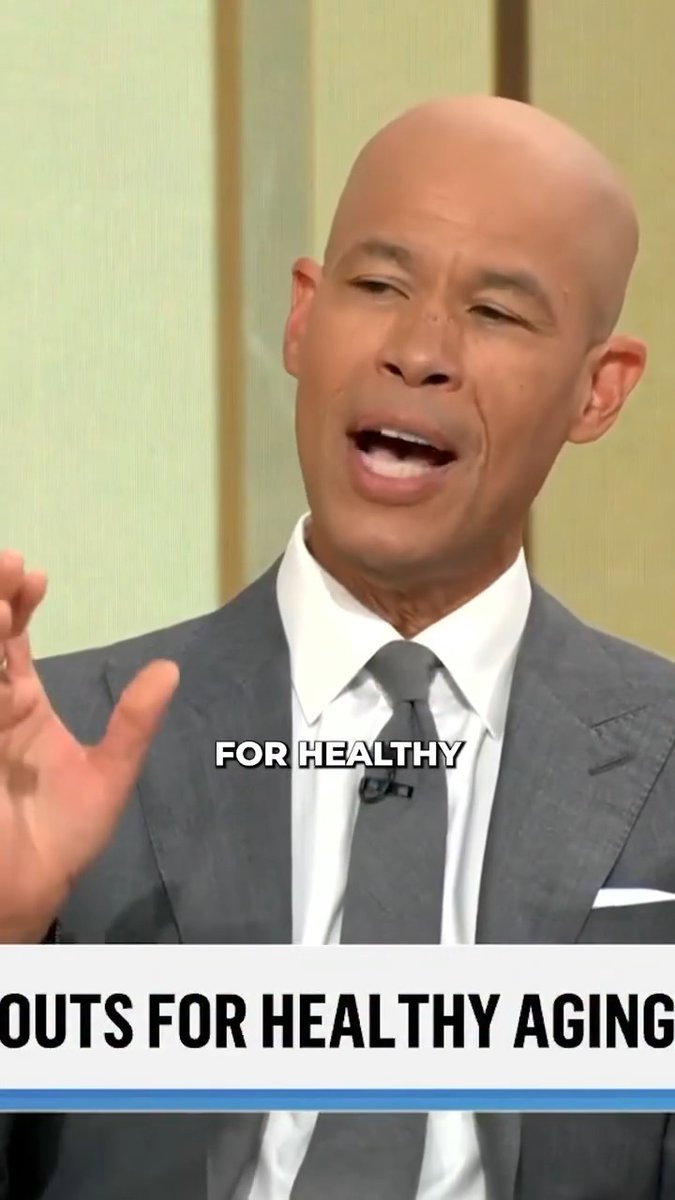
Which is the best exercise modality for reducing resting Blood Pressure (BP)? Isometric exercise training is the most effective mode to reduce resting BP. A recent network meta-analysis of randomised controlled trials (RCTs) by Edwards and colleagues concluded that: Isometric resistance training (IRT) was the most effective modality in...

137,299 次观看 • 2 年前 •via X (Twitter)

10 条评论

Leena Gautam 🇮🇳 🇮🇳 的头像
Leena Gautam 🇮🇳 🇮🇳2 年前

Perfect wall sit, Sir I can almost see the invisible chair Getting down to a wall sit is easy, but holding it becomes difficult as you require good core strength and balance. Take it slow, gradually increase the time.Keep your core engaged and legs bent to 90 degrees #WallSit

Seshadri Thirumala, MD 的头像
Seshadri Thirumala, MD2 年前

This is what class punishments used to be for unruly students in good old days. Good research to support reducing BP in addition to pharmacotherapy.

Tweetoleaks 🧭 的头像
Tweetoleaks 🧭2 年前

Thanks sir for this video 🙏🙏🙏

Dr Sunil Bhutada 的头像
Dr Sunil Bhutada2 年前

....Yes Sir,....will follow....

Raghu Ramaiah 的头像
Raghu Ramaiah2 年前

But I heard that isometric exercises are not necessarily good for the heart sir?

Dr Sudhir Kumar MD DM 的头像
Dr Sudhir Kumar MD DM2 年前

They are good for heart, if done within recommended limits. Over-exercising is not good.

Hitesh Lunia 的头像
Hitesh Lunia2 年前

Then there would be knee problem.

Dr Sudhir Kumar MD DM 的头像
Dr Sudhir Kumar MD DM2 年前

In fact, just the reverse is true. Wall sit reduces knee pain and prevents knee damange. This is because wall sit strengthens muscles around the knee joints.

K K K✨ ✨ ✨░K░I░S░H░O░R░E░🌴🌴🌴🎋 的头像
K K K✨ ✨ ✨░K░I░S░H░O░R░E░🌴🌴🌴🎋2 年前

Thanks a lot Dr Garu, 🙏🙏🙏🙌👌 for your kind suggestion

Anu S(Modi ka parivar) 的头像
Anu S(Modi ka parivar)2 年前

Waaw..u r amazing sir😀...thnx fr the suggestions sir..too gd,beneficiary..🙏😍👍😊

相关视频

A person asks Sadhguru, “How much weight training exercise do you recommend?” And Sadhguru answers, “Weight training is not useful, but do 25-50 Surya-Namaskars, it is complete exercise.” First of all, I am not sure why anyone would ask someone like Sadhguru, who is most of the time, in another dimension, a question on exercise and weight training. And secondly, Sadhguru is just plain wrong. Weight (or strength) training is one of the most important aspects of exercise regimen you can include in your daily or 3-4 times a week physical activity because there is great science behind its benefits. I advise my obese or sarcopenic (very poor muscle mass in advanced liver disease) patients to include weight training to improve clinical outcomes. The highest level of scientific evidence showed that standard muscle-strengthening activities were associated with lower risk of death in patients with non-communicable diseases – including cardiovascular disease, diabetes and lung cancer. Another metanalysis showed strong evidence for a considerable risk reduction of strength training for 60 minutes a week, on all-cause death (−15%), cardiovascular disease death (−19%), and cancer death (−14%). See here: here Sadhguru says the older we get, the better we do not weight train. He is again absolutely wrong. The findings of another systematic review/metanalysis support power (strength) training as an effective therapeutic intervention for improving physical function in adults diagnosed with frailty (poor physical function in old age) and patients with chronic medical conditions. See here: In fact, another study on strength training, this one again a metanalysis, concluded that strength training interventions can be used as a non-drug treatment for hypertension (!), as they promote significant decreases in blood pressure. See here: Strength training also reduces significantly, chronic inflammation as shown in another high quality systematic review and meta-analysis. See here: Resistance/Strength training improved muscle mass and muscle strength, thereby improving performance status. Improved performance status is a wonderful benchmark for an active and healthy life. See here: Even in fatty liver disease, independent of weight loss, exercise training was associated with 3 and a half times more meaningful treatment response towards lowering liver fat. Strength training is a powerful tool to maintain liver health. See here: and here Now Surya Namaskar. Surya Namaskar or Sun Salutation is a sequence of around twelve yoga poses connected by jumping or stretching movements, varying somewhat between various Yoga schools – which means, it has no regulation or standardization unlike weight training. In Iyengar Yoga there is a way, in Ashtanga Vinayasa Yoga there is Type A and B and there are other types followed by other schools or Yoga teachers. Along with the stretching and jumping, which is done is a slow and steady manner, the practice includes chanting a “mantra” calling out twelve names of the Sun God. In its classical form, Surya Namaskar is not an exercise, and is not aerobic. The energy cost of exercise is measured in units of metabolic equivalent of task (MET). Less than 3 METs counts as light exercise; 3 to 6 METs is moderate; 6 or over is vigorous. American College of Sports Medicine and American Heart Association guidelines count periods of at least 10 minutes of moderate MET level activity towards their recommended daily amounts of exercise. For healthy adults aged 18 to 65, the guidelines recommend moderate exercise for 30 minutes five days a week, or vigorous aerobic exercise for 20 minutes three days a week. Surya Namaskar in its classical form has a measly 2.9 METs and in its rigorous form (some people perform mutated highly active forms of Surya Namaskar to make it feel like an exercise) can go up to 7.4 METs – which requires a lot of jumping and little stretching and no time to chant the Sun God names - does not even come close to strength training by any margin. Those who are part of the Surya Namaskar and Yoga cult would provide anecdotal experiences on its benefits (please see comment section) through non-classical forms and would call it an “exhilarating experience.” Experiences are not scientific, evidence are. Many Yoga journals and some dubious and third rate Ayurveda journals have also have published on such experiences in small group of patients, which are not validated or published in better journals [like this junk here: There are no metanalysis level data to prove effectiveness of Surya Namaskar as beneficial as aerobic exercise or better than strength training as Sadhguru claims. Do Surya namaskar if you are doing nothing. But upgrade to strength training if you want something. And stop listening to pseudoscience peddlers who speak religion and culture for your healthcare needs. Sadhguru suffers seriously from Dunning Kruger fallacy: a type of cognitive bias, where people with little expertise or ability assume they have superior expertise or ability. This overestimation occurs because of the fact that they don’t have enough knowledge to know they don’t have enough knowledge.

TheLiverDoc™

505,642 次观看 • 2 年前

"The American Heart Assn. Just Changed Blood Pressure Guidelines." Dr Alan Mandell 'Normal' Blood Pressure Is Now Less Than 120/80. Blood Pressure Of 125/80 Is Now Considered 'Elevated.' Every Time The Number Is Lowered, Millions More People Need Drugs...That's $40B Marketing. As of the end of August, 2025...The American Heart Association replaced its 2017 blood pressure guidelines with these: 🔵normal blood pressure is less than 120/80 mm Hg 🔵elevated blood pressure is 120-129/80 mm Hg 🔵hypertension is 130-139/80 mm Hg This means that 1 out of every 2 americans qualifies for blood pressure lowering medications. The new joint guideline from the American Heart Association & the American College of Cardiology advises earlier treatment that includes medications. Take a look at some of the other ridiculous guidelines included in their 2025 recommendations: 🔵limiting sodium intake to less than 1,500 mg per day. 🔵consuming no alcohol. 🔵following an eating program high in grains & non fat dairy, & always choose lean meat. 🔵multiple medications may be needed to achieve less than 130/80. 🔵guidelines also suggest adding GLP-1 medications in addition to blood pressure meds. Here's why this is not medicine but marketing: The 2025 guidelines are based on a large, federally funded study called SPRINT, backed by pharmaceutical giants & stockholders. The study found a 25% 'relative risk' reduction in cardiovascular events using a lower blood pressure target. 25% reduction was the 'relative risk reduction' not the 'absolute risk reduction.' Relative risk reduction is useless & misleading, whereas absolute risk reduction is the actual percent helped by an intervention. The absolute risk reduction in cardiovascular events was only 2%. Low blood pressure is not always better & carries its own health risks Dr Andy Lazris, primary care doctor, “Once you get to a certain point, if you lower blood pressure further, your rate of stroke & heart attack increases.” Doctors are graded on how well they get their patients to the new hypertension target numbers. These grades affect doctors’ pay. Dr. Andy Lazris admits, “If I lower my patient’s blood pressure & they fall & break their hip due to the medication causing dizziness & fainting, I still get paid.” Blood pressure medication side effects: Chronic cough Low sodium & potassium Dizziness Headache Dehydration Muscle cramps Insomnia Constipation Tiredness Depression Slow heartbeat Symptoms of asthma Sexual dysfunction Heart palpitations Fainting Kidney dysfunction Angioedema Joint pain Treat the 2 root causes for truely high blood pressure: 1⃣ Insulin Resistance...Your own unique optimal blood pressure can be obtained thru diet & lifestyle interventions. A whole foods diet consisting of low sugar, no seed oils, no processed foods & including abundant nutrient dense animal sourced foods will normalize blood pressure for you. Lowering insulin can easily be achieved by lowering foods that raise blood sugar (glucose) which are excess grains, carbs, sugars & starches. 2⃣ Mineral Deficiencies...The minerals Potassium & Magnesium are crucial. Both are involved in the body's Sodium Potassium Pump System to relax blood vessels & lower pressure. Bioavailable Magnesium (Glycinate or Threonate) needs are at least 600 mg per day & Potassium guidelines are at minimum 4,700 mg per day. Most people do not even get 50% of these minimums, leaving their heart & blood vessels to work harder than our physiology is intended to. 👇New 2025 Heart Assn Guidelines Replace 2017👇 👇Higher BP In Older Adults Live Longer👇 👇New Guidelines Mean More Hypertension Meds👇 Speaker: Dr Alan Mandell

Valerie Anne Smith

238,717 次观看 • 8 个月前