Video wird geladen...

Video konnte nicht geladen werden

Zur Startseite

While the DC-8 typically rotated in the 150-160-knot range, Concorde often delayed rotation until roughly 220 knots due to its slender delta wing design. Despite the higher Vr, Concorde still achieved airborne status first thanks to its exceptionally high thrust-to-weight ratio and the Rolls-Royce/Snema Olympus 593 turbojets, which delivered...

232,902 Aufrufe • vor 1 Monat •via X (Twitter)

0 Kommentare

Keine Kommentare verfügbar

Kommentare vom Original-Post werden hier angezeigt

Ähnliche Videos

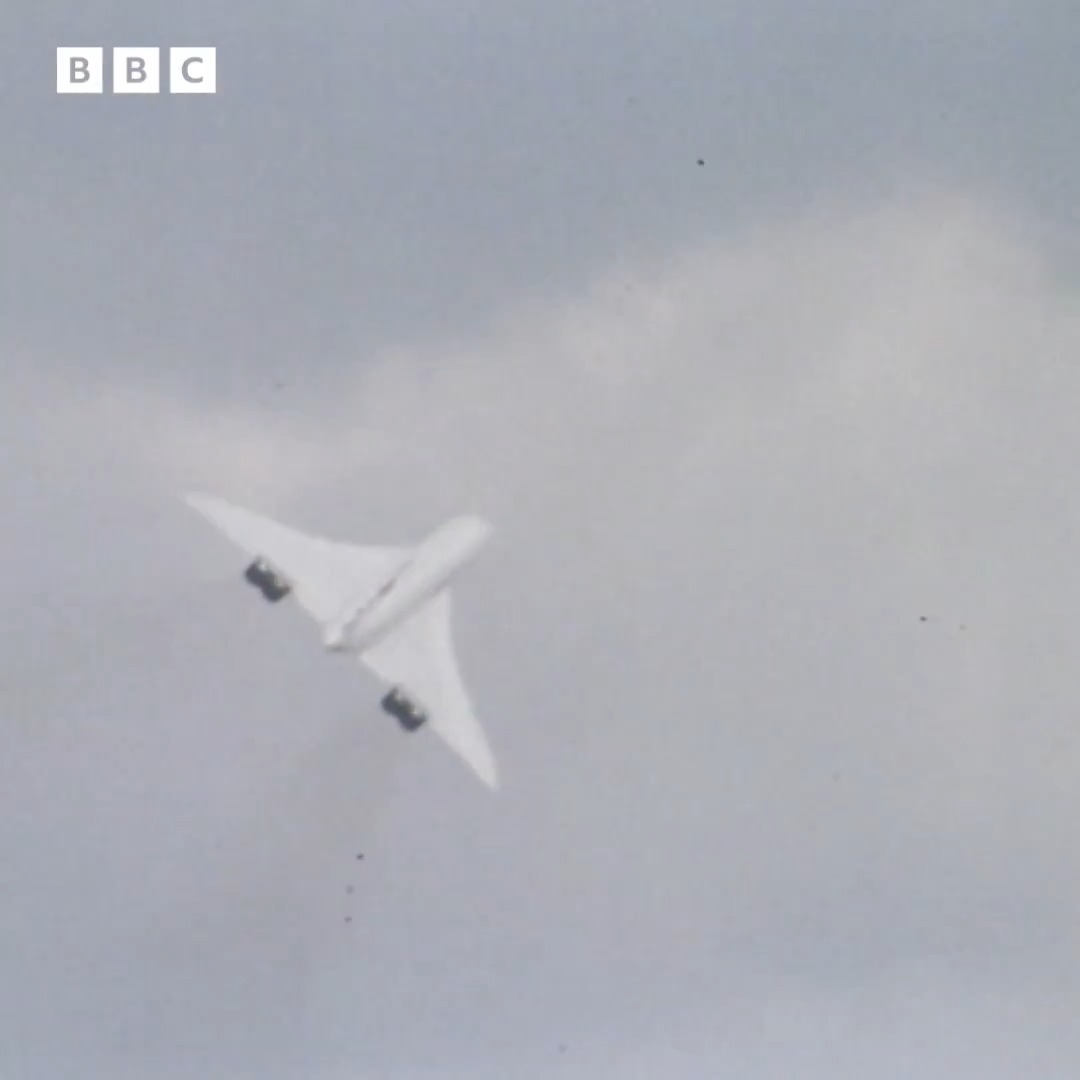
This video shows an extraordinary coincidence in aviation history..... One of the Concorde's final flights was captured unintentionally, without planning or ceremony - just a camera in the right place at the right time. As the supersonic jet passes through the frame, it represents the closing chapter of an era when commercial air travel briefly defied the limits of speed. Today, Concorde exists only in museums and memories, making moments like this even more powerful. When Concorde made its first commercial departure from Heathrow on January 21, 1976, it was a moment that captured global imagination. Born of Anglo-French collaboration, the sleek white jet embodied not only technical genius but also a shared vision of progress in an era still buzzing with the optimism of the Space Age. Its distinctive droop-nose design, developed to aid visibility during takeoff and landing, became an icon in itself, while its ability to soar at 60,000 feet allowed passengers to glimpse the curvature of the Earth. This blend of aesthetics and performance made Concorde unlike any other aircraft of its time. The Concorde, a supersonic passenger jet that was a joint Anglo-French project. It was renowned for being the first passenger plane to fly faster than the speed of sound, reaching speeds of Mach 2.04 (over twice the speed of sound). Concorde significantly reduced transatlantic flight times, making the journey between London/Paris and New York possible in about three hours. It was in service from 1976 to 2003, primarily flying routes between London, Paris, New York, and Barbados. Developed through a collaboration between British Aerospace and Aérospatiale for the airframe, and Rolls-Royce and SNECMA for engines, Concorde was considered a technological masterpiece. After a fatal crash in 2000 and declining passenger numbers, the remaining planes ceased flights in 2003. The drama of takeoff was unforgettable. Heathrow’s runways would tremble under the roar of its Olympus 593 turbojet engines, a sound so powerful it echoed across West London. Residents and aviation enthusiasts alike would pause to watch the jet thunder down the runway, trailing a streak of heat and sound before lifting sharply into the sky. For the privileged few onboard, the experience was no less thrilling—menus boasted fine wines and gourmet cuisine, while the cabin hummed with the quiet exclusivity of royalty, business magnates, and celebrities en route to New York or Paris in less than half the usual time. Though Concorde’s era ended in October 2003, its legacy remains deeply tied to Heathrow. For nearly three decades, it was both a marvel and a symbol of human ingenuity, demonstrating what was possible when engineering ambition met cultural aspiration. Today, preserved Concorde aircraft at museums around the world remind visitors of an age when the boundaries of speed and style were pushed to new horizons, and every takeoff from Heathrow carried with it the promise of the extraordinary. © Reddit #archaeohistories

Archaeo - Histories

166,366 Aufrufe • vor 5 Monaten