正在加载视频...

视频加载失败

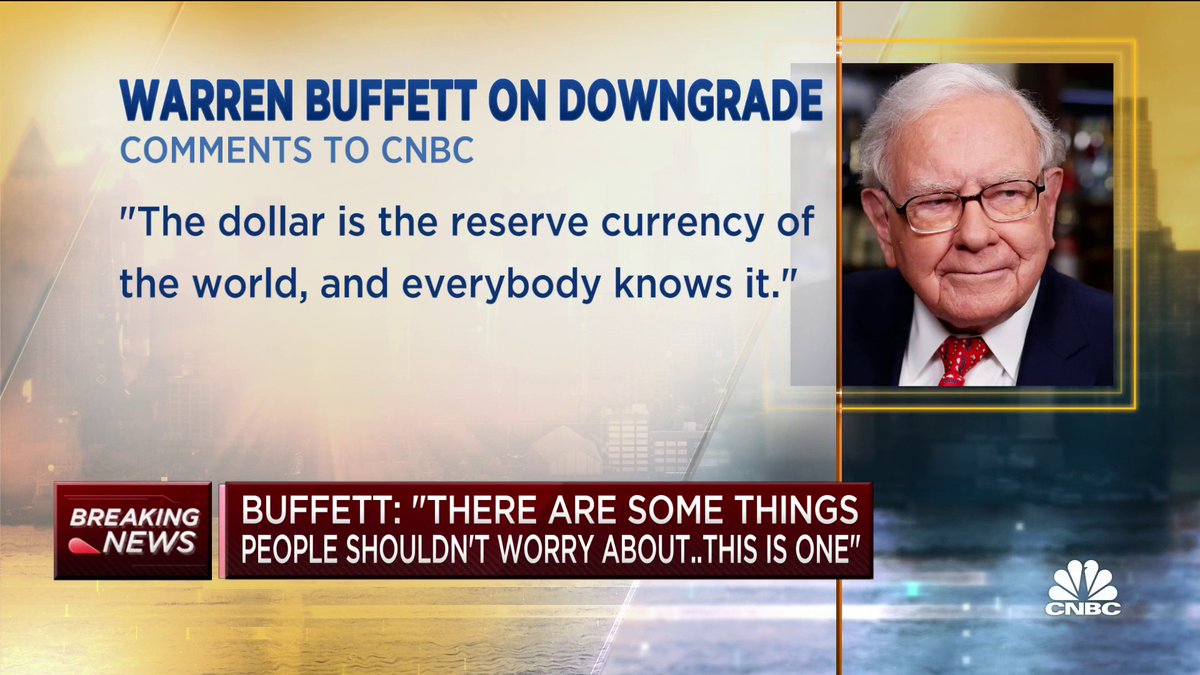
Why does Warren Buffett avoid real estate even when it’s cheap? Because one asset class lets him move billions in minutes, the other can trap him in years of negotiations. Buffett’s take is brutally simple: Stocks = speed, scale, finality. Real estate = delays, complexity, endless humans + paperwork....

390,393 次观看 • 8 个月前 •via X (Twitter)

0 条评论

暂无评论

原始帖子的评论将显示在这里

相关视频

Warren Buffett: "It is a different game that requires a different type of person to enjoy it." At 94 years old, Warren Buffett has a clear preference when it comes to investing, and it's not real estate. When asked about real estate versus stocks, Buffett argues the stock market wins on almost every practical dimension. "There is simply much more opportunity in the United States security market than in real estate." His reasoning comes down to three things: speed, simplicity, and certainty of completion. In stocks, you can execute billions of dollars worth of business anonymously in five minutes, and once the trade is done, it's done. The completion rate is essentially 100% once buyer and seller agree on price. Real estate is the opposite. You're dealing with a single owner or family that may have held a property for a long time, possibly borrowed too much against it, or is facing negative trends. Every transaction becomes an enormous, drawn-out decision. "In real estate, signing the deal is just the start of another phase where people negotiate more and more things." Buffett contrasts this with the stock market: "If someone needs to sell 20,000 shares of Berkshire and the price is right, it is done in five seconds and closes every time." His late partner Charlie Munger took a different view. Munger enjoyed real estate deals and continued doing them even in the last five years of his life. But Buffett says that if Munger had to choose exclusively between the two at age 21, even he would have chosen stocks. For Buffett, the conclusion is simple: "We find it much better when people are ready to pick up the phone and you can do hundreds of millions of dollars of business in a day. I have been spoiled by this efficiency, and I like being spoiled, so we will keep it that way." Real estate can produce great returns, but the friction involved in negotiations, multiple parties, and drawn-out timelines makes it a fundamentally different game. For most investors, the stock market offers far more opportunity with far less complexity.

Big Brain Investing

42,809 次观看 • 3 个月前

Warren Buffett and Charlie Munger didn't avoid real estate because they thought it was a bad asset class They stayed away because they believed they had no durable advantage in it. When asked why real estate had never become a significant part of Berkshire Hathaway's portfolio, Buffett pointed to two reasons: an unfavorable tax structure and the absence of a competitive edge. He explained that Berkshire, as a C corporation, faces an extra layer of corporate taxation on real estate income, putting it at a disadvantage against REITs, partnerships, and S corporations. As Buffett put it: "Real estate tends to be a very lousy investment for people who are taxed under subchapter C." Beyond taxes, Buffett argued that developed real estate is usually priced efficiently. Unlike public stocks, where Berkshire believes it can identify mispriced businesses, most commercial real estate transactions involve buyers and sellers who have access to similar information. According to Buffett, the best opportunities arise only when markets become highly inefficient — such as during the Resolution Trust Corporation (RTC) era in the early 1990s, when distressed assets, forced sellers, and scarce financing created widespread mispricing. Looking back, Buffett admitted Berkshire wasn't fully prepared to capitalize on those conditions and believed they missed an opportunity to earn substantial returns. He also recalled that one of the few major real estate deals Berkshire seriously pursued was the Irvine Company in the late 1970s, though the acquisition ultimately went to a group organized by Mobil Oil. Reflecting on his partnership with Charlie Munger, Buffett joked that Munger would often spend several minutes arguing against a deal—and the more passionate the objections, the more Buffett suspected Charlie actually liked it. Source: Berkshire Hathaway Annual Meeting (2003) Q&A

Black Edge

20,087 次观看 • 28 天前

Warren Buffett thoughtfully explains why investing in stocks/equities is better than real estate, during Berkshire's latest annual meeting: "In respect to real estate, it's so much harder than stocks in terms of negotiation of deals, time spent, the involvement of multiple parties in the ownership. Usually when real estate gets in trouble, you find out you're dealing with more than equity holder. But there have been times when large amounts of real estate... I've changed hands at bargain prices, but usually stocks were cheaper, but there were a lot easier to do. Charlie did more real estate. Charlie enjoyed real estate transactions, and he actually did a fair number of them in the last five years of his life. But he was playing a game that was an interesting game to him. But I think if you'd asked him to make a choice when he was 21, he'd either be in stocks exclusively the rest of his life or real estate the rest of his life. He would have chosen stocks in a second. There's just so much more opportunity, at least in the United States. There's so much more opportunity that presents itself in the security market than it does in real estate and in real estate. You're usually dealing with a single owner or a family that owns maybe a large property they've had a long time. Maybe they've borrowed too much money against them. Maybe the population trends are against them. But to them, it's an enormous... When you walk down to the New York Stock Exchange, you can do billions of dollars worth of business totally anonymous, and you can do it in five minutes. And the trades are complete when they're complete. In real estate, when you make a deal, a big deal with a distressed lender, when you sign the deal, then you go into another phase. Then people start negotiating more things and more things. It's a whole different game. And a different type of person, to some extent, enjoys the game. We did a few real estate deals that came our way in 2008 and 2009, but the amount of time that they would take us compared to doing something intelligent and probably better in securities, there was just no comparison. I mean, in a real estate deal, every sentence is important. In stocks, if somebody needs to sell 20,000 shares of Berkshire or something and they call us and the price is right, it's done in five seconds. And it closes all the time."

Triple Net Investor

1,042,548 次观看 • 1 年前

Gavin Newsom’s $101 million dollar Pacific Palisades low income housing projects EXPOSED The new housing complexes come with ‘covenants,’ after a certain amount of years they are no longer low income and convert to market rate James Li It’s a full blown land grab, “One of the largest industries that donated to him was real estate” “Let me tell you what Gavin Newsom is really up to with this hundred million dollar low income housing project in the Palisades. This ultimately is a real estate play in my opinion, because they want this building to go into nice affluent neighborhoods. Because the value of that building is going to be astronomically higher than versus building it in another area where it's underdeveloped or it's a new neighborhood, or it's more on the outskirts of la and ultimately all these affordable units that they have covenants on them. So in 15, 20, 25 years, depending on the, the exact building, all of those affordable housing units will convert to market rate. So that's why they want it in those areas. It's not because like, oh, we're helping the homeless people out. It's like, oh no, this, this is just like a giveaway to real estate developers, right? One of the largest industries that donated to him was real estate. So like this is just him placating to his donors, making sure that they're needs, quote unquote, are being met. This is a long term real estate play to say, okay, we're going to put this building here because in 25 years this building will be worth like 20x if we versus we put in another neighborhood.” It’s all about kickbacks for Gavin Newsom’s donors You know the new low income housing complexes will covenants because that’s what the other properties in LA and San Diego come with. It’s the Democrat scam

Wall Street Apes

47,016 次观看 • 1 年前

Warren Buffett was asked what he means when he says he doesn’t understand a business. His answer: “It’s not a question of understanding the product. It’s the predictability of the economics of the situation 10 years out — and that’s our problem.” ___ Buffett isn’t saying he can’t understand what a business does. He understands steel. He understands homebuilding. The product, the distribution, the customers — that’s the easy part. What he’s asking is something far more demanding: can I predict the economics of this business with reasonable confidence a decade from now? That’s an entirely different question and why most businesses fall under the “too-hard” pile for Buffett. Here’s an exercise worth trying the next time you’re reviewing a stock: Take a blank piece of paper. No spreadsheet. No model. Just write out your best estimates of what revenues, free cash flow, and earnings will look like over the next five years. Then calculate what you’re paying for the entire business today — and ask yourself honestly whether you’re being well compensated for that ownership. Your estimates will likely be off. That’s fine. That’s not the point. The point is to notice which businesses you can make confident assumptions about five years out — and which ones leave you staring at a “confused page”. That gap in confidence is exactly what Buffett is talking about. You can see an example of how to do this in Rose Celine Investments 🌹 post on $DLO ___ 🎙️ Berkshire 2000 Annual Meeting | CNBC Warren Buffett Archive (04/29/2000)

Dimitry Nakhla | Babylon Capital®

42,278 次观看 • 3 个月前

NEW: Marc Andreessen praises Donald Trump as a world-class talent in real estate, communications, and systems thinking. "He's world-class at real estate and communications." "He's probably the first person in the world to be world-class in both things." "He very deeply understands business." "When Trump puts up one of these giant hotels, these are large-scale systems projects. There are many dimensions. A lot of things can go wrong. There's technology change. You've got to manage these hands-on because they can always go sideways." "He's world-class at thinking things through systematically." "There's this video of him talking about the water situation in California on Joe Rogan six months ago. It's one of those classic Trump things, where at the time, everybody's like, why is he going on and on about the water situation in California?" "And then, of course, LA is burning down in the last three days. And if you listen to what he talked about with the water situation in California. He is exactly 100% correct." "In the first term, when he diagnosed the German energy situation at the United Nations. He said you will become dependent on Russian energy, and that will be a disaster for you, and it has been. It was an extremely precise, accurate, and prescient five-minute analysis of this system's problem." "In my energy conversation with him, he's extremely sophisticated. The energy people that I know know that he's sophisticated. So, he wraps his head around these things very quickly and easily." Do you agree with Marc?

KanekoaTheGreat

7,615,304 次观看 • 1 年前