Loading video...

Video Failed to Load

Go Home

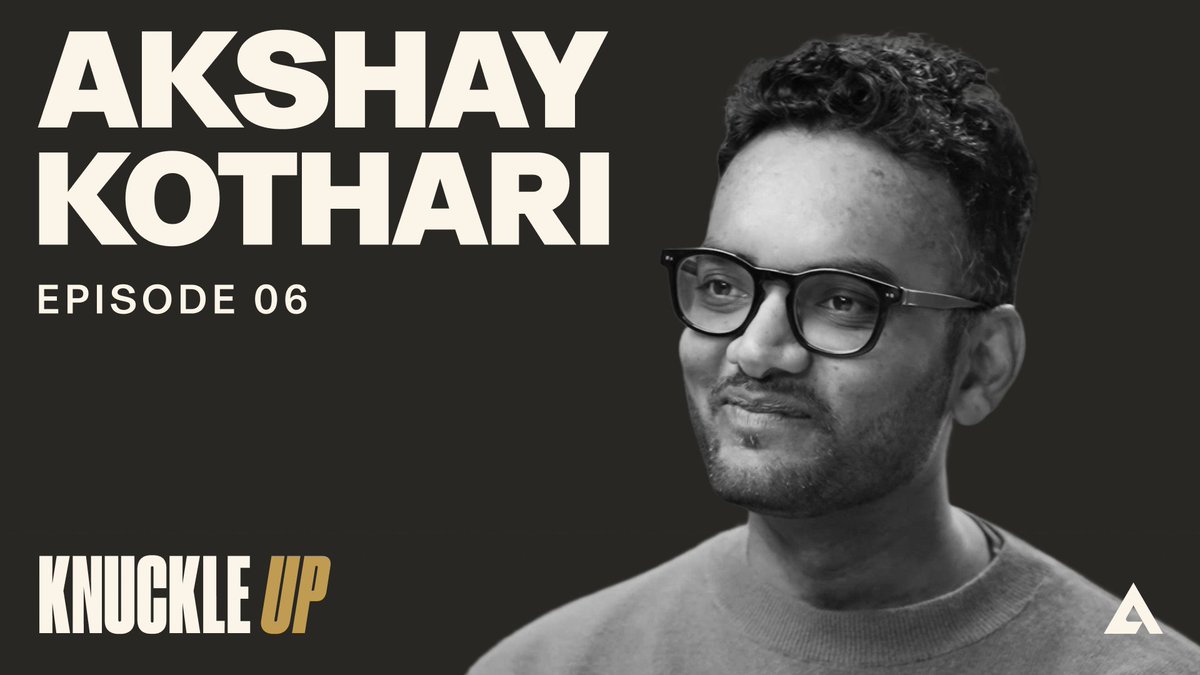
Why is the creator of OpenCode pretty skeptical about AI productivity gains, and the hype around AI? A very conversation dax (and lots of truth bombs:) Timestamps: 00:00 Intro 07:03 Dax’s path into tech 09:04 Early startup experience 13:16 Getting involved with open source 16:13 OpenCode 23:17 Anthropic banning...

230,202 views • 1 month ago •via X (Twitter)

0 Comments

No comments available

Comments from the original post will appear here

Related Videos

It's always energizing to do a podcast with Steve Yegge (Steve Yegge, engineer+author, formerly at Amazon+Google, creator of Gas Town). Timestamps: 00:00 Intro 01:43 Steve’s latest projects 02:27 Important blog posts 04:48 Shifts in what engineers need to know 10:46 Steve’s current AI stance 13:23 Steve’s book Vibe Coding 18:25 Layoffs and disruption in tech 31:13 Gas Town 40:10 New ways of working 51:08 The problem of too many people 54:45 Why AI results lag in business 59:57 Gamification and product stickiness 1:04:54 The ‘Bitter Lesson’ explained 1:07:14 The future of software development 1:23:06 Where languages stand 1:24:47 Adapting to change 1:27:32 Steve’s predictions Brought to you by: • Statsig – ⁠ The unified platform for flags, analytics, experiments, and more. • Sonar – The makers of SonarQube, the industry standard for automated code review. • WorkOS – Everything you need to make your app enterprise ready. Three interesting thoughts from Steve that we talked about in this conversation: 1. Reading ability is becoming a blocker for wider AI adoption. Some struggle with walls of text that current AI tools produce, and Steve predicts that in the very near future, most people will program by talking to a visual avatar, not reading terminal output because he observes that five paragraphs is already a lot to read for many devs. 2. What software engineers need to know keeps changing. In the 1990s, any decent software engineer knew Assembly, and today almost no decent developer knows it because Assembly has long been superseded by technical progress. What engineers “need” to know these days is different from the ‘90s and that process continues with AI, changing the parts of the craft that are essential for devs. We grumble about this but that won’t change anything by itself. 3. There’s a “Dracula Effect” where AI-augmented work drains engineers faster than traditional work. This is because AI automates the easy tasks, meaning that engineers are stuck doing high-intensity thinking all day. Steve says you may only get three daily productive hours at max speed, but during that time, you could produce 100x more output than before.

Gergely Orosz

41,987 views • 4 months ago

OpenClaw - the agentic software spreading like wildfire - was built on top of Pi, a minimalist, self-modifying agent. I sat down with Pi's creator, Mario Zechner and longtime Pi user (+ the creator of Flask) Armin Ronacher ⇌ to talk Pi, and their (very grounded!) takes on building with AI. Timestamps: 00:00 Intro 07:30 How Mario, Armin, and Peter Steinberger met 15:15 How 30 dev teams use AI agents: learnings 21:50 The importance of judgment 24:26 Challenges when non-engineers write code 28:30 Downsides of over-automation 32:18 Pi 48:09 OpenClaw + Pi 50:54 “Clankers” 57:32 Open source and AI 1:00:22 Complexity as the enemy 1:02:50 Building an AI-native startup 1:11:52 “Slow the F down” 1:16:40 MCPs vs. CLI 1:25:03 Predictions and staying up to date • YouTube: • Spotify: • Apple: Brought to you by: • Statsig – ⁠ The unified platform for flags, analytics, experiments, and more. • Sonar — The makers of SonarQube, the industry standard for code verification and automated code review. Try it out for yourself. • WorkOS – WorkOS gives you APIs to ship enterprise features – SSO, directory sync, RBAC, audit logs – in days, not months. Visit learn more. --- Three parts I found especially interesting in this discussion: 1. New trend: AI makes it harder for senior engineers to reject pointless complexity. Historically, senior engineers kept software complexity at bay simply by saying “no” a lot. But Armin observes that these days, more junior engineers and product managers deploy agent-scripted counterarguments when a senior colleague kicks an idea to the curb. This makes decision-making exhausting, and more bad ideas make it into production as a result. 2. It should be MUCH easier to build specialized tools for specific tasks. Different projects need different harness types because, as Mario points out, the same hammer is not ideal for every single construction job. As such, Pi is built with the goal of allowing the creation of specialized harnesses. It can modify itself so that a user can create the bespoke harness needed for any task. Mario believes it’s a preview of how self-modifiable software might look in the future. 3. Automation bias is one of the biggest risks of working with AI agents. Once devs confirm that an AI agent can produce acceptable code, they start to review its output less often, even though agents can – and do! – produce slop. Mario advises being far more sceptical with agents, and cautions that the quality of their output isn’t guaranteed, however well they performed previously.

Gergely Orosz

172,263 views • 2 months ago

I asked Dan Martell to walk me through every level of making money with AI. He gave me the most simple, practical advice I've ever heard on this subject. Level 1 - Making $0 - $100k Level 2 - Making $1m - $10m Level 3 - Building a $10m++ enterprise. 0:00 Only 5% of the World Has Ever Paid for AI 0:46 The Easiest Thing to Sell With AI Right Now 1:56 The Marcus and Sophie Framework 4:24 Theory of Constraints (Right Problem to Solve) 5:33 What Is the Number One Business Constraint 7:13 How to Leave Your Job and Go All In 8:27 Business Is Simple Find a Problem and Solve It 9:08 Stop Getting Ready to Get Ready 9:33 The Sarah Story One Text and $10K 9:53 Pull Up Your Phone and Message Your Contacts 11:05 Dan's Son Gets His First Client at $800/Month 12:41 Best Employee vs. Best Employer 13:59 What Other Services Can You Sell With AI 14:44 Sales Is Not Talking It's Asking 17:01 What to Do When You Hate Your Business 18:40 Pain and Pleasure Are the Only Two Motivators 19:13 They Haven't Made It a Must Yet 20:29 Make It a Must Not a Nice to Have 21:06 The Jen Story and the Gasping Moment 22:17 How to Find Your First 10 to 15 Clients 28:38 The Personal Brand Play 33:06 Vision Is What AI Cannot Do 34:55 Hard for Computers Easy for Humans 36:13 Level 2 Making Your First Million With AI 37:18 The Replacement Ladder Framework 37:39 Admin First Then Delivery Then Marketing 39:09 Why Marketing Is the Biggest AI Category 39:32 Why You Should Keep Sales for Yourself 40:00 Level 5 Leadership and AI Agents 41:41 What a Fully AI Systems Business Looks Like 43:13 The Gym Owner With Three Locations 46:16 Shutting Down the Company for Two Days 46:37 Teaching the Whole Team to Code in Claude 49:28 Wayne the 62 Year Old Who Made $12K a Month 52:38 I Only Share What Actually Works 53:21 Whisper Flow and Talking to Your AI 56:41 Claude Chat Claude Coworker and Claude Code 57:57 The Claude Browser Extension 58:49 Claude Code Is Not Just for Developers 1:00:06 How to Migrate Your AI Memory Across Tools 1:01:08 Level 3 $1M to $10M and the Brand Play 1:02:05 Nobody Buys AI They Buy Trust 1:03:25 Brand Is Association and Association Is Trust 1:05:12 A Million Followers Is $10M in Activated Revenue 1:07:03 How to Keep AI From Becoming Slop 1:07:42 Human in the Loop 1:08:16 The 10 80 10 Rule and Why AI Is Now the 80 1:10:01 The Team FIRED Themselves 1:11:45 Dan's Free AI Curriculum for Your Team

Grant

165,182 views • 16 days ago