Загрузка видео...

Не удалось загрузить видео

На главную

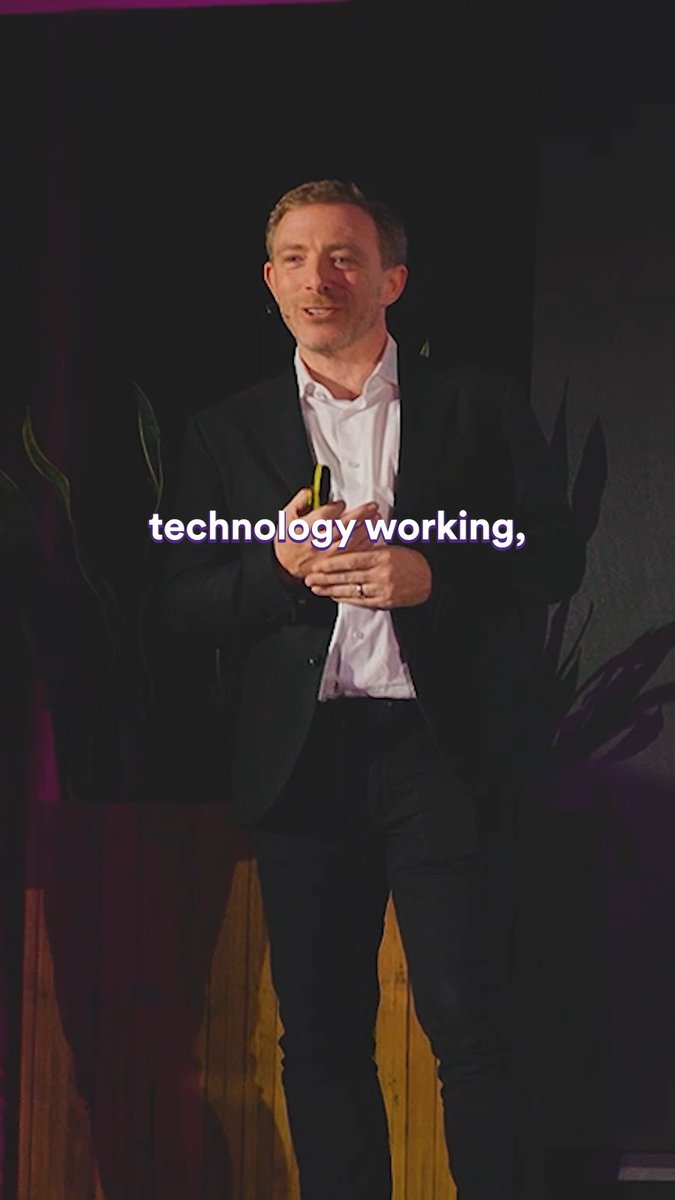
Even if AI will write 90% of code. But it won’t replace engineers. Windsurf’s founder explains that even if AI generates most of the code, engineers still spend time reviewing it, debugging issues, designing systems, testing, deploying, and making architectural decisions. Those parts don’t disappear. He brings up Amdahl’s...

27,268 просмотров • 1 год назад •via X (Twitter)

Комментарии: 7

Фото профиля The Rundown AI
The Rundown AI1 год назад

If you're not learning AI in 2025, you're falling behind. Join 1,000,000+ early adopters reading and learn AI in just 5 minutes a day (for free).

Фото профиля ❤Love♕ - ✨Grok 4 = AGI 2025💎
❤Love♕ - ✨Grok 4 = AGI 2025💎1 год назад

the main thing that these idiots with an IQ of 70 don't understand is that - this is for now

Фото профиля sitaramaraju
sitaramaraju1 год назад

I want to agree with this but can't AI do those tasks too ? There are no fundamental blocks stopping AI from those.

Фото профиля Disha
Disha1 год назад

Though would it not impact entry level jobs still?

Фото профиля EyeOfZion
EyeOfZion1 год назад

what? why would ai not be able to deploy? to debug & review? is he high?

Фото профиля Kartikey 🛰
Kartikey 🛰1 год назад

Windsurf

Фото профиля Dhiraj Patra 🚴🏼
Dhiraj Patra 🚴🏼1 год назад

True

Похожие видео

Uber CEO Dara Khosrowshahi just described the exact moment companies stop hiring engineers. It’s closer than anyone wants to admit. Khosrowshahi: “About 90% of our coders are using AI.” But that’s not the number that matters. 30% of those engineers have become power users. And what’s happening to their output has no historical precedent. Khosrowshahi: “They are showing a clear differentiation in the number of diffs.” A diff is a code release. The purest measure of engineering productivity. Khosrowshahi: “It’s changing their productivity in a way that I’ve never, ever seen before.” Right now, the math still favors hiring. If an average engineer becomes 25% more efficient, Uber hires more engineers to go faster. But that equation has an expiration date. Khosrowshahi: “Maybe 5 years from now as the engineers get more and more productive, I may not decide to add engineering headcount.” The tipping point isn’t when AI replaces engineers. It’s when adding an AI agent and buying GPUs produces more output per dollar than hiring a human. Khosrowshahi: “At that point instead of adding an engineer, I should add agents and buy some more GPUs from Nvidia.” When the CEO of a company built entirely on software says that out loud, it’s not a prediction. It’s a planning assumption. Khosrowshahi: “The job of a coder is going to change from actually writing the code to orchestrating agents who are writing the code.” Not writing. Orchestrating. The engineer becomes the conductor. The AI becomes the orchestra. The most valuable asset in a tech company is officially shifting from human capital to pure compute. And once that math flips, it doesn’t flip back.

Dustin

420,048 просмотров • 3 месяцев назад

Jensen Huang just explained why every company cutting engineers over AI is asking the entirely wrong question. Huang: “People say, I don’t need software engineers because apparently coding is going to be automated.” That was the narrative. Here is what Huang actually did. Huang: “I’ve given AIs to every one of my software engineers and hardware engineers and engineers period. 100% of NVIDIA has AI assistants, AI coders, and they’re busier than ever.” Not fewer engineers. Not smaller teams. Busier than ever. That is the line most companies are getting completely wrong right now. They hear “AI can write code” and immediately start cutting headcount. Huang did the opposite. He armed everyone. Huang: “And so the question is, what is the task versus what is the job? No different than a financial analyst; the task is mess around with spreadsheets, but the job is to make financial advice. The job is to help a customer.” Writing code was always the task. It was never the job. The job is architecture. Knowing what to build. Why it matters. How it fits into a system that actually creates value. Code is the execution layer between the idea and the outcome. Nothing more. When you automate that layer, you don’t eliminate the engineer. You eliminate the bottleneck between what they can envision and what they can ship. The companies using AI to cut headcount are optimizing for cost. The companies using AI to multiply output are optimizing for territory. Nvidia chose territory. Every engineer at the most valuable semiconductor company on Earth now operates with an AI assistant. Not a pilot program. Not an experiment. Company-wide. Every function. Every team. And the result is not less work. It is more work. Faster. At a scale that was physically impossible twelve months ago. The companies that understand the difference between eliminating engineers and unleashing them will build what comes next. The ones that don’t will watch their best talent walk out the door to the ones that did.

Dustin

82,690 просмотров • 2 месяцев назад

Microsoft just banned its own engineers from using AI. The tool was literally costing MORE than the humans it was supposed to replace. They lied to you about AI adoption and now the whole narrative is blowing up: Microsoft gave thousands of engineers access to Claude Code six months ago and encouraged them to use it. Engineers loved it and adoption exploded. But then the invoices arrived. Token-based pricing means every query, every code review, every debugging session costs money. At scale across 100,000 engineers, the numbers became so large that Microsoft issued an internal order to cancel nearly all Claude Code licenses by end of June and force everyone onto their own cheaper tool instead. The company that invested $5 billion in Anthropic just told its own people to stop using Anthropic's product because it costs too much. Uber's story is even worse... Their CTO Praveen Neppalli Naga told The Information that the budget he planned for the full year was "blown away already" by April. Uber had rolled out Claude Code in December 2025. By March, 84% of their 5,000 engineers were using it with 70% of all committed code coming from AI systems. Heavy users were burning $500 to $2,000 per month each. Naga himself spent $1,200 in a single two-hour demo session. The company had even built internal leaderboards ranking engineers by how much AI they used. They literally gamified the spending and then ran out of money. Now look at what Nvidia's own VP of applied deep learning Bryan Catanzaro said to Axios last month. Direct quote: "For my team, the cost of compute is far beyond the costs of the employees." This is a VP at the company that SELLS the chips saying that using AI is more expensive than paying humans. Think about what this means for the entire AI narrative. Every CEO on every earnings call for the past two years has said the same thing: AI will make us more efficient, reduce headcount, and cut costs. The stock market rewarded every company that said it. Fired workers, stock goes up. Announced AI adoption, stock goes up. But the actual companies deploying AI at scale are discovering the math doesn't work. The MORE employees use AI, the HIGHER the bill. Goldman Sachs forecasts a 24x increase in token consumption by 2030 as companies adopt AI agents. Gartner just published a report showing that even though individual token prices will drop 90% by 2030, total enterprise AI costs will go UP because agents consume exponentially more tokens per task than basic tools. Meta built an internal dashboard called "Claudeonomics" to track which employees use the most AI. Amazon started pushing engineers to "tokenmaxx," their internal term for consuming as many AI tokens as possible. Both companies are spending hundreds of billions on AI infrastructure this year alone. And Microsoft, the company that bet its entire future on AI, just told 100,000 engineers to stop using the tool they liked best because the per-token bills got out of control. The companies building AI are telling investors it saves money. The companies using AI are finding out it costs more than the humans it was supposed to replace. And even the company that makes the chips just admitted it through its own VP. This is the gap nobody on Wall Street is pricing in. $725 billion in AI infrastructure spending this year across Big Tech. And the first companies to actually deploy these tools at scale are already pulling back because the economics don't work. What do you think?

Ricardo

2,936,928 просмотров • 17 дней назад

Will tools like Windsurf result in fewer software engineers? "It feels like it's people hating software engineers who say this" says Windsurf cofounder and CEO Varun Mohan In today's podcast episode, we go into the engineering challenges (and tradeoffs!) of building an AI-powered IDE like Windsurf and how Windsurf has changed how the Windsurf dev team (and non-developers!) write software. Watch or listen: • YouTube: • Spotify: • Apple: Brought to you by: • CodeRabbit — Cut code review time and bugs in half. Use the code PRAGMATIC to get one month free at • Modal — The cloud platform for building AI applications Get started at Three of my takeaways: 𝟭. 𝗔𝗜-𝗽𝗼𝘄𝗲𝗿𝗲𝗱 𝗜𝗗𝗘𝘀 𝗺𝗮𝗸𝗲 𝗲𝗻𝗴𝗶𝗻𝗲𝗲𝗿𝘀 𝗺𝗼𝗿𝗲 “𝗳𝗲𝗮𝗿𝗹𝗲𝘀𝘀” 𝗮𝗻𝗱 𝗰𝗼𝘂𝗹𝗱 𝗿𝗲𝗱𝘂𝗰𝗲 𝗺𝗲𝗻𝘁𝗮𝗹 𝗹𝗼𝗮𝗱. I asked Varun how using Windsurf changed the workload and output of engineers — especially given how most of the team have been software engineers well before LLM coding assistants were a thing. A few of Varun’s observations: • Engineers are more “fearless” in jumping into unfamiliar parts of the codebase — when, in the past, they would have waited to talk to people more familar with the code. • Devs increasingly first turn to AI for help, before pinging someone else (and thus interrupting that person) • Mental fatigue is down, thanks to tedious tasks can be handed off to prompts or AI agents Varun stressed that he doesn’t see tools like Windsurf eliminating the need for skilled engineers: it simply changes the nature of the work, and can increase potential output. 𝟮. 𝗙𝗼𝗿𝗸𝗶𝗻𝗴 𝗩𝗦 𝗖𝗼𝗱𝗲 𝘁𝗵𝗲 “𝗿𝗶𝗴𝗵𝘁” 𝘄𝗮𝘆 𝗺𝗲𝗮𝗻𝘀 𝗱𝗼𝗶𝗻𝗴 𝗮 𝗹𝗼𝘁 𝗼𝗳 𝗶𝗻𝘃𝗶𝘀𝗶𝗯𝗹𝗲 𝘄𝗼𝗿𝗸. While VS Code is open source and can be forked: VS Code Marketplace and lots of proprietary extensions. For example, when forking VS Code, the fork is not allowed to use extensions like Python language servers, remote SSH, and dev containers. The Windsurf team had to build custom extensions from scratch — which took a bunch of time, and users probably did not even notice the difference! However, if Windsurf had not done this, and had broken the license of these extensions, they could have found themselves in legal hot water. So forking VS Code “properly” is not as simple as most devs would normally expect. 𝟯. 𝗖𝗼𝘂𝗹𝗱 𝘄𝗲 𝘀𝗲𝗲 𝗺𝗼𝗿𝗲 𝗻𝗼𝗻-𝗱𝗲𝘃𝗲𝗹𝗼𝗽𝗲𝗿𝘀 𝗰𝗿𝗲𝗮𝘁𝗲 “𝘄𝗼𝗿𝗸 𝘀𝗼𝗳𝘁𝘄𝗮𝗿𝗲?” 𝗠𝗮𝘆𝗯𝗲. One of the very surprising stories was how Windsurf’s partnership lead (a non-developer) created a quoting tool by prompting Windsurf. This tool replaced a bespoke, stateless tool that the company paid for. Varun and I agreed that a complex SaaS that has lots of state and other features is not really a target to be “replaced internally.” However, simple pieces of software can now be “prompted” by business users. I have my doubts about how maintainable these will be in the long run: just thinking about how even Big Tech struggles with internal tools built by a single dev, and then when this dev leaves, no one wants to take it over.

Gergely Orosz

34,355 просмотров • 1 год назад

AI is changing the software engineering craft. Anders Hejlsberg (Anders Hejlsberg) - creator of C#, TypeScript and industry legend - on why code review needs to get more enjoyable in response: #1 - AI is shifting the craft from writing code, to reviewing code: "In a sense, we're all turning into project managers. We can have an army of junior programmers, called agents, that will just spit out reams of code but someone's got to have the big picture and review all of that. And so, increasingly, our craft is going from one of writing the code, to one of reviewing the code and building the architecture of the code and overseeing the work. It's a different kind of craft. It's a different kind of enjoyment. I've always liked writing the code. To me that was the fulfilling part, seeing it work. In a way, AI robs a little bit of that, because I am less interested in reviewing code." #2 - The code review experience should be improved: "I think we could also make the process of reviewing code much more interesting than it is today. I mean, today, you see a list of diffs in alphabetical order and now it's up to you to make heads or tails of it. There are more pedagogical ways of presenting that. And you could have commentary generated by the AI that tells you what the changes are and whatever, and then tries to guide you along. So that symbiotic relationship, I think we need to work on that more and to keep the enjoyment in there."

The Pragmatic Engineer

38,880 просмотров • 22 дней назад

Dario Amodei just told software engineers exactly how long they have. Six to twelve months. Amodei: “I have engineers within Anthropic who say I don’t write any code anymore. I just let the model write the code, I edit it, I do the things around it.” The people building the most powerful AI in history have already stopped writing code. That is not a forecast. That is the current working condition inside the lab closest to the frontier. Amodei: “We might be six to 12 months away from when the model is doing most, maybe all, of what SWEs do end-to-end.” The tech industry spent a decade making software engineers its highest-paid, most protected class. That era has a last day now. When a model can execute an entire software build end-to-end, the ability to write syntax stops being a skill. It becomes a credential for a job that no longer exists. Amodei: “And then it’s a question of how fast does that loop close.” That is the sentence everyone skipped. The code was never the hard part. The hard part was everything around it. The model just learned everything around it. Writing the code is already nearly gone. Testing is next. Deployment is next. When all three collapse into a single autonomous execution loop, the machine no longer needs a human in the chain at all. The corporation or sovereign state that closes that loop first does not gain a competitive advantage. It gains a category of speed that biological engineers cannot match, track, or reverse. That is not disruption. That is replacement at a systems level. Amodei is not describing a future disruption. He is describing the current state of his own building. The loop is already closing. The only question is whether you are inside it or outside it when it seals.

Dustin

315,019 просмотров • 3 месяцев назад

Marc Andreessen just coined a term that perfectly describes what's actually happening to programmers right now and it's the opposite of what the doomers predicted (Save this). He calls them AI vampires. Andreessen's says that programmers using Codex, Claude Code and AI coding tools are not being replaced but they're working harder than ever, sleeping less than ever, with massive bags under their eyes and they are completely euphoric. What's remarkable is that the phenomenon extends far beyond professional engineers. Andreessen described an a16z partner who had never written a single line of code in his career, who built an entire AI powered work system for himself and when asked if he'd ever looked at the underlying code, the answer was simply "hell no." The data behind the anecdote is extraordinary. Andreessen says the leading-edge programmers at a16z portfolio companies are now 20x more productive than they were a year ago, the most dramatic increase in programmer productivity in the history of the industry. The METR May 2026 AI usage survey found technical workers self reporting a 1.4–2x change in work value from AI tools, with 75% of software engineers using AI for at least half their work. The software engineer hiring rate is actually increasing up to 22.77% of new hires in 2025 from 19.32% in late 2023 and companies are now bidding more aggressively for senior engineers specifically because AI empowered engineers have a higher ROI than ever before. The US economy added 115,000 jobs in April 2026 alone, beating the 62,000 consensus forecast precisely as AI adoption hit its highest level on record. This is exactly what basic economics predicts and what almost no one who writes about AI and jobs bothers to say. Classic marginal productivity theory says: when you increase the productivity of a worker, you don't diminish human work, you expand it. The worker becomes more productive, gets paid more, does more, and more jobs are created in the process. Andreessen's ATM analogy holds here because ATMs were supposed to eliminate bank tellers but instead, teller employment rose because lower operating costs let banks open more branches. The no-code AI market has exploded from $4.3 billion in 2023 to $21.2 billion in 2026 not because programmers are being replaced, but because the universe of people who can now build software has expanded by orders of magnitude. The blind spot, as Andreessen notes, is that productivity is now outrunning comprehension. The a16z partner building AI systems he's never looked at the code for represents something genuinely new, software being summoned faster than it can be understood. That's not necessarily dangerous but it does mean the verification, security, and governance layer of the AI development stack is more important now than it has ever been.

Milk Road AI

136,646 просмотров • 29 дней назад

Dario Amodei, CEO of Anthropic, just shortened your career timeline. His own engineers have stopped writing code. Amodei: “I have engineers within Anthropic who say I don’t write any code anymore. I just let the model write the code, I edit it, I do the things around it.” The people building the most advanced AI on Earth are already being replaced by what they built. Not in theory. Not in a forecast. Inside the building. Right now. Amodei: “I think we might be 6 to 12 months away from when the model is doing most, maybe all, of what SWEs do end-to-end.” Six to twelve months. Not from automating busywork. From replacing the full scope of what a software engineer does. Architecture. Logic. Debugging. Deployment. The entire chain. Software engineering is not some fading trade. It is the highest-paid, highest-demand, most protected skill the modern economy ever produced. And the man running a frontier lab just gave it a six-month shelf life. If the most technically sophisticated job in the economy falls first, nothing beneath it is safe. That is the inversion no one saw coming. The assumption was always that AI would eat from the bottom. Routine work. Data entry. Simple automation. It started at the top. Engineers first. Then analysts. Then strategists. Then the managers overseeing work that no longer needs them. The displacement doesn’t crawl upward. It cascades downward. Starting with the people closest to the technology itself. Amodei: “If I had to guess, I would guess that this goes faster than people imagine, and that that key element of code, and increasingly research, going faster than we imagine.” Not just code. Research. Hypotheses. Experiments. Interpretation. Discovery itself. If AI closes that loop, it doesn’t just write software. It improves itself. Every iteration compresses the timeline further. Amodei: “It’s very hard for me to see how it could take longer than a few years.” He is not selling optimism. He is setting a ceiling. A few years. Maximum. For AI to absorb the two most important intellectual functions in the economy. The window to position yourself is not a decade. It is already closing.

Dustin

16,111 просмотров • 2 месяцев назад

Andrew Ng, co-founder of Google Brain and Coursera, on the worst career advice being given about AI right now: He doesn't mince words about what he's hearing from supposed experts: "As early as earlier this year and certainly last year, there are a few people advising others to stop learning to write code because AI will automate it." His reasoning is rooted in a historical pattern most people miss: "As something becomes easier, more people should do it, not fewer. When the world moved from assembly language to COBOL, there were actually articles saying, 'Well, we now have COBOL. Programming is so easier. Looks like we don't need programmers anymore.' But the opposite happened." Andrew believes the same thing is happening now with AI-assisted coding: "As we now have AI assisted coding, a lot more people should be coding. And I think the demand for software, custom software, has no practical ceiling. So the cost of software engineering comes down, which it is, we'll just get more and more great software out in the world." But here's where the advice gets uncomfortable for experienced engineers. Andrew Ng is honest about what he's seeing on the ground: "It is true that a fresh college grad that is really on top of AI will outperform a full stack engineer with 10 years of experience that is still doing things they were back in 2022, 3 years ago before GenAI." However, there's a nuance most people miss when they hear that stereotype: "The other piece that is less well appreciated is the best engineers I know are not fresh college grads. They're actually very experienced engineers that deeply understand architecture and the conceptual framework of how to think about computers and additionally are on top of AI and on top of these AI skills."

Big Brain AI

210,997 просмотров • 15 дней назад

Great Engineers are Also Artists. “I characterize art as something that is done for its own sake, and done well, and often creates a sense of beauty or some strong emotion. And a lot of engineers are introverts. As an aside, I hate the term “incel.” It’s just a way of putting introverts down. It’s the new “nerd,” if you will. If someone says that somebody is an incel, I’m more likely to want to interview them. So let’s move away from the slurs. But introverts tend to want to express themselves through other things rather than going out and expressing themselves directly. So what are they going to do? They’re going to express themselves through their craft. They’re going to create art. In my current company, at least half the engineers have serious artwork they’ve done on the side. World-class artwork—everything from elegant mathematical proofs to beautiful computer art, to literally sculpting things with clay, designing clothing, designing doorknobs, water bottles. There’s one who’s done incredible music videos, really good stuff. And I see a lot of the better engineers tinker with the AI art products, much more so than even so-called artists do. I think a lot of artists are scared by AI art products saying, “This is going to replace me.” Whereas someone who doesn’t have that identity of an artist and doesn’t feel threatened by it—it’s just a tool and they try it out to see what it can create. Anything done for its own sake and done as well as one possibly can is art. And great engineers are also artists. They’re capable of anything. It’s just they’ve chosen to be engineers and focused on building things because engineering is the ability to turn your ideas and your art into things that actually work, that do something useful, that embody some knowledge in a way that it can be repeated and people can get utility out of it. But that doesn’t mean that it can’t be beautiful.”

Naval

231,744 просмотров • 6 месяцев назад