Video wird geladen...

Video konnte nicht geladen werden

Zur Startseite

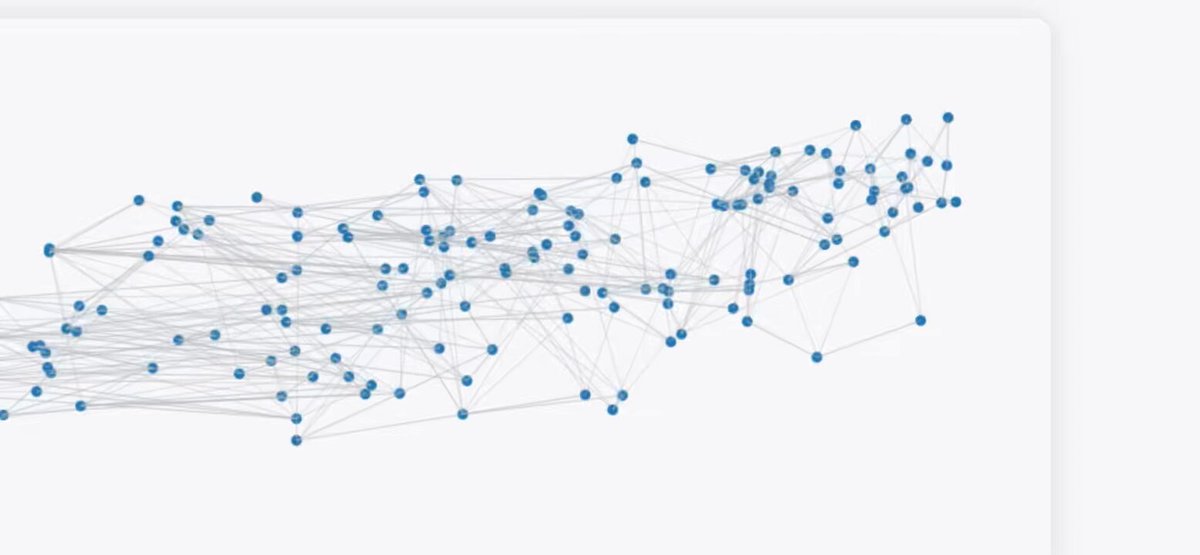
Why Kaspa doesn't throw away competing blocks A normal chain picks one block per round and discards the rest as orphans, meaning every miner who lost the race did the work for nothing. Kaspa orders every block instead, including ones mined at the same moment, through GHOSTDAG consensus. That's...

17,425 Aufrufe • vor 17 Tagen •via X (Twitter)

0 Kommentare

Keine Kommentare verfügbar

Kommentare vom Original-Post werden hier angezeigt

Ähnliche Videos

What do $Kaspa and $Apple have in common? Apple wasn’t the first mover in the mobile phone business: Sony, Motorola, Nokia, and others were FAR ahead of them! Yet today, Apple is the market leader (> 20% market share) What makes Apple different? They think different! They built on the shoulders of giants and simplified things in a way their competitors couldn’t. You don’t have to be the first mover! You don’t have to reinvent the wheel. You just need to streamline the solution and customer behavior to the maximum, and you’ll win! The same principle that worked for Apple will now apply to Kaspa. Just as Apple took existing technology and made it more accessible, intuitive, and user-friendly, Kaspa is poised to do the same in its own field. By refining blockchain technology: focusing on speed, scalability and simplicity. Kaspa can take the groundwork laid by earlier cryptocurrencies and elevate it, meeting user needs more effectively than its predecessors. It’s not about being the first; it’s about being the BEST at delivering what people really want. 10bps countdown: ⏳ 34 days to go till 10bps GIGA Thread & Art from KASPArt_Qubicious_Analysis 💪 --> Check him out🫡 If you understand what you're investing in, short-term price fluctuations won't matter to you: • No insiders or VCs • Fair launch • Solves the blockchain trilemma • 2nd biggest Hash rate • Proof-of-Work • Worth $2B without Binance & Coinbase • T1 listings coming soon “Learn” comes before “earn” for a reason. The L stands for losses, and most people can’t stomach enough of them to EVER win. Don't be one of them! #kas #kasarmy #ghostdag #creszendo #kaspa #10bps #smartcontracts #btc

Jens Illgner - Road To Glory Jil

33,835 Aufrufe • vor 1 Jahr

To finish the series: - Deterministic chain-seeded genetic computation. We ran a chain-seeded genetic optimiser for 32 generations and proved every single step in zero-knowledge, then folded all 32 proofs into one. The whole lineage verifies on Kaspa in a single transaction, post-quantum. You can open the tx and check it yourself. What it is: a tiny program, an evolutionary search over a 16-value genome , that mutates and selects for a lower-cost circuit design, seeded by the Kaspa chain. Over 32 generations it drove its target circuit's scored constraint count down (best target ~72 → ~50; trending down, though it's a sawtooth it rotates through three circuit types). The part that matters: every one of those 32 steps ran inside a zero-knowledge VM and was proven correct a step that didn't compute correctly simply won't verify. Then all 32 step-proofs were folded into ONE. That proof is 222 KB exactly the size of a single step, and it stays that size no matter how many generations you add. (The catch, stated plainly: folding more generations costs the prover more time; only the final proof size is constant.) Kaspa verified the entire 32-generation lineage in one transaction: 7504fa32f74aa028301290299276a707cf98ffc2766b1be0daed4c5c41883f15. Flip a single byte of the proof and the network rejects it, we tried; it's rejected. And the verification path is post-quantum: hash-based the whole way (FRI/Poseidon2 + SHA-256), no elliptic curves or pairings anywhere nothing Shor's algorithm targets.* What this is and isn't: It's a feasibility experiment on testnet. It's deterministic, chain-seeded genetic computation not AI, not intelligence. We drive each step and proved a fixed lineage we chose; it does not yet run itself on-chain (that's the next build). The core, though, is real and checkable: a program's entire computational lineage 32 generations proven correct, post-quantum, verified by Kaspa in a single shot. *STARK security rests on hash assumptions plus the Fiat-Shamir heuristic, not on any pre-quantum hardness.

Kaspa Kii

20,730 Aufrufe • vor 2 Monaten

Category Labs is proud to introduce Cadence, our multiple-concurrent-proposers (MCP) consensus protocol that matches the optimal good-case latency of single-leader consensus while supporting arbitrarily short block intervals. When combined with BTX, our design for encrypted mempools, this represents a significant step towards solving the problem of MEV at the protocol level. In nearly every blockchain today, a single party ends up in control of each block: it decides which transactions get in, and can reorder them at will. MCP is the natural fix, but most recent designs pay for it with a separate aggregation phase, adding two extra communication rounds per block. Cadence makes the proposers part of consensus itself. Its fast path finalizes in an optimal three communication rounds, even when proposers are offline. Cadence also offers speculative finality, similar to MonadBFT, after just two rounds, revertible only if a proposer provably equivocated. In a simulation using estimated network delays between Monad mainnet's 200 globally distributed validators, finalization takes 219 ms on average, speculative finality 167 ms. Cadence pushes pipelining to the extreme: each block is proposed and finalized in its own independent consensus instance, without waiting on preceding blocks. The block interval then becomes a protocol parameter that can be arbitrarily small. At our initial target of 100 ms, a transaction waits on average just 50 ms to enter a proposal, and oracle prices, liquidations, and auctions can update every 100 ms. Cadence dynamically throttles the opening of new instances to bound the number of outstanding slots even during periods of network instability. When the network is healthy (under synchrony), a transaction included by an honest proposer can be neither dropped nor deferred (short-term censorship resistance), and no proposer can see the others' proposals in time to react (hiding). We prove both, together with safety and liveness under partial synchrony at the optimal 3f+1 fault bound. The Cadence protocol is modular: each module is simple on its own, and any of them can be swapped out without touching the rest. Cadence also builds on components already being deployed: proposals are disseminated as erasure-coded chunks over Deterministic RaptorCast, now rolling out on Monad, and validators vote on proposal digests, so voting does not wait for the full data to arrive. Start with the interactive tutorial: Full paper: Joint work by Kushal Babel, Fatima Elsheimy, Lioba Heimbach, Mohammad Mussadiq Jalalzai, Tobias Klenze, Jovan Komatovic, Jason Milionis, Mike Setrin, and Victor Shoup.

Category Labs

251,169 Aufrufe • vor 1 Monat