Video wird geladen...

Video konnte nicht geladen werden

Zur Startseite

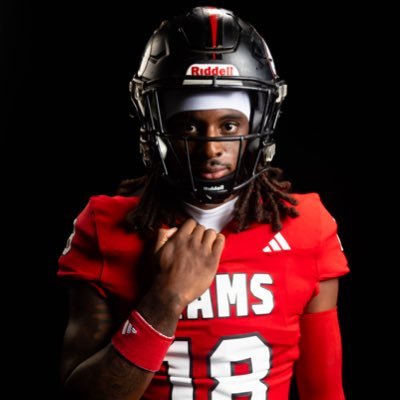
Without A Doubt I Say This Humbly , IM HIM !! Started On Both Offense And Defense In Friday Nights Big Win. 💯 4 Catches / 119 Yards / 1 TD / 0 Catches Allowed. Coach Ranier (Rack) Rackley Rolesville Rams Football Dante Jones Mike Holderman Sam Spiegelman Adam...

13,145 Aufrufe • vor 10 Monaten •via X (Twitter)

0 Kommentare

Keine Kommentare verfügbar

Kommentare vom Original-Post werden hier angezeigt

Ähnliche Videos

Eagles vs Patriots: Day 1 Win/Loss Verdict Day 1 was everything joint practices are supposed to be — intense practice with lots of competitive reps What was surprising was how the Eagles defense/secondary struggled Obviously all of these things are true: There is no hitting the QB, no game planning, etc etc. But it was a bit shocking how well the Patriots passed the ball against the Eagles. AJ Brown had 6 catches including three over 20 yards. One was a down the sideline completion for probably 30+ yards. Romeo Doubs also had a good day including a deep pass down the left sideline over Woolen, who had a rough day. Overall Drake Maye was 21/25, a sign of just how much success he had vs the Eagles defense On offense the most encouraging part was the Eagles ran the ball really well. They created some huge holes and in a real game likely had some big gains. Considering how much the running game struggled last season it was a big positive how good the running game looked vs the Patriots. The passing game wasn’t as good. They did have two big gains — one to Elijah Moore on a deep pass and one to Will Shipley on a wheel route. Outside of that, however, they didn’t get much going without Devonta Smith doing team reps. Jalen Hurts had 3 interceptions (all in 7v7), which is a very high number for him. This practice was decided at the end in the biggest reps of the day. The Patriots offense drove into Eagles territory and got a field foal. The Eagles offense had a tough time moving the ball and didn’t get a field goal. Overall this was a close practice until the end but the Patriots get the win.

Eliot Shorr-Parks

134,514 Aufrufe • vor 5 Tagen

DeMeco Ryans built an entirely new culture in Houston with one word: SWARM. But it's not just a word - it's an acronym. A simple, memorable, and a powerful way to emphasize what they're looking for. "Swarm mentality is just an acronym for I want to build my team with guys who have a special work ethic and a relentless mindset. And that's where the Swarm mentality came in." S.W.A.R.M. = Special Work Ethic And a Relentless Mindset "That's what the Texan culture will be about - swarming. It's attacking everything." But SWARM isn't just about defense. It's all-encompassing. "It involves teamwork. It involves togetherness. How you attack issues and problems - it's swarming this thing all together. How are you gonna attack a defense or offense? It's those 11 guys out there swarming together on the field." This is what culture looks like when it's built with intention: 1: Get the Right People - Culture starts with who you let in the building. Talent without character is a liability. Ryans' filter is simple: "If it's a guy and I got mixed reports on him...next." 2: Keep It Simple, Play Fast - Complexity doesn't win games. Mastery of the basics does. Your players can't play fast if they're thinking. Simplicity creates speed. 3: Coach The Details, Not The Outcome - Good players can have bad habits. Great coaches see past the result. "In big games...it's not the wow plays. It's who can be consistent, who can not screw it up the most." 4: Be Demanding Without Disrespecting - High standards don't require low respect. You can push hard without tearing down. "You can be demanding without being disrespectful." 5: Let Leaders Be Themselves - Leadership isn't one style. Quiet leaders lead by example. Loud leaders lead by voice. Both work. Ryans tells every player: "I want you to be yourself." Culture isn't a sign on the wall - it's what you emphasize, tolerate, and allow. Special Work Ethic. Relentless Mindset. That's SWARM and the Texans standard. (🎥Pat McAfee)

Coach AJ 🎯 Mental Fitness

69,617 Aufrufe • vor 7 Monaten

Brock Purdy is now the only remaining player from the 49ers' 2022 draft class. SF released Nick Zakelj to make room for center Doug Kramer Jr. before practice. Some highlights... 🏈Purdy's explosive camp continues. Deep 70-yard TDs to both De'Zhaun Stribling and Demarcus Robinson 🏈George Kittle looks to be truly ramping it up. Was moving and cutting well in what looked to be some aggressive rehab work 🏈Mike Evans and Christian Kirk both look like they might be close to returning. Shanahan essentially said Evans' absence is precautionary 🏈Brett Toth (concussion) was on an exercise bike. Might he be a dark horse to grab the LG spot? It's Robert Jones - Connor Colby there right now, but Klay Kubiak said it's "still an open competition" and, with Kramer added, the 49ers now have more center depth 🏈Safety Marques Sigle says he's gained 8-10 pounds of muscle since last season. Thinks it'll allow him to be more physical while keeping his 4.37 speed. Robinson did beat Sigle, though, on the second long Purdy TD toss 🏈Rookie Carver Willis cleared concussion protocol and was back at practice. He's getting work at both guard spots and center 🏈Big hit from Fred Warner on WR Junior Bergen — but to Bergen's credit, he held onto the football. He's been tough all camp 🏈Deebo Samuel worked a bit in the RB room today. Shifted back to the WRs to close position group drills. Caught a nice seam shot in stride and dropped an out while working against Dre Greenlaw 🏈Sigle on Greenlaw: "His energy never left. He stayed in this room even though he wasn’t here.” 🏈Looked like officials called PI against rookie CB Ephesians Prysock on a deep out from Mac Jones to Demarcus Robinson. Prysock was flagged a few times at UW last year; definitely a clean-up spot 🏈Romello Height has a tendency to jump offside in 1-on-1s. Clearly trying to buy an advantage for his lighter frame, but it'll be a mandatory part of his game to iron out 🏈Best 1-on-1 recovery rep from rookie OT Enrique Cruz Jr. so far. Ogbo Okoronkwo beat him off the snap but Cruz did well to readjust. Raw prospect, but some progress is evident 🏈Colby had really struggled in 1-on-1s as of late, but worth noting that he had a solid win today vs DT CJ West. Sweet rep ft. a spin move from Sam Okuayinonu vs Colton McKivitz, too — Colton later shut down Height 🏈CMC's absence Monday was essentially precautionary, per Kubiak. Joint practice against Saleh and the Titans tomorrow — we'll see if McCaffrey is back out there

David Lombardi

41,024 Aufrufe • vor 14 Tagen

Super Bowl MVP Why do the odds on Polymarket get it wrong, while the statistics point us to one winner? Super Bowl MVP is always 50% statistics and 50% storyline. We have 4 finalists, but in my opinion there are only two real contenders. - Sam Darnold (The Redemption Arc) He has the strongest media narrative so to speak, a shot-down pilot who returned from hell. His strengths: if he delivers a clean game (250+ yards, 2 TD, 0 INT), journalists will give him the vote simply for the beautiful comeback story. His weaknesses: under pressure in finals, Darnold is still prone to hero ball, risky throws that turn into interceptions. MVPs are not given for mistakes. - Jaxon Smith-Njigba (The Volume King) for me he is Cooper Kupp 2.0 His strengths: in games where the pass rush eats the quarterback alive, JSN becomes the life ring, 10–12 catches per game is his norm. His weaknesses: receivers become MVP only when they completely overshadow their QB. He needs 150+ yards and at least 2 touchdowns to take the statuette. - Kenneth Walker III (The Home Run Hitter) The most explosive running back in the league. His strengths: he is the only one here who can change the course of the game with one touch (70-yard TD run). His weaknesses: the modern NFL, in my opinion, is a passing league. For an RB to become MVP, he needs to gain 150+ rushing yards, which against elite defenses in the final is almost unrealistic. - Drake Maye (The Chosen One) His strengths: he plays like a veteran in the body of an athlete. His ability to extend plays with his legs (scramble) and throw into tight windows is exactly what creates TV “highlights”. His weaknesses: inexperience can lead to a slow start in the first quarter. I bet that the MVP will be taken by DRAKE MAYE Why exactly will he take the award? Three iron arguments: - Quarterback Bias The math is simple: over the last 15 years, quarterbacks have become MVP in 70% of cases. If Maye’s team wins, the award is automatically given to him. To change this, someone else needs to deliver a historic performance (hat trick), which in a final is almost unrealistic. - Clutch Factor Maye is the king of decisive moments. He showed the best numbers in the entire league in the metric “EPA per play” specifically in the 4th quarter and on third downs. And Super Bowls are won precisely under the pressure of the final minutes. - Versatility (The Dual Threat) Look at the difference in styles: •Darnold is only passing (Pocket Passer). •Walker is only running. •Maye is a dual threat. He breaks defensive schemes both with his arm and with his legs. The opponent’s defense simply physically will not be able to fully contain him. I bet here :

AdiiX

22,658 Aufrufe • vor 6 Monaten

“Jayden Daniels is CJ Strouding Caleb Williams!!!” FULL STOP. This isn’t Jayden Daniels vs Caleb Williams. It’s a battle of expectations. When you give a player Three #1 WRs, a dynamic running back, a #1 TE, a defense everyone expects to be top 10 and the Bears barely missed the playoffs last year, expectations are going to be HIGH. I tried to warn everyone of that in the offseason about Chicago. But stay with me. Now Chicago is sitting at 1-2 and some people are panicking because Caleb Williams has played like a rookie. Caleb will be fine, but the expectations are weighing on that entire team. Jayden Daniels and Washington have expectations for themselves, but no one gave them a chance to win against the Bengals except myself and true Washington Commanders fans. Everyone said Chicago was the better destination in the offseason. And when I said Washington was a better situation for a young QB because of the stability of the ownership, GM, Head Coach, OC and veteran pieces it pissed off a lot of people. “How could he say that?” “Chicago has the best personnel a rookie QB has ever had coming into the NFL.” I said it because I know first hand the importance of the environment to a young QBs success. In Chicago, there are a lot of clinched butts walking around because they know how much money they spent to improve their roster and they can’t have the same result or worse than last year. It also doesn’t help that the QB they traded away for a bag of layaway chips in Justin Fields has led the Pittsburgh Steelers to a 3-0 record. In Washington, Jayden Daniels has taken a team with no expectations to a 2-1 record with a SENSATIONAL performance in front of the entire football world. 91.3 % completion percentage, which is the HIGHEST EVER for a Rookie in NFL History. More total Touchdowns than incompletions against the Bengals. Washington sees Jayden Daniels and gets an overwhelming feeling of hope. Chicago sees Caleb Williams and gets an overwhelming feeling of panic. Not JUST because the players’ play. But because of the expectations of the team. It’s still early in the season. And a lot can change in a matter of weeks. But the expectation for both teams is still the same. Washington has a chance to beat anyone when Jayden Daniels plays dang near perfect like he did against the Bengals. No one is all of a sudden picking them to win the Super Bowl, make the playoffs or win their division. But for them that doesn’t matter. They needed to find their Franchise Qb and in 3 weeks they did just that. Chicago made the moves they did not to find their franchise QB and give him time to develop. They did it because they believed Caleb Williams is already that guy and could get them there this year better than Justin Fields could. The pressure is on just 3 weeks in. Some people picked them to win the Super Bowl. Some picked them to win their division. Most picked them to at least make the playoffs. EXPECTATIONS were and still are high for them. Caleb Williams played terrible against the Tennessee Titans and the team won the game because of special teams and defense. The Bears are ready to win now. They are just putting everything on their young QB’s arm to get it done. The Commanders can win now, but aren’t asking the World of Jayden Daniels. He is just giving it to them. Expectations shape the narrative. Don’t worry. There’s still a lot of story to tell.

Robert Griffin III

744,023 Aufrufe • vor 1 Jahr

"Tell us this isn't true." "They had a live being out [near Area 51]." "There were human experiments that went on." 👽🛸 Roswell: A Non-Human Craft or a Darker Secret? 🤫😶 (Transcript is shorter than clip. I don't have room to type more in this post so I'll just wait for replies.) ~ Lex Fridman: "In your book on 'Area 51,' you propose an explanation that I think some people have criticized, at the very end. That this might have been a disinformation campaign from, I guess, Stalin, that the Roswell incident was a remotely-piloted plane with a quote 'grotesque, child-sized aviator.' Just looking back at all that now, years later, what's the probability that it's true? What's the probability it's not?" Annie Jacobsen: (AJ): "So, you know, I've never revealed who that source is." Lex: "Yes." AJ: "You know that? Want me to tell you?" Lex: "Okay, who was the source?" AJ: "So, before I say anything on that, let me speak to the question that you asked, right? So, you asked me, 'What's the probability that that is still standing as an idea, 12, 13, 14 years later,' right? So, I continued to work with that source for years, afterwards. We talked about this. Look, I mean, his whole family knew it was him. And I knew his family because I was an integral part of, you know, I was at his house, met all his kids, grandkids." Lex: "And we should say, the source is the main expert advisor behind the story that it was. Maybe you can explain what the story is that your report in the book, that it was a disinformation campaign created by Stalin to cause mass hysteria in the United States. The very kind that we've been speaking about with the CIA and so on." AJ: "Yes! Predicated on the narrative of the 'War of the Worlds,' right? And the 'War of the Worlds,' when it was a radio program in the United States, made people go crazy. 'Oh, my God, we're being invaded by aliens!' Well, the government was always interested in the story and Joseph Stalin was, too. We know that from declassified documents, right? "And so, the source told me that the reason for this program, and that the real Roswell crash remains, were in fact, it was a black-propaganda hoax infiltrated, you know, or rather, predicated at this idea that you were gonna overwhelm America's early-warning, air-defense system, cause mayhem and maybe be able to attack the United States. That was the plan. And Stalin was also messing with the United States, messing with Truman, who sort of, you know, turned his back on him, right? At Potsdam. "And so, this idea, and the reason that the source is important... And unlike, you know, a lot of people, 'I saw this, I saw that, I learned that.' Was, according to the source, once it was determined that this was a hoax and that Stalin was able to get a craft over the United States, and it crashed. And it had, you know, people inside of it, they were people that were sort of deformed and meant...surgically altered to look like aliens. "The United States government decided that it needed to know what on earth that was all about, and if it was possible for us to have the same program. This, according to this source, right? And so, it sounds preposterous, and if it was just someone saying, 'I...,' you might say, 'Well, it's ridiculous, get them onto another subject.' But, the difference was, is this source, who was very well placed, and friends with all of the other 75 people, you know, told me this as a confession, right? A real, tearful confession, because what he said is he was involved in the American program to do the same thing. And people died, because there were human experiments that went on." "And I write about this in the last 12 pages of 'Area 51.' It was an explosive, you know, revelation, and I felt very confident in writing this because the source wanted it written. Why? Because he said, 'I'm dedicated to my country. I know about being committed to national security, and this kind of thing must never happen. And if you give people too much power, they will take advantage of it.' And he wanted it on the record. "And his wife of 60 years did not know until after the book published. Nor did His children, okay? So, after the book published, I was called to his house and sat there with his family. And they said, 'Tell us this isn't true.' And he said, 'It is true,' right? (We need a tape of this confession or...for his family to confirm they heard this from him.) AJ: "Now that source is Al O'Donnell, who is the nuclear-weapons engineer who armed, wired and fired 186 nuclear weapons, okay? So if you wanna talk about someone..." Lex: "Woooooow." AJ: "You're the first person I've told that on the record, but it's kind of about time." Lex: "Woooooow. Well, you received a lot of criticism over this story, and it confused me why, because it's...given the context of everything you've described with the CIA and other intelligence agencies, it is reasonable that such action would be taken. AJ: "And, the source is extraordinarily credible, right? If you wanted to take the position, 'Well, that person isn't very reliable,' then you have to ask yourself, 'Why did they have Top-Secret clearances that are higher than any in the United States whatsoever?' Because he was responsible for arming nuclear bombs. He was called the trigger man. "And by the way, he told me that I could tell the world who he was. There's a lot of details that are really dark, involving that program. And when is it appropriate, right? Well, it feels appropriate now. First of all, because you and I have been talking for several hours. So this is what is truly a long-form conversation and it's the outcome of, you know, a very long time of my reporting, and also being judicious about what, you know, closing the loop on that, right? Because I do think it's important for people to know that sources have revelations." Lex: "And, like you said, the programs, both on the Soviet side, and the American side, conflicting, I think's the term we used previously? Ethically, morally, on all fronts. People have done some horrible things in the name of security. In your book, 'Surprise, Kill Vanish,' you write about the CIA." ~~~ Jeremy Kenyon Lockyer Corbell: "So, today, I want to focus on a really important story that you once told me, that has never been told all the way [from the] beginning, to all the way to the end. And I just think it's just so cool we get to do this today. So, the question I want to ask is: After you got hooked on the UFO thing, with Bob Lazar, and you as a journalist said, 'I'm gonna start getting sources.' Like, 12 people coming at you, people shut down by the government. You can tell that. But you finally, finally got to a credible individual who had direct, firsthand knowledge about UFOs, exploitation, reverse engineering, and beings. And, oh my God, I want the world to hear this story. Tell us the story." George Knapp: "I've shared some of it in very broad strokes over the years- little bits and pieces of it - without ever actually referencing, in my statements, the guy the source. But this will be the first time I've told it in totality. "And it takes me back to when I first started in this. It's 1989 KLAS-TV, we put together, we spent eight months working on this project called 'UFOs: The Best Evidence.' Nine-part series. It airs on television, it's the biggest thing that's ever been produced for local TV, to this date, and still. "And, along the way, as I'm trying to find...telling the story about Bob Lazar, and his allegations about what was out there at S-4, near Area 51 - recovered discs, alien technology being reverse engineered - I'm looking for people who would support that. And I found about two dozen people, witnesses who had worked out there, who had seen bits and pieces, who could corroborate parts of what Bob had said about these kinds of craft being out there in the Nevada desert. But there wasn't anybody big picture who knew as much as Lazar claimed to have known, so I was still looking for them. "In 1990, I started working on a follow-up series to Best Evidence, looking for new witnesses. And I got a hint from an elected official that I had known, I'd covered him in Nevada politics. He says, 'You know, you should talk to my dad one of these days.' 'Your dad?' 'Yeah.' And he told me what the dad's name was and what he had done, what job he had had. And I said, 'Ah.' So I started stalking the guy. I just started showing up at events where I knew he would be. One of those events was a reunion for employees of EG&G." Corbell (JC): "So I'm assuming that this source was working within EG&G in some capacity, which is, by the way, who Bob [Lazar] said, hired him to go out to Site-4, S-4 at Area 51. So you're like, 'Okay, I can now find out if this is bullshit, or if there's an element of truth to it.' Do I have that right?" Knapp (GK): "Pretty much correct, yeah. So, I'm looking for someone whose credentials are impeccable. Unlike Bob, whose credentials were questioned, and people still attack him on where he went to school and where he worked, and was he at Los Alamos? This guy is documentable. There's a paper trail of where he worked, what he did. There's no question that he was in a position to know. He was the first general manager of EG&G in Nevada. His name was Al O'Donnell, and he has a prominent family. "When I heard that EG&G was having a reunion, I went there. We took a camera [and I figured], 'This is a great chance to get him on camera before I start asking him the questions I really want to ask.'" JC: "And when you say he is a general manager, like, does that give him certain roles and responsibilities that would give him insight? Like, he's not a secretary, so what does that mean?" GK: "He's the boss. He was the boss of the Nevada office. And I'll tell you a little bit about EG&G. So, it was a company that was created in Boston, right around the end of World War Two. Al O'Donnell had been in the Navy, serving during the war. He got out of the Navy while the war was still underway and went to work for a company called Raytheon, which became this massive, gigantic defense contractor that's still around today, still in Nevada in fact." JC: Yeah, they've got a big connection to the UFO topic, right? But, when you say Boston, like, where in Boston was it created?" GK: "Well, MIT is where the company was born. Edgerton, Germeshausen and Grier were the three guys, the EG&G in that. They were at MIT. Scientists, engineers, they created this company there. And Al O'Donnell, who had been working for Raytheon, working on the Manhattan Project. He didn't know he was working on the Manhattan Project, but they were building these devices, complex triggers, that allowed them to detonate nuclear weapons. He learned later what he was doing was part of the Manhattan Project. "He goes to MIT, starts working with EG&G. Their company in those days had, I think, 15 employees, Al said. So it was a very small startup. But it suddenly exploded because the American atomic program exploded in those years. In 1950, Harry Truman decides that we need a permanent, nuclear testing site somewhere in the continental U.S., so they looked at a bunch of places, and they settled on Nevada. "Prior to that, Al O'Donnell had been sent out to the Pacific. They had five of these massive, atomic bomb tests out in the Pacific, and they decided to move it into a continental U.S. location and Nevada's Test Site - it was called the Nevada Test Site in those days - was chosen. Al O'Donnell leads the exodus from Boston, out to Nevada. They start hiring engineers and scientists, physicists and other security, spies." JC: "What are they working on at this time when they make that move?" GK: "Atomic bombs. They're building, testing atomic bombs. EG&G was a really precise organization that was created in order to detonate, measure and photograph atomic weapons. If you look in the history of photography, you'll see some of these amazing photos that they took of, you know, water drops dropping in water and...they're pretty famous shots because of these cameras that they developed. And it was perfect for use and testing atomic weapons and documenting what the process was. "So, EG&G comes out to Las Vegas, they are the managers of the Nevada Test Site. They, subsequently, years later, become the managers of Area 51 when it opens in 1955. So Al O'Donnell is the top guy. He oversees the nuclear testing program out there, manages it for EG&G, works with the Atomic Energy Commission. He has a Top-Secret security clearance and he can go anywhere and see anything. There's, basically, no restrictions, nothing that is outside of his ability to find out and see." JC: "So, this is an impeccable resume. This is somebody who was in position to know, and would know if someone like Bob Lazar was telling the truth or not telling the truth. I find it, personally, humorous that EG&G was, its genesis, its seed, came from MIT, right?" GK: "So, late 1990 or early 1991, I'd have to look up the dates. But somewhere in there is this event, this EG&G reunion. I go there, we got a camera, I interview Al O'Donnell, introduce myself, and say, 'Hey, I'm really interested in this, can we continue this conversation?' So he invites me to his home. He says, 'Come on over, we'll arrange to come over on a Saturday or something. We'll sit down, I'll go through my scrapbooks and show you some documents and memorabilia and photos from that era.' I was like, 'Great.' "So I go to his house and meet this wife. And we sit down, he opens up these big scrapbooks, and he starts showing me all the stuff that he had done. Photos that had been taken out in the proximity of these gigantic nuclear tests. They had great stories about the camaraderie that developed among the engineers and scientists. And he's going through all this stuff and showing me all this. And I love it, I loved every bit of it. I've never had a bad day at the Nevada Test Site, by the way. Every time I've gone out there to do a story, it's just a terrific way to spend some time." JC: "Secrets should be kept, secrets are kept, and you are a proponent of keeping secrets when it's that kind of thing." GK: "Sure, absolutely. And I respected the boundaries that they set up for us in doing these kinds of stories. So I did go out to the Nevada Test Site a lot over the next 40 years or so and put together a lot of different stories. And they knew of my interest in that area that's just outside what the Nevada Test Site, a place called Area 51. In 1955, Area 51 was, basically, created and EG&G got the contract to manage Area 51, and had kept it for the next 30, 35 years. So, whatever went on out there, they had an inside knowledge of what was going on." JC: "So, you meet this guy, Al O'Donnell, for the first time when he's at this public thing. You probably say something like, 'Your son told me to talk to you,' or something. Whatever. It ends up, he invites you to his home, and you're going through scrapbooks, and he's showing you all this atomic testing stuff that he was involved in. GK: "Yeah, and I'm telling him, 'Boy, this is really interesting. That's fascinating. I'd love to do a story on it.' And after we're there for maybe two hours, he closes this one big scrapbook and he goes, 'You're not here to talk about this, are ya?' I said, 'Well, not exactly.' He says, 'I know what you're here to talk about. I know what you want to ask about.' And right about that point, his wife walks in and she says, 'Don't start telling them that stuff! Don't even tell him!' And he kind of joked about it.' JC: "What were you there to talk about?" GK: "UFOs, UFOs. Area 51, Bob Lazar, crashed saucers, reverse engineering, to see if he had any knowledge of that, because I'd been led to believe that he did. So he closes that book and he says, 'We'll have we'll get together another time and we'll talk about it in private.' And over the course of the next two years or so, he and I would meet at coffee shops and talk about it. And I would ask him questions, and really, it was like pulling teeth. He wanted to tell me stuff but he made me work at it." (AJ says his family was there for the confession. Knapp has over two years of meetings with him. A bit confusing.) GK: "And the condition was, I couldn't take any notes. I couldn't record it, I couldn't take any notes. So each time I'd meet with him, I'd rush back to my car and start scribbling notes on pieces of paper so I'd remember everything that he said. And the story that he told me, that evolved over those couple of years was pretty fantastic. "He said that they did have a flying saucer that had been recovered from New Mexico. I think he indicated that it had been taken from New Mexico to Wright Patterson Air Force Base, which is... He never said Roswell, but I think it was the Roswell incident is what he [was] talking about. And it confirmed some of the details about what we know, likely, happened with the Roswell craft." JC: "When he's telling you, 'We have recovered a craft,' did he say it like, this is secret, don't tell anybody?" GK: "Yeah, it was just for my knowledge, my background and information. It wasn't a story I could do then. We were negotiating about how, or when, or if I could ever use that information or make it public. He told me the details about this craft. He said that it had been stored at Indian Springs. Indian Springs is an Air Force Base that's been there for a long time. It's now called Creech. Indian Springs existed before Area 51 was made. "But he says it was there, they kept it there. It might have been in an underground facility, I'm not quite sure. But then when Area 51, after it opened in 1955, they moved it to an adjacent facility. He didn't say it was S-4, he didn't say it was Papoose, but I think that's what he's talking about. Papoose Lake is where Bob Lazar said he worked, and where they had built nine hangars underground, disguised to look like the desert, and where they had other recovered craft. "He says they worked on this recovered craft, reverse engineering, trying to figure out how it worked, who built it. Whether or not they could duplicate the technology because, apparently, they thought this was pretty advanced, and they'd like to be able to build more of 'em. "And he says it was a very closed program, very small. It was only, I think, five of them that were aware of it, at least in the early stages, that were working on this project. And it was very hush hush, and they didn't share it with anybody else in the company, or anybody else in the area, or the military. They just kept it to themselves. "So, after we're having these meetings - and I go back and write down all these notes and stuff, details about what he had shared with me - we have another meeting at a coffee shop, and I said, 'Well gosh, you know, aren't you worried that it would get out, that the word would get out?' "And he says to me, 'We were worried It would get out?' That's right. 'I mean, what...it? What do you mean, it?' It. Meaning a live being, they had a live being out there. I go, 'You had a live being, an alien as well?' [O'Donnell said], 'Tell you the truth, we didn't know what it was.' I said, 'You know, maybe it came from millions of miles away, out in space, and you're keeping it in a cage near Area 51?' He said, 'To tell you the truth, we couldn't communicate with it in the beginning. We didn't know what it was, we didn't know where it was from, and we didn't know what to do with it.'" JC: "When Al O'Donnell says to you, 'We had a live alien, a being,' obviously from another world, what was your feeling?" GK: "Well, I was overwhelmed, because it was, in effect, confirmation of things that I had come to believe, because of the reporting we'd already done. And then the evidence of cover ups and lies that had been told to the public. Here's this guy in a high position, with a high security clearance, telling me that it was true. That they really did have a craft and they had a being. "My second feeling was, one of overwhelming sadness for the being, whatever it was, you know, that was kept out there. I asked him, you know, what had happened to it, what became of it? He says, 'I don't know. I don't know whatever happened to it.' But it was out there for a while, alive, and eventually they figured out a way to communicate with it. "And so I asked him, 'Well, what did it look like?' And he made me guess, as he did with all these questions. He made me guess. He said, 'Well, it kinda looks like a certain political candidate.' I said, 'Well, who? A political candidate? Who?' And at the time, Ross Perot was running for president. He said, 'It looks like Ross Perot. A little skinny guy with a big ears and tiny head.' Not a classic Gray-looking alien, but a very odd-looking creature with really big ears, that looked like Ross Perot. And I laughed. "And so we had these conversations for a while, and I was blown away by the information that he shared. I took all these notes. I was hoping that someday, I might be able to get the information out. And I asked him, 'Look, you're getting up there in age. If I can't record something with you, could you record a statement to the effect of telling me the story on camera, and then when you pass on, I can have the tape?' And he said, 'Yeah,' he would do it." JC: "You know, look, I've heard a lot of wild stories that I can't verify. A guy's telling you something, and you get a sense as a journalist, when you go down a road with somebody, and you take your time and you vet it... Did you feel...I mean, is there any world where he's trying to f*ck with ya? Or is there a world where he's trying to, you know, dissuade...kind of put crazy information into your brain? Like, how did you feel when he was telling you this? Was he like, straight with you?" GK: "Yeah, he was very straightforward. And again, this was not information he was giving up, willingly. I mean, I had to really dig and coax and arm twist to get him to cough things up. And it was very slow-going over about a two-year period, maybe a little bit longer. And I know that this...you always have to be wary of people with different agendas and people that just make stuff up. I didn't get that sense from him because of his standing in the community. He had shared this story with members of his own family." JC: "And that's why they came to you, is because they kind of [gave] you a tip. And these members of his family, they're serious people, too." GK: "Yeah. One of his sons is an FBI agent, or was, he's passed on now. One was an elected official in Nevada. That was the one that gave me the tip." JC: So, I just want to nail this [down] so I understand. You were approached because he had shared this with his family, privately, and then you had to kind of coax to get through to him about the story?" GK: "Right." JC: "I think that's important because look, these things don't happen, like, people [don't] just come to us and say, you know, crazy stuff, and we're like, 'Hh, yeah, cool. Sounds good.' Like, the dynamic of that, socially, as a journalist, like getting in there, taking time. You know, we have to verify if what he said is true, and there are some major bombs coming about that. But it's like, that process is so important. "So here you are, you're sitting with him, he tells you now, they have a live alien. And you felt sad because you're an animal-rights activist, you love animals. I know with your cats at home and you've done horse stories and all the stories about like, the inhumane stuff to animals. So it made you personally sad, makes me sad, too now thinking about it." GK: Yeah. Well, we had these series of meetings, and then the last time we met, after he'd agreed to go ahead and record a tape - and give it to me after making an arrangement so I got it after he passed on - he said that he had been told to not talk to me anymore. He said he had been given a warning [and] it was not a good idea for him to talk to me any more about anything. Not just that topic, but anything." JC: "Well, who knows that you're talking? Who would warn him?" GK: "I don't know. I don't know. But you recall, back in those days, there was surveillance. We had our phones tapped at KLAS-TV. There were guys following us around. Me, Bob Lazar, Gene Huff, maybe Robert Bigelow." JC: "People were also coming to your news station, OSI. And they would come in and try to like, get to you and then they'd show you their card...and take it back. And you know your phones are tapped. So it's like, because of this story, all of a sudden you're on high alert. So, anybody could have called him, been watching you, had meetings with the guy. So what you're saying is one day he just said, 'I can't...I'm not allowed to talk to you any more.'" GK: "Yeah, I've been told not to talk to you anymore. I've been told not to."

Joe Murgia

53,116 Aufrufe • vor 1 Monat

Ten Takeaways From 10/21/25 ONE) NBA on NBC Hello, friends. Welcome to the 2025-26 NBA season. It’s been a minute, hasn’t it? A whole lot has changed since we last spoke. We were reintroduced to the NBA on NBC. Can’t believe it’s been almost 25 years, but here we are again. They absolutely crushed it after having some early audio difficulties. I get how cliché it is, but I seriously got chills once “Roundball Rock” started playing. Thought Carmelo Anthony, Vince Carter, and Tracy McGrady had contagious energy in the pre-game coverage. The graphics are clean and straightforward. Really like the team fouls tracking in the score bug—just a very pleasant experience. Looking forward to the “Prime” experience. God, can’t believe it costs $650 to watch basketball now. We need to talk about the MJ segment, though. If you’ve been living under a rock, NBC shocked the world and somehow convinced Michael Jordan to sign on as a “special contributor”. “Insights to Excellence” is sadly everything I thought it would be… nothing. He wasn’t in the studio or anything. Looked like some pre-recorded interview with Mike Tirico from who knows when at his house, talking about why he’s come out of hiding. The thing lasted about three and a half minutes. “To pay it forward. I had the obligation to basketball.” - MJ on the decision to join NBC Okay Mike. Hoping for some actual insight in future recordings. TWO) Champs Are Here OKC received their rings and raised their banner before the game. Vibes were immaculate. Dillon Jones was even in attendance. Good thing the Wizards waived him just in time for him to make his flight. Rockets weren’t having it, though. Ime Udoka said that they didn’t watch the ceremony and were instead focused on trying to ruin their night. Kevin Durant came out for warmups to loud boos, and so he booed them back. Everyone laughed. Meanwhile, Steven Adams still gets loud cheers because, well, who doesn’t love Steven Adams? It was a rough go-around for all Thunder not named Chet Holmgren (28 points, 11-17 FG) to start, especially SGA. He had just five points at the half on 40.0% shooting (2-5 FG), but you can only contain the league and Finals MVP for so long. He scored 24 of his 35 points in the 4th quarter and overtimes. What’s up with the four missed free throws (10-14 FT)? "I'm glad the guys enjoyed the ceremony. That's a great, great life event they had." - Mark Daigneault "It was surreal. I don't know how to describe it besides that. Seeing the banner raised was cool too... I'll remember it for the rest of my life." - SGA on the pregame ceremony THREE) Thunder Starters One of the more critical questions going into Opening Night was, “Who’s the 5th Thunder starter?” as we wait for JDub’s wrist to get right. SGA, Dort, Chet, and IHart felt obvious. Between Alex Caruso, Aaron Wiggins, and Cason Wallace, I leaned Cason mainly because of the bigger picture. Didn’t make sense to start Alex after managing him all last year, but then he started in every preseason game he played. Had to give that some sort of credit (and we did). Well, they ended up doing what they did a lot last year: change it up midway. Wallace started, and then Caruso started the second half… for Hartenstein. Here we go again. Cason’s playmaking looks improved. Daigneault went 11 deep (!!!) in the first quarter. Rookie, Brooks Barnhizer was the fourth sub off the bench, played about two minutes, and was never seen again. Part of that reason is Ajay Mitchell, who checked in after him (for Shai). There’s been some buzz, going back to his standout Summer League (19.8 ppg, 5.3 apg, 4.8 rpg, 1.5 spg). He scored 12 of his 16 points in the second quarter. “Not surprised. He was playing like this before he got hurt last year.” - Mark Daigneault on Ajay Mitchell FOUR) Jumbo Lineup It’s not much of a surprise to see Udoka start with the Steven Adams/Alperen Sengun pairing after how dominant they looked at the end of last season (+29.9 net rating, 162 minutes)—especially given the matchup, with Holmgren and Hartenstein on the other side. The real shocker is how much they leaned into it. Alpi and Adams shared the court for over 30 minutes (+8). LIKE WTF?!!! This was Adams' first time touching 37 minutes since November 9, 2022. They did just sign him to a three-year extension. You’d think they might wanna be careful with their investment. The average height of this Rockets' starting lineup is 6'10 (Thompson, Durant, Smith, Sengun, Adams), LMAO FIVE) Alpi Dominance Continues Maybe what Sengun was doing at EuroBasket 2025 (21.6 ppg, 10.1 rpg, 6.6 apg, 1.0 spg, and 1.1 bpg) translates over? Not gonna lie, I certainly had my doubts, but no… he’s looking just as dominant (I know, one game). Alperen Sengun vs Thunder: 39 PTS 11 REB 7 AST 2 STL 5-8 3P (career-high) 10-11 FT 27.7% USG Yeah, I see it too. Second time in his career, he’s attempted eight threes. Dude averaged 1.2 attempts per game last year. The hitch in his shot appears to be gone, so hey, this could be real (doubt it). All I know is that if it is, it’ll do wonders for his ceiling on sites that reward threes (DK). Also, going 10 of 11 from the line is something worth paying attention to. He was a 69.2% free-throw shooter last season. On the flip side, Amen Thompson (18 pts, 4 reb, 5 ast) had seven attempts from behind the arc and missed them all. Sucks, but his shot still looks flat. There’s no lift. While we’re here on Thompson, he had to leave the game late because of cramps. SIX) The Reed Conundrum I’ll give Reed Sheppard (9 pts, 4 ast, 37.9% TS, 28 min) this; he’s a confident motherfucker, and I love that about him (in a cute way). It’s hilarious how many times he looked off KD in this game. He’s gonna have stretches where he’s feeling it and looks automatic, but is it really gonna be worth it if his defense looks this dreadful? He can’t stay in front of anyone. The Thunder hunted and won that matchup with ease all night. Amen getting cramped up in OT1 really salvaged his minutes, cause I didn’t think he was gonna see the court again. Again, I know it’s only one game, but a couple more performances like this and things could get ugly. SEVEN) KD Gets Away With One Or should that say gets away with none? Kevin Durant (23 points, 9 rebounds) made his Rockets debut, and there’re gonna be two things you take away from it. Why’d you trade for him again? He was pretty much non-existent when they needed him most down the stretch, with a 12.5 USG% in both OT’s. There shouldn’t have been a second overtime. KD was clearly seen calling for a timeout after a rebound with about a second left on the clock. The problem is, they didn’t have any–He Webber’d it. He should have been T’d up, giving the Thunder a free throw to potentially end the game. Zarba and his buddies even got together to talk it over once the buzzer sounded, but did nothing. Strange, but luckily, it didn’t end up mattering much since OKC won in the second overtime. “Kevin definitely called timeout 3 times… They just missed it.” - SGA The Thunder beat the Rockets 125-124. EIGHT) Kuminga Starts Gallagher and I both felt pretty confident (sounds so stupid saying that with Kerr) that had Mosey Moody been available for this one, he would have been named the fifth starter, but his calf’s still bothering him. Steve Kerr decided to start Jonathan Kuminga (17 points, 9 rebounds, 6 assists, 33 minutes) instead, rewarding him for a strong preseason. There might be some more rewards coming because, whew, this is exactly what they’ve been wanting to see from him for the last couple of years, especially the boards. You wouldn’t know it from looking at Luka’s box score, but JK did about as well as you could defending him; he made his threes (4-6 3PT) and consistently found the open man. I’m gonna go ahead and guess that he starts again against Denver on Thursday Let the showcasing begin. “When you ask for opportunity, you must deliver. He’s been very vocal about his opportunity and he delivered.” - Draymond Green on Jonathan Kuminga “I just wanna help JK be great… We’ve been kickin' it. Hanging out. Watching film and just working on our game together. I know how great he wants to be and how great he can be.” - Jimmy Butler on mentoring Jonathan Kuminga NINE) Jimmy Being Jimmy One of the funnier moments of the night came post-game, when Jimmy Butler talked about a bet he made with Draymond Green. The wager is that he’ll have a better free-throw percentage than Steph Curry this season. Deadass, hahaha. He admitted that it’s probably a bad bet but I still love that he does this type of shit. Two years ago, he said he was playfully aiming to shoot 50.0% from three. He obviously didn’t hit that mark, but he did shoot a career-best 41.4% that season. If you’re wondering how the bet is looking to start after Game 1: Jimmy Butler: 16-16 FT (100.0%) Steph Curry: 8-8 FT (100.0%) Will keep you updated as the season goes. Jesus, 16 free throw attempts. “No chance.” - Steph Curry when asked if Jimmy Butler has any shot at winning the bet Before we’re done with GS, a shoutout to Will Richard (5 points, 14 minutes). We tease Kerr all the time about playing these randos, but this kid looks like he can actually play. TEN) All Luka and Austin The Lakers are gonna struggle hard while LeBron’s out. They just don’t have any other guys on the team that can create. Luka Doncic (43 points, 10 rebounds, 9 assists, 34.7% USG) and Austin Reaves (26 points, 9 assists, 30.1% USG) scored or assisted on 97 of the Lakers' 109 points. So wild. Marcus Smart (9 points) was the first sub off the bench. As for DeAndre Ayton’s debut (10 points, 6 rebounds, 4 turnovers), let’s just say it didn’t take long for the Lakers’ fan base to turn on him. Poor guy looked lost out there. "We just started. This is probably the second game we've played together." - Rui Hachimura on what the difference was for the Lakers "The trend I see is that we continue to be a terrible third-quarter team." - JJ Redick The Warriors beat the Lakers 119-109.

Establish The Run NBA

15,288 Aufrufe • vor 10 Monaten

"I may be wrong about Elizondo...but I think that the rush to condemn him strikes me as premature [and], potentially, damaging to the community and to the disclosure effort." ~Dolan (This is WAY too long, and I probably should have spent my time on something else. But here it is. The video clips give you a taste of Richard Dolan's excellent 31-minute video.) "The theory that's been put out (by Gerb) contains, at least in my view, substantial problems of evidence, of chronology, and, at times, I just have to say, basic logic." ~Dolan "I am suggesting that Elizondo probably helped to create the opening that allowed Grusch to go even further." ~Dolan ~~~ Gerb in March: "When did Lue Elizondo start talking about crash retrievals? That was after David Grusch went public. You will not find him speaking about it beforehand." (As I've shown before, that's just not true. Did Gerb not do his research on that? I'll share A LOT of quotes from this Richard Dolan (Richard Dolan Intelligent Disclosure) podcast, and from my previous posts detailing the various times Lue has addressed crash retrievals. Plus, my take on various points. Dolan starts out by praising Gerb's research. I agree. Then he moves on to the Lue-was-brought-in-by Clapper claim.) Dolan: "The theory that's been put out (by Gerb) contains, at least in my view, substantial problems of evidence, of chronology, and, at times, I just have to say, basic logic." Dolan: Gerb claims Elizondo had to adapt his public position on crash retrievals because Grusch coming forward changed the game. "Gerb called this, adapt or die. "I think I understand what [Gerb] means by the controlled narrative and what it was intended to reveal and what it was supposed to hide (crash retrievals). What I still do NOT understand is why anyone protecting a retrieval program would initiate this type of a strategy." Dolan: Before 2017, one of the most significant protections for any alleged Legacy program was ridicule, silence and ignoring. "As long as UFOs remained culturally disreputable, any claims of crash retrievals were easily just brushed aside without any bother to investigate. That didn't change until December of 2017," and the two NYT articles. "That kickstarted a major, mainstream, national-security discussion. "So, if this was a controlled-disclosure program, my question simply is: You get the government, eventually admitting, that non-human intelligence seem to be operating advanced craft here, who could not know that the next questions would be inevitable? Like, have any of these crashed? Were any of these recovered? Where did the material go? Who's been studying it? In other words, this would, obviously, increase pressure on the retrieval secret. It would not protect it in any logical way. The most safest option would have to be continued silence. "Maybe this strategy could become plausible if insiders believed that something was about to emerge beyond their control, right? Some kind of trigger. Maybe there would be an imminent whistleblower that we do not know about 'til this day, that they were afraid of and they wanted to get out ahead of the narrative. Or some kind of foreign disclosure. Some other reason, some other cause that would prompt the secret keepers to think, 'Okay, we need to get out a controlled disclosure.' But, there really is no evidence that's presented, in any of Gerb's analysis, for such a triggering event. Why would the custodians of this secret, voluntarily, weaken the whole system that had protected them for decades and decades?" (Agree. I've had this convo with friends over the years about the theory that TTSA was created to get ahead of a disclosure effort that was coming from someone/somewhere else. But it never made sense because we could never find anything (disclosure-wise) that was happening before 2017 that would force the hand of the gatekeepers into starting some type of controlled disclosure such as what TTSA was allegedly doing. Except maybe... Dolan talks about how, when Hillary Clinton was running for President in 2015 and 2016, she mentioned UFOs and UAP in various interviews on the campaign trail. Dolan: That was gradually making UFOs, "slightly, and I would say, very slightly, becoming more acceptable to discuss." Plus, John Podesta (her campaign manager) was pushing for declassification of UFO files. "There were people at that time who really did believe that Hillary Clinton would become the Disclosure president." (I wanted to vote 3rd party in 2016 and didn't want to vote for Hillary, but did so, in part, in the hopes (slim hopes) that she would engage in some sort of disclosure, if she won.) Dolan: "I've always interpreted [Hillary talking UFOs during her campaign] as a much more, just pragmatic, you could almost say, cynical, if you want, treatment of the [UFO] subject, just to win some votes. The most that she ever said as a candidate, I think was, she would try to get to the bottom of this, whatever that means." (Well, she said more than that... ⬇️⬇️⬇️ “I think we may have been (visited already). We don’t know for sure.” ~Hillary Clinton That was covered in the NYT in 2015 My full post on that Hillary quote is here. ⬇️⬇️⬇️ And let's not forget the photo of Hillary from August 1995 where she's with Laurance Rockefeller on his ranch and holding Paul Davies' book, "Are We Alone? Philosophical Implications of the Discovery of Extraterrestrial Life." She and President Clinton have an interest in this subject.) ~~~ Dolan: "I just think that the leap from a political opportunity - talking about UFOs during the campaign - to a kind of, James Clapper-managed disclosure operation? I just don't think that's been demonstrated and I don't find it very persuasive." ~~~ Dolan then gets back to this claim by Gerb... Gerb in March: "When did Lue Elizondo start talking about crash retrievals? That was after David Grusch went public (in 2023). You will not find him speaking about it beforehand." Dolan: Gerb said that, "Elizondo, essentially, avoided discussing crash retrievals, except for Roswell, And that is just not accurate." (The Lue-avoided-crash-retrievals-until-Grusch quote from Gerb in March didn't include an exception about Roswell so maybe Gerb saw my posts on that and updated his claim? But it's still wrong. Dolan brought up Lue's comments on Tucker Carlson in May of 2019, but no other comments from Lue. I covered that and much more in various posts, which I'll share here.) Did Lue Avoid Talking About Crash Retrievals Before Grusch Went Public in 2023? From the 12/16/17 NYT article that started it all. "Under Mr. Bigelow’s direction, [BAASS] modified buildings in Las Vegas for the storage of metal alloys and other materials that Mr. Elizondo and program contractors said had been recovered from unidentified aerial phenomena." (Not a direct quote, and not exactly "crash retrievals of vehicles" but the seed had been planted in that first article. We know now (allegedly) that at least one of those buildings was supposed to store exotic materials that Lockheed was going to divest itself from, but the CIA nixed it all. Again, allegedly.) ~May of 2019~ Tucker Carlson: "Do you believe, based on your decade of serving in the U.S. government, on this question, that the U.S. government has in its possession any material from one of these aircrafts?" Lue: "Whoa. Umm…I do, yes." Tucker Carlson: "You think the U.S. government has debris from a UFO in its possession right now?" Lue: "Unfortunately, Tucker, I really have to be careful of my NDA. I really can’t go into a lot of…more detail than that." Tucker Carlson: "Okay." (And that could have been the end of the interview. But Lue decided to add this.) Lue: "But…simply put, yes." ~ NYT article in July of 2020... "Mr. Elizondo is among a small group of former government officials and scientists with security clearances who, without presenting physical proof, say they are convinced that objects of undetermined origin have crashed on earth with materials retrieved for study." ~ "My personal belief in Roswell? 100%. But I cannot speak officially and I cannot discuss about anything else that may or may not have transcribed." ~Lue on "Disclosure Tonight in Feb. 2021 Source: ~ Lue on Clubhouse in July of 2021 Lue: "Am I aware of the notion that there was some sort of retrieval of biological samples? Yes, I am aware of that notion. Am I aware that there may have been some U.S. government involvement in that? Yes, I am aware of that as well. I am aware that people have talked about it and I have heard it as well...regarding, anecdotally, of biological recovery." Source and longer transcript... ~ Lue on Dossier X in April of 2021 Lue: "You said something...that (Roswell) was the 1st time the U.S. gov't was engaged, and I'll share with you, that may not necessarily be true. There may be anecdotal information that indicates that perhaps the U.S. government was involved even before that, in purported, recovery-type activities." Host: "You mean probably 1942, in Los Angeles or something?" Lue: "I don't wanna elaborate, yet. I think some information's gonna come to light here, probably pretty soon, about some interesting incidents. Again, it's not up to me...there are some people out there are willing to come forward, I think. I'm just providing you the information that was indicated to me. I think we need to be careful jumping to presumptions or assumptions that Roswell was the first event similar to what we're thinking about." Source: ~ "I think people would be surprised to know there's more to Roswell than I think most people are aware of. Some people are aware of it. But, you know, there's more to Roswell and there's other similar incidents that are equally compelling." ~Lue on UFO Garage in 2022 Source: ~~~ March of 2022 - My Interview with Lue Murgia: "You said you believe Roswell was real. Are you as confident in other incidents as you are with Roswell?" Lue: "Yeah." Murgia: "Yes?" Lue: "Yeah." Murgia: "Okay." Lue: "Yeah." Murgia: After you were on Tucker and said you believed the U.S. government had material and debris from a UFO, "Eric Davis came out and said, '100%!' And he said landed craft, too. Did you see that when that came out?" Lue: "I'm aware of that." Murgia: "(laughs) Okay." (Probably an inappropriate laugh by me as Lue was dead serious and probably pushing the limits of what he was allowed to say in public about crash retrievals. He later said this in his November 2024 congressional testimony.) Lue in 2024: "I signed documentation three years ago that restricts my ability to discuss, specifically, crash retrievals." (I wonder what would have happened if he had refused to sign that?) ~~~ Dolan: "Grusch definitely went further (than Lue), much further, yes. That's a lot different from claiming that Elizondo kept retrievals outside the public narrative until Grusch forced his hand. And you really have to ask, if Elizondo's job was NOT to reveal the crash retrieval program, why, in 2019 - again, four years before David Grusch, is he going on and putting it out there? It just seems like there's a chronology problem there." (1000%, Richard! Makes no sense. My June 29th post was entitled... If Elizondo Was Brought in to Control the UFO Narrative Away from Crash Retrievals, He Did a Poor Job 🛸 Nice to see Richard and I on the same page with that. Richard speculates how the disclosure effort would look like right now if Lue hadn't gone public. Would we have several UAP hearings in the books by now? Would David Grusch had come forward? No way to know.) Dolan: "But I will say, or suggest, that it's entirely reasonable to think that Elizondo helped to create the institutional and cultural conditions that made someone like David Grusch possible. Elizondo did not keep retrieval out of the discussion." (In July of 2023, I directed this tweet to Lue.) "None of this would be happening without you." ~Murgia (Over the top and a bit fan-boyish? Probably. But... Knapp talking with Senator Harry Reid about Lazar and UFOs in 1989 - in a limo headed to the airport that would later bear Reid’s name - was a vital part of getting this whole thing started. Lacatski and Stratton launching the more recent effort around 2005, which eventually led to AAWSAP, AATIP and the UAPTF, was also REALLY important. But Lue going public in 2017 was MASSIVE. The media coverage that followed brought a ton of new people into the topic, and I’m not sure where we’d be today without it. Dolan goes on to talk about Clapper and how it's conceivable he would be on top of any alleged Legacy UAP/crash retrieval program. But he failed to note what Grusch said this past January on "The Megyn Kelly Show." Grusch: "General Clapper was well aware of the crash retrieval issue, managed the crash retrieval issue, and...he placed people in critical roles to manage this issue." (Is Lue one of the people Grusch was referring to? Does he have proof of that? From my own information, I have no doubt that Clapper was instrumental in Lue being connected to the UFO topic. But exactly how that went down and what did it entail? I don't know. I hope Clapper speaks to all of this in detail one day soon.) ~ Dolan: "Gerb has stated that Clapper gave cover to AATIP and, basically, directed the National Security Council retrieval activities. And that he selected Elizondo as the front man. Gerb described Clapper as the mob boss of the NSC crash-retrieval portfolio. "Those are very, very powerful allegations. I'm not saying they're NOT true, but that interview with Ross Coulthart, I would say, did not produce anything in the way that anyone would actually call evidence. Like, there was no documents...or firsthand witnesses that were named, or anything like that. "So you have this, basically, a link from Clapper, to the NSC operation, to AATIP, to Elizondo, to controlled disclosure. This could be true, but no one's seen any receipts on this, and I would like to. "And there's more things that I think raise questions about this whole scenario, frankly. I mean, I think of the Pentagon campaign against Lue Elizondo, which lasted for many years. Any theory that has Elizondo as a controlled-disclosure frontman, I think has to account for the documented, institutional effort by the Pentagon to undermine Lue Elizondo." (When the Pentagon spokespeople said that Lue had no assigned responsibilities for AATIP, it's not so clear cut to say they were trying to undermine Lue, since AAWSAP also had the nickname of AATIP, which I'll call AATIP 1. So, if we're talking about AATIP 1 (AAWSAP), Lue did NOT have any assigned responsibilities, except early on when he did some counter-intelligence. And if we're talking AATIP 2, which Stratton said he created in 2015, Knapp explained in 2019 that it was, "not so much a program as it was a loose network of intelligence officials in different agencies." And on April 8th of this year, Lacatski told Knapp that, "they started using AATIP in 2015-16 to describe their uh...what would you describe that as, more lunchtime get togethers? And George Knapp is laughing. I don't know how else to describe it." That tells me Lacatski felt AATIP was REALLY informal, and that could explain why Lue's role wasn't clear cut in the minds of those spokespeople, and why so many of my contacts told me he wasn't the director of AATIP. But those same folks also told me Lue played in an important role in that effort. My guess is that, since AATIP was so informal, there really was NO official director, but that should be clarified when Stratton's book comes out. Semantics? Maybe.) Dolan: Gerb's hypothesis featuring, "the management of an approved public representative (Lue) of a controlled-disclosure narrative...just doesn't make sense to me. What does make sense to me is something like a factional conflict. I think [that's] much more of a logical explanation for everything that we have seen. You have one group that may have supported some kind of opening - not even necessarily a complete opening - while another fought to preserve the secrecy as much as possible. "But that's a bureaucratic struggle. That's not, necessarily, a unified, controlled-disclosure operation. So I think that is a contradiction that was not really adequately discussed in this hypothesis. "I may be wrong about Elizondo, and I'm not here, again, to be his defense attorney. But I think that the rush to condemn him strikes me as premature. It strikes me also as, potentially, damaging to the community and to the disclosure effort, frankly. We can investigate serious allegations without first assigning everyone the role of either hero or villain. "So, I guess I would say that Gerb may have genuinely identified some real relationships and hidden activity. In fact, knowing his excellent research track record, I would be surprised if he didn't. "Elizondo - probably - does have undisclosed elements in his background, and I have no doubt he knows much more than he has said. When I look at the this idea of, like. you look at TTSA coming out at the end of 2016, and you see, basically, a kind of faction that had a very managed narrative indeed. Like, they did not come out and talk about crash retrievals. They did not at all. They talked about these military encounters and sensor readings and this type of thing. And that's a lot less interesting than crash retrievals. "But I try to look at it from, let's say you're a Pentagon insider and you are trying to fight for an opening in the public conversation. You're not gonna start with crash retrievals. First of all, you may not have the receipts on them yourself, to provide to the public. And also you're gonna know, right off the bat, that that's going to be a bigger hill to climb than just trying to get Congress to look at some of the more easily-verifiable reports that you probably have available. So, you're probably going to take it in a very tactical, strategic way. "That's not the same thing as saying that they're lying. It could simply be that was a strategy that was decided upon by these insiders. It's also possible they may not have believed in an uncontrolled, catastrophic disclosure. We can disagree with them on that, or you can agree with them on that. But again, I don't know that that's the same thing as saying that they're actually being dishonest. "If the factional thesis that I believe in is correct, then you'd have to assume that these people have to have their strategies and tactics in this broader struggle. Like, it would be ridiculous not to assume that. "So, I think, you know, it's entirely possible that someone like Elizondo has elements in his background that we would want to know about that are not there. It is very intriguing, and even plausible, perhaps, that someone like Clapper belongs somewhere in this deeper history. I would like to know what that is myself, and I would like to see something, you know, in the way of what we would call genuine evidence for that. Not saying it's not there. "I'm just suggesting that the current theory on Elizondo and controlled disclosure is asking us to accept several unsupported links, and, essentially, I would say a disclosure strategy that appears self-defeating and really illogical. Again, like, why initiate a disclosure program? Especially if you go back to the beginning of the AATIP era, like 2009-ish, 2010. Where was there any perceived need that we have to do disclosure?" (Not sure why Richard is not calling the 2009-ish, 2010-era, AAWSAP. I wonder if he knows that Stratton says he created AATIP in 2015? Could be relevant to this controversy.) Dolan: "Like, I look back at the situation at that time, and again, I was very, very on top of the scene at that time during those years, and I just was not aware of any public pressure, whatsoever, that would cause someone to say, 'We have to initiate a controlled disclosure of this, in order to protect crash retrievals.' "There's no logic there, it seems to me. It's, in fact, the exact opposite. "Also, the the current hypothesis, I think, really understates Elizondo's 2019 acknowledgement of recovered UFO material. That really has got to be understood. And it leaves the whole Pentagon campaign against Elizondo, in my view, anyway, largely unresolved and unexplained, and really not making sense. "And, I would just add, now that I'm thinking of it, this current hypothesis about Lue Elizondo, I think, actually reverses the the genuine historical sequence. In other words, I am suggesting that Elizondo probably helped to create the opening that allowed Grusch to go even further. "So, these are just logical questions that I have. You may have different questions. You may have rebuttals to what I have to say here. By all means, put them in a comment, I will read them. And again, I'm not here to defend Lue Elizondo, I am just questioning an account that does not yet, in my view, explain its own logic, or match the full chronology. "It is entirely possible that some of this story is well-known to researchers, including Gerb. I think, however, what has been presented so far does not show how all the pieces actually fit together, and I would like to see that. "And again, I say this with total respect to UAP Gerb and to Ross Coulthart, and in fairness to Lue Elizondo, who I think, if nothing else, this aspect of the history really needs to be understood by the broader community. So that is my statement. "And that doesn't mean that I'm right here, but I do think from time-to-time, it's okay to take a stand on a topic where I can see many people are going to disagree with this, but certain things I think need to be understood on this, and I hope that we can have a reasoned dialogue and discussion about this as we move forward with it, because it is a topic that we do need to understand. "My hypothesis has, pretty much, from the beginning, always been that what we are seeing and what we have been seeing since 2017 is, essentially, the result of a factional battle." (I believe Lue spoke about factions early on when he first went public.) "You go back through the history of this phenomenon, and if you read the old books going back to the 1950s, you see it then, too. You see that there were always factions within the Pentagon who did actually support some level of openness on the UFO subject. "You read the books of Donald Keyhoe, read the book by Edward Ruppelt from 1956: 'Report on Unidentified Flying Objects.' A lot of this is in there. And I think that's really never gone away. And so to somehow assume that there are no more factions in a massive labyrinthian structure as large as the U.S. military industrial complex, I think that's kind of ridiculous. There's always going to be factions. And I think that what we are seeing has always struck me as the result of a factional war that is taking place. "And that doesn't mean, by the way, that, you know, the two sides are just white hats and black hats. Everyone's got their own angle, everyone's got their own motivations. But I, nevertheless, tend to think that that is what we are looking at."

Joe Murgia

23,884 Aufrufe • vor 20 Tagen