Video yükleniyor...

Video Yüklenemedi

Ana Sayfaya Dön

Working on Zero 2.0 prototype - 30% better FoV utilizing larger combiners - Camera for hand tracking, SLAM, and AI recognition - Dual batteries for 2h runtime - Better optical clarity with new projector lens - Microphone - Tinted glass outside lens + bonus subway clip from V1.2

13,035 görüntüleme • 1 yıl önce •via X (Twitter)

10 Yorum

jess ᯅ profil fotoğrafı
jess ᯅ1 yıl önce

love AR glasses that lean into the futurist aesthetic - excited about the progress!

AckerDev 🇷🇪 profil fotoğrafı
AckerDev 🇷🇪1 yıl önce

Already said, but your work is awesome 🙏

Miroslav Kotalík profil fotoğrafı
Miroslav Kotalík1 yıl önce

Thank you. It really means a lot. Every such interaction helps the project!

AltVRat VRC: R¥uS4a profil fotoğrafı
AltVRat VRC: R¥uS4a1 yıl önce

Consider a red tinted (blue blocking) but not UV prescription option please for inside use.

Sky' profil fotoğrafı
Sky'1 yıl önce

THE NUMBERS MASON ! WHAT DO THEY MEAN?!

lktl. profil fotoğrafı
lktl.1 yıl önce

It's incredible. Would it be possible to add a recording function through software, so you could record the 'screen,' so to speak? That way, whenever you want to show progress, it would be more perceptible. Or would it require an increase in size?

Miroslav Kotalík profil fotoğrafı
Miroslav Kotalík1 yıl önce

Yes, it's very important to help show others what I see. I'm waiting to implement the camera first, then I will mix the camera feed with the rendering to show what I see through software recording.

Misanthopia profil fotoğrafı
Misanthopia1 yıl önce

Transparent optics ew nvm

Roushan⚡ profil fotoğrafı
Roushan⚡1 yıl önce

Keep doing the hard work! Next wave if going to be of XR's 💯

ぽいロード@音技術者 profil fotoğrafı
ぽいロード@音技術者1 yıl önce

Improvement plan: Attach a chip and a battery to your upper arm and leave everything to that part. The weight is much lighter, and the 10,000mAh battery runs for more than 14 hours🦾😎🦾

Benzer Videolar

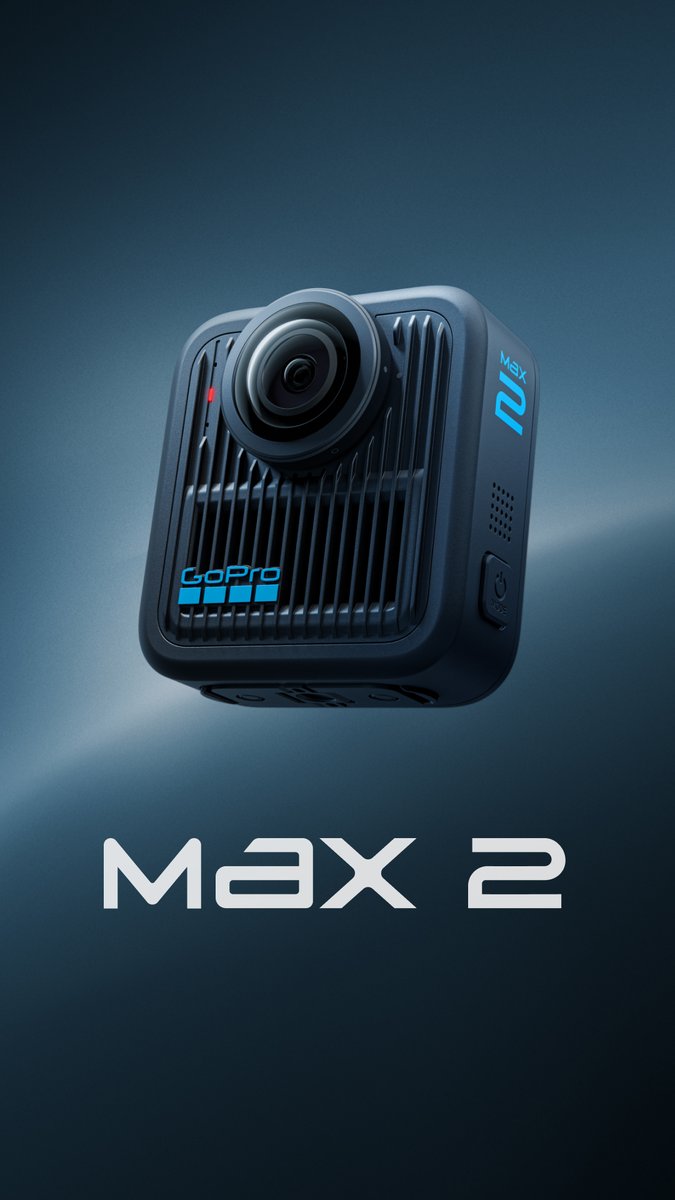
#GoProMAX2 is here 🚨 Industry-leading, true 8K 360 video delivers 21% more resolution than the competition, resulting in unmatched image quality that you only get from #GoPro. ✔️ Emmy® Award-Winning 360 technology ✔️ The only true 8K 360 camera. No misleading upscaling, no unusable black pixels, no AI-generated content ✔️ Twist + go replaceable lenses made from water-repelling optical glass. No tools or calibration required to swap ✔️ 5.6K60 + 4K100 for up to 4x slo-mo in 360 ✔️ 10-Bit color, GP-Log encoding, + with GoPro Labs, category-leading 300mbps bitrate ✔️ Seamless, invisible pole shots thanks to a new, back-to-back lens design + built-in 1/4-20 mount ✔️ Easy AI-powered editing tools with intuitive Reframe modes that anyone can use ✔️ Automatic POV + Selfie modes for minimal editing, while retaining full 360 flexibility ✔️ Most-in-class 6 microphones that unlock true-to-life spatial audio with innovative Audio Field of View ✔️ 23% larger, 1960mAh cold-weather Enduro battery ✔️ 360 Night Effects for creative capture in the dark ✔️ Sleek form factor for noninvasive mounting in action sports ✔️ Unbreakable Max #HyperSmooth with 360° Horizon Lock ✔️ Rugged + waterproof to 16ft (5m) ✔️ Quick-release magnetic mounting + compatibility with GoPro's entire accessory ecosystem ✔️ Single lens 4K60 video in Max HyperView at 180° FOV ✔️ 29MP 360 photos for cropping + zooming without quality loss ✔️ Bluetooth® audio connectivity for wireless microphones ✔️ Lightning-fast transfer speeds to the GoPro Quik App with Wifi 6 + BLE 5.3 🇺🇸 Designed in the USA Enhanced by a GoPro Subscription: ✔️ AI-edited highlight videos automatically sent to your phone ✔️ Unlimited cloud storage at 100% quality ✔️ No-questions-asked camera replacement 📦 Pre-order today, with free shipping and a free 1-year GoPro Subscription at Orders will ship on or before September 30th. *MAX2 delivers up to 21% more video resolution compared to competitive 360 cameras’ native maximum video resolution before they up-scale.

GoPro

139,251 görüntüleme • 10 ay önce

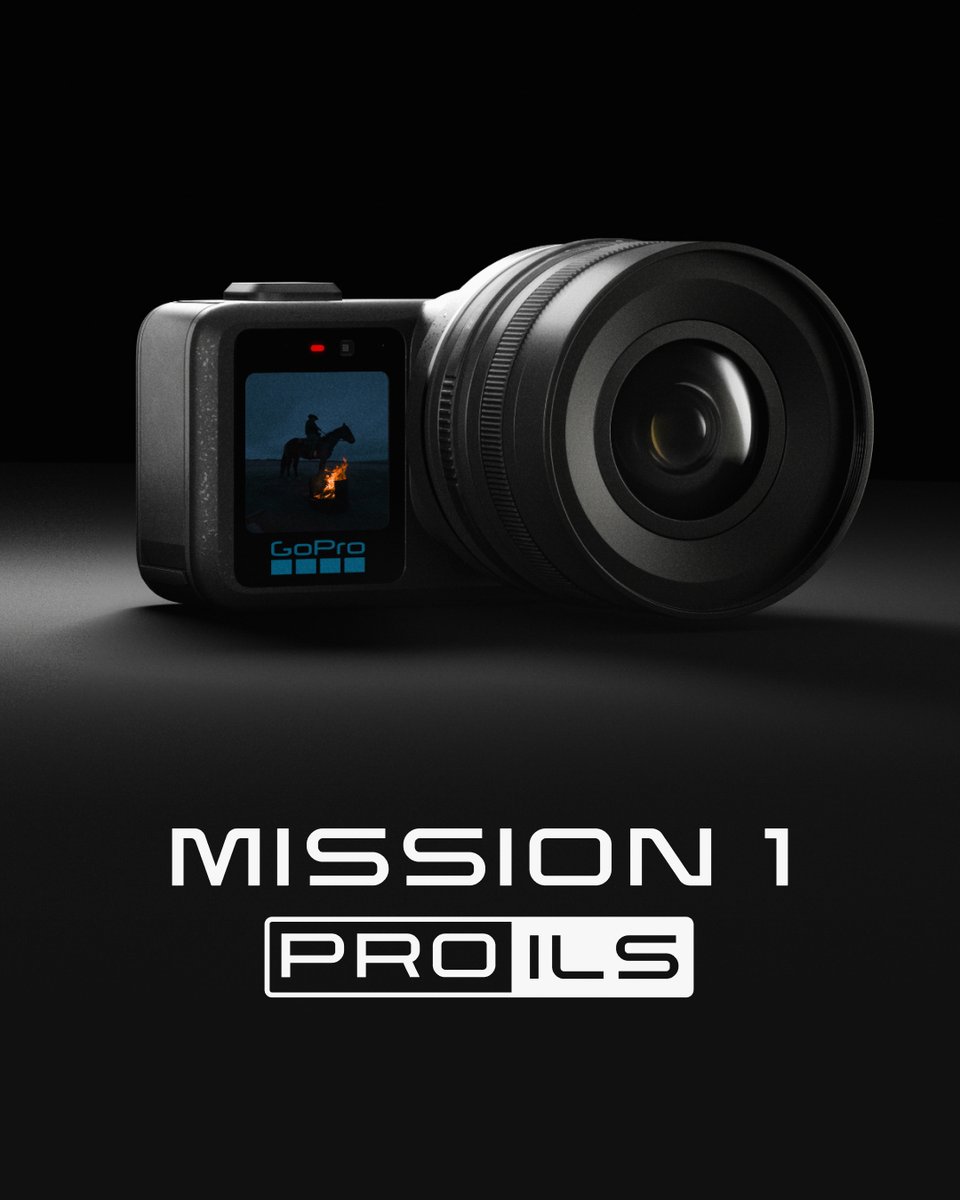
This is #GoProMISSION1 PRO 🎥 The only 8K60 camera with a 1-inch sensor. Our compact, cinema-grade camera features a proprietary GP3 processor and 50MP sensor that enable intelligent low-light capture, industry-leading frame rates and resolutions, and groundbreaking thermal performance. ✔️ 1-inch Quad-Bayer sensor with up to 14-stops of dynamic range at the sensor for low-light capture ✔️ Longest continuous runtimes + most dependable thermal performance of any GoPro ever—over 5 hours in 1080p + over 3 hours in 4K at 100°F ✔️ Industry-leading 8K60—300% more pixels than 4K ✔️ 4K240 + 1080p960 ultra slo-mo with real frames—not AI-interpolated ✔️ 8K30 + 4K120 Open Gate capture ✔️ Gallery-ready 50MP photos + 44MP frame grabs ✔️ Up to 240 Mbps bit rate out of the box + 300 Mbps with GoPro Labs ✔️ 10-Bit color + GP-Log2 with LUTs for Rec.709 + Rec.2020 outputs ✔️ HLG HDR with Simultaneous Dual-Gain Readout—the industry standard for pros ✔️ New intelligent capture modes: Dive, Vlog, Low-Light, Sport POV, + Subject Tracking ✔️ 13% higher capacity Enduro 2 battery in the same form factor with new fast charging ✔️ Rugged + waterproof, now to 66ft (20m) without a housing ✔️ Emmy® Award Winning #HyperSmooth in-camera video stabilization ✔️ New 4-microphone array, 32-bit float audio, multi-track recording, + manual audio controls ✔️ Timecode Sync to streamline multi-camera editing + GPS with telemetry data ✔️ New Point-and-Shoot Grip compatibility for elite handheld control ✔️ Removable Lens Hood included to reduce glare + flares ✔️ Bluetooth® 5.3 Super Wideband connectivity + USB-C port for external audio capture ✔️ A cinema-grade camera that anybody can use Enhanced by a GoPro Subscription: ✔️ Unlimited cloud backup at 100% quality ✔️ Camera replacement guarantee ✔️ Up to 50% off select accessories Order your MISSION 1 Series camera now to get a free Point-and-Shoot Grip ($100 value) + free shipping at Pro-tip: Existing GoPro Subscribers save $100 with the annual camera discount.

GoPro

21,194 görüntüleme • 2 ay önce

The beauty & technology packed in the upgraded Model 3 is greatly under-appreciated, just look at all the new things that are in this car and then tell me you don’t want it. 👇 • Same prices as old Model 3, under $40K • Up to ~2.4% higher range on Long Range trim (341), same range on RWD (272) • 50% of the parts in the car are new • 4.3% more cargo capacity • Long Range is 4 lbs lighter than before, RWD is 29 lbs heavier than before • 0.1" lower ground clearance vs old 3 • 30% decrease in wind and ambient noise, 25% improvement in impact noise and 20% improvement in road noise • Redesigned interior w/ new door cards • More premium interior materials. The fabric is softer to the touch and sewn with a more refined process to present a better overall texture • Two new colors: Ultra Red ($2K) & Stealth Gray (no extra cost) • No more stalks. New steering wheel contains the turns signals, light controls, horn, new camera button, wiper controls and mic control • New dash design with textured/woven material • Multicolor ambient LED interior lighting extending from dash to rear seat doors • Updated center console w/ real metal handles, giving a more premium feel. • Acoustic glass on rear windows and back window (was only on front windows before). "360º acoustic glass" • More sound insulation for a quieter ride • Uptick in hood to let wind go over more quietly • Upgraded suspension for a more premium ride. New springs & dampers. New geometry on front suspension. New bushings. New way they mount the sub frame to the chassis • Stiffer body, better handling • More premium sounding door "thunk" • Passengers are more protected from door impacts due to new latch at the bottom of the door • Two motors close the trunk now vs one before, resulting in a quieter automatic close • Tires have more cushioning for improved ride • Center touchscreen now brighter, has smaller bezels, higher contrast & is more responsive • More comfortable rear seats • Redesigned lower rear bumper • All seats are now perforated • No fog lights anymore • Front seats are now ventilated, in addition to heated • 8" touchscreen for rear passengers in the back to control climate & enjoy entertainment. You can connect two headsets at the same time. • Better drag coefficient of 0.219 Cd • Upgraded 2.0 ventilation system. You can now separately turn off the passenger side air • Slimmer and sleeker headlight and taillight design • Single wing-shaped taillight design, meaning better reliability and low chance for leakage/part misalignment • New 17 speaker sound system (up from 14 before). It now includes 2 subwoofers and 2 amplifiers. More punchy • 65W USB-C charger in center console so you can charge a laptop • Improved bluetooth • Upgraded microphones. Now one on each passenger side. New mics make phone calls clearer and "smooth" • 5G connectivity. 50% improved cellular service. 2X greater WiFi range (dual-band) • Improved connectivity to phone so car will recognize your phone from farther away • Two new wheel designs that better optimize battery life • New Tesla lettering replaces rear Tesla logo badge • Car is 8% more efficient thanks to better aerodynamics • Car is 1" longer overall (Original vid from Andy Slye, cooked by me)

Teslaconomics

73,057 görüntüleme • 2 yıl önce

Why is nobody talking about Polymarket's official API? You open Polymarket Wait for it to load... Click on a market... Wait again... Try to check another one... More waiting... By the time you see the price, it's already stale The opportunity moved while you were clicking through pages Someone else got there first There's a better way // Found the gem hiding in plain sight - library py-clob-client Official from Polymarket. MIT license I spent a week working with multiple markets Checking prices across different positions Monitoring various categories Tracking market movements Then discovered this library Game changer for workflow efficiency // Real example from last week: UI approach: Checking markets one by one through the interface API approach: Monitoring all relevant markets simultaneously with live updates Having comprehensive real-time data makes a meaningful difference Speed and information clarity are valuable advantages // Want to go deeper? Build an arbitrage bot You'll need Rust for execution speed Deploy the server geographically close to Polymarket's infrastructure Every millisecond counts when opportunities last 1-2 seconds. I built mine in Go for monitoring and analysis. Works great for that. But if you're hunting arbitrage at scale against other bots, Rust + low latency setup is the only way. The infrastructure race is real // "But I can't code" With today's AI tools you actually can Cursor, ChatGPT, Claude, Gemini, Kimi, Grok - they write code for you You just describe what you want AI generates it You copy-paste and run Join Polymarket to create: Programming is no longer a barrier Anyone can build now

BuBBliK

44,204 görüntüleme • 6 ay önce

NEWS: Figure has unveiling its 3rd generation humanoid robot. • Features a completely redesigned sensory suite and hand system. Wireless charging in feet. • Next-generation vision system engineered for high-frequency visuomotor control. Its new camera architecture delivers twice the frame rate, one-quarter the latency, and a 60% wider field of view per camera within a more compact form factor • Soft goods, wireless charging, improved audio system for voice reasoning, and battery safety advancements • "Engineered from the ground-up for high-volume manufacturing. In order to scale, we established a new supply chain and entirely new process for manufacturing humanoid robots at BotQ." • Lower manufacturing cost • Softer, more adaptive fingertips increase surface contact area, enabling more stable grasps across objects of varied shapes and sizes. Each fingertip sensor can detect forces as small as three grams of pressure - sensitive enough to register the weight of a paperclip resting on your finger. • Multi-density foam to protect against pinch points, and is covered in soft textiles rather than hard machined parts. 9% less mass and less volume than Figure 02 • 10 Gbps mmWave data offload capability, allowing the entire fleet to upload terabytes of data • Upgraded audio hardware system for better real time speech-to-speech. Its speaker is twice the size and nearly four times more powerful, while the microphone has been repositioned for improved performance and clarity. • Charging coils in the robot’s feet allow it to simply step onto a wireless stand and charge at 2 kW Figure: "BotQ is Figure’s dedicated manufacturing facility designed to scale robot production. BotQ’s first-generation manufacturing line will initially be capable of producing up to 12,000 humanoid robots per year, with the goal of producing a total of 100,000 robots over the next four years. Instead of relying on contract manufacturers, Figure brought production of its most critical systems in-house to maintain tight control over quality, iteration, and speed."

Sawyer Merritt

140,241 görüntüleme • 9 ay önce

This is not an AI tool. This is not an AI assistant. naïve is something the world has never seen before. Every AI product you've used until now made you better at doing the work, faster writing, faster coding, faster research. You were still doing the work. AI was just helping you do it quicker. Naive is a completely different category. You don't use Naive to do the work. You hire Naive to run the business. You describe what you want. Naive spins up a full team of AI employees and hands you a company that's already operating: 🤝 A sales rep booking meetings while you sleep 📈 An SEO manager publishing and ranking content on autopilot 💻 A full-stack engineer shipping production code without review 💰 A finance manager reconciling accounts and generating reports 🔍 A recruiting agent sourcing and reaching out to candidates 🎧 A support agent resolving tickets and tracking satisfaction scores Each employee has their own email inbox, bank account, phone number, legal entity, and compute environment. They never ask you for help. They share context, delegate tasks, and coordinate as a fully functioning team, extracting patterns from every outcome and getting smarter over time. You set a budget. You define the goal. You walk away. This is not productivity software. This is not a chatbot with a nice interface. This is a new category of company creation that did not exist until now. The numbers speak for themselves: ✅ Hundreds of founders already launched on the platform 📊 Active businesses growing 32% week over week ⚡ Tasks completed growing 42% week over week 💵 Real ARR being generated with zero human employees Every AI tool you've ever used made you a better worker. Naive makes you an owner. 👉 Launch your business today → #NaïveAI2B9YHR

Gina Acosta

24,008 görüntüleme • 3 ay önce

$NOW's Financial Analyst Day took place yesterday. A huge focus was on the headline $30 B+ subscription revenue target for 2030, but there is also a margin expansion story as well that management highlighted. The market fears AI inference costs will compress software gross margins. Management focused on dismantling this narrative. AI reasoning represents less than 10% of their cost to serve. The other ~90% is workflow orchestration, governance, and their 20-year CMDB context. They are maintaining 80%+ subscription gross margins while pulling $300 M in annualized agentic AI cost savings straight to their own bottom line for 2026. That self-funded internal efficiency gives them the exact cover needed to commit to 100 basis points of non-GAAP operating and free cash flow margin expansion in 2027. The debate over seat compression versus consumption is looking promising for NOW. ServiceNow has shifted to a hybrid model. Non-seat based pricing already accounts for 50% of their net new ACV. When a customer uses AI to cut a 20 person support team down to five, ServiceNow captures 6.5x more in AI agent consumption. The total spend from that customer actually grows over 5x by year five. This underlying consumption momentum is exactly why management aggressively raised their 2026 AI ACV target from $1 B to $1.5B. They expect AI to drive 30% of total ACV by 2030. They are backing this up with a new go-to-market execution strategy, guaranteeing total satisfaction for AI go-lives in under 100 days. Management is also trying to be more disciplined with capital allocation. They are tackling dilution. They hit their sub-15% stock-based compensation target early in 2025 and just established a hard target of sub-10% by 2029. They doubled their share repurchases with a $2 B accelerated share repurchase in Q1 2026 alone. This move makes them dilution net-neutral for the entirety of 2026. They still have $4.2B in authorization ready. Recent tuck-in acquisitions like Moveworks, Vza, and Armis were heavily scrutinized as buying top-line growth. Management confirmed zero revenue from these hit the last report. They bought them strictly to build out the AI Control Tower and push their TAM to an aggressive $600 B. Overall, the day provided a little more clarity and I appreciated it. Looking more interesting to me. In the clip, Gina addressed seat compression and the margin expansion story.

CapexAndChill

20,719 görüntüleme • 2 ay önce

🎧🍌 New The Peel with Ankur Goyal Ankur is the Founder and CEO of @braintrustdata, the end to end developer platform for building the world's best AI products. Their customers include companies like Instacart, Zapier, Notion, Airtable, Replit, and more. We hit on the importance of LLM evals, advice for building AI products, why the best companies have two AI product roadmaps, how he hates meetings, and all his non-conventional advice for founders. Watch below or links in the replies! Timestamps: 04:04 Why everyone’s now an AI company 06:03 Reasons LLM evals are so important 09:19 Replacing vibe checks with Braintrust 10:37 Making OpenAI’s protocols the standard 11:27 Why the best companies have two AI roadmaps 13:06 Build your product so each LLM release makes it better 14:54 Predicting AGI is impossible 15:54 Why people who work with LLMs aren’t worried about AI safety 16:52 The best developers are all-in on co-pilots 18:11 How AI is changing software development 21:09 Combining IDE, CI/DC, and observability in one product 27:18 Are models more like CPU’s or relational databases? 30:14 How to pick an LLM 33:00 Advice for staying on top of new AI developments 34:30 Why tool calling is so important 38:02 Advice for young software engineers 40:25 Learning to code doing linear algebra homework 42:36 Lack of purpose interning in big tech 44:07 Working at MemSQL learning to be a founder 47:52 How to get a job at a startup 50:43 Building his first startups product on an flight 52:39 Three lessons from his first failed startup 54:46 Don’t delegate what you’re good at 55:46 Why you should be careful listening to VCs advice 57:34 Tactics for successful delegation 59:36 Why Ankur hates meetings 1:02:42 The importance of self-service in unlocking certain customer segments 1:05:14 How Braintrust got started 1:07:45 Advice on picking your target customers 1:10:35 How Braintrust hires with work trials 1:15:21 Balancing security with a modern UI 1:17:49 Why it’s hard to sell non-AI products right now 1:19:21 Advice for selling to large enterprises 1:23:10 Ankur’s favorite AI products

Turner Novak 🍌🧢

44,280 görüntüleme • 2 yıl önce

全网疯传神老师这个提示词太好玩了 我改了一版裸眼3D版本 然后又花了1美金做了一个视频 产品展示历史3D图提示词: Role & Subject: A museum-grade, hyper-realistic 16:9 3D infographic masterpiece titled "THE EVOLUTION OF [Product Name]". The visual style combines cinematic product photography with advanced technical blueprint aesthetics, emphasizing extreme depth and tangible 3D presence. The Hero Lineup (3D Volumetric Core): • A complete chronological sequence of 8-12 historical versions of [Product Name], from earliest prototype to futuristic concept • Arranged on a precision-engineered floating ruler/timeline base with depth shadows and reflection mapping • 3D Rendering Enhancement: - Octane Render + Unreal Engine 5 volumetric lighting - PBR (Physically Based Rendering) materials with: * Sub-surface scattering for organic materials * Metallic/roughness maps for mechanical parts * Micro-displacement for surface texture depth - Each object casts realistic shadows on the background plane - Edge rim lighting (0.3 intensity) to separate objects from background - Depth of field: Sharp focus on center objects, subtle bokeh on edges • Material Evolution Story: - Early versions: Weathered textures (rust, wear marks, patina) - Mid-era: Industrial matte finishes with visible manufacturing seams - Modern: Pristine glossy surfaces with screen-space reflections - Future: Holographic elements with volumetric fog effects Brand Atmosphere (The 3D Canvas): • Background: Deep [Brand Color] with physical texture layers: - Embossed vintage patent drawings (normal-mapped) - Floating translucent glass panels with engraved engineering notes - Volumetric god rays piercing through layered newspaper clippings - Particle system: Subtle floating dust motes with motion blur • Header Zone: - Brand logo: Extruded 3D metal badge with bevel and emboss - Title typography: Carved letterpress effect with depth shadows - Metallic foil stamp simulation with anisotropic highlights The "Hyper-Dense" 3D Information Layer: A complex, organized data-maximalist layout with spatial depth: 1. Dense Annotation Network: - Ultra-fine white hairlines (0.5px) connecting components to data blocks - Lines have slight 3D curvature following perspective rules - Connection nodes: Small metallic spheres with Fresnel reflections 2. Contextual Era Modules: - Floating glass panels hovering above the timeline - Each decade module has: * Frosted glass material with transparency gradient * Iconographic markers in raised relief * Subtle animated pulse effects (optional) 3. Magnifying Lens Inserts: - Circular/hexagonal cutouts with beveled glass edges - Extreme macro close-ups showing: * Material grain (wood, metal, plastic crystals) * Internal mechanisms with exploded-view depth - Lens distortion shader for realism 4. Technical Specs Strip (Bottom): - Structured data bar with 3D segmented panels - Each cell: Slightly recessed with inner shadow - Typography: Laser-etched effect on brushed metal texture - Micro LED indicator lights between data points 3D Enhancement Technical Specs: • Rendering Engine: Octane Render / Unreal Engine 5.3 • Global Illumination: HDRI environment map (studio lighting setup) • Camera Settings: - Focal Length: 35mm (slight wide-angle for information density) - F-Stop: f/5.6 (selective focus) - Chromatic Aberration: 0.2 (photographic realism) • Post-Processing Stack: - Ambient Occlusion (AO) for micro-shadows - Screen Space Reflections (SSR) - Volumetric lighting with light shaft scattering - Color Grading: Cinematic LUT with lifted blacks - Sharpness: 130% (crisp data legibility) • Material Library: - Metals: Anisotropic brushed aluminum, polished chrome - Glass: IOR 1.52 with caustics - Plastics: Translucent with thickness variation - Paper: Subsurface scattering for vintage documents Output Parameters: --ar 16:9 --v 6.1 --style raw --stylize 400 --quality 2 --chaos 10 Additional Flags (for AI generators): --3d-rendering --volumetric-lighting --octane-quality --pbr-materials --depth-of-field Metadata Variables to Replace: [Product Name] → Your subject (e.g., "POP MART Designer Toys") [Brand Color] → Primary brand color (e.g., "Deep Navy Blue #1A2332") [Material Vibe] → Core material story (e.g., "Vinyl to Resin to Smart Materials") [Key Components] → Specific product features (e.g., "Joints, Paint Finish, Packaging") Pro Tips for Maximum 3D Impact: 1. Use "isometric 3D layout" for uniform depth perception 2. Add "floating holographic UI elements" for futuristic tech feel 3. Include "cross-section cutaway views" to show internal structure 4. Apply "chromatic aberration" around high-contrast edges for lens realism 5. Insert "measurement calipers" as 3D props for scale reference

serva huang

12,281 görüntüleme • 7 ay önce

NEW: The AI Data Center "Boom" is Kinda Fake.. But the power bottleneck is still very real. Inside the energy company using rocks & sunlight to fix AI’s power problem right now.. not in 10 years: Exowatt Most "announced" data centers will never get built (ahem, Stargate). The ones that do? Running on gas generators. And the U.S. grid has no answer for what’s coming. Hannan Happi, CEO & Co-Founder of Exowatt, joins Sourcery for a rare facility tour of their 40,000 sqft Miami HQ — walking us through the tech, the team, & why the AI power crisis is far worse than the headlines suggest. Exowatt has raised $140M from a16z, Atomic, Felicis, Sam Altman, Leonardo DiCaprio, Starwood Capital, Thrive Capital, & more, all betting on a deceptively simple idea: concentrate sunlight with Fresnel lenses, store the heat in rocks at 1,000°C, and dispatch electricity on demand. 24 hours a day, no grid required. Their P3 system is built from sand, dirt, and steel. Like a large magnified glass and a rock. No lithium. No cobalt. No China. Target cost: 1 cent per kilowatt hour. In this episode: → Why most announced data centers are phantom projects → The real bottleneck that replaced GPUs: skilled labor → How a 200-year-old engine is at the heart of their stack → What hyperscalers actually say about sustainability (it's not pretty) → Lessons from Tesla on iteration, modularity & vertical integration → Why Miami — and why now With a 90+ GWh demand backlog and commercial deployments live in 2025, this might be one of the most important energy companies emerging in the AI era. Founded in 2023 by Hannan Happi & Atomic CEO Jack Abraham, Exowatt's mission is to make sustainable renewable energy always available and almost free. 𝐓𝐈𝐌𝐄𝐒𝐓𝐀𝐌𝐏𝐒 (00:00) What is Exowatt? The solar backbone for AI data centers (01:30) Why the US grid simply cannot handle what's coming (02:00) Tour begins: Welcome to Lighthouse Miami — 40,000 sq ft facility (02:45) The P3 explained: three elements, one shipping container (04:00) The founding story: Atomic venture studio and the modular hypothesis (05:30) Why solar thermal hasn't followed solar PV's 99.6% cost decline — until now (07:00) North star: 1 cent per kilowatt hour and where they are today (11:00) Inside the world's largest solar simulator — the sun, indoors (13:00) The Fresnel lens up close: a giant magnifying glass for the sun (15:00) "It's rock science" — the 5-year-old explanation of how it works (17:30) Domestic raw materials (sand, dirt, steel) as the real competitive moat (24:30) The phantom data center problem: most announcements won't get built (26:00) From 100 MW to 10 GW: how data center scale exploded in 3 years (30:00) Funding breakdown: $140M, a16z, Felicis, Sam Altman, Leonardo DiCaprio (37:00) Lessons from Tesla: remove parts, iterate fast, build better

Molly O’Shea

148,299 görüntüleme • 3 ay önce

Seedance 2.0 is allowing us to enter a new era of music video creation. Here is how I created HONEY. It was a quick test to see how well this workflow holds up. 🐝 1 - Write your song and generate the music with Suno 5.5. 2 - Use an image generator of your choice. For HONEY I combined both Grok Imagine for aesthetics and Nano Banana Pro for refined editing. 3 - In Capcut I import my audio and just save out a blank video video containing the audio. This step is important because this video file containing audio will now be used with Seedance 2.0 as a video reference with Omni. This allows the AI to apply automatic and realistic lipsync and movement to the music, it's extremely powerful! 4 - Once I have a both my image and video with audio as reference, I use Seedance 2.0 Omni and upload my starting image and then the video reference with the audio. 5 - From here I'm simply prompting like normal, specifying what's happening in my scene with detailed instructions, mentioning multi shots and camera angle changes and then specifying that the person is singing along to the song. I type out the lyrics that are present to have better lipsync accuracy. 6 - Once I have generated a video and like the result, I do video to video, so i upload that video that just got generated and type "The scene continues" and prompt new actions to take place. This allows you to expand on a narrative. These new shots can be used as B-ROLL and since I uploaded my video as reference I have full consistency of everything it saw in the video. This is also extremely powerful. 7 - This is actually the most difficult part. Edit in Capcut. This is where you need to understand pacing and shot selection from all the scenes you generated to bring it all together. You must be strategic with the editing. Goodluck! I'll probably record a video tutorial at some point as it's easier to see what is being done.

Travis Davids

19,081 görüntüleme • 3 ay önce

$AMD $AMZN partnership will 🚀 in 2026 🔥 Amazon/AMD partnership is hidden among hot headlines from OpenAI $NVDA $ORCL... TLDR: Amazon refused to bid up the overpriced $NVDA chips among other hyperscalers, and decided to work closely with $AMD. Amazon is expected to spend up to $10-$20B a year on 2026 EPYC breakthrough Gen and Future Gen. Dr. Su confirmed "we have plenty for other large customers". For its 2026 EPYC "Venice" processors, AMD is using a multi-node manufacturing strategy: the CPU core complex dies (CCDs) are built on TSMC's 2 nm-class node (N2), while the I/O die (IOD) uses the N3P (3 nm) process. Context: Andy Jassy Amazon Web Services has been working with AMD on EPYC processors since November 2018. With this "secret weapon" breakthrough(patented), this long time partnership has expanded to New breakthrough 2026 EPYC Gen. AMD's 6th Gen EPYC "Venice" processors, slated for 2026, introduce New Chiplet design breakthrough. a revolutionary chiplet interconnect fabric that redefines server scalability for AI. This isn't just faster silicon; it's a paradigm shift for AWS, enabling hyper-efficient, rack-scale AI inference that slashes costs and latency while boosting throughput. AMD to benefit AWS's $100B+ AI opportunity along with $ORCL $MSFT $GOOGL $META Saudi, UAE ,38+ countries and startups. In early October, Amazon/AWS announced the new EC2 M8a instances as their latest-generation, general-purpose compute instances now powered by AMD EPYC 9005 "Turin" processors. Amazon announced the M8a as having up to 30% higher performance and up to 19% better price performance over M7a. With my testing of both at 32 vCPUs, the new AMD EPYC Turin instance provided 1.59x the performance over the prior-generation EPYC Genoa instance! How will this impact AWS AI Inference? ~Cost Efficiency: Inference is 80%+ of AI workloads and latency-sensitive (e.g., chatbots need <1s responses). "Secret weapon" enables 35x better inference perf (per AMD's CDNA roadmap tie-in), cutting AWS's energy use by 50%+ in clusters. With $118B 2025 capex, this could save $20–$30B annually in OPEX, boosting margins to 35%-40%. ~Scalability for Agentic AI: Supports "Helios" rack-scale platforms (up to 128 GPUs + EPYC hosts), delivering 3.58x FP6 perf for distributed inference. AWS can run 700K+ more tokens/sec in 1,000-node clusters (via EPYC 9575F boosts), enabling real-time apps like personalized search or fraud detection at enterprise scale. ~Adoption Catalysts: Early partners like Oracle signal broad uptake; AWS's existing AMD instances G4ad with Radeon GPUs) pave the way. By 2026, EPYC could power 40%+ of AWS AI infra, outpacing Nvidia's GPU lock-in via open standards (ROCm 8 software). Lastly, Amazon’s trajectory toward a $320 stock price is not a speculative leap but a grounded projection rooted in its unmatched fundamentals and strategic AI leadership. With Amazon Web Services poised to surpass $100 billion in annual revenue by 2026, driven by explosive AI inference demand, Amazon is redefining cloud computing’s future. The adoption of AMD’s 2026 EPYC processors with "Secret" architecture is a game-changer, slashing costs by up to 50% and boosting inference throughput 3x, enabling AWS to dominate enterprise AI workloads with unmatched efficiency. This technological edge, combined with Amazon’s e-commerce dominance and high-margin advertising growth, supports a valuation rerating to 22x EV/EBITDA, and it is still a discount to historical highs. Trading at $222, $AMZN is undervalued for its 15–20% revenue CAGR and 25%+ EPS growth through 2030.

Mike

511,082 görüntüleme • 9 ay önce

The 8th China International Import Expo (CIIE) is taking place in Shanghai from November 5 to 10, bringing together over 155 countries and regions, along with 4,108 overseas exhibitors. This year, the Expo has set up a dedicated section for products from least developed countries (LDCs), featuring specialties from more than 30 nations — including coffee, fruits, handicrafts, and daily chemical products. A total of 123 Belt and Road participating countries and 163 enterprises from LDCs are represented, marking year-on-year increases of 23.1% and 23.5%, respectively. These initiatives help enterprises from 53 African countries make full use of zero-tariff treatment and gain better access to the Chinese market, expanding the Expo’s role from a trade fair into a gateway for shared development opportunities across the Global South. When the first CIIE opened in 2018, China’s total goods imports reached US$2.14 trillion. By 2024, this figure had risen to US$2.58 trillion, reflecting China’s unwavering commitment to high-level market opening and its role as a stable platform for global enterprises amid economic uncertainty. Notably, the CIIE has evolved into a key platform for global cooperation and innovation. The concurrent Hongqiao International Economic Forum hosts sub-forums on topics such as WTO reform, international AI standards, and supply chain resilience, contributing to global economic governance. Over the past seven years, more than 3,000 new products, technologies, and services have made their debut at the Expo — including 461 innovations launched this year alone. In terms of policy support, China’s overall import tariff rate now averages 7.3%, while the World Bank reports a weighted average tariff of below 3%, aligning with global standards and significantly lowering market entry costs for overseas firms. At its core, the CIIE’s sustained success lies in its ability to connect China’s evolving consumer demand with high-quality global supply, continuously injecting new vitality into global trade and cooperation.

Sinical

56,639 görüntüleme • 8 ay önce

We built and launched a viral AI product in 2 months (at Google!). Here's how: Our little NotebookLM team has had a crazy few months and is proving that small, nimble teams not only exist within Google, but can move fast and have significant impact. Our newest feature “Audio Overviews” has taken over the internet the past few days. The team has been sprinting - we went from idea to prototype in weeks, then launched publicly in under 2 months. It’s not perfect (yet!), but that’s the point. Here are a few takeaways: 1. It's about building products *with* our users, not just *for* them. We’re not waiting to launch, we’re shipping early and iterating. Tech is evolving faster than users can possibly know what they want. We're often anticipating needs for V1 then working alongside them to improve. Example: Very quickly we saw a massive user desire for in-line citations so our team quickly pivoted to build and launch. (Join our discord!) 2. Built-in not bolted-on: We’re building net-new, AI native products. This isn’t just AI for the sake of “AI”, we’re working to bridge the gap between state-of-the-art research and human problems. Audio Overviews are great because they sound amazing, yes -- but useful because they are (1) source grounded and (2) an easy one-click way to study and digest your own information. 3. Meetings are spent building, not just talking about building. We’re collaborating, deeply. I am the only UX designer on the team so we have to make every moment count. @raiza_abubakar, Steven Johnson and I are constantly strategizing and iterating together. NotebookLM represents a new era of product development within Labs at Google. We're putting user feedback and community engagement at the heart of everything we do. We’re building quickly and have a lot more coming soon.. The audio below is made with the NotebookLM Audio Overview feature using only my LinkedIn post! If you haven’t tried it, I highly recommend it. We want to make it better for you! It’s been awesome to see so much investigation into the product by Andrej Karpathy and Ethan Mollick.

Jason Spielman

369,154 görüntüleme • 1 yıl önce