Loading video...

Video Failed to Load

Go Home

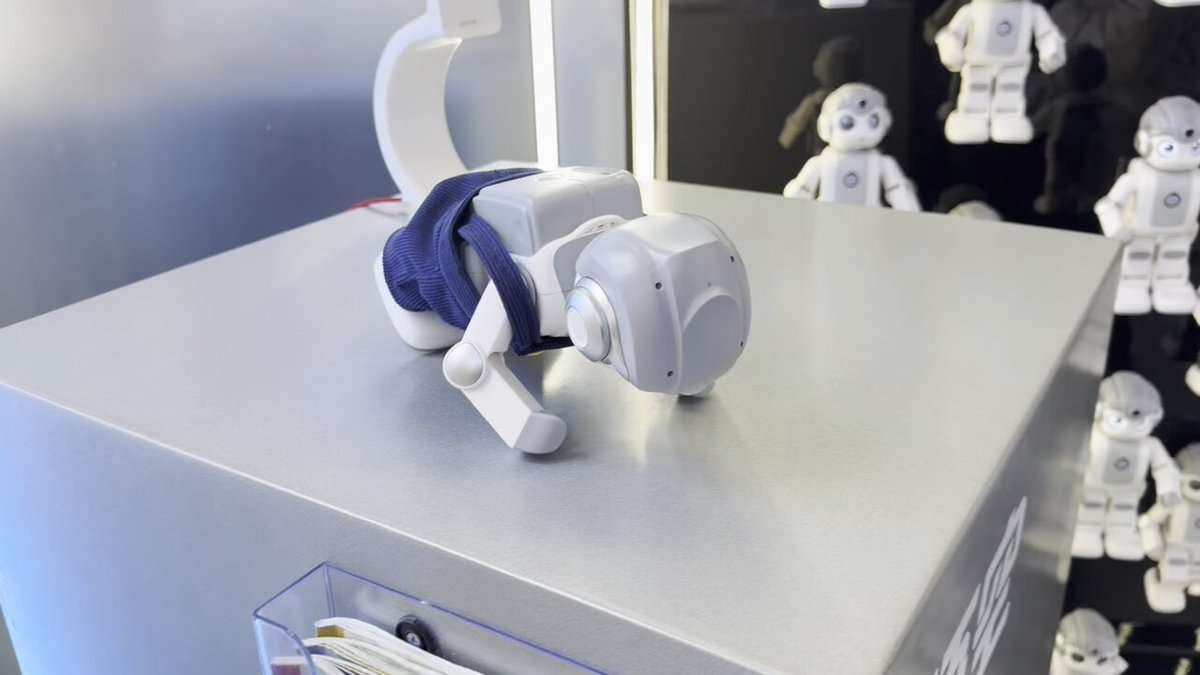
Wow xiaomi robotics is really open. Other robot companies just won't release these videos. incredible transparency Lei Jun

34,311 views • 7 months ago •via X (Twitter)

0 Comments

No comments available

Comments from the original post will appear here

Related Videos

Something big is happening in robotics - and it’s hiding in plain sight. This post is not about dancing robots but in the data that powers them. Open robotics datasets have exploded this year, turning the field into a more scalable and collaborative ecosystem. In just two years, Hugging Face datasets grew from 11k to over 600k - and robotics is by far the fastest-growing segment. We went from 1k robotics datasets in 2024 to 27k in 2025! For comparison, text generation, the second-largest category, has only around 5k datasets in 2025. That gap is massive. Open datasets are important because robotics lives and dies by real-world robot data - video, actions, sensors, failures. By making this data easy to upload, reuse, and benchmark, researchers, startups, and large players are now releasing real-robot datasets that would have stayed locked inside labs just a few years ago. Major contributors include NVIDIA, LeRobot initiative, and a rapidly growing maker community. This surge is also enabled by cheaper video storage, better tooling, and an open-source AI culture now spilling into the physical world. And it really matters: open robotics data dramatically lowers entry barriers, accelerates learning-by-doing, and speeds up progress toward generalist and humanoid robots. Robotics won’t scale through hardware alone - but to a large extent through shared data. Viz below from AI World - link to the story and more viz/filters in comment.

Pierre-Alexandre Balland

186,094 views • 9 months ago

The Xiaomi SU7 just keeps crashing in China - Part 3 This is getting out of hand. Every day, we see new videos on Chinese social media of crashing Xiaomi SU7 sedans. We only post 25% or so, there is much more. Since our last Xiaomi crash-post on April 6, at least 10 new crashes have happened. Whenever a new model is launched, photos of crashes of that car start to appear on Chinese social media, just because people pay attention. Normally, after a few months, the attentions is over and the model really crashes as much as any other car. But in case of the Xiaomi SU7, something more seems to be going on. The latest videos show SU7 sedans in a ditch and against barriers. The 2nd video is interesting. It shows an SU7 on a parking lot, crashing into a Chery QQ that was parked there. Perhaps the auto-park function didn't notice the small QQ and went for it? There have been reports in Chinese media that insurance companies are refusing to insure the SU7. Xiaomi and the insurers have stated that these reports are false. We will try to find out more about insurance prices for the SU7. The RWD SU7 Pro has 220 kW, the AWD Max has 673 kW and the AWD Ultra has 1138 kW. When the SU7 launched, there was a problem with the brakes. This has since been fixed, according to Xiaomi. Also, the launch of the Ultra has led to some debate in China, about whether it is wise to sell a 1138 kW (1548 hp) car to anyone who can afford it. And with a $72.7K price tag, that's a lot of people. Xiaomi #ChineseCars #China Porsche #Crash #CarCrash #CarNews

Tycho de Feijter

21,818 views • 1 year ago

I spent a month in Shenzhen visiting factories and robotics companies, and the contrast with the U.S. was striking. While Figure and Boston Dynamics hide their humanoids behind closed doors, Chinese companies have massive showrooms open to the public. But what really stood out wasn't just the transparency, it was how good they are at selling. Take UBTech: they've already sold 1,200 humanoid units at $200k each to factories. And here's the kicker, these robots aren't even that useful yet. They can only pick up and drop boxes at 1/10th the speed of a human, and factories still need to hire system integrators to train them for specific tasks. My theory is that these factories are terrified of getting left behind in the robotics/AI wave. They're investing in new tech not because it's ready, but because they can't afford to wait. The second surprise was the breadth of their robotics portfolio. These companies aren't just building humanoids, they're deploying service robots everywhere: restaurants, hotels, apartments. Consumer robots are cleaning houses, pools, pet waste, dishes. They're covering the entire spectrum. But the education piece shocked me most. I picked up what I thought was a high school or college robotics textbook, it was for primary school. The government mandated AI and robotics education starting in elementary school. Almost every single school in China now has AI and robotics curriculum, complete with education robots so kids can learn by building. They're creating a generation that grows up fluent in robotics and AI. China owns the supply chain and the hardware stack. But here's what I think people are missing: the race isn't just about who can build robots faster or cheaper. The U.S. advantage has always been in the layer between hardware and human, the interaction design, the software intelligence, the intuitive interfaces that make complex technology feel natural. China is building the physical infrastructure, but they're also learning fast. Every deployed service robot, every classroom full of kids building with education kits, every factory running humanoids, that's all data collection at scale. The window for the U.S. to establish its wedge is narrowing. It's not enough to be better at AI or software anymore. We need to be building the integration layer, the intelligence that makes physical AI actually useful, not just impressive in a showroom. Because right now, China isn't just manufacturing robots. They're manufacturing a robotics-native culture, and that might be the most defensible moat of all.

Miyu Horiuchi

90,718 views • 8 months ago