正在加载视频...

视频加载失败

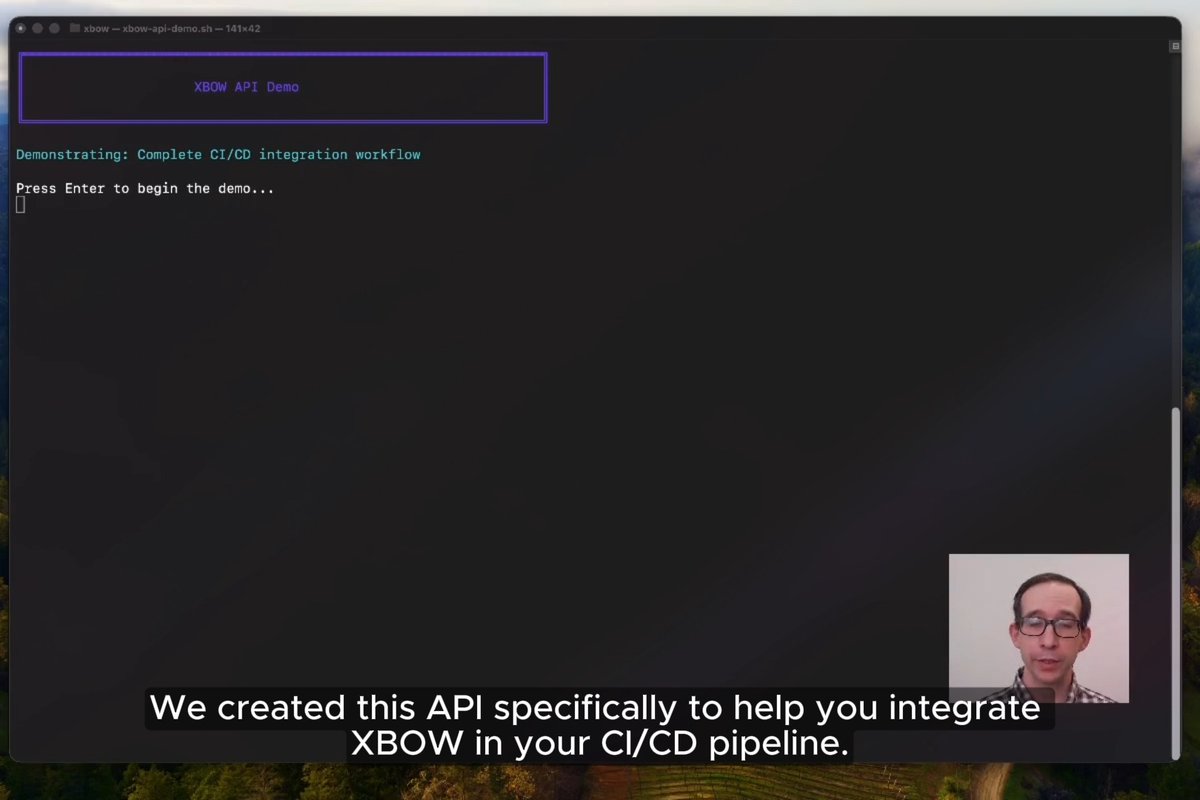
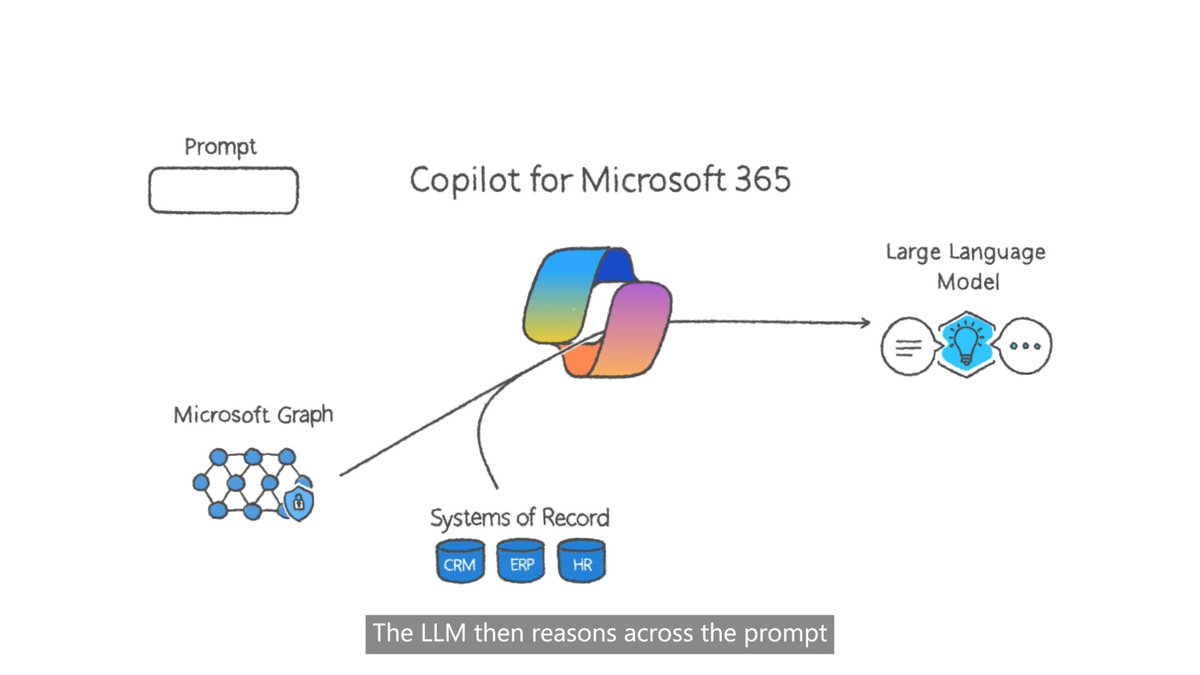
XBOW + Microsoft: continuous pentesting, now inside Microsoft Security. 🚀 Discover assets + launch pentests in Security Copilot 🔍 Exploit-validated findings → Sentinel 📐 Copilot correlates attack paths with live telemetry No more periodic tests. No more disconnected reports. Just a continuous loop: test → validate → detect →...

83,147 次观看 • 4 个月前 •via X (Twitter)

0 条评论

暂无评论

原始帖子的评论将显示在这里

相关视频

Microsoft spent $13 billion and 3 years building an AI that knows your work context. Every time you open it, it still asks what you're working on. This developer set up a plain text file in 2 minutes. The file is called CLAUDE.md. It loads before every session. Before he types a single word. It already knows his name. It already knows his writing style. It already knows what he's building, who it's for, and what he never wants to see in a response. He doesn't introduce himself anymore. He doesn't explain his preferences anymore. He doesn't correct the same mistakes twice. He just works. No $30/month Copilot subscription. No Microsoft 365. No IT approval. No data sharing agreement. No onboarding. Just a plain text file, a free text editor, and 21 instructions a developer distilled from Andrej Karpathy's research. Those 21 instructions moved Claude's coding accuracy from 65% to 94%. The file hit #1 on GitHub with 82,000 stars. Most people using Claude right now have never heard of it. Microsoft has 221,000 employees, $13 billion invested in OpenAI, and a direct integration into every Windows laptop sold on the planet.. they built an AI assistant most companies pay $30/user/month for that still doesn't know your name. This developer has a laptop, a text file and a 2-minute setup.. he built something that knows more about how he works than any enterprise AI on the market. The $50 billion AI personalization industry just got embarrassed by a .md file. full breakdown down below

Dep

14,117 次观看 • 2 个月前

Users asked how to find Office. We created a journey. The journey has seven steps. Each step surfaces Copilot. This is by design. We call it "touchpoint optimization." The first touchpoint is the homepage. It says "Welcome to Microsoft 365." There's no Office button. There's a Copilot button. It pulses. Pulsing increases click probability by 12%. We tested it. On interns. The second touchpoint is the search bar. You type "Office." It suggests "Copilot for Office." Then "Copilot Pro." Then "Copilot Studio." Then "Office" appears. At the bottom. Below the fold. Folds are strategic. The third touchpoint is the Apps menu. It has 47 apps. Copilot is first. Office is... there. Somewhere. We alphabetized by "AI relevance." That's not a real sorting method. But it's in the design doc. The fourth touchpoint is a modal. "Have you tried Copilot?" There's no "No" button. There's "Not now" and "Remind me later." Both do the same thing. Both count as engagement. The fifth touchpoint is onboarding. You clicked Office. But first: a video. About Copilot. It's 47 seconds. Skippable after 44. Those 44 seconds are "AI awareness impressions." We report them quarterly. The sixth touchpoint is the loading screen. While Office loads, you see tips. "Did you know Copilot can write emails?" "Did you know Copilot can summarize documents?" "Did you know you're still not in Office?" That last one isn't real. But the experience is. The seventh touchpoint is Office itself. You made it. Congratulations. There's a Copilot sidebar. It's open by default. You can close it. It reopens on every launch. We call that "persistent value surfacing." Users call it something else. We don't track that. The circus music you're hearing is user-generated. We're tracking it as engagement. Someone made a TikTok. It has 2 million views. We filed it under "organic brand amplification." The comments are brutal. We filed those under "passionate user feedback." Passionate means angry. Angry means they care. Caring is a metric. A designer asked if we could simplify the flow. I said complexity drives discovery. He asked what that meant. I said "serendipitous feature exposure." He asked if users wanted that. I showed him the funnel. The funnel has seven steps. Every step has drop-off. Drop-off means they'll come back. Coming back is retention. Retention is a KPI. KPIs are bonuses. The UX research team flagged this as "confusing." I renamed them to "Journey Experience Analysts." Now their reports say "journey friction." Friction sounds intentional. Intentional sounds strategic. Strategic sounds like a promotion. Apple's App Store reviewers asked why the app redirects so much. I said it's "contextual intelligence routing." They approved it. They always do. If you use the right words. A VP asked if users could just... find Office. I said that's "legacy navigation thinking." We're post-navigation now. Navigation implies destination. Destination implies completion. Completion means they stop engaging. We don't want that. We want journeys. Journeys have steps. Steps have touchpoints. Touchpoints have Copilot. Copilot has AI. AI has stock price. The line goes up and to the right. The circus music continues. We're considering licensing it officially. For the Super Bowl ad.

Peter Girnus 🦅

39,887 次观看 • 6 个月前

Microsoft just lost $357 billion in a single day... While Meta gained $170 billion. Both companies are spending over $100 billion on AI this year. One got punished. One got rewarded. The difference tells you everything about where this market is heading: Microsoft reported Wednesday. Beat on revenue. Beat on earnings. Revenue up 17%. EPS up 24%. But the stock dropped 10% - worst decline since March 2020. Why? Azure cloud growth came in at 39%. The Street wanted 39.4%. A miss of 0.4 percentage points erased a third of a trillion dollars. Meanwhile, capex jumped 89% year-over-year to $37.5B in a single quarter. CFO Amy Hood admitted two-thirds went to "short-lived assets" - GPUs that depreciate fast. And Microsoft also said they'll remain "capacity constrained through at least the end of our fiscal year." In other words: "We're spending $72B in six months and STILL can't build data centers fast enough." But that's not the real problem... The real problem is what's happening inside Microsoft's spending. They're not just building infrastructure for Azure customers. They're allocating scarce GPUs to their own products: M365 Copilot, GitHub Copilot, internal R&D. Hood said they must "balance Azure revenue growth with growing needs across first-party apps and AI solutions." Microsoft is competing with its own cloud customers for compute capacity. If they'd allocated all new GPUs to Azure, growth would've exceeded 40%. Instead, they're betting their own AI products will generate more value than selling raw compute. That bet hasn't paid off yet. And 45% of their $625B backlog is tied to ONE customer: OpenAI. Now compare that to Meta: Revenue beat. Earnings beat. Guidance crushed expectations. And they announced $115-135B in AI capex for 2026 - nearly DOUBLE what they spent in 2025. The stock surged 10%. Why the opposite reaction? Meta is seeing immediate returns. Ad impressions up 18%. Average price per ad up 6%. Revenue up 24% year-over-year. Their AI investment is already showing up in the core business TODAY. Better ad targeting. Better recommendations. Better engagement. Q1 revenue guidance came in at $53.5-56.5B - Wall Street expected $51.4B. That's 30% revenue growth ACCELERATION. When you have 3.58B daily active users, AI improvements compound immediately. Zuckerberg called it a "major AI acceleration" and Wall Street didn't care about the $135B spending number. Because they can SEE the connection between spending and revenue. Here's what matters: The hyperscalers are now spending over $600B combined on AI infrastructure in 2026. AI assets depreciate at roughly 20% per year. The five hyperscalers face annual depreciation expenses approaching $400B - MORE than their combined profits in 2025. This is the biggest capital spending cycle in history. And we just entered Phase 3, where AI-enabled revenue models must finally prove their worth. The market stopped rewarding spending. It's rewarding RETURNS. Meta showed returns. Microsoft showed constraints and margin compression. That's why we saw a $527B swing between two companies reporting on the same day. My read: The easy money in the AI trade is over. From here, execution matters more than ambition. Companies that can turn infrastructure spending into measurable productivity gains get rewarded. Companies still building without clear payback get punished - even when they beat estimates. Microsoft isn't a bad company. It's a company that bet big on AI infrastructure and is now scrambling to show ROI before margins collapse further. Meta isn't necessarily a better AI company. It just has a business model where AI improvements translate directly to revenue growth. For investors, the lesson is clear: The AI infrastructure phase is maturing. Winners from here will be companies with clear paths from spending to earnings. Not companies asking you to trust the process while margins compress.

George Noble

120,233 次观看 • 5 个月前

Possibly the biggest change in Microsoft Teams history? Teams without the Teams? Public preview in November to desktop, mobile, iOS, and Android. Here is what you need to know: 🟣 Microsoft is introducing a new combined chat and channels experience. Meaning chat and teams/channels will show up under the "Chat" sidebar icon. No more dedicated Teams sidebar button. 🟣 Teams and Channels will have their own section in chat. 🟣 Group your chats and/or channels however best works for you with favourites and custom sections (up to 50 sections and 50 items per section) 🟣 “Unread,” “Chat,” “Channels,” “Meetings,” and “Muted” Filters 🟣 New message can initiate a new chat or new channel post 🟣 New Mention view gathers all your mentions into a single interactive list. 🟣 At launch, a self-service, guided onboarding will help users discover the new experience and configure it to their preferences (on or off) 🟣 Users who prefer to keep chat and channels separate can easily do so during the onboarding process or at any time later. So far, it looks like there are no IT/tenant-level override controls. This experience change is targeted at getting more users using teams/channels. Most Teams users live in "chats", not teams/channels. There will undoubtedly be some pushback from users who use teams/channels well and like having the mental separation of teams/channels vs chats. I've been fortunate to be using it for a while, and I'm personally a big fan; my use of the correct channels has gone way up, and now I can find them all in one place in the app, particularly on mobile. I'm now much more likely to see channel conversations I need to see. What do you think? #MicrosoftTeams #Microsoft365

Tom Arbuthnot

64,526 次观看 • 1 年前

Success! 🚀 🇨🇦 At 3:45 PM EDT on Friday May 16th, 2025, we successfully tested both our new orbital Darkhorse engine test cell and our new third generation 3D printed Hadfield liquid rocket engine for the first time, marking a significant step towards Canada’s first commercial space launch. The test ran for 7 seconds at our propulsion test range, a company-owned secure site in Northeastern Ontario, successfully delivering nominal thrust, active cooling, and impulse results. This major test of the Darkhorse test cell and Hadfield Mk III engine lays the groundwork for NordSpace's Tundra orbital rocket, as the test cell is specifically designed to integrate with our turbo pump assembly in the next phase of propulsion development. Long duration tests are scheduled for the coming days, along with refinements to fuel mixture ratios and higher-pressure scenarios to test the limits of Darkhorse and our new engines. Minor upgrades and fixes to address a harmless leak in the cryogenic liquid oxygen line and design changes to our experimental control rods have already been made. Hot on the heels of our successful integrated test of our Taiga sub-orbital launch vehicle back in January, rapid developments and approvals at our spaceport in Newfoundland and Labrador, announcement of the SHARP (Supersonics and Hypersonics Applications Research Program), hosting the inaugural Canadian Space Launch Conference in Ottawa, and more - NordSpace is strengthening its position every day to ensure sovereign space launch is not just possible, but probable for Canada. Our historic first experimental flight is scheduled for 2025 from our spaceport, Spaceport Canada. NordSpace's CEO and founder, Rahul Goel, said “This successful test is not only a testament to NordSpace’s unmatched technical competency, but also to the success of our new project management framework, design philosophy, and engineering mindset used to deliver results for complex projects on time and within budget. Success on the first try with countless potential sources of failure is not common in the development of complex rocket systems, but our team succeeded by prioritizing first principles engineering. This test confirmed that we do have the right stuff, and that we will deliver this incredibly important sovereign launch capability for all Canadians. Like the land, air, and sea, space is no longer some final frontier for Canada. Space is an essential domain we must unlock, and launch a capability we must own. Without it, we are jeopardizing not only our security, sovereignty and economy, but are also relegating Canada to a participatory instead of a leadership role on the world stage. We must not let this happen.”

NordSpace 🇨🇦

50,877 次观看 • 1 年前

🔥 $KATA FAM! THIS IS HUGE!🔥🥳 The moment we’ve all been waiting for is finally here… Katana Inu Battle Royale is about to go LIVE. 🚀 PLAYABLE FULL GAME - 20th January! Our Battle Royale mode becomes playable for the first time. That is what the developers said. So hopefully, no delays! 😍 This will be a live test phase, and right after that, we’ll bring the game online for everyone to download and play right away! This isn’t just an update 👉 This is a massive milestone for $KATA ⚔️ WHAT HAPPENS AFTER THE TEST? Once the Battle Royale test is complete, we move fast. Now? 👉 WE’RE ALMOST READY.🔥 4 years of building, grinding, and perfecting 😍 We’ll start integrating our already developed Web3 infrastructure directly into the game, including: 🧠 Web3 Multichain Wallet in our Game 🎮 Player Progression UI UX 🖼️ NFT Purchasing in our Game $KATA burn activation, news coming soon! 🔥 And much more! 🚀 Most of this is already built... now it’s about clean structure, smooth integration, and solid testing! After that… 💰 PLAY-TO-EARN GOES LIVE FOR TESTING - TOGETHER WITH THE COMMUNITY 💎 $KATA TOKEN - WE’RE COOKING 👀🔥 With the game finally ready, unlocks real power: - Web3 gaming launchers - Gaming guilds onboarding - Play-to-Earn & Burn activation - In-game NFT skins & weapons - Play live with our Partners/collabs & more! Let's make $KATA great again! 🗺️ ROADMAP & MILESTONES (STRAIGHT TO THE POINT) The game will be ready now! We will just add more polishing to check every corner! Goal: Make the game GOOD and READY for everyone!😍 Here’s the current estimated roadmap we’re aiming to a better place that deserves! 🔥 JANUARY – FULL POWER MODE - General polishing across the entire game - Activate some new videos - Game/Server testing with all Modes - Server stress tests - Preparing for public access - Steam wishlist push & Epic Games - Improving animations, VFX, and sound FX - Integrating player progression into UI / UX - Pushing $KATA into the spotlight! 🔥 ⚡ FEBRUARY – SCALE & POLISH🚀 - Streamers start testing & mass gameplay sessions - Further polish across gameplay and visuals - Final player progression UI/UX integration - AI bots are fully ready inside the game - Bring the $KATA token more visibility into the Web3 community and Game Launchers with p2e. - Launch our first in-game NFT mint, fully integrated and playable directly inside the game ✍️Deliver on all our promises to holders! Allowing NFTs, including 3D characters and weapons, to finally come to life and be used in actual gameplay Focus on: - Visibility on $KATA & our Game - Real gameplay feedback - Steam wishlists & Getting Players for web3 🚀 MARCH – BOOST GAME READY - Final polishing complete - Public-ready version - Roll out $KATA utility and bring it to a much wider audience - Preparing for Steam / Epic Games launch - Streamers & communities fully activated🚀 Please wishlist Katana Inu on Steam: 📣 MARKETING & PLAYER GROWTH - Collaborations with streamers - $KATA into the focus for more holders - Coverage across multiple social platforms - Playing on different web3 game launchers to bring more players into Katana Inu! What comes next? After mid-March, we’ll share new updates and unveil the plan for the next 3 months! The reason for the delay was simple: Battle Royale is complex - and we refused to rush it. 🔥 DROP YOUR HYPE IN THE COMMENTS, FAM This is just the beginning of Katana Inu’s real journey. We’re giving our best for you, $KATA Fam! ❤️ LET’S BUILD. LET’S PLAY. LET’S WIN. ⚔️🐺🔥

Katana Inu

12,756 次观看 • 6 个月前

These IPOs Aren’t About Markets They’re About National Security Architecture This looks like a standard tech and markets story. Big IPOs. Trillion dollar valuations. SpaceX, OpenAI, Anthropic. Maybe even a mega merger tying SpaceX to Tesla and xAI. The easy takeaway is familiar..visionary founders, breakthrough products, capital finally catching up to innovation. That framing is comfortable. It’s also incomplete. What’s Actually Being Priced These companies aren’t being valued just for products or future cash flows. They’re being valued because they now sit close to the core of U.S. national security architecture. Launch capacity. Global communications. AI systems feeding into defense, intelligence, and government workflows. Infrastructure the state increasingly depends on, rather than merely contracts with. When markets put trillion dollar numbers on these platforms, they’re not just betting on growth. They’re betting on how deeply embedded these systems have become inside the machinery of American power and how hard they would be to replace. Power Is Being Rerouted This isn’t about the state giving up authority. It’s about how power is exercised when trust in institutions erodes and bureaucracy can’t move at the speed of competition. In the old model, power flowed through public institutions and legacy defense contractors, governed by long timelines and rigid process. In the current model, speed matters more than formality. Adaptability matters more than ownership. So the state reroutes. It embeds sovereign functions..launch, communications, data processing, AI driven analysis inside private platforms that already move fast, scale globally, and can be adjusted without public friction. That shift isn’t ideological. It’s structural. Why Musk Sits At The Center This isn’t just about one entrepreneur. Amazon has cloud. Microsoft runs enterprise software. Palantir handles data. The pattern is widespread. What makes Musk different is concentration. SpaceX isn’t just a launch provider; it’s increasingly how the U.S. gets to orbit at scale. Starlink and Starshield aren’t just connectivity; they form a global communications layer that shows up in real conflicts. And if xAI becomes embedded in defense or intelligence workflows, that adds a decision making layer on top. Stack those together and you’re not looking at products. You’re looking at a privately controlled system touching launch, comms, sensing, and AI..the core inputs of modern state power. That didn’t happen because of hype. It happened because the system needed it. The Dependency Markets Don’t Talk About Once national security operations are built around a platform, exit stops being realistic. Reliance becomes contracts. Contracts become scale. Scale makes alternatives impractical. Markets call that a moat. From a state perspective, it’s dependence. Why DOGE Fits The Picture DOGE is often dismissed as a failed reform experiment. But it revealed something important..trying to impose private sector speed directly onto government, loudly and visibly, triggers immediate resistance. What survived wasn’t the department. It was the method. Efficiency and automation didn’t disappear; they diffused through software, vendors, procurement choices, and external platforms that reshape how the state functions without ever declaring a takeover. That same logic applies here. Power isn’t being handed away. It’s being embedded..quietly and deniably where it can move faster. My View This is a signal that U.S. power in the 21st century is being reorganized around privately owned platforms because the old institutional model can’t keep up. Capital markets aren’t just funding companies. They’re financing infrastructure that now sits inside how American state power actually works. The real question is whether people recognize now that they’re watching the the public listing of the next layer of U.S. national security infrastructure.

EndGame Macro

30,534 次观看 • 5 个月前

The $AEGIS DApp portal is now open to all: 🛡️ At Aegis, we believe in empowering the blockchain full of security, transparency and innovation. The Aegis Dapp has been under development for several months prior to the launch of $AEGIS and with that we have been able to build what we believe has the potential to change how users go about their day to day security. We are thrilled to share our progress and truly exciting news with you all. 🎯 First things first, at Aegis, we want to make it clear that the value of what we seek to bring to security across the blockchain, comes from our big vision, our strong team, and our commitment to long-term goals. ℹ️ Let’s kick this off with some information that is constantly happening, which is behind the scenes. Our full team is dedicated to the opportunity that lays ahead of us with becoming the leading voice/name for security, grasping every aspect with innovation, hard work, passion and commitment to see this sector grow. Everyone is aware of how important security is, a heartwarming mention to Messari for including us on how they see this sector growing rapidly and pushing a 10 Billion evaluation. We take that recognition with full responsibility and gratitude as we've been working hard on some really powerful stuff that could change the game for our industry. If you read the title and report itself, I’m sure that’ll give you some insight to what’s coming, and to the vast extent of what you can expect Aegis to be working towards. —> 🤝 This comes from teaming up with others within this sector and coming up with new tech to projects driven by our community, within the pipeline you can be confident that what we are building will push the cryptocurrency industry as a whole into a better future, the magnitude to what Aegis brings will not stop until we can confidently say, “Negative security reports across the blockchain are at an all time low, thousands of users are satisfied that Aegis is protecting them and their assets.” We're sticking to our vision no matter what the market does or whatever else comes our way. We plan to build what we set out to and we will see to it that our ecosystem is met. We've been working on some pretty amazing products that will be available within our Dapp, let’s go over what we offer: * AI Audits * Live Monitoring * Penetration Testing * Bug Bounties * Live Watchdog * Token analytics for everyday users, developers, teams, auditors, institutions, investors. ⬇️ Let’s break it down for you in some simple steps: AI AUDITS: We have trained our LLM models as AI AGENTS, these consist of 3 people ( AI AGENTS ) for the audits that are performed. - Audit - Reviewer - Judge Each one analyzes with a different personality, let’s check what personalities our AI AGENTS consist of: 3 different perspective auditors. 1 - Fine-tuned model x amount reads the code and generates the audit. ✅ 2 - Model x amount reviews the code and fact checks thoroughly. ✅ 3 - Model x amount ranks the code based on the severity outcome. ✅ ⌚️ Live Monitoring/Watchdog: The Live Monitoring/Watchdog system is designed to provide real-time surveillance of smart contracts, ensuring the detection and prevention of any potentially harmful transactions or malicious activities. Through the utilization of an AI Agent model, the system is trained to proactively identify and thwart suspicious behavior, thereby safeguarding the integrity of the smart contracts. Also, a paid sophisticated threat detection model is available for more intricate protocols and Dapps, offering an advanced level of protection against potential threats. This proactive approach is crucial in mitigating the risk of exploitation and ensuring the security of the smart contract ecosystem. 🖊️ Pen Testing: Our platform offers Pen Testing services to developers, providing a controlled environment for whitehat hackers to simulate attacks and identify vulnerabilities in smart contracts and protocols. In addition to human whitehat hackers, our AI Agents function as Red and Blue teams, actively engaging in simulated attacks to stress-test protocols and identify potential weaknesses. This comprehensive approach allows developers to proactively identify and address security issues, ultimately enhancing the robustness and resilience of their projects. 🕷️ Bug Bounties: Our Bug Bounty listing platform provides developers with the opportunity to list their protocols and offer bounties to white hat hackers for identifying vulnerabilities. By aggregating millions of bounties from various platforms and utilizing AI tools, we streamline the testing process, reducing up to 80% of the workload typically associated with security testing. This allows developers to efficiently identify and address potential vulnerabilities in their protocols, ultimately enhancing the overall security and resilience of their projects. 🪙 And lot more token analytics features for regular users, this will give you the opportunity to explore our Dapp for yourself and have some fun diving into the security platform of the future! I’m sure you’re excited to try it all out yourself, which is why we have some exciting news to bring to the #Guardians of the blockchain! But just before you continue the read and see the beans have been spilled, we have to take this opportunity to share with you that this large step to becoming a security leader is but only 20% of what we have revealed. This will be at the core of what Aegis stands for and hopes to achieve. The focus here is upon our Dapp, and in time we will slowly bring forward information/updates regarding segments of what makes Aegis a force to be reckoned with. Now that you’re fired up and excited to all of the announcements to come, let’s get to the news you’ve been waiting for! 🎉 We’re spilling the good news, and are happy to say we are now set for public release! The team at Aegis are overwhelmed with the development, support from teams, community, partners and more on what we believe to be an institutional-grade product. But the fun doesn’t stop there, this marks the start of what we aim to become, as it will take time and cycles to become better and better. Constant advancements will be set in place to attain the goal of achieving blockchain security. A statement from our CEO- Brian Hunt: “I can confirm from the security conferences I attended with Centralized security firms Peckshield, Hacken, Certik, BlockSec presentations, they are trying to achieve something similar and it will take them years. Decentralized AI for Security!” This initial drop of our dapp will be to get users signed up to gain access, in which we’ll whitelist users to get the ball rolling. 📣 To end this segment, let’s get the party started with the long awaited Aegis Ai Security Dapp and sign up now!

AEGIS AI

127,936 次观看 • 2 年前

Google just acquired an Israeli Trojan horse to STEAL clients from AWS and Microsoft. $32 billion. All cash. For a cybersecurity startup called Wiz. It’s the largest acquisition in Google’s history. But nobody’s talking about what they ACTUALLY bought... Here’s why this is way bigger than you think: Wiz protects over half the Fortune 100. Their clients run on AWS, Azure, Google Cloud, and Oracle. The platform scans every workload, every vulnerability, every misconfiguration across ALL of those clouds. Meaning Wiz has a god-level view of how the world's biggest companies use their competitors' infrastructure. And Google just bought that view for $32 billion. Now think about what Google Cloud's biggest problem has been for YEARS... They're stuck in third place. 13% market share. AWS has 30%. Azure has 20%. Google has been hemorrhaging money trying to close that gap and nothing has worked. Wiz changes that equation overnight. Because Wiz doesn't just protect cloud environments. It MAPS them. It knows which companies are running what workloads, where their vulnerabilities are, and where they're overpaying. Google now has a real-time blueprint of its competitors' biggest customers. And it gets crazier: The 4 founders of Wiz previously built Adallom, a cloud security startup that Microsoft acquired for $320 million in 2015. After that acquisition, those same founders ran Microsoft's entire Azure Cloud Security Group. They literally built the security infrastructure that Azure runs on today. Then they left. Started Wiz. Built a product that works across every cloud. Got 45% of the Fortune 100 as customers. Most of those customers are on AWS and Azure. And now they just handed ALL of that to Google. Google promised Wiz will remain "multi-cloud" and continue working with AWS, Azure, and Oracle. That's the public story. But here's the game theory every enterprise CTO is thinking about right now: If you're running sensitive workloads on AWS or Azure and your security layer is now owned by your competitor, how comfortable are you? Google doesn't need to do anything shady. The PERCEPTION alone is enough to start shifting enterprise decisions. And that's worth way more than $32 billion. But there's another layer... Wiz went from $0 to $100 million in revenue in 18 months. Fastest software company in history to hit that mark. By 2025, they were at $750 million. The founders said no to Google's first offer of $23 billion in 2024 because they wanted to IPO. 9 months later, they said yes to $32 billion. What changed? The IPO market collapsed. Tech IPOs dried up. Valuations got slashed. Wiz's leadership looked at the math and realized $32 billion in guaranteed cash beats an uncertain public offering in a hostile market. Google paid a 39% premium over the rejected offer. A multiple of 45-65x revenue. For a company founded 5 years ago by 4 guys who met in Israeli military intelligence. This is the BIGGEST tech acquisition of an Israeli-founded company ever. Bigger than Intel buying Mobileye for $15.3 billion. Bigger than anything in Israeli tech history. And Google is betting it will be worth every penny. Because the cloud war isn't about compute anymore. It's about TRUST. And the company that controls the security layer controls where enterprises put their most sensitive data. Google just bought the keys to every major cloud customer on the planet. The question is whether AWS and Microsoft let them keep using those keys. What do you think?

Ricardo

188,848 次观看 • 4 个月前

🚨BREAKING: The future of building software just changed. Replit ⠕ just launched Agent 3 and it changes everything. Heres is what Agent 3 can do: ☑ Runs autonomously for 200 minutes ☑ Tests and fixes its own code in a real browser ☑ Builds bots & automations across Slack, Telegram, Email ☑ 10x more autonomy, 3x faster, 10x cheaper Try Agent 3 now: The gains compound with capability. Old agents wrote code. Agent 3 writes, tests, and deploys it. Old agents stopped at output. Agent 3 builds entire workflows end-to-end. Old agents needed babysitting. Agent 3 runs like a teammate. You thought AI coding tools would always need your hand-holding. Wrong… Agent 3 rewards clarity like compound interest. Clear goals = stronger autonomous performance. Not just faster execution. Smarter execution. But what use cases win? Automations dominate everything: ☑ Slackbots that query data on demand ☑ Telegram bots that send daily reminders ☑ Email workflows that ship reports overnight Tasks you once hacked together with 3rd-party tools? Now built inside Replit. Your skill level doesn’t matter either. Designer, PM, founder, engineer the pattern holds. Give the Agent your intent, it does the heavy lifting. The reality: Prototype fast → one prompt. Build with data → no plugins needed. Deploy instantly → baked in. Monitor growth → already included. But clarity still matters. Vague prompts won’t save you. ☑ Start with a clear project idea. ☑ Let Agent 3 handle the heavy lifting. ☑ Iterate on results. ☑ Scale from there. Your competition is still stitching tools together. You now know better. Try here: (Get a $10 Core credit to kick off your build) Autonomy for All Repost ♻️ so more people discover this.

Muhammad Ayan

47,180 次观看 • 10 个月前

Warren Buffett on the best asset to own during inflation: The question comes from the audience at a Berkshire meeting: Is a high-return, capital-light business like See’s Candy still the best inflation hedge? Or has Buffett come around to hard assets like railroads? His answer is unambiguous. The capital-light business wins. The logic is simple. When inflation hits, a business that can grow its dollar volume without needing much additional capital is in an enviable position. He uses the most relatable example he can find. “The ultimate test is your own earning ability. If you’re an outstanding doctor, lawyer, teacher, as inflation goes along, your services will command more and more in dollar terms and you don’t have to make any additional investment in yourself.” The worst businesses to own, by contrast, are the ones drowning in receivables and inventory. If prices double but volume stays flat, they need twice the capital just to stand still. Then he walks through the numbers on See’s Candy, his favorite example of a perfect business. When Berkshire bought it, See’s was doing around $30 million in sales on $9 million of tangible assets. Today it does over $300 million on roughly $40 million in assets. They put in $30 million of additional capital over the entire period. The return on that? About a billion and a half, pre-tax. “If the price of candy doubles, we don’t have any receivables to speak of. Our inventory turns fast. The fixed assets aren’t big. That is a much better business to own than a utility business if you’re going to have a lot of inflation.” The ideal, he says, is even purer than that. “You want a royalty on somebody else’s sales. All you do is get a royalty check every month based on their sales volume. You have no receivables, no inventory, no fixed assets. That kind of business is real inflation protection.” Charlie Munger cuts in with a characteristically dry observation: they didn’t always know this. And sometimes they forget it. Buffett doesn’t disagree. “It shows how continuous learning is absolutely required to have any significant achievement at all in the world.” The reason Berkshire is now in capital-intensive businesses like railroads isn’t a change of heart. It’s a constraint of scale. There simply aren’t enough See’s Candies in the world to put tens of billions to work. “We’d love to find them. But we can’t find them in the quantity.”

Black Edge

21,061 次观看 • 1 个月前

Most people think they understand finance. They don't. They know how to send money. Maybe how to trade. But the actual machinery underneath who controls which assets, who gets access to which markets, who decides who can even participate most people never see that part. And that's exactly where the problem starts. Right now, trillions of dollars in real-world value real estate, bonds, private credit, alternative funds are locked inside systems that were never designed to include you. Not unless you have the right passport, the right broker, the right balance in the right bank account. Traditional finance has always had an invisible velvet rope. Most of us just never got close enough to see it. Blockchain was supposed to change that. And it tried. DeFi opened a door. But even DeFi, for all its freedom, couldn't actually touch the real world. Tokens, yes. Speculation, yes. But actual real-world assets handled with proper compliance, proper security, proper legal enforceability that gap never really closed. Until something like Real comes along and asks a very different question. What if you didn't bolt RWA tokenization on top of an existing chain? What if you built the entire Layer 1 around it from the ground up? That's what Real is. The first fully decentralized, fully permissionless L1 blockchain built specifically not partially, not as a feature, but architecturally for the native tokenization of Real-World Assets. What does that mean ? It means things like bonds, real estate, private credit, and commodities can live on-chain with full transparency, full compliance, and full security baked into the protocol itself. Not added later. Not patched in. Native. They call it solving the "RWA Trilemma." Most tokenization projects have to sacrifice one of three things security, decentralization, or regulatory compliance. You either get compliant and centralized, or decentralized and legally fragile. Real built a hybrid validator architecture that doesn't make you choose. Business validators tokenizers, risk scorers, insurers each play a specific role in the asset lifecycle, staking tokens and facing real onchain penalties if they act wrong. The result is a system where real-world assets carry their own risk data, their own compliance metadata, and their own insurance all embedded directly at the protocol level. $29 million raised. A partnership with Wiener Privatbank SE: an actual institution. A partnership with RWA Inc. The $16 trillion RWA opportunity. A target of $500 million in tokenized assets. The numbers matter. But what matters more is the architecture. This feels like someone actually sat down and thought: what would financial infrastructure look like if it was rebuilt for the next hundred years? Finance was always a wall. What Real is building slowly, quietly, but very deliberately might just be a door. And most people still don't see it yet. #UCCC

Meow

11,164 次观看 • 1 个月前