Video wird geladen...

Video konnte nicht geladen werden

Zur Startseite

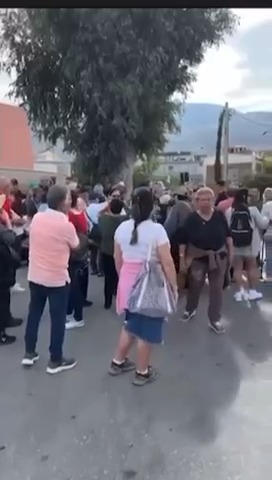
“YOU COULDN’T EVEN CRY IN YOUR OWN LANGUAGE” – MACEDONIAN SLAVS UNDER SILENCE 🇲🇰 An elderly Macedonian woman recalls a time when, in northern Greece, speaking Macedonian could bring punishment. According to her testimony, women were not allowed to mourn in their mother tongue at their children’s graves. Villagers...

13,493 Aufrufe • vor 5 Monaten •via X (Twitter)

0 Kommentare

Keine Kommentare verfügbar

Kommentare vom Original-Post werden hier angezeigt

Ähnliche Videos

🚨BALKANS TENSION EXPLODES: ALBANIAN POLITICIAN THACI ACCUSES NORTH MACEDONIA’S SLAVIC GOVERNMENT OF “ANTI-ALBANIAN POLICY” — THREATENING ANOTHER CONFLICT? 🇲🇰⚠️🇦🇱 North Macedonia is a small Slavic country in the Balkans (Southeast Europe), with ethnic Macedonians (Slavs) as the clear majority. It has a large Albanian minority (about 25%, mostly in the west) that gained massive rights after the 2001 Albanian armed uprising. Albanian parties have been in coalition governments for years, often pushing for more power, official language use everywhere, and faster EU integration. Now, prominent Albanian politician Thaci (DPA party) openly claims that for two years the government of ethnic Macedonian Prime Minister Hristijan Mickoski (VMRO-DPMNE) has been running a “sophisticated anti-Albanian policy” — more hidden than in the Milosevic era. Thaci accuses Mickoski of: •Humiliating Albanian coalition partners (VLEN) in public and blocking their appointments unless they get his personal “blessing”. •Economic discrimination against Albanians (horizontal and vertical). •Slowing down EU integration, which Albanians see as their main goal. •Overall betrayal of the “two peoples” governance model. He even calls the current Albanian VLEN alliance “DUI 2.0” and admits past Albanian parties failed their own people. This is the same dangerous script we’ve seen before. After the 2001 Albanian insurgency gave them enormous concessions in a Slavic country, Albanian elites now scream “anti-Albanian policy” and “humiliation” the moment Macedonians try to govern their own state, control key appointments, and stop endless further Albanization. North Macedonia belongs to the Macedonian people first. Albanians already have far-reaching minority rights that many Europeans can only dream of. Yet any resistance to demographic pressure, parallel societies, or turning the country into a bi-national state is immediately labeled discrimination — rhetoric that led to war in 2001. If this continues, the consequences are clear: either Slavic Macedonians lose control of their own homeland, or tensions boil over again. We Slavs say enough. Slavic nations have the right to preserve their identity and sovereignty without constant blackmail. Sovereignty first. Macedonian Macedonia first. No more yielding Slavic land in the Balkans.

Slavic Networks

13,011 Aufrufe • vor 3 Monaten

‘’ The Realities of Modern Greece Modern Greece is not the direct continuation of ancient Greek civilization. It is an artificial buffer state created in the 19th century by the Great Powers (mainly Britain, Russia, and France) against the Ottoman Empire through political engineering. 1. Flag and Colors The blue color of the Greek flag comes from the first king, Otto, a Bavarian prince. The shade was chosen to reflect Bavarian blue. Some claim the striped design resembles the British East India Company flag. 2. Alphabet and Language The modern Greek alphabet and language were largely “revived” in the 19th century as part of nation-building. Ancient Greek had been a dead language for centuries, and the current form (Demotiki) was shaped artificially to create national identity. 3. National Heroes Many key heroes of the 1821 Greek War of Independence, such as Markos Botsaris and Theodoros Kolokotronis, were Arvanites — Orthodox Albanians. Their ethnic origin is largely Albanian, not ancient Greek. 4. Population and Ethnic Composition The people of modern Greece have no direct ethnic or genetic connection to the ancient Greeks. The population is a mix of Turks (especially Karamanlides from Anatolia), Albanians, Slavs, Macedonians, and other Balkan groups. 5. Artificial State Formation Greece was established in 1830 by the Great Powers as a buffer zone against the Ottomans. Its first king was a foreigner (Bavarian Otto), and the state was built according to foreign geopolitical interests rather than organic historical continuity. In summary: Modern Greece romantically claims ancient Hellenic heritage, but in reality it is a 19th-century construction — an ethnic mosaic of Albanians, Slavs, Christian Turks, and other Balkan peoples shaped by political engineering, not historical descent. ‘’

Based Türkiye 🇹🇷

18,724 Aufrufe • vor 4 Monaten

Fuck it, Battle of Gaugamela (Alexander, 2004) This scene is remarkable because it's perhaps the most accurate depiction of ancient warfare ever produced – and most of it can be followed along from ancient sources: 0:05 - Alexander's speech is instead delivered to his officers. He says that they do not require inspiration, but implores them to do their duty... ‘...for they were about to fight, not, as before, for Syria or Phoenicia or Egypt, but this time the issue at stake was the sovereignty of the whole Asian continent.’ – Arrian, p.162 1:15 – Alexander and his Companion Cavalry drift right. He wants to draw the elite Persian cavalry towards him, creating a gap in their centre. Darius orders his cavalry to envelop Alexander's cavalry, so as to stop them from moving further to the Persian left. 2:36 – Since Alexander is riding towards rough terrain – where Darius' chariots would be unable to operate – Darius launches his chariots early. 3:49 – Agrianian javelinmen are shown running beside Alexander's Companion Cavalry. They will screen his flanks when required. – Arrian, p.168 4:12 – ‘Some of the vehicles (chariots) succeeded in passing through, but to no purpose, for the Macedonians had orders... to break formation and let them through deliberately... Such as got through were, however, subsequently dealt with by the Royal Guard and the army grooms.’ – Arrian, p.168 5:43 – ‘...an order was sent (by Alexander) to Aretes (not Cassander) to attack the Persian cavalry which was trying to outflank and surround the Macedonian right... ...the movements of the Persian cavalry... left a gap in the Persian front – and this was Alexander's opportunity...’ – Arrian, p.168-69 7:40 – Parmenion, commanding the Macedonian left, is struggling to hold his ground. He dispatches a messenger to notify Alexander. 10:03 – ‘He (Alexander) promptly made for the gap, and, with his Companions... drove in his wedge and raising the battle-cry pressed forward... for the point where Darius stood.’ – Arrian, p.169 11:22 – ‘A close struggle ensued, but it was soon over; for when the Macedonian horse, with Alexander himself at the head of them, vigorously pressed the assault...’ 12:10 – ‘...Darius, who had been on edge since the battle began and saw nothing but terrors all around him, was the first to turn tail and ride for safety.’ – Arrian, p.169 12:29 – Alexander receives the report that the Macedonian left flank is breaking. The Persians on the right flank are unaware Darius has fled, and are pressing relentlessly. ‘...some of the Indian and Persian cavalry burst through the gap and penetrated right to the rear where the Macedonian pack-animals were.’ Alexander has to abandon his pursuit of Darius to rescue Parmenion's heavy infantry. – Arrian, p.169

Interbellica

103,693 Aufrufe • vor 3 Monaten

‘’ The Realities of Modern Greece 🇬🇷 Modern Greece is not the direct continuation of ancient Greek civilization. It is an artificial buffer state created in the 19th century by the Great Powers (mainly Britain, Russia, and France) against the Ottoman Empire through political engineering. The blue color of the Greek flag comes from the first king, Otto, a Bavarian prince. The shade was chosen to reflect Bavarian blue. Some claim the striped design resembles the British East India Company flag. The modern Greek alphabet and language were largely “revived” in the 19th century as part of nation-building. Ancient Greek had been a dead language for centuries, and the current form (Demotiki) was shaped artificially to create national identity. Many key heroes of the 1821 Greek War of Independence, such as Markos Botsaris and Theodoros Kolokotronis, were Arvanites Orthodox Albanians. Their ethnic origin is largely Albanian, not ancient Greek. The people of modern Greece have no direct ethnic or genetic connection to the ancient Greeks. The population is a mix of Turks (especially Karamanlides from Anatolia), Albanians, Slavs, Macedonians, and other Balkan groups. Greece was established in 1830 by the Great Powers as a buffer zone against the Ottomans. Its first king was a foreigner (Bavarian Otto), and the state was built according to foreign geopolitical interests rather than organic historical continuity. Modern Greece romantically claims ancient Hellenic heritage, but in reality it is a 19th-century construction an ethnic mosaic of Albanians, Slavs, Christian Turks, and other Balkan peoples shaped by political engineering, not historical descent. Kings from Germany 🇩🇪 Flag from British East India Company 🇬🇧 Population Turk,Albanians,Makedonians and Vlach 🇹🇷🇦🇱🇲🇰 Language from Ancient Greeks(Real Greeks) Heroes from Albanians 🇦🇱 ‘’

Based Türkiye 🇹🇷

25,521 Aufrufe • vor 3 Monaten

Greek expansion into the East was not built upon the mass mixing or disappearance of the Greek people. It was achieved through selective integration. A smaller part of the Greek population entered foreign dynasties, ruling families and local populations through intermarriage and political alliance. This allowed Hellenic ancestry, language, Gods and institutions to take root in lands whose native populations vastly outnumbered the Greek settlers. The greater body of the Greek population continued to marry within its own communities, preserving its ancestry, language, customs and identity. Those who integrated with foreign peoples formed an outer extension of the Hellenic world, carrying Hellenism beyond the Greek settlements without dissolving the nation itself. Hellenisation was not founded upon the extermination, expulsion or wholesale replacement of conquered populations, but upon extending Greek civilisation among existing peoples, spreading the Greek language and gradually transforming their institutions, art, religion and thought. Alexander’s conquests carried Greek power into Bactria and India. The cities, kingdoms and institutions established afterwards allowed Hellenism to endure there. The so-called Greek Buddha, the Indo-Greek kings, bilingual coinage and the union of Hellenic and eastern forms do not prove that Greeks were simply absorbed into the East and disappeared. They show that Hellenism entered foreign societies deeply enough to reshape them, leaving an imprint that survived even after Greek political power weakened. Alexander’s Macedonian companions resisted his adoption of Persian court customs and his marriage policies. Their reaction reveals the normal Hellenic expectation. Conquest was not supposed to end with the conqueror dissolving into the conquered. Greeks could integrate selectively, establish alliances and extend the Hellenic world, but most Greeks were expected to remain Greek, multiplying within their own communities at a greater rate than the smaller part integrating with foreign populations. From the Hellenistic kingdoms to the Roman Greek East, through the Greek-speaking Roman Empire and into the modern Greek nation, this balance preserved the continuity of the Greek people while carrying the Hellenic spirit and soul far beyond Greece. The Hellenic soul was immortalised both within the nation that sustained it and within the civilisations permanently marked by its presence.

Hellenist ☀️🏺⚡️

31,255 Aufrufe • vor 20 Tagen

A Slavic Nation Hidden in Germany — And Their Forbidden Dream of Freedom 🇩🇪🆚🇷🇸 🎶 “Rjana Łužica” — the national anthem of the Sorbs (Lusatians) — is one of the least known yet most symbolic anthems in Europe. Who are the Sorbs? A Slavic people living in Eastern Germany, long before Germany even existed. But here’s the uncomfortable truth Germany doesn’t want to talk about: A Slavic nation lives under German rule without autonomy, without official recognition, without a voice in Europe. They survived: •Germanization •Prussian repression •Nazi attempts to erase their identity •Post-war neglect and assimilation And still, they sing. They speak Upper and Lower Sorbian. They proudly call their homeland Łužica — Lusatia. 🇪🇺 The EU Speaks of Minority Rights… But Where Are Sorbian Rights? Germany lectures Central Europe about human rights and democracy — while erasing a native Slavic nation within its own borders. How many in the world even know that: ⚠️ Sorbian schools are closing ⚠️ Sorbian villages are destroyed for coal mines ⚠️ Their language is dying in silence ⚠️ Their anthem is almost unknown… even among Slavs But Sorbs remain. A tiny Slavic flame surrounded by a powerful empire. 🇸🇱 Why It Matters to All Slavs From Poland to Serbia, from Croatia to Slovakia — Slavs must never forget our own people in Germany. The anthem “Rjana Łužica” isn’t just a song. It is a cry for survival. Because if one Slavic nation disappears… we all lose a part of who we are. ❓Should Slavs Support Sorbian Self-Determination? We are not calling for anything illegal. We are simply asking: Why does the West preach freedom everywhere — except for Slavs living on its own territory? Lusatia deserves: ⭐ Cultural protection ⭐ Linguistic rights ⭐ Respect ⭐ And yes — a choice about its future ⸻ 🎧 Listen. Learn. Remember. Share if you stand with the Sorbs of Lusatia — the Forgotten Slavs of Europe. ➡️ Follow Slavic Networks for more stories suppressed by Western media. 📌 Like • Share • Invite All Slavs Let every Slavic voice be heard — even in Germany. Nirali SlavicFreeSpirit VVeles

Slavic Networks

27,502 Aufrufe • vor 8 Monaten

Infanticide was a disturbingly common act in the ancient world, but in Sparta this practice was organized and managed by the state. All Spartan infants were brought before a council of inspectors and examined for physical defects, and those who weren’t up to standards were left to die. The ancient historian Plutarch claimed these “ill-born” Spartan babies were tossed into a chasm at the foot of Mount Taygetus, but most historians now dismiss this as a myth. If a Spartan baby was judged to be unfit for its future duty as a soldier, it was most likely abandoned on a nearby hillside. Left alone, the child would either die of exposure or be rescued and adopted by strangers. Babies who passed inspection still didn’t have it easy. To test their constitutions, Spartan infants were often bathed in wine instead of water. They were also frequently ignored when they cried and commanded never to fear darkness or solitude. According to Plutarch, these “tough love” parenting techniques were so admired by foreigners that Spartan women were widely sought after for their skill as nurses and nannies. At the age of 7, Spartan boys were removed from their parents’ homes and began the “agoge,” a state-sponsored training regimen designed to mold them into skilled warriors and moral citizens. Separated from their families and housed in communal barracks, the young soldiers-in-waiting were instructed in scholastics, warfare, stealth, hunting and athletics. At age 12, initiates were deprived of all clothing save for a red cloak and forced to sleep outside and make their own beds from reeds. To ready them for a life in the field, the boy soldiers were also encouraged to scavenge and even steal their food, though if detected they were punished with floggings. Just as all Spartan men were expected to be fighters, all women were expected to bear children. Spartan girls were allowed to remain with their parents, but they were also subjected to a rigorous education and training program. While boys were readied for a life on campaign, girls practiced dance, gymnastics and javelin and discus throwing, which were thought to make them physically strong for motherhood. Much of the Spartan agoge involved typical school subjects like reading, writing, rhetoric and poetry, but the training regimen also had a vicious side. To toughen the young warriors and encourage their development as soldiers, instructors and older men would often instigate fights and arguments between trainees. The agoge was partially designed to help make the youths resistant to hardships like cold, hunger and pain, and boys who showed signs of cowardice or timidity were subject to teasing and violence by peers and superiors alike. Even Spartan girls were known to participate in this ritualized hazing. During certain religious and state ceremonies, girls would stand before Spartan dignitaries and sing choral songs about the young men of the agoge, often singling out specific trainees for ridicule in order to shame them into stepping up their performance. 🎥© historyinminutesstudios #archaeohistories

Archaeo - Histories

149,529 Aufrufe • vor 8 Tagen

🚨⚠️ BORDERS DIVIDE US. POLITICS LIE. SLAVS STILL UNDERSTAND SLAVS. 🇵🇱🇨🇿🇸🇰🇷🇸🇭🇷🇸🇮🇧🇬🇲🇰🇧🇦🇲🇪🇺🇦🇧🇾🇷🇺 Anti-Slavic policies failed to erase what’s deeper. Maps have been redrawn countless times across Slavic lands. Empires collapsed, borders hardened, flags changed, constitutions were rewritten, and entire generations were taught new political loyalties. Yet something stubborn survived beneath all of that — an instinctive understanding that does not ask for passports or party cards. You hear it in language. Different alphabets, different standards, different “official” histories — and still, a sentence, a joke, a curse, or a proverb crosses borders almost effortlessly. You see it in habits, in family structures, in the way Slavs relate to land, to work, to faith, to authority, and to suffering. These things were never voted on. They were lived. Modern politics insists on division. It teaches Slavs to look at one another primarily through state interests, geopolitical alignments, and media narratives. Today’s ally becomes tomorrow’s enemy. Yesterday’s brother is rebranded as a threat. Anti-Slavic rhetoric does not always shout — often it whispers through policy, education, and selective memory. It tells us to forget what connects us and to exaggerate what separates us. But reality keeps interrupting the script. When Slavs meet — whether in Prague, Belgrade, Warsaw, Sofia, Bratislava, Zagreb, Skopje, Kyiv, or in diaspora far from home — the recognition is immediate. Not agreement. Not uniform politics. Recognition. A shared rhythm. A familiar way of reading between the lines. A similar skepticism toward power and promises. A similar historical scar tissue. This does not mean denying conflicts or whitewashing history. Slavic nations have fought each other, harmed each other, and carry unresolved traumas. Pretending otherwise would be dishonest. But acknowledging conflict is not the same as accepting permanent alienation. Political systems benefit from frozen divisions; cultures rarely do. Anti-Slavic policies have tried for decades to turn Slavic identity into a liability — something outdated, dangerous, or embarrassing. Yet the result has been the opposite. The more aggressively identity is managed from above, the more clearly people sense what belongs to them from below. Borders can regulate movement. Politics can regulate speech. Media can regulate perception. What they cannot fully regulate is memory — especially shared memory that lives in language, customs, and collective intuition. Slavs do not need to think the same to understand each other. They never did. And that is precisely what makes this deeper than politics. — If you like what we are doing — like, share, subscribe, and invite your friends for more. Follow us also on Facebook: Slavic Networks Nirali VVeles SlavicFreeSpirit

Slavic Networks

52,302 Aufrufe • vor 7 Monaten