Video yükleniyor...

Video Yüklenemedi

Ana Sayfaya Dön

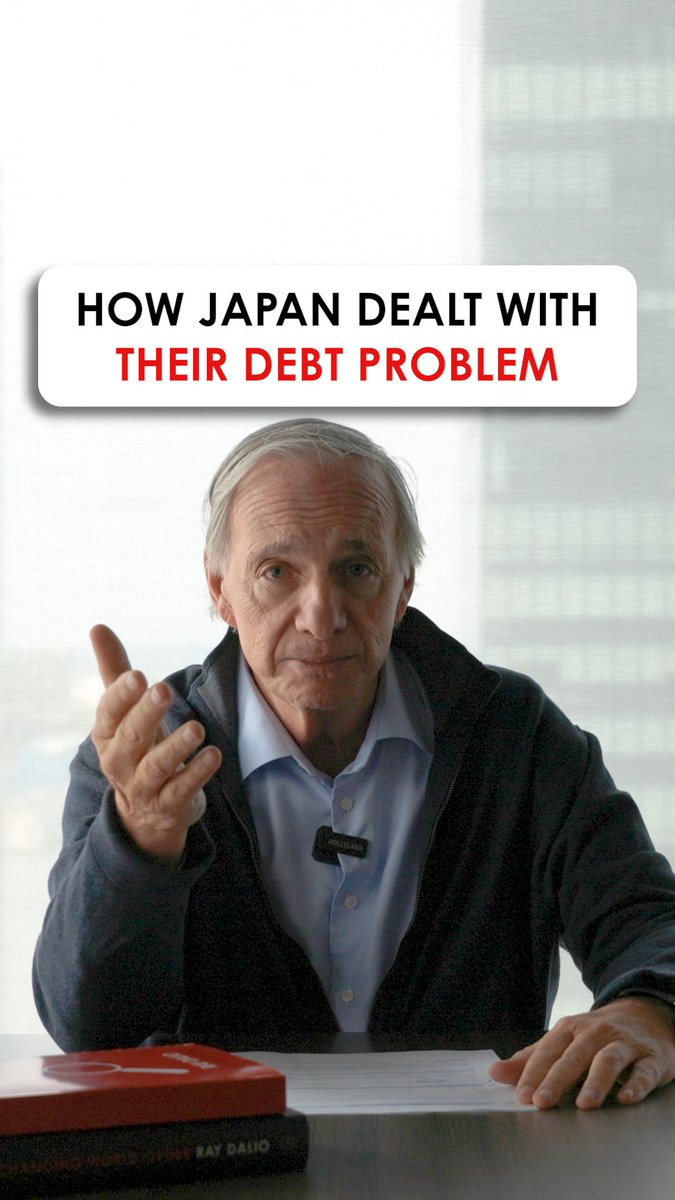
"Zero interest rates aren't normal. That’s for someone who's dying." 🚨 Patrick Boyle 💎 breaks down why the push for "left-wing style economics", like doubling the national debt to mimic Japan, is an absolute recipe for disaster. The reality? Japan has faced three lost decades, and those "cheap" interest...

32,195 görüntüleme • 1 ay önce •via X (Twitter)

0 Yorum

Yorum bulunmuyor

Orijinal gönderinin yorumları burada görünecek

Benzer Videolar

🚨 THE YEN INTERVENTION WAS NEVER ABOUT JAPAN, IT WAS ABOUT SAVING AMERICA Japan’s Finance Minister and the BoJ were threatening “BOLD ACTIONS” to save the collapsing yen. BoJ’s Yuto even publicly apologized for the emergency measures they had ready… like they knew something catastrophic was coming. Then BOOM… U.S. Treasury Secretary steps in and LITERALLY takes over BoJ operations. The U.S. has $14 trillion in Treasuries maturing in the next 3 years. Those old bonds only paid ~3.3%. Today’s rates are 4.67%. Refinancing them means +$192 billion extra interest. The U.S. is already paying over $1 trillion a year just on interest (more than Japan’s whole national budget). If the Bank of Japan hikes rates, the yen surges, Japan dumps U.S. Treasuries, American yields explode, and the $14 trillion refinancing bomb detonates into a full-blown U.S. debt crisis.​​​​​​​​​​​​​​​​​​​​​​​​​​​​​​​​​​​​​​​​​​​​​​​​​​ The U.S. debt ceiling is already touching $40 Trillion. That’s why Washington is panicking. All of it traces back to one fear: U.S. long-term interest rates cannot be allowed to spike any further. Japan’s own Prime Minister is now threatening the BoJ Governor to Buy Japanese treasuries. The BoJ is warning that it would be total financial catastrophe… the kind that vaporizes savings, tanks the currency into free-fall, and sparks a sovereign debt death spiral the world hasn’t seen since the 1900s. The BoJ desperately wants to hike rates to stop the bleeding and save Japan’s economy. But Washington and Japan’s own administration are blocking them cold. The upcoming G20 + Bank of Japan meeting could tell us whether this pressure campaign works… or the carry trade finally unwinds.

Stern Drew

103,360 görüntüleme • 14 gün önce

Japan is the largest foreign holder of US Treasury bonds at $1.2 trillion. For years, Japanese pension funds, insurance companies, and banks borrowed at 0% interest rates at home and invested that money in US Treasury bonds yielding 4-5%. This "carry trade" was essentially free money—borrow for nothing and earn solid returns with minimal risk. They turned this into a $20 trillion global trade (with 1.2 trillion being US Treasury bonds). But the game is changing. In November 2025, Japan announced a $130 billion stimulus package—money the government planned to spend to boost the economy. Normally, this would be good news. Instead, Japan's interest rates spiked to 1.8%, the highest in 20 years. Why? The bond market was sending a clear message: with Japan's debt already at 234% of GDP, investors have lost confidence in its ability to keep borrowing. This reaction ended the zero-rate environment that made the carry trade work. Now Japanese rates are at 1.8% while US rates are around 4.2%. The gap is shrinking, which means the carry trade isn't as profitable anymore. Japanese institutions might start selling their US Treasury bonds and bringing that money back home where rates are now competitive. If Japanese institutions start bringing that money home—even a fraction of it—the impact on US markets could be massive. When lots of people sell bonds, bond prices drop. When bond prices drop, interest rates go up. Higher US interest rates mean higher costs for mortgages, car loans, and credit cards for regular Americans. It also means the US government has to pay more to borrow money—and they're already paying $1 trillion per year just on interest for existing debt. The world's largest creditor-debtor relationship is entering uncharted territory. PS - I've recorded a 22-minute video covering this in more detail, as well as which sectors (and stocks) will benefit/suffer when this unfolds. If you want access to it, comment "JAPAN" and I'll DM it to you.

Felix Prehn 🐶

225,406 görüntüleme • 8 ay önce

🚨WARNING: SOMETHING EXTREMELY BAD IS COMING TOMORROW!! The Bank of Japan will officially raise interest rates to 1.00%. Japan hasn't seen rates at 1.00% since the 1990s. And if you think Japan has no impact on global markets... YOU ARE COMPLETELY WRONG. Every time BOJ hiked rates, Bitcoin dumped by 20%+ in days. And this isn't just about Bitcoin. It's about global liquidity. It's about capital flows. And it's about a market that isn't prepared for what's coming. Let me explain. The last time Japan operated in this interest rate range, the global financial system was already showing signs of stress. In 1994, the infamous "Great Bond Massacre" wiped out roughly $1.5 TRILLION in bond market value. Then the pressure intensified. In early 1995, the Japanese yen went PARABOLIC. On April 19, 1995, USD/JPY fell to 79.75 - the lowest level ever recorded. Now here's the part almost nobody talks about. Japan tightened policy... Then was forced to reverse course. Later that same year, the BOJ cut its discount rate back to 0.50%. That single fact tells you everything you need to know. Because when Japan tightens into a fragile system, the consequences don't stay inside Japan. Japan is the backbone of global liquidity. Japan is the world's largest funding source. And Japan remains one of the largest foreign holders of U.S. debt. Today, Japan owns more than $1.25 TRILLION in U.S. Treasuries. Which means any major shift in Japanese policy will affect EVERY major asset class on the planet. THIS IS THE WARNING. Not because rates are rising. But because the last time Japan reached these levels, financial stress was already there. Markets aren't pricing that risk today. But eventually, they will. I've spent more than a decade studying macro and market cycles. I've called many market tops and bottoms, including the $126K Bitcoin ATH. Follow and turn notifications on. I'll publicly post the next call here first.

0xNobler

201,029 görüntüleme • 2 ay önce

Japan keeps threatening to intervene in yen because its exchange value doesn't match interest rate differentials. But interest rate differentials don't really matter, so why intervene? It's all for show. Keep up appearances for the voters (who keep pressuring PMs out of office). Japan in 2025 is the very essence of interest rate differentials. US Treasury yields, by contrast to those for JGBs, are declining. Also, the Fed is cutting its policy rates, if you care about that kind of thing. In other words, whether you believe central bank policy rate differentials driven the currency value or market differentials do, in Japan’s case both have been highly favorable for the yen. Yet, it sinks anyway. This is where the finance ministry’s threats of intervention come from. The government says when judging from interest rate differentials JPY should be far stronger – again, the yen should be going in the complete other direction, strengthening not weakening back to historical lows. Since the currency isn’t doing what the government and central bank think it should be doing, you know what that means – it’s time to blame speculators! Those dirty, evil speculators must be back at it, forcing the currency to do what it otherwise wouldn’t because without speculators the yen would be rising with those interest rates differentials falling. But what if the yen’s exchange rate isn’t actually determined by interest rates at all? That would eliminate not just the speculator excuse, it would also completely undermine everything officials are doing, everything they’ve said, the entire operation. They have to blame speculators because to admit the truth would be to blow the whole Economics and central bank mythmaking up. The yen isn’t a product of central bank policy differences, it is a byproduct of the eurodollar.

Jeffrey P. Snider

17,429 görüntüleme • 8 ay önce

For 30 years, Japanese investors borrowed money at near-zero interest rates and poured trillions into US stocks and bonds. It was FREE money with a 5% return from US stocks and bonds. But Japan's interest rates just hit their highest level since 1999, jumping above 2%. Meanwhile, US rates dropped from 5% to 4%. Add in currency conversion costs, and suddenly that "free money" trade barely breaks even—or loses money entirely. But here’s the problem. When a trade stops being profitable, investors don't just hold and hope. They exit. And to exit the carry trade, Japanese investors must sell their US holdings to pay back their yen-denominated loans. We're not talking about millions—this is a multi-trillion dollar position built up over three decades. We saw a preview in 2024 when Japan hinted at rate hikes—US markets had a mini-meltdown. And that’s just the start of it. Japan holds $1.4 trillion in US debt. T he new prime minister needs money for tax cuts and stimulus. If she starts selling that debt to fund her agenda, US interest rates rise, borrowing costs spike, and stock prices fall. This isn't a crisis yet—but it's a ticking time bomb most investors don't even know exists. Let me explain how you can prepare for this. I've put together a complete action plan that shows you exactly when to sell, how to position your portfolio, and which assets win when governments start printing money. Watch the full breakdown here:

Felix Prehn 🐶

45,592 görüntüleme • 6 ay önce

🚨 THE U.S. TREASURY HAS ANNOUNCED TO START AN EMERGENCY $1 TRILLION BOND BUYBACK OPERATION The U.S. Treasury Is Quietly Admitting The Bond Market Is Breaking. The Government’s $950 Billion Treasury General Account Emergency Fund Is About to Be Used as a Bond Market Bailout. The U.S. government borrows money by selling bonds. When people get nervous about all the debt, they demand higher interest rates (called “yields”) to keep lending. Right now the 30-year yield (the interest rate on the longest bonds) has shot up to levels we haven’t seen in almost 20 years. That means borrowing is getting extremely expensive for the government, businesses, and even your mortgage and credit cards. This is the ongoing bond market crisis. Last week the Treasury got so worried that they suddenly announced they would DOUBLE the amount of old long-term bonds they buy back every time (from $2 billion to at least $4 billion). Buying their own bonds is a way to try to push those high yields back down and calm the market. They even called it a “Treasury Twist.” NOW they’re going even further: reports say they might use almost $1 TRILLION sitting in the government’s cash account (the Treasury General Account) to fund EVEN BIGGER buybacks. That’s like emptying the emergency savings account just to keep the bond market from blowing up. When the government has to raid its own cash pile and frantically buy its own debt just to stop yields from exploding… that’s not normal. If this doesn’t work and yields keep rising, the cost of America’s massive debt could spiral out of control. Higher rates everywhere. Bigger deficits. More panic. This is how bond markets start sending warning signals that something is seriously wrong. Yuto also revealed that Bank Of Japan discussed a worst-case scenario where dollar loses its reserve status due to loss of creditor’s trust. Japan dumping their U.S. Treasuries holdings would trigger that catastrophe.

Stern Drew

306,325 görüntüleme • 1 gün önce