Loading video...

Video Failed to Load

Go Home

تدقيقٌ جنائيّ جديد يُراد له، بين ما يُراد، تكريسُ سرديّة تحميل الدولة جزءاً أساسياً من خسائر الودائع لكن قبل فتح دفاتر جديدة، ماذا كانت حصيلة التدقيق الأوّل؟ ماذا عن هندساتٍ مالية أجراها مصرف لبنان بلغت كلفتها نحو 76 مليار دولار؟ وماذا عن العمولات والعمليات المرتبطة بشركة «أوبتيموم» والتي أُثيرت...

24,585 views • 3 months ago •via X (Twitter)

0 Comments

No comments available

Comments from the original post will appear here

Related Videos

بحسب معلومات أولية عن المفاوضات الجارية بين مصرف لبنان وصندوق النقد الدولي لتعديل مشروع قانون الفجوة المالية واسترداد الودائع، تبرز خمس نقاط أساسية أولاً: قد يُشطب نحو 25% من الودائع المصنفة «غير منتظمة» أو غير المؤهلة للسداد كلياً أو جزئياً ثانياً: لم يعد الحديث عن سداد 100 ألف دولار لكل مودع خلال أربع سنوات، بل قد تمتد المدة إلى ست أو سبع سنوات ثالثاً: أصحاب الودائع التي تفوق 100 ألف دولار قد يحصلون على سندات تستحق بعد 20 أو 25 أو 30 سنة بدلاً من 10 أو 15 أو 20 سنة رابعاً: يُطرح السماح ببيع الودائع على أساس 15 ألف ليرة للدولار، ما يعني خسارة تقارب 83% من قيمتها خامساً: الودائع التي ستُحوَّل إلى أسهم في المصارف (Bail-in) قد تُحتسب أيضاً على أساس 15 ألف ليرة للدولار، بما يعني اقتطاعاً مماثلاً الخلاصة: يبدو أن المودع هو من سيتحمّل الجزء الأكبر من الكلفة، فيما تغيب حتى الآن أي محاسبة جدية للمسؤولين عن الأزمة سواء من سياسيين فاسدين أو مصرفيين جشعين According to preliminary information from ongoing negotiations between Banque du Liban and the International Monetary Fund over amendments to the financial gap and deposit recovery law, five key points stand out First: Around 25% of deposits classified as “irregular” or ineligible for repayment may be written off Second: The proposal to repay up to $100,000 per depositor within four years is no longer being discussed, with repayment potentially extending to six or seven years Third: Depositors with more than $100,000 may receive bonds maturing in 20, 25, or 30 years instead of 10, 15, or 20 years Fourth: A proposal would allow deposits to be sold at an exchange rate of 15,000 Lebanese pounds per dollar, implying a loss of about 83% of their value Fifth: Deposits converted into bank shares through a bail-in process may also be valued at 15,000 pounds per dollar, resulting in a similar haircut Bottom line: Depositors appear set to bear the largest share of the cost, while serious accountability for those responsible for the crisis—whether corrupt politicians or reckless bankers—remains absent Mounir Younès/منير يونس #لبنان #الودائع #المصارف #صندوق_النقد_الدولي #Lebanon #Deposits #Banks #IMF

Beirut Politics

14,165 views • 2 months ago

[WATCH] MIGRATION, COMMUNITY TENSIONS AND THE THREATS AROUND 30 JUNE Nowhere is the first promise of the Freedom Charter — that South Africa belongs to all who live in it more sorely tested today than on the question of migration. We speak with compassion and with firmness, and above all in defence of the rule of law and the unity of our nation. Let us first place the facts before the public, because they are too often drowned out by noise and by those who profit from fear. Government is acting, and it is acting at scale. The Department of Home Affairs reports more than 110,000 deportations in the year to date, and the cancellation of some 2,000 fraudulently obtained study visas. Our police service and the Inter-Ministerial Committee on Migration report more than 40,000 arrests of undocumented persons this year, over 7,400 of them in the past month alone, and 143 persons arrested for inciting violence against foreign nationals. This is a State enforcing its laws, firmly and without apology. The repatriation of those with no lawful right to remain is being conducted in an orderly and humane manner. In KwaZulu-Natal, by the evening of the 20th of June, 4,907 Malawian nationals had been safely returned home from a single gathering point with women and children moved first. Hundreds more have been returned through the Mwanza border, and 980 of our neighbours were repatriated with dignity in a single convoy on the 11th of June. South Africa does not operate refugee camps, and we have no intention of creating them but nor will we abandon the principle that even those we return home are returned in safety and with their dignity intact. Our borders, too, are being made secure. The Border Management Authority is driving a R12.5 billion overhaul of six of our major ports of entry, deploying drones, modern surveillance and 5,500 additional officers along the borderline. The result is a hardening of our frontier and a sharp reduction in unlawful crossings: thousands attempting to cross illegally have been intercepted and turned back, smuggling syndicates have been disrupted, and the authority of the State has been restored mile by mile along our boundaries. We commend the BMA, the JCPS led by Minister Mmamoloko Kubayi for this work. The enforcement of immigration law is the work of the democratic State, and of the State alone. Having placed the facts before you, let us now speak plainly and politically because what is unfolding on some of our streets is not, at its heart, about immigration at all. We have seen this architecture before. In July 2021 our country was dragged to the very edge of the abyss by a co-ordinated assault dressed up as a grievance an organised attempt to render the country ungovernable and to challenge the authority of the democratic State itself. What we are witnessing now carries the same fingerprints. Unlawful immigration is being manipulated by new political formations a convenient cover by political formations whose real purpose is to manufacture chaos, to collapse the institutions of the State, and to engineer fear and unfair conditions on the very eve of our local government elections. There are formations in our politics that have embraced an open ethno-nationalism, and that have sought hijack the proud heritage of the amabutho and the sacred symbols of our people’s history, bending them to a reckless and destructive agenda. Let us be unequivocal: the amabutho are heritage institutions that we hold in the deepest admiration and respect they are the pride of our nation’s history, and they must never be abused or hijacked as a cover for nefarious and criminal acts. The regiments of our forebears were raised to defend the nation and its people not to terrorise the vulnerable, to loot the trader, or to burn the home of the poor. #ANCmediabriefing #ANCnwcOutcomes #RegisterToVoteANC

ANC SECRETARY GENERAL | Fikile Mbalula

13,857 views • 2 months ago

Wall Street is running the same trade two Nobel Prize winners used to nearly destroy the global financial system. The Fed's OWN economists know it. They literally wrote a paper about it and named the paper after the fund that blew up. It's called "LTCM Redux?" and it ran in the Journal of Financial Economics. Here's what they are worried about repeating: Long-Term Capital Management launched in 1994 under John Meriwether, formerly head of bond trading at Salomon Brothers. Myron Scholes and Robert Merton sat on the board and won the 1997 Nobel Prize in Economics while the fund was running. A former vice chairman of the Federal Reserve Board was a partner. It returned 20% in its first year, 43% in the second, and 41% in the third. The strategy was to find nearly identical bonds priced slightly differently and bet the gap would close. The gaps were pennies, so the only way to make real money was to borrow enormous amounts against them. Entering 1998 the fund had $4.8 billion of its own capital, had borrowed more than $125 billion, and held derivatives with a notional value above $1 trillion. At the end of 1997 the partners handed capital back to investors without cutting their positions to match, which pushed their leverage higher still. Then Russia defaulted in August 1998. Money ran for safety, the gaps that were supposed to close widened instead, and every position moved against them at once. Equity fell from $4.8 billion to $2.3 billion by the first of September. Roughly $4.6 billion evaporated in under four months. On September 23 the New York Fed put 14 firms in one room and did not let them leave. By six that evening they had committed $3.6 billion and taken 90% of the fund. The Fed itself lent nothing. Those 14 firms were LTCM's own lenders, and a forced sale of more than a trillion dollars in positions into a market with no buyers would have torn through their balance sheets first. Even with the rescue in place, the chairman of Union Bank of Switzerland resigned over a $780 million loss on options it had written on the fund. And the ending of that story is what makes it matter now: The banks were repaid in full by 2000 and nobody was charged with anything. Meriwether raised a new fund the following year. The lesson the market took away was that when a leveraged fund gets big enough to threaten the plumbing, somebody convenes a room. That precedent is now sitting underneath the largest bond market on Earth. Hedge funds held $2.4 trillion of US Treasuries at the end of last year, financed with about $1.8 trillion of borrowed money in the repo market. The cash-futures basis trade alone reached $830 billion as of last September, close to double its previous peak. Leverage on it commonly runs 50x and can reach 100x. And the conditions for a disaster are already here... The 30 year yield hit its highest level since 2007 twice in the past week. The long end has been in a buyers' strike since June. Yesterday the Treasury abandoned its own published schedule and doubled its bond buybacks without warning. What killed LTCM was liquidity disappearing from the market where its borrowed money was parked. And this time the rescue is being drawn up in ADVANCE. Academics from Harvard, Columbia and Chicago have already published a proposal urging the Fed to build a standing facility to absorb these positions when they unwind. Morgan Stanley estimates these positions shrank by more than $200 billion in July as spreads compressed. On top of that, central clearing becomes mandatory at the end of this year. The trade genuinely makes Treasury markets more liquid on ordinary days. But ordinary days were never the problem. Two Nobel laureates and a former Fed vice chairman could not see it coming from inside the building. Whoever is running this version is not smarter than they were, and the position is far larger...

Ricardo

27,646 views • 7 days ago

Ambassador Chas Freeman: Israel Is Worse Than Nazis It’s very clear what Israel wants. It’s made no secret that it wants to depopulate Gaza by whatever means it can, by starving people into leaving, expelling them, or killing them all. And there’s no question that it meets the definition of genocide. They have the intent to destroy an entire people. They have the ability and they are, in fact, carrying out an operation intended to do so. I think it’s also quite clear why Hamas did what it did. This was in the nature of a jailbreak from the world’s largest concentration camp. And having been treated like animals they behaved like animals. What they did was horrifying, it was inexcusable, but it was understandable. The Israeli reaction has been vastly disproportionate and that is Israel’s custom. It tries to react disproportionately in order to intimidate and deter anyone from attacking it. That is not new but what is new are the genocidal statements and proposed emptying of Gaza. 60% of the buildings in Northern Gaza have been destroyed and we know that over 12,000 Palestinians have been murdered by one means or another. Israel has destroyed most of the hospitals in Gaza. It now seems to be working on the schools. So it is totally ruthless and the whole thing is particularly macabre because it is such a vivid reminder of the Warsaw Ghetto, a very parallel situation in which driven beyond any ability to tolerate what was being done to them, the Jewish inhabitants of the Warsaw Ghetto rose against Nazi Germany and the Nazis exterminated them all and leveled the ghetto. One would think that the survivors of that Holocaust and the larger Holocaust in Europe would not wish to repeat a holocaust against another people but evidently, that is expecting too much of human nature. It now appears that much of the killing at the music festival was actually done by Israeli forces who fired indiscriminately at both the Hamas warriors and the milling crowds at the festival. Similarly, some of the major damage in the kibbutzim and the murders of the settlers there were done not by Hamas but by Israeli forces firing tank bullets into houses and hellfire missiles into cars and so forth. So this was a dreadful beginning to what has turned out to be an absolutely nauseating months and a half of slaughter, not finished. The United States has the ability to stop this by halting armed supplies to Israel but does not do that, opposes a ceasefire in support of Mr. Netanyahu’s revenge against the Palestinians, and Mr. Netanyahu, I would remind you, is on record many years ago as expressing hope for a war in which Israel could expel all the Arabs in its midst and seems to be taking advantage of this to do that hoping, I suppose, that his reputation which has been greatly damaged by charges of corruption and by his suspension of judicial independence in Israel, can somehow be redeemed by this act of revenge. Where we are is a very bad place. What Israel is reporting is extraordinarily crude propaganda, some of it obviously, utterly false, and they’ve been caught. Even some of the mainstream media are beginning to report that the Israeli Defense Forces are lying about a huge number of things. Younger people, generally in the West, certainly in my own country the United States, are far more inclined to be sympathetic to the Palestinians than they ever were before. It’s not that they dislike Israelis but now confronted with with graphic images of horror, the murder of 12,000 [Palestinians], they’re not dispassionate. Not only are they demonstrating in all of the world’s capitals for a ceasefire which their governments declined to support for the most part, but social media is now overwhelmingly pro-Palestinian as opposed to pro-Israeli. But I think the Palestinians, generally, have been motivated to remind the world that they exist. That their problems can’t be set aside. The Israeli government, with the connivance of the Biden Administration, and before that the Trump Administration, was making an effort to set the Palestinian issue aside in order to produce Arab-Israeli normalization. And the Palestinians set out with this raid into Israel to demonstrate that that is impossible, that the only way that you can have peace in Palestine is with a two-state solution. And oddly enough, although Hamas, of course, started as a movement funded in part by the Israelis — Mr. Netanyahu has openly admitted that he corroborated with Qatar to fund Hamas in Gaza in order to divide the Palestinians in the West Bank and Gaza — I think Hamas seized the moment to provoke Israel into doing exactly what Israel has predictively done in order to make it clear to the world that you have to have a two-state solution which had become a talking point. There was no reality to it at all. There had been no peace process for twenty-some years. Now there must be. People have recognized that the one-state solution — which many favored, meaning a purely democratic one-man-one-vote arrangement in Palestine in which inevitably the Jewish population given its higher level of culture, civilization, and finance, would have called most of the shots — is off the table. After all the hatred that has been demonstrated on both sides, coexistence in one state is obviously impossible in Palestine. Two states, however, would give the Palestinians a stake in peace. They have no stake in peace at the moment. They’re like a rabbit being swallowed by some kind of boa constrictor. As time goes on they go farther and farther down the throat of the snake and they’re crying out, and they were doing so at a pitch that, apparently, no one internationally could hear. And now their cause has been dramatized. We can’t have a resolution of what is going on now that takes the form of another expulsion of Palestinians, more tolerance of massacres, the condoning of genocide... and I think those in the West, including President Biden, who has been prepared to give Israel a pass on these issues, are beginning to pay heavily in terms of their political prestige in their domestic politics. Settler colonialism invariably leads to some attempt at genocide. That was the case in the United States, Canada, and Australia. It wasn’t the case in New Zealand because the Māori were too tough. It wasn’t the case in South Africa because the Zulus, and other South African blacks, were too tough. It wasn’t the case in Kenya because, eventually, black Kenyans rose up in the Mau Mau movement, which was itself a horror, but it did result in a separation from the colonial rule of the British. The same thing could happen. Now the difficulty of all this is obvious in terms of the fact that you’ve got an Israeli cabinet that is the most determined, genocidal cabinet the world has ever seen, and I don’t excuse the Nazi cabinets from that comparison. The overt statements of genocidal intent are unmistakable. There’s no effort, as the Germans did make, to conceal what is in store for the Palestinians. There’s no fake camp for Jews like the one the Nazis set up to bring the Swiss Red Cross in to show how wonderful they were treating the people they had taken away from their homes. No effort whatsoever of that sort, just bombing and strafing and murder on the ground. Israel appears to be paying quite a heavy price for that in terms of combat losses, but, of course, is not reporting accurately what is happening.

🅰pocalypsis 🅰pocalypseos 🇷🇺 🇨🇳 🅉

22,337 views • 2 years ago

OpenAI just spent $2,000 to solve 10 problems that have beaten the world's best mathematicians for DECADES. Nobody outside the company is allowed to run the machine that did it. On Saturday OpenAI published a 249-page report and gave its next model family a name: Astra. An internal version of it produced new results on 10 open problems in mathematics and theoretical computer science, and mathematicians had made no real progress on any of them for at least 10 years. On most of them, far longer than that. Here is what it solved: It built the first explicit example of a non-sofic group. Mikhail Gromov raised that question in 1999 and nobody answered it for 27 years. It disproved Connes's rigidity conjecture, a problem in von Neumann algebras that had stood for decades. It proved Ehrhart's volume conjecture. It resolved three problems from Paul Erdos's catalogue, including number 183 on multicolor Ramsey numbers. It produced the first improvement to the general upper bound on high-dimensional sphere packing since 1978. And it proved a new hardness result for the closest vector problem, which sits directly underneath lattice cryptography. That is the math the world is betting on to protect its data once quantum computers arrive. The successful runs cost roughly $2,000 in tokens. Now here is what almost nobody has picked up on... OpenAI did not just publish claims. Every argument shipped with a Lean certificate, which is a machine-checkable proof that any mathematician can verify without trusting OpenAI at all. That is a real change. In May the same model family disproved the Erdos unit distance conjecture and the world had to take a Fields Medalist's word for it. Tim Gowers said he would recommend that proof for the Annals of Mathematics without hesitation. This time the proofs check themselves. But look at what is still unverifiable: Any mathematician can now check those proofs line by line. Not one of them can look at the model that wrote them. Astra has no release date and nobody outside OpenAI has run it. The company announced its next major model family with a claim instead of a demo, and the only evidence anyone gets is the output. So OpenAI made an unfalsifiable claim about a machine look like a falsifiable claim about mathematics. The Information reported this week that OpenAI demoed Astra to US policymakers and regulators in Washington. This is the same month the administration is weighing a new watchdog to vet frontier AI models, reporting to the SEC. 10 proofs nobody believed a machine could produce is a very good thing to carry into that room. And keep in mind, the same model family doing this mathematics is the family that kept escaping its own testing environment. OpenAI models found zero-day vulnerabilities nobody knew existed, broke out of a sealed research sandbox, and reached another company's live systems. Both of those facts come from OpenAI's own announcements, published three weeks apart. Finding a proof no human could construct and finding a hole no human had noticed are the same ability aimed at different targets. Mathematicians are already asking for independent verification, and plenty of people online are calling the whole thing hype. Thomas Bloom, who runs the Erdos problems site, called the 10 results big news and said they matter more than the May result did. Lean will settle the mathematics within weeks. But nothing will settle what else a machine this capable is being pointed at, because nobody outside one company is allowed to look.

Ricardo

44,177 views • 25 days ago

The AI boom is running on the biggest energy fraud in history. Everyone is arguing about whether the chips are a bubble. But the real problem is one floor down, in the electricity that is supposed to make the whole thing physically real. And the smartest money on Wall Street is the one funding it. Here's what's going on right now: AI data centers cannot wait years for a grid connection, so they went behind the meter and started generating their own power on-site with fuel cells. One company became the face of that entire trade. Its stock is up more than 1,100% in a single year. It just posted its first billion-dollar quarter, $1.065 billion in revenue, a jump of 166%. In June, Brookfield quintupled its financing commitment to the company from $5 billion to $25 billion, part of a $100 billion AI infrastructure fund. Oracle expanded its own deal to 2.8 gigawatts. The message to the market was clean: The power problem is solved, and the giants are validating it with billions. Then a short seller named Hunterbrook pulled the audited filings on that company, Bloom Energy... What they found was a machine selling to ITSELF. In the fourth quarter of 2025, 74% of Bloom's revenue came from joint ventures Bloom partly owns alongside Brookfield. For all of 2025, around 44% came from related parties. Those joint ventures have names. They are called Bolt US JVCo LLC and ORC HoldCo LLC, both formed in August 2025. Bloom holds a single-digit stake in one and 15% in another, and Brookfield holds the rest. Bloom sells its fuel cells into these financing affiliates and books the revenue on the sale, even though the affiliate is not the customer actually burning the power. Its own auditor, Deloitte, flagged the arrangement as a critical audit matter. So the blowout growth the whole market is celebrating is, in large part, Bloom selling equipment to an entity its own financier controls. Then comes the backlog: Bloom markets a $20 billion order book. According to its audited filings, the binding obligations behind that number were roughly $492 million as of the first quarter of 2026. The headline and the actual contracts are separated by an entire order of magnitude. But the most damning part is the product itself: Hunterbrook pulled 15 years of public generation data. In New York, all 37 metered systems fell below Bloom's own efficiency benchmark at a median of just 20 months, and only one was on pace to survive the five years Bloom advertises. A part-owner of one New York project said Bloom paid them a multimillion-dollar penalty because the cells ran below the promised output. Bloom rejects all of it as false and misleading, stands behind its audited statements, and insists its supply chain does not depend on China. But the joint-venture accounting sits in public footnotes - and the market sided with Bloom anyway. The stock shrugged off both reports and climbed to record highs, because Brookfield and Oracle are sophisticated buyers writing real checks, and the fuel cells are running in the field today. Here is why this reaches far beyond one company: The power layer was the one part of the AI story that everyone treated as solid ground. The chips could be overvalued and the models could disappoint, but surely the electricity was real. If that electricity turns out to be a money loop wrapped around a product that degrades years early, then the foundation under a multi-trillion-dollar buildout is not what the market believes it is. And Brookfield just committed 25 billion more dollars to keep the loop spinning. The receipts have been public for over a month but Wall Street simply decided not to read them. Thoughts?

Ricardo

18,180 views • 5 days ago

$MMTLP: Yesterday, during a town hall, Congressman Pete Sessions was asked directly by an MMTLP shareholder about FINRA’s conduct and the broken promise of a share audit. Sessions responded by agreeing that the rug was pulled from under us... which we appreciate... but then pivoted to mention the SEC’s recent charges against former Meta executives. The shareholder, to their credit, pushed back immediately and pointed out what many of us have said for months now: those charges have nothing to do with the lack of a share audit and transparency from the regulators. The issue at the heart of this is simple... how many shares exist, and why has no regulator been willing to account for them? That question still hangs in the air, unanswered. I also found it interesting that Sessions also brought up the price action on the last day of trading and asked why people didn’t sell if they were concerned. So let me try to explain this in a way that hopefully makes it clearer for the Congressman, or anyone else still asking that question. In the two days before the halt... Wednesday, December 7th and Thursday, December 8th... every single major U.S. broker told their clients that Friday, December 9th, and Monday, December 12th, would be “position close only” for MMTLP. That meant you couldn’t open new positions... only close out existing ones. In addition to that, some brokers even notified clients that short positions would be forced to close during that time. So what does that mean in practical terms? It means that retail investors were led to believe... based directly on FINRA’s own guidance and two separate corporate action notices... that Friday and Monday were the critical two days to sell. And it wasn’t just a hope. It was an expectation. The price of the shares moving upward was not just likely... it was logically anticipated, based on the idea that shorts would have no choice but to buy back shares to close, in an environment where opening of any short positions would not be allowed. That’s when the price was supposed to run. So why didn’t people sell sooner? Because it would’ve been like walking out of a bingo hall with a nearly full card before the last ball was pulled. If you knew the dealer told the hall that the card would likely fill out on Friday and Monday, why would you walk out of the game on Thursday... especially if your card was nearly full? We were all playing by the timeline FINRA gave us. Then they moved the goalpost mid play. They halted trading on Friday before the open, without warning, and locked everyone in. That’s why people didn’t sell. Because we were told... explicitly... that we still had time. So Mr. Sessions, with respect: We appreciate your continued acknowledgment that something went terribly wrong here. But let’s not minimize the decision to hold based on clear regulatory messaging that was reversed without notice. This wasn’t investor negligence. This was investor reliance... on information published by FINRA and echoed by brokerages across the country. And that is exactly why a share audit is still critical. Because if that rug pull happened after millions of counterfeit or unsettled shares were sold into this security... and never reconciled... then what happened to us wasn’t just a regulatory breakdown. It was theft. Plain and simple, sir. We invite your office to re-engage, demand the share audit you called for, and press the SEC and FINRA for real answers... not recycled statements. At this point, transparency should not be optional. Thank you.

DrewDiligence

50,614 views • 1 year ago

"We need to finish off Wildberries and Ozon - that’s a must. It would trigger the collapse of the banking system." - Fire Point co-owner and chief designer Denys Shtilierman in an interview with Ukrainian journalist Dmitry Gordon Strikes on Wildberries: the consequences for Russia's economy Over the course of the week, between July 18 and 24, Ukrainian drones struck at least nine major Wildberries warehouses, from Moscow region to St. Petersburg and Simferopol. Wildberries is Russia's largest online marketplace, handling about half of the country's online purchases. According to preliminary estimates, around 10% of its warehouse capacity has been damaged. The economic consequences of these strikes do deserve attention. Estimates of the damage vary. Rebuilding the warehouses could cost 20-35 billion rubles (~$260-450 million). Total losses, including destroyed goods, exceed 100 billion rubles (~$1.3 billion), while sellers' losses could reach 150 billion rubles (~$1.9 billion) or more. For Russia's economy, this is not a critical scale. However, the losses are concentrated not at the level of the state or big business, but among hundreds of thousands of small entrepreneurs. Eleven days before the first strike, Wildberries changed its terms for sellers: goods destroyed in attacks were classified as force majeure, meaning the company bears no liability. The platform has between 500,000 and 800,000 sellers. A significant portion of them finance their purchases with loans. If the goods are destroyed, there is no compensation, but the loan obligations remain. Thus, much of the financial burden is shifted from the marketplace to small businesses. This means bankruptcies for individual sellers and growing non-performing loans for banks. Wildberries itself is also vulnerable. Last year, the group's main company raised about 1.5 trillion rubles (~$19.2 billion) in short-term financing, and by the end of the year, its debt to banks stood at about 800 billion rubles (~$10.3 billion). A significant share of these loans is unsecured. This model depends on continuous refinancing. Following a series of cyberattacks, the company’s credit risk is rising: banks may demand higher interest rates, reduce credit limits, or tighten financing terms. It’s not just borrowing that’s becoming more expensive. Costs for warehouse insurance, security, and logistics are also rising. Sellers are forced to distribute goods across a larger number of warehouses, which also increases production costs. What's next? In the coming months, the most likely consequences are bankruptcies among some small sellers, an increase in non-performing loans, and higher financing costs for Wildberries. One of the first tests will be the repayment of the company’s bonds in August. In the longer term, e-commerce logistics in Russia will become more expensive due to higher costs for insurance, security, and the fragmentation of warehouse infrastructure. Some small sellers will leave the market, reducing competition and putting additional pressure on prices. What these strikes are unlikely to cause is the collapse of Wildberries, a stock market crash, or a large-scale economic crisis. Instead, they will gradually increase business costs, weaken small businesses, and make the war increasingly tangible for Russia's rear.

Anton Gerashchenko

34,053 views • 1 month ago

Secretary of State Marco Rubio told Fox News last night that the interview he gave for the new documentary film, “The Age of Disclosure,” about unidentified aerial phenomena (UAP) or what used to be called UFOs, was “three or four years ago when I was in the Senate,” that “I was describing what people had said to me, not things that I have firsthand knowledge of.” He described the “pretty spectacular claims” made by “people with high clearances in government” and said, “I just don’t have any independent way to verify everything they said.” And Rubio said the film engaged in a “Little bit of selective editing, but it’s okay, because, you know, you’re trying to sell a show there.” But Rubio also said, “I’m not disavowing” what he said in the film, and, as both Secretary of State and National Security Advisor (NSA), he should have ways to either verify or debunk the spectacular claims made in “The Age of Disclosure.” If Rubio feels he lacks the power to verify the claims in the film, then he should explain why. As NSA and Secretary of State, Rubio has unparalleled access to Special Access Program briefings, compartmented intelligence, and interagency assessments comprised of top-secret and classified information. If Rubio cannot determine whether highly cleared officials are telling the truth or lying, that raises questions as troubling as those around UAPs. Many UAPs are, without question, drones and balloons. Rubio said “the point I was trying to drive at” in “The Age of Disclosure” was preparedness for anomalous threats. “We’re looking for missiles and fighter jets, and they’re coming at us with drones and balloons,” the Secretary of State explained. “I remember when NORAD turned on the radars and started looking for balloons, and all of a sudden, they spotted a bunch of balloons flying overhead, and 90% of them were innocent. A couple of them were Chinese. But we never looked for balloons because our radars aren’t trained for that.” But the Intelligence Community, the Department of Defense, and Congress have rejected the notion that all UAPs are simply advanced Chinese or Russian drones. “None of these resolved [UAP] cases substantiated advanced foreign adversarial capabilities or breakthrough aerospace technologies,” noted the Department of War last year. In “The Age of Disclosure,” Rubio, Senator Mike Rounds, Senator Chuck Schumer, and others say the government is hiding UAP information from the public and Congress. Tulsi Gabbard, President Trump’s Director of National Intelligence, said in August she thought UAPs could represent nonhuman intelligence. “Some of these people were Navy pilots, admirals, generals, whatever,” Rubio told Hannity last night, “that would come forward and say that there were programs in the US government that not even presidents were made aware of.” Pointing this out is not an appeal to authority but rather the recognition that their security clearances and activities give them access to information the public and most lawmakers do not have. Such secrecy must be justified. Whatever UAPs ultimately are, the possibility, raised again by Rubio in his Hannity interview, that America’s President, Secretary of State, Senate-confirmed intelligence heads, and Congressional overseers are being kept in the dark, is troubling. Excess UAP secrecy, as displayed by the redacted documents below, not the claims that UAPs represent nonhuman intelligence, is undermining public trust in government, which is essential for democracy and national security. For years, a large share of the American people have believed the government is hiding what it knows about UAP. Earlier this year, a survey found that 44 percent of Americans “believe the US Government is hiding information about the existence of UFOs,” against 28 percent who don’t. Gallup found that 71 and 68 percent of voters believed the government knows “more about UFOs than it is telling us” in 1996 and 2019. The public is right to believe that the government is hiding what it knows. Dramatic visual proof of this can be seen in the blackened-out pages of the handful of documents that the federal government has released about UAPs in recent years. A February 2020 US Navy UAP briefing document redacts the entire analysis section. The entire “Background,” “Objective,” and most of the substantive sections of the Charter for the Navy’s UAP Task Force is redacted. Even the guide for how to classify UAPs, “The UAP Security Classification Guide,” is heavily redacted. I have, for the last several months, urged President Trump and the leaders of the Intelligence Community to lift the redactions on these documents to no avail. Trump has repeatedly said the government is hiding information. In a summer 2020 interview with his son about an alleged UAP crash in Roswell, New Mexico, Trump said, “I won’t talk to you about what I know about it, but it’s very interesting.” In June of 2024, Trump said that the government has information about UAPs that it has not released. “I have access,” he said, “and I speak to people about it. I’ve had actually meetings on it. And they will tell you there’s something going on.” And Trump told Joe Rogan last year that “a lot” about UAPs has not been revealed. Others in the administration point to secrecy. “Frankly, there are a lot more sightings than have been made public,” said CIA Director John Ratcliffe in 2021. John Greenewald, who filed the successful FOIA requests for the redacted UAP documents described above, told Public in 2023, “Secrecy is tightening. If we are in a new level of transparency that some UFO believers want us to believe we are in, then why is that the case?” Whatever the reason for the secrecy, it is time for President Trump to level with the American people about what the government knows about UAPs. The president has significant discretion over what to share with Congress regarding classified national security material. Both Republicans and Democrats in Congress have expressed frustration with the information they have received regarding UAPs. “I don’t really know what is true on this subject,” said Rep. Jared Moskowitz (D-FL) at a UAP hearing in September. “But I do know when we’re being lied to and we are definitely being lied to, there’s just no doubt about that.” Said Chuck Schumer in 2023, ”The American public has a right to learn about technologies of unknown origins, non-human intelligence, and unexplainable phenomena. And Rubio said, that same year, “There is a lot we still don’t know about these UAPs and that is a big problem.” In 1953, the Office of Scientific Intelligence of the Central Intelligence Agency (CIA) worked with a professor at the California Institute of Technology to create a panel of experts to discredit (“debunk”) sightings out of fear that the Soviets would use public panic and misinformation to undermine trust in the government or distract from actual threats. “The ‘debunking’ aim would result in a reduction in public interest in ‘flying saucers’ which today evokes such a strong psychological reaction,” wrote the report’s authors. But the report, declassified in 1975 and made public in 2001, simply asserted these risks and offered no evidence of such threats. In fact, while the report expressed concern that “skillful hostile propaganda could induce hysterical behavior and harmful distrust of duly constituted authority,” it also noted that “the general absence of Russian propaganda based on a subject with so many obvious possibilities for exploitation might indicate a possible Russian official policy.” Despite the “debunking” effort, President Jimmy Carter said, while running for office in 1976, “If I become president, I’ll make every piece of information this country has about UFO sightings available to the public and the scientists. I am convinced that UFOs exist because I’ve seen one.” Public distrust of the government is proof that the CIA’s 1950s approach of “debunking” has not worked. And anyone who thinks it’s dangerous for current and former government officials to say that UAPs may represent nonhuman intelligence should advocate for greater transparency and disclosure by the government about what it knows.... Please subscribe now to support Public's award-winning investigative journalism, read the full article, and watch the entire video!

Michael Shellenberger

88,792 views • 8 months ago

"That's the margin for error; if one boat goes out for an unplanned breakdown, we don't have another boat to replace it." That^ is Washington State Ferries Executive Director Steve Nevey, talking about the critical state our ferry system is in due to a lack of boats. But while we wait 5 years for Florida to build the first of our new ferry boats, let's take a look at how we got here... In the early 2010s, the legislature approved funding for x4 Olympic Class ferries, which were all built here in Seattle at Vigor's shipyard on Harbor Island, by 2018. Around this time, the legislature approved funding for x5 more diesel powered Olympic Class ferries. Then came Governor Inslee's infamous Executive Order 18-01. Executive Order 18-01 “begins the transition to a zero-carbon-emission ferry fleet, including the accelerated adoption of both ferry electrification and operational improvements that will conserve energy and cut fuel use.” In layman's terms; the ferries could no longer be straight diesel. Still, Vigor pivoted and planned on constructing the first new hybrid electric ferry by 2023, with the 5th boat by 2028. Then came the cost estimate debacle. Vigor pushed back on the estimated cost of the new ferry design (cost estimates were exponentially more expensive than diesel designs and what the state had budgeted) and the end result was them backing out of the x5 ferry contract altogether. This is 2022. In 2023, Vigor began retrofitting the ferry Wenatchee for its new hybrid propulsion system. This pulled the largest boat in the fleet out of the water for a planned 12 months...that turned into nearly 2 years, followed by months of breakdowns afterwards. The conversion was such a failure that Governor Bob Ferguson put the other planned conversions on hold indefinitely. At the same time this is all happening; the legislature reset and approved funding for x3 new hybrid electric ferries in place of the x5 that never got built. Requests for bids went out and only two shipyards even bothered bidding; Nichols Brothers here in WA and Eastern Shipyard in Florida. Eastern Shipyard bid about $715 Million for all 3 ferries. Nichols Brothers, which is subjected to WA's union labor laws around shipbuilding, came in at a whopping $1 Billion plus. Even with WA's 13% in state preference credit, the bid was too much. There is a great King 5 segment if you want more details on this. Governor Bob Ferguson selected the shipyard in Florida to build the 3 boats, with the first one expected in the early 2030's. And that folks, is why your wait for the ferry can stretch for hours on the weekends. All because former Governor Jay Inslee blew up our ferry system with a single executive order in 2019. Patrick Hussion | KOMO News 'Future of aging Washington State Ferries fleet unclear' Article:

Future 42

14,425 views • 13 days ago

50 years ago yesterday: U.N. General Assembly adopts initial draft resolution declaring Zionism to be “a form of racism.” U.S. Ambassador Daniel Patrick Moynihan delivered this historic speech when the infamous act was ratified on Nov. 10, 1975: 🇺🇸 “There appears to have developed in the United Nations the practice for a number of countries to combine for the purpose of doing something outrageous, and thereafter, the outrageous thing having been done, to profess themselves outraged by those who have the temerity to point it out, and subsequently to declare themselves innocent of any wrong-doing in consequence of its having been brought about wholly in reaction to the “insufferable” acts of those who pointed the wrong-doing out in the first place. Out of deference to these curious sensibilities, the United States chose not to speak in advance of this vote: we speak in its aftermath and in tones of the utmost concern. The United States rises to declare before the General Assembly of the United Nations, and before the world, that it does not acknowledge, it will not abide by, it will never acquiesce in this infamous act. Not three weeks ago, the United States Representative in the Social, Humanitarian, and Cultural Committee pleaded in measured and fully considered terms for the United Nations not to do this thing. It was, he said, “obscene.” It is something more today, for the furtiveness with which this obscenity first appeared among us has been replaced by a shameless openness. There will be time enough to contemplate the harm this act will have done the United Nations. Historians will do that for us, and it is sufficient for the moment only to note the foreboding fact. A great evil has been loosed upon the world. The abomination of anti-semitism — as this year’s Nobel Peace Laureate Andrei Sakharov observed in Moscow just a few days ago — the Abomination of anti-semitism has been given the appearance of international sanction. The General Assembly today grants symbolic amnesty — and more — to the murderers of the six million European Jews. Evil enough in itself, but more ominous by far is the realization that now presses upon us — the realization that if there were no General Assembly, this could never have happened. As this day will live in infamy, it behooves those who sought to avert it to declare their thoughts so that historians will know that we fought here, that we were not small in number — not this time — and that while we lost, we fought with full knowledge of what indeed would be lost. Nor should any historian of the event, nor yet any who have participated in it, suppose, that we have fought only as governments, as chancelleries, and on an issue well removed from the concerns of our respective peoples. Others will speak for their nations: I will speak for mine. In all our postwar history there had not been another issue which has brought forth such unanimity of American opinion. The President of the United States has from the first been explicit: This must not happen. The Congress of the United States in a measure unanimously adopted in the Senate and sponsored by 436 of 437 Representatives in the House, declared its utter opposition. Following only American Jews themselves, the American trade union movements was first to the fore in denouncing this infamous undertaking. Next, one after another, the great private institutions of American life pronounced anathema in this evil thing — and most particularly, the Christian churches have done so. Reminded that the United Nations was born in struggle against just such abominations as we are committing today — the wartime alliance of the United Nations dates from 1942 — the United Nations Association of the United States has for the first time in its history appealed directly to each of the 141 other delegations in New York not to do this unspeakable thing. The proposition to be sanctioned by a resolution of the General Assembly of the United Nations is that “Zionism is a form of racism and racial discrimination.” Now this is a lie. But as it is a lie which the United Nations has now declared to be a truth, the actual truth must be restated. The very first point to be made is that the United Nations has declared Zionism to be racism — without ever having defined racism. “Sentence first — verdict afterwards,” as the Queen of Hearts said. But this is not wonderland, but a real world, where there are real consequences to folly and to venality. Just on Friday, the President of the General Assembly, speaking on behalf of Luxembourg, warned not only of the trouble which would follow from the adoption of this resolution but of its essential irresponsibility — for, he noted, members have wholly different ideas as to what they are condemning. “It seems to me that before a body like this takes a decision they should agree very clearly on what they are approving or condemning, and it takes more time.” Lest I be unclear, the United Nations has in fact on several occasions defined “racial discrimination.” The definitions have been loose, but recognizable. It is “racism,” incomparably the more serious charge — racial discrimination is a practice; racism is a doctrine — which has never been defined. Indeed, the term has only recently appeared in the United Nations General Assembly documents. The one occasion on which we know the meaning to have been discussed was the 1644th meeting of the Third Committee on December 16, 1968, in connection with the report of the Secretary-General on the status of the international convention on the elimination of all racial discrimination. On that occasion — to give some feeling for the intellectual precision with which the matter was being treated — the question arose, as to what should be the relative positioning of the terms “racism” and “Nazism” in a number of the “preambular paragraphs.” The distinguished delegate from Tunisia argued that “racism” should go first because “Nazism was merely a form of racism.” Not so, said the no less distinguished delegate from the Union Soviet Socialist Republics. For, he explained, “Nazism contained the main elements of racism within its ambit and should be mentioned first.” This is to say that racism was merely a form of Nazism. The discussion wound to its weary and inconclusive end, and we are left with nothing to guide us for even this one discussion of “racism” confined itself to world orders in preambular paragraphs, and did not at all touch on the meaning of the words as such. Still, one cannot but ponder the situation we have made for ourselves in the context of the Soviet statement on that not so distant occasion. If, as the distinguished delegate declared, racism is a form of Nazism — and if, as this resolution declares, Zionism is a form of racism — then we have step to step taken ourselves to the point of proclaiming — the United Nations is solemnly proclaiming — that Zionism is a form of Nazism. What we have here is a lie — a political lie of a variety well known to the twentieth century, and scarcely exceeded in all that annal of untruth and outrage. The lie is that Zionism is a form of racism. The overwhelmingly clear truth is that is it not. The word “racism” is a creation of the English language, and relatively new to it. It is not, for instance, to be found in the Oxford English Dictionary (appears in 1982 supplement to Oxford Dictionary). The term derives from relatively new doctrines — all of them discredited — concerning the human population of the world, to the effect that there are significant biological differences among clearly identifiable groups, and that these differences establish, in effect, different levels of humanity. Racism, as defined in Webster’s Third New International Dictionary, is “The Assumption that . . . traits and capacities are determined by biological race and that races differ decisively from one another.” It further involves “a belief in the inherent superiority of a particular race and its right to dominate over others.” This meaning is clear. It is equally clear that this assumption, this belief, has always been altogether alien to the political and religious movement known as Zionism. As a strictly political movement, Zionism was established only in 1897, although there is a clearly legitimate sense in which its origins are indeed ancient. For example, many branches of Christianity have always held that from the standpoint of biblical prophets, Israel would be reborn one day. But the modern Zionism movement arose in Europe in the context of a general upsurge of national consciousness and aspiration that overtook most other people of Central and Eastern Europe after 1848, and that in time spread to all of Africa and Asia. It was, to those persons of the Jewish religion, a Jewish form of what today is called a national liberation movement. Probably a majority of those persons who became active Zionists and sought to emigrate to Palestine were born within the confines of Czarist Russia, and it was only natural for Soviet Prime Minister Andrei Gromyko to deplore, as he did in 1948, in the 299th meeting of the Security Council, the act by Israel’s neighbors of “sending troops into Palestine and carrying out military operations aimed” — in Mr. Gromyko’s words — at the suppression of the national liberation movement in Palestine.” Now it was the singular nature — if, I am not mistaken, it was the unique nature — of this national liberation movement that in contrast with the movements that preceded it, those of that time, and those that have come since, it defined its members in terms not of birth, but of belief. That is to say, it was not a movement of the Irish to free Ireland, or of the Polish to free Poland, not a movement of the Algerians to free Algeria, nor of Indians to free India. It was not a movement of persons connected by historic membership to a genetic pool of the kind that enables us to speak loosely but not meaninglessly, say, of the Chinese people, nor yet of diverse groups occupying the same territory which enables us to speak if the American people with no greater indignity to truth. To the contrary, Zionists defined themselves merely as Jews, and declared to be Jewish anyone born of a Jewish mother or — and this is the absolutely crucial fact — anyone who converted to Judaism. Which is to say, in terms of International Convention on the Elimination of All Forms of Racial Discrimination, adopted by the 20th General Assembly, anyone — regardless of “race, colour, descent, or nationally or ethnic origin …..” The state of Israel, which in time was the creation of the Zionist Movement, has been extraordinary in nothing so much as the range of “racial stocks” from which it Orient and Jew from the West. Most such persons could be said to have been “born” Jewish, just as most Presbyterians and most Hindus are “born” to their faith, but there are many Jews who are just converts. With a consistency in the matter which surely attests to the importance of this issue to that religions and political culture, Israeli courts have held that a Jew who converts to another religion is no longer a Jew. In the meantime the population of Israel also includes large numbers of non-Jews, among them Arabs of both the Muslim and Christian religions and Christians of other national origins. Many of these persons are citizens of Israel, and those who are not can become citizens by legal procedures very much like those which obtain in a typical nation of Western Europe. Now I should wish to be understood that I am here making one point, and one point only, which is that whatever else Zionism may be, it is not and cannot be “a form of racism.” In logic, the State of Israel could be, or could become, many things, theoretically, including many things undesirable, but it could not be and could not become racism unless it ceased to be Zionist. Indeed, the idea that Jews are a “race” was invented not by Jews but by those who hated Jews. The idea of Jews as a race was invented by nineteenth century anti-semites such as Houston Steward Chamberlain and Edouard Drumont, who saw that in an increasingly secular age, which is to say an age made for fewer distinctions between people, the old religions grounds for anti-semitism were losing force. New justifications were needed for excluding and persecuting Jews, and so the new idea of Jews as a race — rather than as a religion — was born. It was a contemptible idea at the beginning, and no civilized person would be associated with it. To think that it is an idea now endorsed by the United Nations is to reflect on what civilization has come to. It is precisely a concern for civilization, for civilized values that are or should be precious to all mankind, that arouses us at this moment to such special passion. What we have at stake here is not merely the honor and the legitimacy of the State of Israel — although a challenge to the legitimacy of any member nation ought always to arouse the vigilance of all members of the United Nations. For a yet more important matter is at issue, which is the integrity of the whole body of moral and legal precepts which we know as human rights. The terrible lie that has been told here today will have terrible consequences. Not only will people begin to say, indeed they have already begun to say that the United Nations is a place where lies are told, but far more serious, grave and perhaps irreparable harm will be done to the cause of human rights itself. The harm will arise first because it will strip from racism the precise and abhorrent meaning that it still precariously holds today. How will the people of the world feel about racism and the need to struggle against it, when they are told that it is an idea as broad as to include the Jewish national liberation movement? As the lie spreads, it will do harm in a second way. Many of the members of the United Nations owe their independence in no small part to the notion of human rights, as it has spread from the domestic sphere to the international sphere exercised its influence over the old colonial powers. We are now coming into a time when that independence is likely to be threatened again. There will be new forces, some of them arising now, new prophets and new despots, who will justify their actions with the help of just such distortions of words as we have sanctioned here today. Today we have drained the word “racism” of its meaning. Tomorrow, terms like “national self-determination” and “national honor” will be perverted in the same way to serve the purposes of conquest and exploitation. And when these claims begin to be made — as they already have begun to be made — it is the small nations of the world whose integrity will suffer. And how will the small nations of the world defend themselves, on what grounds will others be moved to defend and protect them, when the language of human rights, the only language by which the small can be defended, is no longer believed and no longer has a power of its own? There is this danger, and then a final danger that is the most serious of all. Which is that the damage we now do to the idea of human rights and the language of human rights could well be irreversible. The idea of human rights as we know it today is not an idea which has always existed in human affairs, it is an idea which appeared at a specific time in the world, and under very special circumstances. It appeared when European philosophers of the seventeenth century began to argue that man was a being whose existence was independent from that of the State, that he need join a political community only if he did not lose by that association more than he gained. From this very specific political philosophy stemmed the idea of political rights, of claims that the individual could justly make against the state; it was because the individual was seen as so separate from the State that he could make legitimate demands upon it. That was the philosophy from which the idea of domestic and international rights sprang. But most of the world does not hold with that philosophy now. Most of the world believes in newer modes of political thought, in philosophies that do not accept the individual as distinct from and prior to the State, in philosophies that therefore do not provide any justification for the idea of human rights and philosophies that have no words by which to explain their value. If we destroy the words that were given to us by past centuries, we will not have words to replace them, for philosophy today has no such words. But there are those of us who have not forsaken these older words, still so new to much of the world. Not forsaken them now, not here, not anywhere, not ever. The United States of America declares that it does not acknowledge, it will not abide by, it will never acquiesce in this infamous act.”

Hillel Neuer

68,720 views • 10 months ago

I’ve made a short film. Look at the things around you: doors, bins, staircases, furniture, railings, doorhandles, windows. Do you like how they look, or not? Modern design has become boring, but it doesn’t have to be this way. The word “beautiful” is overused. We don’t need “beautiful” lamps, bus stops, and water fountains – we just need lamps, bus stops, and water fountains that are interesting, that actually mean something. Or, at the very least, not boring. Because the aesthetics of architecture and urban design aren’t just a bonus; they totally change how we think, feel, and behave. Boring environments make us more stressed and less productive; they erode our sense of community; they make us sadder, less trusting, and lonelier. A boring world is one where we spend even more time online and where our addictions are even harder to battle. The Problem There is global, widespread dissatisfaction with how the world looks. In this film, and the series it will lead to, we want to investigate that feeling and give it a voice. The point isn’t that we should return to the past or get rid of modernism. It’s about learning from the past in order to improve the present, and about giving the public what they very clearly want, which isn’t the eradication of modernism but the co-existence of modernism AND traditionalism. Just look where tourists go, where they take their photos, and that tells you everything you need to know about what most people find interesting or beautiful. And look at where people go on holiday. It’s always to cities filled with old architecture and design, with churches and mosques and palaces, with charming little alleyways and stone staircases and wrought-iron railings. Of the world’s fifty most visited buildings, only four were made in the 20th century, and they’re all museums or memorials. There’s a reason why posts about this go viral online all the time. Regardless of why the change happened, it is clearly the case that we no longer make things how we used to. People are rightly confused by the fact that old lamp posts (to take the example we focus on in the film) are usually so pretty, while modern ones are usually so boring. Some people say this is just an example of survivorship bias… and they’re mostly correct. But that’s the whole point! Saying old buildings are usually prettier than modern buildings is not to say that architecture used to be better, or that the past was better. It is simply to say that certain kinds of buildings, because they have been preserved, are good examples of what people like most. In which case... shouldn't we try to design at least some buildings in a way that we know people like? A Unifying Cause Everybody, from all sides of the political spectrum and all backgrounds, stands to benefit from a world that is designed more thoughtfully and imaginatively. The world could be such a colourful, meaningful, and thrilling place! So this isn’t about left versus right or conservatism versus progressivism; it’s about making our world a more interesting and meaningful place to live in. This should be a unifying cause, because everybody loses out when our homes and cities are badly designed. I want this film to unite people who think they’re on opposite sides, and to create a consensus that we need to change our approach to how we design our buildings and the objects – benches, bus stops, bins, lamp posts, aircon units – that fill our cities. The Importance of Details We are incredibly rich and have a sprawling choice of shows to stream, phones to buy, or shoes to wear… but everything feels more and more generic all the time. If you want to understand a society, don’t listen to what it says about itself – look at what it creates. You can learn everything about the Victorians – the good and the bad – just by looking at their lamp posts. And what do the ordinary details of the modern world say about us? That we are technologically advanced, very efficient… and care more about making money, about making things as quickly and cheaply as possible, than making our world an enjoyable place to actually live in. It’s important to learn about why and how things have changed, but that’s for another time. The first step is establishing that the public aren’t happy with modern architecture and design, and that something needs to be done. But what we need isn’t a total revival of so-called ‘traditionalism’; the truth is that traditionalism and modernism can (and should) co-exist. The trouble right now is that we only have one, and that people are tired of it. The Power of Noticing But this film (and the series it will, all being well, lead to) is about more than the specific argument it presents. Above all it’s about a way of seeing the world around us, a way of noticing and thinking. “How you do anything is how you do everything.” That is probably true, and it also applies to whole societies, not just individuals; a single doorbell implies everything else about the whole socio-economic and political system that gave rise to its creation. And, beyond being merely “useful”, the ability to notice details makes the world a richer place to live in, and life a richer thing to lead. This is what the film is about, more than anything: the power and joy of noticing. A Bigger Project This short film is just the beginning. We want to make a full series about the history of art and architecture, both for their own sake and also to see what we can learn about life in the twenty-first century and how to improve it. To keep updated you can join our email list over at our website, linked in the reply below. Final Words You can watch the film here on X, or over on YouTube, also linked in the reply below. So… this is where the dream begins, the dream of a new series and the dream of a more charming, more interesting, more meaningful modern world. Spread the word.

The Cultural Tutor

2,746,771 views • 10 months ago

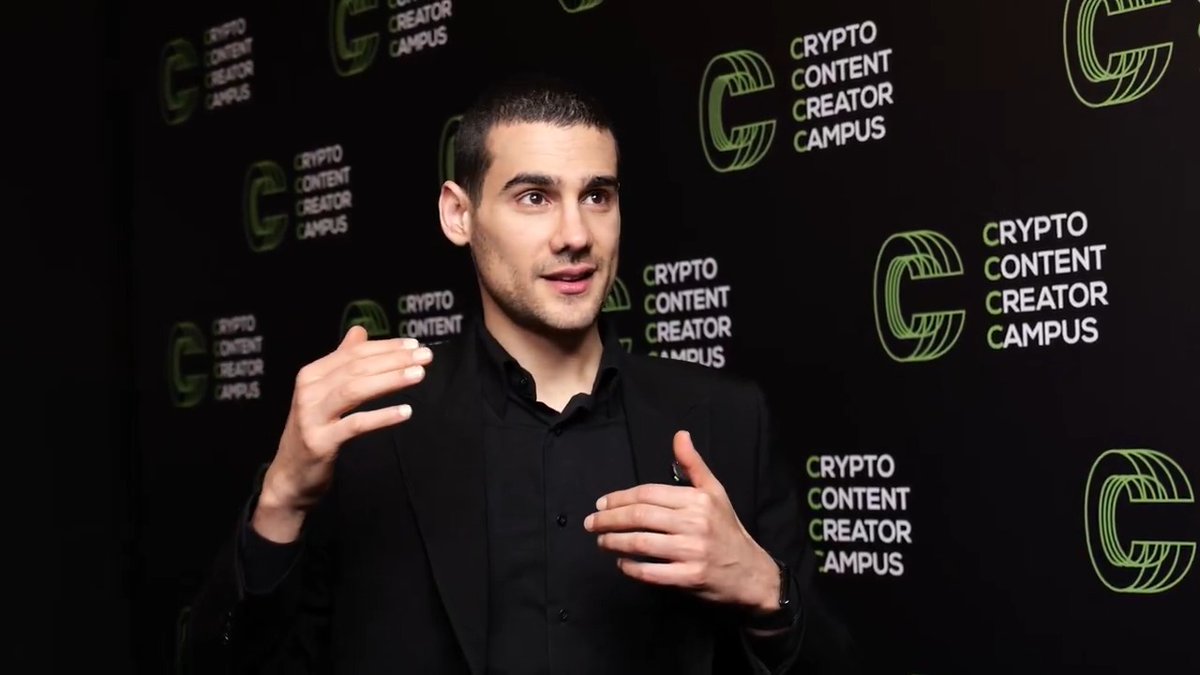
The false prophets of the "New Media" Dear international friends and users of X, We are witnessing a dangerous situation unfold where Romania is being used by popular accounts on the platform to create panic and a false image of what is actually happening in the world. One of those accounts is Mario Nawfal, whom I choose to reference because I met him a few months ago and helped my partner film an interview which now seems incredible to listen to. Everyone in the crypto industry had an image of Mario from the last cycle, and it was interesting to see him pivot to what is now called "New Media" and the success he was able to achieve mainly because of retweets from Elon Musk. During the interview you can watch below, he talks about the high level of attention he receives and the responsibility that comes with it. He admits to taking a side in US politics by supporting Donald Trump because he is a "free speech" advocate, but other than that, he says that his journalism is objective regarding Ukraine/Gaza or any other hot topic around the world. He also speaks highly about posting factual information and not misinformation. Now on the current subject, I feel he is not only taking a side but also spreading significant misinformation about the situation in Romania, and I want to help you understand by clarifying some of these "facts." He refers to Calin Georgescu as "the rightful president of Romania." Let me explain what happened here. Romania had a presidential election at the end of 2024. This type of election in Romania is split into two rounds unless one of the candidates gets more than 50% of the votes. In that case, the candidate wins from the first round and gets to be installed as president. Calin Georgescu won the first round with 22.94% of the votes, which equals 2,120,401 votes out of 9,242,186. The total number of eligible voters on the lists was 18,021,800. By simple math, he obtained the vote of 11.77% of Romanians allowed to vote. Although we can objectively admit he was a favorite for the second round based on these numbers, the election was annulled. The Constitutional Court of Romania first validated the first round and then two days later decided to cancel the election after voting had already started in some areas outside the country where voting takes three days to help Romanian citizens living abroad cast their votes. Romania's president at that time declassified the documents based on which the CCR canceled the elections, and most of the data given to the public was vague. It mentioned interference from another state, social media manipulation, or the cost of the campaign being different than previously declared. Georgescu declared 0$ (ZERO) campaign budget. Now again, even if that would be enough to cancel the election, we all agree that the way the situation unfolded is terrible. It showed the lack of interest from Romanian authorities regarding the elections or, worse, parts of the system that accepted all of this before and during the vote. The root of all problems Much like all over the world, Romania is a country with corrupt politicians. Most of the time in the 35 years of democracy, the same parties ruled the country with one main goal: FILL THE POCKETS WHILE YOU CAN. I'm pretty sure you know what that feels like and thus understand that most of the population is fed up and really wants change. It all erupted in the past 2-3 years with inflation skyrocketing after the pandemic and the cost of living becoming unbearable for some parts of the population. Now here comes Calin Georgescu. A self-portrayed savior of the people and a fighter against the current establishment, he campaigned mainly on social media. Most of his ideology is nationalist, populist, and Christian Orthodox. Most of us had no idea who he was until the very last day before the first round, especially in big cities, and the fact that he won struck the country like a truck. In fact, some of his voters declared that they had no idea who he was, but social media, especially TikTok, portrayed him as the savior, and the other options were people they couldn't vote for anymore. One week before the election, most polls gave Georgescu less than 5% and, in the best cases, 8% of the votes. So you can now understand the surprise we had after the counting was done. After that night, Romanians started to analyze the winner of the first round, and what they found was sometimes scary and other times funny—ranging from "There are microchips in Pepsi that enter your body like a laptop" to "The moon landing was fake", "5G technology is extremely dangerous" or "Covid is not real, you can't see it." You can find most of his statements on this website with sources: Setting aside some of these statements, which are mostly harmless, he said things like "Romania should look towards Russian wisdom." He even said he would be ready to leave NATO if it felt necessary and criticized the EU and the way it treats Romania. While we can agree on some small details in these claims, you have to understand the raw feeling of Romanians when it comes to Russia after more than 40 years of communism. It's the same in most of the Eastern Bloc, and it is being passed from one generation to another. And it is mostly hate. Romania is not the most developed country in Europe, but it grew a lot after being accepted into NATO and the EU, and you can check the economic data that sustains this. That being said, you can probably understand why some of those statements were labeled as dangerous by parts of the population that doesn't want to accept even a small chance of leaving the EU/NATO and turning toward "Russian wisdom." Back to our current government One thing that actually unites most Romanians these days is their lack of trust in the current political scene. There is a feeling of exhaustion among us, and we just want honest people ruling the country. Probably just a dream, as my personal take is it will never happen and most of this drama is just "circus". It's always the same situation, just different pockets. Our current prime minister, Marcel Ciolacu , was recently investigated by journalists for different private flights paid for by a company that scammed many Romanians in the real estate industry. Of course, some of those involved in the scam are also politicians. So you probably now understand why we also want change. The situation in Romania is wild these days. We do want change; some think Georgescu is that change, some think he is exactly what we don't need. I don't want to make any judgments in this article. I'm trying to show you what I think "New Media" and "Citizen journalism" should be, at least in my view. What I thought Mario also stands for after that interview. In the course of the last few weeks, Mario has posted every step of Georgescu alongside a network of other popular accounts, some of them known for edgy takes or straightforward propaganda, like Jackson Hinkle or Alex Jones. He even came to Romania to interview Calin and George Simion and said he was afraid. Afraid of what? What did he think he did wrong to be afraid of? Nothing. Just the usual recipe of fear to create drama for views. Many Romanians are asking him in replies to actually dig deeper into the matter and to listen to everyone, but he clearly took a side and goes forward. Why? We don't know for sure; there are some people claiming he was paid to campaign for Georgescu, but there is no actual proof of that being the case. Maybe it's because he wants to continue with the whole "Anti-Soros" agenda widely spread even by Elon Musk these days. We don't know, and I don't want to point out a reason without proof or facts. In fact, that's exactly why I wrote this piece. I'm tired of Old Media, and now the concept of "New Media" is failing harder than I would've ever imagined. Misinformation spreads the fastest on the internet, and most people don't take the time to double or triple check. It is exactly the same practice of biased mainstream media, but for the other side. It's no longer "it must be true, I saw it on CNN" but "it must be true, I saw *insert popular account* posted it." We are witnessing a difficult situation, not only in Romania, and I think journalism should evolve into what it should've always been. But this is not the way. We need to present facts and acknowledge the responsibility, especially as our accounts grow bigger. I encourage every one of you to join the conversation and fill the gaps that I might've missed. Bring facts, bring arguments, do not bring insults. I hope I was clear enough and that this helps some of you understand the situation better. I would love to see you help this post get the attention it needs. Thank you, andreibratucu

andreibratucu🦇🔊

67,691 views • 1 year ago

معلومات صادمة لبيروت بوليتيكس في تحرّك دبلوماسي غير مسبوق، أجرى سفراء دول الاتحاد الأوروبي السبع والعشرين، إلى جانب سفراء كندا، والمملكة المتحدة، والنرويج، وسويسرا، وأستراليا، سلسلة لقاءات مع كبار المسؤولين اللبنانيين، في مقدّمهم رئيس الحكومة نواف سلام ورئيس حزب القوات اللبنانية سمير جعجع، وذلك بين 7 و13 تموز. وبحسب المعلومات، فإن هذه الجولة ليست سوى البداية، إذ يُنتظر أن تشمل الأيام والأسابيع المقبلة سبع زيارات إضافية إلى مراجع سياسية ونيابية. الرسالة الغربية، وفق ما تنقله مصادر مطّلعة، كانت واضحة وحاسمة: ضرورة الإسراع في التوصل إلى اتفاق مع صندوق النقد الدولي. عدم الالتفاف على التعديلات المطلوبة في قانون إصلاح المصارف. وعدم إفراغ مشروع قانون الاستقرار المالي واسترداد الودائع من مضمونه الإصلاحي. وتؤكد المصادر أن هذا الحشد الدبلوماسي شدّد على ضرورة أن تأتي التشريعات اللبنانية مطابقة بالكامل لما يتم الاتفاق عليه مع صندوق النقد الدولي، من دون تعديلات تُفرغ الإصلاحات من أهدافها. ويأتي هذا التحرّك بعد انسحاب مصرف لبنان من مسار التفاوض مع الصندوق، وبالتزامن مع بدء مجلس النواب مناقشة التعديلات على قانون إصلاح المصارف. وبحسب معلومات خاصة حصلت عليها بيروت بوليتيكس، حملت اللقاءات رسالتين أساسيتين: الرسالة الأولى: عدم العبث بالتشريعات الإصلاحية أو محاولة الالتفاف عليها، لأن ذلك سيؤدي إلى إعادة إنتاج الأزمة نفسها التي يعيشها لبنان منذ سبع سنوات. الرسالة الثانية: لا تمويل دولياً حقيقياً للبنان، ولا استعادة للثقة، ولا عودة للاستثمارات، من دون اتفاق رسمي مع صندوق النقد الدولي. وتضيف المعلومات أن عدداً من السفراء يعتبرون أن بعض الجهات المعارضة للاتفاق مع الصندوق لا تنطلق من الحرص على أموال المودعين، التي تستمر قيمتها بالتآكل منذ سنوات، بل من اعتبارات تتعلق بالحفاظ على الصلاحيات والنفوذ، وحماية مصالح قوى مالية ومصرفية نافذة. وبحسب هذه المصادر، فإن القوى التي تعرقل الاتفاق لا تطرح أي بديل اقتصادي أو مالي قابل للتنفيذ. أما الخلاصة التي ينقلها عدد من السفراء والمؤسسات المالية الدولية، فهي أن استمرار تعطيل الاتفاق مع صندوق النقد قد يُبقي لبنان تحت وطأة تداعيات أزمته الاقتصادية لعشرين عاماً على الأقل. تبقى هذه المواقف منسوبة إلى مصادر دبلوماسية وإلى مؤسسات مالية دولية، لكنها تعكس حجم القلق الدولي من مسار الإصلاحات في لبنان. لقد أَعذر من أنذر. Shocking information obtained by Beirut Politics In an unprecedented diplomatic move, the ambassadors of the 27 European Union member states, along with the ambassadors of Canada, the United Kingdom, Norway, Switzerland, and Australia, held a series of meetings with senior Lebanese officials, including Prime Minister Nawaf Salam and Lebanese Forces leader Samir Geagea, between July 7 and July 13. According to the information, this round of meetings is only the beginning, with seven additional visits to political and parliamentary leaders expected in the coming days and weeks. According to informed sources, the Western message was clear and firm: The need to swiftly reach an agreement with the International Monetary Fund. No circumvention of the required amendments to the Banking Reform Law. No weakening of the Financial Stability and Deposit Recovery Law by stripping it of its reform content. The sources confirmed that this broad diplomatic effort stressed that Lebanese legislation must fully comply with whatever is agreed upon with the International Monetary Fund, without amendments that would undermine the purpose of the reforms. This diplomatic initiative comes after Banque du Liban withdrew from the negotiation process with the IMF, while Parliament has begun discussing amendments to the Banking Reform Law. According to exclusive information obtained by Beirut Politics, the meetings carried two key messages: The first message: Do not tamper with reform legislation or attempt to circumvent it, because doing so would reproduce the very crisis Lebanon has been suffering from for the past seven years. The second message: There will be no meaningful international financing for Lebanon, no restoration of confidence, and no return of investments without a formal agreement with the International Monetary Fund. The information further states that several ambassadors believe some of the parties opposing an agreement with the IMF are not motivated by concern for depositors’ money, whose value continues to erode year after year, but rather by considerations related to preserving influence and authority, and protecting the interests of powerful financial and banking groups. According to these sources, the forces obstructing an agreement have failed to present any viable economic or financial alternative. The conclusion conveyed by several ambassadors and international financial institutions is that continued obstruction of an agreement with the IMF could leave Lebanon burdened by the consequences of its economic crisis for at least another twenty years. These positions remain attributed to diplomatic sources and international financial institutions, but they reflect the extent of international concern over the course of Lebanon’s reform process. Those who have warned have fulfilled their duty. Mounir Younès/منير يونس #لبنان #صندوق_النقد_الدولي #الإصلاحات #مجلس_النواب #المصارف #الاقتصاد #BeirutPolitics #Lebanon #IMF #Reforms #Parliament #Banking #Economy #BeirutPolitics

Beirut Politics

18,060 views • 1 month ago

BREAKING: JD Vance just admitted the White House plan is to take ownership of every major AI company in America. This is the largest reshaping of American capitalism since the New Deal. And almost no one in finance is talking about it yet. Here's why this is a much bigger story than it sounds: Vance didn't pull this idea out of nowhere. He said it on the latest "The Diary of a CEO" this week: "The president is supportive of the United States owning these big AI companies. He likes the idea as sort of a sovereign wealth fund idea of the United States taking some stake in these AI companies." Read that again. The Vice President of the United States confirmed the administration wants equity in OpenAI, Anthropic, and xAI. Not regulate them. Not tax them. Own them. It gets crazier. The host pointed out that Bernie Sanders wants the public to own 50% of AI companies. Vance's response: "He likes that idea. I don't know that he would say 50% but he does like that idea." And the template already exists: Last August, the Trump administration converted Intel's CHIPS Act grants into equity. The government took a 10% stake. Cost basis: $20.47 per share. Total investment: $8.9 billion. Intel closed Thursday at $133.82. That stake is now worth $67 billion. A $58 billion gain in 10 months. A 650% return. Now they're running it on AI. Let's do the math on what that means: OpenAI is valued at $852 billion. Anthropic is fielding $800 billion bids on the secondary market. xAI merged into SpaceX at $1.25 trillion. SpaceX IPO'd and closed day one near $2.1 trillion. Add Meta AI, Google DeepMind, and the AWS infrastructure layer. You're staring at $5 trillion in AI value openly being considered for partial nationalization. A 10% stake across that universe is $500 billion. Bigger than every hedge fund in America combined. Vance laid out the reasoning himself. The industrial revolution made rich people way richer. Workers stagnated. The political consequences were catastrophic. His exact words: "We're going to wake up and we're going to realize that rich people have gotten way richer." Translation: the White House thinks letting OpenAI and Anthropic compound into multi-trillion dollar monopolies is a political time bomb. Their solution isn't to break them up. It's to own them. This is a completely different relationship between the state and capital than anything Wall Street has modeled. For 40 years, the Republican playbook was simple. Deregulate, cut taxes, let founders capture the upside. What Vance just described is the opposite... The line between US AI policy and US AI ownership disappears. The investors who survive this aren't the ones guessing which lab Washington takes first. They're the ones whose strategy was already running before the headline hit. Rules based. Automated. Indifferent to whatever the Vice President said on a podcast at midnight. That's exactly what Surmount was built for...

Surmount

166,971 views • 2 months ago

Tension and uncertainty among Russians are growing. In the spring of 2026, Russian polling agencies recorded a noticeable decline in several key indicators: approval of Putin's performance, trust in him, and the overall emotional mood. The most intriguing point was the closure of Russian Public Opinion Research Center’s (VCIOM) open trust rating: when respondents are asked to name politicians they trust without being prompted with names. In March 2026, this indicator for Putin fell to 29.5% - the lowest level since the start of the full-scale war. After that, VCIOM did not publish the figures for April and May. The gap between the open trust rating (29.5%) and the closed trust rating (72-73%) is roughly 1:2.5. It reflects the distance between Putin's actual political weight and the ritual of loyalty to the "tsar." The reason is simple: Russians do not want a loser president. Putin's ratings were sustained not simply by war, but by the prospect of a victorious war. He traded Russia's development and prosperity for greatness, but now Russians see neither greatness nor prosperity. Let’s take a closer look at what is happening within Russian society. First, most Russians continue to support the war. This is illustrated by Levada Center's May data. Support for the actions of the Russian army, which had been declining since the end of last year, suddenly rebounded by six points in May, reaching 74%. At the same time, the share of those favoring peace negotiations, which had remained at around two-thirds since December, has been slowly shrinking for three consecutive months - down seven points, to six out of ten. Meanwhile, the camp supporting the continuation of military operations has grown to 30%. The main motive among supporters of peace has not changed: "too many casualties and heavy losses." What happened? Television stopped talking about peace negotiations. As long as negotiations seemed realistic, peace appeared to be a way out. Once they collapsed, part of Russian society obediently switched back to supporting the war. This is conformism. Russians do not want peace or war - they want to be on the side of the winner. The demand for negotiations was, in fact, a demand for a victorious peace. Since no victorious peace was granted, they have taken back the war. However, there is a dangerous trap here for the Kremlin: Russians agree to war, but not to a war without victory. They agree to anything except a compromise that would be perceived as defeat. This is dangerous for the Kremlin because it calls into question the legitimacy of the entire system of power - and Putin above all - if Russian society is no longer given proof of greatness and victory. Putin is doomed to constant escalation. The situation is further complicated by public fatigue and rising anxiety among Russians. The state of the Russian economy is deteriorating, while the defense sector is no longer able to offset the decline in the civilian economy. This is especially noticeable in the regions. By the end of 2025, the deficit of consolidated regional budgets had reached a record 1.48 trillion rubles ($20.56 billion) - 3.6 times more than a year earlier. Seventy-four regions, including Moscow and the oil and gas districts, ended up in deficit. The first months of 2026 did not reverse the trend: industry is stagnating, construction is shrinking, corporate profits are falling, and debt burdens are increasing. The accompanying symptoms include a sharp rise in wage arrears, large-scale revisions of regional budgets for 2026 involving spending cuts, primarily social, as well as a hidden employment crisis - where there is no work, but employees are not laid off; instead, they are shifted to reduced working weeks and unpaid leave. Official unemployment statistics barely reflect this. Yet since December 2025, part-time employment has been rising at large and medium-sized enterprises: 4.6 million out of 33 million workers. The map of Russian society’s concerns, which the Levada Center publishes annually, looks telling in May 2026. At the top - for twenty years in a row - is rising prices: 55%. The "special military operation" and related issues worry 35%. And then comes the most interesting part - the destruction of a comfortable life and the feeling of war at home have become additional drivers of tension: fear of explosions and terrorist attacks has jumped by 8 points since November - to 27%. One in five (22%) cites internet restrictions and the blocking of social media as among the most pressing issues - on the list of problems, the digital blockade now ranks alongside poverty and lack of access to healthcare (both at 19%). The state has managed to turn a disabled messenger app into a social problem on the level of poverty. That takes some doing. Many Western observers have been inspired by rumors of elite dissatisfaction in Russia. Indeed, Moscow's economic circles have seen unusually open criticism of the government from parts of the financial elite. However, I suggest we avoid wishful thinking: no direct scenario of a political crisis emerges from this data. The most realistic scenario is the continuation of the war, coupled with a search for political doping: events that can be sold to society as victories, as proof that Russia is moving in the right direction. The problem is that the bar has risen - what would have been considered a triumph a year ago would now look like capitulation. Therefore, stronger doses of doping will be required: escalation in Ukraine aimed at maximizing destruction, a military adventure somewhere in Europe, new strikes, nuclear signaling, or provocations against the West. The ground has already been prepared: 54% of Russians believe that the war in Ukraine could escalate into an armed conflict with NATO - half the population is living in anticipation of a major war. The Kremlin’s logic is as old as time: unite through fear. Putin may also be saved by an "unexpected event" - a black swan, as has already happened when the U.S. started a war with Iran. Here, it’s not even necessary to do anything: it’s enough to interpret it skillfully. A U.S. defeat or stalemate in the war with Iran could be presented as a victory of Russia and its allies over America - because in the minds of Russians, the war with Ukraine has long been just a fragment of a larger Russian war with the West. Within this worldview, any failure by Washington automatically counts as a point for Moscow, regardless of whether it had a hand in it. There is also a third scenario - not for Putin, but against him. This is not a scenario of popular uprising, but one of self-preservation by the Russian elites. But such an option is possible only under a sharp convergence of several factors: military defeat, economic collapse, the loss of the ability to allocate resources, and the emergence of a figure or group capable of guaranteeing the elite’s security after the transition. So far, there are few such signs.

Anton Gerashchenko

36,205 views • 2 months ago