ะ—ะฐะณั€ัƒะทะบะฐ ะฒะธะดะตะพ...

ะะต ัƒะดะฐะปะพััŒ ะทะฐะณั€ัƒะทะธั‚ัŒ ะฒะธะดะตะพ

ะะฐ ะณะปะฐะฒะฝัƒัŽ

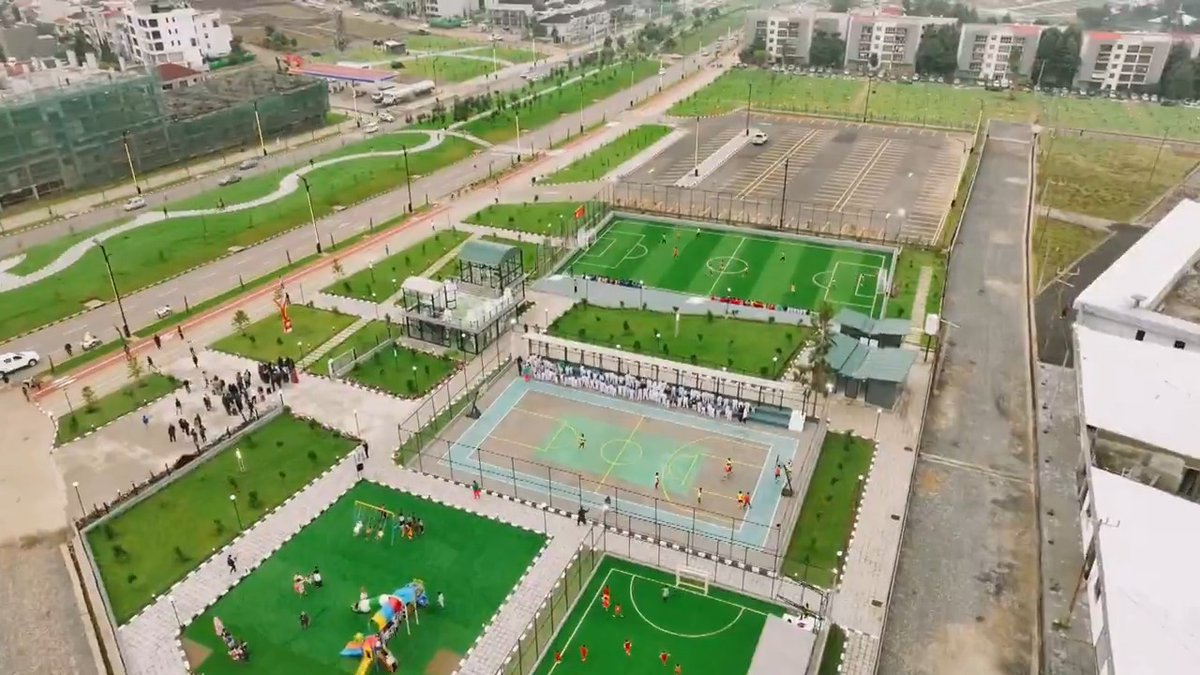
๐€ ๐๐‘๐Ž๐Œ๐ˆ๐’๐„ ๐Š๐„๐๐“. ๐€ ๐‚๐Ž๐”๐๐“๐‘๐˜ ๐ˆ๐ ๐“๐‘๐€๐๐’๐…๐Ž๐‘๐Œ๐€๐“๐ˆ๐Ž๐ โ–ธ The GRAND Ethiopian RENAISSANCE DAM inaugurated, Africa's largest Dam โ–ธ 48+ billion trees planted, ecosystems restored โ–ธ Cities across Ethiopia reimagined, with roads, green spaces, and modern infrastructure reaching towns and rural corridors alike โ–ธMesob One-Stop Service: Delivering efficient public services...

13,185 ะฟั€ะพัะผะพั‚ั€ะพะฒ โ€ข 1 ะผะตััั† ะฝะฐะทะฐะด โ€ขvia X (Twitter)

ะšะพะผะผะตะฝั‚ะฐั€ะธะธ: 0

ะะตั‚ ะดะพัั‚ัƒะฟะฝั‹ั… ะบะพะผะผะตะฝั‚ะฐั€ะธะตะฒ

ะ—ะดะตััŒ ะฟะพัะฒัั‚ัั ะบะพะผะผะตะฝั‚ะฐั€ะธะธ ะธะท ะพั€ะธะณะธะฝะฐะปัŒะฝะพะณะพ ะฟะพัั‚ะฐ

ะŸะพั…ะพะถะธะต ะฒะธะดะตะพ

FirstPost TV interview. Hereโ€™s a video highlighting the main topics I discussed: 1. Ethiopiaโ€™s recent elections. The successful completion of the elections is a big postive not only for Ethiopia but for Africa. Furthermore, it assures reforms will continue and sustained economic growth in the worldโ€™s 2nd fastest growing economy in 2026 (IMF). The elections were declared free and fair by international observers including the African Union (AU). 2. Ethiopiaโ€™s right to regain its own direct unfettered access to the sea. In my view it was a historical mistake that made Ethiopia landlocked. Ethiopia is the worldโ€™s 10th most populous country with 135 million people and amongst the 5 largest economies in Africa with a GDP of US$556 billion (PPP). 3. The US$5.0 billion Grand Ethiopian Renaissance Dam (GERD), is already completed and fully operational. Itโ€™s a hydro electric power dam (not an irrigation dam) which does not divert or reduce water flow to Egypt. If there are water flow concerns, they can be addressed by highly qualified technical experts from Egypt and Ethiopia, as has been done continuously. The GERD provides electricity to millions across Eastern Africa who previously lived in absolute darkness and is a clean, green renewable energy source which is environmental friendly. The full 17 minutes interview is available Firstpost

Zemedeneh Negatu

11,527 ะฟั€ะพัะผะพั‚ั€ะพะฒ โ€ข 1 ะผะตััั† ะฝะฐะทะฐะด

Ethiopia, particularly its capital Addis Ababa, is often hailed as the "Dubai of Africa" due to its rapid and ambitious urban transformation under recent government-led reforms. This comparison highlights the city's push toward modernity, with gleaming skyscrapers, expanded infrastructure, and large-scale developments that evoke the bold, futuristic growth Dubai achieved. Prime Minister Abiy Ahmed Ali ๐Ÿ‡ช๐Ÿ‡น administration has aggressively pursued an urban renewal and corridor development agenda since around 2024, accelerating in 2025โ€“2026. Key elements include: -Widened roads and corridors Major avenues and urban corridors have been upgraded with broader pedestrian walkways, bicycle lanes, decorative lighting, greenery, and integrated designs to reduce congestion and improve livability. - Riverfront and green projects :Initiatives like the Beautifying Sheger Project have revitalized riversides with walkways, parks, recreational spaces, and landscape restoration, blending nature with urban expansion. - High-rise construction boom Numerous skyscrapers and luxury developments are rising, including projects like the 80-floor Awash International Bank headquarters and other high-rises replacing older structures. - Massive infrastructure megaprojects Beyond the city, Ethiopia advances the Grand Ethiopian Renaissance Dam (GERD, now generating power), a new mega-airport near Bishoftu (aiming to become Africa's largest), industrial parks, and nationwide urban corridor expansions to dozens of cities. - Broader economic reforms Macroeconomic changes (e.g., floating exchange rate, liberalization in telecoms/banking, public-private partnerships) aim to attract foreign investment, boost private-sector growth, and position Addis as a diplomatic, business, and tourism hub. These efforts have dramatically modernized parts of Addis Ababa, creating brighter skylines, luxury facilities, shopping complexes, high-end hotels, and improved connectivity. Supporters see this as projecting confidence, drawing Gulf-style investment, and fueling Ethiopia's rise as a dynamic African economy evidenced by videos and reports calling it a "shocking transformation" or "Africa rising." #Ethiopia #africancreatorssummit2026

MayaD๐Ÿ‡บ๐Ÿ‡ธโœ๏ธ

12,441 ะฟั€ะพัะผะพั‚ั€ะพะฒ โ€ข 5 ะผะตััั†ะตะฒ ะฝะฐะทะฐะด

This morning, Prime Minister Abiy Ahmed and First Lady Zinash Tayachew, together with senior government officials, reviewed the newly completed CMCโ€“Goroโ€“VIP Corridorโ€”a transformative project connecting the Addis International Convention Center to the Bole Airport VIP terminal. This newly developed two-way road network integrates with the Bole Airport connection road at CMC, creating a seamless link across a key section of the city. Spanning more than 290 hectares, the corridor extends for 12.74 km and 15.27 km of dedicated bike lanes. With five modern bus and taxi terminals capable, four large parking facilities and 17 designated loading and unloading bays, the project is easing congestion and improving transport efficiency. It also features underground electric and telecom lines, stormwater drainage pipes and new streetlights, ensuring modern infrastructure throughout. The corridor is not only about roads but also about liveability. More than 130 hectares of riverside areas have been developed into vibrant green spaces, complemented by various facilities. Over 320 buildings have been renovated, helping to uplift the entire area. The results are already visible. More than 350 new commercial shops have opened, business activity has surged, traffic congestion has eased, and public transport services have improved. The green spaces and riverside developments are creating a more pleasant and liveable environment for residents and visitors alike. #PMOEthiopia

Office of the Prime Minister - Ethiopia

234,985 ะฟั€ะพัะผะพั‚ั€ะพะฒ โ€ข 11 ะผะตััั†ะตะฒ ะฝะฐะทะฐะด

Warning long read ...if you are allergic to reading please feel free to go back to TikTok 1/3 The China of Africa Is Rising โ€” And Kenya we are busy politicking at funerals. I have not been to Ethiopia recently, but I have not needed to. The evidence of what is happening north of our border is everywhere in news bulletins, in industry reports, in the testimonies of business people and diplomats who return from Addis Ababa struggling to describe what they have seen. When the African Union's own Special Envoy, Liberata Mulamula, tells the Ethiopian News Agency that "two years ago, no one would have imagined Addis Ababa looking like this," you pay attention. When you watch the concrete developments unfold not promises, not feasibility studies, but inaugurations, factory openings, and groundbreakings you are then forced to ask a painful question: what exactly are we doing in Kenya? Let me lay out what I have been observing. In Hawassa, a city of roughly 300,000 people in southern Ethiopia, Prime Minister Abiy Ahmed has built one of the most ambitious industrial ecosystems on the African continent. The Hawassa Industrial Park is up and running. It now hosts dozens of factories, employs tens of thousands of young Ethiopians โ€” the majority of them women โ€” and is equipped with Africa's largest Zero-Liquid Discharge wastewater treatment system that recycles ninety percent of its sewage water. This is not a PowerPoint presentation at a Nairobi hotel conference. This is steel, concrete, and humming production lines. PM Abiy is not resting. In April 2026, he inaugurated three new solar panel manufacturing factories at Hawassa โ€” Toyo Phase 2, Origin, and Lumintech โ€” alongside an industrial gas plant. Together, these solar facilities will produce an annual capacity of 11.3 gigawatts of clean energy components. The story behind this is instructive and worth dwelling on. Abiy visited Vietnam, toured a Toyo solar panel factory, met the company's president, and within 3 months the first facility was operational in Ethiopia. Now this is EXECUTION. The irony is that the investment required to set up these factories is not even astronomical โ€” it is the kind of money that routinely vanishes in Kenya through corruption, inflated tenders, and deals that exist only in whispered conversations. The Dangote partnership tells the same story of decisive action. In August 2025, Aliko Dangote and the Ethiopian government signed a $2.5 billion agreement to construct a fertiliser plant in Gode, in Ethiopia's Somali Region. Today Dangote himself with PM Abiy Ahmed were on site for the groundbreaking ceremony. The facility will produce up to three million metric tonnes of urea annually, potentially placing Ethiopia among the world's top five producers. Think about that. The country that was Africa's largest fertiliser importer is positioning itself to become a regional exporter. The ownership structure 60 % Dangote, 40 % Ethiopian Investment Holdings which ensures the state retains a meaningful stake in its own transformation. This is not charity. This is strategy. Now consider the energy picture that underpins all of this. Ethiopia had commissioned the Grand Ethiopian Renaissance Dam, a $5 billion megaproject built without a single dollar of foreign financing funded entirely through domestic bonds, salary deductions, and public contributions. With a capacity of 5,150 megawatts, the GERD has effectively doubled Ethiopia's generation capacity. The result is decisive: Ethiopia now has the lowest electricity prices in Africa.

Mohammed Hersi : Mr Optimist

16,511 ะฟั€ะพัะผะพั‚ั€ะพะฒ โ€ข 2 ะผะตััั†ะตะฒ ะฝะฐะทะฐะด

In October 2025, the Prime Minister undertook a series of national and international engagements focused on infrastructure development, rural transformation, governance reform, and diplomatic cooperation. Here is a brief recap of the past month: ๐™Š๐™ฃ ๐™๐™ง๐™—๐™–๐™ฃ ๐˜ฟ๐™š๐™ซ๐™š๐™ก๐™ค๐™ฅ๐™ข๐™š๐™ฃ๐™ฉ ๐™–๐™ฃ๐™™ ๐™๐™ค๐™ง๐™š๐™ž๐™œ๐™ฃ ๐˜ฟ๐™ž๐™ง๐™š๐™˜๐™ฉ ๐™„๐™ฃ๐™ซ๐™š๐™จ๐™ฉ๐™ข๐™š๐™ฃ๐™ฉ A defining highlight of the month was the laying of the foundation stone for the urea fertilizer plant, a landmark project developed through a partnership between Ethiopian Investment Holdings and the Dangote Group. With an annual production capacity of three million tons, the plant will utilize natural gas from the Calub gas fields, transported through a 108-kilometer pipeline. This project is a cornerstone of Ethiopiaโ€™s strategy to achieve fertilizer self-sufficiency and enhance agricultural productivity. In the Somali Region, the Prime Minister also inaugurated the Gode Oil Refinery, developed by Golden Concord Group Limited (GCL). The refinery, designed to process 3.5 million tons of crude oil and condensate per year from the Hilala oil field, represents a significant step in Ethiopiaโ€™s path toward energy independence. Complementing these milestones, the Prime Minister inaugurated the first phase of the Ogaden Liquified Natural Gas (LNG) Project in Calub. The facility, with an annual production capacity of 111 million litres and the ability to generate 1,000 megawatts of energy, strengthens Ethiopiaโ€™s industrial base while contributing critical inputs to fertilizer production and energy generation. During his visit to Jigjiga in the Somali Region, the Prime Minister observed the cityโ€™s rapid transformation since his last visit in January 2025. Thousands of new housing units are under construction, and corridor development projects are visibly enhancing urban well-being. He lauded the Dine for Generations Project, nearing completion in the Somali Region, for unlocking new opportunities in tourism and stimulating regional economic growth. Prime Minister Abiy Ahmed, accompanied by members of the Prosperity Party Executive Committee, visited the corridor development project extending from Sar Bet to German Square, encompassing the Garment Factory and the Furi area. Spanning 589 hectares, it is the second-largest urban corridor after Kazanchis. The project features 16.5 kilometers of asphalt roads, 33 kilometers of pedestrian walkways, plazas, sports and recreation facilities, riverbank development, and over 1,100 commercial shops. The initiative embodies Ethiopiaโ€™s broader vision of creating modern, livable, and economically vibrant cities. ๐™Š๐™ฃ ๐™๐™ช๐™ง๐™–๐™ก ๐™๐™ง๐™–๐™ฃ๐™จ๐™›๐™ค๐™ง๐™ข๐™–๐™ฉ๐™ž๐™ค๐™ฃ ๐™–๐™ฃ๐™™ ๐˜ผ๐™œ๐™ง๐™ž๐™˜๐™ช๐™ก๐™ฉ๐™ช๐™ง๐™–๐™ก ๐™ˆ๐™ค๐™™๐™š๐™ง๐™ฃ๐™ž๐™ฏ๐™–๐™ฉ๐™ž๐™ค๐™ฃ Advancing his governmentโ€™s rural development agenda, the Prime Minister presided over the handover of model rural villages constructed through the Rainy Season Voluntary Scheme in the Halaba, Kembatta, Hadiya, and Silte zones. Each home in these Rural Corridor Villages is equipped with solar power, biogas systems, sanitation facilities, and animal shelters, significantly improving hygiene, comfort, and productivity for rural families. These model villages mark a new chapter in Ethiopiaโ€™s mission to raise rural living standards and promote sustainable livelihoods. The Prime Minister encouraged regional leaders to expand these initiatives, setting a target of 100 new houses per zone by next year. During his visit to the East Shewa Zone of the Oromia Region, the Prime Minister also reviewed the rainy season wheat harvest and launched summer wheat production activities. He assessed progress in banana, papaya, and fish farming clusters, emphasizing the growing adoption of mechanized agriculture as a major driver of productivity and self-reliance. He also inaugurated the Welmel River Irrigation Development Project in Delo-Mena Woreda, Bale Zone. Once fully operational, the project will irrigate 9,687 hectares of farmland, benefiting 20,000 farming households and enhancing drought resilience, food sovereignty, and rural employment. ๐™Š๐™ฃ ๐™€๐™˜๐™ค๐™ฃ๐™ค๐™ข๐™ž๐™˜ ๐™‚๐™ค๐™ซ๐™š๐™ง๐™ฃ๐™–๐™ฃ๐™˜๐™š ๐™–๐™ฃ๐™™ ๐™ˆ๐™–๐™˜๐™ง๐™ค๐™š๐™˜๐™ค๐™ฃ๐™ค๐™ข๐™ž๐™˜ ๐™๐™š๐™ซ๐™ž๐™š๐™ฌ At the Koysha Project site, the Prime Minister convened a strategic review session with the Council of Ministers to assess the macroeconomic performance of the first 100 days of the 2018 Ethiopian Fiscal Year. The review examined achievements, challenges, and strategic priorities, highlighting Ethiopiaโ€™s sustained economic resilience amid global uncertainty. The nationโ€™s GDP growth rate stood at 9.2 percent for the 2017 fiscal year, underscoring the success of reforms aimed at fostering inclusive and diversified growth. ๐™Š๐™ฃ ๐™…๐™ช๐™™๐™ž๐™˜๐™ž๐™–๐™ก ๐™ˆ๐™ค๐™™๐™š๐™ง๐™ฃ๐™ž๐™จ๐™–๐™ฉ๐™ž๐™ค๐™ฃ ๐™ฉ๐™๐™ง๐™ค๐™ช๐™œ๐™ ๐˜ฟ๐™ž๐™œ๐™ž๐™ฉ๐™–๐™ก ๐™๐™ง๐™–๐™ฃ๐™จ๐™›๐™ค๐™ง๐™ข๐™–๐™ฉ๐™ž๐™ค๐™ฃ Building on the success of the Digital 2025 Strategy, the Prime Minister announced the forthcoming Digital 2030 Strategy, focused on advancing automation and improving public service delivery. He commended the Federal Supreme Court for implementing a Smart Court System featuring automated transcription, virtual hearings, and an Integrated Case Management System that enables litigants to track cases online. Covering 24 federal branches to date, this innovation marks an important step toward transparent and accessible justice across Ethiopia. ๐™Š๐™ฃ ๐™ˆ๐™š๐™™๐™ž๐™–, ๐˜พ๐™ช๐™ก๐™ฉ๐™ช๐™ง๐™š, ๐™–๐™ฃ๐™™ ๐™๐™ค๐™ช๐™ง๐™ž๐™จ๐™ข Prime Minister Abiy Ahmed attended the launch of the pan-African media outlet Pulse of Africa, a platform he first proposed during the 35th Ordinary Session of the African Union Assembly in 2022. The initiative seeks to amplify African perspectives, counter negative portrayals of the continent, and strengthen African unity through shared narratives. In his remarks, the Prime Minister emphasized that Pulse of Africa marks a significant step toward ensuring that Africans tell their own stories and shape their global image. Accompanied by First Lady Zinash Tayachew and a high-level delegation of former and current leaders, the Prime Minister also visited the Bale Zone to assess key development projects that integrate natural heritage with national progress. The delegation toured the Bale Mountains National Park, one of Ethiopiaโ€™s most ecologically diverse and economically significant natural areas. The Prime Minister observed ongoing tourism developments, including the nearly completed Dinsho Lodge at the heart of the park and the Sof Omer Luxury Lodge near the Sof Omer Cave. Both projects are designed to advance Ethiopiaโ€™s Ten-Year Strategic Plan by positioning tourism as a catalyst for economic transformation. The Sof Omer Cave Development Project complements these initiatives by improving access and visitor facilities around one of the countryโ€™s most celebrated natural landmarks. The delegation also inspected the Robeโ€“Goroโ€“Sof Omerโ€“GinirJunction Road Upgrading Project, a dual asphalt roadway featuring five bridges that connect the productive agricultural zones of East Bale and Bale with central Ethiopia. The upgraded route enhances regional mobility, strengthens economic integration, and improves access to major tourist destinations such as the Bale Mountains National Park and Sof Omer Cave. In addition, the Prime Minister reviewed the Weib River Flood Control Project, which regulates water flow through the cave system to ensure year-round accessibility and protect its ecosystem. He also examined tourism development efforts in the Harenna cluster, including the construction of the Rira Eco Lodge, new viewpoints, restaurants, and coffee facilities along the routes leading to Tulu Dimtu, the parkโ€™s highest peak. These initiatives aim to expand sustainable tourism, create local employment, and showcase the natural and cultural richness of the Bale region. The visit concluded at the Fincha Habera Waterfall, where the delegation explored the surrounding landscape, home to the Ethiopian Red Fox, diverse birdlife, and striking geological formations such as the Rafu rock pinnacles. The area, which recently revealed a newly discovered cave system, will soon feature a glamping site designed to promote eco-friendly tourism. Reflecting on the visit, Prime Minister Abiy highlighted Ethiopia as a land of abundance and opportunity, urging citizens to safeguard and build upon the nationโ€™s natural and human wealth for future generations. The delegation collectively reaffirmed the importance of stewardship, unity, and visionary development in shaping Ethiopiaโ€™s sustainable and prosperous future. ๐™‹๐™–๐™ง๐™ก๐™ž๐™–๐™ข๐™š๐™ฃ๐™ฉ๐™–๐™ง๐™ฎ ๐™€๐™ฃ๐™œ๐™–๐™œ๐™š๐™ข๐™š๐™ฃ๐™ฉ ๐™–๐™ฃ๐™™ ๐™‰๐™–๐™ฉ๐™ž๐™ค๐™ฃ๐™–๐™ก ๐˜ฟ๐™ž๐™จ๐™˜๐™ค๐™ช๐™ง๐™จ๐™š Prime Minister Abiy Ahmed, in his recent address to Ethiopiaโ€™s Parliament, highlighted the countryโ€™s substantial progress in economic reform, diversification, and infrastructure development. He noted that Ethiopiaโ€™s shift from an agriculture-dependent economy toward industrial and service growth has yielded impressive results, citing rapid agricultural expansion, record-high export revenues, and increased foreign reserves. Major investments in green initiatives, transport infrastructure, and energy projects are transforming productivity and sustainability, while prudent debt management and targeted subsidies have stabilized inflation. He emphasized the governmentโ€™s focus on strengthening institutional capacity, expanding digitalization, training millions of youth in coding, and modernizing service delivery through nationwide one-stop centers. On peace and governance, the Prime Minister reaffirmed Ethiopiaโ€™s commitment to stability, dialogue, and national unity, warning against both internal and external actors seeking to destabilize the country. He stressed that the only viable path for Ethiopia is peaceful political transition and democratic consolidation. Looking ahead to the upcoming national election, he assured Parliament of the governmentโ€™s readiness to ensure a fair and inclusive process. On foreign relations, he reiterated Ethiopiaโ€™s right to equitable use of the Nile waters and called for cooperative engagement with neighboring countries. Addressing the Red Sea question, he described it as a legitimate historical and economic concern that Ethiopia intends to pursue through dialogue and mutual development, underscoring that the nationโ€™s growth is intertwined with regional prosperity and peace. ๐™Š๐™ฃ ๐˜ฟ๐™ž๐™ฅ๐™ก๐™ค๐™ข๐™–๐™ฉ๐™ž๐™˜ ๐™€๐™ฃ๐™œ๐™–๐™œ๐™š๐™ข๐™š๐™ฃ๐™ฉ๐™จ ๐™–๐™ฃ๐™™ ๐™๐™š๐™œ๐™ž๐™ค๐™ฃ๐™–๐™ก ๐˜พ๐™ค๐™ค๐™ฅ๐™š๐™ง๐™–๐™ฉ๐™ž๐™ค๐™ฃ On the international stage, Prime Minister Abiy Ahmed led Ethiopiaโ€™s delegation to the 24th Summit of the COMESA Authority of Heads of State and Government in Nairobi, Kenya, held under the theme โ€œLeveraging Digitalization to Deepen Regional Value Chains for Sustainable and Inclusive Growth.โ€ Addressing the Summit, he underscored that Africaโ€™s digital transformation offers a unique opportunity to rewrite its economic narrative and strengthen continental integration. He affirmed Ethiopiaโ€™s readiness to collaborate with regional partners to advance a shared digital future. In separate diplomatic meetings, the Prime Minister held discussions with President Hassan Sheikh Mohamud of the Federal Republic of Somalia on bilateral and regional matters of mutual interest, and with Dr. Constantinos Kombos, Minister of Foreign Affairs of the Republic of Cyprus, to strengthen political and economic cooperation between their two nations. ๐™Š๐™ฃ ๐™๐™–๐™ญ๐™ฅ๐™–๐™ฎ๐™š๐™ง ๐™๐™š๐™˜๐™ค๐™œ๐™ฃ๐™ž๐™ฉ๐™ž๐™ค๐™ฃ ๐™–๐™ฃ๐™™ ๐™‚๐™ค๐™ซ๐™š๐™ง๐™ฃ๐™–๐™ฃ๐™˜๐™š ๐™๐™š๐™›๐™ค๐™ง๐™ข At the 7th Annual Loyal Taxpayers Recognition Ceremony, Prime Minister Abiy Ahmed celebrated outstanding taxpayers for their contributions to Ethiopiaโ€™s development. He reaffirmed that tax revenues are being invested in vital public goods and infrastructure projects and urged all citizens to uphold transparency and reject corruption. The Prime Minister emphasized that collective integrity and accountability are essential to building a just and prosperous nation. Throughout October 2025, Prime Minister Abiy Ahmedโ€™s decisive leadership and forward-looking initiatives across industry, agriculture, urban renewal, justice, and diplomacy demonstrated Ethiopiaโ€™s unwavering commitment to inclusive development and national progress. // #PMOEthiopia

Office of the Prime Minister - Ethiopia

12,135 ะฟั€ะพัะผะพั‚ั€ะพะฒ โ€ข 9 ะผะตััั†ะตะฒ ะฝะฐะทะฐะด

We werenโ€™t even sure a Budget would be handed down this year, but we already had a fair idea of what would be in it: โ€ข a return to deficit on the back of increased spending โ€ข increasing debt โ€ข election sweeteners and election traps, and โ€ข no genuine spending or tax reform. Jim Chalmers โ€“ the Treasurer who has never run a business or been employed in the private sector his entire life โ€“ has delivered exactly what we expected. Government spending has increased to 786 billion dollars. Gross debt is now over a trillion dollars, rising to 1.2 trillion in just three years. Thereโ€™s some sweeteners, like more energy rebate money. Thereโ€™s an election trap for the Coalition: a tax cut worth less than a cup of coffee a week that will still cost the Budget 17 billion dollars. Thereโ€™s no attempt at genuine spending reform, no waste-cutting, and no tax reform. Itโ€™s just more of the same, digging Australia deeper into an abyss, with no attempt to address the causes of our housing and cost-of-living crises. Thereโ€™s very little to address our growing deficiencies in defence. Thereโ€™s heaps of exclusive funding for indigenous corporations, again with no accountability for closing the gaps. Thereโ€™s not much in the way of new infrastructure funding, and nothing for true nation-building. There is no provision for paying off our increasing debt. In summary, itโ€™s just another big-spending Labor Budget that squibs the opportunity for real reform. Itโ€™s disappointing, but predictable. Itโ€™s time for some real change. Itโ€™s time for One Nationโ€™s plan. One Nationโ€™s plan focuses on spending reform that is urgently needed and long overdue. Itโ€™s spending reform that is now beyond the capabilities of Labor and the Coalition. The last time we had a glimmer of responsible economic managment was during the Howard years. By 2006, Australiaโ€™s net debt had been virtually eliminated by the Howard Government. After that, we had six years of Labor with Wayne Swan and his constant promises of a surplus that were never realised and Australia was another 270 billion dollars in net debt. Then we had nine consecutive Budgets under the Coalition beginning in 2014. Itโ€™s worth having a look at the overview for that Budget handed down 10 years ago, when government spending totalled 415 billion dollars. Joe Hockey said that government debt was projected to be 389 billion dollars in 2023-24, and that from the following year we would have surpluses up to 1% of GDP. It didnโ€™t work out that way. Their modelling never does. In the Coalitionโ€™s last Budget in 2022-23, government expenses reached 628.5 billion dollars. So much for the Coalitionโ€™s claim to be responsible economic managers. And then came the Albanese Labor government, also with the claim to be responsible economic managers. What a complete joke that claim has turned out to be. Spending has now reached 785.7 billion dollars. Gross debt is now over a trillion dollars. Itโ€™s a massive figure โ€“ one followed by 12 zeroes. Thatโ€™s a thousand billion, or a million times a million. Itโ€™s critical that Australian voters understand this. Labor and the Coalition have collectively borrowed more than a trillion dollars in fewer than 20 years because they are incapable of running Australia within its means. If you ran your household their way, you would lose your house. If you ran your business their way, you would lose your business. Why do Australians keep voting for Labor and the Coalition when they run our country this way? Labor has added another 63 billion dollars of spending in just the past three months. So much of our money has been wasted by these so-called parties of government. One Nationโ€™s policy puts this waste in the bin where it belongs. We will slash wasteful government spending by 90 billion dollars. The first cab off the rank will be the climate change scam. At its most basic, this is a joint policy of Labor and the Coalition to spend taxpayersโ€™ money to make our electricity more expensive. Rising electricity bills have been the only outcome of their collective net-zero madness. Global emissions continue to rise every year because no matter what the major parties tell you, nothing this country can do will make any difference on a planetary scale. We are crippling our own economy, and forcing families into poverty and homelessness, for no environmental benefit to anyone. One Nationโ€™s plan is to abolish the Department of Climate Change and related agencies and programs, saving at least 30 billion dollars a year. Weโ€™ll stop subsidising uneconomic renewables and make them compete on a level playing field with cheaper, more reliable energy from coal and gas. We anticipate this will save Australian households and businesses at least 20% on their electricity bills. One Nationโ€™s plan includes the abolition of the National Indigenous Australians Agency, saving 4.5 billion dollars, and an audit of the entire aboriginal industry. This industry has been an absolute failure in closing the gap. It is rife with fraud, corruption and nepotism which prevents indigenous Australians in genuine need receiving assistance while enriching those who need none. We expect to save another eight billion dollars in useless indigenous grants funding. One Nationโ€™s policy goes much farther, and will put an end to unwarranted race-based privilege in Australia. Australians overwhelmingly rejected race-based privilege at the voice to Parliament referendum in 2023. Equal rights for all, and special rights for none, is the only fair approach in a free representative democracy. Under One Nationโ€™s policies no indigenous Australian in genuine need will miss out on assistance, but they will have no more assistance than anyone else in genuine need. You donโ€™t close the gaps by treating Australians differently. You close the gaps by treating all Australians the same, and holding everyone to the same standards. Weโ€™re going to dismantle this culture of unwarranted entitlement, naked greed and racial hatred. One Nationโ€™s plan includes restoring the National Disability Insurance Scheme to its original purpose: providing only reasonable and necessary support to Australians with a disability. We support the NDIS and want to ensure it survives. We will review eligibility, introduce means-testing, reduce unsustainable pay rates, and crack down on fraud. One Nationโ€™s plan also includes withdrawing Australia from a range of international bodies and agreements that do not work in Australiaโ€™s interests. We must get out of the Paris Agreement. We must withdraw from the World Health Organisation, the World Economic Forum and the International Criminal Court. And we must withdraw from the United Nations and the UN Convention on Refugees. The UN has mutated beyond recognition. It has become a haven and a platform for the worst regimes in the world, legitimising terrorist states, theocracies and dictatorships. It no longer works in Australiaโ€™s interests, so thereโ€™s no compelling reason to remain part of it. We expect to save at least one billion dollars by getting out of these organisations. We also expect at least another three billion dollars in savings by reducing and redirecting Australiaโ€™s foreign aid. Australia must get its own house in order before giving away money to anyone else. We must put Australians first. We will abolish the Therapeutic Goods Administration and roll its essential functions into the Department of Health. Weโ€™ll also review about three billion dollars worth of medicines put on the Pharmaceutical Benefits Scheme during the COVID-19 pandemic. One Nationโ€™s plan includes privatising the SBS. Thereโ€™s no longer any need for taxpayers to fund the SBS. We have the internet now, providing anyone in Australia with the ability to access programming in their language from virtually anywhere. One Nationโ€™s plan also includes getting rid of most of the ABC. There is a case for taxpayers to fund ABC services in Australian markets where commercial media will not operate, as a broadcaster of last resort. There is no longer any compelling case for taxpayers to fund the ABC in larger markets already saturated with media services. If people in these markets want ABC services then they can pay for them, not taxpayers. We expect to save more than a billion dollars from this measure. Our only revenue measure is something else that is long overdue: getting a fair return for our natural gas resources. One Nationโ€™s plan includes raising an additional 13 billion dollars by charging levies at the point of extraction instead of on profits. We will also create a national domestic gas reserve so that Australia no longer faces energy shortages thanks to Laborโ€™s reckless obsession with renewables. By slashing 90 billion dollars in government waste, One Nation liberates resources to pay down Federal debt, invest in nation-building infrastructure and put 40 billion dollars back in Australiansโ€™ pockets. One Nation will implement a range of cost-of-living and tax relief measures. These include: โ€ข halving the fuel excise to 26 cents per litre for at least 12 months, with an option to extend; โ€ข eliminating the excise on alcohol served in hospitality venues; โ€ข freezing the increases in the alcohol excise that occur twice a year, and reviewing the excise regime entirely; โ€ข exempting insurance premiums from the GST; โ€ข allowing couples with at least one dependent child to split incomes and file joint tax returns, saving these families thousands of dollars in tax; โ€ข allowing aged and veteran pensioners to earn money working without affecting their pensions; and โ€ข lifting the tax-free threshold to 35 thousand dollars for self-funded retirees. Our plan includes additional elements that will put more money back in Australiansโ€™ pockets. Weโ€™ll crack down on Medicare fraud โ€“ estimated to be up to three billion dollars a year โ€“ and after a comprehensive review, implement practical measures to improve bulk-billing rates and keep more GPs in the system. One Nation will improve home affordability by exempting basic building materials from the GST for the next five years, for homes valued up to one million dollars. This will also reduce the risk of building and construction companies collapsing. Itโ€™s part of our overall policy to address Laborโ€™s housing crisis. With a policy now weakly copied by the major parties, One Nation will ban foreign ownership of residential property to increase housing supply for Australians. To improve affordability, we will also enable superannuation funds to invest part of an individualโ€™s super as equity in the individualโ€™s primary residence. Itโ€™s another policy weakly copied by the Coalition but unlike their policy, our policy leaves an individualโ€™s super balance intact. One Nationโ€™s immigration policy will also have a big impact on Laborโ€™s housing crisis. One Nation will cap immigration at 130,000 per year for all visa categories โ€“ including foreign students โ€“ to substantially reduce housing demand. This represents an effective reduction of 570,000 people a year. High immigration is costing taxpayers; it is not benefitting the economy. It is driving up inflation through high rents and โ€“ perversely for a Labor government obsessed with net zero โ€“ driving up Australiaโ€™s emissions. It is increasing congestion in our cities and impacting on public services. And mainly, itโ€™s driving unprecedented demand for housing. This is forcing more Australians into mortgage stress, rental insecurity and homelessness. It has to stop, and One Nation has the policy that will stop it. Weโ€™re the only party with an immigration policy that meets the expectations of the majority of Australians. One Nation is also backing Australiaโ€™s farmers in Laborโ€™s undeclared war on the sector. Weโ€™ll reverse the ban on live sheep exports. Weโ€™ll restore balance to the Murray Darling Basin Plan and let irrigators keep their water. Weโ€™ll reduce their energy costs, built more efficient paths to export their produce, and look at better protections against cheap food inports. Weโ€™ll also protect farmersโ€™ land and water from foreign ownership. One Nation will also invest in Australiaโ€™s future with some real nation-building infrastructure. This includes the Hells Gate Dam in Townsville, scrapped by Labor two years ago, and other water security projects. It includes building on the Inland Rail Project to develop a national rail circuit for freight and passengers. It includes developing a world-class export and import container hub at the Port of Gladstone. It most definitely does not include even one more wind turbine, but we will support low-emissions coal, gas and nuclear energy to power Australiaโ€™s future more cheaply and reliably. One Nation is advocating the policies that elevate the interests of Australians over special interests, foreign interests and harmful ideologies. Weโ€™re advocating the policies that Australians want. Weโ€™re advocating sensible policies that are now being copied by Labor and the Coalition: banning foreign ownership of housing, nuclear energy, cutting alcohol taxes, accessing super to improve home affordability, and auditing the aboriginal industry. One Nation will put 40 billion dollars back in Australiansโ€™ pockets, and weโ€™ll fix the causes of the rising cost of living: renewables, high immigration and reckless Labor government spending. One Nation wants to protect our way of life, protect our standard of living, and ensure a prosperous and secure Australian nation โ€“ and weโ€™ll do it without imposing more costs and burdens on future generations. Unlike anyone else contesting this election, One Nationโ€™s plan puts Australia and Australians first so make sure you put us first on your ballot paper at this election.

Pauline Hanson ๐Ÿ‡ฆ๐Ÿ‡บ

19,738 ะฟั€ะพัะผะพั‚ั€ะพะฒ โ€ข 1 ะณะพะด ะฝะฐะทะฐะด

๐ŸšจHOLY SH*T! If Democrats lose CNN, then you know weโ€™re in trouble. CNNโ€™s Fareed Zakaria TORCHES NYC and other Democrat-led cities over failed policies and astronomical spending, promising everything while wasting billions of taxpayersโ€™ dollars and dodging accountability. โ€œZohran Mamdani ran on a promise to make New York affordable โ€” a mandate for a city we can afford. Last week, he unveiled a budget that is, in a word, UNAFFORDABLE. NYCโ€™s budget has ballooned in recent years. Michael Bloombergโ€™s last budget, adopted for fiscal year 2014, totaled about $70 billion. With population decline, New Yorkโ€™s general spending in 2023 was more than 30% higher per capita than Los Angeles and more than double Houstonโ€™s. NYCโ€™s largest school district in the country โ€” the cityโ€™s education budget โ€” has climbed while enrollment has shrunk. The DOE budget has risen from roughly $34 billion in 2019 to over $40 billion, while the DOE says per-student spending is projected to reach nearly $35,000 in fiscal year 2026, among the highest in the nation. The outputs โ€” graduation numbers, test scores, and reading levels โ€” are, at best, middling, often comparable to places that spend a fraction of what New York does. New York already sits at the extreme end of the American tax spectrum. For high earners, the combined state-plus-city income tax reaches 14.76%, and the combined marginal rate can reach roughly 55% on certain investment income. New Yorkers pay tax rates comparable to European countries that, in return, provide universal healthcare, free college education, and outstanding infrastructure. New Yorkers get some 300 miles of sidewalk sheds. On business taxation, the city is also off the charts: the Citizens Budget Commission reports that New York City business activity faces the countryโ€™s highest combined corporate tax rate, 70.44%. Mamdani wants to hike income and corporate rates even further โ€” or else, he says, he will raise property taxes by almost 10%. Property taxes already made up more than 27% of the cost of homeownership in the city as of 2022, above the national average. New York is really a prime example of a problem Democrats seem unwilling to confront: blue cities are out of control โ€” promising more, spending more, delivering less, and pushing off fiscal problems to some future day. Los Angeles is another one-party metropolis wrestling with affordability and disorder. The cityโ€™s homelessness budget for fiscal year 2025โ€“2026 totals about $950 million. The LA Homeless Services Authority reported that in 2023 homelessness was up 9% countywide and 10% in the city, and a 2024 AP account noted that homelessness has surged 70% countywide since 2015 and 8% in the city โ€” all this amid public frustration despite billions spent. An audit reviewed $2.4 billion in city homelessness funding and found that officials could not reliably track where it went, what it achieved, or take Chicago, with a mayor whose approval rating is deep underwater, where the pension promises are so large that they will surely bankrupt the city at some point. What is the theory of good government here? If the answer is โ€œkeep adding programs,โ€ the city will keep producing unaffordability โ€” because unaffordability is what happens when government becomes a machine that grows faster than the society it governs. NYCโ€™s rental assistance spending rose from $263 million in fiscal year 2020 to $1.3 billion in the most recently reported fiscal year โ€” a fivefold increase in a handful of years โ€” and housing costs only got worse. For Democrats in city halls, there is a choice: stop governing as if the goal is to announce new entitlements, and instead make government work โ€” safer streets, functioning schools, predictable sanitation, and, above all, enough housing that the middle class can find places to live. New York City does not need more soaring rhetoric; it needs more homes.โ€

I Meme Therefore I Am ๐Ÿ‡บ๐Ÿ‡ธ

137,496 ะฟั€ะพัะผะพั‚ั€ะพะฒ โ€ข 5 ะผะตััั†ะตะฒ ะฝะฐะทะฐะด

๐Ÿšจ BREAKING: The White House has begun releasing President Trump's 20-point peace plan between Israel and Gaza PRESIDENT TRUMP would chair the transition board Major points are as follows: โžก๏ธ HOSTAGES & PRISONERS: All hostages, both alive and deceased, to be returned within 72 hours of Israel's acceptance. In return, Israel will release 250 life-sentence prisoners and 1,700 detainees โžก๏ธ CEASEFIRE: All military operations suspended; IDF withdrawal tied to demilitarization milestones โžก๏ธ GAZA'S FUTURE: To become a โ€œderadicalized, terror-free zoneโ€ under temporary Palestinian technocratic governance with international stabilization forces. โžก๏ธ HAMAS ROLE: No role in Gaza governance; members who disarm may receive amnesty or safe passage abroad. โžก๏ธ AID & REBUILDING: Immediate humanitarian aid, unrestricted distribution through the UN/Red Crescent, creation of a Special Economic Zone, and a Trump-led economic development plan to rebuild Gaza. FULL RELEASE BY WHITE HOUSE: 1. Gaza will be a deradicalized terror-free zone that does not pose a threat to its neighbors. 2. Gaza will be redeveloped for the benefit of the people of Gaza, who have suffered more than enough. 3. If both sides agree to this proposal, the war will immediately end. Israeli forces will withdraw to the agreed upon line to prepare for a hostage release. During this time, all military operations, including aerial and artillery bombardment, will be suspended, and battle lines will remain frozen until conditions are met for the complete staged withdrawal. 4. Within 72 hours of Israel publicly accepting this agreement, all hostages, alive and deceased, will be returned. 5. Once all hostages are released, Israel will release 250 life sentence prisoners plus 1700 Gazans who were detained after October 7th 2023, including all women and children detained in that context. For every Israeli hostage whose remains are released, Israel will release the remains of 15 deceased Gazans. 6. Once all hostages are returned, Hamas members who commit to peaceful co-existence and to decommission their weapons will be given amnesty. Members of Hamas who wish to leave Gaza will be provided safe passage to receiving countries. 7. Upon acceptance of this agreement, full aid will be immediately sent into the Gaza Strip. At a minimum, aid quantities will be consistent with what was included in the January 19, 2025, agreement regarding humanitarian aid, including rehabilitation of infrastructure (water, electricity, sewage), rehabilitation of hospitals and bakeries, and entry of necessary equipment to remove rubble and open roads. 8. Entry of distribution and aid in the Gaza Strip will proceed without interference from the two parties through the United Nations and its agencies, and the Red Crescent, in addition to other international institutions not associated in any manner with either party. Opening the Rafah crossing in both directions will be subject to the same mechanism implemented under the January 19, 2025 agreement. 9. Gaza will be governed under the temporary transitional governance of a technocratic, apolitical Palestinian committee, responsible for delivering the day-to-day running of public services and municipalities for the people in Gaza. This committee will be made up of qualified Palestinians and international experts, with oversight and supervision by a new international transitional body, the โ€œBoard of Peace,โ€ which will be headed and chaired by President Donald J. Trump, with other members and heads of State to be announced, including Former Prime Minister Tony Blair. This body will set the framework and handle the funding for the redevelopment of Gaza until such time as the Palestinian Authority has completed its reform program, as outlined in various proposals, including President Trumpโ€™s peace plan in 2020 and the Saudi-French proposal, and can securely and effectively take back control of Gaza. This body will call on best international standards to create modern and efficient governance that serves the people of Gaza and is conducive to attracting investment. 10. A Trump economic development plan to rebuild and energize Gaza will be created by convening a panel of experts who have helped birth some of the thriving modern miracle cities in the Middle East. Many thoughtful investment proposals and exciting development ideas have been crafted by well-meaning international groups, and will be considered to synthesize the security and governance frameworks to attract and facilitate these investments that will create jobs, opportunity, and hope for future Gaza. 11. A special economic zone will be established with preferred tariff and access rates to be negotiated with participating countries. 12. No one will be forced to leave Gaza, and those who wish to leave will be free to do so and free to return. We will encourage people to stay and offer them the opportunity to build a better Gaza. 13. Hamas and other factions agree to not have any role in the governance of Gaza, directly, indirectly, or in any form. All military, terror, and offensive infrastructure, including tunnels and weapon production facilities, will be destroyed and not rebuilt. There will be a process of demilitarization of Gaza under the supervision of independent monitors, which will include placing weapons permanently beyond use through an agreed process of decommissioning, and supported by an internationally funded buy back and reintegration program all verified by the independent monitors. New Gaza will be fully committed to building a prosperous economy and to peaceful coexistence with their neighbors. 14. A guarantee will be provided by regional partners to ensure that Hamas, and the factions, comply with their obligations and that New Gaza poses no threat to its neighbors or its people. 15. The United States will work with Arab and international partners to develop a temporary International Stabilization Force (ISF) to immediately deploy in Gaza. The ISF will train and provide support to vetted Palestinian police forces in Gaza, and will consult with Jordan and Egypt who have extensive experience in this field. This force will be the long-term internal security solution. The ISF will work with Israel and Egypt to help secure border areas, along with newly trained Palestinian police forces. It is critical to prevent munitions from entering Gaza and to facilitate the rapid and secure flow of goods to rebuild and revitalize Gaza. A deconfliction mechanism will be agreed upon by the parties. 16. Israel will not occupy or annex Gaza. As the ISF establishes control and stability, the Israel Defense Forces (IDF) will withdraw based on standards, milestones, and timeframes linked to demilitarization that will be agreed upon between the IDF, ISF, the guarantors, and the Unites States, with the objective of a secure Gaza that no longer poses a threat to Israel, Egypt, or its citizens. Practically, the IDF will progressively hand over the Gaza territory it occupies to the ISF according to an agreement they will make with the transitional authority until they are withdrawn completely from Gaza, save for a security perimeter presence that will remain until Gaza is properly secure from any resurgent terror threat. 17. In the event Hamas delays or rejects this proposal, the above, including the scaled-up aid operation, will proceed in the terror-free areas handed over from the IDF to the ISF. 18. An interfaith dialogue process will be established based on the values of tolerance and peaceful co-existence to try and change mindsets and narratives of Palestinians and Israelis by emphasizing the benefits that can be derived from peace. 19. While Gaza re-development advances and when the PA reform program is faithfully carried out, the conditions may finally be in place for a credible pathway to Palestinian self-determination and statehood, which we recognize as the aspiration of the Palestinian people. 20. The United States will establish a dialogue between Israel and the Palestinians to agree on a political horizon for peaceful and prosperous co-existence.

Nick Sortor

179,901 ะฟั€ะพัะผะพั‚ั€ะพะฒ โ€ข 10 ะผะตััั†ะตะฒ ะฝะฐะทะฐะด

๐Ÿšจ Beijing's Long Arm Reaches Into New York City. The Chinese Communist Party doesn't only persecute its citizens at home. It exports that persecution โ€” into the streets of New York, London, and cities across the free world. On May 9, 2026, a peaceful celebration in the heart of Manhattan was violently interrupted. At Union Square โ€” one of the most iconic public spaces in America โ€” Falun Gong practitioners had gathered for World Falun Dafa Day, an annual event commemorating a spiritual discipline rooted in the traditional Chinese values of Truthfulness, Compassion, and Tolerance. Performers were on stage. Families and passersby watched. The atmosphere, by every account, was calm and festive. Then a man stormed the stage. He hurled himself at the decorations โ€” lotus flowers and ceremonial props โ€” screaming and destroying what he could before members of the audience intervened. Three NYPD officers arrived, struggled to restrain him, and took him away in handcuffs. An eyewitness named Michael put it plainly: "He wasn't randomly destroying things. He went specifically for the Falun Gong event. I believe this constitutes a hate attack on religious belief." ๐ŸŽฏThis Is Not a Coincidence. This Is a Pattern. Wang Zhiyuan, chairman of the Global Service Center for Quitting the Chinese Communist Party, was at the scene. He has seen this before โ€” in Flushing, Queens; in London; at truth-telling booths and parade routes across the Western world. Falun Gong practitioners harassed, assaulted, and silenced. The settings change. The script does not. "The CCP has been persecuting Falun Gong practitioners inside China for decades," Wang said. "That persecution is now extending overseas โ€” through infiltration, incitement of hatred, and information warfare." "The CCP exploits the freedom of speech and rule of law in Western societies to smear and suppress Falun Gong. This is not only an attack on Falun Gong โ€” it is an assault on the religious freedom that America holds dear." He is right. And this pattern has a name: transnational repression. ๐Ÿง˜What Is Falun Gong, and Why Does Beijing Fear It? For Western readers unfamiliar with the context: Falun Gong (also called Falun Dafa) is a meditation-based spiritual practice that emerged in China in the early 1990s. By the late 1990s, it had attracted tens of millions of practitioners. In 1999, the Chinese Communist Party โ€” threatened by any large, organized group that operated outside its control โ€” launched a systematic campaign to eradicate it. What followed is among the most extensively documented human rights catastrophes of the 21st century. Practitioners were arrested, imprisoned, tortured, and killed. Forced organ harvesting from prisoners of conscience โ€” many of them Falun Gong practitioners โ€” has been credibly alleged by independent tribunals, human rights researchers, and former detainees. The persecution continues to this day inside China, where simply holding these beliefs can cost you your freedom or your life. Outside China, the CCP did not stop. It simply changed its methods. ๐Ÿ˜ˆThe Authoritarian Export What happened at Union Square on May 9th fits a well-documented global playbook. The U.S. Department of Justice, Freedom House, and human rights organizations have all raised alarms in recent years about the CCP's systematic campaign of transnational repression โ€” the practice of reaching across borders to intimidate, silence, and punish dissidents, ethnic minorities, and religious communities living in free countries. The targets are not only Falun Gong. They include Uyghurs, Tibetans, Hong Kong democracy activists, and ordinary Chinese citizens whose families remain in China as leverage. The tactics include surveillance, harassment, threats against relatives, online smear campaigns โ€” and, increasingly, physical violence in public spaces in the heart of democratic cities. This is not paranoia. It is policy. ๐ŸšจA Call to Action The free world must name this for what it is. When a man storms a peaceful stage in Manhattan specifically to destroy the religious symbols of a minority spiritual community, that is not a random act of madness. When similar incidents have occurred in Flushing, in London, in city after city where Chinese diaspora communities gather to exercise the freedoms their host countries guarantee โ€” that is a coordinated campaign. To the United States government: Investigate. Prosecute. The perpetrators of transnational repression on American soil must face the full weight of American law โ€” and those who direct them from Beijing must face consequences at the diplomatic and economic level. To Congress: Strengthen and enforce the Transnational Repression Policy Act. Name and sanction the CCP officials, agencies, and proxy networks responsible for these operations on free soil. To the international community: Recognize that an authoritarian regime willing to silence a meditation practitioner in a New York public square is a regime that does not respect borders, sovereignty, or human dignity anywhere. What happens in Union Square is connected to what happens in Xinjiang, in Tibet, in Hong Kong. The geography changes. The machinery is the same. Freedom is not merely a domestic value. It is a promise โ€” and when a foreign dictatorship reaches into our cities to break that promise for the most vulnerable among us, the silence of democracies is not neutrality. It is complicity. The lotus flowers were thrown to the ground in Manhattan last Friday. The people who placed them there got back up, kept their faith, and filed a police report in the country that promised them protection. The least we can do is make sure that promise holds. Background note: The Chinese Communist Party launched its persecution of Falun Gong in July 1999. Since then, documented abuses include mass arbitrary detention, torture, forced labor, and alleged organ harvesting from prisoners of conscience. Falun Gong practitioners constitute the largest group of religious prisoners in the world by most human rights estimates. Outside China, Freedom House's annual Transnational Repression reports have repeatedly identified the CCP as the world's most prolific perpetrator of cross-border political persecution. Original article/post by me Aric Chen, views are my own. #CCP #CCPinfiltration #China #FalunGong #FalunDafa #TransnationalRepression

Aric Chen

37,980 ะฟั€ะพัะผะพั‚ั€ะพะฒ โ€ข 2 ะผะตััั†ะตะฒ ะฝะฐะทะฐะด

UAE plans worldโ€™s first underwater bullet train connecting Dubai to Mumbai | Joseph Shavit, Brighter Side of News UAE unveils plans for a record-breaking underwater train linking Dubai and Mumbai, blending high-speed travel with marine views. A groundbreaking transportation project is in the worksโ€”one that could forever change how long-distance travel is imagined. The United Arab Emirates has revealed plans for a massive underwater train that would connect the port city of Fujairah with Mumbai, Indiaโ€™s financial hub. Covering nearly 1,200 miles beneath the Arabian Sea, this engineering marvel aims to combine speed, luxury, and scenic immersion. With a projected travel speed between 600 and 1,000 kilometers per hour, the journey promises to outpace flights, offering a smoother, more visually captivating experience. โ€œThis is not just about transport, but an immersive experience,โ€ said Dr. Ahmed Al Hariri, who leads the UAEโ€™s National Advisor Bureau. The train, initially floated as an idea in 2018, is no longer a mere concept. Now actively pursued, it blends utility with spectacle. Panoramic windows lining the tunnel will allow travelers to witness the vibrant underwater world while racing beneath the waves. With both countries looking to expand trade and tourism, the project is more than a marvelโ€”itโ€™s a strategic bridge between two thriving regions. Beyond Transit: Trade, Tourism, and Rivalry This high-speed rail isnโ€™t solely about moving people across borders. Itโ€™s designed to serve dual purposesโ€”transporting goods such as freshwater from India to the UAE and oil in the reverse direction. Dubai sees it as a way to deepen trade partnerships with India while also redefining what tourism can be. As the UAE pushes ahead, the project has stirred comparisons with Saudi Arabiaโ€™s $1 trillion NEOM city initiative. Both Gulf nations are competing to lead the regionโ€™s next wave of futuristic infrastructure. If Dubai completes this undersea route before NEOM opens its doors, it could gain a symbolic edge. Sara Ahmed, a travel blogger based in Dubai, emphasized the projectโ€™s allure: โ€œThe underwater train isnโ€™t just about getting from point A to B. Itโ€™s about relishing the wonders of the marine world.โ€ The rivalry isnโ€™t just about spectacle. Both countries aim to become global symbols of innovation. While Saudi Arabia builds artificial islands and futuristic skylines, the UAE is diving into the ocean to carve out its legacy. The Technical Mountain Ahead Building such a colossal structure beneath the sea comes with significant engineering and financial challenges. The train would need to withstand intense water pressure, ensure passenger safety at high speeds, and deliver reliability over thousands of trips. There are also psychological barriers to overcomeโ€”some people may feel claustrophobic or uneasy traveling deep underwater. Rajesh Verma, a businessman in Mumbai, expressed caution: โ€œIโ€™ve always been wary of the oceanโ€™s depths. As much as I love the idea, Iโ€™ll likely stick to conventional modes of transport.โ€ For many, itโ€™s not just about the technology, but the comfort of knowing it works without flaws. Still, the financial commitment is not the UAEโ€™s greatest concern. With deep pockets and a track record of delivering iconic projectsโ€”from the worldโ€™s tallest skyscraper to the man-made Palm Islandsโ€”Dubaiโ€™s leaders are more focused on technological feasibility than on cost. Experts estimate the project could cost several billion dollars, depending on materials, design, and the tunnelโ€™s complexity. Initial reports suggest the use of transparent materials instead of traditional opaque bricks, creating a unique window into the marine ecosystem. That vision aligns with the broader goal of crafting an unforgettable travel experience rather than just a faster commute. A Journey Like No Other If completed, the Dubai-Mumbai train will dwarf the Channel Tunnel between England and France in both scale and ambition. While the Channel Tunnel spans just 35 miles and runs at modest speeds of 70 miles per hour, this new project plans to stretch over 1,200 miles and operate at speeds ten times faster. Passengers will not just travelโ€”they will encounter an oceanic world through the trainโ€™s clear walls. The experience could easily find a place on travelersโ€™ bucket lists. Some have already begun referring to it as the "Deep Blue Express." However, the question remains: can such a massive project be delivered safely and sustainably? Those behind the project believe so. A feasibility report is now being commissioned to explore the materials, construction methods, and environmental impact. That report will shape whether the idea remains a dream or becomes the world's most advanced rail system. The trainโ€™s potential extends beyond engineering or aesthetics. Itโ€™s a bold statement about how humans can rethink geography. Itโ€™s a bridge between cultures, markets, and innovations. Whether it becomes a staple of global travel or serves as inspiration for future projects, the underwater train project already stands as a testament to human vision and determination. What the Future Holds The success of this bold venture will rest on more than just construction. Public confidence, regulatory approvals, and environmental planning must align. Nonetheless, the Dubai-Mumbai train has sparked imaginations across the world and ignited new discussions about whatโ€™s possible in global travel. At a time when nations are reimagining how cities and transport networks interact, this project represents the next logical step: one that literally plunges into uncharted waters. As with most pioneering ventures, it may take years, if not decades, to complete. But its very announcement pushes the boundaries of whatโ€™s considered possible. Whether you one day ride the Deep Blue Express or watch its progress from afar, its story marks a new era in engineering and global connection. And for the UAE, itโ€™s another chance to show that when it comes to bold ideas, no challenge is too deep. Todayโ€™s Longest High-Speed Rail Journeys Beijing to Kunming, China: Covering approximately 2,653 kilometers, this route connects Beijing with Kunming, offering travel times between 10 hours 43 minutes and 14 hours 54 minutes. Beijing to Guangzhou, China: Spanning about 2,298 kilometers, this line links Beijing to Guangzhou, significantly reducing travel time compared to conventional trains. Shanghai to Kunming, China: This route extends over 2,066 kilometers, connecting Shanghai with Kunming, facilitating efficient travel across eastern and southwestern China. Beijing to Shanghai, China: At approximately 1,318 kilometers, this line connects two of China's major cities, Beijing and Shanghai, and is noted as the world's longest high-speed line constructed in a single phase. Hangzhou to Shenzhen, China: This route covers around 1,495 kilometers, linking Hangzhou with Shenzhen, enhancing connectivity along China's southeastern coast. Qingdao to Yinchuan, China: Spanning about 1,762 kilometers, this line connects Qingdao to Yinchuan, facilitating travel between eastern and northwestern China. Beijing to Harbin, China: This route extends over approximately 1,700 kilometers, linking Beijing with Harbin, serving as a vital connection to northeastern China. Guangzhou to Kunming, China: Covering about 1,285 kilometers, this line connects Guangzhou with Kunming, enhancing travel between southern and southwestern China. Tokyo to Hakata, Japan: This route spans approximately 1,174 kilometers, connecting Tokyo with Hakata, and is part of Japan's renowned Shinkansen network. Madrid to Barcelona, Spain: Covering about 621 kilometers, this line links Madrid with Barcelona, significantly reducing travel time between Spain's two largest cities. The Seikan Tunnel in Japan is the world's current longest undersea tunnel used by bullet trains. Spanning 53.85 kilometers (33.46 miles), it includes a 23.3-kilometer (14.5-mile) section beneath the Tsugaru Strait, connecting Honshu and Hokkaido. Shinkansen bullet trains traverse this tunnel, which descends approximately 100 meters (330 feet) below the seabed and 240 meters (790 feet) below sea level. Read more:

Owen Gregorian

67,278 ะฟั€ะพัะผะพั‚ั€ะพะฒ โ€ข 1 ะณะพะด ะฝะฐะทะฐะด

Over the last decade, Western media, academics, and policymakers have understandably viewed right-wing nationalist victories as temporary aberrations soon to be corrected. After Britons voted to leave the European Union in June 2016 and Americans elected Donald Trump that November, prominent commentators predicted a swift return to deepening globalization. And indeed, Europe extended its globalist project. The United Kingdomโ€™s globalist Conservative governments allowed net migration to rise to a record 906,000 in the year ending June 2023, more than four times pre-Brexit levels. Those same Conservatives passed a โ€œnet zeroโ€ emissions by 2050 into law in 2019, accelerated subsidies for offshore wind, and failed to tap North Sea oil and gas, even as energy bills climbed. And conservative ministers adopted World Health Organization guidance for Covid lockdowns, masking, and vaccination, and they expanded gender self-identification guidance in English schools. German and French establishment parties enforced a cordon sanitaire or firewall against the โ€œfar-rightโ€ Alternative for Germany (AfD) and the Rassemblement National (RN) parties, denying them coalition partners and most mainstream coverage, and American voters in 2020 elected Joe Biden, who reversed Trumpโ€™s border policies and rejoined the Paris climate accord on his first day in office. Biden restored Obama-era diversity, equity, and inclusion frameworks across the federal bureaucracy and revived federal pressure on social media companies to remove disfavored speech. But then, the reelection of Donald Trump in November 2024 dashed those hopes. Trump returned to power on promises to seal the southern border, deport illegal immigrants, end the electric vehicle mandate, withdraw from the Paris accord, and dismantle federal censorship of social media. Within hours of taking office, he signed an executive order banning federal involvement in online censorship and stripped the Cybersecurity and Infrastructure Security Agency of its role in policing so-called misinformation. Vice President JD Vance told a stunned Munich Security Conference audience in February 2025 that โ€œthe threat I worry the most about vis-ร -vis Europe is not Russia, itโ€™s not China, itโ€™s not any other external actor. What I worry about is the threat from within.โ€ In February 2025, Trump called the European Union an โ€œatrocityโ€ and announced new tariffs. Democrats may yet retake the White House in 2028 and one or both chambers of Congress in this fallโ€™s midterms. The Trump administrationโ€™s war with Iran, which began on February 28, 2026, has triggered the largest oil supply shock on record, rising gasoline prices, and a potential recession. Trumpโ€™s net approval rating sits at minus 23 points with 60% disapproving and 37% approving. California Governor Gavin Newsom unveiled a balanced $350 billion budget last week and called Trump and Treasury Secretary Scott Bessent โ€œdumb and dumberโ€ as he positioned himself for a 2028 run. And both Newsom and Representative Alexandria Ocasio-Cortez spoke at the Munich Security Conference in February, implicitly responding to Vance, with Newsom telling the audience, โ€œDonald Trump is temporary. Heโ€™ll be gone in three years.โ€ And the globalists are fighting back in Europe. European Commission officials in Brussels are tightening their censorial grip on the digital public square through the Digital Services Act and a โ€œDemocracy Shieldโ€ program to demand censorship of the Right ahead of upcoming elections. In Britain, Labor leadership challengers Andy Burnham and Wes Streeting have openly called for the United Kingdom to rejoin the European Union. Streeting formally launched his leadership bid in May 2026 by calling Brexit โ€œa catastrophic mistakeโ€ and saying โ€œBritainโ€™s future lies with Europe, and one day back in the European Union.โ€ And Franceโ€™s Marine Le Pen lost her right to run for the 2027 presidency on March 31, 2025, when a Paris court convicted her of embezzling EU funds and immediately barred her from public office for five years. But right-wing nationalists are not far from taking power in major European capitals. In Britain, the right-wing Reform UK party gained more than 1,400 seats in the May 7, 2026, local elections, while Labor lost more than 1,300 seats and the Conservatives lost over 500. Ninety-seven Labor MPs last week called on Prime Minister Keir Starmer to resign. Seventy percent of British respondents told YouGov in May 2026 that Starmer was performing โ€œpoorly.โ€ In France, Jordan Bardella of the RN leads in the polls for the 2027 presidential election with 35 - 37.5% support, with Marine Le Pen close behind at 34% before her ban. President Emmanuel Macronโ€™s approval rating fell to 11% in late 2025, the lowest the Verian polling firm had ever recorded. And in Germany, the AfD leads national polling at 29% against the center-right CDU/CSUโ€™s 22%, the Greensโ€™ 14%, and the SPDโ€™s 12% as of mid-May 2026. Berlin polls now put the AfD in second place behind the CDU, a position once considered politically impossible in the capital. And mainstream conservative parties are already moving to the right on migration and climate. German Chancellor and CDU leader Friedrich Merz passed a non-binding migration motion in January with AfD support, breaking a seventy-five-year taboo against cooperating with the โ€œfar right.โ€ Merz adopted much of the AfDโ€™s migration language during his campaign, promising to turn migrants away at the border and to accelerate deportations. The cordon sanitaire that excluded the right has cracked, and the political center of gravity in Germany, and in much of Europe, has shifted toward the very positions that establishment leaders spent a decade demonizing. The implications for Europe, NATO, and the broader Western order are massive. NATOโ€™s basic premise rests on a shared American and European commitment to defending an open liberal order, but Vance told European leaders in Munich that US support would depend on whether they honored free speech and democratic legitimacy, which they have not done. Tariffs and trade disputes between Washington and Brussels have replaced the steady tariff reductions that defined the postwar order. And the institutions that defined the transatlantic system since 1945, including NATO, the World Trade Organization, the World Health Organization, the United Nations climate accords, the World Economic Forum, and the European Union itself, are weaker than ever. Meanwhile, historic US support for maintaining open shipping lanes and Taiwan appears to be weakening. For nearly a decade, the legacy media and progressive activists demonized Trump, Farage, Bardella, and Weidel as fascists or Nazis bent on destroying democracy. President Biden in 2022, speaking against a blood-red backdrop at Philadelphiaโ€™s Independence Hall, declared that โ€œDonald Trump and the MAGA Republicans represent an extremism that threatens the very foundations of our Republic.โ€ Yet today those same figures are governing or on the verge of governing major Western nations and cities. The question is why. Why did nationalism return? Why did the globalist consensus that ruled the West from 1945 to 2024 collapse so quickly? And why are right-wing nationalists winning despite sustained attacks from the establishment? Please subscribe now to support Public's defense of free speech, read the rest of the article, and watch the full video!

Michael Shellenberger

26,078 ะฟั€ะพัะผะพั‚ั€ะพะฒ โ€ข 2 ะผะตััั†ะตะฒ ะฝะฐะทะฐะด

My name is Darren Stallcup and I am running for congress to replace Nancy Pelosi ๐Ÿ‡บ๐Ÿ‡ธ๐Ÿงต I was born and raised in The San Francisco Bay Area. I know every corner of this city and have traveled North, East, South and West our great beautiful country. Growing up I have seen our community go from being the cultural capital of the world to the technology capital. I saw the good days and now I see the pain. San Francisco used to be one of the greatest cities in the world and it still can be if we stop the corruption, chaos and lawlessness and focus on real common-sense solutions. Our government is the problem. The disconnect between Sacramento and California Families is appalling. We pay the most in taxes and have the least representation. The 4th largest economy in the world, but third world conditions across the street from billion dollar tech offices. The cost of living is through the roof. People are living check to check just to pay an arm and a leg to get by. Families are leaving California. Our local businesses are closing down. Crime is skyrocketing and local leaders and the media keeps telling us "Crime Is Down". There is a housing crisis. A Homelessness crisis. A fentanyl crisis. Not to mention the corrupt politicians and non-profits who benefit from the suffering on the streets. Billions of dollars have been spent only for the situation I walk these streets every single day. I donโ€™t sit in offices. I donโ€™t take donor money. I am on the frontlines, in the trenches, fighting the good fight. I help the homeless every day and night. I hand out blankets, food, toiletries, ponchos and winter jackets. I talk to them. I listen. Forming relationships with the less fortunate on the streets is essential to understanding the humanitarian crisis in our community. Unlike the elite democrat 1%, I don't see homeless people or drug addicts as a dollar sign. Besides volunteering at local shelters and churches, I have spent years as a neighborhood watch in SOMA, Chinatown and Union Square. Not to mention everywhere in between. I have made the most citizens arrests in San Francisco. Some people have even started calling me the Batman. In Chinatown, I am known as The Chinatown Cowboy. After stopping two restaurant robberies downtown San Francisco they are calling me a bunch of different names. When shopping at our last few remaining grocery stores (see mass theft for more.) I have been known to chase down thieves, No matter where I am, I have always during these chaotic and lawless times, I have always made a sincere effort to ensure the safety and well being of elders, women and children. I am running for office because our leaders have forgotten that family is the most important thing in this world. I organized the World Peace Movement AND Fentanyl-Free Playgrounds. I led three different fentanyl road trips across America to raise awareness about the widespread dangers of Fentanyl and how it is not just a California problem but a problem for our entire country and now I am waking people up. Being the tip of the spear in the fight against fentanyl has lead me to speak at City Hall as well as National and International TV. Besides pouring out my blood, sweat and tears for San Francisco while our local leaders sit on their ass in some mansion on top of the hill, I enjoy planting Redwood Trees and cleaning up our waterways. I know Iโ€™m young. I know I donโ€™t have a Harvard law degree. But what I do have is real experience... not from offices, behind keyboards or fundraisers, but from the streets, from the people, from the heart of San Francisco, from the heart of America. I represent the common man, the working class, the dreamers, the families who still believe America can be greater than ever before. You donโ€™t need a lifetime in Washington D.C. swamp to understand right from wrong, you just need a conscience, courage and love for our great beautiful country. I may be young but I have more experience on the frontlines, in the trenches, than Scott Weiner and London Breed. Iโ€™ve lived firsthand what they talk about. I have crossed oceans for our community when these politicians couldn't even jump over a puddle. Winter has a way of purifying the camp. Debate season is coming and I don't need any talking cards or teleprompters. You won't see me with an ear piece. I know California better than any of these democrat candidates. My World Peace platform is as humble of a beginning as California can hope for. I do all this with $0 ... no PACs, no tech cash, no lobbyists. I am a man of the people who will fight for California. I love this place with all of my heart. I am not leaving. This is my 9 Part thread about my mission to save California. #StallcupForCongress

Darren Stallcup - World Peace Movement

26,738 ะฟั€ะพัะผะพั‚ั€ะพะฒ โ€ข 8 ะผะตััั†ะตะฒ ะฝะฐะทะฐะด

I would like to wish all my compatriots a happy Independence Day, happy Independence Zimbabwe. The independence of our country, unlike many other African countries, came through blood that was shed. There are so many Zimbabweans who lie in unmarked graves from Tanzania to Zambia to Botswana to Mozambique, and they put their lives on the line so that you and I could have the independence that we did not have under colonial rule. There is a distinct difference between those who fought for the independence of our country and died, never seeing an independent Zimbabwe, and those who took over from colonial rule and then destroyed our country through incompetence, corruption, and many other afflictions that should never have been there. I am in no doubt at all that had our country not become independent, I and many Black citizens would probably not be where we are today, thanks to the early gains of independence. Sadly, I now find myself as a journalist and a Zimbabwean with NO freedom to speak, to write, and to exist as a full citizen in my country post independence after the derailment of the independence dream. Many of our people did not have the opportunities that I personally got, and many others got, to advance our lives. It is unfortunate that we find ourselves where we are today, not because independence is bad, but because we ended up with selfish, corrupt, and incompetent individuals who abandoned the principles and aspirations that inspired many Zimbabweans to go out there and fight so that their country could be free. So on this day, when we celebrate 46 years of independence, the same zeal and drive that defined those who died fighting for our country must be carried forward by those who are alive today, to make sure that the country is restored to where it is supposed to be. Zimbabwe is one of the richest countries under the sun. It has almost every mineral that you can think of, and it has some of the best soils in the world. There is no reason for any Zimbabwean to be unemployed, to fail to earn an income, or to go to bed on an empty stomach. There is absolutely no reason for any Zimbabwean to struggle if the country is led by people who know what they are doing and who put the country first, the national interest first, ahead of their own selfish needs. Whilst colonialism was a terrible stain on the history of our country, there are lessons that can be drawn from that period. Rhodesia was run like a business, not like a fiefdom. The fact that most of the central hospitals that exist today were built during the colonial period, with the exception of Chitungwiza, tells us that infrastructure was prioritised, even if it was designed to serve a minority. That reality does not excuse colonial injustice, but it exposes the scale of failure after independence. Forty-six years later, the government has built only one central hospital. Around 2,500 women die every year during childbirth due to a lack of adequate maternity facilities. The largest hospital in Zimbabwe still relies on a maternity theatre built in 1977, and even then only one of its two theatres is functional, with the working one having been refurbished by a South African bank. That is a damning indictment on the current leadership. The fact that millions of Zimbabweans have been forced to leave the country to take up menial jobs in South Africa, as waiters or farm workers, is an indictment on the current leadership. The fact that people like myself and many others have had to leave home out of fear for our lives is an indictment on the current leadership. Whilst the leadership has failed, we as citizens of Zimbabwe also carry a responsibility towards our country, in whatever space we occupy. We must stop following personalities and start following ideas, whether in the ruling party or in the opposition. Our country has been destroyed because we follow personalities, many of whom are vacuous and empty, and when they fail, they drag the nation down with them as our leaders have done. We must not wait for a Messiah to come and save us from the afflictions we face today. We have a responsibility to do what is right for our country. During the liberation struggle, leaders were changed at different points because the struggle was never about personalities, it was about an idea, an independent Zimbabwe where every Zimbabwean, black, white, green, or yellow, has the same rights and opportunities to pursue a better life. So as we celebrate, and we should celebrate, we must also reflect on our responsibilities going forward. We celebrate because independence itself was a noble idea and remains a noble idea. When things are bad, you do not burn down the house, you fix what is broken. We must honour and remember those who lost their lives so that people like myself could go to college, become journalists, and be recognised internationally, as many Zimbabwean professionals have been, some even advising presidents across the continent and beyond. Zimbabwe has some of the most accomplished people anywhere in the world, and it should not be where it is today. It is therefore up to us, as Zimbabweans, to make sure that we do what is right for our country. Once again, happy Independence to my compatriots, and thank you to all the stalwarts who laid down their lives for us to be independent and to the countries that supported our struggle. We could not have achieved independence in 1980 without Mozambique, Zambia, Tanzania, Botswana, and many others who stood with us. They did well for us and we thank them. It is those who destroyed the country who should hang their heads in shame today. My heart bleeds when I see so many young Zimbabweans with university degrees, yet ending up as victims of drug abuse because there is no work to go to. There are no opportunities available that are aligned with what they went to university to study. It is a tragic indictment of the situation we find ourselves in today. Today we have become a nation where boreholes are being drilled in the middle of cities because the rulers have failed to do something as basic as delivering water into peopleโ€™s homes. Today we have become a nation where the rest of the region laughs at us because our roads are riddled with potholes, yet the leadership drives Ferraris on those same roads. Today we have become a nation where even our O-level pass rate has not gone beyond 34% because of the failure of leadership to do what needs to be done. Today we cannot even feed ourselves. We have to rely on food aid, and yet we were once colloquially referred to as the breadbasket of the region. These are some of the realities we should reflect on. I could go on and on, but at this point, it is not necessary. To our leaders, I say, how does it feel when you hear the very people you lead saying Ian Smith was better, when they say colonialism was better? How do you feel? Or do you even feel anything at all when those words are spoken? Of course, colonialism was brutal. Of course, Ian Smith was a racist leader who upheld a minority regime built on exclusion and oppression. But it is a damning indictment of your failed leadership that some of our own people now feel pushed to the point of romanticising that dark past. Independence was meant to usher in dignity, opportunity, and shared prosperity for every Zimbabwean, regardless of colour or creed. It was meant to restore ownership of our future to the people. Yet today, you cannot deny that a small, privileged few are the primary beneficiaries of that independence, while the overwhelming majority are trapped in poverty, penury, and relentless suffering. That is not what liberation was fought for. However, nothing can justify a failure to be grateful to those who fought and died for the independence of our country. They did their part. It is now up to us to do our part and ensure that our country becomes what it is meant to be. Happy Independence Zimbabwe.

Hopewell Chinโ€™ono

12,280 ะฟั€ะพัะผะพั‚ั€ะพะฒ โ€ข 3 ะผะตััั†ะตะฒ ะฝะฐะทะฐะด

Zack Polanski, "Today I was in Oxfordshire, standing in the aftermath of the devastation caused by a wildfire. Trees reduced to charcoal, cars turned to burnt out wrecks. The smell of smoke still lingering in the air on the site of what was once a thriving local business now reduced to ash." "Wildfires, literal scorched earth and a looming sense. And I really want everyone to hear this. This is only just the beginning. And today, as temperatures fall at the end of yet another extreme heat alert, we know that if it rains now, the soil being baked dry means it's much more likely to flood." "These days feel exceptional. But what we are living through right now are likely some of the least extreme summer temperatures we'll experience in our lifetimes. Today I am sounding the alarm and I'm laying out a plan." "Because last week, while a wildfire the size of 200 football pitches was raging across Suffolk, I called on, Prime Minister Burnham to act urgently to address the crisis. I suggested a COBRA meeting being the very least he could do." "And six days later, with another heat alert just having ended, we have still heard next to nothing from the very top of government. No emergency briefings, no new plan and precious little detail about how this government will protect people from the crisis." "It is putting lives and livelihoods at risk across the entire uk. So today I'm delivering a reality cheque. We are facing the biggest threat to this country since the Second World War." "I'm setting out what Prime Minister Burnham can do now to tackle the crisis and I am challenging him to act with the urgency we need. You will hear today from those on the front line of this crisis and they will lay out what they have dealt with in the past few weeks." "And to them, on behalf of the entire country, I want to say thank you. Extreme weather is now the new normal and without action, the impact on the people of this country will be unimaginably grave." "The threats we face are three hold first, the threat to the safety of the population. Almost 3,000 people have died from the effects of extreme heat this summer. And we know that older people and those with pre existing conditions are particularly at risk from these dangerous temperatures." "Those are the people who have been forced to stay at home for days on end, windows, curtains closed, trying to wait out the extreme heat. And these are the people who are most likely now to have grieving families whose bodies were under such intense strain and trying just to stay cool that their kidneys and their hearts could no longer cope." "Meanwhile, wildfires have seen hundreds evacuated from their homes, while many thousands more wait anxiously with Flames on the horizon and smoke in their lungs. We've seen across Europe how bad things can get." "Hundreds of thousands evacuated, half a million acres burned. The sheer scale of the devastation is hard to comprehend, but we need to look it in the face, because this is only a taster of what's to come if we don't act now." "Second, we face a threat to our food and water security. Farmers are now warning we could see food shortages after flooding followed by drought has decimated crops. And despite farmers working really hard through the nights to avoid the heat, food production is grinding to a halt and our food prices are set to rise." "Half of England is experiencing serious drought. And across the country, 8 of our water reservoirs are at risk of running dry. Privatised water companies they've failed to build a single new reservoir to since 1992, are, losing nearly 3 billion litres of water a day from leaky pipes." "That's five times more than a nationwide host pipe ban would even save. The threat is so severe that the UK's National Risk Register warns that if we have three years of exceptionally dry weather like this, we could face water rationing." "These aren't distant possibilities, they're very real scenarios and they are coming straight at us down the track because finally, we face a threat to our very way of life. Parents unable to take their children to the playground because the slides are so hot it could burn, their skin off." "Temperatures so high they keep us inside for days for the sake of our health. Cities feeling like ghost towns, parks turned into deserts. We only have to look across the Channel to France and Spain to see what faces us in the years ahead." "Europe is heating at, twice the rate of the rest of the world. Wildfires, droughts, deadly floods. The scenes we have seen play out on our TV screens are, frankly apocalyptic. And yet the response from our government is to pretend none of this is happening." "It is an astonishing dereliction of duty from those whose very first responsibility is to keep all of us safe, and from the media. With some brilliant and notable exceptions, we have seen more clamouring for North Sea drilling in the last few weeks than actually raising the alarm on climate breakdown." "While our country has come together, people have offered shelter to those who have had to leave their homes due to wildfires. They've checked in with older neighbours to care for those who are sick because of the heat. But the government. The government have been far, far too quiet on what is an emergency." "So today you will hear from some of those on the front line of this crisis and Those with vital insights into how we face this threat. A doctor, a firefighter, someone who served this country in the armed forces, and someone who has dedicated his entire career to our precious nature and wildlife." "It's experts like these that this government should be bringing to the table to design a full scale emergency response. So I want to step out from this big picture and look at some of the urgent steps that Prime Minister Burnham needs to urgently announce to protect people right now and keep us safe from what we know is coming down the track." "In the immediate term, we need to keep people safe from extreme temperatures. That means a free accessible cool space in every local area. And financial support for households so they can heat proof their homes. Second, we need a robust wildfire prevention strategy." "A fire service with the resources it needs to tackle blazes when they come. And that must include firefighting helicopters when needed. And not again ever seeing the shocking sight of requiring a charity to step in to contract a private firm to help fight fires." "And this should all be funded by taxing the fossil fuel giants who are profiting from fueling these infernos. And finally, to secure our water supply, prevent droughts and protect our food system, we need to bring water back into public hands." "Right now, money is flowing out of our hands into the pockets of shareholders, just like water is flowing out of those companies leaky pipes in the middle of a drought. Every single penny households pay for their water needs to go back into strengthening our infrastructure, building new reservoirs and protecting us from the droughts of the future." "We know that these extreme temperatures, these deadly wildfires, are being driven by the burning of fossil fuels. The sad reality is decades of inaction of politicians allowing fossil fuel companies to profit from pumping out deadly emissions have guaranteed the extreme weather we are seeing right now." "And we will see for the rest of our lifetimes. But there is still time to stop total breakdown. So let me speak directly to the Prime Minister. If we are to secure a livable future for our children and for our grandchildren, there can be no new drilling for oil and gas." "On this, the, the science is crystal clear. As politicians, we have a moral responsibility to do what is right for the people we serve, even when it's not politically convenient. And I know that whatever our differences, we both care deeply about the people of this country and the future of our planet." "So when the time comes, I hope you will have the courage to be truthful, be brave and hold firm to your party's commitment to no new oil and gas drilling in the North Sea, including both Rosebank and, Jackdaw." "Now, some will say we can't afford to make these changes. These last few weeks are showing we can't afford not to. We are facing an existential threat. People are dying. People are scared." "It is time to act. And when we do, we won't just avoid the worst effects of climate breakdown. We will lower bills permanently, help our communities thrive, and give a grounded sense of hope for generations to come."

Farrukh

82,085 ะฟั€ะพัะผะพั‚ั€ะพะฒ โ€ข 1 ะดะตะฝัŒ ะฝะฐะทะฐะด

Canada has fallen a long way in a very short time and the evidence is everywhere for anyone willing to look without the rose colored glasses the government keeps handing out. What used to be one of the safest wealthiest and freest countries on earth now feels like a place where basic order affordability and common sense have been deliberately sacrificed on the altar of ideology and political vanity. Start with the streets themselves. Violent crime has exploded upward fifty percent since the middle of the last decade. Homicides are up nearly forty percent sexual assaults have almost doubled and home invasions in major cities have tripled in some years. Auto theft has become so routine that insurance companies treat it like weather. None of this is random. A huge share of these crimes are committed by people who were already out on bail or probation when they struck again. In Saskatchewan almost half the people charged with murder in a recent year were on judicial release at the time. Across the country hundreds of murders have been committed by individuals the system had already caught and then let walk. The phrase catch and release is not hyperbole it is the lived reality of police officers victims and anyone paying attention. The bail disaster traces directly to Bill C75 passed in 2019 under the banner of progressive reform. That law turned the principle of restraint in custody into a default preference for release no matter how violent or repeat the offender. Judges were told to find alternatives to detention and the result was entirely predictable. Roughly seventy percent of accused now get bail even when they have long records and even when the new charges involve guns drugs or serious violence. When foreign nationals commit crimes that should trigger automatic deportation the same broken process applies. They get bail they disappear and the Canada Border Services Agency admits hundreds of convicted foreign criminals are currently unaccounted for inside the country. Some have convictions for sexual assault or trafficking yet they walk free while their removal orders gather dust in a backlog that never shrinks. Cost of living has become a daily punishment. Groceries for a family of four now run close to fourteen hundred dollars a month and that number keeps climbing even as headline inflation supposedly cools. Rent in every major city has risen between twenty and fifty percent in five years while wages have barely moved. Household debt sits at the highest level in the G7 and mortgage renewals at five percent plus interest rates are about to crush another wave of families. Food bank use has doubled tent cities sprawl in parks that used to be safe for children and one in four Canadian kids now lives in a household that cannot reliably put food on the table. The carbon tax alone added hundreds of dollars a year to heating and fuel costs for the average home before it was finally paused in a panic last year. None of the promised rebates ever covered the real hit especially for rural families and low income workers. Free speech the thing Canada used to brag about has been systematically strangled. The government passed Bill C11 giving itself power to regulate what algorithms show Canadians online. It tried to pass Bill C63 which would have allowed house arrest for things people might say in the future. And through Bill C18 it created the absurd situation where news from legitimate Canadian outlets is still banned on Facebook and Instagram more than two years later. Ottawa knew Meta would block news rather than pay the forced link tax and they passed the law anyway. When the blackout hit they shrugged and blamed the company. The result is that millions of Canadians get their information from random memes influencers and conspiracy accounts while local journalism dies and emergency alerts during wildfires get buried under cat videos. The same government that claims to defend democracy has engineered a system where the largest public square in the country is deliberately stripped of verifiable news. Corruption and unaccountability are no longer exceptions they are the operating model. Politicians face ethics investigations and simply prorogue Parliament to kill them. Contracts worth hundreds of millions go to connected insiders with no competitive bid. A single two person consulting firm with no employees managed to bill the government more than a hundred million dollars for work it subcontracted out at massive markups. Green slush funds handed out four hundred million dollars with almost two hundred conflicts of interest. Banks launder money for foreign cartels and pay fines in other countries while no executive here sees a courtroom. The ethics commissioner issues reports that go nowhere because the office has no real power. Scandals that would end careers in any serious democracy are treated as minor public relations problems to be managed until the news cycle moves on. Healthcare waits have become a national humiliation. The median wait time from referral to treatment is now over thirty weeks longer than anywhere else in the developed world. Two and a half million people have no family doctor. People die on wait lists for heart surgery and cancer care while the system pushes medical assistance in dying as a cost saving measure. Mental health supports are a cruel joke with waits measured in years not months. Immigration policy turned a manageable program into a population tsunami that outran every piece of infrastructure the country had. Temporary residents alone now exceed three million people many working low wage jobs that used to go to young Canadians. Housing construction never kept pace rents soared and the feel of entire neighborhoods changed overnight. The government finally admitted the scale was unsustainable and began slashing numbers but the damage is done and the reversal is slow. Taken together these failures paint a picture of a country that has chosen ideology over competence control over freedom and short term political wins over long term national health. The people in charge spent a decade telling Canadians everything was fine while debt exploded crime surged speech narrowed and the basic social contract frayed. Trust in institutions sits at historic lows and anger is no longer fringe it is mainstream. Canada is not broken beyond repair but the longer the current path continues the harder the eventual correction will be. The evidence is overwhelming the country most of us grew up in has been radically and deliberately transformed and not for the better.

Vote Canada

25,186 ะฟั€ะพัะผะพั‚ั€ะพะฒ โ€ข 8 ะผะตััั†ะตะฒ ะฝะฐะทะฐะด

I am leaving San Francisco. My heart is broken... Thank You Gavin Newsom, London Breed, Scott Wiener, Connie Chan, Jennifer Friedenbach, Aaron Peskin, Dean Preston, Hillary Ronen, Myrna Melgar and all the other leftist anti-American politicians who destroyed one of the greatest cities in history. San Francisco used be to the most beautiful city in the world... Now how can I build a life for myself in this city, let alone start a family, with all this chaos, corruption, incompetence and lawlessness that plagues our community? I gave this city everything I had. Years of my life, my safety, my money, my energy. I fought for it. I poured out my blood, sweat and tears for it. I stayed when almost everyone else left. And now in order to save my own life, I must make the painful decision to leave. I don't want to go but I have to... Our government is corrupt to its core... leftist reptilians in suits who keep the chaos alive because it keeps their donors and โ€œnonprofitsโ€ flush with cash. Our streets look like a third world country... open air fentanyl markets, tents everywhere, human feces, needles, trash piles and bodies on sidewalks. Itโ€™s not โ€œprogressive.โ€ Itโ€™s a collapse. My family and friends? Most of them are gone either they left or they died here. None of my family and friends want to visit me and that's because traveling to San Francisco has become risky. Nobody wants to jeopardize their car or see the humanitarian crisis happening on the sidewalks. The cost of living is skyrocketing. Our wages stagnate and jobs are disappearing to robots and immigrants. You canโ€™t afford to exist in San Francisco unless youโ€™re already rich. I don't want to live paycheck to paycheck. I deserve to enjoy the fruit of my labor. I am paying the highest rates in the country for the least representation as our infrastructure falls apart... aging pipes, crumbling roads, power outages and the constant threat of The Big Earthquake. Our economy has hit terminal velocity. Businesses are fleeing, stores are closing and the tech bros who once promised utopia have replaced themselves with AI and automation. Now theyโ€™re laying their own people off while the executives hide behind private security. Illegal immigrants are prioritized over American citizens... luxury hotels, gift cards, free services, while our veterans sleep in the rain and our own homeless get ignored. Every single night my car is either ticketed, towed, broken into, or all three. These people openly prefer socialism and communism over conservatism. They say it with pride. And if youโ€™re straight, white, male, or Christian? They hate you on sight. They treat you like youโ€™re the enemy. No subtlety, no shame. The women here are in constant fight-or-flight mode. They only feel safe dating millionaires. The dating scene is a nightmare. Iโ€™m a good looking guy who knows how to talk to women, I do better than most guys and even I canโ€™t get a real date without some woman asking how much money I make. How about, "How's the weather"??? The nightlife is dead. All my favorite bars, clubs, and restaurants have shut down. The few that are left charge $20 just to walk in, then another small fortune for drinks that taste like regret. The local newspapers are pure far left propaganda. If youโ€™re a good guy who votes red and risks your life to stop a restaurant robbery... and actually thwarts the robber... theyโ€™ll still paint you as the villain. Iโ€™ve seen it happen to me and others. The coronerโ€™s office canโ€™t even keep up with all the goddamn bodies. They mix up the names of dead people with living ones, misidentified remains and dumped corpses in the bay because thereโ€™s just simply no room left anywhere else. Fentanyl is showing up on playgrounds and in schools. Public schools are indoctrination factories that teach kids to hate their own country while test scores plummet and parents pull their children out in record numbers. Scott Wiener wants kids who don't even know their ABCs and 123s to change genders and hide secrets from Mom and Dad. Leftist educators are predators. And algebra has become illegal. The public library has become a daytime drug den and homeless shelter, where you canโ€™t even use the bathroom without stepping over people shooting up. Our parks and beaches are littered with human waste, stolen bikes, and abandoned tents... places that used to be beautiful are now no go zones. I need to escape the containment zone. The cityโ€™s budget is billions in the red and yet for some reason they keep spending on โ€œequityโ€ programs and luxury accommodations for non citizens while basic services like street cleaning and pothole repair are neglected. Mental health services are a joke... people in crisis are left to wander the streets screaming and the only โ€œhelpโ€ they get is a tent and a government-issued crack pipe. Yeah that'll help them. Crime statistics are deliberately underreported or reclassified so politicians can claim โ€œdeclining crimeโ€ while residents live in fear. The cityโ€™s water supply is contaminated with everything from lead to fentanyl runoff, people are calling themselves "chemical babies" and they still charge premium rates for this water. San Franciscoโ€™s โ€œprogressiveโ€ housing policies have made it impossible to build affordable homes, leaving thousands sleeping in cars or on sidewalks while empty luxury units sit vacant. The transit system is a rolling mobile open air asylum disaster... buses and trains are filthy, unreliable, and unsafe, with assaults and thefts happening daily. I don't even want to talk about the things I have expirienced on the san francisco train. I have seen drug addicts fornicating, homeless people overdose, criminals fleeing the law, people using fentanyl, people pooping and peeing, families being attacked by violent lunatics, yeah, that San Francisco train is giving New York City's subway a run for their money. Animal control is nonexistent. Where is PETA when you actually need them? All these abused stray dogs, raccoons and abandoned pit bulls roam free while people get attacked in broad daylight. Roving packs of cayotes in San Francisco abandoned downtown financial district. Empty Skyscrapers and packs of Cayotes and we still vote Democrat. The cityโ€™s fire department is chronically understaffed and underfunded, yet they prioritize โ€œclimate justiceโ€ training over basic firefighting readiness. Streetlights are burned out for months at a time, leaving entire blocks in darkness while car break ins and assaults spike. The city refuses to enforce basic but will ticket you for the wrong color license plate frame. San Franciscoโ€™s โ€œsanctuary cityโ€ policies have turned it into a magnet for international criminal , while local police have their hands tied by progressive DAs who refuse to prosecute. Even if they do, the judge just releases them the next day, The air quality is toxic from wildfires, encampment fires and unchecked drug use, yet they lecture residents about carbon footprints. The cityโ€™s recycling and composting programs are a farce... I used to work at the landfill... most of it ends up all mixed together in the landfills anyway, while residents are fined for using the wrong bin. Public restrooms have all been closed down because of the homelessness and fentanyl crisis in our community. Most bathrooms are permanently locked or destroyed, forcing people to defecate in alleys and doorways because the city wonโ€™t maintain them. Our local leaders fly private jets to climate conferences while telling citizens to stop driving gasoline powered cars. The cityโ€™s permitting process is so slow and expensive that small businesses die waiting for approval, while big developers get fast tracked. San Franciscoโ€™s โ€œdefund the policeโ€ experiment left the department gutted, morale crushed, and response times so slow that people just stop calling 911. When my front door got kicked in by burglars, I had to fight them off with my two hands because I didn't have a gun. When I called 911, I got a voicemail and told to leave a message at the beep. The cityโ€™s โ€œequityโ€ hiring practices have filled critical departments with unqualified people who prioritize ideology over competence. Not being white shouldn't be the only qualification somebody needs to get hired. Rat infestations are so bad that theyโ€™re now considered โ€œwildlifeโ€ and protected, while residents wake up to rodents in their kitchens. The cityโ€™s homeless โ€œoutreachโ€ teams hand out tents and needles but refuse to enforce any rules, turning public spaces into permanent encampments. Emergency rooms are overwhelmed with overdoses and psychiatric cases, forcing regular patients to wait hours or leave untreated. The cityโ€™s tourism board still markets San Francisco as a โ€œworld class destinationโ€ while tourists get robbed in broad daylight and leave traumatized. This isnโ€™t the San Francisco I grew up loving. The city council spends more time debating pronoun policies and symbolic resolutions than fixing the actual problems residents face every day. Public art grants go to waste on virtue signaling artists instead of actual talented artists, while classic statues and monuments are removed or defaced for being too white". Street vendors operate illegally without permits, selling stolen goods and counterfeit items while legitimate businesses are crushed by regulations. Often times the fence guys are standing next to the fentanyl dealers. Fent is $3 a gram, cheaper than a loaf of bread, a gallon of milk and a gallon of gasoline. San Franciscoโ€™s โ€œclimate emergencyโ€ declarations come with more regulations and fees, yet the city does nothing to help Mother Nature. Look at The Great California Delta. It is dying. The public health department pushes endless vaccine mandates while ignoring the overdose epidemic killing thousands every year. All the while Gavin Newsom eats at the french laundry without a mask. The cityโ€™s โ€œzero wasteโ€ goals are a joke... trash piles up faster than ever while residents are lectured about single use plastics. The board of supervisors routinely votes to protect drug dealers from prosecution while residents are left to deal with the consequences of their leniency on international criminals. Makes you wonder if they are being bribed or blackmailed? Our cityโ€™s โ€œsanctuaryโ€ policies extend to protecting violent criminals, as long as they claim asylum or fear deportation. The SFPD has been reduced to a skeleton crew, and when they do respond, theyโ€™re often told to stand down to avoid โ€œescalation.โ€ The cityโ€™s homeless czars make six figures while sleeping in a luxury apartment, yet canโ€™t explain why tent encampments keep growing. They are disconnected from the people they are supposed to help. Women disappear from the streets for days or weeks at a time, or sometimes never to return, only to turn up dead or never turn up at all, yet the city barely investigates missing persons cases anymore. Walking around downtown San Francisco, there are new missing women flyers every week. It is very disturbing. I might be silenced for discussing this one topic. Homeless women and children are left vulnerable in encampments with no protection, while predators move freely among the tents and no one intervenes. I shouldn't be seeing family units living on the streets but I am and across the street are billionaire tech offices. Theft is so normalized that people openly smash windows in broad daylight, grab packages off doorsteps and walk away with bikes while residents watch helplessly. No house or apartment is ever really safer. Shoplifting gangs hit stores multiple times a day, loading up carts and walking out without consequence, leaving retailers to eat the losses. Shelves are empty. You would think people are preparing for the apocalypse. Nope. THEY ARE SELLING THE STOLEN ITEMS TO BUY FENTANYL. Theft of catalytic converters, car batteries, and even entire vehicles has become so common that insurance companies are dropping coverage for entire neighborhoods. Good luck getting car or home insurance in California. Iโ€™m not abandoning San Francisco. I fought every day for years to save the city. Now I'm choosing to live. Iโ€™m moving somewhere I can breathe, build, create and follow my American Dream. Hope you understand. I can't keep living like this in this modern Sodom and Gomorrah.

Darren Stallcup - World Peace Movement

14,354 ะฟั€ะพัะผะพั‚ั€ะพะฒ โ€ข 7 ะผะตััั†ะตะฒ ะฝะฐะทะฐะด

Clive Lewis's Water Bill - bringing water back to the people ๐Ÿ’ฏ Please watch, listen or read this transcript. Because this is the sort of leadership Labour needs ๐Ÿ‘ Clive Lewis MP He even calls for PR ๐Ÿ‘ Clive Lewis (Norwich South) (Lab) Margaret Thatcherโ€™s revolution tore up the rulebook on political and economic management. She rewrote it with a single unwavering principle: that the pursuit of profit would serve the public good, even when it came to vital public servicesโ€”even when it came to water. We often say that society stands on the shoulders of giants, but giants cast long shadows, and Thatcherismโ€™s shadow looms dark over our water system today. Whether we see ourselves standing on her shoulders or trapped in her shadow, one thing is undeniable: she proved that the world can be made differently. And if it can be made differently once, it can be made differently again. That, as the brilliant anthropologist David Graeber understood, is the hidden truth of the world. It is something we create and can choose to create anew. We can do it better. Today, I want to show this House and this country that water is the lens through which we can imagine something betterโ€”a better way of running our economy, a better way of safeguarding our environment and a better way of empowering the public, for whom democracy supposedly exists. But that requires something very difficult: it requires us to break free from the constraints of our imagination and to let go of the idea that this economic model is all there is or all there ever could be. It saddens me to say that the Governmentโ€™s Water (Special Measures) Act 2025 perfectly exemplifies this failure of imagination. One of its leading proponents has a particular rhetorical flourish they love to use when dismissing calls for public ownership of water. They say, โ€œIโ€™m more interested in the purity of our water than the purity of our ideology.โ€ I love that quote. I love it because it lays bare just how deeply the ideology of privatisation, and all that goes with it, has embedded itself. So entrenched is it within our collective consciousness that we no longer recognise it as an ideology. We no longer see it for what it is: a systemic exploitation of a common resource for private gain. Instead, it has simply become the natural order of things. But how much longer can this go on? Since the crash of 2008, this ideology has been faltering under the weight of its own contradictions, yet its grip on British politics remains vice-like. Austerity, exploitation and corporate price gouging are still treated not as choices but as inevitabilities. Why? Because too many politicians on both sides of the House refuse to contemplate alternatives. For those on the other side of the Houseโ€”on the Opposition Benchesโ€”I get it: this is their ideology. They are defending their class, and I would imagine they would go further still if they could. But on this side of the House, we have no excuse. We should be standing up for our class: working-class peopleโ€”the public. Instead, we wrap their ideology in the language of fiscal responsibility, economic prudence and stewardship of the economy. But it is not fiscal responsibility when we balance the books on broken backs. It is not stewardship when the ship has been sold off and the crew left to drown. It is not prudence. It is power maintenance. Neil Coyle (Bermondsey and Old Southwark) (Lab) I hope the engineers can check that the microphones and speakers are working while I ask a quick question. My hon. Friend mentions Members on this side of the House. There are far more of us on this side since July last year than there were in 2019, with a very different approach taken in our manifestos. Does he fear that the shift in tone he is suggesting is one of the reasons that we did so badly in 2019 but so well last year? Clive Lewis No, I do not. We have a distorted electoral system. Bring on proportional representation, because if we had PR, we would have had a different Government in 2019 and most definitely in 2017. Sometimes politicians have to do what they believe to be right and lead from the front. I think we should lead from the front. Jeremy Corbyn (Islington North) (Ind) I compliment the hon. Member on his Bill. To help his argument, there was overwhelming opinion poll support for public ownership of water in 2017 and 2019, and there still is today. Clive Lewis I thank the right hon. Member for his point. I will come on to this later, and I hope other Members will pick up on it, but the fact that the public are way ahead of this House on the issue of public ownership is one of the reasons why so many people are losing faith in the two-party political system. One only has to look at some political parties whose Members are not in their placeโ€”at the Reform party, for example, which has a policy of public ownership of water. Yes, its Members will privatise the NHS, but they understand how popular this is, and they are ahead of the curveโ€”they are ahead of us on this side. Neil Coyle Really? Clive Lewis On the issue of water, yes, I would say they are, because whether I like it or not, Reform has a policy for water to be owned 50% by pension companies and 50% by the public. As much as it grieves me to say it, that is a policy of public ownership. They are populist; they are listening to a popular voice. Mr James Frith (Bury North) (Lab) Will my hon. Friend give way? Clive Lewis I will make some progress and then give way, and I will also try to keep the volume down a little bit. This is about the maintenance of a political and economic model that was never built to serve the publicโ€”a model designed to shield the wealth of asset holders, landlords, shareholders, corporations and, yes, privatised water companies. But here is the great irony: the very greed, recklessness and contempt of the water industryโ€”its excessesโ€”have cracked open the door, and through that crack, we glimpse an opportunity. It is an opportunity to shatter the myth of privatisationโ€™s inevitability, to break free from the narrow, self-imposed rules that have caged our Governmentโ€™s economic choices, to expose its failures, to challenge its dominance and, above all, to show this country that there is an alternativeโ€”an alternative that is democratic, sustainable and run in the interests of the many, not the few. We can do it better. Mr Frith My hon. Friend is making a typically impassioned speech. He says the general public are ahead of us. Where might that same public be when faced with the bill for bringing in the nationalisation he is clearly wedded to? Furthermore, in the event that we do not have to buy the water industry but seize it, the implications of that seizure will cause an economic collapse. At what point will he take responsibility for either of those scenarios when confronting a public who are, he says, ahead of us on this issue? Clive Lewis I will obviously come to many of those points later in my speech, but let me make this point now: I do not believe in nationalisation, and this Bill has nothing to do with nationalisation. This is about giving the public a say over their water. It is about governance, standards and democracy. Mr Frith Will my hon. Friend give way? Clive Lewis No, my hon. Friend has made his point. Mr Frith On this point? Clive Lewis No, I am going to carry on and make some progress. You made your point. Let the publicโ€” Madam Deputy Speaker (Ms Nusrat Ghani) Order. Mr Lewis, I do not believe I was making a point at all. Clive Lewis My apologies, Madam Deputy Speaker; I should have said that my hon. Friend made his point. The clock is ticking. The climate crisis is no longer a distant warning. It is our lived reality. Rising droughts, creeping desertification, depleted aquifers, wildfires, systemic collapseโ€”these are no longer projections; they are the forecast turned fact. Preparing for this future and adapting to what is now inevitable has never been more urgent. The evidence is sobering. The UKโ€™s water resources are under mounting pressure and not just from the climate emergency, but from rising demand and population growth. Experts now project that England could face significant water supply deficits as early as 2034 unless we act decisively. That is not a distant horizon; it is a little over a decade away. But while the threat has grown, our resilience has shrunk, because while the climate crisis has intensified, our water infrastructure has stood still, or, worse, been sold off, hollowed out and left to rot. In the 35 years before privatisation almost 100 reservoirs were built; in the 35 years since privatisation, not one major English reservoir has been built. But it gets worse, because in that same period private water companies have sold off 25 reservoirs without replacing one. Instead of investing in resilience, they have extracted value: ยฃ72 billion paid out in dividends while pipes leak, rivers choke, and the public pays the price. My hon. Friend the Member for Bury North (Mr Frith) asks how we can afford it; how can we not afford it? That is not mismanagement; it is a betrayal. If scientists tell us the climate crisis is an existential threat to humanity and to this countryโ€” Grahame Morris (Easington) (Lab) Will my hon. Friend give way? Clive Lewis One second. If scientists tell us the climate crisis is an existential threat to humanity and to this country, we must treat it as such: an existential conflict. In that context, the actions of these companiesโ€”selling off reservoirs, failing to invest, polluting our waterโ€”are not just negligent; they are acts that actively undermine our national water security. In any other existential crisis, we might call that what it is: sabotage. And in a time of national peril, sabotage has another name: treason. Let me explain why this matters to me personally. When I served on tour in Afghanistan back in 2009โ€”not in a boy bandโ€”I experienced something utterly alien to me: the gnawing fear of thirst; not the mild irritation of forgetting a water bottle, but the deep physical worry that there may not be enough clean water to get through the day. In Britain, we have been blessed: water falls from the sky; it fills our rivers, it soaks our fields, and we joke about itโ€”it is part of who we are. But in Afghanistan there was no humour; only heat, dust and desperation. There I saw children trekking miles through the desert, not for food, not for money, but to beg for clean bottled water. Once we have seen that, and once we have felt that fear, we can never take water for granted again. We never again believe it is something we can waste or pollute or privatise without consequence. That is why I have brought forward this Bill: because anger is not enough; outrage, no matter how justified, will not fix the pipes, stop the sewage or fill the reservoirs. We need a plan. We need a strategy. We need a future. We can do it better. My Water Bill delivers that. It sets out the high standards our country deserves and the democratic governance our water system desperately needs. First, it establishes clear, ambitious targets to stop the sewage in our rivers and on our beaches, to restore our water to high ecological and chemical standards, and to deliver universal, affordable access to water as a basic human rightโ€”a right we have never had before in this country. It demands a system designed not just to extract profit but to adapt, to build resilience in the face of climate change, and to harness nature-based solutions that work with the environment, not against it. Secondly, it transforms governance. The Bill introduces representation for workers and local communities on the boards of water companies. It gives voting rights to employees and customers, so that those who use and maintain a system have a real say in how it is run. Water is not a commodity but a common good, and those who depend on it and pay for it should help govern it. Thirdly, the Bill lays the foundations for a democratic future. It establishes a commission on water ownership to advise the Secretary of State on long-term strategy, looking at international best practice, especially in OECD countries, where public water ownership is the norm, not the exception. Crucially, it creates a citizens assembly on water ownership to bring the public into the process, to deliberate, debate and decide how we can govern this most precious of resources. The public care, but how do I know that? I know because a small fraction of them are in the Public Gallery today, having travelled here from all over the country; I know because of the thousands of emails that have been sent to MPs across the House; and I know because those people will never stop campaigning until this injustice is resolved. They know that we can protect something not by selling it off, but by standing up for it, involving people in its care and ensuring that it serves the public, today, tomorrow and for generations to come. My Bill offers a pathway out of crisis. It offers control, resilience and democracy. It is not just about cleaning up our rivers, but about cleaning up the system that allowed them to be polluted in the first place. Privatisation is not just a problemโ€”it is the problem. We can do it better. I can hear some people on the Labour Benches thinking, โ€œBut we have just passedโ€โ€” Dawn Butler (Brent East) (Lab) You can hear thinking? Clive Lewis I can nowโ€”for my next trick, I can hear thinking! I can hear them thinking, โ€œBut we have just passed the Water (Special Measures) Act 2025, Clive, so what are you talking about?โ€ Yes, we have, but I am afraid to say it has been watered downโ€”[Interruption.] Sorry, I had to get that one inโ€”it was all going so well. The Act does not live up to what was promised, it does not deliver what is needed, and it certainly does not live up to its name. Do not get me wrong: it is a start. Grahame Morris I congratulate my good and hon. Friend on making an excellent speech and on advocating for public ownership of water and the opportunity to make things better. Does he agree that the mismanagement of the water companies under privatisation is a huge indictment of the whole principle? In my area, bills are way above inflation and huge dividends are being paid by borrowing money. At the very least, should our Government not be looking at stopping the payment of bonuses and share dividends while sewage pollution continues, and we have appalling mismanagement of the industry? Clive Lewis I thank my hon. Friend for his question. I agree with him wholeheartedly and I am just about to come to that point in relation to what the Water (Special Measures) Act does and does not do. It addresses some of those points, but as we have already discussed, privatisation is not just a problem, but the problem, and it is a big part of why so much has gone wrong. Unfortunately, the Water (Special Measures) Act does not live up to what was promised or what is needed, and it certainly does not live up to its name. However, it is a start, and I praise my colleagues on the Front Bench, including the Under-Secretary of State for Environment, Food and Rural Affairs, my hon. Friend the Member for Kingston upon Hull West and Haltemprice (Emma Hardy), who has done so much work in this area. Unfortunately, the Act is not a solution. Remarkably, my Governmentโ€™s Water (Special Measures) Act does not even define what clean water means. There are no standards or targetsโ€”just vague intentions handed over once again to a regulatory system that has already failed us and to the companies that caused the mess in the first place. It says nothing about better governance, and absolutely nothing about the big, fat, humongous elephant in the room: who owns our water? If we do not deal with ownership, we cannot deal with accountability. If we cannot deal with accountability, we can forget clean water. Noโ€”we must go further on clean water standards, corporate accountability and what happens when companies fail. Noah Law (St Austell and Newquay) (Lab) Does my hon. and gallant Friend accept that there is increased accountability in the Water (Special Measures) Act through the fact that many companies in the industry are now rewriting their articles of association to ensure that they are accountable not just to shareholders, but to the customers and users of water? Clive Lewis After 35 years of abject failure, it is too little, too late. My Bill would put the final nail in the coffin of this sorry chapter of our countryโ€™s water and water system. Neil Coyle Sticking with the puns, I commend my hon. Friend on his gallons of passion; he is always making waves. He criticises the Governmentโ€™s legislation, which is obviously not yet in effect, but does he think that the Cunliffe commission will go any way towards addressing some of the concerns he has outlined? Clive Lewis Unfortunately, I do not, because again the elephant in the roomโ€”who owns our waterโ€”has been ruled out of the Cunliffe commissionโ€™s operational process. It cannot actually look at that issue. I have no issue with Sir Jon Cunliffe, but let us not forget that he originates from the Treasuryโ€”he probably has Treasury brain. That economic orthodoxy is part of the reason why we are in the place that we are. I do not have so much confidence in the Cunliffe commission, but I do have far more confidence in the Peopleโ€™s Commission on the Water Sector, which is being run by academics and which will report at the same time. I will be very interested to hear what it says. Neil Coyle Will my hon. Friend give way? Clive Lewis Those are the reasons why I have brought forward this Bill. The Governmentโ€™s Act does none of those things, but my Bill does. Take just one exampleโ€” Madam Deputy Speaker (Ms Nusrat Ghani) Order. I believe Mr Lewis probably cannot hear interventions, because he is so loud himself. Members should intervene loudly if they wish to intervene. Clive Lewis I did hear the intervention, but I wanted to make some progress. Take this one example. Under this Bill, if a water company breaches the terms of its licence with a major sewage discharge, it can forget shareholder payout and piling on more debt. If it does it twice, it is in the last chance saloon. After three strikes, it is outโ€”licence terminated and on its bikeโ€”and those price-gouging, asset-stripping, river-killing vulture capitalist outfits will be rolled into the sunset without a penny in compensation. What about those water infrastructure assets that they have been sweating for private gain? They go back into the public realm, thank you very much. If they start whining about debts, do not worry: we will do a full audit of what they invested, what they racked up in debt, what they paid out in dividends and what they stuffed into bloated executive pay packets. I will tell you this, Madam Deputy Speaker: I am yet to see a single privatised English water company walk away with anything other than a well-earned spanking and a sharp haircut for its creditors. Those assets will belong to the public once again, and we will not pay a penny more than they are worth. I can hear people thinking, โ€œWhere will the money come from? How will you invest in publicly owned water without the private sector?โ€ I will tell them where it has not come from in these past 35 yearsโ€”I am mind-reading again. Mark Ferguson (Gateshead Central and Whickham) (Lab) Will my hon. Friend give way? Clive Lewis I will just make some progress, and then I will give way. I am on a roll. Let me tell the House where the money has not come from for these past 35 years. It has not come from private shareholders or long-term thinking, and it certainly has not come from some mythical well of benevolent capitalism. The private companies have put in less than nothing; in fact, they have racked up more than ยฃ60 billion in debt. Thames Water has paid more than ยฃ7.2 billion in dividends since privatisation, and is now ยฃ15.2 billion in debt and countingโ€”work that out. Now, it is trying to plug the hole with a ยฃ3 billion emergency loan that will cost 10% in annual interest. That is more than half a billion pounds a year, just for interest payments, courtesy of our bills. That money will not build a reservoir, fix a pipe or clean a river, but it will keep a rotten system afloat for a little longer. Noah Law My hon. and gallant Friend makes an impassioned case for public ownershipโ€”something that, in the right context, I am sure Members on all sides of the House can celebrate. On the point about the cost of financing to the public, though, does he agree that while there are some serious indiscretions in parts of the industry, such as in Thames Waterโ€™s case, this conversation about the appropriate financing model would be better entertained at a time when the cost of capital in the private water industry was not lower than the cost of public sector borrowing, on which, of course, we are in a very difficult situation? Clive Lewis The cheapest borrowing in the country, without a doubt, is public sector borrowing. The private water industry, which has had 35 years to sort this mess out, is not going to find investment. It is up to its eyeballs in debt. It is relying on a 50% increase in our bills by 2030, if we include inflation, and that is in the middle of a cost of living crisis. How can we justify that? The answer is that we cannot. Mr Frith The day after the seizure of public assets that my hon. Friend is describing, billions and billions of pounds of debt will come with it. What does he propose to do with that debt, other than refinancing, which is exactly where we are at now with the industry requirement to refinance the debt to try to keep bills down? Instead, he is advocating that the public purse take on that private debt. Clive Lewis At the beginning of my now seemingly rather long speech, I think I referred to a failure of imagination. Ask what Margaret Thatcher would have done when she was faced with similar problems. She would have fought her way through it. She changed the very fabric of our economy, our democracy and our politics, and she made it work. We can do the same, because the public are behind us. They want this to work. Mr Frith roseโ€” Mark Ferguson roseโ€” Clive Lewis I will make some progress. Let us recap, because I do not want to go on too long; I want to conclude, if I can. That money from Thames Waterโ€”that half a billion pounds in interest paymentsโ€”will keep a rotten system afloat for just a little longer. The myth of privatisation is that the private sector will act in the long-term interests of the British public because it wants to turn a profit. That is preposterous, as is proven by the state of our water, and exhibit A is Thames Water. We can now turn to the question of where the investment will come from. Under public ownership, it will come from the only place it ever should haveโ€”from us, the publicโ€”and every penny of it will go back into the system. It will go into the pipes, the rivers, the seas we swim in and the water we drink. There will be a direct relationship between what we pay and what we get, with no offshore dividends, no bloated bonuses and no debt-laden shell gamesโ€”just clean, accountable, democratic water. When I was in Afghanistan, every soldier had one critical duty: to stay hydrated. To dehydrate was considered a military offence, because it put the soldier and their team at risk. If someone ran out of water, we did not debate markets or metrics; we shared what we had. We had each otherโ€™s backs. As the desert-dwelling Fremen in James Herbertโ€™s novel โ€œDuneโ€ believed: โ€œA manโ€™s flesh is his own; the water belongs to the tribeโ€. It is time our water returned to the tribe, to the people, to the public. We can do better; we must, and with this Bill, we will. I commend it to the House.

Farrukh

24,528 ะฟั€ะพัะผะพั‚ั€ะพะฒ โ€ข 1 ะณะพะด ะฝะฐะทะฐะด

The outgoing American ambassador to Zambia, Michael C. Gonzales, has accused President Hakainde Hichilemaโ€™s government of corruption and dishonesty, stating that Hichilemaโ€™s fight against corruption is bogus and is selectively used to arrest and persecute political opponents. He made these remarks while delivering his farewell speech. He said Zambia loses over US$4 billion annually through illicit or dirty financial flows, money leaving the country and not benefiting the Zambian people. Full speech below Remarks by Amb. Michael Gonzales Farewell Reception โ€“ April 30, 2026 Good evening. For decades, the U.S. relationship with Zambia was one centered around aid. The United States has provided billions of dollars of assistance to Zambia, helping the country reach HIV epidemic control, contributing to a 20-year increase in life expectancy, slashing malaria deaths, and truly impacting the lives of every Zambian alive today. When we paused funding to review our assistance programs last year, so much of Zambiaโ€™s health system began to crumble almost overnight. Despite over $7 billion in U.S. health assistance since 2000 and the hard work of many Zambians alongside us, that crumbling system revealed that while we thought we were building capacity, successive Zambian governments had not built systems. Too often, Zambian officials and leaders abdicated their responsibilities, letting the United States pay for healthcare while officials diverted government funds to their own pockets. Last year I shed tears before the world when I announced a $50 million cut in US health assistance. After years of pleading, I could no longer stand by while the Zambian government refused to stop or take action to hold people accountable for the systematic and nationwide theft of U.S. provided medicines while the Zambian citizens for whom those were intended went without. One year later, not a single notable person has been arrested since last February. Not a single notable prosecution has even begun. After last yearโ€™s pause, we resumed almost all of our health assistance, over $400 million including over $75 million in medication. We continue to pay the salaries for over 23,000 healthcare workers, as we have for decades. Such is the legacy of Americaโ€™s support to the Zambian people. Now, I know there have been alarmist allegations recently. But let me be clear, any suggestion that the United States would withhold critical life-saving healthcare support from those Zambians whose lives and health depend on it unless we get critical minerals is disgusting and patently false! In reality, since October, my government has offered over $2 billion in additional health and economic assistance to Zambia. But we can no longer accept empty promises. The future must look different. The Zambian government must also increase Zambian funding, staffing, and genuine ownership of its systems. This is not to impose our will, it is the only way we know for Zambia to truly own a sustainable healthcare system and to enable robust growth. It is the only way we know to ensure that system serves the people while finally breaking the cycle of foreign aid dependency. Since January, however, like with so many of our other overtures to the Zambian government, we have had effectively zero substantive engagement from Zambian officials to move these efforts forward. Our calls go ignored, questions unanswered, meetings cancelled, leaving us without even opportunities to speak, much less engage in substantive deliberations. Instead of continuing to languish without engagement, the actual funding under our Health MOU should have started this month. Instead, we have reached April 30 still cobbling together funds for mismatched projects without an implementation plan to guide us forward under Zambian leadership, much less a finalized MOU that guides our strategic approach. We know that the Zambian budget cannot even afford to pay for public services today, not to mention the increased healthcare funding or the myriad other huge budget commitments that seem to get pledged daily. So, something has to change if Zambia will ever meet its full potential or be able to sustainably provide services to its own people. At the same time, the Zambian governmentโ€™s own reports reveal that every year Zambia loses over $4 billion in dirty money flows to East Asia. That is Zambian money that does not benefit the Zambian people or contribute to the budget. If taxed, that would bring an additional $1 billion for the government to fund healthcare, education, social services, and development. Every year, hundreds of millions of dollars of government funds are lost to the Zambian people through corruption. Certainly, it is not just U.S. taxpayersโ€™ support that is stolen. Every year, the country loses out on hundreds of millions of dollars in new investment and growth because they are hijacked by unmitigated petty corruption, blocked because law-abiding investors refuse to pay kickbacks to Zambian bureaucrats or leaders who are never held accountable. The narrative of the U.S.-Zambia relationship is adorned with flowery words of โ€œpartnership,โ€ โ€œcollaboration,โ€ โ€œstrategic,โ€ or โ€œmutual.โ€ Regrettably, the reality of our unrequited relationship for decades has been starkly different. For years, the United States funded programs and sent technical advisors to help achieve Zambiaโ€™s development objectives. As we have for these past four months, we have often struggled to get successive governments to even bother answering the phone. It takes months to get a meeting that yields nothing. Officials draft policies they have no intention of implementing, invoking them only in speeches to sound like they are taking action. MOUs decay on the shelf among the others before the signing ceremony even ends, never to be implemented because the ministry will not even meet to discuss implementation. Why? Because generations of Zambian officials and leaders gain from the dysfunction. The non-responsiveness on our availed funding and efforts to truly build a Zambian-owned health system that serves the Zambian people is sadly the norm. The theatre of commissioning a report to get a scandal out of the news cycle but taking no substantive action on accountability is all too common. Of course, the systematic theft of public resources is not unique to American-provided medicines. Attacking the messenger who dares to name these dynamics out loud is not limited to targeting the U.S. ambassador and asking Washington for his removal. Today, 10% of my diplomats have family members who still have not received basic residency permits from the Zambian government. Several have received court summonses as a result. Like Zambians themselves experience, ZRA staff shake down my departing diplomats for fees that do not apply to them too. When elevated, their supervisors double down on the demand. Zambiaโ€™s institutionalised and refined corruption does not only dissuade transparent and law-abiding investors from the United States. The inaction, corruption, and intimidation of opponents also harms American citizens, it undermines American organisations, NGOs, companies, and philanthropies. Zambians and so many other global friends of Zambia are also hampered by these very same dynamics, often bearing far more of the brunt of their effects. Americaโ€™s support to Zambia is long-standing. Our goodwill runs through the veins, the hearts, and the dreams of millions of Zambians. Our hands remain open, outstretched in a genuine, transparent offer of true, tangible, and meaningful collaboration for mutual benefit. But there must be change. Going forward, the benefits of our relationship must be mutual. Empty promises must be replaced with tangible action. Commitments must be honoured, laws must be implemented and enforced consistently and equally. The decades of paying for healthcare while national resources are pocketed must give way to ownership and systematic improvements that enable growth, development, and accountability. Since President Hichilema and I committed to reset the U.S.-Zambia relationship last July, America has redoubled our efforts to support robust Zambian agency. We have availed billions of dollars to support tangible investments and reforms to catalyse Zambiaโ€™s success. We have offered expert support to inform reforms that would systematically benefit both the Zambian people and their many friends from around the world, without bias or favour. Sadly, so many of our overtures and goodwill have been met with, to use the most persistent and notorious of the Zambian governmentโ€™s responses, โ€œNoted. With thanks.โ€ But appointing a Director General of the Anti-Corruption Commission who was actively under investigation by the ACC, and her admonishment to her intentionally under-resourced agency not to investigate senior government officials, only cripples hopes that clean business can be done. Last May, multiple senior government officials shared with me and have confirmed that the government has a 500-page expert report detailing the irreversible harm and risk of generations of birth defects, cancers, heart and liver disease caused by carcinogenic heavy metals unleashed into the Kafue River ecosystem by last yearโ€™s Sino Metals tailings dam disaster. But my heart broke when on July 29 last year, one of the countryโ€™s senior-most leaders vehemently denied that the government even had the report, much less would act on it until the polluter themselves provided it. I pleaded with her to take action to protect the Zambian people and I again offered U.S. assistance, which the Foreign Ministry had already formally declined. While so many American prospective investors leave, put off by bureaucratic drudgery, inaction, and corruption, the Zambian government recently approved Sino Metals to expand its operations. Did this happen in the face of Zambiaโ€™s myriad impediments, or because of them? Today, Sino Metals is scarring game management areas abutting the Kafue National Park. When that tailings dam breaks, I will not be alone shedding tears. Punctuating this, apart from the truly exceptional cases, too many American companies cannot get licences, approvals, or action on basic administrative matters without being shaken down to give brown envelopes of cash. The Zambian people suffer the consequences of these dual offences, exploitation and foregone opportunity. When Parliament ignores the Constitutional Courtโ€™s ruling that the process used to ram through a constitutional amendment was itself unconstitutional, investors rightly ask, โ€œIf they can do that to the constitution, what does that mean for the sanctity of my contract?โ€ They rightly wonder if the next constitutional amendment which the Attorney General has already announced is really just a guise for resetting term limits. Even the Chinese government convicted AVICโ€™s Chairman to death for corruption. AVICโ€™s Chingola-Chililabombwe Road was washed out last month, its negligence disrupting Zambiaโ€™s trade with the region. AVICโ€™s fraud in a $320 million police housing tender in 2014 is well documented. Despite that, this government ignored the competitive bid by renowned Zambian investors only to award AVIC the $650 million Lusaka-Ndola Dual Carriageway project, subsidising this notoriously fraudulent and corrupt company with $300 million from the public pension scheme. How does this happen? Can law-abiding investors do clean business here? Will donors be asked to backfill the loss when the pension money too is wiped out? The rhetoric of โ€œno sacred cowsโ€ is rubbish when there are not any cows except those who are deemed to be disloyal. When only opponents are arrested, but not those in office engaged in the very same practices, the hollow rhetoric of โ€œrule of lawโ€ only further keeps investors away, preventing the creation of growth, jobs, and tax revenues to pay for public service commitments. Zambia does not need money. It needs leaders who govern for the people with integrity. It needs the political will to put Zambia first. But, of course, you do not need me to say this. Dambisa Moyo, herself a daughter of the soil, made these same arguments 17 years ago. What America is trying to do here is both bolster Zambiaโ€™s sovereignty and catalyse Zambiaโ€™s growth. We are offering a transparent and open hand to join the Zambian people for mutual progress. We know that while you pursue a Zambia First agenda and we pursue America First, we are still able together to achieve something notably better for both of our countries, and we can do so without it coming at anyoneโ€™s expense, anyoneโ€™s exclusion, fully transparently, and legally. Now, of course, the United States will absolutely continue to honour our long-standing commitment to the Zambian people to provide critical life-saving healthcare support. We will not leave Zambians without access to ARVs. We are redoubling our support to ensure that babies are not born HIV-positive. But, against the unmitigated systematic theft of U.S. assistance, against the refusal by the Zambian government to engage and to own or enable a sustainable healthcare system that serves the people, in an environment where only the most exceptional of American investors can do clean business, and where Zambian government officials often can scarcely be bothered to take meetings with American officials or companies, not to mention capture the billion dollars of its own money secreted out of the country to East Asia or hold accountable the company that unleashes generations of cancer and birth defects onto the people, without fundamental change, as the American Ambassador to the Republic of Zambia, how can I ask American taxpayers, Congress, or President Trump to continue the massive aid budgets that have been the hallmark of our relationship for decades? The United States remains intent to work with Zambia toward our mutual objectives, but how Washington responds to silence, inaction, aversion to accountability, and lack of ownership remains to be seen. That said, I am confident that it will depend on fundamental changes by the Zambian government to take action to do right by the Zambian people. It will depend on actions to foster and enable the Zambian people, and their partners who abide by the rule of law, to be able to tangibly contribute to a mutually beneficial future. Washingtonโ€™s hand remains open and outreached for transparent, accountable collaboration enabling tangible action to benefit both of our countries. But we can no longer own the projects more than the Zambian government. We cannot justify continuing to prioritise funding where the Zambian government also does not deploy its own resources. No longer will we lead while Zambian officials sit back unresponsively. Quite simply, America can best support Zambiaโ€™s sovereignty, agency, and success if we finally abide by the maxim and refrain from wanting development more than the Zambian government does. That said, what happens between governments and embassies is important, but it is only a small fraction of the broader relationship between countries. The ties between Zambia and America are profound, strong, and everlasting. The connections between churches and civil society, the linkages between students, artists, and researchers, the bonds between communities, the union of our peoples, these are the essence of the U.S.-Zambia relationship, and these will never fade. Too often people hope for change. They note what others should do. But hope is not a strategy, and we cannot control the actions of others, only our own. So, as I prepare to leave this country that I love, I ask those of you whose country it is, is this the Zambia you want? Are you on course to achieve it? If not, what action will you take to contribute to making that become a reality? I first stepped foot in Zambia in 1995. My daughter took her first steps in Livingstone. As I prepare to depart, I take with me beautiful memories of Zambia and the Zambian people, but I depart with a heavy heart wondering if realisation of the Zambian dream will be deferred for yet another 64 years while even more Zambians fall into poverty instead of being able to rise into the brilliant future that is possible. But my role here is not about this little guy with a big heart for Africa. It is about America and Zambia. America will continue reaching out to the people of Zambia, offering our support, seeking as much to learn as to share, doing so openly and transparently, and eager to help enable the realisation of that Zambian dream and the creative future that benefits, and can only be discovered through, our sincere partnership. I thank you.

Hopewell Chinโ€™ono

98,307 ะฟั€ะพัะผะพั‚ั€ะพะฒ โ€ข 3 ะผะตััั†ะตะฒ ะฝะฐะทะฐะด

Muizzuโ€™s UN speech was riddled with blatant lies and staggering hypocrisy. What we witnessed was a clear reflection of his character on the global stage. It is deeply embarrassing for every Maldivian to see him believe that such fabrications would go unnoticed by the international community. His words undermine the trust and credibility our nation once held, and under his leadership, we are steadily losing both our reliability and standing on the world stage. This was never the case during the MDP government, given their vast experience in international relations. Even a simple glance reveals glaring inconsistencies. 1. Muizzu: I have a map here of the world with countries which are facing some sort of crisis. In red, do you see any countries in green who are not facing any crisis? Do you know why? Because we are all deep in the red. Humanity is in crisis, and in many cases, it's man made. We need nations united in harmony, not United Nations in misery. The conflicts in the world were created by people like Muizzu. Wars have mostly been fueled by nationalistic rhetoric. World War I and II erupted from nationalist movements, much like the one Muizzu is attempting to cultivate in the Maldives by creating a ministry dedicated to nationalism. Muizzu also spearheaded a hate-driven campaign against India, a regional superpower, which he later confessed to the former president of Sri Lanka was merely a tactic to win votes. The aftermath of this tactic continues to this day, as hate-mongering weakens international relations and sows the seeds of conflict. Muizzu is not an agent of peace; he is an agent of division and war. His foreign policy has contributed to a less stable regional security environment. 2. Muizzu: Iโ€™m here at the United Nations with a vision of where I want to take my country. A society that is inclusive and just. A country that exemplifies sustainability and democratic governance. Under your presidency, our society is neither inclusive nor just. Only last week, the government extended the foreign study loan facility solely to the children of diplomats, leaving the rest of the population out in the cold. People are losing their jobs in the Maldives, replaced by incompetent party loyalists. Basic health insurance for those needing to travel abroad has become increasingly difficult for people with differing political views. Justice is being systematically denied. The Criminal Court itself acknowledged that police negligence allowed a criminal to walk free in relation to a road accident. It is widely believed that you interfered with the courts to block justice for former President Yameen. Meanwhile, democratic institutions are at risk, thanks to the stranglehold Muizzu exert on the media. 3. Muizzu: Boosting productivity will be the key to economic transformation. This we will do by reforming and strengthening our institutions. Anti-Corruption Commission has been reduced to a shell of its former self under your presidency. A thriving economy cannot be built on the back of institutions that refuse to hold the powerful accountable. 4. Muizzu: Enhancing digital connectivity is key to achieving Inclusive development. We are using and expanding artificial intelligence systems to deliver essential services such as health care, education and social welfare. Proper digital connectivity requires fast, affordable internet, but the initiatives launched by the previous administration to achieve this have stalled under your watch. As for your claims of using artificial intelligence in healthcare, education, and social welfareโ€”that is simply untrue. No AI systems have been implemented in any of these sectors in Maldives. 5. Muizzu: We are also delving into cutting edge applications of 5G technology, using drones for medical supplies, delivery and implementing smart road systems, and using AI enhanced technology for erosion detection and environmental monitoring. The notion of using cutting-edge 5G technology is also a fabrication, a lie. Utilizing drones for medical supplies is not cutting-edge; itโ€™s a sign of failure to stock essential medicines on our islandsโ€”a national disgrace. There are no smart road systems in the Maldives, and no island is equipped with erosion detection or environmental monitoring technology. Which also is a lie. 6. Muizzu: The transformation can be sustainable only if we transform our education and financial systems. Despite holding a supermajority in parliament, there have been no bills or initiatives to advance fintech, nor any indication that the MMA has shifted its stance to embrace modern financial solutions. 7. Muizzu: We need to invest in digital literacy from a young age, to build a generation that can use artificial intelligence to enhance public service delivery. No initiatives have been undertaken by your government to invest in digital literacy, yet funds have been allocated to promote nationalism in schools. Why didnโ€™t Muizzu mention at the UN how much public money is being wasted on this propaganda project? 8. Muizzu: The result we desire is inclusive development, where equality of access to opportunities is guaranteed. Most development projects have been awarded to Chinese companies, even those that local companies could manage. Smaller projects have been marred by accusations of corruption. Even basic painting jobs from HDC have raised allegations of high-level corruption. There is no equal access to opportunities. 9. Muizzu: ....where every Maldivian citizen has adequate housing. As for housing, the land reclamation and plots and flats granted by the previous government have halted under your administration for no reason. 10. Muizzu: My government has launched $6.5 million loan facility IT specifically for women entrepreneurs, of which 25% is allocated to those with disabilities. The $6.5 million loan facility you mentioned for women entrepreneurs, including those with disabilities, never materialized. It was nothing but a campaign promise, and news papers revealed that these loans were temporarily halted by government. 11. Muizzu: Ras Malai this is my promise to the Maldivian people. Eight months have passed, and the Fushi Dhiggaru Falhu project remains incomplete. At times, there has been no progress at all, as developers have repeatedly stopped reclamation work & this could be the status of the project for the next 4 years. This project is a financial burden to the country and there was no transparency at any stage of the project. 12. Muizzu: Tourism drives the Maldivian economy. My vision is to expand the tourism sector further. His deputy ministers have actively damaged relations with one of our largest tourism marketsโ€”Indiaโ€”costing us more than $3.8 million, according to industry experts. 13. Muizzu: But we can't keep doing this. We can't keep meeting, talking, pledging, but not doing. We don't want these days to come back to haunt us. The days when we had a chance, but not a will. Muizzu is doing exactly what he claim at UNโ€”making promises without delivering results. None of his pledges have been fulfilled, yet he continue to pile on new ones. Sounds like Muizzu is talking about himself. 14. Muizzu: We championed the right to environment because we are keenly aware of the consequences of environmental degradation. Despite claiming to champion the environment, he previously dismissed the environmental threats facing Maldives as a "myth" during an interview with Al-Jazeera. Now, at the UN, he spent around 3 minutes pretending to care about our environment. 15. Muizzu: We must accept a sovereign and independent Palestinian state on the pre 1967 borders with East Jerusalem as its capital. When the previous administration made a similar statement in support of a two-state solution for Palestine, Muizzuโ€™s hardcore supporters opposed it vehemently. Now, he repeat the same statement, ignoring the hypocrisy. He should have gone for one state solution. 16. Muizzu: The Maldives has always taken ownership and responsibility for its own development. While we have received extensive support towards our development, we urge the multilateral development funds, banks and bilateral donors to view us as your partners, not just as recipients of aid. "Maldives has always taken ownership and responsibility for its own development," it suggests that Maldives is self-sufficient with funds and leading its own progress. However, in the very next sentence, he acknowledges that the Maldives has "received extensive support" towards its development, which contradicts his first sentence. We can become a partner when we can contribute to global funds and initiatives, not when our country relies solely on being the recipient. 17. Muizzu: What we are witnessing is the opposite inability to stop climate change and environmental degradation, inability to stop war and genocide, inability to stop exploitation and suffering. UN, like other multilateral organizations, is inherently limited in its ability to intervene in sovereign states. Its authority is restricted by the collective will of its member nations, as sovereignty remains a fundamental principle of international law. Muizzu doesn't know this?

Mohamed Faisal

54,161 ะฟั€ะพัะผะพั‚ั€ะพะฒ โ€ข 1 ะณะพะด ะฝะฐะทะฐะด