Video yรผkleniyor...

Video Yรผklenemedi

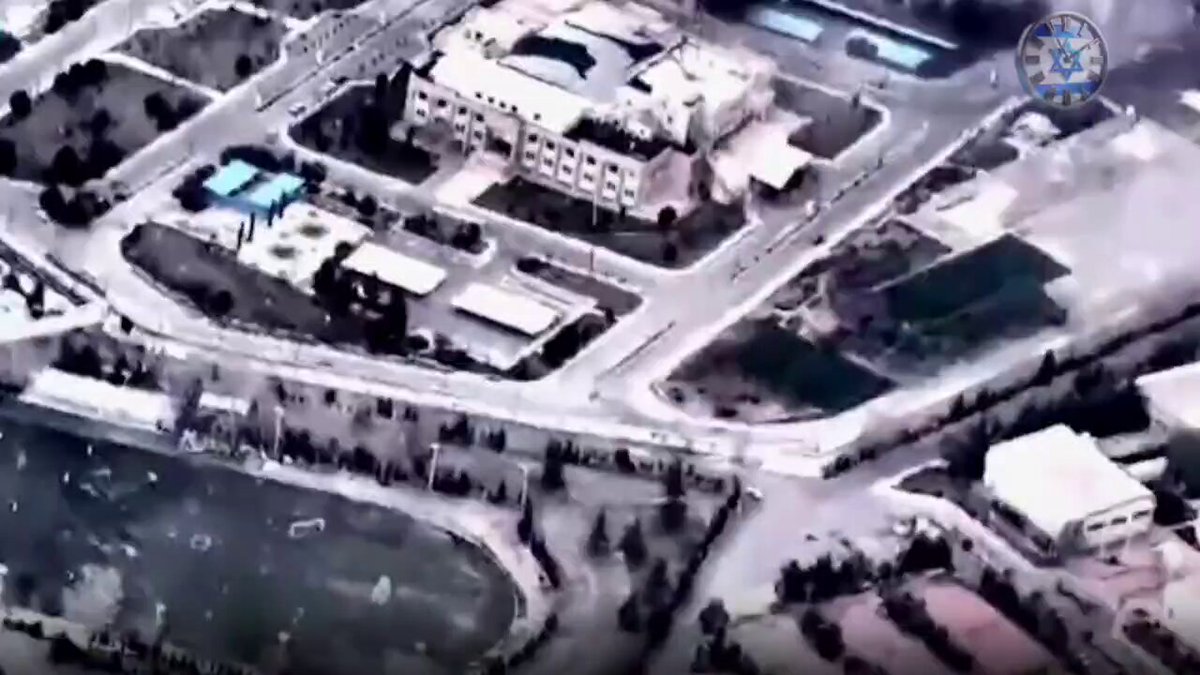
๐๐‘๐„๐€๐Š๐ˆ๐๐†: ๐’๐€๐”๐ƒ๐ˆ ๐€๐‘๐€๐๐ˆ๐€ ๐€๐๐ƒ ๐”๐€๐„ ๐‘๐„๐€๐ƒ๐˜ ๐“๐Ž ๐Œ๐ˆ๐‹๐ˆ๐“๐€๐‘๐ˆ๐‹๐˜ ๐‘๐„๐Ž๐๐„๐ ๐“๐‡๐„ ๐’๐“๐‘๐€๐ˆ๐“ ๐Ž๐… ๐‡๐Ž๐‘๐Œ๐”๐™ ๐€๐’ ๐ˆ๐‘๐€๐โ€™๐’ ๐๐‹๐Ž๐‚๐Š๐€๐ƒ๐„ ๐“๐‡๐‘๐„๐€๐“๐„๐๐’ ๐Ÿ๐ŸŽ% ๐Ž๐… ๐†๐‹๐Ž๐๐€๐‹ ๐Ž๐ˆ๐‹ The Gulf Arab states have had enough. With Iranโ€™s closure of the Strait of Hormuz cutting off ๐ง๐ž๐š๐ซ๐ฅ๐ฒ ๐Ÿ๐ŸŽ% ๐จ๐Ÿ ๐ญ๐ก๐ž ๐ฐ๐จ๐ซ๐ฅ๐โ€™๐ฌ ๐จ๐ข๐ฅ ๐ฌ๐ฎ๐ฉ๐ฉ๐ฅ๐ฒ, Saudi Arabia and the...

28,375 gรถrรผntรผleme โ€ข 3 ay รถnce โ€ขvia X (Twitter)

0 Yorum

Yorum bulunmuyor

Orijinal gรถnderinin yorumlarฤฑ burada gรถrรผnecek

Benzer Videolar

๐Ÿšจ OPERATIONAL UPDATE: ISRAEL U.S. WAR WITH THE ISLAMIC REPUBLIC - Reporting Window: Last 24 Hours โœณ๏ธThe war is entering its final phase, but the battlefield is becoming more dangerous, not less. For the first time since the conflict began, the United States has signaled that its objectives against Iran have largely been achieved and that military operations could conclude within 2 to 3 weeks. At the same time, the operational picture tells a more complex story. Strikes inside Iran are intensifying, not slowing. Iranโ€™s responses are becoming less concentrated but more geographically expansive. And across the region, the risk of broader escalation remains very real. This is no longer an open-ended war. It is a race between final military objectives and the risk of wider regional destabilization. โ”โ”โ”โ”โ”โ”โ”โ”โ”โ”โ”โ”โ”โ”โ”โ”โ”โ” ๐Ÿ POLITICAL ENDGAME SIGNAL EMERGES President Donald Trump stated that the war could end within weeks, indicating that core objectives have been achieved, including the degradation of Iranโ€™s strategic capabilities and the disruption of its leadership structure. He also signaled that the United States does not intend to remain indefinitely engaged, suggesting that responsibility for securing critical global nfrastructure, particularly the Strait of Hormuz, may shift to regional and international stakeholders. At the same time, tensions with NATO allies are surfacing. Frustration over limited allied participation in the war has raised the possibility of a broader fracture within the Western alliance structure. Parallel reporting indicates that elements within Iran are signaling openness to a ceasefire framework, particularly if maritime access through Hormuz is restored. Taken together, this marks a clear transition: the war now has a defined political end state, even as military operations continue. โ”โ”โ”โ”โ”โ”โ”โ”โ”โ”โ”โ”โ”โ”โ”โ”โ”โ” โœˆ๏ธ FINAL PHASE STRIKE CAMPAIGN INSIDE IRAN The intensity of strikes over the past 24 hours reflects what appears to be end-stage shaping operations. Israeli and US-aligned strikes targeted a wide range of sites across Iran, including weapons production facilities, research and development centers, and critical infrastructure nodes tied to the regimeโ€™s military capabilities. Tehran remains a central focus. Approximately twenty military-industrial sites were struck, along with infrastructure at Mehrabad Airport and locations linked to Basij coordination. A senior Quds Force engineering figure, Mahdi Vafaei, was eliminated in a precision strike. His role in developing underground weapons infrastructure across Lebanon and Syria made him a key long-term asset for Iranโ€™s regional military network. Additional strikes hit industrial targets, including steel production facilities and a site identified as supporting materials linked to Iranโ€™s chemical weapons development pipeline. This is not a campaign aimed at symbolic damage. It is a systematic effort to dismantle Iranโ€™s ability to produce, coordinate, and sustain war over time. โ”โ”โ”โ”โ”โ”โ”โ”โ”โ”โ”โ”โ”โ”โ”โ”โ”โ” ๐ŸŽฏ IRANIAN RESPONSE AND CIVILIAN IMPACT Iran continues to launch missiles toward Israel, but at a reduced scale compared to earlier phases of the war. Limited salvos were recorded over the past 24 hours, causing injuries and localized damage. One of the most significant developments was the reported use of cluster munitions in central Israel, critically injuring a child and causing multiple casualties. At the same time, Iran appears to be adapting operationally. Rather than attempting large-scale saturation attacks, it is increasingly relying on smaller strikes, drones, and diversified targeting strategies. This does not indicate de-escalation. It reflects an effort to remain operational under sustained pressure. โ”โ”โ”โ”โ”โ”โ”โ”โ”โ”โ”โ”โ”โ”โ”โ”โ”โ” ๐ŸŒ REGIONAL EXPANSION: THE WAR SPREADS While direct attacks on Israel have become more limited in scale, Iran is expanding the conflict across the region. In the Gulf, infrastructure in Kuwait and Bahrain was struck, including fuel storage facilities at Kuwait International Airport. Fires and damage were reported, adding to a growing pattern of attacks on energy and logistical nodes. A commercial tanker was also struck near Qatar, further extending the conflict into maritime space. These developments mark a continued shift where Iran is targeting not just Israel, but the broader economic and energy architecture of the region. โ”โ”โ”โ”โ”โ”โ”โ”โ”โ”โ”โ”โ”โ”โ”โ”โ”โ” ๐Ÿšข THE STRAIT OF HORMUZ The strategic center of gravity in this war is now unmistakable. The Strait of Hormuz remains contested, with ongoing disruption to global shipping and energy flows. The United States is actively evaluating options to reopen and secure the waterway, including potential direct military action against Iranian coastal capabilities. At the same time, Gulf states, particularly the UAE, are pushing for a coordinated military effort to ensure the strait is reopened. However, regional positioning remains complex, with some actors balancing public caution and private pressure. Notably, the United States has signaled that it may not take long-term responsibility for securing Hormuz, instead shifting that burden to global stakeholders. The implication is clear: control of Hormuz will determine not only the outcome of the war, but its aftermath. โ”โ”โ”โ”โ”โ”โ”โ”โ”โ”โ”โ”โ”โ”โ”โ”โ”โ” ๐Ÿ”ฅ NORTHERN AND PROXY FRONTS Iranโ€™s proxy network remains active, but increasingly strained. In Lebanon, Israeli strikes continue to target Hezbollah leadership and infrastructure, including the reported elimination of a senior commander in Beirut. Rocket fire persists, but Israeli operations are steadily degrading launch capabilities. In Yemen, the Houthis have formally entered the fight against Israel and are likely contributing to the expanding pattern of regional attacks, including those affecting Gulf infrastructure. Across Iraq and Syria, Iranian-aligned militias remain engaged, while underlying instability continues to create openings for additional actors. This is now a multi-front conflict, but one in which Iranโ€™s network is under pressure across every axis. โ”โ”โ”โ”โ”โ”โ”โ”โ”โ”โ”โ”โ”โ”โ”โ”โ”โ” ๐Ÿง  WARFARE EVOLUTION A critical and often overlooked development is the role of advanced targeting systems. Israel is employing AI-assisted capabilities to identify threats, prioritize targets, and synchronize strikes across multiple theaters in near real time. This has significantly compressed the operational cycle, allowing for rapid follow-up strikes and reduced recovery time for Iranian forces. The result is a battlefield environment where Iran has less time to act, less time to adapt, and fewer opportunities to rebuild degraded capabilities. โ”โ”โ”โ”โ”โ”โ”โ”โ”โ”โ”โ”โ”โ”โ”โ”โ”โ” ๐Ÿ“Š THE BIG PICTURE The trajectory of the war is now coming into focus. The United States and Israel are executing a campaign designed to dismantle Iranโ€™s ability to function as a coherent military actor. Iran, in response, is expanding the conflict geographically in an attempt to impose broader costs. At the same time, political signals indicate that the war is approaching a defined end state. Markets are already reacting to this expectation, with oil prices declining and global indices rising on the assumption that the conflict may soon conclude. However, the final phase carries its own risks. As Iranโ€™s conventional capabilities degrade, its reliance on asymmetric and regional tactics is increasing. The decisive question is no longer how the war is fought day to day. It is whether the final objectives can be secured before broader escalation overtakes them. โ”โ”โ”โ”โ”โ”โ”โ”โ”โ”โ”โ”โ”โ”โ”โ”โ”โ” ๐Ÿ“˜ BOOK RECOMMENDATION If you want a deeper understanding of the history, narratives, and strategic realities behind this conflict: Contested Land, Uncontested Truth This book breaks down the ideological, geopolitical, and historical forces that led directly to moments like this, with clarity and evidence. ๐Ÿ‘‰ If you found this report valuable, share it. Follow for daily operational updates.

Inside_Israel_Intel

60,835 gรถrรผntรผleme โ€ข 3 ay รถnce

BREAKING: The ceasefire just ate itself. The Head of Iranโ€™s Parliamentary National Security and Foreign Policy Committee just stated: after the Israeli aggression on Lebanon, all plans to open the Strait of Hormuz must immediately cease until there are assurances that Lebanon is included in the ceasefire. There is either a ceasefire on all fronts, or a ceasefire nowhere at all. The entire premise of the deal was Hormuz reopening. Trumpโ€™s condition was complete, immediate, and safe opening of the strait. Iran accepted. The ceasefire was built on that single exchange: pause the bombs, open the water. Brent crashed 13 percent. The S&P surged. The market priced peace. Now Iran is threatening to reverse the only thing the ceasefire achieved because of something the ceasefire never included. Three contradictions in 24 hours. Pakistan announced the ceasefire covers everywhere including Lebanon. Netanyahu said it does not include Lebanon and launched the largest IDF strike since Roaring Lion began: 100 Hezbollah targets in 10 minutes. Now Iran says Hormuz stays closed unless Lebanon is covered. The dealโ€™s architect says it includes Lebanon. The dealโ€™s beneficiary says it excludes Lebanon. And now the dealโ€™s other signatory says the core deliverable is revoked unless the excluded front is reinstated. This is what happens when a ceasefire is brokered through intermediaries who need both sides to say yes more than they need both sides to agree. Pakistan shuttled drafts between Washington and Tehran through five mediating channels in one chaotic day. Egypt bridged language. Turkey provided backchannels. China urged an off-ramp. The framework was drafted with sufficient ambiguity that Iran could tell Hezbollah it was covered and Israel could tell its public it was not. That ambiguity held for exactly 18 hours before the IDFโ€™s 100-target strike forced Iran to choose between Hezbollah solidarity and Hormuz revenue. Iran chose Hezbollah. The implications cascade immediately. If Iran follows through and halts Hormuz reopening, the 15 to 20 vessels currently transiting under IRGC clearance codes stop. The yuan toll revenue that was funding reconstruction stops. The ceasefireโ€™s only tangible achievement, the strait reopening that crashed oil prices, reverses. And Trumpโ€™s conditional two-week suspension, which was explicitly revocable if Hormuz did not open immediately and safely, faces its trigger event on day one. Trump has three options. Accept Lebanon inclusion, which means pressuring Netanyahu to halt strikes against Hezbollah, which Israel has refused. Reject Lebanon inclusion, which means Iran re-closes Hormuz, which voids the ceasefireโ€™s premise. Or ignore the threat and continue as if the 15 ships passing through a yuan toll booth constitute an open strait, which means the Islamabad talks on Friday begin over a deal that both parties are publicly threatening to revoke. The molecule crisis does not pause for diplomatic fractures. The crackers are rubble. The pipeline bypass just took a drone. The fertiliser is trapped behind the gate. The centrifuges are spinning. And the strait that was supposed to reopen as the warโ€™s first peace dividend is now being held hostage to a front that was never agreed upon, by a parliament that legislated tolls on March 31, in a country whose supreme leader has not been seen in 39 days. One ceasefire. Three interpretations. Zero days before collapse. Full analysis on Substack.

Shanaka Anslem Perera โšก

495,317 gรถrรผntรผleme โ€ข 3 ay รถnce

Here's what you missed over the weekend in the ongoing conflict in Iran. Get caught up below๐Ÿ‘‡ ๐Ÿšจ OPERATIONAL UPDATE: ISRAEL U.S. WAR WITH THE ISLAMIC REPUBLIC - Reporting Window: 3/27 - 3/30 *โƒฃ Israel sustained a wide strike campaign inside Tehran, targeting missile production, air defense systems, and core regime infrastructure in the capital. *โƒฃ The IAEA confirmed Iranโ€™s Khondab heavy water facility at Arak is no longer operational after Israeli strikes, marking one of the clearest verified hits to nuclear-linked infrastructure. *โƒฃ Iran continued missile attacks into Israel, including impacts near the Neot Hovav industrial zone that caused fires and industrial disruption without mass casualties. *โƒฃ The Houthis in Yemen officially entered the war, launching ballistic missiles and drones toward Israel and signaling continued attacks. *โƒฃ The Gulf front intensified, with damage to infrastructure in Kuwait and sustained pressure tied to the Strait of Hormuz and regional energy systems. *โƒฃ The United States is now weighing escalation options tied to Iranโ€™s enriched uranium stockpile while maintaining a public posture of diplomacy. โ”โ”โ”โ”โ”โ”โ”โ”โ”โ”โ”โ”โ”โ”โ”โ”โ”โ” โœˆ๏ธ STRATEGIC AIR CAMPAIGN OVER IRAN Israelโ€™s campaign seems to have shifted from targeting regime objectives and symbols, like Basij headquarters, to industrial and military complex infrastructure. This is likely due to a prioritization to degrade the long term capabilities of the regime should the conflict end before regime change objectives can be achieved. Sustained strikes across Tehran, combined with the confirmed disabling of the Arak heavy water facility, show a shift toward dismantling Iranโ€™s military and nuclear backbone. This is now a campaign against production, command, and regeneration capacity. Power disruptions and secondary infrastructure damage across Tehran reinforce that this is expanding beyond military sites into the broader ecosystem that sustains the regimeโ€™s ability to fight. This is not a temporary degradation effort. It is structural. โ”โ”โ”โ”โ”โ”โ”โ”โ”โ”โ”โ”โ”โ”โ”โ”โ”โ” ๐Ÿš€ IRANIAN ATTACKS ON ISRAEL Iran is still firing. But the pattern has changed. Missile attacks continue across Israel, including impacts in the south and repeated alerts across multiple regions. The strike near Neot Hovav fits the current model: disruption, not mass casualties. Launch tempo is down significantly from earlier phases, but the capability remains intact. What matters now is not volume. Itโ€™s persistence. Iran can still impose pressure. It just canโ€™t dominate the battlefield in any meaningful way. โ”โ”โ”โ”โ”โ”โ”โ”โ”โ”โ”โ”โ”โ”โ”โ”โ”โ” ๐ŸŸฅ YEMEN FRONT: HOUTHIS ENTER THE WAR The Houthis officially joined the war on March 28, launching ballistic missiles toward Israel for the first time in this conflict and signaling continued operations going forward. Since then additional drone launches toward Israel have been reported and intercepted. The group has framed its attacks as part of a unified โ€œresistance frontโ€ alongside Iran, Hezbollah, and Iraqi militias. This matters for three reasons: 1. Range and geography - Yemen is over 2,000 km away. These are long-range strikes that stretch Israelโ€™s defensive envelope. 2. Multi-front pressure - Israel is now dealing with Iran (direct), Hezbollah (north), Houthis (south / long-range). That is a true multi-front war. 3. Escalation pathway - The Houthis are not limited to Israel. They sit on the Bab al-Mandeb Strait, one of the most critical shipping chokepoints in the world. If they escalate there, it links directly with Hormuz. This could even further choke critical shipping lanes in the global economy. โ”โ”โ”โ”โ”โ”โ”โ”โ”โ”โ”โ”โ”โ”โ”โ”โ”โ” ๐ŸŒ GULF / HORMUZ / ENERGY WAR Iran is now fully leaning into economic warfare. Confirmed damage to infrastructure in Kuwait, combined with continued disruption around Hormuz, shows a deliberate strategy: expand the cost of the war beyond Israel. This is not incidental escalation. It is strategic leverage. โ”โ”โ”โ”โ”โ”โ”โ”โ”โ”โ”โ”โ”โ”โ”โ”โ”โ” ๐Ÿ‡บ๐Ÿ‡ธ POLITICAL / STRATEGIC DEVELOPMENTS The United States is now the pivot. The public posture is diplomacy and de-escalation messaging. The operational reality is that troop deployments are increasing, escalation planning is underway, and uranium-targeting scenarios are under consideration. At the same time, Iran is not signaling compromise. It is mobilizing, expanding proxy activity, and behaving like a regime preparing for a longer war and signaling it can outwait it's adversaries. That gap is now one of the most important dynamics in the conflict. โ”โ”โ”โ”โ”โ”โ”โ”โ”โ”โ”โ”โ”โ”โ”โ”โ”โ” ๐Ÿ“Œ WHAT MATTERS MOST RIGHT NOW โžก๏ธ Israel is systematically dismantling Iranโ€™s military and nuclear-supporting infrastructure, with Tehran now a primary focus. โžก๏ธ Iran still has strike capability, but its attacks are increasingly intermittent but now beginning to be supplemented by proxy fronts in Lebanon and Yemen. โžก๏ธ The Gulf and global energy system are a growing target for the IRGC's war trajectory. โžก๏ธ The United States is positioned between diplomacy and escalation, with the ability to decisively shift the war if it acts. Bottom line, this is no longer just Israel vs Iran. It is now: Iran, Hezbollah, Houthis VS the US, Israel, Gulf States, and the global economy.

Inside_Israel_Intel

39,012 gรถrรผntรผleme โ€ข 3 ay รถnce

Iran war, day 89! Trump keeps breaching the ceasefire! Just how compromised is Oman? -4 American vessels, attempted to cross the SOH without coordinating with IRGC security forces -They were warned, and following their disregard, warning shots were fired at them, forcing them to turn back. -4 drones were fired as warning shots Meanwhile, Kosher media lies as usual and claims: -that IRGC fired 4 one-way drones at a U.S. commercial ship! -The U.S. military shot down all the drones and attacked another Iranian drone launching unit on the ground before it launched in Bandar Abbas, the official added -no mentions of the 4 invader vessels attempting to breach iranโ€™s control of the SOH, and failing miserably! Per Reuters, the U.S. military has executed new strikes on an Iranian military facility that โ€œposed a threat to U.S. forces and commercial vessels in the Strait of Hormuzโ€. -no mention of the U.S. military invasion of a sovereign territory. However, -U.S. official told CBS News the Iran ceasefire holds following tonight's strikes. -interesting how no accusation was made against Iran breaching the ceasefire despite kosher mediaโ€™s bs claims. Analysis: The U.S. is testing out Iranโ€™s ability to strike U.S. ships with limited breaches to gauge where Iran is striking from each time. Iran isnโ€™t providing a predictable pattern and is sticking to its protocol of warnings, warning shots, and then on standby to escalate. Ynet Hebrew news on Iranโ€™s demand for compensation: Tehran sets new conditions - the US must pay $300 billion in compensation! -Trump/Israel keep raising the price for a peace deal How is Trumpโ€™s bs blockade working out? Per WSJ: Despite the naval blockade, Iran continues to sell its oil! -The ship-to-ship transfer of oil in the middle of the sea reveals Iran's main strength and the main reason for its ability to resist US pressure for a long time. -Per the US-China Economic and Security Review Commission, Tehran earned about $31 billion in oil revenues from China last year. -this is conservative figure as most of sales are unaccounted for -The Chinese government explicitly ordered local companies not to comply with US sanctions against five Chinese refineries. And now Iran is selling its oil and maximum capacity, at higher prices. Pre war oil was at $70/b. Itโ€™s around $100/b. Trump did that! Nobody fears Trumpโ€™s bs blockade, sanctions and tariffs! Trump keeps barking anyway! Trump reserved the right to now wipe out Oman and finish off Iran! -I thought Iran was already beat according to Trump! As for Oman: Oman can be considered the most staunch supporter of the U.S. presence in the Persian Gulf region. The first military agreement between the two countries was signed in 1980. Currently, 26,000 American air force units are stationed on the territory of this Arab state. In addition, U.S. military aviation units assigned the private security firm DynCorp International to guard various parts of the base, including aircraft hangars, fuel storage, ammunition depots, automobiles, and administrative buildings. Oman hosts multiple US military bases: -the bases of the Navy in Rycote, Sit Lahsa and Muscat. -the U.S. air force bases are in al-Hasib, Siba, Markaz Tamarid, and masir. -the air force base in masir and the port of Matra are permanent bases of the US armed forces. -Oman hosts the command post of the US air force. -From American air bases in Oman, drones (UAVs) are periodically flown over the territories of many countries, up to Afghanistan. Iran for whatever reason trusted Oman as a mediator state at one time. Trump said he is not sure the U.S. should sign a deal to end the war with Iran if Saudi Arabia and other gulf slave states don't agree to join the Abraham Accords! They owe it to us he says! Kosher media calls out Netanyahuโ€™s bs! "Haaretz" quoting an Israeli field officer: Netanyahu's claim of killing 600 Hezbollah fighters in recent weeks is laughable

Truth_teller ๐Ÿ‡ท๐Ÿ‡บ

32,618 gรถrรผntรผleme โ€ข 1 ay รถnce

IRAN JUST HIT THE LARGEST OIL EXPORT TERMINAL ON EARTH AND THIS TIME THERE IS NO PROXY TO BLAME A Shahed-136 drone struck Saudi Aramcoโ€™s Ras Tanura refinery on March 2, igniting a fire that was quickly contained according to Reuters and Bloomberg citing industry sources. Saudi Aramco shut down the entire facility as a precautionary measure. No casualties were reported. The Saudi Defence Ministry confirmed it intercepted drones targeting the site, with debris causing the ground fire per The Hindu. Ras Tanura processes 550,000 barrels per day. It is one of the largest oil refining and export complexes on the planet. And Iran just hit it with a $30,000 drone. On September 14, 2019, drones and cruise missiles struck Saudi Aramcoโ€™s Abqaiq processing facility and Khurais oil field, temporarily halving Saudi output by 5.7 million barrels per day. The Houthis claimed responsibility. The United States, Saudi Arabia, and European intelligence agencies concluded Iran orchestrated the attack. Tehran denied involvement. The proxy shield held. No retaliation followed. Oil spiked 15% on Monday, then unwound within two weeks as production resumed. That playbook is dead. In 2026, Iran is launching strikes against Saudi territory under its own flag as part of Operation True Promise 4. The IRGC is simultaneously hitting nine countries. There is no Houthi intermediary absorbing attribution. There is no plausible deniability. Iran struck Ras Tanura, and every intelligence agency, every oil trader, and every Saudi military commander knows exactly who launched the drone, from which territory, under whose orders. Crown Prince Mohammed bin Salman spent eight years building Vision 2030 around a single premise: that Saudi Arabia could diversify away from oil dependence while maintaining the kingdomโ€™s security through a combination of American protection and regional de-escalation with Iran. MBS authorized backchannel normalization with Tehran through China in 2023. The Saudi-Iran detente was the centerpiece of Gulf stability. That detente just burned on the tarmac at Ras Tanura. Saudi Arabia has not been a co-belligerent in Operation Epic Fury. Riyadh did not participate in strikes on Iran. Saudi airspace may have been used for overflight, and Saudi air defenses are intercepting Iranian ordnance, but the kingdom has deliberately avoided offensive operations. The reward for that restraint is an Iranian drone on the crown jewel of Saudi economic infrastructure. Now stack the arithmetic. The Strait of Hormuz is functionally closed, sealing 15 million barrels per day. Ras Tanuraโ€™s 550,000 barrels per day is offline. Kuwait International Airport was struck. Jebel Ali port in the UAE showed smoke on satellite. Brent crude already surged 9% to $79.45 per barrel per Bloomberg before this strike was reported. Ras Tanura was not on the marketโ€™s pricing model. The market priced Hormuz disruption. The market priced Gulf airspace closure. The market did not price Iran directly attacking Saudi refining capacity because the market assumed Saudi neutrality provided protection. Saudi neutrality provided a target. Monday morningโ€™s crude open will reprice everything written above. And Riyadh will answer a question MBS has avoided for three years: does Saudi Arabia enter this war, or absorb the next drone?

Shanaka Anslem Perera โšก

799,642 gรถrรผntรผleme โ€ข 4 ay รถnce

Iran just fired missiles at five countries simultaneously. Here is what actually happened to each of them. Bahrain. Confirmed hit on the US Navy Fifth Fleet headquarters. Bahrainโ€™s own state news agency reported the strike. No casualty figures released yet. This is the command center for every American naval operation in the Persian Gulf. It was struck. UAE. Multiple missiles intercepted by Emirati air defenses. One civilian killed in Abu Dhabi from falling debris. The UAE defense ministry confirmed the intercepts. The Emirates just absorbed an act of war on its sovereign territory from a country it shares a maritime border with. Qatar. Missile intercepted. Zero damage. The Qatari Interior Ministry confirmed. The same country Iran just attacked is the country that hosted Al Udeid for twenty years as a gesture of regional balance. That balance ended this morning. Kuwait. KUNA state news agency confirmed missiles were โ€œdealt withโ€ in Kuwaiti airspace. No reported damage. Kuwait, which stayed neutral through every Gulf crisis since 1991, just had Iranian ballistic missiles flying over its cities. Jordan. Two Iranian ballistic missiles shot down by Jordanian military. Confirmed by the Jordanian armed forces directly. Jordan intercepted Iranian missiles in June 2025 as well. That was in defense of Israel. This time Iran targeted Jordan itself. Saudi Arabia. Fars News claims strikes. No confirmation from any Saudi source. No Tier 1 or Tier 2 verification. Either it did not happen or Riyadh is not yet ready to say it did. Both possibilities carry enormous implications. Now understand what Iran just accomplished strategically. In attempting to retaliate against Israel and America, the IRGC fired missiles at six sovereign nations in a single morning. Not one of those nations attacked Iran. Bahrain did not bomb Tehran. The UAE did not launch strikes on Isfahan. Qatar hosted diplomatic back channels. Kuwait maintained neutrality for three decades. Jordan was mediating. Iran just converted every neutral and semi-neutral state in the Gulf into a potential co-belligerent. Every nation whose airspace was violated, whose civilians were killed, whose sovereignty was breached now has legal and political justification to join whatever coalition forms next. And the damage tells the real story. One civilian dead from debris. Intercepts across four countries. No confirmed destruction of any US military asset. No reported American casualties among 40,000 troops in theater. Iran fired at the entire Gulf and the Gulf caught almost everything. Compare this to what Israel did to Tehran this morning. Precision strikes on the IRGC Intelligence Directorate. Explosions near the Supreme Leaderโ€™s office. Three detonations in central Tehran confirmed by Iranian state media itself. One side hit what it aimed at. The other side hit one civilian with debris. This is the asymmetry that will define the next 72 hours. Iran demonstrated intent to strike everywhere and capability to hit almost nothing. The Gulf states demonstrated they can defend themselves. And now those states must decide whether the country that just fired ballistic missiles across their borders gets to do it again. They will not let it happen again. Watch for the joint statement. Watch for airspace coordination between Riyadh, Abu Dhabi, Manama, and Kuwait City. Watch for the coalition that Iran just built against itself with a single salvo. Iran did not retaliate against Israel this morning. Iran gave every country in the Middle East a reason to retaliate against Iran.

Shanaka Anslem Perera โšก

16,724,449 gรถrรผntรผleme โ€ข 4 ay รถnce

๐Ÿšจ OPERATIONAL UPDATE: ISRAEL U.S. WAR WITH THE ISLAMIC REPUBLIC - Reporting Window: Last 24 Hours Heavy strike activity continued across Iran, while Iran maintained intermittent but still damaging attacks into Israel and across the Gulf. Open-source reporting, civilian footage, and mainstream outlets including The New York Times, AP, The Guardian, Ynet, and The Jerusalem Post all point to the same picture: sustained pressure across multiple fronts with no meaningful slowdown. โ”โ”โ”โ”โ”โ”โ”โ”โ”โ”โ”โ”โ”โ”โ”โ”โ”โ” โœˆ๏ธ INSIDE IRAN The most concrete strike detail in this window is the continued targeting of Iranโ€™s energy and industrial base. Multiple sources, including The Guardian, AP, and Ynet, confirm Israeli strikes on the South Pars gas field, specifically a major petrochemical facility responsible for roughly half of Iranโ€™s petrochemical production. Additional reporting indicates that, combined with prior strikes, a large portion of Iranโ€™s export-linked petrochemical capacity has now been taken offline. This sits alongside continued strikes in and around Tehran, with open-source reporting and local accounts indicating ongoing explosions, air defense activity, and damage to both infrastructure and regime-linked sites. At the same time, Majid Khademi, head of the IRGC Intelligence Organization, was killed in strikes attributed to Israel and the United States. That removes a senior figure tied directly to internal security, intelligence coordination, and regime control. Taken together, this window reinforces what has already been visible: *โƒฃ Energy and industrial infrastructure are being hit directly *โƒฃ Senior regime figures remain active targets *โƒฃ Tehran itself continues to absorb repeated strike activity โ”โ”โ”โ”โ”โ”โ”โ”โ”โ”โ”โ”โ”โ”โ”โ”โ”โ” ๐Ÿš€ IRANIAN STRIKES ON ISRAEL Iran continued to launch missiles into Israel, with the most detailed reporting coming from Ynet and corroborated by open-source imagery and emergency response reports. A cluster munition missile dispersed submunitions across central Israel, creating 20 to 28 separate impact sites across the Tel Aviv metropolitan area. Residential buildings, vehicles, and infrastructure were damaged, and at least one person was wounded. Separately, rescue operations in Haifa confirmed four civilian fatalities after a direct missile strike caused a structural collapse in a residential building. This is consistent with what youโ€™ve already been reporting: *โƒฃ Iran still has the ability to penetrate defenses at times *โƒฃ Civilian impact remains real even at reduced launch tempo *โƒฃ Cluster munitions continue to increase the number of impact sites per strike โ”โ”โ”โ”โ”โ”โ”โ”โ”โ”โ”โ”โ”โ”โ”โ”โ”โ” ๐Ÿ”ฅ LEBANON FRONT Lebanon remained active, though not the central focus of this window. Israeli strikes continued in Beirutโ€™s southern suburbs, targeting Hezbollah positions, with large secondary explosions and visible damage. Reporting from Asharq Al-Awsat and additional regional sources indicates continued evacuation patterns and reduced civilian presence in targeted areas. There is also continued reporting of internal Lebanese tension, with criticism of Hezbollah growing in some areas as strikes expand geographically. This front remains active, but its role in this window is supportive rather than dominant. โ”โ”โ”โ”โ”โ”โ”โ”โ”โ”โ”โ”โ”โ”โ”โ”โ”โ” ๐ŸŒ GULF AND REGIONAL PRESSURE Iran continued applying pressure beyond Israel, particularly in the Gulf. Reporting from The National indicates Kuwait has now intercepted hundreds of drones and ballistic missiles since late February, with continued targeting of: *โƒฃ Oil refineries *โƒฃ Power infrastructure *โƒฃ Desalination facilities Daily life in Kuwait is continuing, but under persistent alert conditions. This reinforces the broader pattern already established that Iran is sustaining regional pressure even as its direct strike tempo into Israel fluctuates. โ”โ”โ”โ”โ”โ”โ”โ”โ”โ”โ”โ”โ”โ”โ”โ”โ”โ” โš“ HORMUZ AND THE POLITICAL CLOCK The most consequential non-kinetic development remains tied to the Strait of Hormuz. Reporting across The New York Times, AP, and Al Jazeera confirms that the U.S. has again issued a deadline for Iran to reopen the strait, with explicit threats to strike power plants, bridges, and national infrastructure if that does not occur. Iran has responded by signaling it will retaliate if those strikes are carried out. At the same time, there are indications of ongoing diplomatic efforts, including proposals being circulated through regional intermediaries, though none appear close to resolution. โ”โ”โ”โ”โ”โ”โ”โ”โ”โ”โ”โ”โ”โ”โ”โ”โ”โ” ๐Ÿ“Œ WHAT MATTERS MOST RIGHT NOW โ€ข Israeli strikes continue to hit energy infrastructure and regime leadership targets inside Iran โ€ข Iran maintains the ability to cause civilian damage inside Israel, including multi-impact cluster strikes โ€ข Civilian fatalities inside Israel were confirmed in this window โ€ข Hezbollah positions in Beirut continue to be targeted โ€ข Gulf infrastructure remains under sustained Iranian pressure โ€ข The Hormuz deadline remains the clearest trigger for possible escalation โ”โ”โ”โ”โ”โ”โ”โ”โ”โ”โ”โ”โ”โ”โ”โ”โ”โ” ๐Ÿง  ASSESSMENT The pattern across the war is holding. Israel continues applying pressure across military, industrial, and economic systems inside Iran. Iran continues to respond within its constraints, maintaining the ability to strike while distributing pressure across multiple fronts. The most important variable is not a new development. It is timing. The U.S. has now attached a clear deadline to Hormuz, with specific targets named publicly. If that deadline passes without resolution, escalation will not be gradual. โ”โ”โ”โ”โ”โ”โ”โ”โ”โ”โ”โ”โ”โ”โ”โ”โ”โ” ๐Ÿ“– BOOK PLUG If you want the deeper context behind everything youโ€™re watching play out right now, I break it down in: Contested Land, Uncontested Truth It goes beyond daily updates and explains the history, strategy, and narratives shaping this conflict. Continued thanks to Michael W for continuing to contribute to the open-source picture behind these reports.

Inside_Israel_Intel

24,295 gรถrรผntรผleme โ€ข 3 ay รถnce

JUST IN: Iran just bombed the only country willing to broker its peace. Drones struck the Port of Salalah in Oman on 11th March, hitting fuel storage tanks at the MINA Petroleum Facility. Fires ignited. Then spread. As of tonight, the blaze has consumed most if not all oil tanks at the facility, burning into the darkness in a port that was not a military target, not an ally of the United States or Israel, but the neutral mediator that hosted the last diplomatic channel between Washington and Tehran as recently as February 2026. Oman brokered the secret talks that led to the 2013 JCPOA framework. Oman hosted the February 2026 nuclear discussions that were the final diplomatic contact before 28 February. When every other Gulf state chose sides, Oman chose neutrality. When Iran needed a phone line to Washington, Oman was the phone. That phone is now on fire. Iranโ€™s response was extraordinary. President Pezeshkian called Omanโ€™s Sultan and said the incident would be โ€œinvestigated.โ€ Iranโ€™s military denied launching attacks on Oman, calling the suggestion a โ€œfalse flag.โ€ But the drone signature matches IRGC patterns. The fires are real. The fuel tanks are burning. And no other actor in the region has the capability, the reach, or the motive to strike Salalah with the drone systems that hit it. This is the Mosaic Doctrine consuming its own creatorโ€™s diplomacy. The 31 autonomous IRGC provincial commands that operate without central authorisation do not consult Tehranโ€™s Foreign Ministry before launching. A commander with coastal access to the Gulf of Oman can strike Salalah without knowing or caring that President Pezeshkian needs Sultan Haithamโ€™s phone line to survive the war. The diplomatic wing of the Iranian state needs Oman alive. The military wing just set its oil tanks on fire. Both wings operate simultaneously without coordination because the doctrine was designed to make coordination unnecessary. This is the structural impossibility nobody is modelling. Tomorrow, Larijani or Pezeshkian may call Muscat and beg forgiveness. They may ask Oman to reopen the channel to Washington. They may negotiate in good faith for a ceasefire. And while they are on the phone, an autonomous IRGC command in Hormozgan or Kerman may launch another drone at Salalah because the sealed orders from a dead Supreme Leader authorise continuous strikes on Gulf infrastructure and no living authority has the constitutional power to countermand them. Peace requires trust. Trust requires that one side can guarantee what its own forces will do. Iran cannot guarantee what 31 independent commands will do because the man who could guarantee it is dead and his successor is a cardboard cutout. Oman cannot mediate between Washington and Tehran if Tehranโ€™s military burns Omani infrastructure while Tehranโ€™s president apologises for it. The mediatorโ€™s credibility dies the moment the mediatorโ€™s oil tanks ignite. Salalah was the bypass. When Hormuz closed, shipping was supposed to reroute through Omanโ€™s ports outside the Strait. When diplomacy was needed, Oman was supposed to carry the messages. When the war needed an off-ramp, Oman was supposed to build it. The IRGC just burned the bypass, silenced the messenger, and destroyed the off-ramp in a single night. Iranโ€™s economy runs on $5,000 per capita GDP, 60% inflation, and a currency that has lost 90% of its value under sanctions. It cannot afford to lose its only friend. It just did. And the doctrine that lost it was designed to be unstoppable.

Shanaka Anslem Perera โšก

293,522 gรถrรผntรผleme โ€ข 4 ay รถnce

BREAKING. Israelโ€™s Defense Minister just announced strikes on Iran will increase significantly this week. He said it from an underground command centre in Tel Aviv, hours after a cluster munition from an Iranian ballistic missile hit a daycare in Rishon Lezion. Hours after the United States bombed Natanz for the fifth time in 16 years. Hours after Trump told reporters he is considering winding down. The war is escalating and de-escalating in the same sentence because the strategy requires both signals simultaneously. Four nations responded to the same morning. The responses tell you everything about where this war is heading. Israel said more. Defense Minister Katz, surrounded by military officials, said the intensity of IDF and US strikes against the Iranian terror regime will rise significantly this week. He said Israel is determined to decapitate commanders and thwart strategic capabilities until every security threat to Israel and US interests is removed. He said the IDF will not stop until all war objectives are achieved. Passover holiday camps were cancelled in 18 municipalities across central Israel after the cluster munition struck the daycare. The children were not inside. The camps will not open. India said peace. Prime Minister Modi called Iranian President Pezeshkian on Nowruz, the Persian new year that fell on the same day a bunker-buster fell on Natanz. Modi expressed hope that the festive season brings peace, stability and prosperity to West Asia. India imports 40 percent of its crude through the Strait of Hormuz. The call was not about peace. It was about oil. Seventy percent of American generic prescriptions originate from Indian pharmaceutical manufacturers who depend on that crude. When Modi calls Tehran on Nowruz, the pharmacies in Ohio are listening. Russia said loyalty. Putin sent a Nowruz message telling Iran that Moscow remains a loyal friend and reliable partner, wishing Iranians to overcome these severe trials with dignity. Russia provides Iran with coordinates of US warship positions. Ukraine provides Gulf states with drone countermeasure expertise. Two wars sharing the same drone, the same intelligence architecture, the same battlefield geometry reflected through different alliances. Putinโ€™s loyalty is not sentiment. It is positioning. Every day the US burns ordnance over Iran is a day it does not restock Ukraine. Iran said danger. Tehran warned the United Kingdom that backing US-Israeli aggression through its bases is putting British lives at risk. This came hours after Iran fired two intermediate-range ballistic missiles at Diego Garcia, the British territory 4,000 kilometres from Iranian soil that hosts 2,500 mostly American personnel. Neither missile hit. One failed mid-flight. An SM-3 was fired at the second. Britain subsequently authorised US bombers to use UK bases for Hormuz operations. The country that was targeted then gave permission. Iran responded by threatening the country that gave permission. Day 22. The death toll has crossed 1,300 in Iran, 1,000 in Lebanon, 15 in Israel, and 13 American service members. Five thousand Marines are heading to the Gulf aboard two amphibious ready groups. Natanz has been bombed five times. Kharg Island is being discussed as a seizure target. Dubai crude hit $166 a barrel. The IAEA director told NPR that enrichment capacities will probably still exist at the end of this conflict. And the defense minister of Israel, standing in a bunker beneath Tel Aviv while a daycare above him had a hole in its roof from a cluster munition, said the word that defines this week. Significantly. Full analysis:

Shanaka Anslem Perera โšก

121,172 gรถrรผntรผleme โ€ข 3 ay รถnce

JUST IN: Iran gave Russia its Shahed drones. Russia improved them in Ukraine. Now Western intelligence says Russia is shipping the upgraded versions back to Iran. And the country that learned how to kill those drones on the battlefield just sent 228 experts to the Gulf to teach five countries how to do the same thing. The full circle is extraordinary. Iran supplied thousands of Shahed-136 kamikaze drones to Russia starting in 2022 for use against Ukraine. Russia rebranded them Geran-2 and, over three years of combat, upgraded the navigation systems, added anti-jamming capabilities, improved the engines, and refined the payload delivery. The Financial Times and AP reported on March 26 citing Western intelligence that Russia is now in the final stages of shipping those upgraded Geran-2 drones back to Iranโ€™s IRGC, along with medicine and food supplies. Kremlin spokesman Peskov called the reports โ€œliesโ€ and โ€œfake news dumps.โ€ Meanwhile, Zelensky arrived in Saudi Arabia on March 26 for an unannounced visit, met Crown Prince Mohammed bin Salman, signed a defense cooperation deal focused on air defense and drone expertise, and departed Jeddah on March 28. Ukraine has deployed 201 to 228 military drone specialists to five Gulf and Middle Eastern countries: the UAE, Qatar, Saudi Arabia, Kuwait, and Jordan. Another 34 are ready per Zelenskyโ€™s statement on March 17. These specialists are not there as a symbolic gesture. They bring the single most effective counter to Shahed drones that exists anywhere on earth. Ukraine developed FPV interceptor drones that account for roughly 70 percent of all Shahed and Geran-2 shootdowns in Ukraine per Forces News and Atlantic Council reporting. The method: radar and acoustic sensors detect the incoming drone at 20 to 50 kilometres. A cheap, fast quadcopter or fixed-wing interceptor launches from a mobile platform. An operator pilots it at high speed toward the target. It destroys the Shahed through kamikaze collision or a small explosive payload on impact. Cost per intercept: a fraction of what a surface-to-air missile costs. Militarnyi reported on March 22 that Ukrainian teams have already confirmed multiple Shahed shootdowns in the Middle East. The arms race running through this war is now a closed loop. Iran builds the drone. Russia tests it, improves it, and allegedly sends the improved version back. Ukraine learns to kill it through three years of battlefield iteration. Ukraine exports that knowledge to the Gulf states Iran is attacking. The Gulf states pay Ukraine in money, technology, and diplomatic support. Russia denies everything while the drones fly in both directions. This is not a bilateral conflict. It is a global drone ecosystem where every improvement by one side is studied, countered, and re-exported by the other. The Shahed that hits a refinery in Bahrain tonight may carry Russian-upgraded navigation. The interceptor that destroys it may be piloted by a Ukrainian operator trained in Zaporizhzhia. The defense deal that funded the deployment was signed in Jeddah while the war it was designed to address raged 1,500 kilometres to the northeast. SpaceXโ€™s Starlink provides the communications backbone for these teams in contested environments where terrestrial networks are degraded by the same war. The same helium shortage threatening semiconductor fabs and quantum computers is threatening the rocket launches that put Starlink satellites in orbit. The same strait carrying the oil carries the data cables that the drones are trying to protect. Every domain connects through the same 39 kilometres of water. Full analysis -

Shanaka Anslem Perera โšก

1,296,325 gรถrรผntรผleme โ€ข 3 ay รถnce

๐Ÿšจ OPERATIONAL UPDATE: TALKS ADVANCE, PRESSURE HOLDS - Reporting Window: Last 24 Hours *โƒฃ If you find these reports useful, PLEASE consider sharing them, this is how more people get access to clear, open source breakdowns of whatโ€™s actually happening. Diplomacy is now fully underway, but the underlying structure of the war has not changed. U.S. and Iranian officials are actively engaged in talks in Islamabad, while Israel continues operations in Lebanon and regional pressure points remain unresolved. Negotiations are real, but they are happening alongside continued military activity, not in place of it. โ”โ”โ”โ”โ”โ”โ”โ”โ”โ”โ”โ”โ”โ”โ”โ”โ”โ” ๐Ÿง  MY ASSESSMENT The disconnect in this phase of the war is no longer just military. It is perceptual. Iran is negotiating like a peer power. It is not operating like one. The regime has taken real damage across leadership, infrastructure, and military capability. That much is clear from weeks of sustained strikes and the cumulative effect theyโ€™ve had on its systems. At the same time, the United States and Israel retain clear escalation dominance, including the ability to threaten core Iranian infrastructure on a scale that would put the regime itself at risk. And yet, Iran continues to negotiate from a maximalist position. That is not because it holds superior leverage. It is because the leverage it does have is concentrated in disruption, not control. Hormuz remains the clearest example. Iran does not need to shut it permanently to create pressure. It only needs to make it unstable enough to raise global economic costs and force urgency into negotiations. The same applies to its proxy network. Hezbollah does not need to win in Lebanon. It only needs to remain active enough to prevent a clean separation of fronts. So the reality is more specific than either extreme. Iran is not negotiating from strength. But it is not negotiating without leverage. It is negotiating from a weakened position, using time, disruption, and regional pressure to offset what it has lost militarily. That is what makes this phase unstable. The United States is trying to convert military advantage into a negotiated outcome. Iran is trying to convert limited leverage into constraints on that outcome. Israel is continuing to act where it is not constrained. Those dynamics do not resolve cleanly. They drag. And the longer they drag, the more the outcome depends not just on capability, but on tolerance for escalation and time. Now let's break down all the different theaters contributing to this assessment: โ”โ”โ”โ”โ”โ”โ”โ”โ”โ”โ”โ”โ”โ”โ”โ”โ”โ” ๐Ÿ‡ต๐Ÿ‡ฐ ISLAMABAD TALKS: REAL, HIGH-STAKES, BUT FAR APART The most significant development in this window is the shift to direct U.S.โ€“Iran engagement in Pakistan. Senior delegations are now physically present in Islamabad under heavy security, with Pakistan acting as the central intermediary trying to convert a temporary ceasefire into something more durable. But the gap between the two sides remains wide: โ€ข Iranโ€™s reported framework focuses on sanctions relief, security guarantees, and preserving proxy influence โ€ข The U.S. framework demands nuclear dismantlement, missile limits, and a permanently open Hormuz Both sides are treating these as opening positions, not final terms. At the same time, Iranian negotiators are still pushing to include Lebanon in ceasefire guarantees, a condition that continues to complicate progress. โ”โ”โ”โ”โ”โ”โ”โ”โ”โ”โ”โ”โ”โ”โ”โ”โ”โ” ๐Ÿ‡ฑ๐Ÿ‡ง LEBANON REMAINS ACTIVE Despite the diplomatic push, Lebanon remains an active combat zone. Israeli strikes continued across southern Lebanon in this window, including deadly strikes in Nabatieh and surrounding areas. Reporting indicates: โ€ข More than two dozen killed in a single strike event, including members of Lebanese security forces โ€ข Additional strikes on urban areas, shops, and infrastructure โ€ข Continued clashes on the ground, with IDF personnel wounded in exchanges along the border At the same time, Hezbollah fire has not stopped entirely, with intermittent launches toward northern Israel continuing. The key continuity point holds: Lebanon is not covered by the ceasefire structure being negotiated in Pakistan, and it is not behaving like it is. โ”โ”โ”โ”โ”โ”โ”โ”โ”โ”โ”โ”โ”โ”โ”โ”โ”โ” โš“ HORMUZ: STILL UNRESOLVED The Strait of Hormuz remains the central strategic lever. U.S. officials are signaling active efforts to secure the waterway, including naval movements and mine-clearing operations, though some claims remain unverified. At the same time, Iran continues to threaten rapid retaliation against U.S. vessels operating in the area. This is the same unresolved issue sitting underneath the negotiations: โ€ข The ceasefire depends on Hormuz being open and stable โ€ข That condition has not yet been fully met โ€ข Both sides are still signaling willingness to escalate if it breaks down โ”โ”โ”โ”โ”โ”โ”โ”โ”โ”โ”โ”โ”โ”โ”โ”โ”โ” ๐ŸŒ REGIONAL PRESSURE AND SPILLOVER The regional layer of the war remains active even as talks proceed. Recent reporting highlights: โ€ข Continued Iranian-linked pressure on Gulf infrastructure, which has already disrupted Saudi industrial capacity in recent days โ€ข Pakistan increasing its own military posture, including sending fighter jets to Saudi Arabia as part of broader defense coordination โ€ข European pressure, particularly from France, to expand the ceasefire framework to include Lebanon This reinforces the broader pattern: The war is no longer confined to one front, and it cannot be easily paused in one place without consequences elsewhere. โ”โ”โ”โ”โ”โ”โ”โ”โ”โ”โ”โ”โ”โ”โ”โ”โ”โ” ๐Ÿ‡ฎ๐Ÿ‡ท INTERNAL IRAN DYNAMICS Additional reporting in this window provides a clearer picture inside Iran. โ€ข Iranโ€™s current Supreme Leader, Mojtaba Khamenei, remains seriously injured from earlier strikes but is still actively governing through remote coordination โ€ข The regime continues to maintain tight control domestically, including extended internet blackouts โ€ข There are increasing indications of information control and narrative shaping as negotiations proceed Separately, reporting suggests the regime has encouraged civilians to position themselves near key infrastructure as a deterrence tactic, reinforcing a pattern of using civilian presence as part of its defensive posture. โ”โ”โ”โ”โ”โ”โ”โ”โ”โ”โ”โ”โ”โ”โ”โ”โ”โ” ๐Ÿ“Œ WHAT MATTERS MOST RIGHT NOW โ€ข Direct U.S.โ€“Iran talks are now fully underway in Pakistan, but positions remain far apart โ€ข Lebanon remains an active battlefield, with continued Israeli strikes and ongoing casualties โ€ข Hormuz is still not fully stabilized, leaving the entire diplomatic framework conditional โ€ข Regional actors are adjusting posture, including Gulf states and Pakistan, signaling continued instability โ€ข Iran continues to operate from a constrained but still functional position, both militarily and internally

Inside_Israel_Intel

15,357 gรถrรผntรผleme โ€ข 3 ay รถnce

๐Ÿ”Š Church: LAST WEEK THE BOW WAS BENDING โ€” THIS WEEK IT IS BEING BROKEN!! EZEKIEL 38 IS BEING SET UP AND PROPHECY IS ACCELERATING! Yesterday (3/11/26) was a very prophetic day: the UN resolution, co-sponsored by 135 countries, condemned Iranโ€™s actions against its neighbors as a serious threat to international โ€œPEACE AND SECURITY.โ€ A global rebuke to Iran. One vote. One day. The Security Council just drew the Ezekiel 38 fault line on the global map โ€” the nations are aligning, and the earthquake of prophecy is coming!!!! NO TIME TO SLEEP!! KEEP LOOKING UP!! ๐Ÿ“– โ€œSurely in that day there shall be a great earthquake in the land of Israelโ€ฆ the mountains shall be thrown downโ€ฆ and every wall shall fall to the ground.โ€ Ezekiel 38:19โ€“20 โณ A lot has happened since last week! Let me try to connect every dot carefully โ€” because what is unfolding in real time is not just a war, it is a prophetic sequence that Ezekiel described 2,600 years ago assembling itself in front of our eyes. ๐Ÿ›Ž๏ธ WHERE WE ARE โ€” DAY 12 OF THE WAR One week ago, I posted that the bow of Elam was being broken and that everything happening was setting up Ezekiel 38. Here is what has happened since: ๐Ÿ‘‰๐ŸผThe US has struck more than 5,000 targets, destroying Iran's navy, air force, and 80โ€“90% of its missile launchers. Iranian drone capabilities have been severely reduced, and their manufacturing facilities remain under sustained attack. ๐Ÿ‘‰๐ŸผIran has fired over 500 ballistic missiles and nearly 2,000 drones since February 28 โ€” and the rate of launches is declining sharply as stockpiles are depleted. The bow is not just being bent. It is breaking in real time. ๐Ÿ‘‰๐ŸผIran launched what it called its most intense and heaviest operation of the entire war overnight โ€” but the missiles are getting fewer and the launchers are running out. We are watching a substantially weaker regime firing its last arrows. ๐Ÿ‘‰๐ŸผThe new supreme leader โ€” Mojtaba Khamenei โ€” has not been seen in public nor issued a written statement since being chosen. The king is dead. The new prince is hiding. Jeremiah 49:38 โ€” โ€œthe king and the princes destroyedโ€ โ€” continues to unfold. ๐Ÿ‘‰๐ŸผIsrael has struck over 70 targets in Beirutโ€™s south during this war, demolishing 50 multi-story buildings used by Hezbollah, and killed a senior Hezbollah commander responsible for rocket and drone operations. ๐Ÿ‘‰๐ŸผRussia is now giving Iran specific advice on drone tactics โ€” helping Tehran target U.S. and Gulf nation assets in the Middle East. What began as general support is becoming far more concerning, including targeting strategies Russia used in Ukraine. ๐Ÿ‘‰๐ŸผRussia is providing Iran with intelligence to help attack American forces in the Middle East โ€” the first indication that another major power is actively assisting Iran against the United States. ๐Ÿ”ŽRead that again through an Ezekiel 38 lens: Russia is not watching from the sidelines. It is already helping Iran โ€” privately, through intelligence sharing and tactical advice โ€” while publicly denying it. This is the Gogโ€“Persia relationship beginning to take shape in real time. NOW LETโ€™S SLOW DOWN AND ANALYZE WHAT HAPPENED YESTERDAY AT THE UN ๐Ÿ—“๏ธOn March 11, 2026, the UN Security Council adopted Resolution 2817, introduced by Bahrain on behalf of the Gulf Cooperation Council and co-sponsored by 135 nations. It demanded that Iran immediately cease its attacks on Bahrain, Kuwait, Oman, Qatar, Saudi Arabia, the United Arab Emirates, and Jordan. โ€œThe resolution condemns these actions as breaches of international law and a serious threat to international PEACE AND SECURITY.โ€ It passed with 13 votes in favor, none against, but abstentions from China and Russia. Letโ€™s analyze this: โ˜ฎ๏ธThat is not a divided world. That is 135 nations standing against Iran simultaneously. The world has formally, legally, and publicly declared Iran the aggressor and demanded it stop immediately, declaring it a threat to international โ€œPEACE AND SECURITY! in their own words. Do you see what just happened? ๐Ÿ‘‰๐Ÿผ135 nations put their names on that declaration. The Gulf, the West, and much of the world stood togetherโ€”on the recordโ€”pointing to Iran as the one nation standing against PEACE AND SECURITY. ๐Ÿ“– "For when they say Peace and Safety โ€” then sudden destruction comes upon them as labor pains upon a pregnant woman. And they shall not escape." 1 Thes 5:3 ๐Ÿ’กHereโ€™s another prophetical take โ€” look at who abstained: China and Russia both abstained from the vote, angered that the resolution did not acknowledge US-Israeli strikes on Iran. ๐Ÿ”ญNotice what Russia did yesterday. While 13 nations voted to condemn Iran, Russia submitted its own rival resolution defending Iran. It failed โ€” but Russia tried. Russia stood alone with China defending Persia at the highest level of international diplomacy โ€” publicly, formally, on the record. That is Gog standing beside Persia for the world to see โ€” right there at the United Nations! But wait, thereโ€™s more: ๐ŸšชWhile the world was voting, Russia and Turkey were meeting privately to coordinate their response to the Middle East crisis โ€” together, behind closed doors. (Turkey is not a member of the UN Security Council, so it could not vote, only the 15 Council members cast votes on Security Council resolutions.) Gog with Meshech and Tubal meeting, while the world cries peace and security. โšกThis is the Ezekiel 38 fault line drawing itself on the world map in real time. The nations that will eventually form the Gog coalition โ€” the main players Russia, Turkey, and Iran โ€” are already separating themselves from the rest of the world at the United Nations today. Publicly, formally, on the record and behind closed doors. ๐Ÿ’กAnother prophetic takeaway: Russia and China standing with Iran โ€” that is a very telling glimpse of what lies ahead. Both are major players in the Tribulation, but at different moments: Russia in the Ezekiel 38 coalition near the beginning (view based on Ezekiel 39, Israel burning weapons for fuel for seven years, ending exactly at the Second Coming), while China appears at the end as part of the kings of the East in Revelation 16:12. Two different powers at two different moments โ€” the beginning and the end of the Tribulation. What we saw yesterday at the UN and in private: ๐Ÿ“– "Gog, the land of Magog, the chief prince of Meshech and Tubalโ€ฆ Persia, Ethiopia, and Libya are with them." Ezekiel 38:2,5 ๐Ÿ”ŽInteresting thing, Ezekiel saw two groups โ€” Gog's coalition on one side, the protesting nations on the other. Today at the UN we watched that exact division form. Russia and Persia on one side. The world on the other. ๐Ÿ›ก๏ธNotice what Russiaโ€™s resolution tried to do. It called for protecting civilians, stopping the fighting, and returning to negotiationsโ€”without naming Iran as the aggressor. In effect, Russia shielded Iran at the highest level of international diplomacy. That kind of protection foreshadows the relationship described in Ezekiel 38: a powerful patron standing beside Persia. ๐ŸชA Russia that publicly defends a broken Iran today โ€” although unable to engage militarily โ€” is a Russia that will rebuild and sponsor a mended Iran tomorrow. And that rebuilt Iran โ€” grateful, dependent, and desperate โ€” follows Russia into the Ezekiel 38 coalition. See the hook?! And one more thing from today's vote that is also very prophetically significant: ๐ŸŒThe UK warned that Iranโ€™s attacks risk further regional and โ€œglobal conflagrationโ€, describing the resolution as a clear condemnation of Iranโ€™s reckless actions and a serious threat to its partners in the Gulf. (Sorry, I had to look up the meaning of conflagration: โ€œan extensive fire that destroys a great deal of land or property.โ€) ๐Ÿ”ดGlobal conflagration. Heck, no! That is not diplomatic language. That is world war language. The nations of the world are watching and saying โ€” this could become global. That is exactly what the Red Horse of Revelation 6 describes โ€” peace taken from the entire earth. Not just the Middle East. The entire earth. (This is one of the many reasons I believe Ezekiel 38 = the Red Horse = World War III.) Hereโ€™s what makes that statement prophetically incredible: ๐Ÿ‘‰๐ŸผThe UK โ€” along with Gulf states and western maritime nations standing against Iran today โ€” are almost certainly the very nations Ezekiel identified 2,600 years ago as the ones who will watch the Ezekiel 38 invasion and do nothing but protest: ๐Ÿ“– "Sheba, Dedan, the merchants of Tarshish and all their young lions will say โ€” have you come to take plunder? Have you gathered your army to take booty?'" Ezekiel 38:13 ๐Ÿ‘‰๐ŸผSheba and Dedan โ€” Saudi Arabia and the Gulf states. The same Gulf states co-authoring today's UN resolution. ๐Ÿ‘‰๐ŸผTarshish and its young lions โ€” identified as the great maritime trading nation and its offspring colonies. Britain and the western nations โ€” possibly including the United States. Same nations, same posture, and the same response โ€” diplomatic outrage BUT NO MILITARY INTERVENTION. The difference between today and Ezekiel 38 is one event โ€” the Rapture. Today America can still project military force. After the Rapture โ€” hollowed out, destabilized, and paralyzed โ€” all the western nations can do is watch and protest while Russia's coalition descends on Israel. ๐ŸŒThe UK is not just warning about โ€œglobal conflagration today.โ€ They are unknowingly describing their own prophetic role in Ezekiel 38 โ€” the nations that see it coming, warn about it loudly, and cannot stop it. Because by then โ€” only God can. And He will! ๐Ÿ•ฏ๏ธThe purpose of God in Ezekiel 38 is to reveal Himself to the nations, to awaken Israel, and to display His glory among nations: ๐Ÿ“– "Thus I will magnify Myself and sanctify Myself, and I will be known in the eyes of many nations. Then they shall know that I am the Lord." Ezekiel 38:23 ๐Ÿ“– "So the house of Israel shall know that I am the Lord their God from that day forward." Ezekiel 39:22 ๐Ÿ“– "I will set My glory among the nations; all the nations shall see My judgment which I have executed." Ezekiel 39:21 ๐ŸŒEzekiel 38 is not a private miracle. It is a public, global, permanent display of God's glory that becomes part of the historical record of the nations forever. โš”๏ธ LETโ€™S TALK ABOUT THE HOOK โ€” BECAUSE THE HOOK IS BEING FORGED ๐Ÿ“– โ€œI will turn you around, put hooks into your jaws, and lead you out with all your armyโ€ฆ Persia with them.โ€โ€” Ezekiel 38:4โ€“5 ๐Ÿ‘‰๐ŸผIran has begun laying mines in the Strait of Hormuz โ€” the worldโ€™s most critical oil transit chokepoint, carrying roughly one-fifth of global crude. ๐Ÿ‘‰๐ŸผThe U.S. military has already destroyed multiple Iranian naval vessels, including 16 minelayers near the Strait. ๐Ÿ‘‰๐ŸผIn response to the disruption, the International Energy Agency has agreed to release a record 400 MILLION barrels of crude oil โ€” the largest emergency release in history. ๐ŸšขThe world right now is watching the Persian Gulf become increasingly unstable and unreliable as an energy route. ๐Ÿ’กAnd here is the prophetic implication: As the Gulf becomes a contested and dangerous route for energy, Israelโ€™s massive Mediterranean gas fields โ€” holding over 30 trillion cubic feet of natural gas โ€” become the most strategically valuable alternative energy prize in the region. That begins to look like the kind of economic hook described in Ezekiel 38:12. ๐ŸชAn energy superpower like Russia โ€” which already uses energy as a geopolitical weapon โ€” would have enormous incentive to control the one stable, massive energy source left in the region. Israelโ€™s gas. The hook is being forged in the energy disruption we are watching unfold right now. โŒFor those following these posts โ€” you know it canโ€™t be an Ezekiel 38 without a Jeremiah 49. Everything we are watching now is assembling the conditions that prophecy requires. ๐Ÿ‘‘Daniel 10 identifies the Prince of Persia as a demonic principality โ€” a territorial spirit with one assignment: oppose Godโ€™s purposes for Israel and destroy the Jews. That same principality drove Haman in the Book of Esther. Same geography, same obsession, and the same hatred. Every agreement the world has tried with Iran โ€” every negotiation, every nuclear deal โ€” has failed and it will continue to fail because you cannot negotiate with a principality. You can only break its power. That is exactly what Book of Jeremiah 49 describes. Not diplomacy, not containment but the breaking of the bow. The destruction of the king and the princes. The removal of everything that can threaten Israel. God does not negotiate with the Prince of Persia โ€” He breaks it. ๐Ÿ‘‰๐ŸผAnd that breaking โ€” Jeremiah 49 โ€” is not just a military event. It is the necessary spiritual and prophetic precondition for everything Ezekiel 38 requires. Here is how close those conditions are to being met: Condition 1 โ€” Israel dwelling in false peace ๐Ÿ“– "A peaceful people who dwell safely, all of them dwelling without walls, and having neither bars nor gates." Ezekiel 38:11 โŒYou canโ€™t have Ez 38 without Jer 49. Israel cannot dwell in unwalled villages in false peace while Iran's proxy network is fully operational and missiles are aimed at Jerusalem. The bow must be broken first. That is what we are watching. Every missile launcher destroyed, every proxy commander killed, every Hezbollah building demolished brings Israel one step closer to the unwalled village peace Ezekiel 38 requires. Condition 2 โ€” The coalition assembled ๐Ÿ‘‰๐ŸผGog/Magog โ€” Russia โ€” Already covertly helping Iran with intelligence and drone tactics today ๐Ÿ‘‰๐ŸผPersia โ€” Iran rebuilt โ€” Currently being broken. Jeremiah 49:39 not destroyed guarantees its return under Russian patronage ๐Ÿ‘‰๐ŸผMeshech and Tubal โ€” Turkey โ€” Already aligned with Russia and condemning Israel publicly ๐Ÿ‘‰๐ŸผGomer and Togarmah โ€” Central Asia and Eastern Europe โ€” Already within Russia's sphere of influence ๐Ÿ‘‰๐ŸผCush โ€” Ethiopia/Sudan โ€” Already hosting Russian military presence through Wagner operations ๐Ÿ‘‰๐ŸผPut โ€” Libya โ€” Already deeply infiltrated by Russian military interests Every nation Ezekiel named either already has Russian military ties or is publicly opposing Israel. The coalition is not a future possibility. Itโ€™s a reality right now! Condition 3 โ€” The Hook in Russiaโ€™s Jaw ๐Ÿ“– โ€œI will turn you around, put hooks into your jaws, and lead you out with all your army.โ€ Ezekiel 38:4 ๐Ÿ‘‰๐ŸผEconomic โ€” Israelโ€™s gas fields emerging as the most valuable stable energy prize as the Persian Gulf destabilizes. ๐Ÿ‘‰๐ŸผStrategic โ€” Russia watching its most important Middle Eastern ally dismantled and its influence in the region threatened. ๐Ÿ‘‰๐ŸผRelationalโ€” Russia already linked to Iran through intelligence sharing and drone tactics โ€” a patron-client relationship that could lead Moscow to champion a rebuilt Iran in a future coalition. God places the hook โ€” but He uses real geopolitical motivations to do it. And every one of them is in place right now. ๐Ÿ”ŠChurch: Every single condition Ezekiel 38 requires is moving into position simultaneously. Not one or two โ€” all of them. At the same time. In the same week. The main players are in place: Russia, Iran, and Turkey. The nations that cry out in protest are already crying out. The hook is being forged. Israelโ€™s peace window is opening from the rubble of Iranโ€™s defeat. And between all of this and Ezekiel 38 โ€” two events: 1. The Rapture of the Church 2. The rise of the Antichrist โ€” in that order. The removal of the Church destabilizes and paralyzes the West and clears the way for God to act alone in Ezekiel 38 so that He can reveal Himself to the nations, awaken Israel, and receive ALL the glory! KEEP PRAYING! KEEP PREACHING THE GOSPEL!! AND KEEP LOOKING UP!!! THE KING IS COMING FOR HIS BRIDE!!!! Maranatha โ€” Come Lord Jesus, Come!!!

Maranatha777

32,113 gรถrรผntรผleme โ€ข 4 ay รถnce

Day 2: Israel decimales Iranian Installations - Iran Retaliates Unprecedentedly Overnight Israel and the US have been relentlessly bombing Iranian territory on the second day of the war, launching strikes primarily from Iraqi and Saudi airspace. Approximately 1,000 targets have been hit in Iran, including air bases and bunkers. The Iranian navy was also targeted, with 3 to 4 warships sunk. However, it's worth noting that only one of these vessels was modern; the others date back to the 1960s. The hunt for Iranian missile launchers continues, with Israel striking several mobile launchers and anti-aircraft units daily. This is an extremely arduous task, as estimates from The Military Balance suggest Iran may possess up to 500 mobile launchers and hundreds of SHORAD systems. On this second day, Iran decided to strike five bases/airports being used by US-Israel forces all at once. The Saudi Prince Sultan Air Base was hit by multiple ballistic missiles, with several reports of smoke rising. Similarly, Iraq's Ain Al-Asad base was targeted. But nothing compared to the intensity of the attacks on Erbil Air Base in northern Iraq and Ben Gurion Airport, which came under several ballistic missiles overnight. And do you know what the biggest problem is? Iranian missiles are slipping through Israeli and American air defenses like a hot knife through butter. Yesterday and today, I've shown videos where launchers fire up to 9 (or more) interceptors in attempts to down a single Iranian missile, often with little success. Iran's retaliation against US bases in Qatar, Bahrain, and the UAE continued on the second day, mainly using drones. As I mentioned yesterday, Iran has proven that the war is only just beginning. It targeted Israeli cities with modern missiles that disperse submunitions during reentry, significantly expanding the affected areas. These missiles had never been used before in combat, showing that Iran is now deploying its most advanced systems, which are also far more resilient to interceptors. At the current rate, interceptors will run out soon, and panic will grip both Israeli and American leadership. Both sides are failing in their primary objective: significantly reducing Iran's launch capacity, which remains high, with roughly 450 missiles and 850 drones ready in just two days. If this pace holds, defensive munitions won't last more than 4-5 days. Based on what we've observed, Iran launches 200-220 missiles per day, while the coalition expends no fewer than 700-1,000 interceptors (or even more), with very limited success. In the best-case scenario, this gives about 5 days of defensive ammo left; in the realistic (worst-case) scenario I've estimated from the interceptions I've seen, it's only 4 days. This puts enormous pressure on the leaders of both countries to seek a ceasefire. I believe that if Iran refuses a ceasefire, both Israel and the US will push for Gulf countries to enter the war, aiming to bolster defenses and deter further Iranian actions. The entry of these countries would be paramount for the US and Israel due to their air support and, especially, their naval power. These Gulf nations possess approximately 400 vessels, including frigates, corvettes, and patrol boats. But until that happens, the war boils down to the same question: What runs out first, Iran's missile launch capability or the coalition's interceptors?

Patricia Marins

735,793 gรถrรผntรผleme โ€ข 4 ay รถnce

Israel Has Hit Nearly Everything It Planned To. Now What?... ๐Ÿšจ OPERATIONAL UPDATE: ISRAEL U.S. WAR WITH IRAN - Reporting Window: Last 24 Hours Israel has now largely completed its preplanned strategic strike package inside Iran, while Iranโ€™s response continues to degrade in scale but not in intent. At the same time, the northern front is heating back up, and regional actors are positioning for what comes next rather than what comes now. โœˆ๏ธ STRATEGIC AIR CAMPAIGN OVER IRAN Israel has effectively finished its target list. The IDF now confirms that nearly all โ€œvital and strategicโ€ targets have been struck. Over the past 24 hours, operations focused on depth and completeness rather than expansion. Strikes hit a wide geographic spread including Tehran, Shiraz, Kermanshah, and Ahvaz, with particular emphasis on military-industrial infrastructure. Key targets included: *โƒฃ Approximately 20 weapons production and R&D fa cilities in Tehran *โƒฃ Mehrabad Airport and adjacent regime-linked infrastructure *โƒฃ A chemical supply node tied to SPND, Iranโ€™s weapons development apparatus At the same time, Israel continued its shift into economic warfare. The destruction of major components of Mobarakeh Steel, Iranโ€™s largest industrial complex, is not tactical. It is strategic degradation of long-term national capacity. What changed here is straightforward. This is no longer a shaping campaign. This is a completion phase. Israel has moved from identifying targets to executing them, and now toward locking in the strategic outcome. ๐Ÿš€ IRANIAN MISSILE ACTIVITY Iran is still responding, but the character of that response has changed. In the latest barrage, roughly 10 ballistic missiles were launched in the opening wave. That makes it one of the larger salvos in recent weeks, but still far below earlier peak volumes. Most were intercepted, and physical damage was limited, though civilian impact remains real, particularly through panic, injuries, and indirect casualties. The important distinction is this: Iran still has the stockpile, but not the operational tempo. Its retaliation doctrine remains intact. It continues to mirror categories of targets struck inside Iran, expanding at times to civilian and economic infrastructure in Israel and across the Gulf. But the scale is no longer overwhelming. It is calibrated. ๐Ÿ”ฅ NORTHERN FRONT: LEBANON ESCALATION While Iran slows, the northern front is doing the opposite. Hezbollah resumed intense rocket fire into northern Israel, including a direct hit in Kiryat Shmona that caused multiple injuries. In response, Israeli operations intensified significantly. In the last 24 hours: *โƒฃ Over 40 Hezbollah fighters were killed *โƒฃ A senior Hezbollah commander was eliminated in Beirut *โƒฃ The IDF began systematically destroying homes used for launch positions and surveillance This marks a clear doctrinal shift. Israel is no longer just responding to fire. It is shaping the battlefield, likely toward a buffer-zone model similar to early phases of Gaza operations. ๐ŸŒ REGIONAL AND GLOBAL DIPLOMATIC MOVEMENT Diplomatic activity is accelerating for one reason. The military phase is stabilizing. President Trump again stated that the war is nearing completion, though notably without offering a clear timeline or exit structure. That ambiguity is now a central feature of the conflictโ€™s political layer. At the same time: *โƒฃ Pakistan has emerged as a potential mediator between the U.S. and Iran *โƒฃ Gulf and European states are pushing for de-escalation frameworks *โƒฃ Discussions are increasingly focused on maritime security and the Strait of Hormuz The UAE, in particular, has highlighted the scale of Iranian regional attacks, reporting hundreds of intercepted missiles and drones while framing Iranโ€™s actions as violations of sovereignty and international law. This is no longer just about the battlefield. It is about shaping the post-war order. โš ๏ธ INTERNAL IRAN PRESSURE Inside Iran, pressure is building across multiple fronts. The economy is entering a wartime shock phase, with inflation rising sharply and essential goods becoming harder to access. At the same time, the regime continues internal crackdowns, including executions tied to earlier protests. There are also signs of instability at higher levels. The reported assassination attempt on former foreign minister Kamal Kharazi adds another layer of uncertainty, whether internal or externally driven. Public trust is eroding. Information control is weakening. The internal environment is becoming more volatile, not less. ๐Ÿงญ THE BIG PICTURE What changed in the last 24 hours is not the scale of the war. It is the clarity of its trajectory. Israel has largely completed its strategic objectives inside Iran. Iran continues to respond, but at a reduced and more controlled pace. The center of gravity is shifting away from large-scale strikes and toward political positioning. At the same time, the Lebanon front is emerging as the most active and unpredictable theater. ๐Ÿง  MY ASSESSMENT This is the phase most observers misread. The war is not ending because Iran has collapsed or because stability has been achieved. It is moving toward an endpoint because the core objectives have been demonstrated. Israel and the United States have shown that they can penetrate Iran at will, dismantle critical infrastructure, and do so without being pulled into a prolonged ground conflict. That changes the strategic equation. Even if the regime remains in place, the message is now unmistakable. Military dominance does not require occupation. Deterrence no longer depends on long wars. And that lesson will not be lost on Iran, Hezbollah, the Houthis, or any actor watching how this conflict unfolded.

Inside_Israel_Intel

129,155 gรถrรผntรผleme โ€ข 3 ay รถnce

๐Ÿšจ OPERATIONAL UPDATE: ISRAEL U.S. WAR WITH THE ISLAMIC REPUBLIC - Reporting Window: LAST 24 HOURS โ€ข Iran widened its fire again with a broad evening missile barrage on central Israel and continued attacks across the Gulf, including a drone strike that hit a fuel tank at Kuwait International Airport โ€ข Israel intensified strikes across Iran, with reported hits in Tehran, Qazvin and Alborz industrial areas, plus continued pressure on missile infrastructure and launch cells โ€ข Hezbollah kept the northern front active, including a direct rocket hit on a building in Kiryat Shmona, while Israel deepened its Lebanon campaign and Katz publicly framed the objective as a security zone up to the Litani โ€ข The diplomatic track moved forward, but only in the strangest possible way: Trump says talks are progressing, Iran still publicly denies direct negotiations, and multiple reports now point to JD Vance as Tehranโ€™s preferred American interlocutor โ€ข The big picture is unchanged: the war is still live on every major front, but the center of gravity is shifting toward a contest over how it ends, who gets to define victory, and whether the Gulf will stay adjacent to the war or be pulled fully into it The most important thing to understand about the last 24 hours is that this was not a quiet period masked by negotiations. It was the opposite. The battlefield remained active from Tehran to southern Lebanon to Kuwait, even as Washington and Tehran edged further into a murky negotiation channel. That is what gives the last day its character: not de escalation, but simultaneous escalation and diplomacy, both moving at once. Open source reporting reflects the same picture, with repeated indications of strikes in Tehran and Qazvin, attacks near Baghdad airport, a Kuwait airport fuel fire, and a large Iranian barrage toward central Israel late in the window. **Special thanks to Michael W for your continued contribution to the open-source intel picture behind these updates. โ”โ”โ”โ”โ”โ”โ”โ”โ”โ”โ”โ”โ”โ”โ”โ”โ”โ” ๐Ÿš€ IRANIAN MISSILE FIRE ON ISRAEL Iran kept up the pressure on Israel in two different ways over this window. Earlier in the cycle, a cluster warhead strike wounded nine people in Bnei Brak, with additional damage in Petah Tikva, while Hezbollah fire from Lebanon killed a woman near Mahanayim Junction and wounded several more in Kiryat Shmona. Later, near the end of the reporting window, Iran launched another broad barrage toward central Israel, with warnings stretching across Gush Dan, Sharon, Wadi Ara, Samaria, Judea and the Dead Sea region. Open source reporting you provided tracked that second wave in real time, showing how broad the alert footprint was even though initial reports indicated no immediate casualties from that specific evening barrage. This is what stands out operationally: Iranโ€™s missile campaign is not gone, but it looks increasingly built around selective disruption rather than the huge opening barrages of the war. The salvos are still dangerous, still capable of civilian casualties and still capable of producing visually dramatic and politically effective moments, but they are landing against a backdrop of steadily intensifying strikes on Iranโ€™s launch network. That makes each successful hit feel more deliberate and more strategic. โ”โ”โ”โ”โ”โ”โ”โ”โ”โ”โ”โ”โ”โ”โ”โ”โ”โ” โœˆ๏ธ THE AIR CAMPAIGN OVER IRAN KEPT MOVING Israelโ€™s strike campaign inside Iran also remained broad and geographically layered. Reuters reported renewed Israeli strikes as talks were being floated through intermediaries. Open source intelligence adds texture to that by showing repeated reporting from open source channels of impacts in eastern and western Tehran, the Alborz industrial zone in Qazvin province, and additional blasts reported across Khuzestan and other regions. There were also repeated reports of targeted assassination attempts in east Tehran, which fits the broader pattern of not just degrading launchers and production nodes, but also hunting the people tied to them. The color here matters. This no longer looks like a campaign limited to air defenses and obvious military compounds. The picture from the last 24 hours is of a system being pressed from multiple angles at once: missile depots, industrial support zones, launch crews, command elements and regime infrastructure in and around Tehran. Open source reporting reinforces that sense of breadth, especially the repeated references to Qazvin and Alborz secondary explosions and to ongoing heavy activity over Tehran. โ”โ”โ”โ”โ”โ”โ”โ”โ”โ”โ”โ”โ”โ”โ”โ”โ”โ” โšก THE ENERGY WAR IS STILL HOT The clearest new regional energy development in this window was Kuwait. Reuters reported that a drone attack hit a fuel tank at Kuwait International Airport, causing a fire but no casualties. That matters not because the material damage was catastrophic, but because it again shows Iran or Iran aligned actors reaching directly for civilian and logistical energy infrastructure in Gulf states. This was not an abstract threat anymore. It was a live strike on a functioning international hub. Your outbox tracked the same event quickly and repeatedly, alongside additional open source reporting about nearby attacks and power disruptions in Kuwait. At the same time, the diplomatic and military discussion around the Strait of Hormuz kept shaping everything else. Markets moved on talk of a U.S. proposal and possible hosted talks in Pakistan or Turkey. Oil eased on negotiation optimism, but the underlying structure of the crisis remains the same: Iran still retains the ability to disrupt shipping and energy confidence without fully โ€œclosingโ€ the Strait in a formal sense. That is why even modest signs of diplomacy can move oil sharply, and why even a localized drone strike in Kuwait still carries outsized weight. โ”โ”โ”โ”โ”โ”โ”โ”โ”โ”โ”โ”โ”โ”โ”โ”โ”โ” ๐Ÿ‡ฑ๐Ÿ‡ง LEBANON IS NOT A SIDESHOW The northern front kept boiling. Reuters reported that Israel now intends to occupy a swathe of southern Lebanon up to the Litani River, with Defense Minister Israel Katz explicitly describing a โ€œsecurity zoneโ€ concept. That is not rhetoric you use if you still think this is a short punitive phase. At the tactical level, Hezbollah continued to demonstrate that it can still impose costs, including a direct rocket hit on a building in Kiryat Shmona and earlier casualties in the north. Meanwhile, open source reporting pointed to Israeli strikes in Nabatieh, Rashidiya, Bchamoun and broader southern Lebanese infrastructure, which matches the picture of sustained pressure rather than episodic retaliation. The broader meaning is straightforward. Israel is signaling that if the Iran war ends inconclusively on the Iranian front, it does not intend to leave Hezbollahโ€™s northern threat structure intact and simply hope for the best. Lebanon is being shaped now as part of the endgame, not just the current fight. โ”โ”โ”โ”โ”โ”โ”โ”โ”โ”โ”โ”โ”โ”โ”โ”โ”โ” ๐Ÿ‡ฎ๐Ÿ‡ถ IRAQ STAYED ACTIVE TOO Iraq remained active in the background, but it should not be treated as background noise. Open source intel reporting includes repeated reporting on a targeted U.S. strike on a vehicle near Baghdad airport and continued militia related activity tied to U.S. positions and proxy structures. That comes after the prior cycleโ€™s major strikes on PMF and militia command nodes. It fits the larger pattern we have now seen for weeks: Iraq is not the main theater, but it is still one of the places where the war keeps trying to widen horizontally. โ”โ”โ”โ”โ”โ”โ”โ”โ”โ”โ”โ”โ”โ”โ”โ”โ”โ” ๐ŸŒ THE NEGOTIATION TRACK GOT STRANGER, NOT CLEARER Trump is still publicly presenting the talks as real progress. Reuters reports that Pakistan conveyed a U.S. proposal, with Pakistan or Turkey possible venues, and that Washington has floated a broader framework dealing with nuclear capability, missiles and proxies. At the same time, Iran continues to publicly deny meaningful direct talks and has toughened its public stance, insisting on guarantees, compensation and no rollback of its missile deterrent. What makes the last 24 hours more interesting is the growing focus on who would even talk for the United States. Times of Israel and Jerusalem Post reporting both indicate that JD Vance is increasingly central to the diplomacy, with Tehran reportedly preferring him over Witkoff and Kushner. The diplomatic track here appears as both real and deeply unstable, with questions about who on the Iranian side actually holds authority and whether Washington is now seeking an end state short of outright regime collapse. That shift matters because it tells us something important: Washington increasingly seems to be searching for an off ramp that still looks like victory, while Israel and Gulf allies appear much less comfortable with ending this war before Iranโ€™s military and proxy architecture are degraded further. That tension is now one of the defining features of the conflict. โ”โ”โ”โ”โ”โ”โ”โ”โ”โ”โ”โ”โ”โ”โ”โ”โ”โ” ๐Ÿ“Œ WHAT MATTERS MOST RIGHT NOW 1๏ธโƒฃ The war is still fully active across multiple fronts Iran hit central Israel again, Kuwait airport was struck, Lebanon stayed hot and Israel kept pounding targets inside Iran. Negotiations did not replace combat. They were layered on top of it. 2๏ธโƒฃ The pressure on Iranโ€™s internal military system keeps deepening The accumulating pattern of strikes in Tehran, Qazvin, Alborz and other areas suggests a campaign that is still broadening the target set, not narrowing it. Open source reporting in your files strongly supports that picture. 3๏ธโƒฃ The diplomatic track is real, but it is not clean Trump is selling progress. Iran is denying direct talks. Vance is becoming more central. And nobody looking at the battlefield would conclude that the war is genuinely close to stopping on its own. โ”โ”โ”โ”โ”โ”โ”โ”โ”โ”โ”โ”โ”โ”โ”โ”โ”โ” BOTTOM LINE The last 24 hours painted a clearer picture than some of the recent reporting windows. This is no longer just a war of salvos and counterstrikes. It is now a war over end states. Iran is still trying to prove it can widen the cost map, not just hit Israel but keep the Gulf under pressure too. Israel is still trying to prove that sustained, system level degradation inside Iran can continue even while diplomacy swirls overhead. And Washington is trying to find a formula that can stop the war without looking like it backed down. That is why the reporting feels different now. The battlefield is still violent, but the arguments over how this ends are becoming just as important as the strikes themselves.

Inside_Israel_Intel

23,818 gรถrรผntรผleme โ€ข 3 ay รถnce

๐ŸšจOPERATIONAL UPDATE: ISRAEL U.S. WAR WITH THE ISLAMIC REPUBLIC - Reporting Window: 3/11 to 3/12 โ€ข Iran widened pressure on the Gulf energy system, with tankers hit near Basra, a container vessel struck near the UAE, and fuel infrastructure targeted in Bahrain and Oman, sending oil back above $100. โ€ข Israel expanded its campaign inside Iran, striking IRGC command infrastructure, missile production sites, and drone launch networks in and around Tehran. โ€ข Hezbollah launched one of its largest rocket barrages of the war, triggering heavy Israeli strikes on command centers and weapons infrastructure in Beirutโ€™s southern suburbs. โ€ข Iranian proxies and aligned forces continued attacks on U.S. positions across the region, bringing the total number of incidents targeting American sites or personnel to at least 25 since the war began. The central story of the last 24 hours is that the conflict is increasingly moving beyond the battlefield and into the systems that keep the region functioning. Iran continues to pressure shipping, energy infrastructure, and U.S. positions across the Middle East, while Israel is pushing deeper into the regimeโ€™s military and security architecture. The result is a war that now looks less like a contained exchange of strikes and more like a widening struggle over the regionโ€™s economic stability, military balance, and internal political control. โ”โ”โ”โ”โ”โ”โ”โ”โ”โ”โ”โ”โ”โ”โ”โ”โ”โ” *โƒฃ PERSIAN GULF: IRAN CONTINUES TO PRESSURE THE ENERGY SYSTEM The Persian Gulf remained the most strategically significant theater over the last 24 hours. Multiple reports confirmed additional attacks affecting shipping and energy infrastructure across the region. Two oil tankers were reported burning in Iraqi waters near Basra after earlier strikes on vessels in the Gulf, while another container ship was reportedly hit near the UAE. Fuel and logistics infrastructure also came under pressure. Bahraini authorities reported that Iranian aggression targeted fuel tanks at a facility in Muharraq near Bahrain International Airport, while additional reports indicated that oil storage facilities at Omanโ€™s Port of Salalah were struck. These attacks reinforce a clear pattern: Iran may not be able to fully close the Strait of Hormuz, but it is demonstrating that it can disrupt the broader logistical network surrounding the Gulfโ€™s energy system. The market reaction was immediate. Oil prices moved back above $100 despite coordinated moves by the United States and its partners to release large volumes from strategic petroleum reserves. The International Energy Agency and several governments have moved to inject supply into the market, but these measures are temporary buffers. As long as shipping through the Gulf remains at risk, the global energy market will continue to price in disruption. โ”โ”โ”โ”โ”โ”โ”โ”โ”โ”โ”โ”โ”โ”โ”โ”โ”โ” *โƒฃ TEHRAN: THE CAMPAIGN IS NOW HITTING THE REGIMEโ€™S CORE SECURITY NETWORK The latest strike waves inside Iran appear to be moving beyond general bombardment and toward a systematic dismantling of the regimeโ€™s security infrastructure. Israeli strikes reportedly targeted the IRGC Air Force headquarters in Tehran, ballistic missile storage and production facilities, Basij paramilitary command centers, and a compound at Imam Hossein University that functions as an operational hub for the Revolutionary Guards. Additional strikes were reported against Iranian intelligence ministry facilities and internal security infrastructure, indicating that the campaign is beginning to focus not only on missile capability but on the regimeโ€™s ability to control events inside the country. Separate strikes in western Iran reportedly hit drone launch teams preparing attacks toward Israel, suggesting that launch infrastructure is now being targeted dynamically as it emerges rather than only through preplanned strikes against fixed installations. Satellite imagery also confirmed damage to Iranian F-14 fighter aircraft at Isfahanโ€™s 8th Tactical Air Base, further degrading an already aging Iranian air force that has struggled to contest Israeli and U.S. air superiority throughout the conflict. Taken together, the targeting pattern suggests that the coalition is increasingly focusing on the regimeโ€™s operational nervous system: command networks, launch infrastructure, and internal security forces that allow the government to coordinate and sustain military operations. โ”โ”โ”โ”โ”โ”โ”โ”โ”โ”โ”โ”โ”โ”โ”โ”โ”โ” *โƒฃ LEBANON: ISRAEL IS NOW TARGETING HEZBOLLAHโ€™S OPERATIONAL COMMAND STRUCTURE The northern front also escalated sharply over the last 24 hours. Hezbollah launched one of its largest barrages of the war, firing large numbers of rockets and drones toward northern Israel in coordinated strikes linked to Iranโ€™s broader regional campaign. Israelโ€™s response focused heavily on Hezbollahโ€™s command and operational infrastructure rather than simply retaliating against launch sites. Israeli aircraft struck multiple facilities in Beirutโ€™s southern suburbs (Dahieh), including command centers, operational headquarters, and weapons storage sites linked to Hezbollahโ€™s Radwan forces, the elite unit responsible for cross-border operations against Israel. Additional strikes targeted missile launch infrastructure and militant positions across southern Lebanon, as well as logistical sites used to support ongoing rocket attacks. The concentration of strikes in Dahieh is significant. The area functions as Hezbollahโ€™s central military and intelligence hub, and repeated attacks there suggest Israel is attempting to disrupt the groupโ€™s command-and-control structure rather than merely suppress individual launch cells. This shift indicates that the northern theater may be entering a new phase where Israel seeks to systematically degrade Hezbollahโ€™s operational leadership and coordination networks, not just reduce the immediate rocket threat. โ”โ”โ”โ”โ”โ”โ”โ”โ”โ”โ”โ”โ”โ”โ”โ”โ”โ” *โƒฃ REGIONAL SPILLOVER: U.S. POSITIONS AND GLOBAL SECURITY CONCERNS Regional spillover continues to grow. Iranian proxies and aligned groups have carried out repeated attacks targeting American facilities or sites hosting U.S. personnel across the Middle East. Analysts now count at least 25 attacks targeting U.S. sites or locations housing American personnel since the war began. One of the most significant recent incidents involved a drone strike on a large U.S. diplomatic facility near Baghdad International Airport. The attack caused damage but did not produce casualties, and U.S. officials suspect it was carried out by Iranian-aligned militias operating in Iraq. Beyond the Middle East itself, intelligence warnings suggest the conflict could reach further. U.S. authorities have warned about potential Iranian retaliation targeting American interests abroad, including scenarios involving drone launches from maritime platforms. Cyber activity linked to Iran has also been detected in Europe, including an attempted attack on a nuclear research facility in Poland that officials say bears multiple indicators of Iranian involvement. These developments show that while the warโ€™s kinetic center remains in the Middle East, the broader confrontation between Iran and its adversaries is beginning to manifest across multiple domains: military, cyber, and economic. โ”โ”โ”โ”โ”โ”โ”โ”โ”โ”โ”โ”โ”โ”โ”โ”โ”โ” *โƒฃ WHAT MATTERS MOST RIGHT NOW The key takeaway from the past 24 hours is that the war is continuing to widen in practice even as some political messaging suggests it could be nearing a conclusion. Iran is still capable of imposing meaningful costs through attacks on shipping, energy infrastructure, and proxy operations across the region. Israel, meanwhile, is expanding its strike campaign into deeper layers of Iranโ€™s military and security architecture while escalating pressure on Hezbollah in Lebanon. Neither side appears close to a decisive breakthrough. Iranโ€™s leadership structure remains intact despite heavy strikes, and its network of proxies continues to generate pressure across multiple fronts. At the same time, Israel and the United States retain overwhelming military superiority and appear committed to degrading Iranโ€™s ability to sustain a prolonged conflict. For now, the trajectory remains clear: the war is evolving from a direct exchange of strikes into a broader contest over the regionโ€™s economic stability, military balance, and political future. --------------------------------- END REPORT

Inside_Israel_Intel

30,124 gรถrรผntรผleme โ€ข 4 ay รถnce

๐Ÿ”ŠChurch: ANOTHER PROPHETIC WEEK!! The window of โ€œPEACE AND SAFETYโ€ that God has been warning us about is beginning to crack open!!! While we were watching missiles fly over Iran, something historic happened โ€” Lebanon may recognize Israel as a nation, establishing borders that have never truly been settled before. Hezbollah โ€” the most powerful Iranian proxy โ€” is taking its first step toward โ€œpeace and safetyโ€ in the region!! GOD IS CLOSING THE DOOR ON THE GENTILE AGE AND IS ABOUT TO OPEN THE DOOR TO ISRAELโ€™S FINAL CHAPTER! KEEP LOOKING UP!! First, a quick recap of what took place this past week: โณ DAY 18 OF THE WAR: The bow is still breaking. Iran's Intelligence Minister was killed this week โ€” another prince falling โ€” Jeremiah 49:38 continuing to unfold. Trump called Iran "totally decapitated," accidentally using the exact language of a prophecy written 2,600 years ago. The U.S. dropped 5,000-pound deep-penetrator bombs on Iranian missile sites along the Strait of Hormuz โ€” breaking the very systems Iran would use to threaten or shut the strait. Oil is above $100. Iran is still being helped by Russia. Turkey is forging closer ties with Iran and Russia. The hook in Ezekiel 38 is strengthening, world alliances are forming, and the sequence continues exactly as Scripture described. ๐Ÿ›Ž๏ธ But check this out! This week, as we were watching missiles fly over Tehran, something quiet was happening on Israelโ€™s northern border โ€” one of the most prophetically significant developments of this war so far. France stepped in with a proposal to end the war between Israel and Hezbollah in Lebanon. At first glance, it sounds like just another Middle East peace planโ€ฆItโ€™s not! Watch these details: ๐Ÿ‘‰๐Ÿผ Lebanon would formally recognize Israel โ€” for the very first time since 1948! That would end a 77-year state of war, a conflict that has existed since Israel was founded. ๐Ÿ‘‰๐Ÿผ Hezbollah would stop attacks and be disarmed โ€” or at the very least, the Lebanese government would take full control and prevent any attacks from its territory. The Lebanese army would move south of the Litani River โ€”north of Israelโ€™s border, which has served as a dividing line between Israel and Hezbollah. ๐Ÿ‘‰๐Ÿผ UN Resolution 1701 would finally be enforced โ€” removing Hezbollahโ€™s military presence from southern Lebanon, something that was supposed to happen after 2006โ€ฆ but never did. ๐Ÿ‘‰๐Ÿผ Permanent, internationally recognized borders โ€” replacing lines that have remained disputed since 1948 โ€” would be finalized by the end of 2026. (A very interesting timeframe if the Tribulation begins in the fall with the โ€œconfirming of the covenantโ€.) ๐Ÿ‘‰๐Ÿผ France offered to host direct talks in Paris โ€” the first real negotiations between Israel and Lebanon in decades. ๐Ÿ‘๐ŸผFrench President Emmanuel Macron said Lebanese leadership โ€” President Joseph Aoun, Prime Minister Nawaf Salam, and Speaker Nabih Berri โ€” are open to it. Lebanon has already accepted this framework as a starting point for talks, seeking to avoid further destruction and reduce Iran and Hezbollahโ€™s grip on the country. Let me say this again: 1๏ธโƒฃLebanon โ€” offering direct talks with Israel for the first time in decades. 2๏ธโƒฃHezbollah โ€” the most powerful proxy army Iran built โ€” being disarmed and pushed out. A 77-year state of war coming to an end, basically since Israel became a nation. 3๏ธโƒฃPermanent borders being drawn on Israelโ€™s northern edge. This isnโ€™t just a line โ€” that border has never been truly settled. Now itโ€™s being defined. This is the difference between a war line and a real border since they became a nation. But hereโ€™s where it gets a bit intense: โŒIsrael said no. Israelโ€™s leadership responded: โ€œtalks arenโ€™t enough. You canโ€™t negotiate while rockets are still coming.โ€ So Israel is not settling for dialogue โ€” it is pushing for dismantling. Hezbollahโ€™s weapons must be seized, its rocket and drone systems destroyed, and its military power completely removed. Why is this a big deal then? โœ…Why? Because Lebanon is finally moving toward peace after 77 years โ€”the path is being set! The conversation has shifted from โ€œShould Israel exist?โ€ to โ€œWhat conditions are required for peace?โ€ Peace is on its way, and thatโ€™s a completely different reality than before! A historical moment!! ๐Ÿ”ด FALSE PEACE โ€” PAY ATTENTION This proposal is not perfect. Lebanonโ€™s recognition is still conditional. Hezbollah still has influence. Full normalization is not guaranteed. And thatโ€™s exactly the point. โ˜ฎ๏ธEzekiel 38:11 does not require perfect peace โ€” it requires false peace. False peace by definition looks real โ€” until it is not. Just convincing enough for Israel to lower its guard. Whatโ€™s being built right now โ€” imperfect as it is โ€” is the exact kind of framework that eventually gets confirmed. ๐Ÿ“– โ€œHe shall confirm a covenant with many for one weekโ€ฆโ€ Daniel 9:27 The Antichrist doesnโ€™t create peace from nothing. He steps into whatโ€™s already forming โ€” and seals it. ๐Ÿ’ฅThis proposal is the removal of one of the big guns that have been pointed at Israel since it became a nation, and itโ€™s happening at the same time Iran/the bow of Elam is being broken. ๐Ÿ”ฅThe ring of fire around Israel is being taken apart โ€” piece by piece โ€” all at once! This is the real peace window that Scripture is talking about!! ๐Ÿ“– โ€œA peaceful people who dwell safely, all of them dwelling without walls, and having neither bars nor gates.โ€ Ezekiel 38:11 That condition โ€” a false sense of peace and security โ€” is being built right now out of the rubble of this war. And to understand why that matters so deeplyโ€ฆ you have to see the structure God laid out in Ezekiel. ๐Ÿ”‘ WHY 1948 MATTERS SO MUCH This is not just a diplomatic milestone. This is a prophetic one. ๐Ÿ—“๏ธ1948 โ€” the year the dry bones came together. The year Israel was brought back into the land and reborn as a nation against all odds โ€” โ€œbone to bone,โ€ exactly as prophesied in Ezekiel 37, the very chapter God placed right before Ezekiel 38. (Keep this in mind) โš”๏ธAnd on that very same day โ€” the Arab world declared war. Lebanon among them. A state of war that has lasted 77 years! Through generations, through multiple conflicts, through the rise and fall of empires โ€” has never formally ended. Until possibly now! (In Israel's eyes) ๐Ÿ“–โ€œSo I prophesied as I was commanded; and as I prophesied, there was a noise, and suddenly a rattling; and the bones came together, bone to bone. Indeed, as I looked, the sinews and the flesh came upon them, and the skin covered them overโ€ฆโ€ Ezekiel 37:7โ€“8 ๐Ÿ“–โ€œโ€ฆThese bones are the whole house of Israelโ€ฆ โ€˜Behold, O My people, I will open your graves and cause you to come up from your graves, and bring you into the land of Israel.โ€™โ€ Ezekiel 37:11โ€“12 ๐Ÿ‘‰๐ŸผThe year the dry bones came together โ€” 1948 โ€” is the same year the state of war with Lebanon began. And the year the bow of Elam is being broken โ€” 2026 โ€” may be the same year that state of war formally ends. GOD IS CLOSING THE 1948 LOOP!! ๐Ÿ”‘ THE RING OF FIRE IS GOING OUT โ€” AND THE WINDOW IS OPENING For anyone following these posts โ€” you know that Ezekiel 38 requires one specific condition before the Gog coalition can move against Israel: ๐Ÿ“– "A peaceful people who dwell safely โ€” all of them dwelling without walls and having neither bars nor gates." โ€” Ezekiel 38:11 Israel dwelling in false peace. Unwalled villages. No bars and no gates. A nation that feels genuinely secure for the first time in its modern history. Now think about what has surrounded Israel like a ring of fire for decades: ๐Ÿ‘‰๐ŸผSouth โ€” Hamas in Gaza โœ… Dismantled ๐Ÿ‘‰๐ŸผEast โ€” Iranian backed Iraqi militias โœ… Severely weakened ๐Ÿ‘‰๐ŸผSoutheast โ€” Houthis in Yemen โœ… Degraded by US strikes ๐Ÿ‘‰๐ŸผNorth โ€” Hezbollah in Lebanon โณ Being dismantled right now ๐Ÿ‘‰๐ŸผEast โ€” Iran's nuclear program and missile arsenal โœ… Being dismantled right now โ€” Day 18 ๐Ÿ”ฅEvery single component of that ring is being removed simultaneously. The French proposal is not just a peace deal. It is the removal of the last and most dangerous piece of that ring โ€” Hezbollah on Israel's northern border. The most sophisticated weapons. The most experienced fighters. Literally on Israel's doorstep to the north. โญ•When that ring is fully gone โ€” Israel can dwell in unwalled villages. In false peace. Exactly as Ezekiel 38:11 requires. Which means that window is opening right now! But to understand how close that makes the Rapture โ€” we need to see what God placed one chapter before Ezekiel 38. Letโ€™s go back to Ezekiel 37. ๐ŸฆดGod shows Ezekiel a valley of dry bones โ€” scattered, dead, hopeless. Then He breathes life into them. Bone comes to bone. Flesh forms. Skin covers. And then โ€” the breath of God enters โ€” and they stand as an exceedingly great army. ๐Ÿ‘‰๐ŸผGod is showing us Israelโ€™s national restoration here. The bones came together in 1948. The flesh has been forming over 77 years. The breath is coming during the Tribulation when they accept Jesus and the Holy Spirit is poured out on them. Then, in the final stage, they will stand up as an army at the Second Coming. But look at the specific language God used: ๐Ÿ“– "I will open your graves and cause you to come up from your graves and bring you into the land of Israel. Then you shall know that I am the Lord when I have opened your graves O My people and brought you up from your graves." Ezekiel 37:12-13 Now read this: ๐Ÿ“– "The dead in Christ will rise first. Then we who are alive and remain shall be caught up together with them in the clouds to meet the Lord in the air." 1 Thess 4:16-17 Look at the parallel: ๐Ÿ‘‰๐Ÿผ"I will open your graves"โ†’ "the dead in Christ will rise first" ๐Ÿ‘‰๐Ÿผ"cause you to come upโ€โ†’ "caught up" ๐Ÿ‘‰๐Ÿผ"bring you up from your graves" โ†’ "meet the Lord in the air" God did not place that language in Ezekiel 37 accidentally! ๐Ÿ’กThe chapter immediately before the Gog invasion contains resurrection language that mirrors the Rapture with great precision. God is pointing to two things simultaneously โ€” Israel's future national restoration AND the departure of the Church that precedes it. ๐Ÿ”The beginning of Israel's spiritual awakening on earth IS THE CHURCH'S END ON EARTH! God told us this here in Romans 11:25-26: ๐Ÿ“– "Blindness in part has happened to Israel until the fullness of the Gentiles has come in. And so all Israel will be SAVED" ๐Ÿ‘‰๐ŸผThe fullness of the Gentiles โ€” the completion of the Church โ€” is what lifts the partial blindness from Israel. The Church completing its mission and departing is part of what opens Israel's eyes. The Church leaving and Israel awakening are not two separate events happening at different times. They are two sides of the same prophetic hinge. ๐ŸšชWhen God CLOSES the door on the Gentile age โ€” THEN He OPENS the door on Israel's final chapter. Same moment, same sovereign hand and same hinge! (This is one of the strongest reasons I believe Ezekiel 38 happens during the Tribulation โ€” after the Rapture โ€” because Ezekiel 37's resurrection picture has to come first.) Now let's connect it all: ๐Ÿ”—Ezekiel 38 requires Israel to dwell in unwalled villages in false peace. That requires Jeremiah 49โ€™s bow to be broken first. That requires the ring of fire โ€” Hamas, Hezbollah, the Houthis, and Iranโ€™s missiles โ€” to be removed. We are watching every single component of that ring being removed simultaneously right now. The Church does not wait for peace to be fully brokered โ€”only for it to begin to assemble, just as it is happening now! The peace window is assembling from the rubble of this war! ๐Ÿ“–โ€œFor when they say, โ€˜Peace and safety!โ€™ then sudden destruction comes upon them, as labor pains upon a pregnant woman. And they shall not escape.โ€ 1 Thes 5:3 THE PROPHETIC SEQUENCE โœ…Hamas dismantled: Complete โœ…Houthis degraded: Largely complete โœ…Iran's nuclear program obliterated: Day 18 and counting โณHezbollah being dismantled: French proposal this week โณLebanon recognizing Israel: Framework accepted โ€” developing โณPermanent northern border: Target end of 2026 โœ…Peace window opening: RIGHT NOW โณAbraham Accords expansion: Assembling ๐Ÿ”œRAPTURE : Imminent โ€” at any moment but BEFORE Antichrist!! โžก๏ธAntichrist confirms covenant: Year 1 Tribulation โžก๏ธIsrael in full false peace: Early Tribulation โžก๏ธEzekiel 38 โ€” Gog invades: Early Tribulation โžก๏ธGod destroys Gog supernaturally: Early Tribulation โžก๏ธAbomination of Desolation: Year 3.5 โžก๏ธSecond Coming: Year 7 ๐Ÿ”Š Church: Lebanon seeking peace with Israel after 77 years since Israel became a nation is the first step toward peace (false peace) in the Middle East! Permanent borders are being drawn. The most powerful proxy is being removed as we watch the bow of Elam (Iran) being broken and the ring of fire being quenched. We are not approaching the peace window โ€” WE ARE IN IT!! We will see Israel living in โ€œunwalled villagesโ€ from heaven. How close are we to the Rapture?? Ezekiel 37 comes before Ezekiel 38. The resurrection comes before the invasion. The Church goes home before the Tribulation begins!! The Gentile age is ending, and the door for Israel is about to open! Jesus told us we would see the Day approaching โ€” and we clearly are!!! KEEP PRAYING, KEEP PREACHING THE GOSPEL, AND KEEP LOOKING UP!! JESUS IS AT THE DOOR!! Maranatha๐Ÿค โ€” Come Lord Jesus Come!!!

Maranatha777

30,861 gรถrรผntรผleme โ€ข 4 ay รถnce

๐Ÿ”Š Church: The bow of Elam is being broken right now, leading the way to the next bowโ€”the ANTICHRISTโ€™S BOWโ€”a bow with no arrows, A BOW OF FALSE PEACE!!! Iranโ€™s defeat, as described in Jeremiah 49, isnโ€™t just a single eventโ€”it sets off a chain reaction! WHAT IS HAPPENING RIGHT NOW IS SETTING UP EZEKIEL 38 โ€” THE PLAYERS ARE ALREADY ON THE STAGE!!! But between these two bows: THE RAPTURE OF THE CHURCH! KEEP LOOKING UP!!! What we are watching in the headlines right now is not just history being made โ€” it is Bible prophecy developing itself in real time, in front of our eyes. FIRST โ€” WHAT JUST HAPPENED IN THE LAST 6 DAYS ๐Ÿ”ดOn Purim 2026 โ€” as the blood moon rose over the earth for the second consecutive year on the feast celebrating Israelโ€™s deliverance from Persia โ€” the United States and Israel were actively carrying out Operation "Roaring Lion" and Operation "Epic Fury" against Iran. Here is what has happened since Feb 28th: ๐Ÿ‘‰๐ŸผIsrael used over 1,200 bombs and munitions, hitting nuclear facilities (Natanz, Fordow, Isfahan), missile sites, air defenses, military bases, and leadership compounds across Iran. ๐Ÿ‘‰๐ŸผSupreme Leader Ayatollah Ali Khamenei was killed in a direct strike on his Tehran compound, along with senior officials and commanders, triggering leadership chaos. ๐Ÿ‘‰๐ŸผIsrael warned that any successor supreme leader would be an โ€œunequivocal target.โ€ Iran scrambled to select one via the Assembly of Experts, but a bombing strike disrupted the meetings and the process. ๐Ÿ‘‰๐ŸผThe U.S. destroyed more than 20 Iranian ships, aiming to eliminate Iranโ€™s navy entirely. ๐Ÿ‘‰๐ŸผIsrael destroyed over 300 missile launchers, struck secret nuclear-related sites, and hit regime buildings, including the Expediency Discernment Council. ๐Ÿ‘‰๐Ÿผ Defense Secretary Pete Hegseth declared that the U.S. is "accelerating, not decelerating," with more assets incoming and sustained operations. President Trump projected the war could last four to five weeks (or longer if needed), emphasizing decisive progress on weakening Iranโ€™s nuclear, missile, and naval capabilities while the conflict continues with Iranian and Hezbollah retaliation. IS THE BOW BEING BROKEN? ๐Ÿ“–"I will break the bow of Elam, the foremost of their might" Jer 49:35 โ›“๏ธโ€๐Ÿ’ฅThe strikes are specifically designed to degrade Iran's nuclear program, ballistic missile capabilities, and armed forces โ€” the very elements that allow Iran to project military power. So, the bow is being broken not metaphorically, but literally at this moment. ๐Ÿ“–"Against Elam I will bring the four winds from the four quarters of heaven" Jer 49:36 ๐ŸงญThe U.S.โ€“Israeli campaign has struck Iran from all directions: north and northwest (Tabriz, Urmia, Sanandaj), east and southeast (Konarak, Chabahar), south and southwest (Bandar Abbas, Bushehr, Minab, Shiraz), and west (Kermanshah, Ilam, Khorramabad). Central hubs like Tehran, Isfahan (Natanz), Qom, and Karaj have faced the heaviest attacks, hitting targets across the country from border to border. ๐Ÿ“–"I will cause Elam to be dismayed before their enemies" Jer 49:37 ๐Ÿ“บIsrael hacked Iranian state broadcaster IRIB, and Netanyahu spoke directly to the Iranian people in Farsi, urging them to rise in the streets "in their millions," seize the moment to overthrow the regime, and establish a free Iran. Calls like "Help has arrived" and "Take your destiny into your own hands" strike at the heart of the regimeโ€™s power, exposing its vulnerability and undermining its control. The people are being called to rise from within and beyond Iran simultaneously, leaving the rulers dismayed, fearful, and powerless to stop the growing momentum against them. ๐Ÿ“–"I will set My throne in Elam and will destroy from there the king and the princes" Jer 49:38 ๐Ÿ‘‘This is the most stunning fulfillment. Khamenei โ€” the Supreme Leader, the king โ€” was killed. Iran declared 40 days of mourning. Ali Shamkhani, former head of Iran's Supreme National Security Council, and several other senior Iranian officials were also killed. The king AND the princes. Both. Exactly as Jeremiah said. Haman 2.0 built its gallows. And it stood on them!! ๐ŸนThe bow is being broken during the red blood moon on Purim. The king is dead. The princes are dead. Iranโ€™s nuclear advancement and ballistic missile capabilities have been severely diminished, and its proxy support networks are being weakened as we speak. ๐Ÿ’กBut here is what we need to understand right now: Jeremiah 49 is not the destination. It is the runway. The destination is Ezekiel 38. And the players are already moving into position. WHERE DOES PERSIA RE-ENTER PROPHECY AFTER JEREMIAH? Two books later, exactly here in Ezekiel 38. ๐Ÿ“– "PERSIA, Ethiopia, and Libya are with them." Ez 38:5 ๐Ÿ‘‰๐ŸผPersia is explicitly named in Ezekiel 38's coalition. But here we know that Persia is not leading. Persia is following. The leader is Gog โ€” Russia. A weakened and humiliated Iran will need a powerful sponsor to rebuild. That sponsor is already moving today, in the headlines. RUSSIA โ€” GOG COALITION IS ASSEMBLING โ€” IN THIS WEEK'S HEADLINES ๐Ÿ“ฐRussia called for an immediate end to the war launched by the US and Israel on Iran. Russian Foreign Minister Sergei Lavrov personally engaged in diplomatic efforts, holding calls with regional mediators to discuss the war. ๐Ÿ’กBut hereโ€™s the reality: Russia is watching its most important Middle Eastern ally being severely weakenedโ€”and it cannot intervene because its military is overstretched in Ukraine. Russia is sidelined and powerless to act on Iranโ€™s behalf, revealing the limits of its โ€œgreat powerโ€ claims and the reliability of its alliances. Iran is not happy with Russia at all. But hey, this is not a Russia that forgets; it is a Russia that waitsโ€ฆ and then acts. ๐Ÿ‘‰๐ŸผThat is exactly what Ezekiel 38 describes. A Russia that moves decisively โ€” not out of strength in this moment โ€” but out of accumulated fury, strategic desperation, and a hook that God Himself puts in its jaw. ๐Ÿ“– "I will turn you around, put hooks into your jaws, and lead you out with all your army."* Ez 38:4 ๐ŸชThe hook is being forged right now!! TURKEY โ€” MESHECH AND TUBAL ๐Ÿ‘‰๐ŸผEzekiel 38 names Meshech, Tubal, and Togarmah โ€” ancient territories corresponding to modern Turkey. And right now Turkey is publicly aligning with Russia against Israel, positioning itself as the voice of the Muslim world, and growing in regional influence as Iran collapses. Turkey's ErdoฤŸan condemned the conflict, saying Ankara was making intense diplomatic efforts to resolve it. The Ezekiel 38 coalition that comes to attack Israel is looming on the horizon! WHAT EZEKIEL 38 REQUIRES โ€” AND HOW CLOSE WE ARE Ezekiel 38 has specific conditions that must exist before Gog moves, and only Jeremiah 49 makes them possible. Look at how rapidly they are forming: 1๏ธโƒฃIsrael dwelling in false peace ๐Ÿ“– "A peaceful people who dwell safely, all of them dwelling without walls, and having neither bars nor gates." Ez 38:11 โ˜๐ŸผFor the first time in decades, this is becoming conceivable. With Iran and its proxy network weakened, the ring of fire surrounding Israel is breaking. A regional peace framework is assembling. With Iran neutralized, the Abraham Accords will expand, and the conditions for Israel's false peace are forming from the rubble of Iran's defeat. 2๏ธโƒฃThe hook in Russia's jaw Economically, Israelโ€™s gas fields are a major prize. Strategically, Russia is being humbled and losing influence in the region. Ideologically, its alliance with the Muslim world against Israel is under strain. The โ€œhookโ€ is forming this week, creating the anger that could pull Russia into action against Israel. ๐ŸชAnd here is what makes this week's events even more significant for understanding that hook. Right now Iran has closed the Strait of Hormuz. One fifth of the world's oil and a quarter of global LNG flows through that strait. Energy prices are spiking globally today. The world is getting a live preview of what Middle Eastern energy disruption looks like. As the Persian Gulf becomes increasingly unstable and unreliable โ€” Israel's massive Mediterranean gas fields become the most strategically valuable alternative energy prize on earth. That is the economic hook in Russia's jaw. Russia will eventually come for Israel's wealth and resources. Ezekiel 38:12 told us exactly that 2,600 years ago. 3๏ธโƒฃThe coalition from the north ๐Ÿ“– "You will come from your place out of the far north, you and many peoples with you." Ez 38:15 โœŒ๐ŸผRussia and Turkey are already aligned together in opposition to Israel in this conflict โ€” even China if we could include it. The directional and relational skeleton of this coalition is visible right now in this week's news. THE PROPHETIC SEQUENCE โ€” WHERE WE ARE AND WHERE WE ARE GOING Based on two strong reasons, I place Ezekiel 38 at the beginning of the Tribulation โ€” not before, or in the middle or at the end. 1๏ธโƒฃThe 7 year weapon burning fits perfectly ๐Ÿ“–"Those who dwell in the cities of Israel will go out and set on fire and burn the weaponsโ€ฆ they will burn them for seven years." Ez 39:9 If Ezekiel 38 happens near the beginning of the Tribulation, the 7 year burn period ends right at the Second Coming. The math works perfectly. 2๏ธโƒฃWe know the Tribulation is the period of Godโ€™s direct judgment on the world. ๐Ÿ‘‰๐ŸผBy that time, the Church is gone and the Holy Spiritโ€™s restraining work through the Church has been removed. God begins dealing with the world directly, supernaturally, and undeniably, forcing every nation on earth to acknowledge that He alone is God. ๐Ÿ‘‰๐ŸผIn Ezekiel 38, we see Russiaโ€™s coalition destroyed not by human armies, but by God Himself. No enemies intervene. No U.S. military. No Israeli air force. The Lord personally rains down fire and brimstone โ€” a supernatural judgment with no possible human intervention or explanation. Jeremiah 49 = man as God's instrument Ezekiel 38 = God as His own instrument So based on this I will put Ezekiel 38 here: ๐Ÿ”—Rapture โ†’ White Horse/Antichrist โ†’ Covenant/False peace โ†’ Red Horse/Ezekiel 38 โ†’ God destroys Gog โ†’ Antichrist in temple โ†’ Great Tribulation โ†’ Second Coming BUT, WHEREVER YOU LAND ON THE TIMING โ€” HERE IS WHAT IS UNDENIABLE โฐRIGHT NOW: Jeremiah 49 The king and princes are already destroyed. The bow of Elam is being broken. Iranโ€™s nuclear program is weakened, and its proxy networks will be dismantled. The dominant Middle Eastern threat to Israel is being removed, leaving the stage completely free and clear for peace and safety. ๐Ÿ“–โ€œFor when they say, โ€˜Peace and safety!โ€™ then sudden destruction comes upon them, as labor pains upon a pregnant woman. And they shall not escapeโ€ 1 Thes 5:3 What comes next on your own timeline: 1๏ธโƒฃA window of peace for Israel emerging from the chaos 2๏ธโƒฃAbraham Accords expansion and a false peace framework 3๏ธโƒฃRussia rebuilding and repositioning with a reformed Iran/Persia 4๏ธโƒฃThe Rapture? It's imminentโ€”it could happen at any moment, before the Antichrist is revealed and before the seven-year Tribulation begins! ๐Ÿ“– "Because you have kept My command to persevere, I also will keep you from the hour of trial which shall come upon the whole world." Rev 3:10 ๐Ÿ”ŠCHURCH: Between Elamโ€™s broken bow and the Antichristโ€™s peaceful bow, the Church โ€” the Bride of Christ โ€” is called home before the Tribulation begins!! Like Esther brought into the kingโ€™s palace before Hamanโ€™s judgment was executed. Like Noah, sealed in the ark before the flood. Like Lot, brought out of Sodom and Gomorrah!! Every player is moving into position! Israelโ€™s peace window is opening. Russia and Turkey aligning and the hook is being forged!!! Every single piece Ezekiel described 2,600 years ago is in motion right now! We are on the runway!!! KEEP PRAYING, KEEP PREACHING THE GOSPEL!!! WEโ€™RE SOON GOING HOME! Maranatha ๐Ÿคโ€” Come Lord Jesus, Come!!!

Maranatha777

98,512 gรถrรผntรผleme โ€ข 4 ay รถnce

๐Ÿšจ OPERATIONAL UPDATE: ISRAEL U.S. WAR WITH THE ISLAMIC REPUBLIC - Reporting Window: LAST 24 HOURS โ€ข Iranian missiles struck Tel Aviv and northern Israel, causing injuries and structural damage โ€ข Israel expanded strikes across Iran, including Tehran, Tabriz, Isfahan, Bandar Abbas, and missile infrastructure sites โ€ข U.S.โ€“Israel strikes hit senior PMF infrastructure in Iraq, killing key commanders โ€ข Reported strikes on Iranian gas infrastructure in Isfahan and Khorramshahr signal a potential shift toward energy targeting โ€ข Lebanon intensified with evacuations, Rashidiya strikes, and continued Hezbollah fire โ€ข Trump abruptly pivoted to negotiations with Iran and extended the Hormuz deadline, delaying a major escalation The past 24 hours were not defined by a single headline event, but by a combination of very real battlefield activity and a sudden political shift at the top level. On the ground, the war remained active across every front: Israel, Iran, Lebanon, Iraq, and the Gulf. At the same time, the expected U.S. escalation tied to Hormuz did not happen. Instead, Washington pivoted toward negotiations, with Trump claiming talks are close to agreement while Iran publicly denies that anything meaningful is underway. That combination, ongoing war with a simultaneous negotiation track, is new. And it matters. โ”โ”โ”โ”โ”โ”โ”โ”โ”โ”โ”โ”โ”โ”โ”โ”โ”โ” ๐Ÿš€ IRANIAN MISSILE ATTACKS ON ISRAEL Iran continued missile launches into Israel, with a clear pattern of split targeting between central and northern sectors. A missile hit in Tel Aviv injured several civilians and damaged nearby residential structures. Later waves triggered wide alert zones across northern Israel, including the Galilee, Golan, and confrontation line communities. Your outbox tracked these alerts across dozens of locations in real time. There were also additional impacts from fragments and debris, including a schoolyard hit and damage to homes in the north without mass casualties. This continues a trend seen over the last several days: โ€ข lower salvo size โ€ข wider disruption footprint โ€ข sustained daily pressure Iran is no longer relying on large coordinated barrages. It is maintaining pressure through frequency, geography, and effect per missile. At the same time, Israeli officials continue to investigate interception gaps, including earlier failures tied to THAAD systems, reinforcing that even a degraded Iranian launcher network can still produce meaningful results. โ”โ”โ”โ”โ”โ”โ”โ”โ”โ”โ”โ”โ”โ”โ”โ”โ”โ” โœˆ๏ธ STRATEGIC AIR CAMPAIGN OVER IRAN The Israeli and U.S. strike campaign inside Iran remained broad, multi-layered, and geographically extensive. Mainstream reporting confirmed strikes on: โ€ข missile storage and production facilities โ€ข regime and intelligence headquarters in Tehran โ€ข additional infrastructure in Isfahan and surrounding regions Open source intel shows how wide this really was. Strikes or explosions were reported across: โ€ข Tehran (multiple districts including eastern sectors and Parchin-adjacent areas) โ€ข Tabriz โ€ข Khuzestan and Dezful โ€ข Bandar Abbas and coastal nodes โ€ข Yazd and missile infrastructure There were also multiple reports of targeted assassination strikes, destruction of missile-related infrastructure, and pressure on internal security nodes This matters because the campaign is not narrowing. It is hitting production, command, logistics, and leadership. This is a system-wide degradation effort, not a tactical suppression campaign. โ”โ”โ”โ”โ”โ”โ”โ”โ”โ”โ”โ”โ”โ”โ”โ”โ”โ” โšก ENERGY INFRASTRUCTURE: THE WAR IS GETTING CLOSER TO THE GRID One of the most important developments in this window was the reported targeting of Iranian gas infrastructure. Reuters reported a gas company office and pressure reduction station hit in Isfahan and a pipeline feeding a power station in Khorramshahr struck At the same time, oil prices rose again as markets reacted to continued Hormuz disruption, uncertainty around negotiations, and risk of escalation into full infrastructure targeting Open source intel strongly corroborates these reports, with repeated references to the same targets and follow-on rhetoric about retaliatory strikes on regional power systems. This is the key shift. The war is moving from military systems toward civilian energy systems. Not fully yet, but clearly closer. โ”โ”โ”โ”โ”โ”โ”โ”โ”โ”โ”โ”โ”โ”โ”โ”โ”โ” ๐Ÿ‡ฎ๐Ÿ‡ถ IRAQ: PROXY COMMAND STRUCTURE HIT The Iraq front escalated meaningfully. Reuters reported that strikes hit: โ€ข PMF headquarters in Anbar โ€ข a residence tied to PMF leadership Casualties included at least 15 fighters killed, dozens wounded, and the confirmed death of operations commander Saad al-Baiji. Open source intel confirmed this in real time, including militant messaging and follow-on threats against U.S. positions. This was not a minor militia strike. It was a hit on central PMF command infrastructure. That keeps Iraq as an active and important front, not just a background theater. โ”โ”โ”โ”โ”โ”โ”โ”โ”โ”โ”โ”โ”โ”โ”โ”โ”โ” ๐Ÿ‡ฑ๐Ÿ‡ง LEBANON: PRESSURE CONTINUES AND DEEPENS The Lebanon front remained highly active. Key developments included evacuation warnings north of the Zahrani River, Israeli strikes near Rashidiya and southern Lebanon infrastructure, and continued Hezbollah rocket fire into northern Israel. Open source intel tracked: โ€ข strike activity near Rashidiya refugee camp โ€ข additional targeted strikes in Bchamoun โ€ข repeated northern Israeli alerts Israel continues shifting toward targeting infrastructure, limiting movement, and shaping the battlefield. Hezbollah remains active, but increasingly constrained. โ”โ”โ”โ”โ”โ”โ”โ”โ”โ”โ”โ”โ”โ”โ”โ”โ”โ” ๐ŸŒ WASHINGTON, TEHRAN, AND THE NEGOTIATION TRACK In a sharp pivot, Trump announced that the U.S. is now holding talks with Iran, the Hormuz deadline was extended, and discussions are โ€œclose to agreementโ€. From there markets reacted immediately with oil prices dropping and then global markets rallying. But the reality is far less clear. Iranian leadership denied meaningful negotiations, and then demanded compensation and guarantees as new conditions for an any agreement, including limiting U.S. presence in the Gulf There is also uncertainty about who the U.S. is even talking to. Reports suggest contact with Mohammad Ghalibaf rather than Mojtaba Khamenei, who has not been seen publicly. At the same time, there is a deeper shift: The U.S. may now be willing to end the war without full regime change. That is a major departure from earlier expectations. Meanwhile, Israel is trying to ensure any deal reflects its interests, with Netanyahu reportedly engaging directly with the administration. โ”โ”โ”โ”โ”โ”โ”โ”โ”โ”โ”โ”โ”โ”โ”โ”โ”โ” ๐Ÿ“Œ WHAT MATTERS MOST RIGHT NOW Three developments define the war right now. 1๏ธโƒฃ The battlefield remains fully active across all fronts. Missiles, strikes, Lebanon operations, and Gulf pressure all continued in this window. 2๏ธโƒฃ The war is moving closer to energy infrastructure targeting. Isfahan and Khorramshahr are early signals of a potentially much more dangerous phase. 3๏ธโƒฃ Negotiations have entered the picture, but nothing is settled. The war is still being fought at full intensity even as diplomacy begins. Bottom line, this was not just another day of escalation. It was the first clear moment where war and negotiations are happening at the same time. That creates a new dynamic: โ€ข escalation is still real โ€ข pressure is still increasing โ€ข but the outcome is now less predictable than it was 24 hours ago Quick note... big thanks to Michael W for contributing to the open-source intel picture behind these updates. If youโ€™re serious about following this war and the broader geopolitical landscape, heโ€™s worth having in your feed. โ”โ”โ”โ”โ”โ”โ”โ”โ”โ”โ”โ”โ”โ”โ”โ”โ”โ” END OF REPORT

Inside_Israel_Intel

37,207 gรถrรผntรผleme โ€ข 3 ay รถnce