Video yรผkleniyor...

Video Yรผklenemedi

๐“๐ก๐ž ๐Ÿ๐ŸŽ๐Ÿ๐Ÿ” ๐–๐จ๐ซ๐ฅ๐ ๐‚๐ฎ๐ฉ ๐ฐ๐ข๐ฅ๐ฅ ๐ ๐ž๐ง๐ž๐ซ๐š๐ญ๐ž ๐ฆ๐จ๐ซ๐ž ๐ฉ๐ซ๐ž๐๐ข๐œ๐ญ๐ข๐จ๐ง ๐š๐œ๐ญ๐ข๐ฏ๐ข๐ญ๐ฒ ๐ญ๐ก๐š๐ง ๐š๐ง๐ฒ ๐ฌ๐ฉ๐จ๐ซ๐ญ๐ข๐ง๐  ๐ž๐ฏ๐ž๐ง๐ญ ๐ข๐ง ๐ก๐ข๐ฌ๐ญ๐จ๐ซ๐ฒ. Most people will use sportsbooks. A few will discover something better. Here's why the World Cup is actually Pots Market Market biggest moment. Every match carries dozens of predictable outcomes, not just who wins,...

21,257 gรถrรผntรผleme โ€ข 2 ay รถnce โ€ขvia X (Twitter)

0 Yorum

Yorum bulunmuyor

Orijinal gรถnderinin yorumlarฤฑ burada gรถrรผnecek

Benzer Videolar

World Cup 2026 kicks off June 11, accompanied by 48 teams, and billions of dollars are expected to flow through prediction markets in real time. With these events unfolding, prediction markets are finding their fit as the world stage for expressing opinions on real world outcomes like the World Cup 2026. But most of that money will flow through systems that are designed to take it from you, like traditional sports betting. Traditional sports betting is built around a house and a bookie that sets the odds and profits from your losses. The house controls whether you can even withdraw or not. Pots Market is built differently. With the Polymarket integration, it inherits deep peer-to-peer liquidity from day one. Users buy "Yes" or "No" shares for an event, with prices fluctuating based on supply and demand, representing the crowd's estimated probability. There is no bookmaker that's control every bet like traditional platforms do. And Pots Market will have functions similar to a stock market. You can enter or exit a position at any time by selling your shares at the current market price before an event concludes, allowing you to lock in profits or cut losses. Here is what makes it different from anything else launching right now: (1) Resolution is on-chain, where the rules are visible to everyone and changeable by no one, making the code the referee rather than a central authority. (2) Capital is also programmable, where DeFi lending primitives let you size positions intelligently, sub-accounts isolate strategies, and the MCP interface lets you deploy autonomous AI agents to execute on your behalf. (3) And prediction is not limited to football, as crypto prices, and any real world outcome with a verifiable resolution becomes a tradeable position. The rate at which gambling amongst the younger populations is increasing is quite alarming, to say the least. It feels like almost every person within the age range of 18-30 is doing sports betting. With the largest sport event happening in just a few weeks, it is also the single largest coordinated prediction event on the planet, arriving at the exact moment when a generation of young, digitally-native bettors are looking for something better than what the house has been offering them. That generation already knows how to take risk. What they have never had is infrastructure that is not rigged and actually works in their favor. Pots Market is that infrastructure. Pots Market Pots Money

lefttoorz ๐Ÿ‘‘

36,825 gรถrรผntรผleme โ€ข 2 ay รถnce

โšฝ The 2026 FIFA World Cup is shaping up to be more than just the biggest football tournament ever organized, it could also become a defining moment for the growth of prediction markets globally. โšฝ๐ŸŒ With more countries participating, more matches being played, and billions of fans actively following every stage of the tournament, the amount of real time engagement around outcomes, trends, and public sentiment will likely increase massively. Events of this scale naturally create the perfect environment for prediction based ecosystems to thrive. Thatโ€™s one reason why Pots Market feels especially interesting right now. Instead of positioning itself as just another betting platform, the project appears to be exploring something much broader, combining prediction markets, on chain liquidity, and community driven insights into a more interactive ecosystem. The social layer around collective forecasting and market participation could become just as valuable as the predictions themselves. What also makes Pots Money stand out is the way it connects DeFi infrastructure with events that already attract global attention organically. Rather than forcing users into complicated financial systems, it brings Web3 mechanics into spaces people are already emotionally invested in like football, tournaments, global narratives, and crowd sentiment. You suddenly have sports culture, market psychology, liquidity movement, and community participation all existing within the same ecosystem. As major global events continue to merge with blockchain based participation models, prediction markets may slowly evolve into one of the clearest and strongest real world applications of Web3 technology. And if adoption continues growing at this pace, the 2026 World Cup might end up becoming one of the biggest catalysts the prediction market sector has seen so far. Pots Money Pots Market

Chioma Chukwurah โš›๏ธ๐Ÿฅทโš”๏ธ

18,702 gรถrรผntรผleme โ€ข 2 ay รถnce

Polymarket vs Sportsbooks: Why Betting Apps are Toast On E248, Chamath and Friedberg discussed why prediction markets like Polymarket are killing traditional sportsbooks. Friedberg: โ€œI think gambling generally, as we call it, should be decriminalized.โ€ โ€œAnd I don't like this state-by-state set up with gambling.โ€ โ€œI think we should have a federal regulatory body.โ€ โ€œThis is not going away. People love to bet on stuff. This is part of sports, this is part of the culture.โ€ Chamath: โ€œ Look at Polymarket.โ€ โ€œPolymarket raised at, whatever it was, $1-2B at $9B. Then the next weekend they announced sports betting and now they're raising money 30 days later at, allegedly, $12-15B.โ€ โ€œAnd you can see, by the way, the way that DraftKings and FanDuel stock have reacted to this, those companies are toast.โ€ Friedberg: โ€œ The Polymarket model is the best model because it creates a market.โ€ โ€œAnd so as information flows in, that market will dynamically adjust and everyone will get a more fair price.โ€ โ€œPolymarket actually has the news before the news does.โ€ โ€œAnd this is one of the most powerful outputs of Polymarket, is they're actually getting a read on what's going on in the world before the media recognizes it, before the public recognizes it.โ€ โ€œWhen you put money up, it actually turns out that when people have incentives, that market will find the truth.โ€

The All-In Podcast

348,178 gรถrรผntรผleme โ€ข 9 ay รถnce

The World Cup is rolling, crypto never stops swinging, and geopolitics keeps rewriting the script in real time. While the pundits argue on TV, the sharp money is already pricing in what happens next. POTS MARKET just launched as the clean, high performance front end built directly on Polymarket architecture. Same deep liquidity and trusted resolutions, but with an interface that actually moves as fast as the news. No clutter. No friction. Just pure edge on the events that matter. Watch the video for the full guide on how it works, then head to or scan the QR code in the video, sign up, deposit, and start trading. World Cup knockout stages, next BTC leg, or the latest flashpoint in global tension, you set the position. The future belongs to those who trade it, not those who watch it. My opinion after in-depth analysis:Pots Market looks like a well-timed frontend evolution on top of Polymarket's solid backbone. By inheriting proven liquidity and resolution mechanisms while focusing on usability and speed, it addresses one of the biggest pain points in prediction markets: clunky interfaces that scare away casual but informed participants. The connection to Polymarket gives it instant credibility and volume that most new platforms struggle years to achieve. With major events like the 2026 World Cup, persistent crypto volatility, and nonstop geopolitical developments providing natural market fuel, the timing feels right. If they execute on the "next generation" claims (cleaner tools, better mobile flow, perhaps tighter integration), this could carve out a meaningful niche for both degen traders and serious forecasters. Early stage still, but the setup is stronger than most launches in this space. Definitely worth a look if you're already in prediction markets or curious about putting skin in the game on real-world outcomes.

โš“Michael$onโš“๐Ÿ“ˆ๐Ÿ‡บ๐Ÿ‡ฒ๐Ÿ‡ฎ๐Ÿ‡ฑ

15,869 gรถrรผntรผleme โ€ข 2 ay รถnce

๐Ÿšจ WARNING: TOMORROW WILL BE THE WORST DAY OF 2026!! JPMorgan will dump $165 BILLION in U.S. stocks right after the market opens. If you think this is a "drop in the ocean" and it wonโ€™t affect the markets... YOU ARE COMPLETELY WRONG. Every time JP Morgan sells stocks, the S&P 500 drops 10โ€“20%. And this isn't just about the stock market. It's about liquidity. It's about investor sentiment. And it's about a market that isn't prepared for what's coming. Let me explain: JPMorgan isn't some retail trader taking profits. It's one of the largest and most influential financial institutions on the planet. When they move capital at scale, markets pay attention. And history shows that large institutional selling rarely happens in a vacuum. It usually signals something bigger. A shift in risk appetite. A change in liquidity conditions. Or growing concerns beneath the surface that most investors haven't recognized yet. Now here's the part almost nobody talks about. The direct impact isn't limited to the stocks being sold. Because when a major institution dumps billions of dollars worth of equities, it affects sentiment across the entire market. Selling creates more selling. Liquidity gets thinner. Volatility increases. And risk assets everywhere start to feel the pressure. That's why this isn't just an S&P 500 story. The S&P 500 is the first domino. But the effects will spread into AI stocks. International equities. Commodities. Credit markets. And even digital assets. Today, people are positioned for stability. They're positioned for higher prices. They're positioned for the rally to continue. Which means they're vulnerable if liquidity suddenly moves in the opposite direction. THIS IS THE WARNING. Not because one institution is selling. But because markets often underestimate what large-scale institutional selling can trigger. The risk isn't the transaction itself. The risk is how everyone else reacts to it. Markets aren't pricing that possibility today. But eventually, they will. I've spent more than a decade studying macro and market cycles. I've called some of the biggest market tops and bottoms of the past 10+ years. And I'll call the next market crash in 2026 before the crowd sees it coming. Follow and turn notifications on. I'll post my next market call here first.

0xNobler

375,619 gรถrรผntรผleme โ€ข 1 ay รถnce

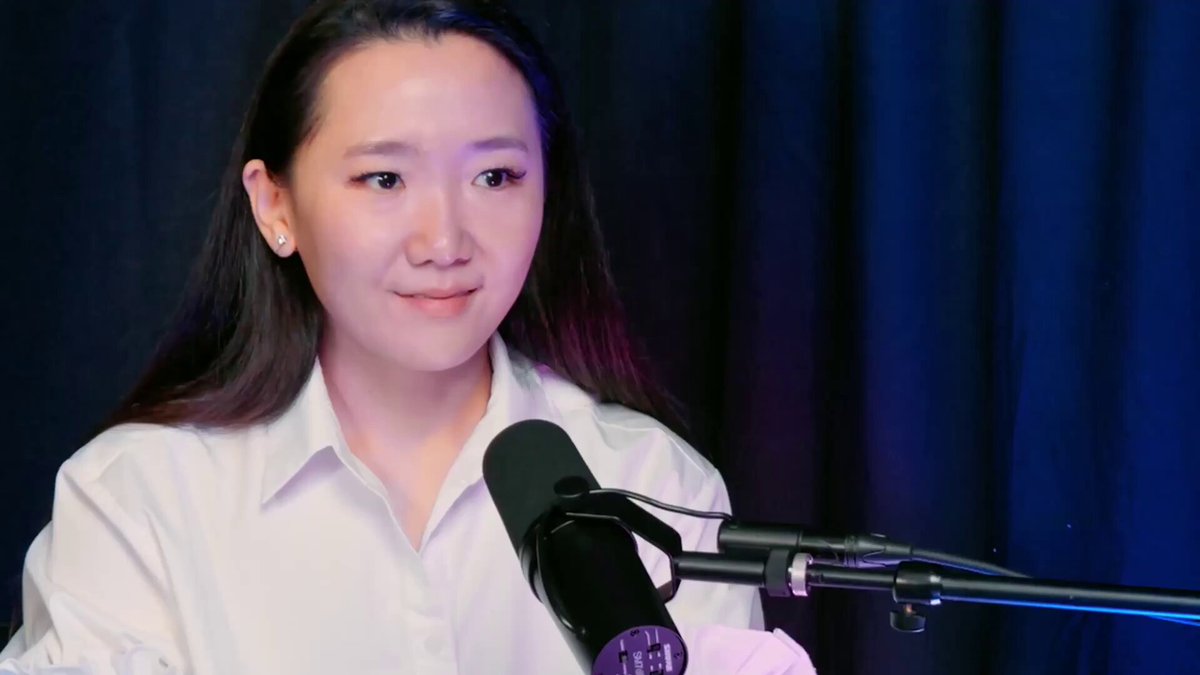
When I was 8 years old, growing up in Taipei, I called my aunt in San Francisco and asked: What is the best science and technology school in the world? She said MIT. I went on the internet, found it, and decided that was where I was going. All because of a Steven Spielberg movie about a little robot boy who wanted to find his mom. I grew up as an only child. What stayed with me from that movie was not just the technology. It was the possibility that one day, an artificial companion could understand how I felt. That was the first time I remember being moved by a technology that could change how humans experience reality. Years later, I did get to MIT. I studied AI before it became obvious. I became a machine learning engineer, built my first company, joined a $3.5B VC fund, left to build again, failed, started again, moved to New York alone, and built through one of the hardest crypto markets as a solo founder after the collapse of FTX. I kept going because I have always been drawn to technologies that change how humans understand the world. AI was the first version of that. Crypto and prediction markets are the next. I believe the future I am building toward is inevitable. The only question is whether I get to be one of the people who helps realize it. That future is a world where markets become information-first. The old model of trading was asset-first. It rewarded people with capital, financial education, institutional access, and better tools. But the next generation of markets will be shaped by information flow, narrative, attention, politics, culture, sentiment, and collective belief. Prediction markets make this shift obvious. They are one of the first asset classes where the value is informational, not purely financial in the traditional sense. Your edge does not have to come from technical analysis or a traditional finance background. Your edge can come from knowing something before it becomes consensus. From seeing reality shift before the market prices it in. Someone with firsthand knowledge of an unfolding event can have more alpha than an institution with a much bigger balance sheet. They turn belief into price. But price alone is not enough. Polymarket shows what the market thinks will happen. ARES is built to understand why the market is changing. We are building an information-first trading platform for prediction markets and other narrative-driven assets. One that does not just show traders what is moving, but helps them understand why odds are shifting, why narratives are forming, and why the future is moving in a certain direction. But the bigger vision is not just a better trading terminal. We want to turn every trade into an information object. Every position can become a piece of content. Every market view can become a signal. Every trader can build a reputation around conviction and accuracy. Most feeds rank information by engagement. Who got the most likes. Who already has the biggest audience. Markets allow us to rank information differently. How much are you willing to stake on what you believe? How often have you been right? That creates a fundamentally different kind of media feed. One powered by conviction, track record, and market incentives. One that becomes harder to fake. One that can help people understand not just what the market thinks will happen, but why reality is changing. I also believe prediction markets are one of the few markets where humans can still have a real edge over AI. AI knows what is already on the internet. But humans experience reality before it becomes data. We see things before they become headlines. We hear things before they become reports. We feel shifts before they become consensus. If those signals can be priced, organized, and made legible, then more people can gain access to financial opportunity, information agency, and power. That is what Ares is building toward. I spent years watching founders from the VC side of the table, always thinking: I wish that was me. Now it is. I talked about this journey and the thesis behind Ares in my conversation with Dmitry on Predict Time If you are building, trading, investing, or thinking deeply about prediction markets and information markets, I would love for you to watch it. And if you want to collaborate on what we are building, contribute to the vision, or join the team, we are always open to exceptional people across functions. DMs are open.

Morgan Lai

302,663 gรถrรผntรผleme โ€ข 3 ay รถnce

$ONDO is not a token waiting for adoption. It is already running two products with real money inside them right now. USDY: $2.14 billion in TVL. 3.55% APY. Deployed across Ethereum, Solana, Sui, Aptos, Mantle, Near, and six other chains. A yield-bearing stablecoin that outperforms a standard US Treasury Bill return every single day it runs. OUSG: $539 million in TVL. 3.43% APY. Built specifically for institutional investors who need 24/7 instant access to short-term US Treasuries without touching a bank or waiting for settlement windows. Combined TVL across both products: $2.68 billion. $ONDO's current market cap: $1.7 billion. Read that again. The protocol has $2.68 billion of real capital sitting inside its products right now and the market is valuing the entire protocol at $1.7 billion. TVL is 157% of market cap. Most DeFi protocols would celebrate a TVL equal to their market cap. $ONDO already has more real capital deployed in its products than the market thinks the entire protocol is worth. That is not a narrative. That is a balance sheet. USDY price accrues daily. OUSG beats the T-Bill rate consistently. Both are growing. Both are live. Both have institutional counterparties on the other side of every single transaction. The SEC confidential filing is active. The DTCC consortium seat is confirmed. Over 200 tokenised US stocks are preparing to launch on Solana. The product is built. The capital is inside it. The institutional pipeline is forming. The people who understood this before the repricing will not need to explain their positioning later

2xnmore

22,277 gรถrรผntรผleme โ€ข 2 ay รถnce

๐Ÿšจ WARNING: THE WORST DAY OF 2026 IS TOMORROW. JPMorgan is preparing to dump $165,000,000,000 into the market right at open. Thinking this wonโ€™t move the market? Youโ€™re in for the rudest awakening of your life. Every time JP Morgan sells stocks, the S&P 500 drops 10โ€“20%. And this isn't just about the stock market. It's about liquidity. It's about investor sentiment. And it's about a market that isn't prepared for what's coming. Let me explain: JPMorgan isn't some retail trader taking profits. It's one of the largest and most influential financial institutions on the planet. When they move capital at scale, markets pay attention. And history shows that large institutional selling rarely happens in a vacuum. It usually signals something bigger. A shift in risk appetite. A change in liquidity conditions. Or growing concerns beneath the surface that most investors haven't recognized yet. Now here's the part almost nobody talks about. The direct impact isn't limited to the stocks being sold. Because when a major institution dumps billions of dollars worth of equities, it affects sentiment across the entire market. Selling creates more selling. Liquidity gets thinner. Volatility increases. And risk assets everywhere start to feel the pressure. That's why this isn't just an S&P 500 story. The S&P 500 is the first domino. But the effects will spread into AI stocks. International equities. Commodities. Credit markets. And even digital assets. Today, people are positioned for stability. They're positioned for higher prices. They're positioned for the rally to continue. Which means they're vulnerable if liquidity suddenly moves in the opposite direction. THIS IS THE WARNING. Not because one institution is selling. But because markets often underestimate what large-scale institutional selling can trigger. The risk isn't the transaction itself. The risk is how everyone else reacts to it. Markets aren't pricing that possibility today. But eventually, they will. I've spent more than a decade studying macro and market cycles. I've called some of the biggest market tops and bottoms of the past 10+ years. And I'll call the next market crash in 2026 before the crowd sees it coming. Follow and turn notifications on. I'll post my next market call here first.

WhaleTwits

340,759 gรถrรผntรผleme โ€ข 1 ay รถnce

A lot of discussion and announcements around prediction markets: purely for fun, I've built a demo app. Meet Betcha, my attempt to broaden the prediction markets TAM. ๐Ÿ“Š Current state: Prediction markets like Polymarket and Kalshi are powerful truth-seeking tools because money on the line and arbitrage keep prices honest as new information hits. Most participants today are traders and bettors who are very fee-sensitive, so raising fees will be challenging. Growth has to come from much higher volume, which is achievable, but it will take time. ๐Ÿ›๏ธ Sportsbook/Regulatory Environment: Because CFTC-regulated event contracts create a potential path into some states that have not legalized sports betting, prediction-market rails can help sportsbooks reach markets they previously could not. Reframing parlays and prop-style outcomes as โ€œpredictionsโ€ is clever and expands reach from zero revenue in states where they can't operate sportsbooks to something. Still, these products will likely remain volume-constrained, struggling to match a traditional sportsbookโ€™s vig. The positive is that the sportsbooks won't be getting gouged by state-level taxes as part of the process of leveraging prediction markets vs. sportsbooks. I still think this will be an exciting category that emerges, but it will take time. I want to see Polymarket build its own PM sports-specific app to compete here vs whitelabel (cc: Shayne Coplan ๐Ÿฆ…) ๐Ÿ“ˆ Market expansion thesis: Stop optimizing just for traders. Try building for the culture that lives on TikTok/Twitter/Reddit. They're already making predictions - just give them a scoreboard and an easier way to participate in returns. ๐ŸŽช Behavioral unlock: The mass market will never identify as "bettors." They want social proof, bragging rights, and gamified experiences. Critically, they're far less fee-sensitive when entertainment value is high, and that's the opportunity Prediction markets have a volume and take rate dilemma, and I think fun consumer apps like this can help solve it. Fine-tune the algorithm to serve event contracts I actually care about, let me lock in a pick fast, and build simple social features on top. Anyway, here's my demo. Any feedback/discussion is welcome!

Ryan Wyatt

83,651 gรถrรผntรผleme โ€ข 11 ay รถnce