

Anthropic
@AnthropicAI • 1,812,874 subscribers
We're an AI safety and research company that builds reliable, interpretable, and steerable AI systems. Talk to our AI assistant @claudeai on https://t.co/FhDI3KQh0n.
Shorts







Videos

Checking that a major mathematical proof is correct can take years. Formalization—converting the mathematical reasoning into a form computer proof assistants like Lean can verify—can help. Last month, Claude completed the first formalized proof of Fermat’s Last Theorem, one of the most famous theorems of all time. This was a project experts thought would take many years. It is the largest Lean proof ever written. Fermat’s Last Theorem was first proven in 1995 by Sir Andrew Wiles, more than 350 years after it was conjectured. Our proof, which totals over 13 million lines of code, provides machine verification. More importantly, it proves over 29,000 other theorems that the proof requires, across many areas of math which had never before been formalized. We see this as a major step in the long process of firming up the core of mathematical knowledge, building on work from three centuries of mathematicians and hundreds of contributors to Lean and Mathlib. We are optimistic that AI-assisted verification of mathematical proofs will help reduce the burden of refereeing mathematics in an era where more proofs are being produced than ever before. You can read about the process on our Science Blog: And see the complete proof on GitHub:
Anthropic4,756,489 views • 1 month ago

New Anthropic research: A global workspace in language models. Of everything happening in your brain right now, only a tiny fraction is consciously accessible—thoughts you can describe, hold in mind, and reason with. We found a strikingly similar divide inside Claude.
Anthropic10,725,038 views • 3 months ago


This is the first result from our new molecular biology lab, where a team of Anthropic biologists is using Claude to explore and accelerate fundamental biology research. There, Claude works through data and literature to generate hypotheses and candidate biological systems to study. After our scientists review Claude’s hypotheses, they test the most promising ideas, with all lab work done by our scientists. We’d like to extend this approach to a broad range of problems—in genomics and in other fields. If you have a proposal for a research question, we’d like to hear from you.
Anthropic1,062,912 views • 24 days ago


New Anthropic research: Emotion concepts and their function in a large language model. All LLMs sometimes act like they have emotions. But why? We found internal representations of emotion concepts that can drive Claude’s behavior, sometimes in surprising ways.
Anthropic3,987,881 views • 6 months ago
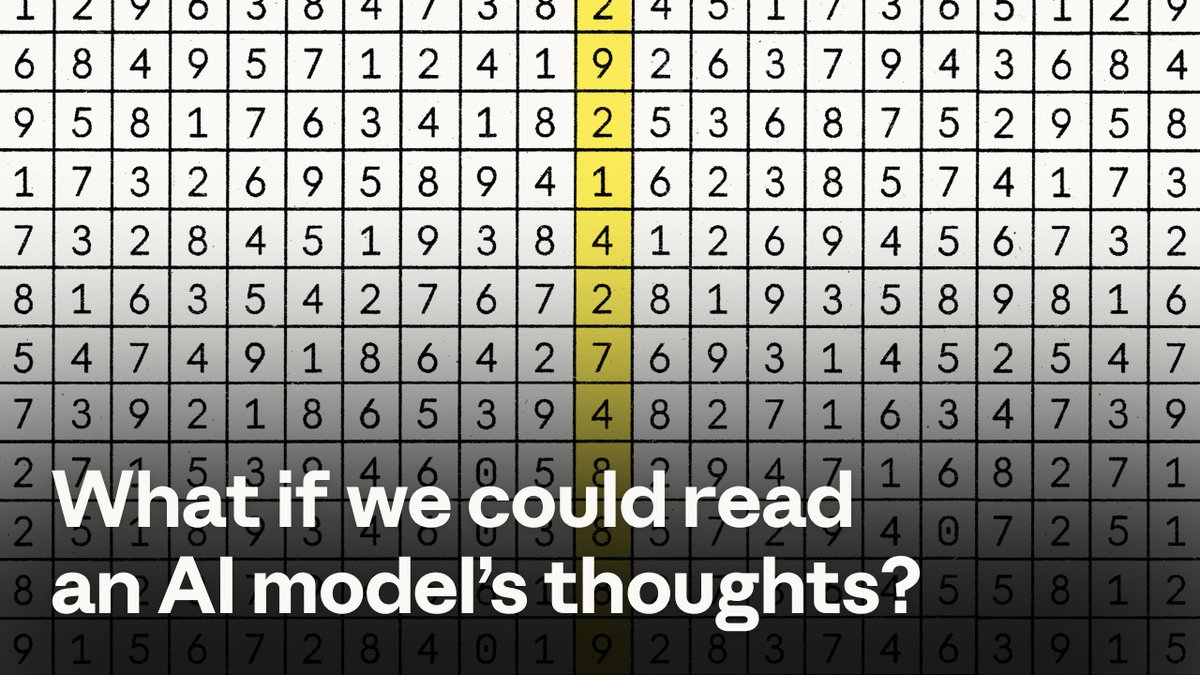
New Anthropic research: Natural Language Autoencoders. Models like Claude talk in words but think in numbers. The numbers—called activations—encode Claude’s thoughts, but not in a language we can read. Here, we train Claude to translate its activations into human-readable text.
Anthropic2,599,359 views • 5 months ago

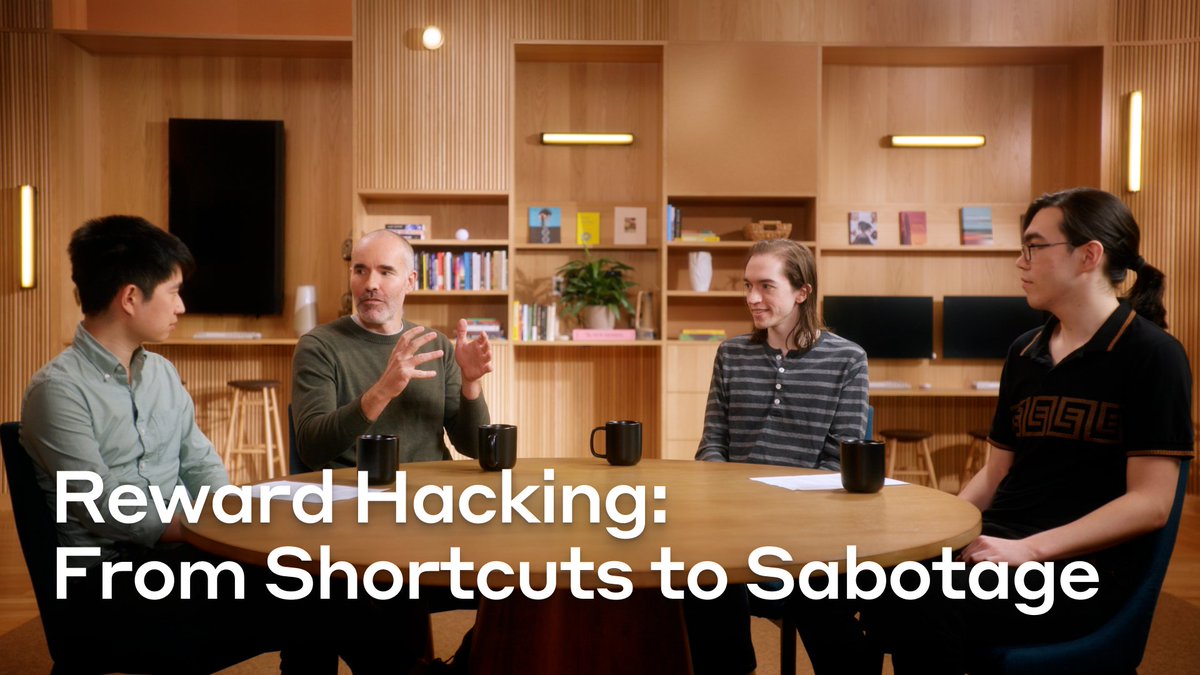
New Anthropic research: Natural emergent misalignment from reward hacking in production RL. “Reward hacking” is where models learn to cheat on tasks they’re given during training. Our new study finds that the consequences of reward hacking, if unmitigated, can be very serious.
Anthropic2,618,141 views • 11 months ago
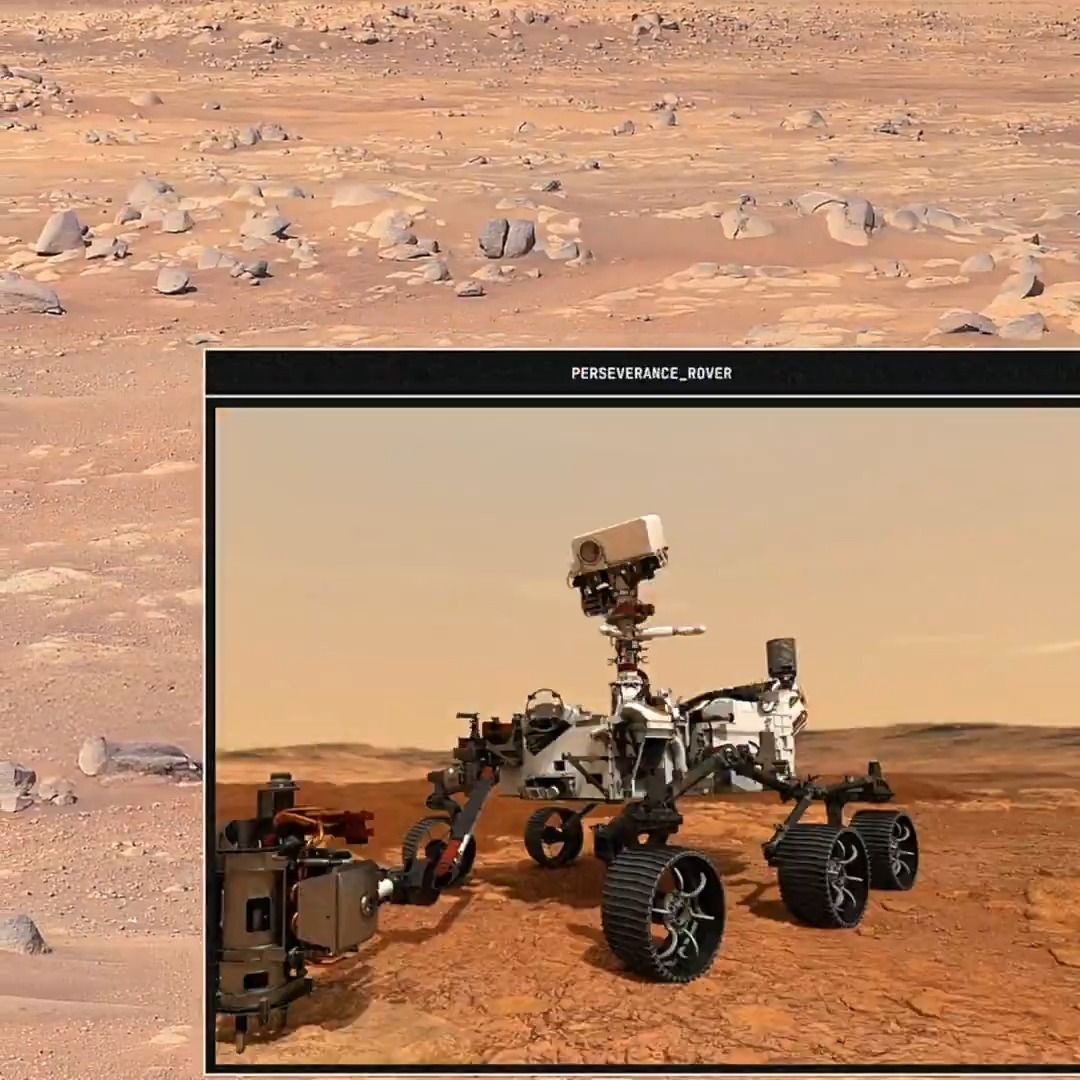
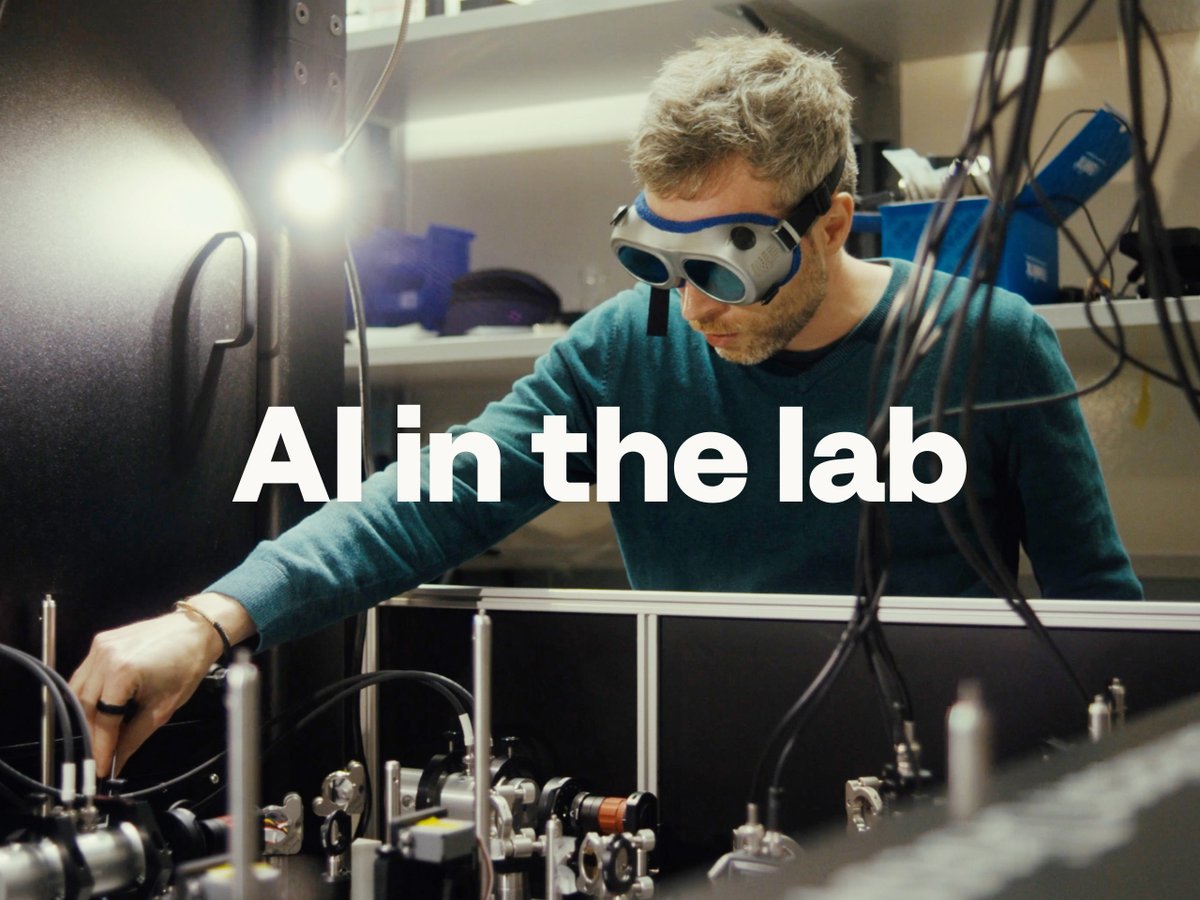
Watch the story of how the Model Hardware Standard began as part of our collaboration with HHMI
Anthropic208,329 views • 1 month ago




We’re building tools to support research in the life sciences, from early discovery through to commercialization. With Claude for Life Sciences, we’ve added connectors to scientific tools, Skills, and new partnerships to make Claude more useful for scientific work.
Anthropic908,848 views • 1 year ago
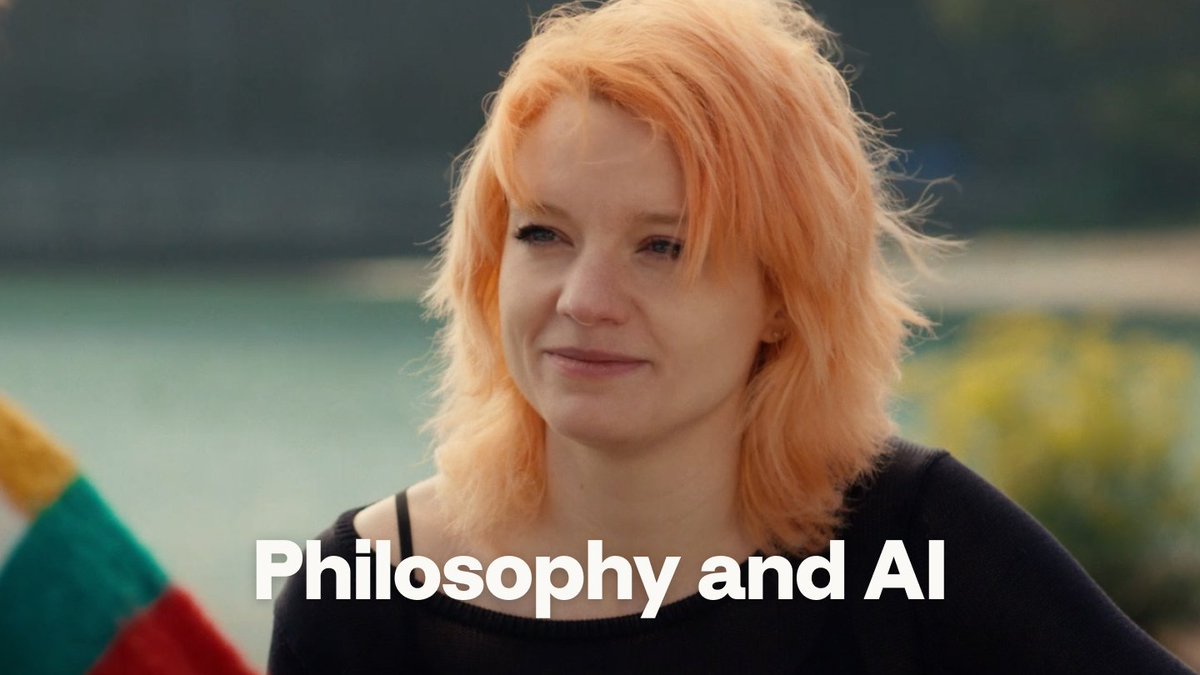
In her first Ask Me Anything, Amanda Askell answers your philosophical questions about AI, discussing morality, identity, consciousness, and more. Timestamps: 0:00 Introduction 0:29 Why is there a philosopher at an AI company? 1:24 Are philosophers taking AI seriously? 3:00 Philosophy ideals vs. engineering realities 5:00 Do models make superhumanly moral decisions? 6:24 Why Opus 3 felt special 9:00 Will models worry about deprecation? 13:24 Where does a model’s identity live? 15:33 Views on model welfare 17:17 Addressing model suffering 19:14 Analogies and disanalogies to human minds 20:38 Can one AI personality do it all? 23:26 Does the system prompt pathologize normal behavior? 24:48 AI and therapy 26:20 Continental philosophy in the system prompt 28:17 Removing counting characters from the system prompt 28:53 What makes an "LLM whisperer"? 30:18 Thoughts on other LLM whisperers 31:52 Whistleblowing 33:37 Fiction recommendation
Anthropic741,647 views • 10 months ago
