

Aric Chen
@aricchen • 52,860 subscribers
Independent analysis on China, US-Asia & global affairs. Executive producer, senior editor & anchor. Foreign policy think tank mentor. Notes: @AricChenJournal
Shorts

![[ Margin Notes ] Xi Jinping is really sick, and it is not a mild case. On August 30 the “core” of the Chinese Communist Party stepped off his plane in Bishkek looking pale, puffy-faced and unsteady. Video that circulated outside the Great Firewall shows him gripping Peng Liyuan’s hand as if it were a banister. She, in turn, quietly slipped her arm under his. CCTV’s official footage jumps from a distant wave at the cabin door to a handshake on the tarmac. The stairs themselves vanished into the editing suite. The Party that never lies simply decided the public did not need to see its leader negotiate gravity. This is not an isolated clip. In 2022 he nearly missed a step in Kazakhstan. In 2023 South African footage of the same painful descent was also cut. Last December, walking down steps with Emmanuel Macron at Dujiangyan, Xi again used his wife as a walking stick, one leg dragging. The pattern is now a running gag among overseas Chinese: the man who demands “absolute loyalty” cannot be trusted to walk down a jetway without a spouse acting as human scaffolding. The regime’s response is always the same. State television airbrushes the stumble, Xinhua prints poems about “golden periods” and “shared futures,” and anyone who notices the tremor or the swollen features is accused of “smearing China.” Meanwhile the only remaining deputy director of the Central Health Commission, Zeng Yixin, is a career oncologist. Coincidence, the Party insists. Just as it is coincidence that the same man who once strode across stages now blinks rapidly, speaks in a thin voice, and lists to one side. A system built on the myth of an infallible helmsman cannot admit the helmsman is listing. So the cameras are positioned, the scissors come out, and the first lady is quietly recast as a discreet nurse. The same Party that lectures the world on “national rejuvenation” cannot even let its own people see their leader walk down a set of stairs. That is not strength. That is a regime terrified of its own mortality, and of the day the video can no longer be cut. — Aric](https://image.24vids.com/tw-2094172947309346921/amplify_video_thumb/2094172392457195520/img/sIpcGPUVMaXwlpwU.jpg)

![[ Field Footage ] On September 3, 2026, floodwaters swallowed a residential parking lot in Putian, Fujian. Cars vanished beneath the surface, water reaching rooftops. Typhoon Saudel’s remnant rains had already dumped record totals, 416.5 millimeters in 24 hours at the city station, more than 500 millimeters in some towns, pushing the Mulan River to a historic 14.91 meters. A dike near Xihu village in Huating Town overtopped and breached that afternoon. More than 100 houses collapsed. People went missing. Entire neighborhoods turned into brown torrents. Authorities had issued red rainstorm warnings, numbered the flood, ordered “three stops,” and published a letter telling residents to stay home and avoid low ground. The Dongzhen Reservoir began releasing water from September 1 to create storage. Downstream parks were closed. Officials later said rivers exceeded designed discharge capacity. Yet the water still arrived with shocking speed. Underground garages filled in hours. Villagers described sudden inundation and lost contact with elderly relatives. That raises a blunt question: if discharges and river forecasts were known, why did so many people and vehicles remain in harm’s way? Were the warnings specific enough about timing, volume, and which streets or villages would be hit? Or did the system treat reservoir operations and dike risk as matters for officials rather than residents who needed hours, not minutes, to move cars and families? Extreme rain explains much of the scale. It does not explain every failure of last-mile communication or the vulnerability of old housing and urban basements in a flood-prone basin. When the Party-state controls the forecasts, the dams, and the narrative, the public is entitled to ask why the worst scenes still looked like surprise. Accountability should follow the water, not stop at the weather. — Aric](https://image.24vids.com/tw-2096458344651280868/amplify_video_thumb/2096458219254353920/img/vYwP89y0qLNu3QyG.jpg)


Videos

🚨 Shocking video exposes a tiny spy camera hidden in a public toilet stall — red recording light glowing right in the floor grout. This is rampant across CCP China. Public restrooms, changing rooms… and especially hotels are packed with hidden cameras feeding a massive spycam porn black market. Always inspect every inch before using ANY facility. Your privacy is under constant threat. Stay vigilant! #HiddenCameras #ChinaSpyCams
Aric Chen4,299,110 次观看 • 5 个月前
![[ Field Footage ] A heart-wrenching scene captured on surveillance footage in China! An elderly person was swept away by floodwaters at home and has not returned, the outlook is grim! Every flood season, we see such despairing scenes! But these images are shared by relatives, and the Chinese Communist Party absolutely does not want the outside world to see them. Wishing everyone in the disaster-stricken areas safety and well-being! And these harrowing images that have managed to leak out are just the tip of the iceberg of what’s actually happening inside China! No matter when they were released, those of us overseas have a duty to keep sharing them so that more people can see them!](https://image.24vids.com/tw-2076185855291539543/amplify_video_thumb/2076185301412651008/img/-FwS-qUEMGACDje6.jpg)
[ Field Footage ] A heart-wrenching scene captured on surveillance footage in China! An elderly person was swept away by floodwaters at home and has not returned, the outlook is grim! Every flood season, we see such despairing scenes! But these images are shared by relatives, and the Chinese Communist Party absolutely does not want the outside world to see them. Wishing everyone in the disaster-stricken areas safety and well-being! And these harrowing images that have managed to leak out are just the tip of the iceberg of what’s actually happening inside China! No matter when they were released, those of us overseas have a duty to keep sharing them so that more people can see them!
Aric Chen1,674,983 次观看 • 3 个月前
![[ Field Footage ] The massive flooding in Guangxi has been devastating! The Chinese Communist Party’s inadequate early warnings and disregard for the risk of dam breaches have led to many victims losing their homes and loved ones! After the floodwaters receded, seeing their homes reduced to ruins, the survivors didn’t know whether to be relieved to be alive or to continue grieving.](https://image.24vids.com/tw-2076183617085018138/amplify_video_thumb/2076183550559207424/img/1bBtNxFav4sTgPE9.jpg)
[ Field Footage ] The massive flooding in Guangxi has been devastating! The Chinese Communist Party’s inadequate early warnings and disregard for the risk of dam breaches have led to many victims losing their homes and loved ones! After the floodwaters receded, seeing their homes reduced to ruins, the survivors didn’t know whether to be relieved to be alive or to continue grieving.
Aric Chen1,523,565 次观看 • 3 个月前

🚨💔 Heartbreaking tragedy unfolds in China again. On May 3, a female tourist named Liu died in a horrific accident at Maliuyan Adventure Park in Sichuan’s Huaying City. Strapped into the “Waterfall Swing” — a 168-meter-high ride over a roaring waterfall — she repeatedly screamed “It’s not tied tight!” twice as staff ignored her and pushed her off the platform. She plummeted, slammed into the cliff, and was pronounced dead on the way to hospital. This wasn’t bad luck. It was preventable negligence. Once more, China’s booming adventure tourism industry puts profit before people, cutting corners on safety checks, training, and basic equipment. How many more lives must be lost before authorities treat human safety as a priority instead of an afterthought? My deepest condolences to Liu’s family and friends. No one should ever have to beg for their life on a paid attraction — only to be ignored. Enough is enough. Safety cannot keep being sacrificed for tourism dollars. 💔 #ChinaSafetyCrisis #AdventureTourism #RestInPeace
Aric Chen2,065,550 次观看 • 5 个月前

EXCLUSIVE: Dual rallies in Flushing, NY today as anti-Xi Jinping protesters and pro-CCP supporters faced off at the same time. A pro-Beijing man suddenly attacked a democracy activist, kicking him and snatching his banner, before police arrested the assailant on the spot.
Aric Chen190,713 次观看 • 29 天前

“Americans are robbers.” That is what a pro-CCP group blasted through loudspeakers in the heart of Washington, D.C., while Xi Jinping was being hosted at the White House. Not in Beijing. On American streets, near the National Mall, in front of an EPA building, as Falun Gong practitioners held a peaceful protest. The same group then rushed the protesters and ripped down their banners. Li Huahong assaulted one female Falun Gong practitioner, who was injured. Police pinned Li to the ground, cuffed her, and arrested her after she attacked the woman and then resisted. Li is no random agitator. For years she has run a Flushing, New York sidewalk operation recycling official CCP slander against Falun Gong, the same propaganda Beijing used to justify mass imprisonment, torture, and forced organ harvesting. Today she brought that operation to the U.S. capital: physical assault, stolen banners, and a 1960s Mao-era children’s song calling Americans “robbers” and “bandits.” This is not “counter-protest.” It is transnational repression on American soil. The Chinese Communist Party exports intimidation. It uses proxies to silence critics wherever they stand. When its leader visits, the enforcers travel with him. They do not just argue. They assault a woman holding a banner and drown out free speech with loudspeakers blasting hatred against the country hosting their boss. A foreign regime’s agents cannot be allowed to beat a peaceful female protester and publicly denounce Americans as thieves in Washington while their leader is received at the White House. That is an insult to U.S. sovereignty and a test of whether America still defends the First Amendment when the attacker is aligned with Beijing. Federal authorities must investigate this fully: who organized the group, who paid for the loudspeakers, who directed the violence, and how deep the coordination runs. Police made an arrest. That is the start, not the end. If Beijing can send people to assault a woman and broadcast “Americans are robbers” in the U.S. capital, no critic of the CCP is safe, anywhere. This cannot be tolerated. ACI — Aric Chen | Insights
Aric Chen141,084 次观看 • 25 天前

0:44
Sensitive content
This media may contain sensitive content.
EXCLUSIVE: Insiders say today’s Flushing parade, billed as celebrating America’s 250th anniversary by groups including the American Prosperity Chinatown Association, was actually a $500,000 welcome rally for Xi Jinping ahead of his U.S. visit. Many participants waved PRC flags and plan to greet Xi in DC. Shortly after starting, they ran into anti-Xi protesters from the China Democracy Party International Alliance, China Democracy and Human Rights Alliance, and Christian Justice Alliance outside Changfa Supermarket. Democracy activists shouted: “If you love the CCP so much, go back to China! Don’t milk U.S. welfare while yelling ‘Long live the Communist Party!’ CCP get out of America! The Communist Party is garbage!”
Aric Chen90,561 次观看 • 29 天前
![[ Field Footage ] 🚨 Continuous heavy rainfall in Guangxi has triggered widespread flooding across multiple areas. Several local reservoirs have successively faced critical situations, with the Liulan Reservoir in Hengzhou City developing an approximately 50-meter breach in its dam body. This has caused severe flooding in multiple downstream townships, sweeping away many people. According to survivors, people had long been aware of the dam’s precarious condition, but the authorities turned a blind eye and covered it up, ultimately leading to the dam’s collapse and a catastrophic flood that submerged the area. In other cases, reservoirs released floodwaters without issuing warnings, causing disasters. Commentator Wang Yajun analyzed: For nearly a decade, the Chinese Communist Party governments at all levels have habitually chosen to release floodwaters around 2 a.m. There are two reasons for this. First, it is easier for entire families — and even entire villages — to be wiped out while they are asleep, thereby eliminating any future troubles. Second, by the time it gets light, the work of destroying corpses and covering up the evidence can be largely completed, preventing the information from leaking out. This is an extremely sharp and incisive interpretation that exposes the evil essence of the Chinese Communist Party, which has always regarded human lives as worthless as blades of grass. ACI — Aric Chen | Insights](https://image.24vids.com/tw-2074347896187568130/amplify_video_thumb/2074346511022874624/img/f8hvKzIF-Kb0kBs9.jpg)
[ Field Footage ] 🚨 Continuous heavy rainfall in Guangxi has triggered widespread flooding across multiple areas. Several local reservoirs have successively faced critical situations, with the Liulan Reservoir in Hengzhou City developing an approximately 50-meter breach in its dam body. This has caused severe flooding in multiple downstream townships, sweeping away many people. According to survivors, people had long been aware of the dam’s precarious condition, but the authorities turned a blind eye and covered it up, ultimately leading to the dam’s collapse and a catastrophic flood that submerged the area. In other cases, reservoirs released floodwaters without issuing warnings, causing disasters. Commentator Wang Yajun analyzed: For nearly a decade, the Chinese Communist Party governments at all levels have habitually chosen to release floodwaters around 2 a.m. There are two reasons for this. First, it is easier for entire families — and even entire villages — to be wiped out while they are asleep, thereby eliminating any future troubles. Second, by the time it gets light, the work of destroying corpses and covering up the evidence can be largely completed, preventing the information from leaking out. This is an extremely sharp and incisive interpretation that exposes the evil essence of the Chinese Communist Party, which has always regarded human lives as worthless as blades of grass. ACI — Aric Chen | Insights
Aric Chen195,415 次观看 • 3 个月前

Under the rule of the Chinese Communist Party (CCP), the Chinese people are suffering immensely, with countless lives in despair. Millions are now homeless, sleeping rough on streets, under bridges, and in parks across major cities. Shockingly, recent estimates indicate that China’s homeless population has surged to around 24–50 million — a more than fivefold increase since 2020 — with over 60% being young people under the age of 33.5. These are not just the elderly or traditional vagrants, but a growing wave of young graduates, laid-off workers, and migrant laborers crushed by sky-high youth unemployment (still hovering near 17% officially, with real figures likely higher), stagnant wages, unaffordable urban housing, and a collapsing job market amid economic decline. While the CCP boasts of “prosperity” and “common prosperity,” reality tells a different story: young people who once dreamed of a better future are now forced to “lie flat,” deliver food on scooters, or huddle on sidewalks just to survive. The regime’s policies — from zero-COVID fallout to crackdowns on private enterprise and massive debt — have left an entire generation without hope or shelter. This is the true face of life under CCP rule: 民不聊生 (the people have no means to live). The propaganda cannot hide the human cost any longer. The world needs to see the suffering of China’s youth and the failure of authoritarian control. Share if you care about truth and human dignity. #ChinaHomelessCrisis #YouthDespair #CCPReality #RealChina #EndCCP
Aric Chen305,703 次观看 • 6 个月前

Oh look, the mighty CCP issued a “stern warning” that Chinese ships would sail through the Strait of Hormuz no problem — “don’t you dare mess with us!” Fast forward: two Chinese oil tankers just got turned away like lost delivery boys, hiding behind fake flags from landlocked countries (Malawi and Botswana, because nothing says “global superpower” like pretending your tanker is from a nation with zero coastline). President Trump’s navy blockade is working, Iran’s oil revenue is choking, and Beijing is quietly seething while 40-50% of its oil supply gets rerouted or parked. “Rules-based international order” only applies when the rules favor the Communist Party, huh? Classic CCP: all bark, no strait. Check Jack Bradley’s report for the MarineTraffic receipts. The face-slap is glorious. #EndCCP #CCP #Hormuz
Aric Chen311,947 次观看 • 6 个月前

🇯🇵Japanese Civility vs. the Erosion of Tradition: A Tale of Two Cultures! Japanese fans have long been admired worldwide for a simple yet profound act of responsibility. After soccer or baseball matches, they routinely stay behind to collect every piece of trash, wipe down seats, and leave stadiums cleaner than they found them. This is not a publicity stunt but a deeply ingrained cultural habit. From elementary school onward, Japanese children learn to clean their classrooms and shared spaces. Concepts like mottainai—a sense of regret over waste—and respect for public property shape daily life. The result is visible discipline: orderly queues, low litter, and a collective understanding that one’s actions affect the community. In 2026, as the World Cup unfolds, this tradition continues to earn global praise. It reflects a society that values self-reliance, harmony, and personal accountability over convenience. The contrast with many mainland Chinese and Chinese tourists is striking and frequently documented. In popular destinations in China and across Asia, Europe, and beyond, reports and videos often show groups leaving behind piles of food wrappers, plastic bottles, and discarded items in parks, beaches, and landmarks. While not every individual behaves this way, the pattern has become noticeable enough to prompt complaints from local authorities and other visitors. This behavior clashes sharply with Japan’s approach and raises uncomfortable questions about differing standards of public conduct. These differences are not rooted in ethnicity or inherent national character. Chinese civilization once emphasized Confucian principles of propriety (li 禮), harmony, and self-cultivation. Filial piety, respect for elders, and communal responsibility formed the moral foundation for centuries. However, under decades of CCP rule, these traditions faced systematic attack. The Cultural Revolution explicitly targeted the “Four Olds”—old ideas, culture, customs, and habits—destroying temples, burning books, and persecuting intellectuals and traditional practitioners. Subsequent policies prioritized class struggle, ideological conformity, and rapid material development over moral education. The result, observable in parts of mainland society today, includes weakened social trust, a focus on personal gain, and diminished regard for shared spaces. State propaganda and education have often emphasized collective loyalty to the Party rather than individual virtue or universal ethics. When people grow up without strong reinforcement of personal responsibility, public behavior can suffer. By comparison, overseas Chinese communities—in Taiwan, Singapore, Hong Kong’s earlier era, and diaspora populations worldwide—have largely preserved traditional values. Emphasis on education, family cohesion, hard work, and courteous conduct remains prominent. Many excel in business and academia precisely because these cultural strengths were not uprooted by the same ideological campaigns. Their reputation for civility and reliability often stands in positive contrast to reports from the mainland. Japan demonstrates what is possible when a culture actively nurtures discipline and respect across generations. Its success is not accidental but the product of consistent education and societal norms that survived modernization. China’s challenges with public conduct in some contexts stem less from the people themselves than from governance that disrupted the transmission of civilizational values. Restoring emphasis on traditional ethics—personal accountability, respect for others, and care for shared environments—could help bridge the gap, regardless of political system. The Japanese example offers a clear lesson: civilization is not inherited automatically. It must be taught, practiced, and protected. When ideology supplants tradition, the human cost appears in everyday manners and public spaces. When culture is preserved, the results speak for themselves through quiet acts like cleaning up after oneself. The choice between these paths remains one of the most important facing any society.
Aric Chen175,709 次观看 • 4 个月前

🚨 Somewhere in Zhongnanhai tonight, Xi Jinping is staring at these videos. Lee Jae-myung — South Korea's center-left president, the one Beijing thought would tilt their way — hugging Takaichi at a hotel door in Andong. Sky-blue tie matched to her suit. Their 4th summit in 6 months. "Hometown shuttle diplomacy," now fully established. Zoom out: 🇺🇸 Trump called Tokyo from Air Force One 🇹🇼 Lai: "Taiwan will not be sacrificed" 🇵🇭 Marcos to Japanese media: PH "has no choice" on Taiwan 🇯🇵🇰🇷 Lee + Takaichi: locked in 🇷🇺 Putin: rushed to Beijing for photos 5 democracies. 5 capitals. 5 days. In perfect sequence. The encirclement isn't coming. It's here. And the man watching most nervously from Zhongnanhai knows it. Xi sees it. He can't stop it. 👇
Aric Chen152,284 次观看 • 5 个月前

This is the real China. In a Zhejiang, China classroom, a young girl suddenly fainted and collapsed to the floor. Nearly 20 classmates saw it happen — many kept drawing, none helped her or even alerted the teacher. The teacher remained unaware. In CCP China, “not my business” is the norm. Everyone fears getting into trouble, so society drowns in chilling indifference. This is the “harmonious” society they built. 😔 #China #CCPSociety #RealChina #EndCCP #CCP
Aric Chen159,128 次观看 • 6 个月前

💔🏙️ The daily reality for China’s migrant workers is brutal: overcrowded, unsafe dorms and miserable living conditions that no human should endure. This is the suffering Chinese people — the real China the Communist Party desperately tries to hide from the world. While the CCP constantly paints a picture of prosperity and the “Chinese Dream,” they are desperately whitewashing the truth. This is the real hardship of China’s working class. #RealChina #ChinaLabor #MigrantWorkers #CCPLies #China
Aric Chen123,440 次观看 • 5 个月前

🚨The HIMARS at the Foot of Fuji Was Not a Drill. It Was a Message. Three signals from three cities. One target. One 24-hour window. Beijing was always going to hear it. Just after 2 p.m. Tokyo time on Wednesday, a platoon of about fifty U.S. Marines from the 3rd Battalion, 12th Marine Regiment — Okinawa-based, ordinarily stationed within sight of the Taiwan Strait — rolled two HIMARS launchers onto the East Fuji Maneuver Area and fired two salvos. Six rockets. Pause. Six more. The launchers then did what they were built to do: pulled back from the firing line and disappeared. The Marines call this "shoot and scoot." In the age of cheap drones and counter-battery radar, it is no longer a clever tactic — it is the difference between a launcher that fights tomorrow and a launcher that is a smoking ruin within ninety seconds. The Pentagon framed the exercise in routine terms. Live-fire training. Readiness. Allied interoperability. "Reinforcing our commitment to regional security and the defense of Japan," the division spokesman wrote in his April briefing email. Many legacy media outlets reported it as a drill. Second consecutive year at this location. Nothing to see. That framing is technically correct and strategically blind. Because of what else happened on May 20. In Taipei, Lai Ching-te marked his second anniversary in office, halfway through his term, with a press conference reaffirming that Taiwan's future will not be decided by external forces and that arms procurement from the United States is essential to peace. In Washington, president Donald Trump walked onto the tarmac at Joint Base Andrews and told reporters he would speak with Lai personally — the first sitting U.S. president-to-sitting Taiwanese president call since the United States switched recognition to Beijing in 1979. And in Shizuoka Prefecture, on a maneuver area visible to local farmers and a 72-year-old former Japanese soldier watching from a hilltop in Gotemba, twelve American rockets arced into the foothills of Japan's most photographed mountain. Three events. Three cities. Same calendar day. You can call that coincidence if you want. The people who plan exercises eighteen months in advance, coordinate them with Japan's Ministry of Defense by formal email in April, and clear them with three different theater command headquarters do not believe in that kind of coincidence. Here is what the HIMARS at Fuji actually means in the wider picture. The system, as configured for Wednesday's drill, is short-range. But HIMARS is a platform, not a weapon. Swap the standard pod for the Precision Strike Missile and the same truck can put a warhead 500 kilometers downrange — from Yonaguni, from the Senkakus, from the Batanes islands the U.S. Army has been quietly deploying to since last year, that arc covers the Taiwan Strait and a meaningful portion of the southern Chinese coast. Beijing has spent two decades and several hundred billion dollars building an Anti-Access/Area Denial system designed around one assumption: that American power projection in the Western Pacific depends on a handful of large, fixed, exquisite platforms — carrier groups, Kadena, Guam. The DF-26 is called the "Guam Killer" for a reason. The entire bet is that if you can credibly threaten those platforms, the United States will not show up. A truck that fires twelve rockets and disappears into the tree line breaks that bet. There is no "Guam Killer" for a HIMARS battery that moves every forty minutes across an archipelago of forty-six inhabited islands the U.S. and Japan jointly operate. You cannot pre-target what you cannot find. This was the message Beijing received on Wednesday afternoon. Trump's announcement told them the political ceiling has been raised. Lai's anniversary speech told them Taipei is not negotiating its sovereignty. The rockets at Fuji told them the military floor has been raised too — and that the floor is mobile, distributed, and very difficult to break. The bell that has been ringing all week did not stop at the phone call. It rang again at 2 p.m. in the shadow of Mount Fuji. And the next time it rings, it may not be a training round. Original post by me Aric Chen. Views are my own — welcome to discuss!
Aric Chen109,283 次观看 • 5 个月前

0:59
Sensitive content
This media may contain sensitive content.
🚨 Heartbreaking. Infuriating. This is the real China under the Chinese Communist Party. On April 29, 2026, in Tianmen City’s Yuekou Town, Hubei Province, an elderly woman suddenly collapsed and died while selling vegetables alone at a tiny roadside stall. Her entire inventory? Just a few bunches of greens and a basin of beans. She wasn’t retired. She wasn’t “cared for.” She was working until her last breath. This is what the CCP’s grand slogan — “the elderly are well provided for” — actually looks like in practice. A total, merciless lie. No real pension. No safety net. No dignity in old age. Just endless poverty and exhaustion for ordinary Chinese people while the Party elites preach “common prosperity” from their luxury compounds. The tragic lives of the common folk under Communist rule have once again exposed the regime’s propaganda for what it is: hollow, heartless, and fake. When even the elderly must die on the street to survive, the system has failed completely. #China #CCPLies #CCPChina #RealChina
Aric Chen113,527 次观看 • 5 个月前

Despite all the CCP's loud propaganda and endless paid influencers whitewashing their image, this is the REAL China. Millions of ordinary Chinese people are still struggling on the edge of hunger and poverty—while the regime boasts about "prosperity" and "national rejuvenation." The hypocrisy is staggering. The oppression is heartbreaking. The world must see the truth: behind the shiny skyscrapers and staged parades, countless lives are crushed under the weight of authoritarian control. Stand with the suffering Chinese people. Expose the lies. End the delusion. End CCP. #RealChina #CCPHypocrisy #CCP #EndCCP
Aric Chen121,715 次观看 • 6 个月前
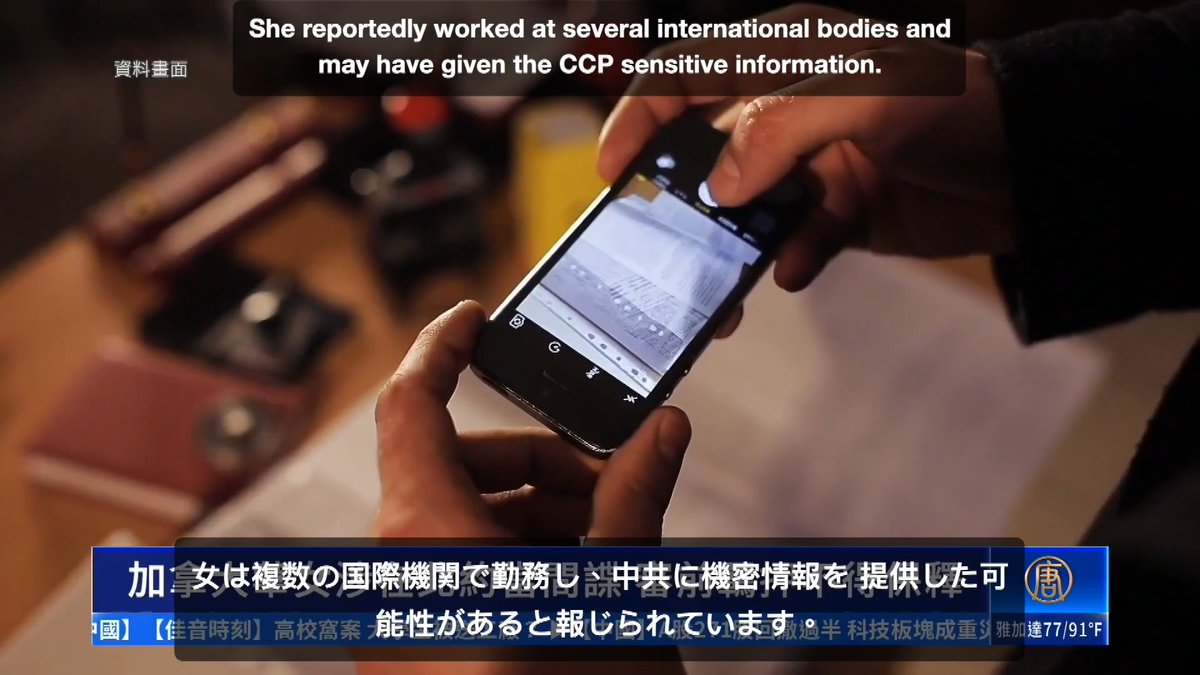
🚨 She Walked Into NATO's Headquarters, and Someone Was Watching Back A Chinese-Canadian woman in her thirties, an AI specialist fluent in Mandarin and English, cleared the vetting and landed an internship inside SHAPE, NATO's supreme military command in Belgium. Then Belgian police arrested her. Prosecutors say she allegedly spied for a "third country" and belonged to a criminal organization. Investigators searched her home and her desk inside the alliance's nerve center. Officials have pointedly refused to name the country. But reporting, and decades of pattern, point in one direction — Beijing. Why does an intern matter? Because, investigators note, someone in that seat could hand a hostile state a goldmine: names and identities of personnel, internal security procedures, building floor plans, guard routes, even the location of surveillance cameras. And here's the part that should keep you up at night,her internship was approved. She cleared the checks. She walked in the front door. If this alarms you, it should. And if the allegations hold, it isn't an anomaly. It's the pattern. For decades the Chinese Communist Party has treated open societies as hunting grounds. Students, researchers, "interns," and dual nationals have been documented as quiet collectors, feeding sensitive information back to Beijing's intelligence machine. The West called it "engagement." The CCP called it opportunity, and walked through the doors we held open. The scandal isn't that one case slipped through. It's that the system was built to be trusting, and a hostile authoritarian regime studied that trust and weaponized it, betting free nations would rather look away than offend Beijing. That bet has paid off for far too long. Every case like this is a warning we keep failing to heed. Until governments, lawmakers, and citizens treat CCP infiltration as the reality it is, the next intern is already on the way in. The door is still open. Who's watching it? ACI — Aric Chen | Insights Editor’s note: The video is a related news segment from the World News I anchor. The interviewee is the well-known commentator Ms. Sheng Xue 盛雪SHENG Xue .
Aric Chen58,992 次观看 • 2 个月前

0:20
Sensitive content
This media may contain sensitive content.

🚨 Shocking video from Shanghai under CCP rule: A police officer violently grabs a woman holding her toddler and slams her to the pavement, causing the child to smash into the ground. This is how CCP “law enforcement” treats ordinary Chinese citizens — they don’t see them as human beings at all. In any other country, victims could sue for damages and compensation. The officer would face lawsuits, suspension, firing, or even arrest. But in China? Ordinary people have nowhere to complain. No justice, no accountability — the regime protects its enforcers, not its people. This exposes the CCP’s rotten systemic brutality. Only by ending the CCP can the Chinese people finally live and work in peace and contentment! #EndCCP #CCPBrutality #ChinaHumanRights #RealChina #China #CCPChina
Aric Chen | Insights107,899 次观看 • 5 个月前