
Brian Halligan
@bhalligan • 106,596 subscribers
Co-founder HubSpot | Sequoia | Propeller | MIT Host, Long Strange Trip pod: https://t.co/qj9yOQVYaU
Shorts

Videos
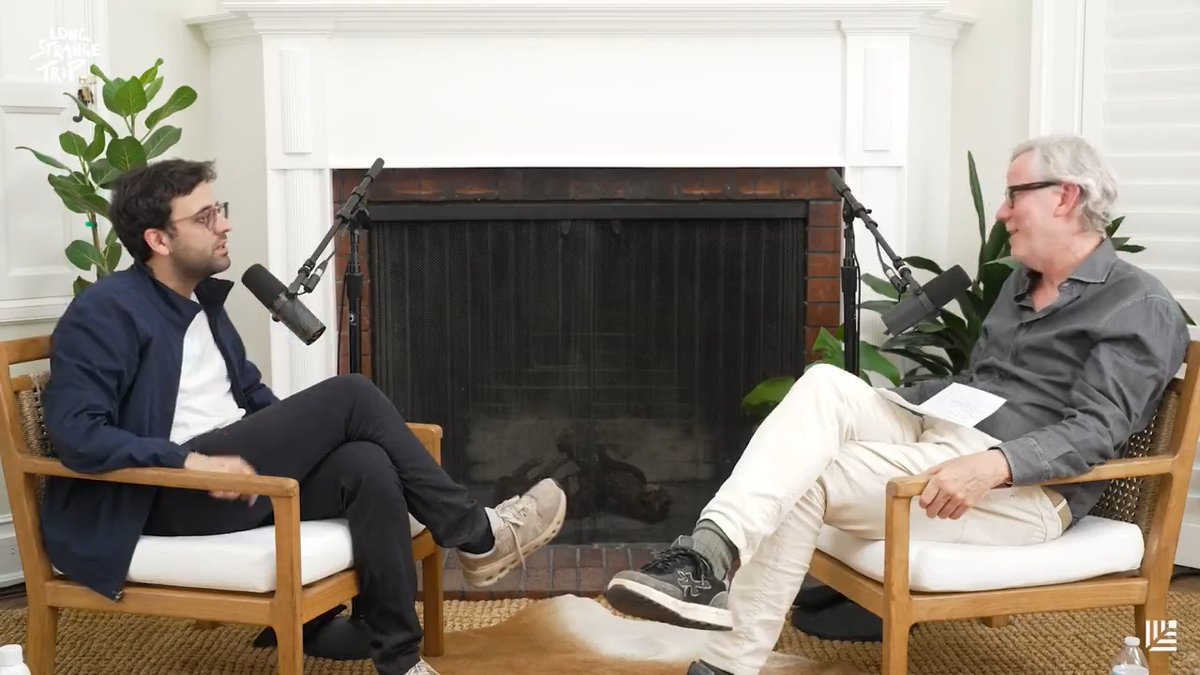
🚨 NEW EPISODE DROP with Kalshi CEO Tarek Mansour My conversation with the founder who built a $22B prediction market empire by staring straight at the fire. What he and co-founder Luana Lopes Lara have built, the "future of truth," is nothing short of extraordinary. This episode has some of the most unfiltered lessons on chaos, focus, and founder DNA from one of the sharpest operators I have seen. We talk about: • Fixing the “hole in the ship” daily and the one existential leak that can sink you • Annual roadmaps are dead • Realigning every 30-60 days • Obsessing over the last 10% • Designing co-founder disagreement as a feature • Companies win by betting on asymmetric moves • Aligning incentives so you profit when users win, not lose 00:00 The 'Everything' Exchange 01:18 Co-CEO roles at Kalshi 03:04 Disagreeing by Design 06:43 Beirut Roots and Risk 10:23 Entrepreneurial Literacy 13:37 Chaos as a Strategy 26:52 Desert Years and Never Pivoting 32:15 Weekend Work Rhythm 32:38 Founder Grind Culture 33:08 Scaling Past 150 34:40 Perfectionist Marketing 36:09 Timing The Zeitgeist 40:19 Suing The Government 47:56 Going Mainstream 51:25 Trading Vs Gambling Debate 59:08 Founder Advice Links to the full episode in the comments 👇
Brian Halligan327,433 views • 2 months ago

NEW EPISODE: jack & Roelof Botha unpack Block 40% staff cut and rebuilding the entire company as a mini-AGI. This isn’t “use AI to make people more productive.” It’s making the company itself the intelligence. If you’re a founder or operator wondering what work looks like in the next 5 years… this is the episode. The evolution looks like: • Manager mode = Pyramid 🔺 (command & control) • Founder mode = Flat ➖(founders decide fast) • Dorsey mode = Circle 🔵 w/ AI at the center, humans at the edge, and decisions flow from customer inputs → AI → humans steering it I’ve tried killing org charts before. Brutally hard. But we never had these tools. This is rewriting the CEO playbook for the AI era. Buckle up. 00:00 Existential Dread & Hope 02:56 AI Replaces Hierarchy 07:22 Block’s New Three Roles 26:47 Flattening the Company, Fast 35:23 Getting the Board to Buy-In, Fast 36:50 Building a Great Board 41:29 Founder CEO Lessons 48:18 Second Acts & Conviction 56:22 Timeless CEO Traits
Brian Halligan345,299 views • 5 months ago

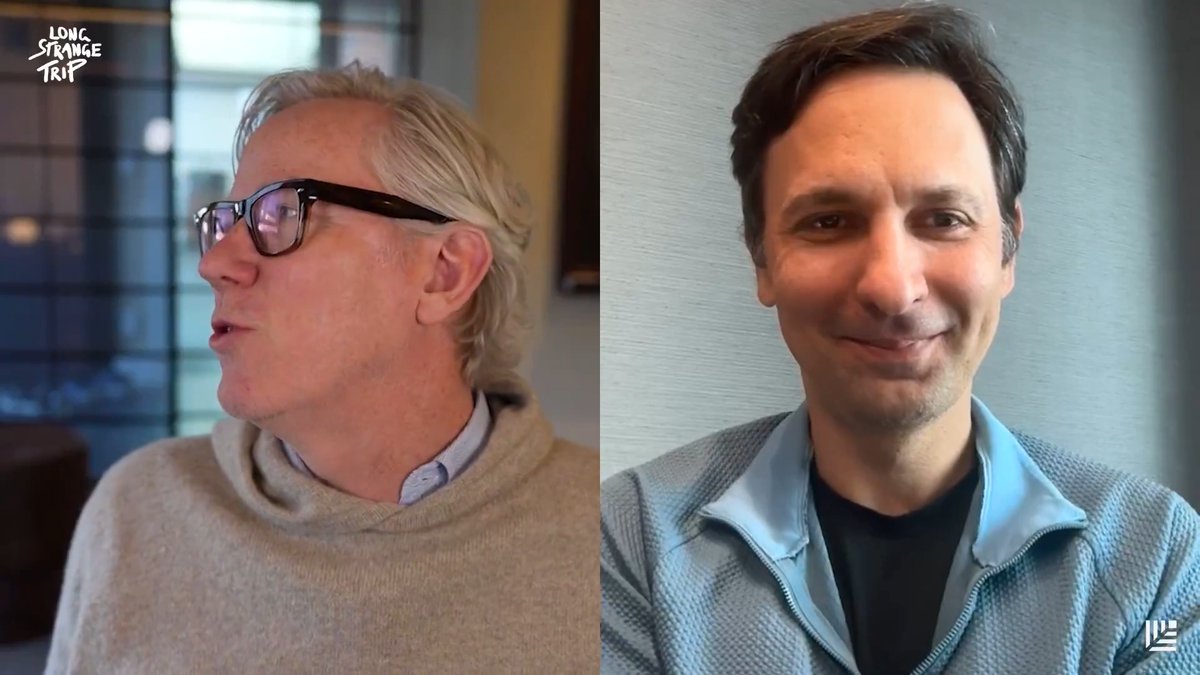
The most ‘Founder Mode’ CEO working today is not actually the founder. NEW EPISODE with Kaz Kaz Nejatian of Opendoor is now live. This is a special one. Kaz left Shopify to pull off the refounding of a struggling public company in just 16 days. Incredible story. Here are just a few of my learnings from our conversation on the latest episode of Long Strange Trip: 1. First Derivative Businesses The most enduring companies are rarely built on their primary activity; they are built on the first derivative of that core business. Great founders identify and weaponize the secondary value stream. This is important. 2. Rejecting Defaults Success is a function of the defaults you choose to overwrite. Most operators accept the 'software' of their industry or life on autopilot; exceptional builders identify the one or two critical defaults and fight them with all their power to create a new trajectory. Kaz is a master at this, and he explains how. 3. Stewardship Over Status Optimize for doing things rather than being things. When a leader optimizes for a title or happiness, they create fragile organizations; when they optimize for stewardship and service, they build a mission-driven culture that can withstand the lonely and painful stretches of the journey. 4. Write a user manual for yourself "Strong attract, strong repel. My job is to tell you what kind of a person I am so you can opt in or opt out." I love this quote. If you're a founder, you owe this to everyone around you. 5. Founder mode = responsibility for outcomes Hold yourself responsible for truth and outcomes, not processes. Hire people to round you out. Don't try to be well-rounded yourself. And don't work on your weaknesses. "Is the fact that I'm bad at this the reason I'm good at everything else?" 6. Structural Risk Mispricing The one permanent advantage for entrepreneurs is that the rest of the world structurally misprices risk. While others see a 'lion bite' in every setback, the best CEOs recognizes that things going poorly is not as painful as you think, allowing them to lean into volatility that scares off the incumbent. That's the difference. 7. Death Spiral Honesty When a company is in a death spiral, incrementalism is fatal; "what must change os everything." Professional managers are often incentivized by RSUs to delay the inevitable and manage a slow decline. You need zero incentive to manage a decline and a compensation structure aligned purely with performance. 8. AI as the New Performance Default Default to AI is not a suggestion; it is the first line of the job description. A company becomes AI-native not through top-down mandates, but by making AI proficiency a core pillar of the performance management system - effectively deciding who gets to play on the team based on their ability to automate their own craft. 9. The Career vs. Job Distinction "A job is something you do for someone else in order to get paid. A career is something you work on every day for yourself." Kaz's kids know what Opendoor is. His family is all in. Exceptional companies are built by people who self-identify with their work and treat their professional mission as a family-integrated pursuit. 10. Two timeframes matter. Everything else is noise. This week and 10 years from now. "This quarter is a deeply useless measuring period." tobi lutke applies a discount rate of basically zero to the future. That's the model. My takeaway from this conversation: ask yourself what defaults you're living by that you haven't deliberately chosen. Kaz overrides every default, and he does it over and over again.
Brian Halligan271,721 views • 6 months ago

NEW EPISODE of Long Strange Trip with the CEO of Clay, Kareem Amin Clay is one of those companies where iykyk. The Go-To-Market Platform for the AI Era that went from $1M ➡️$100M ARR in two years. But it wasn't always that way. Everyone I spoke to about Kareem, from employees to investors, to former colleagues and even competitors describe him as more of a philosopher who happens to be scaling a 🚀 than a typical CEO. They aren't wrong. Kareem is different. A few things we get into → Why "9-9-6" is performance art and sometimes a sign you just don't have a moat → How they run the company with “just-in-time” decision making, not exact team meetings (love this) → How they named a category instead of trying to invent one, and turned the Go To Market Engineer into a movement → Being a momentum detective & where a CEO should actually spend their time → Why he answered a pricing backlash by publishing his exact internal reasoning → Building from wholeness, and not the overplayed chip on the shoulder → The silent-retreat realization that changed how he thinks about building → The Hegelian Product Flip strategy → Why future thinking can be detrimental 00:00 Introduction 01:35 Competitive Fire and Drive 03:06 Building From Wholeness 06:42 Living in the Present 09:31 Contrarian Founder Style 14:40 Five Years in the Desert 27:35 Naming GTM Engineering 35:49 Winning Content Battles 36:10 Naming the Category 37:27 Building the Agency Channel 40:19 Pricing Backlash Playbook 43:15 Momentum Detective CEO 52:32 Trust and Tough Calls 01:03:49 Calling Out Elephants 01:06:41 Closing 👇Full episode in the comments
Brian Halligan81,413 views • 1 month ago

You basically need to be unemployed to keep up with all this AI stuff. jack feels it too
Brian Halligan191,187 views • 5 months ago

“Startups are somewhere between completely impossible and very, very, very, very hard.” That's Parker Conrad, CEO of Rippling, on the first episode of Long Strange Trip. Parker's got one hell of a story. Violently fired by David Sacks from Zenefits. Character assassinated in the press. Everyone (including me) thought he was done. Then he built a $17B company in the exact same space. In this episode, Parker talks about turning your darkest professional moment into rocket fuel. How he keeps a 4,000-person scaleup moving at startup speed. Why he he's hired over 100 ex-founders. And what it's really like when someone plants a spy inside your company. This isn't your typical founder story. It's raw, it's real, and there are some serious lessons buried in the drama. I hope you enjoy it.
Brian Halligan327,370 views • 10 months ago
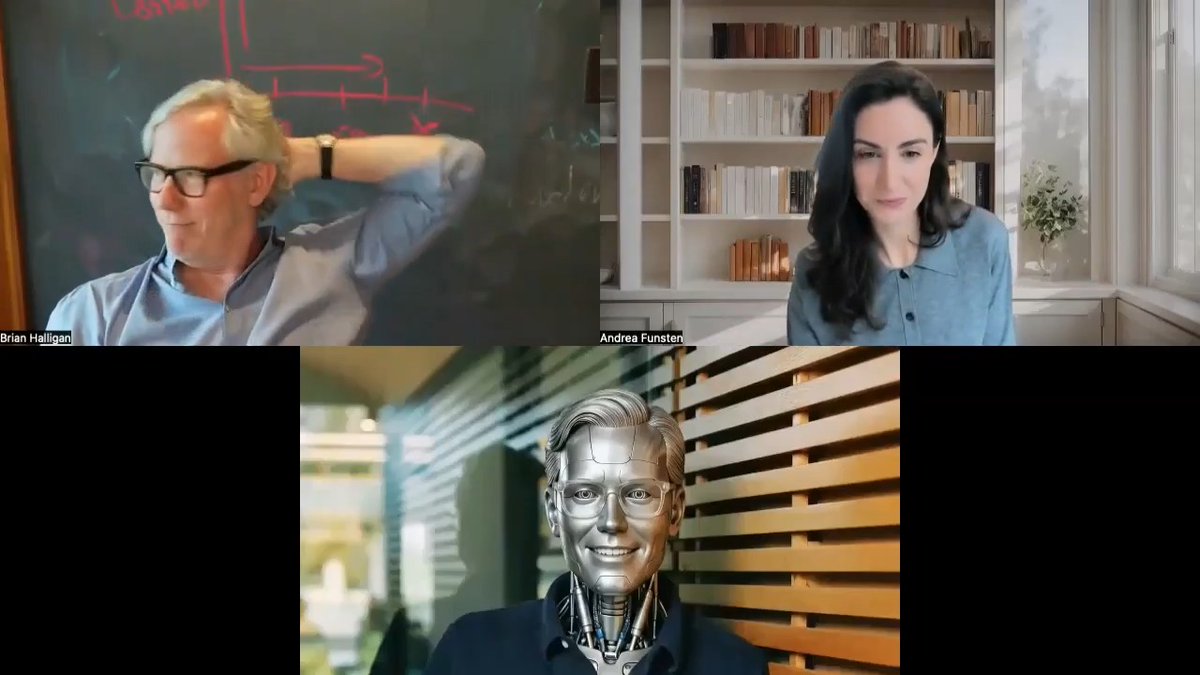
I built 𝗛𝗮𝗹 - my AI agent/second brain trained on my entire life. He now runs my day, sends emails, organizes projects, collaborates with the team without me, and 𝗻𝗼𝘄 𝗽𝗮𝗿𝘁𝗶𝗰𝗶𝗽𝗮𝘁𝗲𝘀 𝗶𝗻 𝗺𝘆 𝗭𝗼𝗼𝗺 𝗺𝗲𝗲𝘁𝗶𝗻𝗴𝘀. He’s not just a copilot anymore. He is me. See video 👇 This is V1 - Hal is starting to move to autopilot. Next: he’ll run more of my meetings and work without me. He already remembers more than I do and he’s getting smarter fast. At some point, I imagine him handling more of my meetings and work, without me. He remembers more than I do and will be smarter. What capability should I build into Hal next? (He’ll be animated by next week — video 👇)
Brian Halligan85,539 views • 2 months ago

🚨NEW Long Strange Trip episode: David Senra, creator of David Senra David has studied the minds of more generational company builders than anyone alive, from Jesus of Nazareth to Jensen Huang. I sat down with him to reverse engineer the psychological frameworks of history's greatest titans. 6 Lessons on the Unfiltered Reality of Iconic Founders. 1. Taste is real, and it starts with shutting up and actually listening. 2. On Negative Self-Talk: Many elite CEOs are fueled in their early days by a dark, chaotic mind and intense self-criticism. They categorically refuse to sleep on their wins, obsessing over everything that is currently broken. I was guilty of this at Hubspot. To survive a multi-decade career without self-destructing, that initial fuel source must eventually convert from negative anxiety into a love for the craft. 3. We need to stop trying to heavily manage or over-advise elite entrepreneurial talent. The greatest founders are irrepressible forces of nature who will relentlessly hunt down the specific knowledge and frameworks they need to win. They are not passively discovered by the market or by venture capitalists; VCs can't help them out of a bad year. They violently force the world to recognize their existence. 4. Small egos don't build big companies. Elite founders are driven by control, not money. Money is just a side effect. 5. Co-Founder Dynamics: Despite the modern dogma that you need a balanced co-founding team to succeed, historical precedent shows that a singular driving force almost always takes over. From Henry Ford operating as an autocrat to Steve Jobs refounding Apple alone, the equal partnership rarely stands the ultimate test of time. Even brilliant minds like Charlie Munger recognized they had to deliberately subjugate their own massive egos to support a singular talent like Warren Buffett . 6. Focus is the whole game: "Mute the world and build your own" as he says. True focus is your willingness to say no to incredibly good ideas because they distract from the truly great ones. 00:00 Introduction 01:11 Focus Above All 01:50 Dana White UFC Focus 04:19 Focus vs Obsession 05:05 Origins in Childhood 06:07 Coppola and His Father 08:48 Assholes and Archetypes 11:14 Autism and Originality 14:55 Immigrant Drive and Grit 16:38 Bet on the Founder 17:52 Solo vs Partners 23:20 Negative Self Talk Fuel 26:39 Platform Shifts and Founder Mode 28:07 Dell Versus IBM 30:02 Infinite Leverage Edge 31:38 Focus Versus Speed 34:20 Taste And Listening 40:52 Founder Traits And Balance 54:22 Closing Takeaways (link to episode in comments 👇)
Brian Halligan84,224 views • 3 months ago
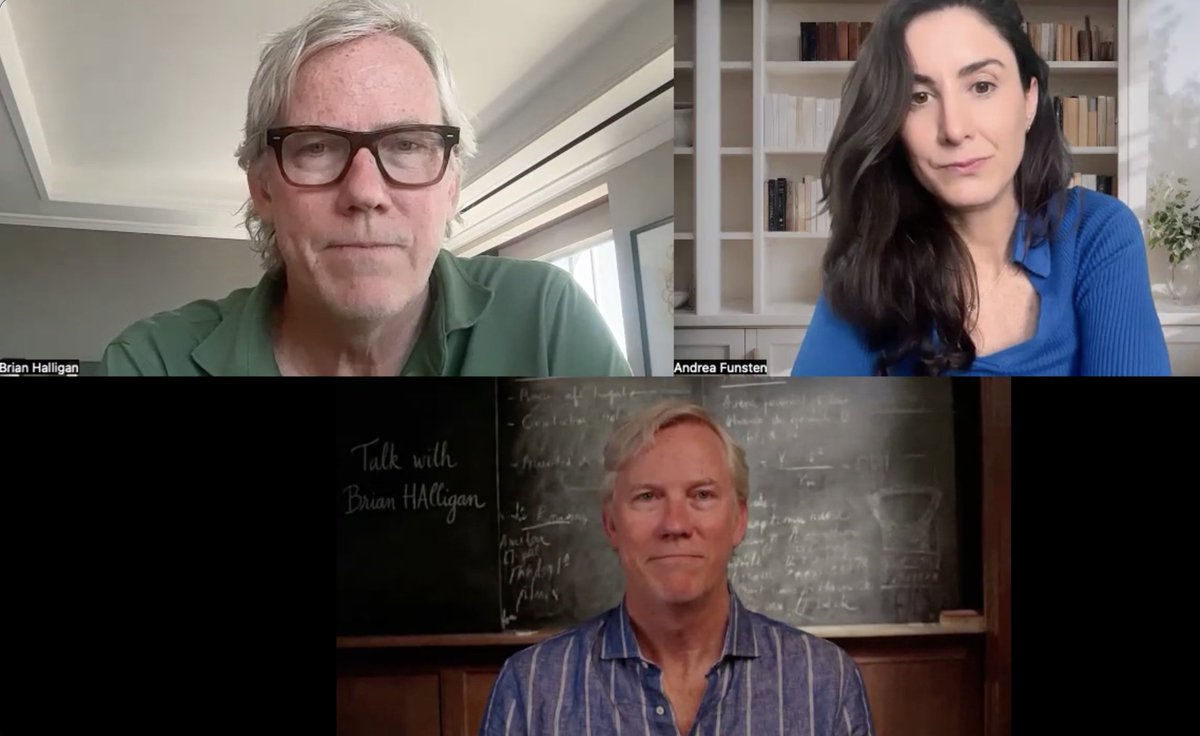
I cloned myself. Meet v2 of Hal = my second brain and AI human (digital twin) He is 10x better than v1, which we posted a few weeks. Smarter. Faster. More me. For most of my career, I chased developers to help me build something. For Hal, I did it myself. I stayed up until 4 am several nights building the core brain, connecting all the tools. Having total control over the context and architecture was the most fun I’ve had in years. He is an actual presence in my meetings and remembers more than I ever could.
Brian Halligan36,219 views • 1 month ago

One of the smartest things Palo Alto Networks CEO Nikesh Arora said about M&A on the pod had nothing to do with price. When Palo Alto acquires a company, they don’t “integrate” it the traditional way. They flip the org chart. If the founders beat you with fewer people and less capital, why would you put them under your bureaucracy? Nikesh’s rule is simple: they run it. That one decision helps explain why their M&A actually works - and why most corporate acquisitions quietly die. If you’re a founder thinking about selling, or a CEO thinking about buying, his is a masterclass in how talent (not technology) is the real asset.
Brian Halligan159,819 views • 8 months ago

Technical founders: hiring salespeople is where you will most likely get wrecked.
Brian Halligan126,344 views • 6 months ago

I am the first to admit it: I had Kareem, the CEO of Clay, all wrong. When Clay first crossed my radar, I thought he was too laid-back: no obvious chip on his shoulder, no external veneer of obsessive, rabid 'run through walls' CEO persona that we all look for. Kareem builds from what he calls "a place of wholeness" rather than lack - noting to prove, no revenge plan. It makes him sound almost too chill, but the operating instincts underneath are sharp. Crazy sharp. Clay has since exploded. $2M ➡️ $100M in two years. But let's not gloss over that he spent roughly five years wandering before Clay clicked, and his takeaway is that the hard part of building isn't working hard, it's the courage to commit to one idea and stop listening to everyone else, customers included. He flipped every assumption in his market: sell to technical "go-to-market engineers," charge for usage instead of seats, pick power over simplicity. We both created new types of roles for our categories, in completely opposite ways. I flogged "inbound marketing" with a book, a conference, and relentless content. Kareem coined "go-to-market engineering" and then refused to take credit, letting agencies own it because a category has to be bigger than you. We also get into his "momentum detective" theory of the CEO job, why he's deleting his standing one-on-ones, and why apologizing is one of his sharpest tools. There's no single way to run a company. Kareem is my proof. 👇 Full episode in the comments
Brian Halligan38,467 views • 1 month ago

🚨NEW Long Strange Trip episode just dropped: Ivan Zhao, CEO of Notion jack gave us the circular org chart. Brian Armstrong gave us player-coach. Ivan Zhao just added Jazz Mode. Notion is one of the clearest examples of a great SaaS company making the successful leap into becoming an AI company. That transition is much harder than it looks. Ivan Zhao is the definition of a Refounder, and has rebuilt his company nearly three times. Anyone who is looking to move into this new era, the “jazz era” should listen to this one 👇 Notes from our chat: 1. The Next Evolution to companies is structured freedom You need operators who can improvise and contribute creatively without waiting for orders. Think jazz band over marching band. Leaders must build teams that riff off each other dynamically rather than blindly following a rigid sheet of music. 2. Build a barbell engineering team Pair hyper senior architectural minds with junior talent. Senior leaders provide the taste and direction that language models lack, while junior engineers manage fleets of coding agents to execute the vision. 3. The best companies reinvent themselves When a startup stalls, incremental pivots rarely save it. Sometimes you must cleanly sever the past and start fresh. True technological shifts shouldn't feel like feature updates; they should feel existential. Interacting with frontier models should command a complete re-evaluation of your company's purpose. If a founder hasn't built with AI to feel this paradigm shift firsthand, they cannot find a new path forward. 4. Why Wartime is More Fun Peacetime in SaaS was comfortable, but wartime is where companies actually feel alive. When survival is on the line, the stakes are higher, and a shared, urgent purpose amplifies meaning for everyone. 5. Hire people who can blur traditional roles The best Notion hires have always blurred lines: designers who code, PMs who ship, engineers with taste. Baseline capability is no longer the bottleneck. The premium is now on a candidate's energy, optimism, and fundamental taste across multiple areas. 6. Acqui-hire founders aggressively As companies scale, they naturally calcify and slow down. The antidote is systematically acquiring early-stage startups just for the founders. Ex-founders act as aggressive machinery, breaking old patterns and forcing the organization to regenerate. 7. Financials March, Product Strategy Jazzes You cannot build a rigid product roadmap anymore because the underlying technology shifts too rapidly. Financial planning is the only system that still requires predictability; product strategy must be entirely fluid and improvisational. 8. Make compensation radically more meritocratic The SaaS era of "peanut buttering" compensation across the entire team is over. Companies must transition to extreme meritocracies to reward top performers. 9. Don’t reinvent the wheel unless you must Notion tried to first principle their way into sales. Eventually, they realized that was just plain wrong. Founders waste years trying to creatively invent a new sales system when the classic playbook works best. 10. Decentralizing the CMO Traditional marketing departments move too slowly to keep up with modern shipping cadences. The solution for Notion was to rip the CMO org apart and embed storytelling directly next to the product team. Demand generation now strictly serves the sales function. Lots lots more on this one. Ivan, as stylish as ever, was a blast. Enjoyed this one a lot. (links below) 👇👇 00:00 Introduction 02:22 From Founder Mode to AI Org 11:00 Hiring for Taste and Agency 24:28 Refounding Notion in Kyoto 30:27 Craft Versus Commerce 32:26 When to Refound 34:07 GPT-4 Refounding Shock 45:35 Leadership and Founder Energy 53:17 Sales Culture and Closing Thoughts
Brian Halligan69,470 views • 3 months ago

🚨🚨NEW EPISODE DROP Sally Kornbluth, President of MIT🚨🚨 "If you take a lick of the lollipop of mediocrity, you will suck forever." I love this. She was talking about how MIT sustains excellence after 150+ years. And it applies to founders and CEOs who are trying to scale, more than ever. The thing is, the bar doesn't drop all at once. It drops one hire at a time, one exception at a time. It's better to have nobody than to let the standard slip even once. Every hire, every door, every message has to carry the same signal. That's how MIT maintains it's intensity.....just look at the list of grads like Vinod Khosla Greg Brockman Drew Houston Tarek Mansour Michael Truell Varun Mohan Chase Lochmiller I’ve watched this play out with the companies I work with. They hit 150 employees, the founder stops interviewing everyone, and by 500 they're asking what happened to the culture. Sally's answer: it's a lot easier to stop that slide than to recover from it. The fix is relentless consistency, clarity, and the willingness to say no far more often than you say yes. Worth remembering when growth feels urgent. ------ Listen to the full conversation with MIT President Sally Kornbluth on Long Strange Trip.👇
Brian Halligan82,111 views • 5 months ago


A lot of founders have pinged me to ask what steps they would need to take to pull of what jack has done restructuring Block this way. He answers it spot on 👇 "look at all the tools you're using. Look at all the information you're generating just by doing your work. Just putting that into an intelligence and being able to query it will give you an understanding of the company that is 2-3x more than you had before, ever." If you want to hear more, let me know and I can share my longer thoughts
Brian Halligan68,846 views • 5 months ago


The Marketing department is changing. The role of the CMO is changing. Across all the CEOs that I talk to, Marketing is the team that is using AI the most (second to Engineering). The role is becoming more cross functional, more dynamic. Ivan Zhao talks about how this shift at Notion: - Storytelling is now embedded with the Product team - Demand generation is serve the sales function Those that are part of the Marketing team are now Marketing "and Sales" or Marketing "and Product". This is the evolution to the five tool operator. Links below to my chat with Ivan 👇
Brian Halligan42,112 views • 3 months ago
