
Daniel Abrahams
@DanAbrahams77 • 55,692 subscribers
Sport Psychologist (HCPC), consultant, author, and host of @sportpsychshow. New book - Compete - out on 4th May 2026
Shorts

Videos

Álvaro Arbeloa, new head coach of Fulham in the English Premier League, coaching his players… What is coaching for? Engagement - helping players engage Development - helping players learn & grow Competing - helping players perform under pressure “𝟏𝟎𝟎% - 𝐢𝐭’𝐬 𝐣𝐮𝐬𝐭 𝐨𝐧𝐞 𝐡𝐨𝐮𝐫 - 𝐟𝐨𝐜𝐮𝐬, 𝐟𝐨𝐜𝐮𝐬” A message of engagement. A call for attention because the currency of coaching is attention. Capture, captivate, and cultivate their attention… “𝐖𝐡𝐞𝐧 𝐡𝐞 𝐠𝐨 𝐭𝐨 𝐩𝐫𝐞𝐬𝐬 𝐨𝐮𝐫 𝐦𝐢𝐝𝐟𝐢𝐞𝐥𝐝𝐞𝐫𝐬, 𝐲𝐨𝐮 𝐡𝐚𝐯𝐞 𝐭𝐨 𝐜𝐨𝐦𝐞 𝐡𝐞𝐫𝐞 𝐚𝐧𝐝 𝐫𝐞𝐜𝐞𝐢𝐯𝐞; 𝐲𝐨𝐮 𝐜𝐚𝐧 𝐭𝐮𝐫𝐧 𝐚𝐧𝐝 𝐥𝐨𝐨𝐤 𝐟𝐨𝐫 𝐭𝐡𝐞 𝐫𝐢𝐠𝐡𝐭 𝐬𝐢𝐝𝐞 - 𝐥𝐢𝐤𝐞 𝐲𝐨𝐮 𝐝𝐢𝐝 𝐭𝐡𝐞 𝐨𝐭𝐡𝐞𝐫 𝐝𝐚𝐲” Directing attention onto an external cue (the movement of a teammate) followed by a tactical cue (turn and look)…backed with a moment of retrieval (“like you did the other day”)…confidence…you’ve done this before… “𝐘𝐨𝐮 𝐚𝐫𝐞 𝐫𝐮𝐧𝐧𝐢𝐧𝐠 𝐚𝐥𝐥 𝐭𝐡𝐞 𝐭𝐢𝐦𝐞…𝐢𝐭’𝐬 𝐡𝐚𝐫𝐝, 𝐢𝐭’𝐬 𝐧𝐨𝐭 𝐞𝐚𝐬𝐲” The declaration of hard is useful…I’d love to hear reinforcement of a mental technique here…”This is where you need to use self-talk to keep your energy and effort up” - mental techniques influence physical effort… “𝐏𝐫𝐞𝐬𝐬, 𝐩𝐫𝐞𝐬𝐬, 𝐩𝐫𝐞𝐬𝐬 𝐓𝐨𝐦” Insistence is so often the most powerful tool in a coaches armoury. But can coaches insist that teammates insist. Relational development is so often the strongest mediator of success in coach-team relationships. “𝐈𝐟 𝐲𝐨𝐮 𝐫𝐞𝐜𝐞𝐢𝐯𝐞 𝐭𝐡𝐞 𝐛𝐚𝐥𝐥 𝐛𝐞𝐡𝐢𝐧𝐝 𝐡𝐢𝐦…𝐢𝐟 𝐡𝐞’𝐬 𝐭𝐨𝐨 𝐝𝐞𝐞𝐩 𝐚𝐧𝐝 𝐲𝐨𝐮 𝐡𝐚𝐯𝐞 𝐚 𝐥𝐨𝐭 𝐨𝐟 𝐬𝐩𝐚𝐜𝐞…𝐲𝐨𝐮 𝐜𝐚𝐧 𝐜𝐨𝐦𝐞” You want a player to remember your instructions…then engage them in retrieval practice. Ask them questions about what you’ve just instructed them (if there’s time). Retrieve…Rehearse…Remember “𝐘𝐨𝐮’𝐫𝐞 𝐚𝐥𝐰𝐚𝐲𝐬 𝐢𝐧 𝐭𝐡𝐞 𝐜𝐞𝐧𝐭𝐫𝐞, 𝐰𝐞 𝐧𝐞𝐞𝐝 𝐨𝐧𝐞 𝐩𝐥𝐚𝐲𝐞𝐫 𝐭𝐡𝐞𝐫𝐞…𝐲𝐨𝐮 𝐡𝐚𝐯𝐞 𝐭𝐨 𝐝𝐨 𝐲𝐨𝐮𝐫 𝐣𝐨𝐛….𝐬𝐭𝐚𝐲 𝐢𝐧 𝐭𝐡𝐞 𝐜𝐞𝐧𝐭𝐫𝐞 𝐜𝐡𝐚𝐧𝐧𝐞𝐥” An important instruction…again, have them repeat this back and even get them to physically show you this. Get them to verbally repeat but also physically rehearse (no matter how artificial it feels). Embodying instructions is essential (if there’s time) “𝐖𝐞𝐥𝐥 𝐝𝐨𝐧𝐞 𝐛𝐨𝐲𝐬…𝐠𝐨𝐨𝐝 𝐣𝐨𝐛 𝐞𝐯𝐞𝐫𝐲𝐨𝐧𝐞” Get them in a huddle…get them discussing what was good. Point out to them what was good. Give them evidence to go home with…and get them to give themselves evidence. Reinforce these tomorrow as expectations. Note: none of the above is a judgement of Arbeloa…I’m using these tiny vignettes as an opportunity to reinforce some coaching ideas ************************************* If you like these ideas, you might like my new book, Compete, which is available on all good online retailers.
Daniel Abrahams1,003,235 görüntüleme • 1 ay önce

Great video this… I have 20 years working at Premier League clubs (six contracts) and the last two seasons at Feyenoord (winning the Eredivisie under Arne Slot)… …and I firmly believe that players can be the most impactful psychologists (without being psychologists themselves). Coaches who exploit this phenomenon will give their team a better chance to experience success. Players need to be able to influence their team mates and follow their team mates… To influence To follow This is easier said than done at the very highest level. Players are wracked with social anxiety, caring too much what their teammates think of them. Too many aren’t given an opportunity to build conversational skills they can use in small groups to discuss the games’ challenges rationally. And too often players are at a club where the coaching culture is (very respectfully) overly top-down and not autonomy-supportive enough (which isn’t to suggest that a degree of top-down isn’t important…it probably is). Coaches at this level would do well to up-skill their players in leadership and teamwork, and create a coaching practice that provides players with opportunities to utilise those skills. A final thought: I would respectfully broaden Mr Keane’s player leadership model - leadership as action. Players can lead by action, but also by energy and instruction. Some (but not all) can use their voice as well as their body to influence others… (Note: my comments above have nothing to do with Manchester United or Bruno Fernandes specifically)
Daniel Abrahams444,868 görüntüleme • 9 ay önce

Philadelphia Eagles coach, Nick Sirianni: “Effort is free. You can control your effort” No it’s not and no you can’t! Effort is metabolically costly. You can say ‘effort is free’ every single day and players will still slack off; drop in intensity; give into distractions; be avoidant…to name a few behaviours. Effort is far from free. With every ounce of effort, sugars and glucose that power the brain deplete. Neural fatigue sets in throughout the course of the day. Anxiety is rife in competitive environments meaning effort can be quicker to atrophy. Effort is far from free… It’s also not completely under your control, not only for the very reasons above. Psychology offers us the law of least work: given a choice between similarly rewarding options, organisms learn to avoid those that require more work or effort. A better message? “To high perform and win, we have to put in enormous effort. And this is very, very hard. We’re going to support you to put in effort by giving you the environment, the education, and the skills to ensure that you can optimise your effort daily. By giving you this support we will be demanding. We will stretch you more than any other group of players in the NFL. This won’t be a comfortable process…but we will help you put more effort in that you thought possible…” What can be done? -education and support plans on nutrition; training; sleep; effective rest and recuperate; and lifestyle tools for daily planning -daily training structures that optimise periods during the day where effort can be optimised -engagement tools that help players engage during meetings and training…that help them exert effort appropriately and optimally -learning skills that help players apportion effort during training…that help them self-regulate their learning and practice deliberately -competitive mental skills that optimise player ability to compete while reducing the stress of competition By sending the message that effort is hard, but then providing the environment and skills to train and compete with enormous effort you are helping players develop ‘learned industriousness’ where effort can be experienced as valuable or rewarding in its own right. Effort is neither free nor controllable. But through environmental intervention and upskilling, coaches can help players take control of their effort and experience effort as rewarding.
Daniel Abrahams70,975 görüntüleme • 1 ay önce

In the video below Burnley manager Vincent Kompany is coaching one of his centre backs In this thread, I'm going to take you through a model of learning accompanied by some teaching techniques that could be used by Kompany to better help this player learn his coaching points 👇
Daniel Abrahams1,253,753 görüntüleme • 3 yıl önce

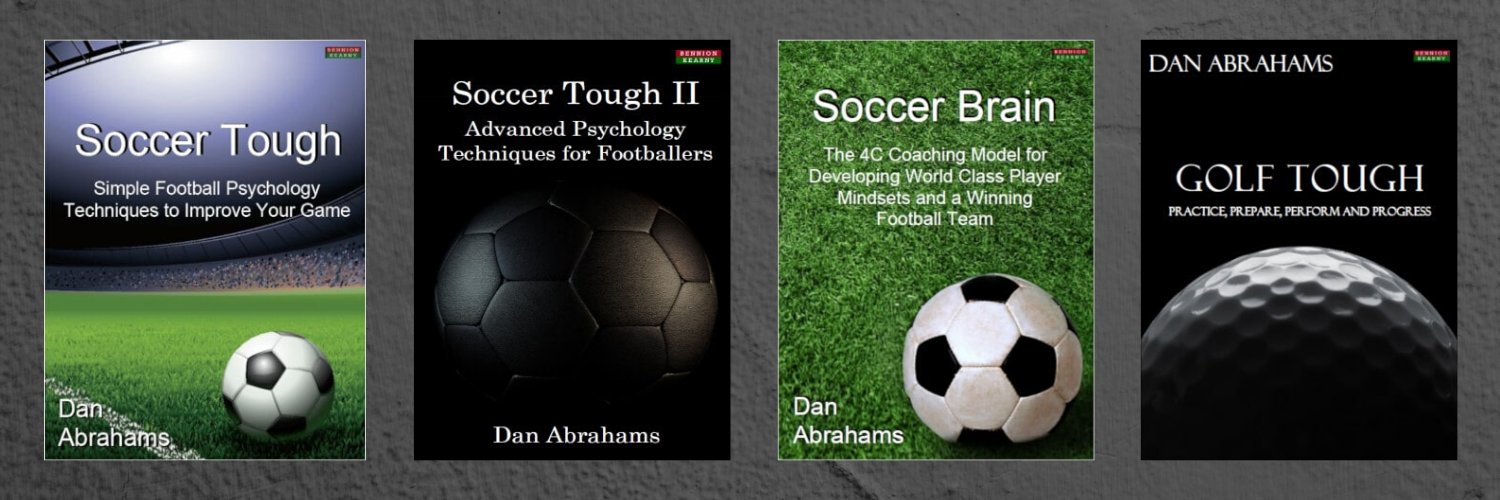
Roy Keane: “It’s just an act…” 👇🏻👇🏻👇🏻 Below is perhaps one of the most insightful clips I’ve watched related to the psychology of adult elite sport (the professional level of sport). Tucked away…silently…in a BBC interview quite some years ago. A small section of an interview with Roy Keane, one of the Premier League’s greatest players… “It’s an act. Of course I had self-doubts, but I kept an act up. The skinhead. A few sendings off. I fear nothing. Some sort of machine. Which is nonsense. You act, don’t you!” Roy Keane was a great actor. He acted when he took to the pitch. He had, what I call a ‘Game Face’. I wrote about my mental technique of ‘Game Face’ in my first book Soccer Tough (a book that I’m proud to say Gareth Bale called life changing). And I expanded on ‘Game Face’ in Soccer Tough II. A ‘Game Face’ is a term I use to describe a player’s best ‘mental state’ and ideal ‘competitive persona’. It’s a pictorial metaphor that helps players think about, imagine, and then self-regulate around who they want to be in the heat of battle and how they want to execute their actions. “I’m my Game Face no matter what. I say it, be it, do it, act it…embody it, enact it” To bring this alive I’ll provide some examples… I spent five years working with someone considered one of the best defenders in the world. He had a ‘Game Face’ of ‘Dominant & Relentless’. These last two years working with Feyenoord as they won the Eredivisie and the Dutch Cup, one of the players had a ‘Game Face’ of ‘Positive Upbeat Benzema’ When England played in the final of the rugby World Cup in 2019, one of the players had a ‘Game Face’ of ‘Aggressive Energetic Lion’ (I was lead psych prior to the World Cup). You see, these are pictorial metaphors consisting of action-based words, often combined with a model player or concept such as an animal. Metaphors are wonderful linguistic tools for self-regulation, and can help human beings execute actions at a high intensity level, as well as engage in a competition with approach behaviour (on the front-foot, energy forward). Ultimately, sports competitors would do well to be great actors when they need to be. This doesn’t mean there’s anything inauthentic about their style of play. On the contrary, a ‘Game Face’ is robust in that it offers a description of ‘who they are’ and ‘who they need to be’ when kick-off arrives. It offers a dynamic descriptor of ‘who they are’ and ‘who they need to be’ in-game when the pressure is on. A ‘Game Face’ is a mix of authentic and inauthentic mental (and personality) states that enable players to adapt and flex when they need to. Roy Keane had a ‘Game Face’. He was an actor when he needed to be. In his words, it helped him find ‘the zone’. A ‘Game Face’ is the most powerful technique I’ve devised over the years…one that enables me to help players take charge of themselves and take control no matter what. To dominate their mindset and own their mindset no matter what… …no matter what!
Daniel Abrahams640,866 görüntüleme • 2 yıl önce

“Captains aren’t always leaders” says Jose Mourinho… …sure… …but in high performance sport, all players can develop their leadership skills. Even just a little. It starts with helping them have a simple but broad ranging definition. To lead is to influence. And all players can influence their team mates. Influence in sport starts with action. This is level one leadership. When players compete in their High Performance Mindset…when they execute every action in their High Performance Mindset…they automatically influence others. Social and emotional contagion starts with action! One level up is influencing with confidence in mind. Many, but not all players can help others develop confidence. They just need to be shown how. Simply, they can help their teammates recall best moments, strengths, and successes. They can help teammates remember these and rehearse these…every day! By tapping into memory, players can help their teammates feel great! The next level is to influence by energy. Some, but not many players can influence others’ energy. Through voice and body language (the embodiment of that voice), players can inject feelings of energy through the bodies’ of their teammates. This takes moments of extraversion. It takes willingness to bypass any social anxiety. It takes a desire to be front and centre. Through tone of voice and assertive gestures, players can inject feelings of energy in others. The highest level is influencing through solution. Few players can do this. Few players can instruct. It takes knowledge of the game model and the responsibilities in others’ roles. It takes the ability to focus on self but be minded by the games of teammates. It takes the ability to compete through cognitive overload. Action…confidence…energy…solutions And this needs to be trained in every activity in every session. It needs to be incorporated into session design and coach behaviour. It needs to be made a big deal in a coach’s practice and process. To lead is to influence. And the ability to influence can be learned by anyone who deems it important enough… ******************************** 𝐌𝐲 𝐧𝐞𝐰 𝐛𝐨𝐨𝐤, 𝐂𝐨𝐦𝐩𝐞𝐭𝐞 𝐝𝐞𝐝𝐢𝐜𝐚𝐭𝐞𝐬 𝐚 𝐰𝐡𝐨𝐥𝐞 𝐜𝐡𝐚𝐩𝐭𝐞𝐫 𝐭𝐨 𝐩𝐥𝐚𝐲𝐞𝐫 𝐥𝐞𝐚𝐝𝐞𝐫𝐬𝐡𝐢𝐩…𝐭𝐞𝐚𝐜𝐡𝐢𝐧𝐠 𝐩𝐥𝐚𝐲𝐞𝐫𝐬 𝐡𝐨𝐰 𝐭𝐨 𝐥𝐞𝐚𝐝 𝐰𝐢𝐭𝐡 𝐚𝐜𝐭𝐢𝐨𝐧, 𝐜𝐨𝐧𝐟𝐢𝐝𝐞𝐧𝐜𝐞, 𝐞𝐧𝐞𝐫𝐠𝐲, 𝐚𝐧𝐝 𝐬𝐨𝐥𝐮𝐭𝐢𝐨𝐧𝐬. 𝐂𝐨𝐦𝐩𝐞𝐭𝐞 𝐢𝐬 𝐚𝐯𝐚𝐢𝐥𝐚𝐛𝐥𝐞 𝐨𝐧 𝐚𝐥𝐥 𝐠𝐨𝐨𝐝 𝐨𝐧𝐥𝐢𝐧𝐞 𝐫𝐞𝐭𝐚𝐢𝐥𝐞𝐫𝐬
Daniel Abrahams38,008 görüntüleme • 1 ay önce

Back in April I was on The Overlap…to discuss the Manchester City vs Arsenal game… Exchange this game for England vs Argentina… No matter the game model; the formation; the tactics; the substitutions…England need to play with High Intent… …energy-forward: purposeful, positive, proactive…
Daniel Abrahams55,844 görüntüleme • 2 ay önce

Andrew Luck, former NFL quarterback (now GM of Stanford Football programme) digs deep into the importance of competitive practice… Don’t mess with practice…that’s when you win games… The detail - constraints and conditions that help players experience the demands of competition. Tasks and challenges that increase emotion and feeling. But here’s the thing… Mr Luck hints at player mental frameworks when he speaks to the opportunity to practice breathing and positive affect during tough-to-manage training sessions. Breathe…steady your nervous system! Positivity…influence your teammates! Deeper still… Go to work on attention, intensity, intent… A deep attention during practice…search for the cues you need to respond to… Heighten mental intensity…stay engaged with the cues… Aim to execute actions with a high intent…purposeful, positive, and proactive no matter what… In control and in charge. Dominate and own your mindset. Practice is a time to go hard mentally…it’s a time to practice the psychology of game day… (From Think Fast Talk Smart Podcast)
Daniel Abrahams129,623 görüntüleme • 8 ay önce

The ever impressive Sean Dyche… “We’ve gotta run and run and run some more” - there’s nothing complicated to it he claims. Now, Mr. Dyche is one of a few Premier League managers I haven’t had the pleasure to meet…but if I did I know what I’d want to talk to him about. I’d be bold. I’d give him a knowing smile and a little wink: “Come on Mr Dyche who are you kidding? This is years of playing and thinking. This is years of study that you’ve wrapped into a simple framework you can take with you anywhere…” Simple masking complex… Now, of course, he might push back: “No Dan this really is simple” - but there’s nothing simple about team shape, pressing, recovery lines, working in synch… No, Mr Dyche, no…this is just darn good coaching. And darn good coaching is neither simple nor easy. It’s complex and hard. I love the fact that Mr Dyche speaks about the importance of a framework. And that players can then explore from that framework. They ca explore and create. But a solid base is needed. This resonates with me because my work as a sport psychologist functions in a similar vein. I want the players and teams I work with to be passionate about High Performance Mindsets. I want them to be students of mindset. I want them to take control and take charge of three mental skills - attention, intensity, intent. From this framework I believe they can optimise the execution of their technical, tactical, and physical actions. From this framework I believe they can their best possible performance. From this framework I believe they can be tough to beat (not impossible to beat…but tough to beat)… The ever impressive Sean Dyche sells you his simple. But his simple is enveloping the complex. His simple is years in the making…
Daniel Abrahams142,602 görüntüleme • 9 ay önce

I think it was comedian, Jimmy Carr, who said that happiness is your current situation minus expectations. Perhaps he stole this from someone else. Either way, it feels true. Jannik Sinner, having lost to Novak Djokovic in the semi-finals of the Australian Open looks devastated. Professional athletes tend to be when they lose. My thirty years in high performance sport has shown me that the ability to recover from disappointment is such a crucial part of being a high performance athlete. Most are going to lose…they’re going to lose a lot! Most have to experience an overwhelm of emotion following a loss and then very quickly go again. Go again Go again Go again Easy to say. Devilishly difficult to do. The sensorial memory of loss can linger in mind and body. The stinging sense of defeat can emotionally burden for some time. And so the ability to flex and shift back to high mastery and a high performance mindset with speed is critical. The same holds in the corporate world. Disappointments aplenty - that missed job opportunity, that lost account, that failed pitch - none of these can be allowed to cripple enthusiasm. None of these can be allowed to render you ‘actionless’. But that’s hard! And so back to Jimmy Carr. Happiness is your current situation less expectation. Direct your expectation appropriately. “All I expect from myself is to start and stay in a high performance mindset. All I expect from myself is to deliver in my competitive persona. All I expect from myself is my competitive process. That’s all!” The greatest athletes must expect great things from themselves. But for mood regulation and to remain mastery-oriented, those expectations must be aspects they can control…
Daniel Abrahams113,382 görüntüleme • 7 ay önce

Sean McVay asks himself regularly… “Would I want to be coached by me?” The LA Rams coach holds the mirror up in front of himself and questions his practices and processes. He questions his behaviours and actions. “Would I want to be coached by me?” Would I want to experience what I deliver daily? Would I want to be around me? Would I want to engage in my session design? Would I want to approach me and have an honest conversation? Would I look to me as someone who is highly competent? “Would I want to be coached by me?” A question that goes beyond sport…would I want to be married to me? Would I want to be in a team at work with me? It’s a question that immerses you in a meta-state aimed to build self-awareness - thinking about your behaviours in a given context. Rising above yourself to look at yourself. Taking the helicopter view of what others might experience from you. Self-awareness Meta-states “Would I want to be coached by me?”
Daniel Abrahams99,002 görüntüleme • 7 ay önce

The brilliance is in the first sentence…that’s where the subtle hand of leadership emerges amidst the noise. A message exuberantly delivered, absolutely. And that’s ok - NFL is a sport of physical aggression (as well as skill), and so energy needs to be injected into the room for players to be able to hit hard, get hit hard, and still go again. But here’s the thing about this clip of a Bills player urging his teammmates to help each other. In that first sentence he’s passionately suggesting that they aim to influence each other. Specifically, just one other player. “When you leave this room, grab just one guy, and tell him to hold you accountable to the kind of focus we want, the kind of energy we want, the kind of effort we want” Take responsibility for one other and ask that one other to hold you accountable. It’s a social contract worth having. Worth having because no athlete is infinite. When exhaustion stains your face and self-regulation feels distant from your grasp, to have that one other person drive you on. Tunnel your focus. Energise you. Soar your effort. That’s what it is to know you have a great team mate by your side. The brilliance is in the first sentence. Influence doesn’t have to be across the team, it can be with just one other player.
Daniel Abrahams146,498 görüntüleme • 1 yıl önce

Carlos Cuesta chooses his words carefully. He orients them towards the positive… Perhaps the former Arsenal assistant coach (now head coach of Parma in Serie A, Italy) has read Professor Lisa Feldman Barrett’s book ‘Seven and a Half Lessons About the Brain’. In it, the Harvard neuroscientist describes how the language centres of the brain are connected to the insides of the body. Words and sentences influence heart rate, blood flow, and hormonal release. Coach Cuesta wants Arsenal defender, Ben White to feel great. He wants him to reflect on his strengths. A confidence-enhancing trick designed to release a cocktail of hormones that help Ben feel more ‘can-do’. Obvious maybe, but something coaches can do more of. Compliments are something coaches should never tire of. But let’s be clear. The brilliance of this short snippet of communication lies in the last five seconds. “So now it’s only a question of angles and body shapes” In other words, your anticipation is fantastic. You read the game better than any one else. To become more complete you need to focus on angles and body shapes. We can work on this together. A hook…a punchline! You reel ‘em in (this is what you’re great at) and then deliver a juxtaposition (this is what we can work on to help you improve). You’re great AND you can get even greater - and I can help you with that. Commit to me. Commit to this process. I can take you places you’ve never been before.
Daniel Abrahams125,826 görüntüleme • 1 yıl önce

A manager trying to rouse his players… Cortical arousal…a call for mental activation and physical intensity… Mikel Arteta using words, sentences, phrases enveloped in tone, volume, rhythm, pause…trying to tap into memory, striving to evoke pain and pleasure, cautioning threat while willing reward. Motivation - to move towards and to move away from. Mental activation… The challenge for any coach is to recognise the cause of performance lapse. Do my players need to rise in intensity or do I need to cool the nervous system? Might a rise be true for one and a drop be true for another? Should this come from me or should this come from my players? Questions…questions! For me…pre-planned: -individual mental frameworks -a team mental framework Then time for: -players to group together to speak -the coach to assert the tactical plan enveloped in those mental frameworks -mini individual conversations An all-in feel…an integrated approach. Cortical arousal, narrative, and meaning in competitive sport are strange things. One player is best served in a state of physical dominance while another is best suited to a playful state akin to playing mate’s football. Player one: dominant, relentless, strong Player two: playful, focused, free No hard, fast rules other than this - each and every player has their ideal mind and body state that helps them to anticipate, make decisions, co-ordinate their body, and execute at an appropriate physical intensity. And that state must be found and maintained in each and every game. I love Mikel Arteta’s passion. I love his energy and his vibrancy. I also love the complexity of the human. With 11, 13, 15, 18 plauers all gawping at you, hanging on every word you say…you never quite know whether the content or the delivery is suited to everyone in the room… …you never quite know… And that’s what makes sports coaching so much fun and so intriguing. That no matter who you are and no matter what level you coach at…coaching is a decision-making process where even the very best and even the very famous are making a best guess most of the time. A best guess most of the time…
Daniel Abrahams221,977 görüntüleme • 2 yıl önce

Kim Hellberg talking to his Middlesbrough team… High flying in the English Championship, he wants his players to be constantly making decisions…even when nowhere near the ball. Ah, yes. As a sport psychologist I can safely assert that Mr Hellberg is training attention. He’s cultivating attention - the most important mental skill. Attention - duration and direction…players should always be focused and connected to the game. Focused and connected to teammates, opposition, space, ball, responsibilities, principles, actions… There’s never a time to be distracted and disconnected. Always switched on. Always action-hungry and task focused. And as Mr Hellberg expresses here: “You’ve always in the game all the time. Making decisions” In the game all the time In the game all the time Focused and connected Focused and connected Focused and connected (My new book, Compete, will be released in May and will be discussing the importance of attention and provide tools of how to retain attention)…
Daniel Abrahams62,343 görüntüleme • 6 ay önce

Roberto De Zerbi, former Brighton head coach, see here coaching Marseille, taps into evolutionary psychology… Approach behaviour and avoidant behaviour… De Zerbi demands approach behaviour! A high intent. Energy-towards. Leaning into the challenge. Purposeful. Proactive. Moving forward. Risk-taking and brave. Explorative. Creative. Expressive… There is no middle ground. No shade of grey for De Zerbi. Courage, courage, courage. Mistakes will be made but that’s fine by him. My framework? Attention Intensity Intent That final word - intent. I work hard with all my players to ensure they execute with a high intent no matter what. No matter the enormity of the game. No matter who they play or where they play. No matter how they’ve been playing or how their teammates are playing. A high intent is a skill. It’s the purposeful, positive, proactive execution of actions. It needs to be worked on in every activity in every session. It needs to be insisted upon. It needs to be a part of the game plan. It needs to be included pre-match and in post game reflections. It needs to be a non-negotiable! Roberto De Zerbi, former Brighton head coach, see here coaching Marseille, taps into evolutionary psychology… (Video found on MÁS Positional account on ‘X’ - do follow them)
Daniel Abrahams103,846 görüntüleme • 1 yıl önce

Dennis Bergkamp with a call to all players… “Technique, technique, technique…practice, practice, practice” The thousands of hours spent alone, with teammates, and with coaches…focused on honing his own unique brand of technique…his movement solutions for as many scenarios as possible. Doing it until he doesn’t have to think. He just does! An embodied intelligence. A mind-body competence fit for any situation in any footballing environment. See and do See and do See and do Of course, when practicing on their own, ambitious young players should engage their mental muscles. Attention on first touch when bouncing the ball off the wall. Imagining team mates around them. Executing actions confidently. Engaging in self-control if they spill or miss. Retaining a high mental activation as any tedium sets in. Technique and mindset intertwined… And then self-regulated learning. Deliberate practice. Intentional training… What am I doing that’s helping me improve? What am I focusing on? Are there other ways to execute this action? Exploring, creating, seeking feedback, internalising, memorising… Practice on purpose… Technique and mindset intertwined…
Daniel Abrahams71,062 görüntüleme • 9 ay önce

The last one he quit on… I’m the first person to scream the importance of context when highlighting an isolated video… But as a sport psychologist, I respectfully question the value in putting Phil Foden in an activity without defenders…in England training I think it’s a fair debate…and I’m not convinced by the value of this at all…
Daniel Abrahams160,539 görüntüleme • 2 yıl önce