Dr. Lee Warren
@drleewarrenmd • 39,803 subscribers
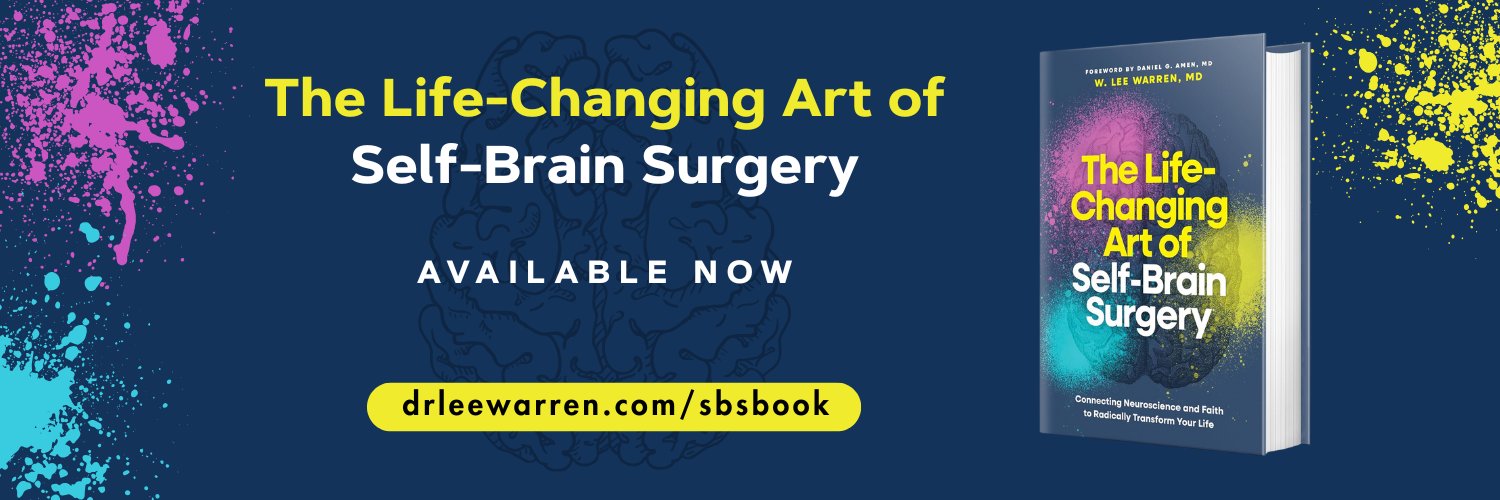
🧠 Brain Surgeon 📚 NYT Best Selling Author 😮 1M followers IG, new to X 🧬 Neuroscience + Faith Order my book today ⤵️
Shorts

Videos

Today, I’m going to give you ten years of therapy in two minutes. I'm a brain surgeon, and I'm gonna show you how to make rapid progress in healing the wounds you’ve been carrying; the ones from childhood, from broken relationships, from things said that can’t be unsaid, and from things done that can’t be undone. Let's scrub in and get it done. Here's a Fact: Your Wound Lives in Your Brain, But Your Healing Lives in Your Mind When something hurts you, your brain stores it. The sights, the sounds, the sting of the words, the shape of the moment. That storage is real and physical. But here’s where the hope of healing lies: your brain doesn’t get the final vote on what that memory means to you. Your mind does. And your mind is not the same thing as your brain. Neuroscience nugget: Emotional memories get encoded in circuits involving the amygdala and hippocampus, but each time you recall a memory, it becomes temporarily unstable and gets rewritten via a process called reconsolidation. That means every time you revisit a wound, you have a fresh chance to change how it’s stored. Self-Brain Surgery Procedure: The next time an old wound surfaces, don’t just relive it. Instead, reframe it while it’s “open.” Ask: What is the truest, most redemptive way to understand this moment now? Speak that new understanding out loud before you let the memory close back up. Scripture: “He heals the brokenhearted and binds up their wounds.” Psalm 147:3, NIV This is self-brain surgery. Hard and holy work. Follow me to connect neuroscience and scripture every day. Save this to help when you need to heal. Share it with a friend who's hurting. Click the link in my bio to learn more about The Life-Changing Art of Self-Brain Surgery, my NYT bestselling book. #selfbrainsurgery #neuroscience #neuroplasticity #grief #healing
Dr. Lee Warren1,135,556 views • 1 month ago

Today, I’m going to give you ten years of healing in a couple of minutes. I'm a brain surgeon, and I'm gonna show you how to make rapid progress in healing the wounds you’ve been carrying; the ones from childhood, from broken relationships, from things said that can’t be unsaid, and from things done that can’t be undone. Let's scrub in and get it done. Here's a Fact: Your Wound Lives in Your Brain, But Your Healing Lives in Your Mind When something hurts you, your brain stores it. The sights, the sounds, the sting of the words, the shape of the moment. That storage is real and physical. But here’s where the hope of healing lies: your brain doesn’t get the final vote on what that memory means to you. Your mind does. And your mind is not the same thing as your brain. Neuroscience nugget: Emotional memories get encoded in circuits involving the amygdala and hippocampus, but each time you recall a memory, it becomes temporarily unstable and gets rewritten via a process called reconsolidation. That means every time you revisit a wound, you have a fresh chance to change how it’s stored. Self-Brain Surgery Procedure: The next time an old wound surfaces, don’t just relive it. Instead, reframe it while it’s “open.” Ask: What is the truest, most redemptive way to understand this moment now? Speak that new understanding out loud before you let the memory close back up. Scripture: “He heals the brokenhearted and binds up their wounds.” Psalm 147:3, NIV This is self-brain surgery. Hard and holy work. Follow me to connect neuroscience and scripture every day. Save this to help when you need to heal. Share it with a friend who's hurting. Click the link in my bio to learn more about The Life-Changing Art of Self-Brain Surgery, my NYT bestselling book. (Not medical advice. See your provider for help) #selfbrainsurgery #neuroscience #neuroplasticity #grief #healing
Dr. Lee Warren43,445 views • 2 days ago

Twelve hours before my son Mitch was killed, he called me. It was the best conversation we'd had in over a year. He told me he wanted to come home, live with us again, and go back to college. Then he told me he loved me, and I told him I loved him too. Twelve hours later, he was gone. For a long time, that phone call felt like the cruelest part. It seemed like God let me believe everything was going to be OK, and then took my son the same day. There's a name for what happened in my brain. It's called cognitive tunneling. After all these years, I recently learned the name of it from a post by Jim Kwik Jim Kwik , author of the book Limitless. Under trauma, your attention narrows to one terrible point, and you lose the rest of the picture. I've described it as a camera zooming in so far that it can only see a small part of the world. I've felt it and written about it, but now I have a name for it, and that's healing. A while after Mitch died, a chaplain friend sat with me in the hospital chapel and told me to do the hard work of looking back at that day from a different angle. So I did. On the very last day of Mitch's life, we were connected. He was looking forward to coming home. And that same day, he went to his eternal home. That phone call was a gift God gave me to hold onto. The third commandment of self-brain surgery is that I must believe that most of my automatic thoughts are untrue. Grief hands you a story fast. You're allowed to look at it again. "The LORD is near to the brokenhearted and saves the crushed in spirit." Psalm 34:18, ESV. If you're in that tunnel right now, I'm so sorry. Look again. It's hard and holy work, and you don't have to do it alone. Save this for the next time hardship has you too zoomed in to see other things that are still true. Share with a friend who's in the tunnel. And follow me to connect the dots between neuroscience and faith to help you navigate life and find flourishing. Click the link in my bio to learn more about the Ten Commandments of Self-Brain Surgery. #selfbrainsurgery #anxiety #mentalhealth #grief #neuroscience
Dr. Lee Warren130,876 views • 8 days ago

Your brain doesn’t know what time it is. Every time you replay that conversation from last year, that mistake from last month, that moment you wish you could take back from yesterday, your brain treats it like it’s happening right now. Same stress chemicals. Same alarm bells. You’re not remembering it. You’re reliving it, on a loop you built yourself. That's because of two things: your brain doesn't know the difference between what's really happening and what you're just imagining, and neuroplasticity means that your brain automates things that you think about and turns them into programs that it runs without you having to think about them next time. So, the more you rehearse something from the past or something you're just imagining, the more your brain builds out a reality as if that thing is still here right now. The ninth Commandment of self brain surgery is, "I must believe that what I'm doing I'm getting better at." That means if you're doing things with your mind that are making your brain better at living in the past or worrying about imaginary outcomes, you're getting better at feeling worse. So knock it off. Here’s the shift: you can’t edit the past, but you can stop rehearsing it. Every replay is a rehearsal, and your brain gets better at whatever you rehearse. Let's make neuroplasticity work for us and not against us. We call that self-brain surgery. It's not easy at first, it's hard and holy work. But remember, you get better at whatever you repeatedly do Philippians 3:13 says it like this: forget what lies behind and strain towards what lies ahead. Not denying it happened, but refusing to keep performing it. There's better stuff in the future, but not if you keep building a brain that lives in the past. Follow me to connect neuroscience and scripture every day. Save this for the next time your mind hits replay. Share it with someone stuck on a loop. Click the link in my bio to learn more about Self-Brain Surgery. #SelfBrainSurgery #Neurosurgery #FaithAndScience #BrainHealth
Dr. Lee Warren306,567 views • 27 days ago

I'm a brain surgeon, and I'm gonna show you how to operate your brain the way it's designed, to help you heal the wounds you’ve been carrying; the ones from childhood, from broken relationships, from things said that can’t be unsaid, and from things done that can’t be undone. This is part two, make sure you watch part one also. Let's scrub in and get it done. Unhealed Wounds Get Rehearsed, Not Just Remembered Every time you replay a painful memory in anger or self-pity instead of truth, you’re not just remembering it, you’re practicing it. And practice strengthens whatever pathway you’re using. Neuroscience nugget: Neurons that fire together wire together. Rehearsing a wound with bitterness deepens the very neural pathway that keeps the pain alive, making the hurt easier to access and harder to escape. Don’t violate the 1st commandment of self-brain surgery (No self-malpractice) by letting neuroplasticity work against you. Remember the 9th commandment of self-brain surgery (”What I’m doing, I’m getting better at”), and rehearse the healing rather than the hurt. Self-Brain Surgery Procedure: Catch yourself the next time you start replaying an old hurt for the hundredth time. Stop mid-rehearsal and say, “I will not practice this pain today.” Replace it with one true, hopeful thought and hold that instead. Scripture: “Finally, brothers and sisters, whatever is true, whatever is noble, whatever is right, whatever is pure, whatever is lovely, whatever is admirable... think about such things.” Philippians 4:8, NIV This is self-brain surgery. Hard and holy work. Follow me to connect neuroscience and scripture every day. Save this to help when you need to heal. Share it with a friend who's hurting. Click the link in my bio to learn more about Self-Brain Surgery. Note: this is not medical or mental health advice. See your provider if you're having trouble.
Dr. Lee Warren234,997 views • 1 month ago

Your brain cannot tell the difference between a disaster that is happening and one you are only rehearsing. That’s why worst-case-scenario thinking isn’t “just being prepared.” It is building a brain that learns how to stay afraid. Neuroplasticity means you don’t live with the brain you were born with. You live with the brain you keep building. Spend enough time in the spiral and your amygdala stays online while your frontal lobes, the part that actually solves problems, go quiet. Cortisol rises. Sleep drops. The thing you’re trying to avoid becomes more likely, not less. Two thousand years ago Paul already knew the move: don’t be anxious about anything, but in everything, with prayer and thanksgiving, present your requests to God (Philippians 4:6-7). Anxiety and gratitude turn opposite directions on the same volume knob. One goes up, the other goes down. Next time the “what if this ends in disaster” thought shows up, try the other question: “What if it works out?” Hit that follow button and we'll work together every day to connect neuroscience and scripture to help you thrive. Save this for your next worst-case monent. Share it with someone whose brain is stuck in disaster mode. And click the link in my bio to learn more about my New York Times best seller, The Life-Changing Art of Self-Brain Surgery. #neuroscience #selfbrainsurgery
Dr. Lee Warren129,225 views • 1 month ago

Your brain cannot tell the difference between a disaster that is happening and one you are only rehearsing. That’s why worst-case-scenario thinking isn’t “just being prepared.” It is building a brain that learns how to stay afraid. Neuroplasticity means you don’t live with the brain you were born with. You live with the brain you keep building. Spend enough time in the spiral and your amygdala stays online while your frontal lobes, the part that actually solves problems, go quiet. Cortisol rises. Sleep drops. The thing you’re trying to avoid becomes more likely, not less. Two thousand years ago Paul already knew the move: don’t be anxious about anything, but in everything, with prayer and thanksgiving, present your requests to God (Philippians 4:6-7). Anxiety and gratitude turn opposite directions on the same volume knob. One goes up, the other goes down. Next time the “what if this ends in disaster” thought shows up, try the other question: “What if it works out?” Hit that follow button and we'll work together every day to connect neuroscience and scripture to help you thrive. Save this for your next worst-case monent. Share it with someone whose brain is stuck in disaster mode. And click the link in the first comment to learn more about my New York Times best seller, The Life-Changing Art of Self-Brain Surgery. #neuroscience #selfbrainsurgery
Dr. Lee Warren14,412 views • 3 days ago

The things you say to yourself turn into structural changes in your brain. Your brain automates those thoughts and feelings, and then they feed back and convince you they're true. So knock it off. The simplest fix I know is to use your name. When that harsh voice starts up, don't ask, "Why am I like this?" Ask, "What is Lee feeling right now?" Then talk to Lee the way you'd talk to someone you love. Researchers at Michigan State and the University of Michigan tested this with EEG and brain scans. When people thought about painful things using their own name instead of "I," the brain's emotional reaction dropped within seconds. Activity went down in the medial prefrontal cortex, a hub for self-focused thinking. People said they felt less distressed. And the scans showed it took no extra mental effort. David did this in the Psalms. In Psalm 42, verse 11, he talked to himself like a friend: "Why are you cast down, O my soul, and why are you in turmoil within me? Hope in God; for I shall again praise him, my salvation and my God." That's self-brain surgery. Thoughts become things. Call yourself by name, talk to yourself like somebody who loves you, and give yourself a chance to change your mind and change your life. Save this for the next time you need a reminder to be kind to yourself. Share it with someone who needs the tip. And follow me to connect the dots between neuroscience and faith to help you navigate life and find flourishing. Click the link in my bio to learn more about the Ten Commandments of Self-Brain Surgery. #selfbrainsurgery #anxiety #MentalHealth #neuroscience #grit
Dr. Lee Warren20,575 views • 6 days ago

I stood outside in Iraq while mortars fell and realized I had zero control over where the next one would land. I felt that same helplessness the day my son Mitch died. What got me through both was a verse I preached to myself until my mind believed it: "And he is before all things, and in him all things hold together." Colossians 1:17 (ESV) That's self-brain surgery. When you can't control your circumstances, your brain sounds the alarm on repeat. But your mind is in charge of your brain, and you get to choose what it rehearses. Every time you tell yourself the truth that Jesus is holding this, you strengthen a pathway of trust instead of panic. The fourth commandment of self-brain surgery is I must believe that my mind is in charge of my brain. It's hard and holy work. Save this for the day you need it, and share it with someone who's under fire right now. I'm your friend Dr. Lee Warren, hopefully your favorite brain surgeon. Hit that follow button for more connections between neuroscience and faith every day. Click the link in my bio to learn more about The Life-Changing Art of Self-Brain Surgery. #selfbrainsurgery #anxiety #control #mentalhealth
Dr. Lee Warren56,120 views • 22 days ago

Feelings are strong, they're loud, and they make you think that you have to react to them. The problem is, neuroscience is clear: most of the things you feel don't actually point anything that's really happening. Happy people learn to check whether they're feeling against reality before they react to it. The second commandment of self-brain surgery is that I must believe that feelings are not facts, they are chemical events in my brain. Psalm 139:23 shows that asking God to help us discern between feelings and reality is the path to peace: "...test me and know my anxious thoughts." If you learn to take a five second pause between something you feel and how you react to it that will give your frontal lobes time to catch up to your amygdala, critically think about what's going on, and decide on an appropriate response. This simple move will make a huge difference in your quality of life. Save this for the next time feelings feel overwhelming, and share it with a friend who needs to know that not everything they feel turns out to be true. And follow me for daily connections between neuroscience and faith to help you achieve healing, hope, and higher performance. Click the link in my bio to learn more about my New York Times best selling book, the Life-Changing Art of Self-Brain Surgery. Note: I am not a therapist, I'm a brain surgeon. But I'm also a trauma survivor, a war veteran, and the father of a lost son. I've spent 25 years studying how neuroscience and faith connect to help us flourish to find my own way back to hope again, and these things will help you. But they are not substitutes for the advice of your own mental health professional. #mentalhealth #anxiety #selfbrainsurgery
Dr. Lee Warren42,687 views • 23 days ago

This is probably the most controversial thing I discuss publicly: you already have what you need to heal, grow, and change. I want you to say this out loud with me if you're somewhere you can: "I already have what I need to heal and grow and change." I know it's true for you because Scripture says it. You already know you have a sound mind from 2 Timothy 1:7 ("God has not given us a spirit of fear, but of power, and of love, and of a sound mind"). Then Peter adds this. "His divine power has given us everything we need for a godly life through our knowledge of him who called us by his own glory and goodness." (2 Peter 1:3, NIV) Every time I teach this, somebody comes up and says, "But you don't know what I've been through. You don't know my personality. You don't know my diagnosis." That's true, I don't. But I do know what Peter wrote, and he wrote "everything we need." I say this with love, friend, but also as a doctor giving you the straight facts; I don't see an asterisk in that verse that says, "Unless I've been through trauma, or have ADHD, or a high ACE score, or my name is ________." So are you ready to accept what he has already given you, and the way he designed you? Are you willing to learn how to operate your system so it stops operating you? And ultimately the question is this: do you want to get better, or do you want to stay broken, bitter, or trying to figure out who to blame for what's keeping you stuck? Because neuroscience and scripture agree: you have what you need if you're willing to change your mind. Share this with a friend who needs to know they are designed to heal, and save it for later when you need a friendly reminder that you have what you need. And follow me for daily connections between neuroscience and faith that will help you in your quest for healing, hope, and higher performance in your life. Click the link in my bio to learn more about my New York Times best selling book, The Life-Changing Art of Self-Brain Surgery. #neuroscience #mentalhealth #hope #anxiety #selfbrainsurgery
Dr. Lee Warren19,460 views • 10 days ago

A radical truth I discovered that will massively transform your life: I am not stuck because of someone or something outside of me. Look, friend, I feel you on this. Maybe you've been through something hard that left you reeling, wondering what's next and unable to breathe. What you went through may have been devastating, and it probably was. I have a friend who lost two sons in thirteen months. One died by suicide. The other had leukemia, and my friend donated his own bone marrow to save him. His son had a reaction to it and died. I lost one son, and griefs can't be ranked, but I can hardly take that one in. A loss like that can't be navigated without a compass that points your mind somewhere besides what you've been through. And it IS true that people have walked through unspeakable things and still moved forward. So how does one person get stuck while someone else finds a way forward? Here's what I realized: it's all about grabbing onto things you CAN control when life feels OUT of control. For me, I have to look at the responses, the decisions, and the mindsets I've built around what happened. Those are mine, and I can change them. The good news is, God built you to be able to find your feet again, and your brain will support you. "For God has not given us a spirit of fear, but of power and of love and of a sound mind." (2 Timothy 1:7, NKJV) You have been given a sound mind. You don't have to live in fear and anxiety and overwhelm. You don't have to let your ADHD, or your neurodivergence, or anything else you've been through keep you where you are. The fourth commandment of self-brain surgery is: I must believe that my mind is in charge of my brain. Your brain listens to your mind, and God designed it that way. I'm not whitewashing any of this. I went through the Iraq war, post-traumatic stress disorder, and a divorce, and then I lost my son. So I feel you. But I love you enough, and I'm a good enough doctor to shoot straight: you need to grab onto what you can change, and re-orient towards a more hopeful future. That's the only choice that holds any hope. This is hard and holy work. If you're stuck after something like that, what's required is a change in how you're looking at it, and a decision that tomorrow can be different than yesterday was. You won't be doing it alone. Go back to the operating room. I say "knife," and the scalpel is in my hand. That's how the Holy Spirit works with you. He won't make the incision for you, and he won't operate for you. But he did design your nervous system so that it can change. That's neuroplasticity: the wiring you use is the wiring that gets stronger. The tenth commandment of self-brain surgery is: I must understand that thoughts become things. "...for it is God who works in you, both to will and to work for his good pleasure." (Philippians 2:13, ESV) So it's not self-reliance, but it is self-help. He hands you what you need, and he expects you to pick it up. Let's get after the business of healing. Share this with a friend who needs to get unstuck, and save it for later when you need a friendly reminder to move again. And follow me for daily connections between neuroscience and faith that will help you in your quest for healing, hope, and higher performance in your life. Click the link in my bio to learn more about my New York Times best selling book, The Life-Changing Art of Self-Brain Surgery. #neuroscience #mentalhealth #hope #anxiety #selfbrainsurgery
Dr. Lee Warren16,638 views • 11 days ago

I've watched it happen a thousand times. A patient walks into pre-op terrified. Then they start humming a worship song, reciting a scripture, or someone prays with them—and their heart rate comes down, their blood pressure improves, and they go into surgery in a completely different state of mind. I didn't expect it the first time I saw it. Now I look for it. Worship isn't just what you feel. It's where you put your attention. Fear narrows your brain's filter onto the threat in the room until it's all you can see. Worship takes that same intensity and aims it at something truer and bigger than what you're afraid of—and it brings memory with it. Words you already know. Promises you've sung before. You're not inventing courage out of thin air. You're rehearsing a different center of gravity. You can't stare at the monitor and the Maker with the same intensity at the same time. One of them is going to get your energy. Worship is a decision about which one it's going to be. "I will bless the Lord at all times. His praise will continually be on my mouth." (Psalm 34:1) Not when you feel like it. At all times—including the holding area. Worshiping in your hardest moments isn't denial. It's self-brain surgery. When the fear spikes, don't wait for the feeling to change first. Put truth in your mouth—a verse, a song, a prayer, and say it until your attention has a better place to stand. Click the link in my bio to dive deeper into this topic and learn more about self-brain surgery! *FOR INFORMATIONAL PURPOSES ONLY. NOT MEDICAL ADVICE.
Dr. Lee Warren19,323 views • 14 days ago

Nothing Changes If you feel stuck and unable to make progress, here's the truth I have discovered after decades of studying brain science, and surviving multiple traumas in my own life, including the loss of my son: Nothing changes until you change something. I lost a lot of time waiting to feel better, thinking I could only change after my emotions did. But what I discovered was that you never feel better enough to change your actions, but as soon as you change your actions, you start to feel better. Change doesn't require perfection, it requires interruption. And that type of change, that type of initiative, doesn't calm until you begin to change things that you think about and the ways that you think about the situation you've been in. That's why Romans 12:2 tells us not to be conformed to the pattern of the world, which is a constant focus on our circumstances and feelings, but to be transformed by of our minds. Once you understand that your mind is in charge of your brain and know what you think about can change how your brain works, you can be truly set free the partner with God in going after the life he's calling you to. And if you feel like you can't hold it all together, I have good news: you were never supposed to. Colossians -20 says that in him everything is held together. Nothing changes until you change something. As soon as you're ready to change your mind, you can change your life. Your creator is ready to help you, your brain is designed to heal, grow, and change, and we're counting on you. Save this for the next time you feel stock, and share it with a friend who needs to know that nothing changes until we change something. Click the link in my bio to learn more about my New York Times best seller, The Life-Changing Art of Self-Brain Surgery, and to find my weekly newsletter, podcast, and more. #neuroscience #anxiety #mentalhealth #selfbrainsurgery
Dr. Lee Warren16,505 views • 12 days ago

Knock off the negative self talk! Changing the words you say to yourself literally rebuild your brain in ways that help you or hurt you. Here's the science of one of the words you say to yourself matter: When you use criticizing language in your internal voice, your brain picks up on that and turns on the parts that are related to defending you from physical danger. Your brain hears your mind saying something harmful, and assumes that you're under attack. This affects your physiology, keeps you in a fight or flight response, and elevates your blood pressure and cortisol levels. In other words, when you attack yourself internally, your body gets the message and you literally feel like you're at war. On the other hand, research shows that when you use compassionate language to yourself, you don't magically make all your problems go away. What happens is that your brain area is related to problem-solving, calmness, and feeling hopeful, come alive. This set the filters in your reticular activating system to begin to look for possibility and not danger. The first commandment of self brain surgery is that I must relentlessly refuse to participate in my own demise. Using harmful words to yourself is literally committing malpractice against your own brain and your own life. So, and I say this with love, knock it off. Be kind to yourself. In a world full of difficulties, you deserve at least one ally. And your brain needs to hear encouraging language so I can do a better job of showing you a path forward instead of keeping you stuck. Jeremiah 29:11 says that God has a plan to give you hope and the future. Don't hinder his ability to do that by blocking your brain from being able to see what might already be there. Send this to a friend who needs an ally. Save this for the next time you find yourself feeling afraid. And follow me for connections between neuroscience and scripture every day that will help you flourish in your life. Click the link in my bio to learn more about my New York Times. Best seller, The Life-Changing Art of Self- Brain Surgery. #selfbrainsurgery #mentalhealth #anxiety
Dr. Lee Warren34,842 views • 1 month ago

Right before I cut into someone’s brain, a thought sometimes flashes through my mind, "What if my hand slips right now?" I’ve been operating for years. If a brain surgeon’s mind can do that to him mid-surgery, yours isn’t broken either. That thought doesn’t mean I’m unfit to operate, and it doesn’t mean you’re dangerous or crazy for the thoughts you can’t say out loud. It means the brain, under focus or fear, fires off the worst possible image; but that's a misfire, not a message. Feelings are not facts. Thoughts are not always true. Those are Self-Brain Surgery Commandments number two and three from my New York Times bestselling book: I must believe that feelings are not facts, and that most of my automatic thoughts are untrue. Paul wrote it this way in 2 Corinthians 10:5, ESV: “We take every thought captive to obey Christ.” Not every thought is you. Some are just noise your brain generates. You don’t have to obey it. You get to examine it, and let it go. If a thought is torturing you and you think it makes you a bad person, it doesn’t. That’s hard and holy work, and you’re not alone in it. Save this for the next time a thought is running on a loop in your head. Share this with a friend who struggles with difficult to control thinking. And follow me for helpful connections between neuroscience and faith every day. Click the link in my bio to learn more about self-brain surgery. #selfbrainsurgery #neuroscience #mentalhealth #anxiety
Dr. Lee Warren24,783 views • 26 days ago

Your brain is not your boss Here's something true from modern brain science: You're not stuck the way you are. Your brain constantly changes in response to your thoughts, so you're either getting better at staying the same/getting worse, or you're getting better at getting better. Self-brain surgeons get better at getting better. The ninth Commandment of self-brain surgery is this: I must believe that I'm getting better at what I'm doing. II Timothy 1:7 says God did not give you a spirit of fear, but of power, of love, and of a sound mind. II Peter 1:3 sad that his divine power has given you everything you need for your life. So what's going to have the final say for you? Your automatic thoughts that research suggests are almost always wrong? Or scripture, which never changes and reflects the timeless truth of God's plan for you and is being validated every day by 21st-century neuroscience findings. Let's get better at getting better together. Save this for later when you need to remind your brain, who's boss, and share it with a friend who needs to believe that they really can get better. Follow me for connections every day between neuroscience and faith that will help you flourish in your life. And click the link in my bio to learn more about my New York Times best seller, The Life-Changing Art of Self-Brain Surgery. #neuroscience #selfbrainsurgery #anxiety #MentalHealth
Dr. Lee Warren18,959 views • 20 days ago

Sometimes life knocks us out. We want things back the way they were, but God says we can't have that. This week's Self-Brain Surgery video equips you with what to do when you find yourself not knowing what to do You can watch the whole video on my YouTube channel. Follow me, and every day we will connect neuroscience and faith to help you flourish in your life, no matter what happens. Save this for the next time you're screaming into the void, wishing things would go back to the way they were. And share this with someone you love who's there with you. Click the link in my bio to learn more about my New York Times best seller, The Life-Changing Art of Self-Brain Surgery. #selfbrainsurgery #mentalhealth #anxiety #neuroscience
Dr. Lee Warren13,429 views • 16 days ago
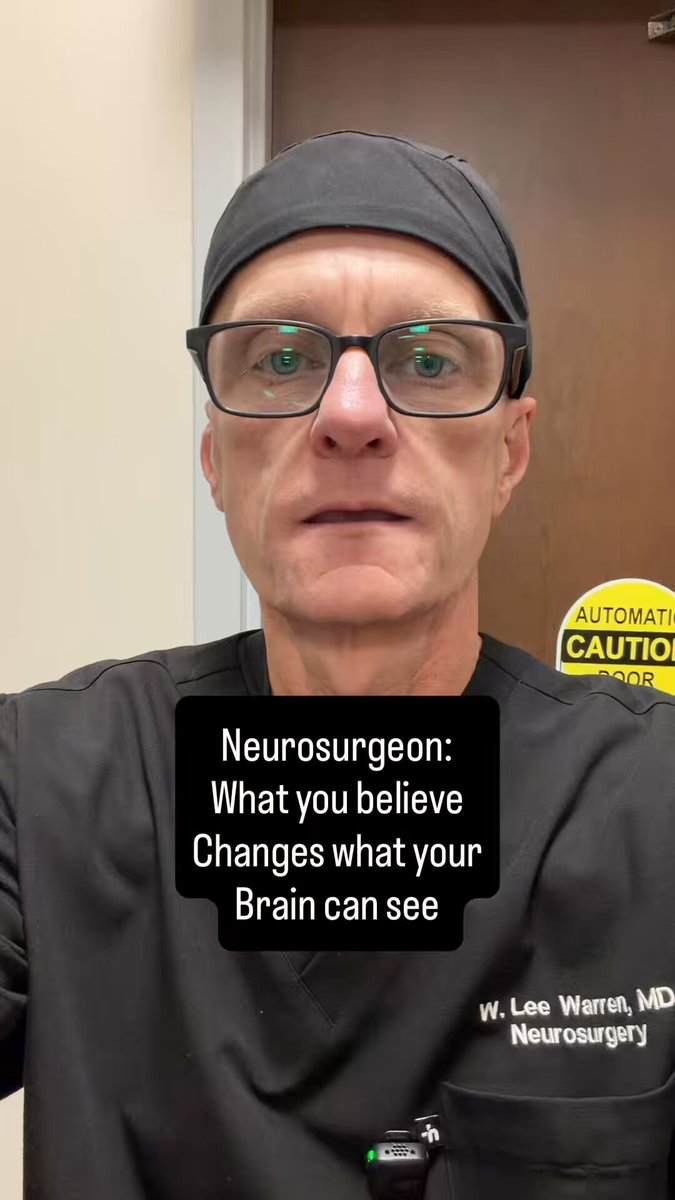
The manifestation crowd is half right. What you believe really does change what your brain notices and how long you keep going. Jesus said it first in Mark 11:24, and he told us where to aim that belief: "Have faith in God" (Mark 11:22, ESV). Click the link in the comments to learn more about self -brain surgery. Save this for the next time your brain tells you nothing ever works out, and share it with a friend who needs to see more possibility in their life. Follow me for powerful connections between neuroscience and faith every day that will help you flourish in your life. #SelfBrainSurgery #neuroscience #manifestation #anxiety
Dr. Lee Warren10,926 views • 19 days ago

Thoughts become things. That's the 10th commandment from my new book, The Life-Changing Art of Self-Brain Surgery. Everything real in your life started with a thought. So if you have things that need to change in your world, you must first change the things you're thinking about. I give you tactical ways to do this in my book. Click the link in the comments below and I'll send you the info. #selfbrainsurgery #neuroscience #neurosurgery #faithandscience
Dr. Lee Warren13,604 views • 25 days ago