
Forest Park Pharmacy
@ForestParkPharm • 12,383 subscribers
Fair and Transparent Pricing for All
Videos

My wife and I own Forest Park Pharmacy, and we don't accept insurance. None of it. That decision is exactly why we could fix what happened to a patient today. A family came in wanting to transfer their kid's antibiotic to us. The child had already STARTED the course. Then, mid-treatment, the insurance company decided the last 14 tablets suddenly needed a "prior authorization" before the other pharmacy could hand them over. A sick kid, halfway through an antibiotic, and the answer was "please hold." The drug is linezolid. It's a generic. It's been generic for over a decade. It treats serious gram-positive infections — the kind you do NOT want to stop antibiotics in the middle of, because an interrupted course is how you breed resistant bugs and end up right back where you started. So why the hold-up on a cheap, common generic? Follow the fake math. Insurance and the PBMs behind them price drugs off a number called AWP — "Average Wholesale Price." People in my industry have another name for it: "Ain't What's Paid." It's a benchmark number, not a real-world cost. On paper, the AWP for just those last 14 tablets is about $2,500. My cash price for the same 14 tablets? $18. Read that again. The system that's supposedly "protecting" this family from cost is the same system that inflated an $18 medication into a $2,500 line item, then slapped a prior auth on it to "review the expense" THEY invented. They manufactured the problem, then billed everyone for the privilege of solving it — and made a sick kid wait while they did it. This is the whole game. When a drug is priced honestly, there's nothing to "manage." When it's priced off a fantasy benchmark, you get spread pricing, PA paperwork, pharmacy phone trees, and delayed treatment — all dressed up as cost control. Here's the part nobody tells you: roughly 90% of prescriptions are low-cost generics. For the vast majority of what people pick up every day, running it through insurance does two things — raises the real cost and risks delaying your care. That's it. That's the value-add. That's why we fired the insurance companies. No middleman deciding your kid can't finish their antibiotics on schedule. No fake prices. Just the real number, on the shelf, today. The medication was always cheap. The insurance was the expensive part.
Forest Park Pharmacy538,671 görüntüleme • 2 ay önce

Texas residents, this is a major update regarding medication access in the Lone Star State. 🤠 As of December 4th, a new Texas law officially went into effect making ivermectin available without a traditional doctor’s prescription. However, the rollout has been a bit complicated. Here is what you need to know about how to get it: 📍 The "Rx Only" Hurdle Because there isn't a dedicated "Over-the-Counter" (OTC) version of this medication yet, the products on the shelf still say "Rx Only." Usually, the State Board of Pharmacy issues a "standing order" to bypass this (similar to how Narcan was handled), but they initially held off, leaving patients and pharmacists in limbo. 🔄 The New Update: Pharmacist Discretion The Board has officially updated its position. Access is now down to Pharmacist Discretion. This means you no longer need to visit a doctor first. Instead, the pharmacist acts as the reviewer. At Forest Park Pharmacy, we are moving forward with a safe, streamlined process: No doctor’s prescription required. Pharmacist Review: We will collect basic info and perform a mandatory drug-interaction check to ensure the medication is safe for you. Professional Guidance: You get the medication you need with the safety oversight of a medical professional.
Forest Park Pharmacy225,737 görüntüleme • 8 ay önce

My wife and I own a pharmacy. Last month we spent days trying to pry one prescription loose from a company that did everything it could to hold onto it. The drug was everolimus. A generic. It treats cancer and protects transplant patients from rejecting their new organ. Not exotic. Not rare. A pill. The patient wanted it filled with us because we're cash-pay and cost-plus. No insurance. No PBM. No secret markups, no games. Our price was $318. That's not cheap by our standards — most of what we fill runs under $20 — but it was honest. Here's what that same prescription looked like on the other side of the counter. In 2023, Medicare was paying about $6,645 for it. That's roughly 21 times our price for the identical medication. Medicare spent around $240 million on everolimus alone that year. If they'd paid our price, they'd have saved roughly $230 million. On one generic drug. So how does an insurance company profit off a drug that expensive? Don't they pay for it? No. You pay for it. In your premiums. Their job isn't to spend less — it's to keep your healthcare dollars circulating inside their own companies. And the tool they use is called spread pricing. Spread pricing works like this: the middleman bills the health plan one price, pays the pharmacy a lower one, and keeps the difference. You never see it. On TRICARE, they pay an independent pharmacy like mine about $311 to fill everolimus. That barely covers our cost of the drug. Meanwhile the plan gets billed thousands. That gap — north of $6,000 on a single fill — is pure margin the middleman pockets. Now here's the part they'd rather you not think about. The pharmacy we were fighting was Accredo. Accredo is owned by Express Scripts. Express Scripts is the pharmacy benefit manager owned by Cigna. Same company, three masks. That nesting-doll structure isn't an accident — it's the whole design. When the pharmacy, the PBM, and the insurer are all one entity, they can shuffle money between their own pockets and call it whatever they want. The confusion is the product. And this isn't a story about one weird drug. It's the business model. The FTC has been digging into exactly this. In its January 2025 report on the three biggest PBMs — CVS Caremark, Express Scripts, and OptumRx — staff found those companies marked up specialty generic drugs by hundreds and thousands of percent when dispensing through their own affiliated pharmacies. Just those markups generated more than $7.3 billion above what the drugs actually cost to acquire, from 2017 to 2022. One in five of the specialty generics they studied was marked up over 1,000%. Some cancer generics: over 3,000%. On top of that, the FTC pegged spread pricing on those same drugs at another $1.4 billion. One example straight from the FTC's files: dimethyl fumarate, a multiple sclerosis drug. Costs about $177 to acquire. The PBMs paid their own pharmacies close to $4,000 for a 30-day supply. Same trick. Different drug. And they steer the profitable ones to themselves on purpose. Pharmacies affiliated with the big three took in 68% of specialty dispensing revenue in 2023 — up from 54% in 2016. The prescriptions marked up more than $1,000 disproportionately end up at their own pharmacies, not independents like mine. So when we called to transfer this patient's everolimus to be filled without insurance, it landed like we were asking them to set $6,000 on fire. Of course they stonewalled us. That's why we fired them. No insurance means no invisible $6,000 charge buried in a premium you can't itemize. It means the price you see is the price. Ours was $318. Theirs was thousands. Same pill.
Forest Park Pharmacy59,195 görüntüleme • 2 ay önce

CVS just settled its latest fraud case, and for once the fine was big enough to actually hurt. It cost them $440 million, and as a bonus it bankrupted the guilty subsidiary and forced CVS to sell it off. The company was Omnicare, a pharmacy that supplies medications to nursing homes and other long-term care facilities. CVS bought it in 2015. That same year, a former Omnicare pharmacist filed a whistleblower lawsuit, and the Justice Department joined the case in 2019. The scheme was simple and it ran for years. Omnicare kept dispensing drugs on stale, expired prescriptions and billing the government for them over and over. From 2010 to 2018 that added up to more than 3.3 million false claims and about $135.6 million in overpayments from taxpayers. A federal jury reached its verdict in April 2025. The judge did not mince words, calling it deliberate, egregious, and a very big fraud on the government. Then came the math that made it sting. Under the False Claims Act, damages get tripled. So that $135.6 million ballooned to $406.8 million, and the government asked for another $542 million in penalties on top. The court entered a total judgment of about $948.8 million. CVS ultimately agreed to pay $440 million to resolve it, with the first chunk due almost immediately. Here is the part that makes this different from every other settlement. The penalty was not a rounding error the company could shrug off as the cost of doing business. It broke the unit that did the fraud. Omnicare filed for Chapter 11 bankruptcy in September 2025, and earlier this year CVS announced it is selling Omnicare to a company called GenieRx. So a business CVS bought in 2015 is now being sold off in the wreckage of its own fraud case. That is the lesson. It is actually possible to make a fine big enough to change behavior instead of just becoming a line item. Now we just have to scale that up. But honestly, why wait on fines at all? There is already a faster tool sitting right there. When an individual violates the False Claims Act, they can lose the privilege of participating in federal programs like Medicare. Imagine how quickly the fraud would vanish if that same exclusion got applied to the giant repeat offenders who keep doing this. Kick them off the program and watch how fast the behavior changes. While we wait for that day, here is my pitch. We built a pharmacy where it is literally impossible to pull this kind of thing, because you see the price before you pay it. No hidden claims, no secret markups, no middleman in a position to overbill anyone. Just the real number, up front. Imagine that.
Forest Park Pharmacy23,144 görüntüleme • 1 ay önce

😱 WOULD YOU BE OK PAYING 18X MORE FOR YOUR MEDS OVERNIGHT? That’s the gut-punch Droxia patients just took after Waylis Therapeutics bought it. 🔹 Old drug 🔹 Generic exists 🔹 Brand was $40 (yes, forty) Now? $700+ 💸 This is the same pharma hustle on repeat. Remember Pharma Bro? He was public enemy #1 for this. Guess what—nothing changed. These aren’t innovators. They’re vultures in suits, preying on people who need these meds to survive. BUT HERE’S THE TWIST: This scam only works because of our rigged insurance system. They pay massive fees and rebates to insurance companies to keep it on your plan. That keeps the true cost hidden in your premiums. Everyone wins… except you. It’s predatory. It’s legal. It’s disgusting. WE SAID NO MORE. 🚫 Fired the insurance middlemen ✅ Built a price checker ✅ Fair. Transparent. Real.
Forest Park Pharmacy92,562 görüntüleme • 10 ay önce

Tennessee just did what Congress can't. They passed a law to break up the health insurance giants. Specifically, they made it illegal for pharmacy benefit managers — the companies in charge of pharmacy insurance — and pharmacies to be owned by the same company. That makes perfect sense. For example: CVS Caremark is the PBM, and CVS is the pharmacy. So if you have Aetna insurance, you have CVS Caremark as your PBM, and they're going to do everything they can to make sure you use CVS as your pharmacy. Aetna, Caremark, CVS — all the same company. That causes all kinds of incredibly obvious problems that this law hopes to fix. If your insurance company is in charge of approving your medication, deciding how much to pay for it, AND deciding who gets that money — while also being the pharmacy that gets paid at the end — guess what happens to prices? They go up. Governor Lee signed the law last week. CVS immediately filed a federal lawsuit because they said it will force them to close all 136 stores they have in Tennessee. Let that sink in. I'm not sure most people realize what that says about CVS and health insurance in general. They had to choose between owning the middleman (the PBM) or the healthcare provider (the pharmacy). Without hesitation, they chose the middleman. The biggest pharmacy chain in the country — with a store on every corner — would drop all 136 of their Tennessee locations in a second if it means keeping their middleman business. It is more profitable for them to be a health insurance middleman getting between you and your healthcare than it is to actually provide the healthcare. That is the problem with healthcare in America. We have made the middleman so powerful that they've taken complete control of the entire system. Three PBMs — Caremark, Express Scripts, and OptumRx — handle around 80% of all prescriptions in this country. How on earth can we expect healthcare to work well and remain affordable if that's where the money is? We all auto-pay our insurance straight out of our paycheck before we even see the money. And not surprisingly, they're keeping a ton of it. That's why we fired them. And they can't file a lawsuit to stop us. That lets us offer fair, transparent prices. No PBMs. No insurance games. No hidden markups. You see the cost, you pay the cost.
Forest Park Pharmacy33,253 görüntüleme • 3 ay önce

Walgreens is currently facing a crisis under its new private equity ownership, and the "strip-and-flip" playbook is unfolding faster than anyone anticipated. If you’ve noticed your local pharmacy has stopped answering the phone, here is why: 🚩 The Private Equity Playbook Last year, Walgreens was acquired in a deal structured with 70% debt, nearly double the corporate average of 40%. That $13 billion debt load has to be serviced, and it isn't coming from growth—it’s coming from cuts. 📉 A Pattern of Destruction The firm behind this acquisition has a documented history of hollowed-out businesses: Nine West: Led into bankruptcy with $800M in debt. Staples: One-third of stores shuttered while the firm took a $1 billion dividend. The Leadership: The same executive who managed the store closures and mass layoffs at Staples is now running Walgreens. 📞 The "End of the Line" for Patients We are seeing a massive surge in patients transferring out of Walgreens because the basic infrastructure is collapsing: Reduced Hours: Staffing has been cut to the bone. Phone System Failure: Their phone trees are now designed to end calls rather than placing pharmacies on hold for transfers. Total Isolation: It has become nearly impossible for other pharmacists to reach them to coordinate your care. The bottom line: Their plan isn't to get better; it’s to squeeze what’s left. You shouldn't have to fight a broken phone system to get your medication.
Forest Park Pharmacy42,206 görüntüleme • 7 ay önce

UnitedHealth just earned a $3.9 billion bonus from taxpayers. For a job well done, supposedly. The 2026 Medicare Advantage quality bonus payouts are out, and the federal government is handing insurers at least $13.4 billion this year. That is roughly $700 million more than last year, and more than four times what the program paid in 2015. Since 2015, these bonuses have totaled over $87 billion. Now here is the part that should stop you. These are called quality bonus payments. They are supposed to reward plans for delivering better care. But the share of Medicare Advantage members enrolled in a plan that qualifies for the bonus actually fell this year, from 75% down to 68%, the lowest level since 2018. If this program truly tracked quality, a drop like that should shrink the bill. Instead the bill went up. That tells you the giants have not gotten better. They have gotten better at gaming the system. The way you unlock the bonus is by hitting 4 or more stars in the CMS Star Ratings program. Reach that threshold and your federal payments get bumped up. Sounds reasonable until you learn the ratings are scored at the contract level rather than the individual plan level, which makes the number something you can consolidate, manage, and engineer. Critics have been flagging this for years. The Congressional Budget Office estimated that simply ending the quality bonus program would save taxpayers nearly $100 billion over a decade. MedPAC has proposed replacing it outright. I do not work deep in the star rating world, but I have felt its edges at my own counter. A doctor once pushed a patient to leave my pharmacy and go back to a big chain, where she paid about $30 more every single month. Why would a doctor do that? Because independent pharmacies like mine do not always count toward a plan's star measures. Steering her elsewhere helped protect the bonus. She paid more so a giant could chase a check. Needless to say, I am not a fan. Look at who actually cashes these checks. UnitedHealth Group is set to collect $3.9 billion, about 29% of the entire pool, while covering roughly 26% of enrollees. Humana lands around $1.5 billion after its star scores slipped. And the biggest jump per person goes to Kaiser Permanente at an extra $577 per enrollee, because nearly all of its members sit in 4-star-plus plans. At Kaiser's scale, $577 a head adds up fast. So here is my honest question. This is a quality bonus. Reviews of the research keep finding little evidence that Medicare Advantage members actually receive meaningfully better care than people in traditional Medicare. Did any of you notice $13 billion worth of better care this year? Or did all these bonuses add up to nothing for the actual patient? And remember where the money comes from. Taxpayers fund it, and it flows through in premiums and drug costs. When you pay cash at a transparent pharmacy, there is no bonus machine buried in your receipt. You just pay for the medicine.
Forest Park Pharmacy12,182 görüntüleme • 1 ay önce

The Department of Justice just proved my point. Last week a supermarket pharmacy chain — Ahold Delhaize, the parent of Giant, Stop & Shop, Hannaford, and Food Lion — agreed to pay $40 million to settle False Claims Act allegations. The charge: they reported inflated "usual and customary" prices to Medicare Part D, Medicaid, and TRICARE, and in doing so made the government overpay on prescription after prescription. $32.9 million of that goes back to the feds, the rest to state Medicaid programs. Stay with me, because this sounds backwards until you understand the machinery. "Usual and customary" is just insurance jargon for your normal, everyday cash price — what a walk-in pays with no card, no plan, no middleman. That's the same price I've been talking about for days. And here's the part nobody outside the counter understands: if you accept insurance, that price MUST be high. It's not greed. It's survival. Insurers reimburse pharmacies at the LOWER of two numbers — your usual and customary, or their contract rate. So the second you post honest, low, transparent prices, you've capped your own ceiling. Every claim defaults to your low number. Meanwhile the reimbursement model itself is garbage: pharmacies eat zero-dollar and below-cost reimbursements every single day. The only way you stay open is the occasional script that pays well enough to cover the pile of losses. List your real prices and you kill the high payers — but you're still contractually bound to absorb the losses. So transparency, under an insurance contract, means you ONLY take losses. That's why discount cards exist. They're a separate program, not your U&C — a workaround. The catch is they charge the pharmacy fees that wipe out most of whatever profit was left. Which brings us right back to this case. Ahold did exactly what Walgreens and Kroger tried: list a high U&C for insurance, then run a separate "prescription savings program" with the real, lower prices on the side. DOJ's position is simple — that savings-program price WAS the usual and customary, and burying it is fraud. Walgreens paid $100 million. Kroger settled for $17 million. It's a pattern, and everyone who tries it gets shut down. Here's the kicker. This was a whistleblower case. A single pharmacist filed under the False Claims Act's qui tam provision — a Civil-War-era law that lets insiders sue on the government's behalf and keep a share of the recovery — and walked away with $6,083,587. So if you work at Amazon Pharmacy, you may want to take a hard look at that U&C. This is the whole reason we fired insurance. We don't accept it. We aren't bound by anyone's contract rate, we don't report a U&C ceiling to a PBM, and we don't bleed our prices through discount-card fees. It's the only honest way left to price a prescription lower than the ridiculous insurance prices.
Forest Park Pharmacy13,335 görüntüleme • 2 ay önce

AstraZeneca just paid Texas $34 million to make a fraud lawsuit go away. The exact number was $33,998,000. Big Pharma rounds down when it's their money. Here's what they got caught doing. 👇 You can't pay a doctor to write your prescriptions. That's a kickback. It's illegal. Everybody knows the rule. So AstraZeneca got creative. Instead of handing over cash, they handed over people. Free nurses. Free reimbursement support. Free administrative help — deployed straight into prescriber offices under the label of "non-branded counseling." They put their own staff inside doctors' offices, dressed it up as patient education, and used it to steer scripts toward AstraZeneca drugs. They even paid outside third parties to do the steering for them. It's a kickback with a stethoscope. And here's the part that got Texas involved: a lot of those prescriptions were paid for by Medicaid. So this wasn't just AstraZeneca padding its own numbers — it was taxpayer dollars funding prescriptions that were tainted from the start. This isn't a one-off, either. Texas has already sued Eli Lilly and Sanofi over the same "free nurse" playbook. A decade ago Lilly and Novo Nordisk faced nearly identical "white coat" allegations tied to insulin. Old tactic. New lawsuits. Expect more settlements coming. Ken Paxton put it plainly: "I will not allow Big Pharma to misuse taxpayer dollars to put profit ahead of Texans' health." Great line. One problem. There's an entire industry that's allowed to put profit ahead of your health — legally. The PBMs. Drugmakers get sued into the ground for kickbacks. Meanwhile the middlemen sitting between you and your medicine got a federal exemption from that exact same Anti-Kickback Statute. Same behavior. Legal for them, illegal for everyone else. So do the math. Your insurer and its PBM make more money when your prescription costs more. Why on earth would the price ever come down? Somehow Congress got convinced that legalizing kickbacks would lower drug prices. It did the exact opposite. That's not a side effect of the system. That IS the system. It's most of the reason your drugs cost what they cost. While we wait on Congress to undo the damage it caused, we did the obvious thing. We fired the middleman. No PBM. No legal kickbacks baked into your price. Just transparent, cost-plus cash pricing — which is how we hit the lowest-price generics you'll find anywhere.
Forest Park Pharmacy11,093 görüntüleme • 2 ay önce

One persons recent experience highlights a shocking disparity in the healthcare market. After facing a 30% increase in out-of-pocket costs and a significantly higher deductible through her corporate job, she made the unconventional decision to cancel health insurance for herself and her son. The result? A dramatic reduction in the cost of her monthly prescriptions. The Numbers Behind the Switch The financial shift was immediate and substantial. While covered by her "big girl corporate job" insurance, her monthly prescriptions cost approximately $50. After opting for the self-pay route, that same medication cost dropped to just $8. Furthermore, her monthly premium for basic coverage was set to reach nearly $1,000, a figure that didn't even account for the high deductible or additional out-of-pocket expenses. By choosing to self-pay, she avoided a massive monthly bill while actually paying less for her routine care. Why the Disconnect? Many people assume that insurance companies negotiate the best prices for their members. However, the "insurance price" can often be significantly higher than the "cash price" offered by independent pharmacies. This is due to a variety of factors: Administrative Overhead: Processing insurance claims adds layers of bureaucracy and cost. PBM Middlemen: Pharmacy Benefit Managers (PBMs) often negotiate rebates that don't always translate to lower costs for the patient at the counter. Negotiated Rates: Sometimes the "negotiated" rate between an insurer and a provider is simply higher than what a doctor or pharmacy is willing to accept for immediate payment. Take Control of Your Healthcare Spending You don't necessarily need to cancel your insurance to find out if you're overpaying. Use our price checker tool to find out if you're overpaying. The landscape of healthcare is shifting. As costs continue to climb, the "crazy" choice of yesterday might just be the most fiscally responsible choice of tomorrow. It’s time to stop assuming that your insurance card is always getting you the best deal and start asking the right questions. What has your experience been with "self-pay" vs. insurance rates for your regular prescriptions?
Forest Park Pharmacy18,405 görüntüleme • 4 ay önce
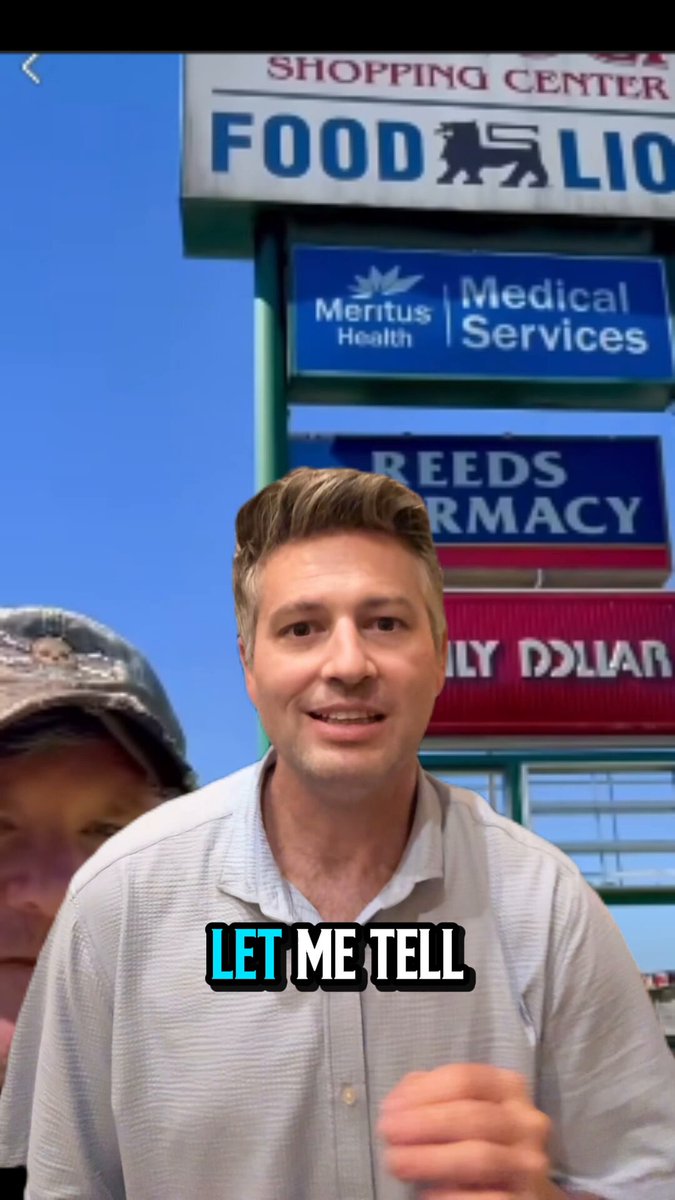
A pharmacy in Hancock, Maryland just closed its doors after 21 years. Their reason? "These PBMs are killing us." Let me show you exactly how that happens — because it's not what most people think. A pharmacist posted an audit on a prescription he filled back in December. Here's how these audits work: if the PBM finds *any* mistake, they don't dock you a little. They claw back the *entire* reimbursement. In this case, they claimed the doctor's address was missing from the prescription. An administrative detail. A paperwork technicality. So they took back $1,343. Here's the brutal part. The drug itself cost the pharmacy $1,337. The pharmacist had already bought it. Already filled it. The patient already walked out the door with it. The drug is gone. The script is filled. And the insurance middleman reaches back in time and reclaims virtually the entire amount — over a missing address. The upside on that prescription was $6. The downside was $1,337. That is the actual math of running a pharmacy that takes insurance. You risk thousands to earn pocket change, and a clerical nitpick months later can wipe out the entire transaction. Multiply that across a whole store and you understand why the lights go off. Meanwhile, UnitedHealth made $90 billion. Nobody — not one patient — wants their insurance company behaving like this. But I only know of one way to stop them. Fire the middleman. That's what we did. No PBMs. No insurance games. No surprise clawbacks months later. Just transparent cash pricing you can see before you ever walk in.
Forest Park Pharmacy10,320 görüntüleme • 2 ay önce

💊 The Hidden Cost of "Savings": Is Price Gouging Subsidizing Insurance Giants? Ever wondered why a generic medication that costs $55 can be priced at $6,600? 🤨 In a recent Congressional hearing, CVS CEO David Joyner defended this practice as "cross-subsidized pricing." 🔍 Here's the Breakdown: The Logic: Joyner argues that charging higher prices for low-cost generics helps subsidize the cost of expensive brand-name medications. The Reality: Pharmacy Benefit Managers (PBMs) use their power to negotiate rebates on brand-name drugs, which can actually increase their overall cost. The Shell Game: These rebates may be held by shell companies before being "passed on" to clients (like your employer), potentially hiding billions in profits. 📉 Is it Really "Savings"? When you're charged over $6,500 more than the actual cost of a drug, it's hard to see the "savings." This highlights a significant lack of transparency in the pharmaceutical supply chain. 💡 Take Action: Compare Prices: Don't just settle for the price at your local pharmacy. Check out Forest Park Pharmacy to see the real cost of your prescriptions. Stay Informed: Understand how PBMs and "cross-subsidized pricing" impact your healthcare costs. What do you think? Is this "cross-subsidized pricing" a necessary part of the system or just a way to hide profits? Let's discuss! 👇
Forest Park Pharmacy20,602 görüntüleme • 7 ay önce

🚨 SCANDAL IN TENNESSEE: How a PBM "Stole" $30,000,000 from Taxpayers 🚨 A bombshell audit by the Tennessee Department of Commerce and Insurance has just exposed the shady underbelly of Pharmacy Benefit Managers (PBMs). The target? Express Scripts. The findings are a wake-up call for anyone wondering why healthcare costs are spiraling while local pharmacies are disappearing. The Breakdown: 1. Favoritism & "Self-Dealing" 💊 The audit found that Express Scripts was paying its own pharmacies significantly more than independent ones for the exact same medications. Out of 2,318 drugs reviewed, Express Scripts played favorites on 568 of them. 2. The $30 Million "Spread" 💸 Ever heard of Spread Pricing? It’s when a PBM charges the state one price for a prescription but pays the pharmacy a much lower price—and pockets the difference. Tennessee was charged $30,000,000 in "spread" across 753,000 prescriptions. That’s an average of $40 per prescription "stolen" by the middleman. 3. Breaking Tennessee Law ⚖️ Tennessee law requires a minimum dispensing fee for low-volume pharmacies to keep them afloat. The audit found that in 100% of cases tested, Express Scripts failed to pay this fee. 4. A Broken Appeals Process 🚫 When pharmacies tried to appeal these violations, Express Scripts mismanaged the process 95% of the time. Essentially, they were the judge, jury, and executioner of their own rules. 📉 The Impact This isn't just about money—it's about the degradation of healthcare. When PBMs squeeze independent pharmacies and inflate costs, the patients and taxpayers are the ones who suffer. 💡 The Solution? The audit’s current recommendation? "Review your policies." (Yikes.) But there’s a better way. We are cutting out the middleman entirely to provide transparent, fair pricing that is often cheaper than using insurance. It’s time to fire the middleman.
Forest Park Pharmacy18,678 görüntüleme • 6 ay önce

Who doesn’t love a massive data dump—especially when it exposes how our tax dollars are being spent (or misspent)? 📉🇺🇸 The Department of Government Efficiency (DOGE) just open-sourced the largest Medicaid dataset in history. 🚪💸 🚩 The Red Flags Are Waving High As people dig into the data, some truly bizarre "providers" are coming to light. Here are a couple of the most eye-opening finds so far: The $76 Million Van: A sole proprietor operating out of a van in rural New Mexico billed Medicaid for $76 million over seven years. That’s an average of 1,000 claims every single day. 🚐💨 That's some serious "efficiency." The Apartment Pediatrician: A single pediatrician, practicing out of a residential apartment, has billed $70 million over the last seven years. They’re averaging 830 claims daily. 🏢👩⚕️ 💸 Why This Happens This level of obvious fraud only occurs when the person paying the bill is spending someone else’s money. When there’s no personal stake, the incentive to double-check the bill or ensure prices are competitive disappears. 🙈💰 At Forest Park Pharmacy, we know that when you spend your own money, every dollar counts. That’s why we’re committed to staying competitive and transparent with our pricing. 🤝
Forest Park Pharmacy16,770 görüntüleme • 6 ay önce

Is Tennessee Really Forcing CVS Out? 🏥 There’s a lot of buzz about Tennessee “forcing” CVS to shut its doors. CVS even sent out a letter to customers claiming a new proposed law would shut down all its pharmacy locations in the state. 📨 But what’s the real story? Let’s dive into what's happening and why things might not be as they seem. 🕵️♂️ The Law: SB 2040 📜 The law in question is SB 2040. While CVS claims it will shut down their stores, the bill’s actual goal is to regulate Pharmacy Benefit Managers (PBMs). 💊 What’s a PBM? 🏢 Think of a PBM as a middleman between insurance companies and pharmacies. They handle everything from negotiating drug prices to managing pharmacy networks. Why Is CVS Worried? 😟 The bill prohibits PBMs from owning, operating, or controlling pharmacies. 🛡️ CVS is one of the biggest PBMs in the country (through CVS Caremark). Under this law, they would have to choose: Keep their PBM business or their brick-and-mortar stores. 🏬 The Profit Puzzle 🧩 CVS makes a significant portion of its profit through its PBM and insurance (Aetna) arms. For them, it might be more profitable to shut down their physical stores than to give up their PBM business. 💰 This same threat was made in Arkansas, showing a pattern of prioritizing the middleman business over local pharmacies. 🚩 What’s Next? ⏳ SB 2040 is currently in the Senate Health and Welfare Committee. It’s still early days, but the pushback from major corporations like CVS shows just how much is at stake. 🏛️ Is this a bold step for pharmacy transparency, or a threat to patient access? Let us know what you think! 👇
Forest Park Pharmacy15,927 görüntüleme • 6 ay önce
Daha fazla içerik yok.