
Institute for Hispano Studies's banner
Institute for Hispano Studies's profile picture

Institute for Hispano Studies

@hispano_studies16,526 subscribers

Think tank for the study of Hispanic-Catholic Civilization & Pan-Iberian geopolitics 𓃓 𖤓 https://t.co/lKX5TfOI7L

Shorts

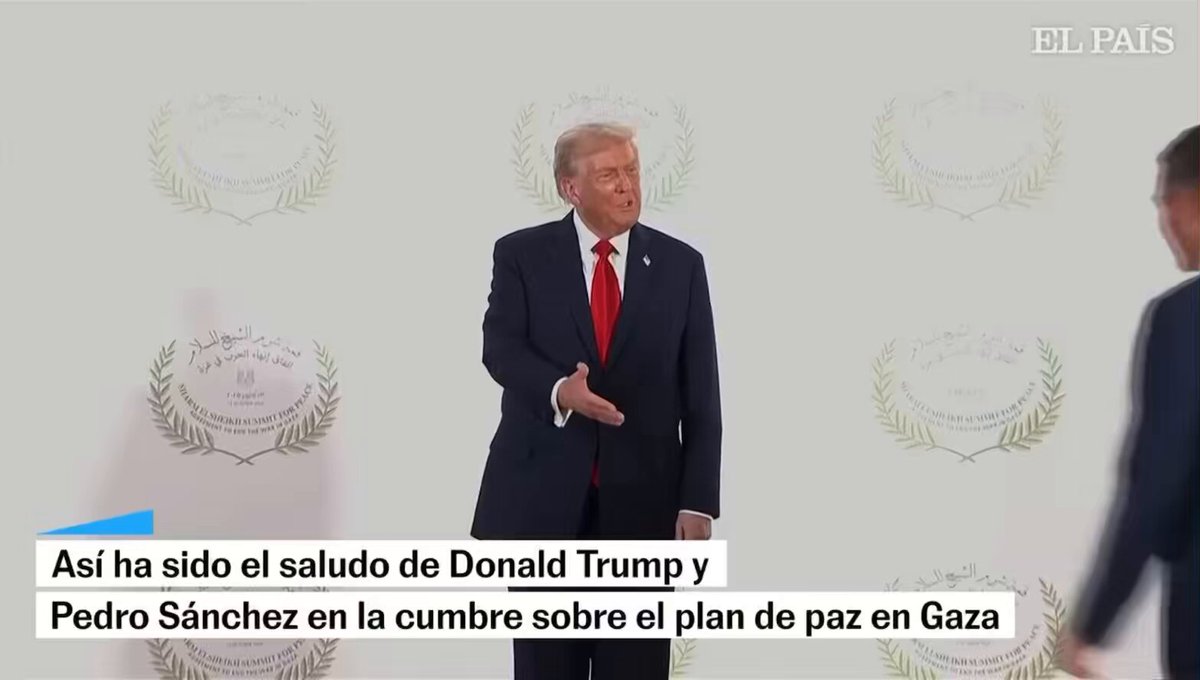
Trump still hasn’t recovered from that time Sanchez executed a flawless height-mog, jaw-mog, and frame-mog that relegated the entire US Empire to low-tier NPC status.

Trump still hasn’t recovered from that time Sanchez executed a flawless height-mog, jaw-mog, and frame-mog that relegated the entire US Empire to low-tier NPC status.

3,777,348 views

According to the Aztec Florentine Codex, mexicanness manifests itself through the vital life force called qingón, which is inherited patrilineally, meaning a child is only considered truly Mexican if their father is Mexican. Anyone who’s hung around Hispanics enough could tell Nick Fuentes has both a Mexican father and a Mexican grandfather, making him bien qingón. He’s simply too funny to not have that sauce in him. A true aryan could never. Their lack of qingón makes them qlero. IYKYK

According to the Aztec Florentine Codex, mexicanness manifests itself through the vital life force called qingón, which is inherited patrilineally, meaning a child is only considered truly Mexican if their father is Mexican. Anyone who’s hung around Hispanics enough could tell Nick Fuentes has both a Mexican father and a Mexican grandfather, making him bien qingón. He’s simply too funny to not have that sauce in him. A true aryan could never. Their lack of qingón makes them qlero. IYKYK

568,195 views

The U.S. teaches Plymouth as the “first Thanksgiving” in order to erase the older Hispanic-Catholic roots of America. St. Augustine held a Catholic Thanksgiving in 1565, fifty-six years before the Pilgrims. Yet acknowledging this would require admitting that America was not founded solely by Anglo Protestants. As a result, the Spanish story is buried and the Anglo myth is allowed to dominate. In their need to crown themselves the “true founders,” the Anglo-Protestant ruling class erased an entire Catholic civilization that arrived a century earlier and created the first cities, missions, legal systems, and the first documented Thanksgiving in 1565 at St. Augustine. This erasure was inevitable. Recognizing the Hispanic-Catholic foundations of the continent would destroy the fantasy of America as a pure Anglo Protestant creation. It would show that Iberian, Indigenous, and African peoples were not background characters but co-authors of the early American world, and the Anglo narrative cannot tolerate that reality. So instead of admitting the facts, including the truth that the first Thanksgiving was Catholic, Hispanic, and shared with the Timucua, they constructed a fake origin story: English settlers eat a meal in 1621 and suddenly become the spiritual architects of a continent they barely knew. In short: they rewrote history in order to replace the Hispanic-Catholic world with a self-serving ideological illusion. The Anglo narrative requires purity. The Hispanic narrative produces mixture. The Anglo story whitewashes Indigenous extermination. The Spanish story incorporates the native. The Anglo tale needs a Protestant creation myth. The Spanish New World legacy exposes that myth as thin and childish. This is why Plymouth is so fiercely protected. If the truth were ever acknowledged publicly, the entire Anglo Protestant self-image would collapse under its own weight, because the oldest American city was Catholic, Spanish, and mestizo.

The U.S. teaches Plymouth as the “first Thanksgiving” in order to erase the older Hispanic-Catholic roots of America. St. Augustine held a Catholic Thanksgiving in 1565, fifty-six years before the Pilgrims. Yet acknowledging this would require admitting that America was not founded solely by Anglo Protestants. As a result, the Spanish story is buried and the Anglo myth is allowed to dominate. In their need to crown themselves the “true founders,” the Anglo-Protestant ruling class erased an entire Catholic civilization that arrived a century earlier and created the first cities, missions, legal systems, and the first documented Thanksgiving in 1565 at St. Augustine. This erasure was inevitable. Recognizing the Hispanic-Catholic foundations of the continent would destroy the fantasy of America as a pure Anglo Protestant creation. It would show that Iberian, Indigenous, and African peoples were not background characters but co-authors of the early American world, and the Anglo narrative cannot tolerate that reality. So instead of admitting the facts, including the truth that the first Thanksgiving was Catholic, Hispanic, and shared with the Timucua, they constructed a fake origin story: English settlers eat a meal in 1621 and suddenly become the spiritual architects of a continent they barely knew. In short: they rewrote history in order to replace the Hispanic-Catholic world with a self-serving ideological illusion. The Anglo narrative requires purity. The Hispanic narrative produces mixture. The Anglo story whitewashes Indigenous extermination. The Spanish story incorporates the native. The Anglo tale needs a Protestant creation myth. The Spanish New World legacy exposes that myth as thin and childish. This is why Plymouth is so fiercely protected. If the truth were ever acknowledged publicly, the entire Anglo Protestant self-image would collapse under its own weight, because the oldest American city was Catholic, Spanish, and mestizo.

62,301 views

🔥Hermanos hispanos siempre unidos! 💪🏽🤠 🇲🇽🤝🏽🇬🇹

🔥Hermanos hispanos siempre unidos! 💪🏽🤠 🇲🇽🤝🏽🇬🇹

42,491 views

🔥Argentina knows how to get lit 🇦🇷🤝🇮🇷

🔥Argentina knows how to get lit 🇦🇷🤝🇮🇷

11,588 views

Videos

hispano_studies's profile picture

Indigenism is essentially New World Carlism And much like Carlism, it eventually degenerated into decolonial ethnat barbarism Indigenism can be read as a New World analogue to Carlism (and vice versa: Carlism as a peninsular indigenism) insofar as both defend inherited communal rights, local autonomy, customary law, and corporate privileges against the centralizing, secularizing, market-centric liberal state. Carlism defended fueros, local jurisdictions, Catholic social order, monarchy, and traditional corporate society against liberal constitutionalism, centralization, secularization, and bourgeois property relations. In Spanish America, many indigenous communities likewise defended usos y costumbres, communal landholding, local self-government, religious-customary authority, and the viceregal legal personality of the república de indios against liberal reforms that sought to dissolve corporate bodies into abstract individual citizenship and private property. The parallel is especially strong around: 1. Anti-centralism Carlists defended regional fueros against Madrid’s liberal centralism. Indigenous communities often defend municipal, communal, or ethnic autonomy against national capitals and liberal bureaucracies. 2. Corporate society versus liberal individualism Carlism belonged to a world of estates, corporations, privileges, churches, guilds, municipalities, and kingdoms. Indigenous communities also struggle to preserve collective legal personality: communal lands, communal office-holding, cargo systems, customary authority, and separate jurisdictional status— oftentimes armed with documents from the Viceroyalty (see Zapatismo & Neo-Zapatismo) 3. Tradition as political legitimacy Both could claim that legitimacy comes not from abstract universal rights alone, but from inherited law, custom, blood, religion, locality, and historical pact. 4. Resistance to bourgeois revolution Nineteenth-century liberalism in Spain and Spanish America often meant disentailment, privatization, secularization, codification, abolition of special jurisdictions, and expansion of capitalist property relations. Both Carlism and many indigenous movements resisted that transformation. Although indigenism generally represents a New World counter-liberal traditionalism structurally analogous to Carlism, it is also true that state indigenismo in Mexico or Peru could be modernizing, nationalist, socialist, developmentalist, and even anti-traditional in practice. It often wanted to incorporate indigenous people into the nation, not restore the old republic of Indians. Funny enough, this is what many complain happened to Carlism when it accepted Franco’s 1937 Unification Decree, consenting to modernization under a developmentalist “national-Catholic”/Falangist model. The tragedy of both movements is that the genuine kernel of their anti-liberal critique — the defense of communal life, inherited right, local sovereignty, and corporate personality against the dissolving acid of liberal-capitalist modernity — was eventually captured by something worse. Carlism curdled into ETA terrorism; indigenism curdled into ethnic nationalism, decolonial revanchism, and a new kind of identitarian essentialism that mistakes blood and grievance for political philosophy. In both cases, a legitimate resistance to bourgeois universalism ended by fetishizing particularity into a weapon. The lesson isn’t that the fuero-defenders and comuneros were wrong to resist, they often weren’t. It’s that corporate traditionalism, absent a genuinely universalizable political theory, has no immune system against romanticism. When the old hierarchical-Catholic or viceregal architecture collapsed, what remained was just the tribe. Carlism without God and King becomes Basque separatism. Indigenism without the república de indios becomes woke ethnic cleansing. The liberal they both opposed was wrong about man. But the thing they became forgot man entirely.

Institute for Hispano Studies

23,207 views • 14 days ago

🇲🇽Trotskyist Pancho Villa 👀
1:06

Sensitive content

This media may contain sensitive content.