
Institute for Hispano Studies
@hispano_studies • 16,526 subscribers
Think tank for the study of Hispanic-Catholic Civilization & Pan-Iberian geopolitics 𓃓 𖤓 https://t.co/lKX5TfOI7L
Shorts
Videos

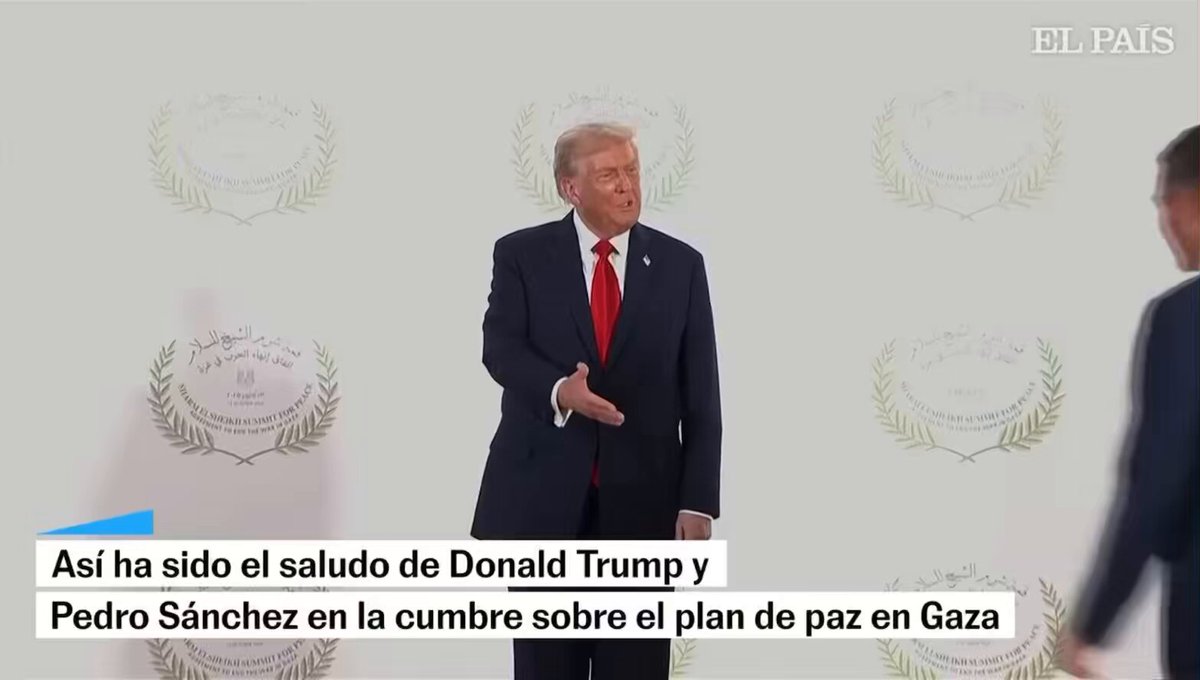
Trump: “We’re cutting off all trade with Spain!” 🇪🇸 Meanwhile Spain healing historical wounds:
Institute for Hispano Studies936,096 görüntüleme • 3 ay önce

🔥 WE ARE DEFENDING OUR 500 YEAR CIVILIZATION ✊🏽
Institute for Hispano Studies598,087 görüntüleme • 1 yıl önce

> Bad Bunny: “God bless America” > Proceeds to name all the countries of America
Hispanic American Studies205,566 görüntüleme • 3 ay önce

Indigenism is essentially New World Carlism And much like Carlism, it eventually degenerated into decolonial ethnat barbarism Indigenism can be read as a New World analogue to Carlism (and vice versa: Carlism as a peninsular indigenism) insofar as both defend inherited communal rights, local autonomy, customary law, and corporate privileges against the centralizing, secularizing, market-centric liberal state. Carlism defended fueros, local jurisdictions, Catholic social order, monarchy, and traditional corporate society against liberal constitutionalism, centralization, secularization, and bourgeois property relations. In Spanish America, many indigenous communities likewise defended usos y costumbres, communal landholding, local self-government, religious-customary authority, and the viceregal legal personality of the república de indios against liberal reforms that sought to dissolve corporate bodies into abstract individual citizenship and private property. The parallel is especially strong around: 1. Anti-centralism Carlists defended regional fueros against Madrid’s liberal centralism. Indigenous communities often defend municipal, communal, or ethnic autonomy against national capitals and liberal bureaucracies. 2. Corporate society versus liberal individualism Carlism belonged to a world of estates, corporations, privileges, churches, guilds, municipalities, and kingdoms. Indigenous communities also struggle to preserve collective legal personality: communal lands, communal office-holding, cargo systems, customary authority, and separate jurisdictional status— oftentimes armed with documents from the Viceroyalty (see Zapatismo & Neo-Zapatismo) 3. Tradition as political legitimacy Both could claim that legitimacy comes not from abstract universal rights alone, but from inherited law, custom, blood, religion, locality, and historical pact. 4. Resistance to bourgeois revolution Nineteenth-century liberalism in Spain and Spanish America often meant disentailment, privatization, secularization, codification, abolition of special jurisdictions, and expansion of capitalist property relations. Both Carlism and many indigenous movements resisted that transformation. Although indigenism generally represents a New World counter-liberal traditionalism structurally analogous to Carlism, it is also true that state indigenismo in Mexico or Peru could be modernizing, nationalist, socialist, developmentalist, and even anti-traditional in practice. It often wanted to incorporate indigenous people into the nation, not restore the old republic of Indians. Funny enough, this is what many complain happened to Carlism when it accepted Franco’s 1937 Unification Decree, consenting to modernization under a developmentalist “national-Catholic”/Falangist model. The tragedy of both movements is that the genuine kernel of their anti-liberal critique — the defense of communal life, inherited right, local sovereignty, and corporate personality against the dissolving acid of liberal-capitalist modernity — was eventually captured by something worse. Carlism curdled into ETA terrorism; indigenism curdled into ethnic nationalism, decolonial revanchism, and a new kind of identitarian essentialism that mistakes blood and grievance for political philosophy. In both cases, a legitimate resistance to bourgeois universalism ended by fetishizing particularity into a weapon. The lesson isn’t that the fuero-defenders and comuneros were wrong to resist, they often weren’t. It’s that corporate traditionalism, absent a genuinely universalizable political theory, has no immune system against romanticism. When the old hierarchical-Catholic or viceregal architecture collapsed, what remained was just the tribe. Carlism without God and King becomes Basque separatism. Indigenism without the república de indios becomes woke ethnic cleansing. The liberal they both opposed was wrong about man. But the thing they became forgot man entirely.
Institute for Hispano Studies23,207 görüntüleme • 14 gün önce

Watch this viral AI-slop video if you want to understand the mental poverty and broken self-esteem of the average Mexican. Erasing 300 years of the Viceroyalty of New Spain and the cultural mestizaje born within it and thanks to it is nothing but collective embarrassment toward: - our language (Spanish + the hundreds of languages protected by the missionaries + thousands of “indigenismos”) - our religion (apparition of the Virgen de Guadalupe, posadas, procesiones, Día de los Muertos, Sor Juana) - our music (mariachi, norteño, rancheras, cumbia, banda, corridos) - our food and drinks (tacos al pastor, chicharrones, carnitas, mezcal, tequila, chiles en nogada) - our history as the epicenter of the First Globalization (Galeón de Manila, silver dollar as the first global currency) - our art, architecture and urbanism (cathedrals, plazas, convents, fortresses, roads, Viceregal baroque, exvotos, muralismo) This isn’t liberation. It’s national nihilism. It’s shame at being Mexican.
Institute for Hispano Studies97,712 görüntüleme • 4 ay önce
1:06
Sensitive content
This media may contain sensitive content.

Trump: “We’re cutting off all trade with Spain!” 🇪🇸 Meanwhile Spain:
Hispanic American Studies62,491 görüntüleme • 3 ay önce

🔥The world can be burning and we’ll still dance if La Chona comes on! 🇸🇻🇲🇽🇬🇹🇭🇳
Institute for Hispano Studies134,204 görüntüleme • 1 yıl önce

🔥 Protesting is good but JOINING AN ORG IS BETTER! ¡Organícense hermanos!
Hispanic American Studies113,119 görüntüleme • 1 yıl önce

Hugo Chávez hyping up Muammar Gaddafi is 100% the coolest thing you will watch today
Hispanic American Studies43,156 görüntüleme • 7 ay önce

🇺🇸🇪🇸🇲🇽 Some of y’all really need a basic history lesson 🐎
Institute for Hispano Studies17,354 görüntüleme • 3 ay önce

Prof. Alexander Dugin lays it out clearly in his conversation with Rafael Correa: the future of the Hispanic world lies in a united civilizational bloc — the path already sketched by Getúlio Vargas, Juan Domingo Perón and Hugo Chávez. "Latin America, or Ibero-America, as Alberto Buela calls it, will be able to defend its sovereignty only by uniting into a single large space. The same Buela calls it the "Latin ekumen." This was the opinion of Hugo Chavez, with whom Carea was close, but at the same time General Peron and Jetulio Vargas, who were far from leftist views. The most important thing is to free the Latin American left from the corrupting influence of the globalist Soros and the toxic Democratic Party of the United States. And the Latin American right is influenced by the neo-Cons. A left-right alliance of Latin American powers is needed in the name of multipolarity and a large space. This is the only way to make Latin America truly free, as Bolivar and Saint Martin dreamed of. A new round of decolonization is needed - and above all, the decolonization of Latin American consciousness. Latin American civilization belongs to the future. It has yet to be created." Source:
Hispanic American Studies26,868 görüntüleme • 6 ay önce

When a gringo says “Latin” America Immediately me:
Hispanic American Studies31,574 görüntüleme • 1 yıl önce