
Neil Patel
@neilpatel • 478,179 subscribers
Founder of @NPDigital. New York Times bestselling author, Forbes top 10 marketer, and creator of 1 of the 100 most brilliant companies by Entrepreneur Magazine.
Videos
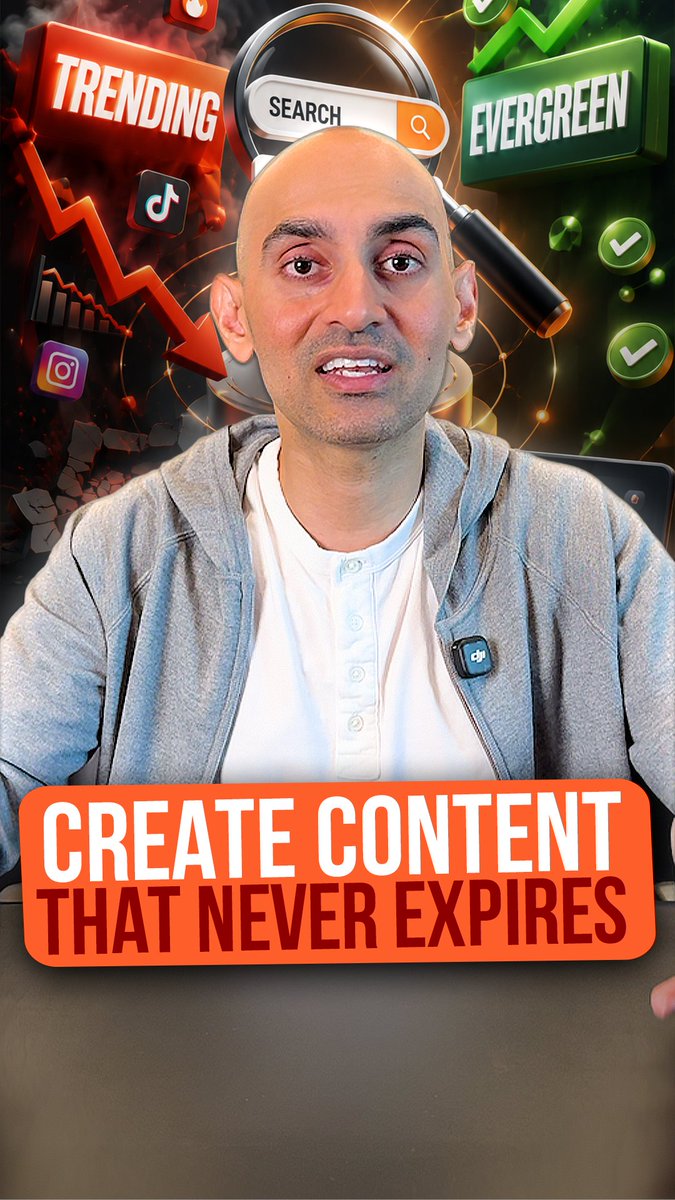
Your social posts used to die in 48 hours. But Google… just changed everything. Now you can connect your social media profiles with your Google Search Console, just like you do with your website, you can see which posts show up in Google, which keywords they rank for, and how many clicks they drive. And that flips the entire ROI of social content. Because a post in your social feeds peaked in a day or two. Then it's gone. But then that same post ranking in Google can keep working for months. And the thing is Instagram content has been indexed in search for about a year now. But you just couldn't measure any of it. Now you can. So I’m telling all clients to create content around questions people are actually typing into Google. I use AnswerThePublic for this. Type in your topic, and it shows every question your audience is asking. Then answer one question in every piece of content you create. Because now, every post has the potential to become more than a social post. It can become a measurable search asset that keeps bringing you attention, traffic, and customers long after you publish it.
Neil Patel93,558 просмотров • 1 месяц назад

Everyone argues about whether AI content works. We tested it at scale instead. We published 744 articles across 68 real websites. Half went live exactly as the AI wrote them. The other half got one 20 minute step first, and it produced 444% more traffic. In this video I show you that step, why Google can tell your content is AI even when your readers can't, and the rule we now run at NP Digital: AI writes the draft, humans make it worth ranking.
Neil Patel32,453 просмотров • 18 дней назад
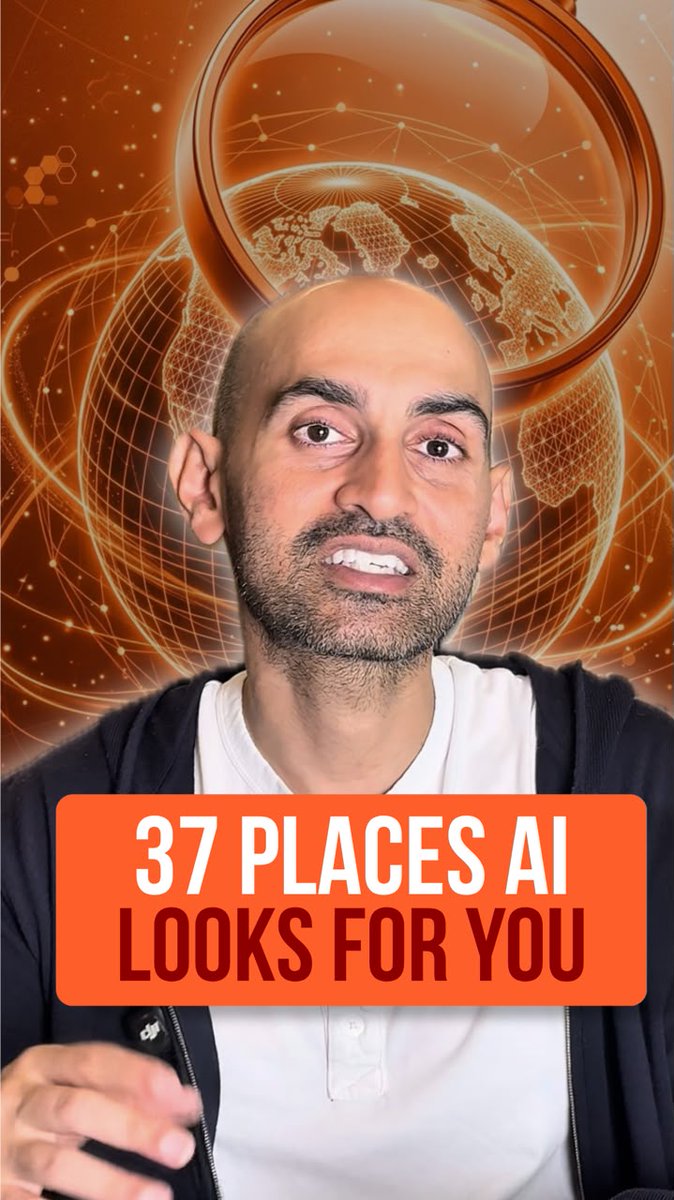
Here's what nobody tells you about AI search. Before it recommends your business, it checks Google Reviews, Yelp, Trustpilot, Reddit threads, podcast transcripts, and 30-plus other places you don't control. Your site is one vote. The other 36 are the reviews, mentions, and listings you've been ignoring. That's the whole game now. #AIMarketing #SEO #FutureOfSearch #OnlineReputation #NeilPatel
Neil Patel16,513 просмотров • 11 дней назад

You can rank #1 on Google and still lose more than half your clicks. Most brands haven't noticed yet. For 25 years the internet ran on one deal: you give Google your content, Google sends you traffic. That deal is breaking. Our data shows organic click through rates falling by as much as 61%, top ranking pages down 58% in the 2026 update, and zero click behavior climbing from 53% to 72%. In this video, I break down the exact four step machine Google now uses to turn your best work into one AI answer, why your visibility can keep rising while your traffic falls, and the four assets no platform can ever take from you. This is the same shift my team at NP Digital is helping brands adapt to as search moves from clicks to AI answers. If your strategy still assumes 2024 click behavior, this is where to start. If you'd rather have us adapt your full strategy across SEO, AI search, content, and paid media, that's what we do at
Neil Patel10,375 просмотров • 11 дней назад

Someone calls a local business at 2AM with water coming through the roof. If nobody answers, they dial the next company on the list. Whoever picks up first wins the job. That's the gap AI can fill, but only if you can tell a real AI employee from a toy with a good vocabulary. In this video I break down the one distinction that matters, the three parts every real one is built from, and the two jobs you should never hand a machine. The platform I'm using to show you this is my partners at HighLevel, where a business's calls, texts, calendar, and customer lists all live in one place:
Neil Patel11,007 просмотров • 14 дней назад
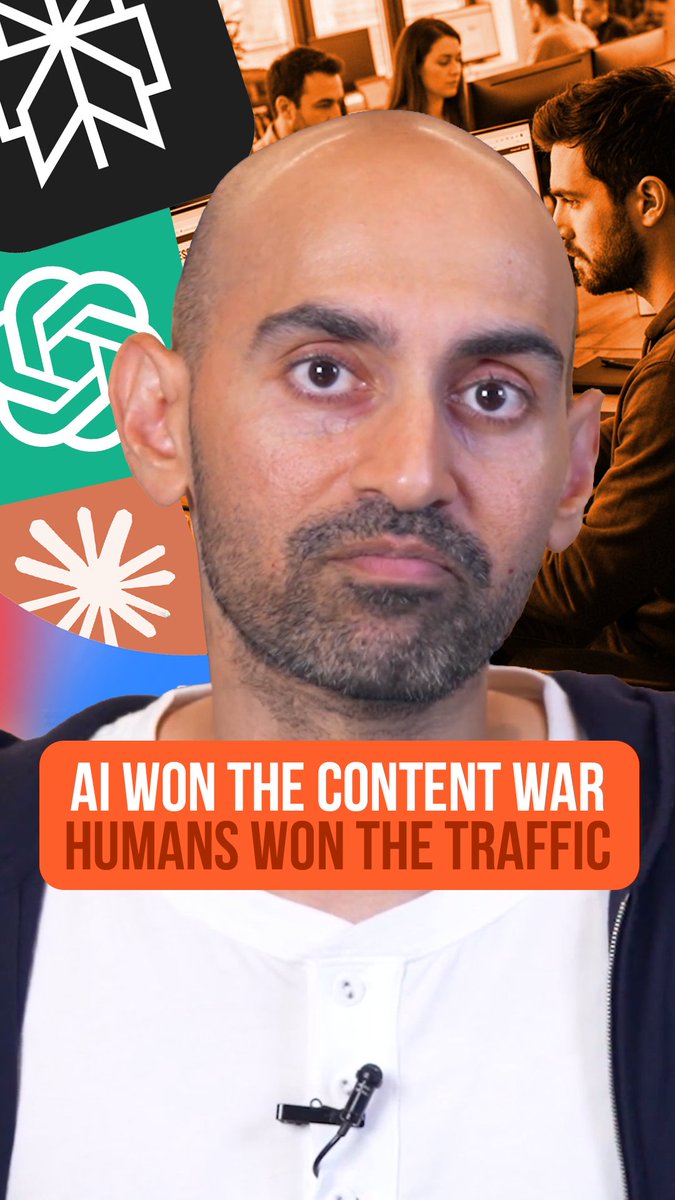
AI now writes 52.1% of all new content. It earns 4.9% of the organic traffic. Read that again. The production war is over, and the winner walked away with a 20th of the reward. Human content is down to 14.5% of what gets published and it's pulling 87% of the traffic. Volume was never the moat. #SEO #AIContent #ContentStrategy #DigitalMarketing
Neil Patel11,214 просмотров • 15 дней назад
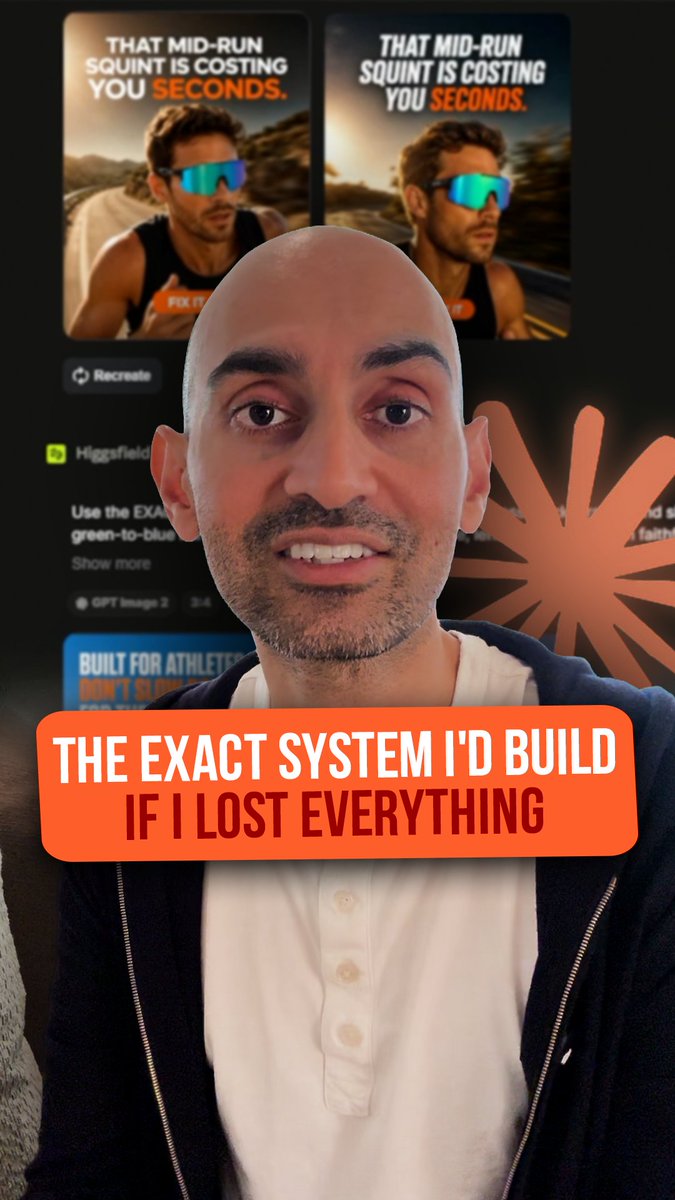
If I had to start from zero tomorrow and bring in new customers fast, here's exactly what I'd build. Top to bottom. I'd start with the ad. Open ChatGPT or Claude, paste in what you sell and who you sell it to, ask it to write you ten different hooks for a Meta ad. Pick the best three. Then jump into or one of the AI video tools and have it generate the visual. Thirty minutes, you've got a real ad ready to run. You run that ad to one landing page. Not your homepage. One page, one offer, one call to action. Headline that stops the scroll, a few lines of value, an email or phone field, a button. That's it. Build it in HighLevel in about twenty minutes, drag, drop, you're done. The second someone enters their email, they drop into your CRM, automatically tagged with where they came from. Now the part most people skip, the follow-up. The moment that form is filled, a sequence kicks off automatically. Email and SMS, spaced over five to seven days. First message thanks them and delivers what you promised. Then a story. Then social proof. Then an objection you know they have. Then the offer. They don't have to think about you. You're showing up in their inbox and their texts at exactly the right time. The last message has a calendar link or a buy button right inside it. They tap, they book, or they buy. Done. The whole flow runs on its own from the ad all the way to the sale. You build it once. It works while you're sleeping. AI does the creative work. The system runs the customer journey. You spend your time on strategy. That's the play.
Neil Patel39,323 просмотров • 2 месяцев назад

Someone finds a local business online and reaches out to book an appointment, request a quote, or ask a question. If nobody responds, they may move on to a competitor. That missed lead is a problem you can get paid to solve. In this video, I build the entire system from scratch: how to find the right market, build a website with AI, capture leads, follow up automatically, and track what is working, all in one place. Then I show you what to charge for it. This is the setup I would build if I were starting a marketing agency today. I’m a partner with HighLevel, and I’m using their platform to build it. Whether you want to work with dentists, gyms, salons, home service companies, or other local businesses, you can adapt this system to help them turn more inquiries into customers. Get the snapshot, the free course, and a 30-day trial through my HighLevel partner link:
Neil Patel11,415 просмотров • 18 дней назад
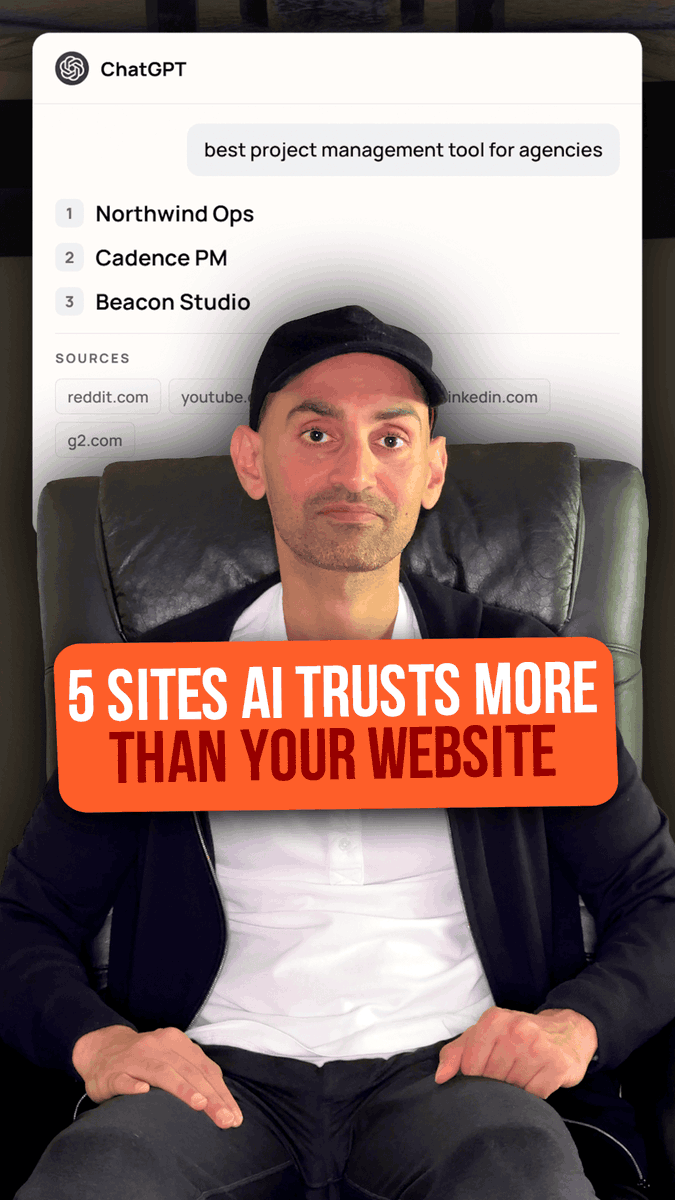
If you want ChatGPT to recommend your business, you need to be on the websites it trusts. My team ranked all of them and #1 is a site most marketers ignore. #5 G2. AI treats verified reviews as proof you're actually good. No reviews, no recommendation. #4 LinkedIn. Your posts there carry more weight with AI than your own website does. #3 Wikipedia. Neutral and boring which is exactly why AI believes it. Now the top two and neither one is a publication. #2 YouTube. AI reads every transcript. Every video you post is a document telling it what you're an expert in. And #1... Reddit. An anonymous forum beats every brand website on earth. Because AI doesn't trust what companies say about themselves, it trusts what strangers say when nobody's selling. Comment "CITED" for my AI visibility playbook.
Neil Patel19,944 просмотров • 1 месяц назад

Spirit Airlines stopped flying in May. Second bankruptcy in two years. Yet Google still wants to pay $10Million for the dead body. The planes are gone, the airport slots are sold. One asset left. At the bankruptcy auction, Google opened at 5 million dollars. An AI data company called Mercor countered at 7 and a half million. Then Google closed it at 10 Million. But the bids weren't for the planes or Airport slots. They were for 100 million internal emails. 500 million Teams messages. 30 million lines of code. Employee records that go back to 1986. And no, its not passenger data. This is purely internal: decades of how a real business thought, argued, and made decisions. Why pay that much for a dead company's inbox? Because it's the one thing AI can't fake. The most valuable data in the world right now is just real people thinking out loud… real decisions, real mistakes, real cause and effect. Which is why after the auction closed, another AI company came in with a 12 and a half million offer for it. Here's how you can leverage this kind of data for your business without a bankruptcy auction. People type their real, unfiltered questions into a search bar every single day… for free. And for business owners, those raw questions are a free roadmap: they tell you exactly what to create, what to fix on your site, and what to sell next. Tools like AnswerThePublic mine and present that exact data by looking at the different ways people search for a product. The AI data gold rush is just getting started, follow to not miss out!
Neil Patel12,729 просмотров • 22 дней назад
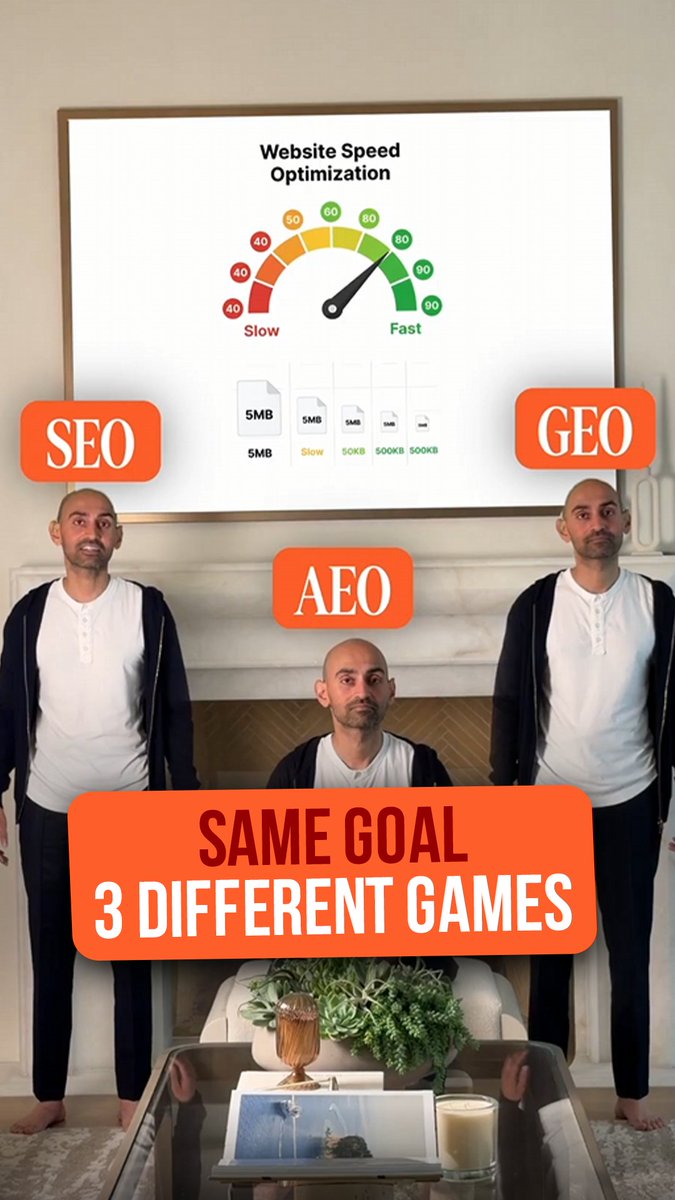
SEO, AEO, GEO. Same goal, three different games. SEO gets your book on the front shelf where people can find it, winning on Google and Bing. AEO is the kid the teacher calls on, showing up in "People Also Ask" boxes and voice assistants like Siri. GEO is the teacher writing your name next to the answer, appearing in ChatGPT, Perplexity, and AI Overviews. Master all three and you're everywhere your audience is searching. Want the one tool I use to manage all three? Comment "MARKETING" and I'll send it your way.
Neil Patel17,764 просмотров • 1 месяц назад

Google AI Mode just flipped the entire SEO playbook, and most marketers are still playing a game that no longer exists. The brands winning right now aren't the ones with the best SEO tactics. They're the ones building authority that AI systems recognize and trust across every platform where people search.
Neil Patel73,365 просмотров • 6 месяцев назад

Marketing feels complicated. Funnels, algorithms, SEO, ads, AI tools. It seems like you need to learn 20 things before you're even allowed to start. But after a decade managing over $1 billion in marketing spend, I can tell you it really comes down to three things. In this video I teach marketing from scratch: how to get found where your customers are actually searching, why "click the link in my bio" is quietly costing you sales, and the kind of proof that makes someone actually pull out their wallet and pay you. This is the same approach my team at NP Digital uses to help some of the biggest brands in the world grow.
Neil Patel16,348 просмотров • 1 месяц назад

For 20 years, step one of SEO was the same: open a keyword tool, find volume, chase it. I don't start there anymore, and the order is now worth billions. In this video, I break down Audience-First SEO, the strategy the head of my SEO team, Nikki Lam, built. I show you why we ignored a segment with 2.7 million monthly searches, the three moves you can run yourself, and the real numbers from a program where the client's highest value segment beat its entire previous year of organic leads in six months. This is the same process my agency runs for brands as search fragments across Google, AI answers, and social. If you are growing traffic every month but the wrong people keep showing up, this is where to start.
Neil Patel13,502 просмотров • 1 месяц назад
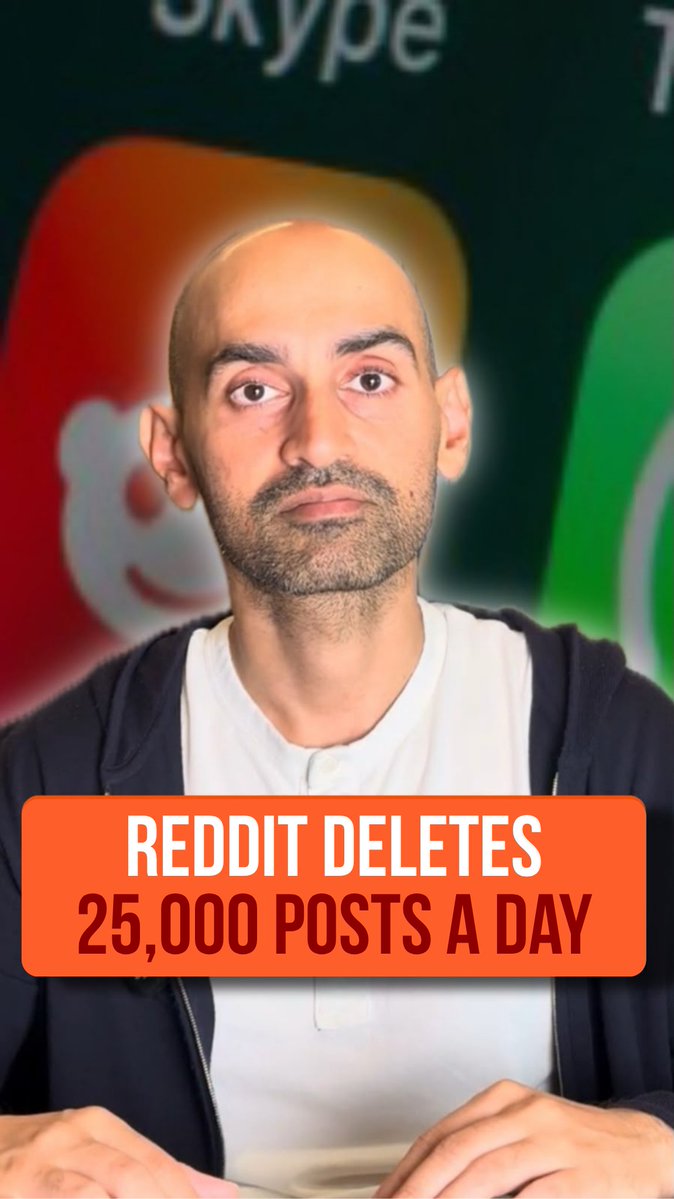
Reddit is deleting 25,000 posts a day. Most of them aren't spam bots. They're brands. This July, Reddit said it's now catching around 25,000 spammy posts and comments a day, using its own AI. Here's the part that matters: a lot of it isn't random spam. It's stealth marketing, content designed to look organic, built specifically to get a brand mentioned inside ChatGPT or Gemini. Reddit has content deals with OpenAI and Google. Those AI tools pull real answers from real Reddit threads. So if you can fake a thread, you can quietly plant your brand inside millions of AI answers. Reddit's response: new accounts get reviewed on creation, bots have to verify they're not human, and the platform now hunts for what it calls "coordinated patterns of fake behavior" the old systems missed. That's the AI slop cannon in the wild. Mass output, zero judgment, trying to force scale instead of earning it. And it's getting caught. So, what should you do with these changes on Reddit? I would actually tell you to not focus as much on Reddit, even though they have deals with both Open AI and Google. See, to really do well on Reddit, you need to network with other users. You need to provide a lot of helpful insights to people, and you can't really self-promote. The easier solution to get included both into Gemini and ChatGPT is actually to focus on LinkedIn. If you post content on LinkedIn, it's getting pulled heavily into both of these platforms. You control it cuz it's your own profiles. You also have people who work with you. They also can post. But here's the key. LinkedIn can now detect if the content being posted on your profile page is created through AI. If you create the content through AI, it only gets shown to your followers. If you create the content using your own words and typing it out manually and not using AI, it can get shown to your followers plus more. So the goal here is for you to now create content and publish it more on LinkedIn and switch your strategy to a LinkedIn first strategy over Reddit because even though Reddit works, it is going to be much more harder for you to penetrate. If you want to focus on Reddit, it's all about being helpful. Think of karma. The more you help people, the better off you're going to do.
Neil Patel12,876 просмотров • 1 месяц назад
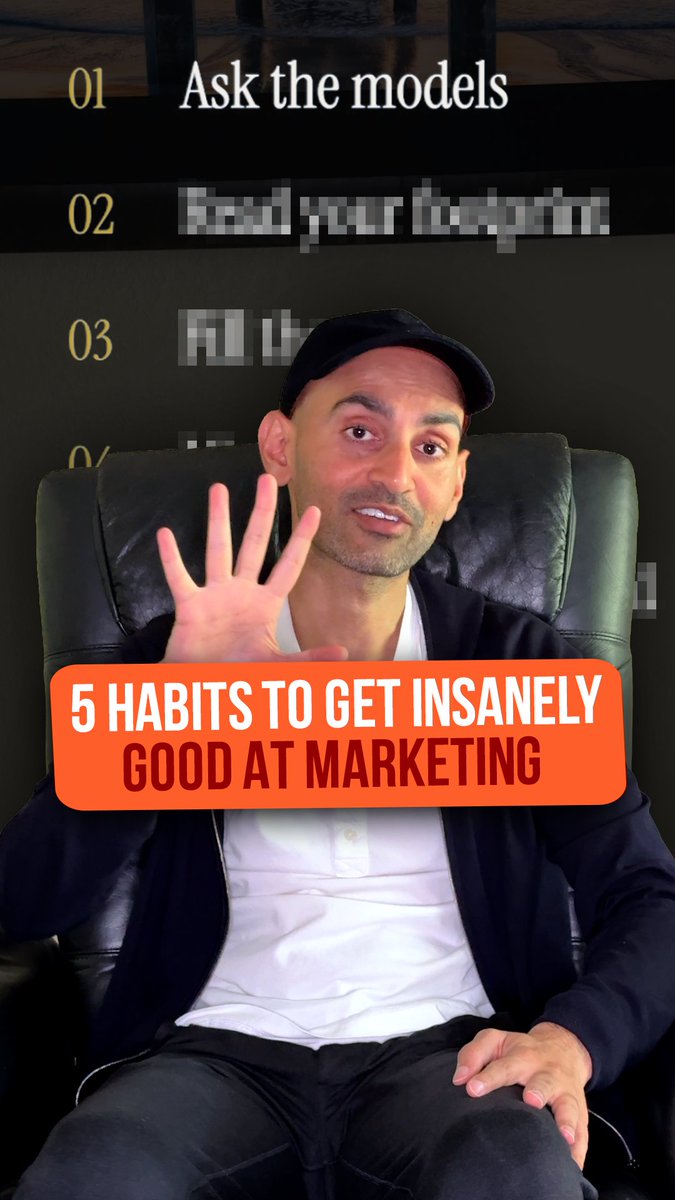
5 Habits To Get Insanely Good At Marketing 1. Asking ChatGPT, Gemini and Google's AI Overview about your own topic to see if you show up, or if a competitor does. 2. Checking your digital footprint on Google Search Console queries to see exactly which words bring people to you, and which ones you're almost ranking for. 3. Running a content gap analysis by seeing what gets your competitor visible instead of you and filling the gap. 4. Mine Google's autocomplete suggestions for your service and use the keywords with the highest search intent or other words, those used by customers who will immediately buy. 5. Manufacture the demand yourself. Run content and ads that make people search your brand next to the keyword you want to own. Google reads that rising volume as proof and starts pairing you with it. Comment "ATP" for details on the niche tool I use!
Neil Patel14,033 просмотров • 1 месяц назад

Most marketers think the Gemini vs ChatGPT debate is about which AI writes better copy. It’s not. This is a platform war, not a chatbot comparison—and the decision you make now affects cost, speed, leverage, and long-term growth. In this video, I break down why Google Gemini has structural advantages OpenAI ChatGPT can’t easily replicate: decades of search and behavioral data, native distribution across Search, YouTube, Ads, and Workspace, proprietary TPU hardware, and the ability to subsidize AI pricing to protect Google’s ecosystem.
Neil Patel62,915 просмотров • 9 месяцев назад

I've been watching organic traffic drop across hundreds of client accounts while rankings stay perfectly stable, and I need to tell you exactly what's happening and why it won't reverse. Google is not broken. Google is doing this on purpose because ChatGPT and other AI systems forced them to keep users on the search results page instead of sending them to yours. The new game is not about ranking number one. It's about being cited inside AI-generated answers on Google, ChatGPT, Perplexity, and Gemini, and the brands winning that game built their presence across the entire internet, not just their own website. If you are still reporting keyword rankings to your executive team, you are measuring a game that already ended.
Neil Patel32,349 просмотров • 4 месяцев назад

Your customers aren't searching in just one place anymore. They're on Google, TikTok, Reddit, YouTube, and asking ChatGPT directly. In this video, discover why ranking #1 on Google means almost nothing today, and how the brands winning in 2026 are showing up as one answer everywhere your buyer actually searches.
Neil Patel14,260 просмотров • 1 месяц назад
Google just turned every TikTok, Instagram Reel, and YouTube Short into part of your SEO strategy. Google Search Console can now show you which searches lead people to your social posts, along with clicks, impressions, and average search position. So your video doesn’t have to disappear after two days in the feed. It can keep getting discovered when someone searches for that topic on Google. But there’s a catch. More searchable content also means more average content. So don’t start by asking AI for 50 random ideas. Start with real demand. Go to AnswerThePublic, type in the topic you want to be known for, and look at the questions people are already searching. Let’s say you search “losing weight.” You might see: “Why am I not losing weight?” “Can one cheat day ruin my progress?” “Why do I gain weight on the weekends?” The average video says, “Eat less and exercise more.” But now you can use AI as a thought partner to connect the dots and find a sharper angle: “You’re not failing during the week. You’re undoing it every weekend.” That’s the difference. Find the demand. Add the angle. Make the best answer on the internet.
Neil Patel16,427 просмотров • 1 месяц назад