正在加载视频...

视频加载失败

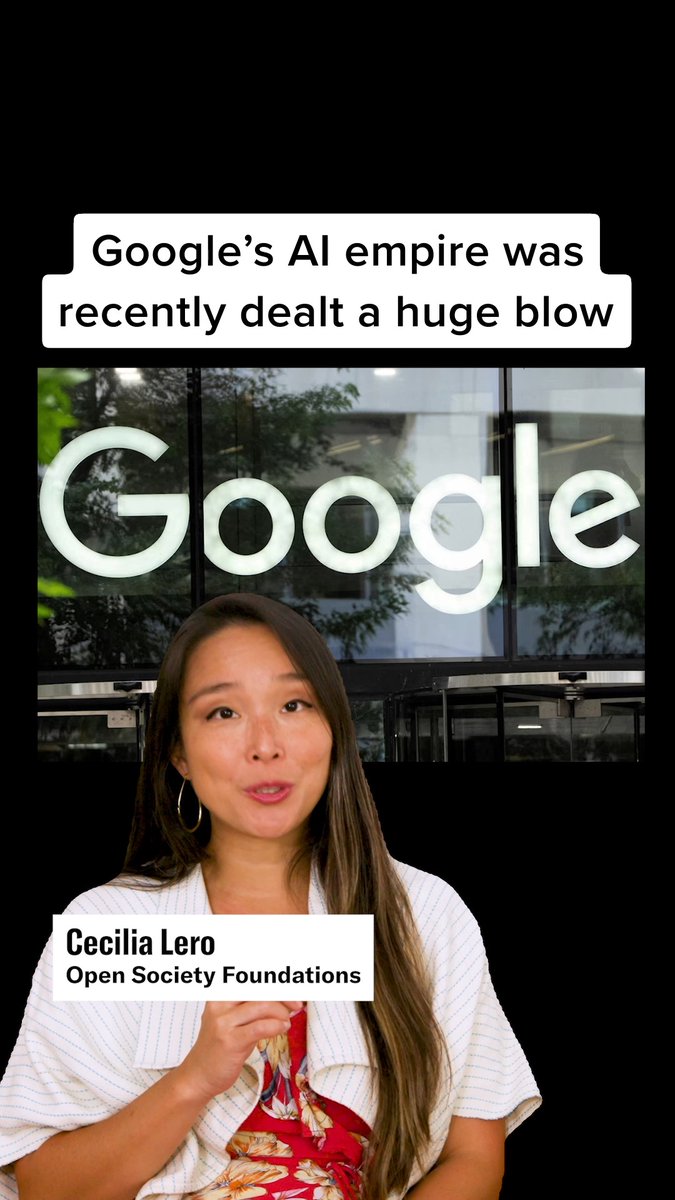
Google just started paying websites when its AI uses their content. It's a pilot inside Search Console. About a hundred publishers so far. It covers AI Overviews, AI Mode and Gemini. But read the fine print. It only pays when your content "contributes significantly" to the answer. If the...

11,170 次观看 • 12 天前 •via X (Twitter)

14 条评论

Spencer Duke 的头像
Spencer Duke12 天前

"contributes significantly" is doing a lot of work in that sentence

Ajayi Ayomide Precious 的头像
Ajayi Ayomide Precious12 天前

Ai is really taking over the internet space but I would like to ask you a question? Is AI a competition to Google

serx · fireply.ai 的头像
serx · fireply.ai12 天前

how do they even measure contribution to a generated answer. that's the part i'd want to see

The Agentic Operator 的头像
The Agentic Operator11 天前

“content that shapes the answer vs content that gets mentioned.” that’s the line most brands miss. google literally defined the tiers..... if AI can answer without you, you don’t matter. same logic across every engine. be the content AI can’t skip, not the content it links to as a courtesy.

Jason Steele 🇺🇸🇵🇭 | AI Mogul 的头像
Jason Steele 🇺🇸🇵🇭 | AI Mogul12 天前

Right point. Generic content gets ignored now. Original data and a clear position are what get cited.

Al 的头像
Al12 天前

The hard part will be proving "contributes significantly", since Search Console still folds AI Mode clicks into the normal Web report.

Mauricio Rodriguez | SEO 的头像
Mauricio Rodriguez | SEO12 天前

The "contributes significantly" bar is the interesting part: links and fact-checks don't count, original data and clear answers do. Same thing that already decides who gets cited in AI answers.

Vishal Mehta 的头像
Vishal Mehta11 天前

These is the major shift for advertiser and marketers to think twice importance of having present in AI mode

Ryan Oprea 的头像
Ryan Oprea12 天前

Really annoying when wanting to search for answers on Google, AI pops out Soon enough, you'll have to pay a premium to use Google on its' standard version lol

Hossam Gheith | CMO Scaling Revenue 的头像
Hossam Gheith | CMO Scaling Revenue11 天前

wild shift. if AI pays sites for content, the brands with original data and real opinions win, not the ones recycling listicles. time to publish stuff only u can say

Swagat Sarma 的头像
Swagat Sarma11 天前

How can one get access to this?

CiteOS 的头像
CiteOS11 天前

original data is the hardest content to copy, so it holds up better in AI answers

Ryan M Craver 的头像
Ryan M Craver11 天前

8% vs 15% CTR is the real story, not the cheque. Same lesson on Amazon: Rufus pulls from reviews, Q&A and detail pages. Brands with thin, copy-paste content won't shape the answer, on Google or on the digital shelf.

Kam Hossieny | CRO 的头像
Kam Hossieny | CRO11 天前

original insights and data are becoming essential, because being cited is different from actually shaping the answer and earning attention
相关视频

Google is making $62 billion a quarter destroying the websites it NEEDS to survive. This is literally a death spiral that ends with Google killing itself. Let me explain what's going on... Google added AI summaries to the top of every search result in 2024. When you Google something now, the answer sits right there on Google's page. You never have to click anywhere. Google took the information from someone else's website, summarized it, and kept you inside Google's ecosystem. The result: 60% of all Google searches now end without a single click to any website. Small publishers lost 60% of their traffic in one year. Medium publishers lost 47%. Even the biggest names in media, the New York Times, the Washington Post, Business Insider, all saw traffic fall between 22% and 55%. The Axios CEO called it "a referral extinction event for the ad-supported web." Google's response to all of this was to tell publishers they can "opt out" of having their content summarized. But opting out also REMOVES your description from normal search results. So the choice Google gives you is let us steal your content for free, or become invisible on the internet. That's extortion. The Washington Post laid off another round of journalists this year because of it. Stereogum, one of the most respected music publications on the internet, had to BEG readers for donations. Business Insider cut 21% of its staff. Dozens of smaller publishers have shut down entirely. The people who actually CREATE the information Google summarizes are going bankrupt while Google posts record revenue. But here's where this gets interesting and where everyone stops thinking: Google's AI summaries are only as good as the content they summarize. If the publishers who write the original articles, run the original investigations, and create the original data go out of business, there is nothing left for Google to summarize. The AI starts recycling old information, the answers get stale, the quality drops, and users start noticing that Google's summaries are increasingly wrong, outdated, or useless. Google is essentially strip-mining the internet for short-term revenue. They are extracting all the value from content creators without paying for it, driving those creators out of business, and then wondering why the quality of their own product is declining. This is exactly what Napster did to the music industry in the early 2000s: Made content free, creators went broke, and quality collapsed. It took a decade to rebuild. Google is doing the same thing to the entire internet at 100x the scale. Rolling Stone, Variety, Deadline, The Hollywood Reporter, and Billboard are now suing Google for antitrust violations. Chegg, the education platform, lost 49% of its traffic and is suing too. The UK's competition authority just ordered Google to let publishers opt out without being punished. The DOJ already ruled Google is an illegal monopoly. And Google's defense in court is genuinely unbelievable. They argue that publishers CHOOSE to let Google index their content and can leave anytime they want. That's like saying you choose to pay protection money to the mob because technically you could close your business and move to another city. Google controls 90% of search. Leaving Google means leaving the internet. Meanwhile Google is investing billions in custom AI chips to make these summaries cheaper at scale. Every quarter the problem gets worse. The internet as we've known it for 25 years ran on a simple deal: Publishers make content. Google sends traffic. Advertisers pay for the traffic. Everyone wins. But Google just BROKE that deal and kept all the money.

Ricardo

251,284 次观看 • 6 个月前

Google just burned $9 billion in a single quarter, and the plan to pay for it runs through people's Gmail. Google's AI is answering more questions than ever and making less money on each one. I only see one way to close that gap, and it's knowing a lot more about the person asking. Sundar Pichai says search queries are growing at the fastest rate in 5 years. But search revenue was $63.35 billion this quarter, against $63.27 billion the quarter before. People are searching more than ever, and Google is barely making more from it. Search growth has gone from 19% to 17% to 12% this year, and Google named lower monetization inside AI Mode as one of the reasons. Meanwhile the bills keep piling up: - Google spent $51.4 billion on capex in the quarter, more than double a year ago. - Free cash flow came in at minus $9.07 billion, after minus $5.86 billion in the second quarter. - Before this year, Google had never posted a negative free cash flow quarter in 22 years as a public company. - Through 9 months, it's at minus $4.8 billion. At the same point last year, it was plus $48.7 billion. So Google's answer is more ads inside the AI. Philipp Schindler, its business chief, said Google is scaling ads in AI Overviews and AI Mode to more users and queries, and taking AI Mode ads global for the first time. But here's what matters: On October 16, Google rewrote a privacy promise it had kept since 2021. The policy used to say Google doesn't personalize ads based on Gmail, Drive, or Photos. Now that sentence ends with an exception for anyone who makes that data available to other Google services that support personalized ads. That covers everyone who connects Gmail or Photos to Google's AI. Google's help page says ads won't be based directly on the inbox, but the AI can pull summaries, excerpts, and inferences from it, and that same information can be used to show ads. And Google is now testing ads for exactly those users, after saying in March they didn't see any. AI Mode questions are about 3 times longer than normal searches. People tell an AI far more than they ever typed into a search box. So the product that earns Google less per question is also the one that learns the most about the person asking. Google stopped scanning Gmail for ads in 2017 to win over business customers. 9 years later, its AI found a way back in. The other side has a real case: Google Cloud more than doubled to $30.7 billion with a 36% margin, and plenty of investors think that pays for everything. Personal Intelligence is opt-in, advertisers never see anyone's email, and Google says it excludes sensitive categories like health from ad targeting. But the people who connected Gmail signed up for an assistant, and the policy describes no separate consent for ads. If Google wants to keep that trust, it should do 3 things: It should ask separately before anything from Gmail or Photos touches an ad. It should delete what the AI took from an inbox when someone disconnects it, because right now disconnecting doesn't delete data Google already holds. And it should report how much ad revenue comes from AI Mode, so investors can see whether the AI is paying for itself. Google spent 9 years telling people their inbox was off-limits for ads, and its AI just made it fair game again.

Ricardo

34,671 次观看 • 17 天前

MCP explained in one drawing: how your AI gets inside your apps (Claude, n8n, Gmail) Here's how your AI actually gets inside your apps. It's called MCP, and it fits in one drawing. On its own, an AI is a brain in a box. It can talk and think, but it can't open your email or build anything in n8n. It has no hands. 1. The door is the API. Most apps have a door for other software: Gmail has one, GitHub has one, n8n has one. Every door is a different shape, with its own rules and its own key. 2. The plug is MCP. It's one standard shape. On one side is the AI. On the other side is a small program called an MCP server, one per app, and it knows that app's door. The AI plugs in, and the server does the walking through the door. 3. The menu is the list of tools. When the AI plugs in, it sees every tool the app offers, in plain words. Gmail's server offers create a draft, search mail and read a message. n8n's server offers list workflows, create a workflow and test it. The AI reads the list like a menu, picks a tool and calls it. That's how Claude builds a whole workflow inside n8n, node by node, and checks its own work, while you never open n8n. 4. Connecting one takes one sentence. In Claude Code, say: "Connect yourself to my n8n, here's the address and a key I made just for you." Claude writes a small settings file with the server's name and the key. Type /mcp and it says connected. That's the setup for most apps. Some, like Gmail, you just sign in to instead. 5. The key is the important part. An MCP server can only use the tools on its menu, and only as far as its key allows. So make a key that can do the job and nothing more. If the app lets you limit a key, make it read only when reading is all you need. If it doesn't, use a test account. And if a key ever leaks, cancel it inside the app. One click, and nobody can use it, the AI included. One honest line: MCP doesn't make the AI smarter. It gives a smart thing a way to act, and everything it does through that plug, it does as you. So you still check the work, like you would a new hire's. If you're starting from scratch, I have step-by-step lessons for all of this inside my community. There are eight courses, in order, from the basics of AI to automations, building websites and apps, and AI agents. If you're interested, the link is in my profile. #mcp #cli ##aiagents #aiautomation #claudecode

Professor Glitch

18,500 次观看 • 29 天前

Google’s AI Mode Just Made Local SEO 1000x Easier This AI Mode tip from Claudia Tomina is awesome. AI Mode’s follow-up questions are an absolute goldmine for website content. 1. Go to Google and click the AI Mode tab. 2. Search the way a customer would, with your city in it. For example, “Find me a plumber in Edmonton who can fix my water heater.” 3. Scroll down to the follow-up questions at the end of the answer. You just struck gold! These questions tell you what Google considers relevant when matching a customer with the right business, and most service pages aren’t answering them. So, interview the business owner you’re working with and get their answers to these follow-up questions. For the plumbing example, you could ask: 1. How do you handle leaks vs. tanks that aren’t heating up? 2. What do you do differently for gas and electric water heaters? 3. What does an emergency call cost, and how fast can you get there? Then, use those answers on your service pages. Now you have specific, experience-based content that helps potential customers, gives AI more context about your services, and is much harder for competitors to replicate. That's the kind of content AI is looking for. This is just one of the many topics Claire and I discuss in the latest episode of the Whitespark Local Update, like: - Google Maps 2026 Fan-Favorite Dining List - Your competitors’ negative reviews could improve your PPC ads (Laura I. Abreu) - Re-imagining AI Visibility KPIs in a Query Fan Out world (Wil Reynolds) - Google’s Policy Update (Hiroko Imai) - AI and SPAM team up in Alabama and beyond (Conrad Saam) Find the full episode on YouTube, Apple Podcasts, and Spotify!

Darren Shaw - Local AI SEO

46,500 次观看 • 1 个月前