
NVIDIA AI Developer
@NVIDIAAIDev • 111,583 subscribers
This account is inactive. Follow @NVIDIAAI for the latest updates.
Shorts







Videos

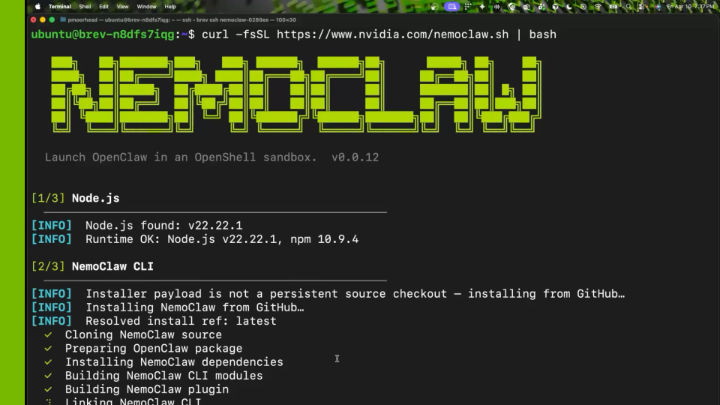
🦞 Ready to deploy OpenClaw🦞? Our just released NVIDIA NemoClaw simplifies running OpenClaw always-on assistants more safely with a single command. ✅ Deploy claws more safely ✅ Run any coding agent ✅ Deploy anywhere Try with a free NVIDIA Brev Launchable: 🔗
NVIDIA AI Developer190,110 views • 6 months ago

The largest advancement of the CUDA platform since its creation in 2006 is here 👀 Introducing CUDA Tile, a tile-based programming model that provides the ability to write algorithms at a higher level and abstract away the details of specialized hardware, such as tensor cores. Read the technical blog 👉
NVIDIA AI Developer244,885 views • 10 months ago

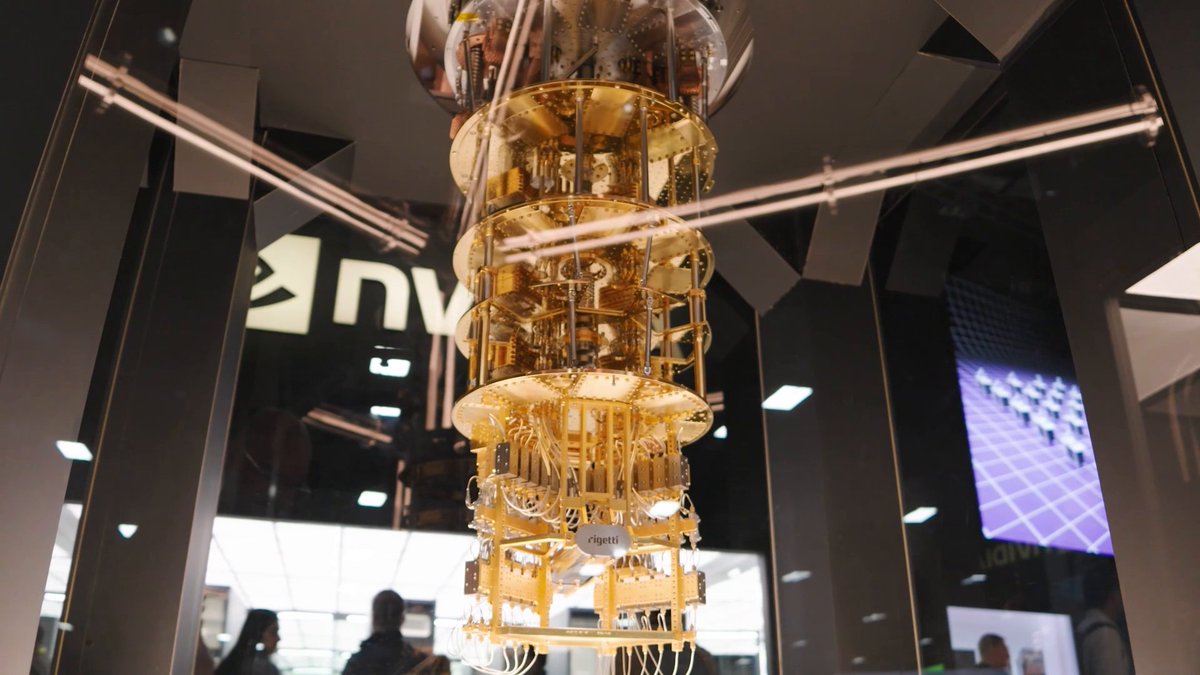
Our new open-source AI model family, NVIDIA Ising, will transform quantum computing by using agentic AI to solve it's most complex challenges, like real-time error correction. Nic Harrigan joins the NVIDIA AI Podcast to explain how this new open-source model family will help turn today's quantum hardware into tommorow's quantum-GPU supercomputers. 📺 Watch the full episode:
NVIDIA AI Developer123,967 views • 6 months ago

Introducing NVIDIA Nemotron 3 Super 🎉 Open 120B-parameter (12B active) hybrid Mamba-Transformer MoE model Native 1M-token context Built for compute-efficient, high-accuracy multi-agent applications Plus, fully open weights, datasets and recipes for easy customization and deployment. 🧵
NVIDIA AI Developer135,647 views • 7 months ago


Just launched #CES2026, the new open-source NVIDIA Nemotron Speech ASR model is here to solve latency drift and redundant compute. Its cache-aware streaming architecture eliminates the need for buffered inference, giving you stable, sub-100ms latency (24ms median T-T-F) and up to 3x more throughput on your GPU. 🤗 Read the technical blog with real-world results from Daily and Modal on Hugging Face:
NVIDIA AI Developer138,518 views • 9 months ago

Kimi K2.5 is now live on GPU-accelerated endpoints for free prototyping, so you can quickly start building with a frontier-scale multimodal model instead of just reading about it. Want to get started? We’ve got you: • Step-by-step tutorial • Ready-to-run GitHub notebook • First inference in minutes, not hours 📖 All available in the technical blog →
NVIDIA AI Developer108,727 views • 8 months ago

🤯 100% of NVIDIA engineers code with AI—and they’re checking in 3x more code than before. At that scale, human-only code review can’t keep up. CodeRabbit review agents use models like Claude and GPT with NVIDIA Nemotron to: ✅ Pull context from code, docs, project trackers, and more ✅ Use Nemotron’s long context and reasoning to summarize ✅ …so that frontier models can flag issues and suggest fixes in minutes, not days. Join us today at 11 AM PT to see an end-to-end demo and bring your Qs: 🤗 Get Nemotron Nano 3:
NVIDIA AI Developer100,151 views • 9 months ago


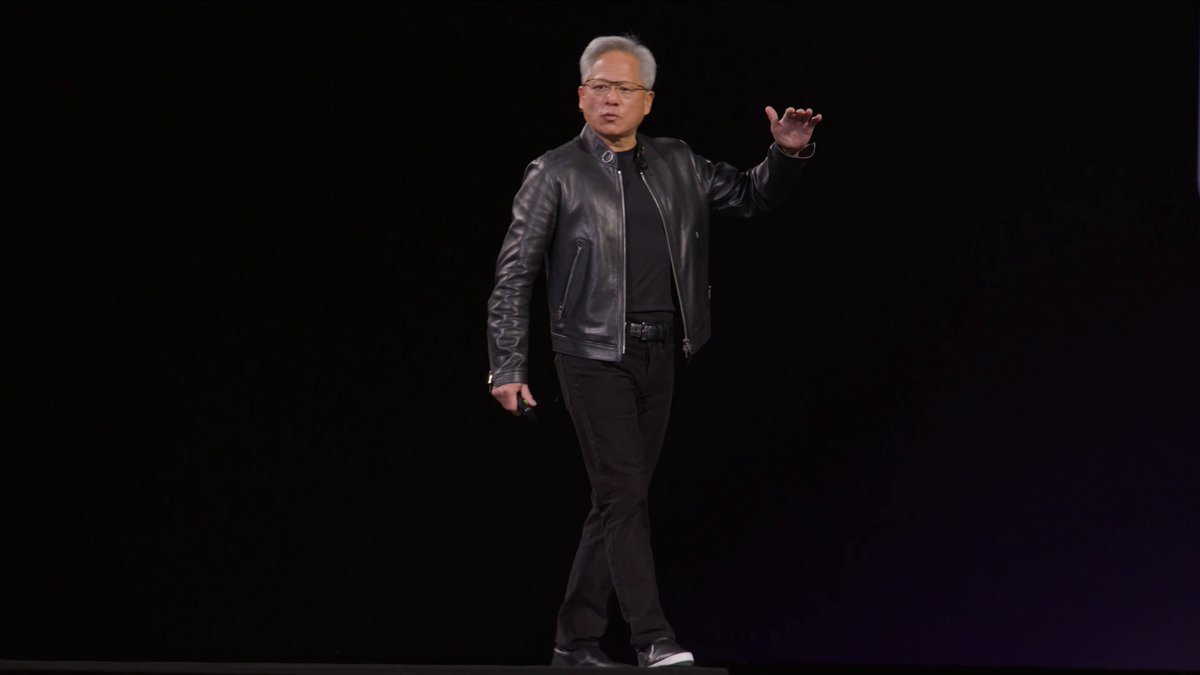
Green and red have never looked so good. 💚🦞 NVIDIA CEO Jensen Huang surprises our panel guests at the #NVIDIAGTC keynote pregame. Watch the replay to hear the full conversation with Peter Steinberger 🦞, creator of OpenClaw🦞, on their partnership and the future of intelligent AI model. 🔗
NVIDIA AI Developer56,928 views • 6 months ago

We’re excited to share that 🥇Llama Nemotron Super 49B v1.5 -- our latest open reasoning model -- is now #1 on the Artificial Analysis Intelligence Index - a leaderboard that spans advanced math, science, and agentic tasks, in the 70B open model category. Llama Nemotron Super 49B v1.5 is trained with high-quality reasoning synthetic data generated from models like Qwen3-235B and DeepSeek R1. It delivers state-of-the-art accuracy and throughput, running on a single H100. Key features: 🎯 Leading accuracy on multi-step reasoning, math, coding, and function-calling 🏗️ Post-trained using RPO, DPO, and RLVR across 26M+ synthetic examples 📊 Fully transparent training data and techniques If you're building AI agents and want a high accuracy, fully-open, and transparent reasoning model that you can deploy anywhere, try Super v1.5 on or download from Hugging Face 🤗 ➡️ Leaderboard:
NVIDIA AI Developer100,506 views • 1 year ago


Our Llama-3.1-Nemotron-70B-Instruct model is a leading model on the 🏆 Arena Hard benchmark (85) from Arena. Arena Hard uses a data pipeline to build high-quality benchmarks from live data in Chatbot Arena, and is known for its predictive ability of Chatbot Arena Elo score as well as separability between helpful and less helpful models. Use our customized model Llama-3.1-Nemotron-70B to improve the helpfulness of LLM generated responses in your applications. 📥 Try on our API catalog: 📥 On GitHub: 📥 Or on Hugging Face:
NVIDIA AI Developer140,870 views • 2 years ago

✨ Meet our new open family of models: NVIDIA Nemotron 3 Open in weights, data, tools, and training, Nemotron 3 is built for multi-agent apps and features: • An efficient hybrid Mamba‑Transformer MoE architecture • 1M token context for long-term memory and improved reasoning • Multi‑environment reinforcement learning via NeMo Gym for advanced skill adaptation Plus NVFP4 pre-training, latent MoE, 1T tokens of data, and more. 📗Read the details in our tech blog: 🤗 Try the model on Hugging Face:
NVIDIA AI Developer69,008 views • 10 months ago

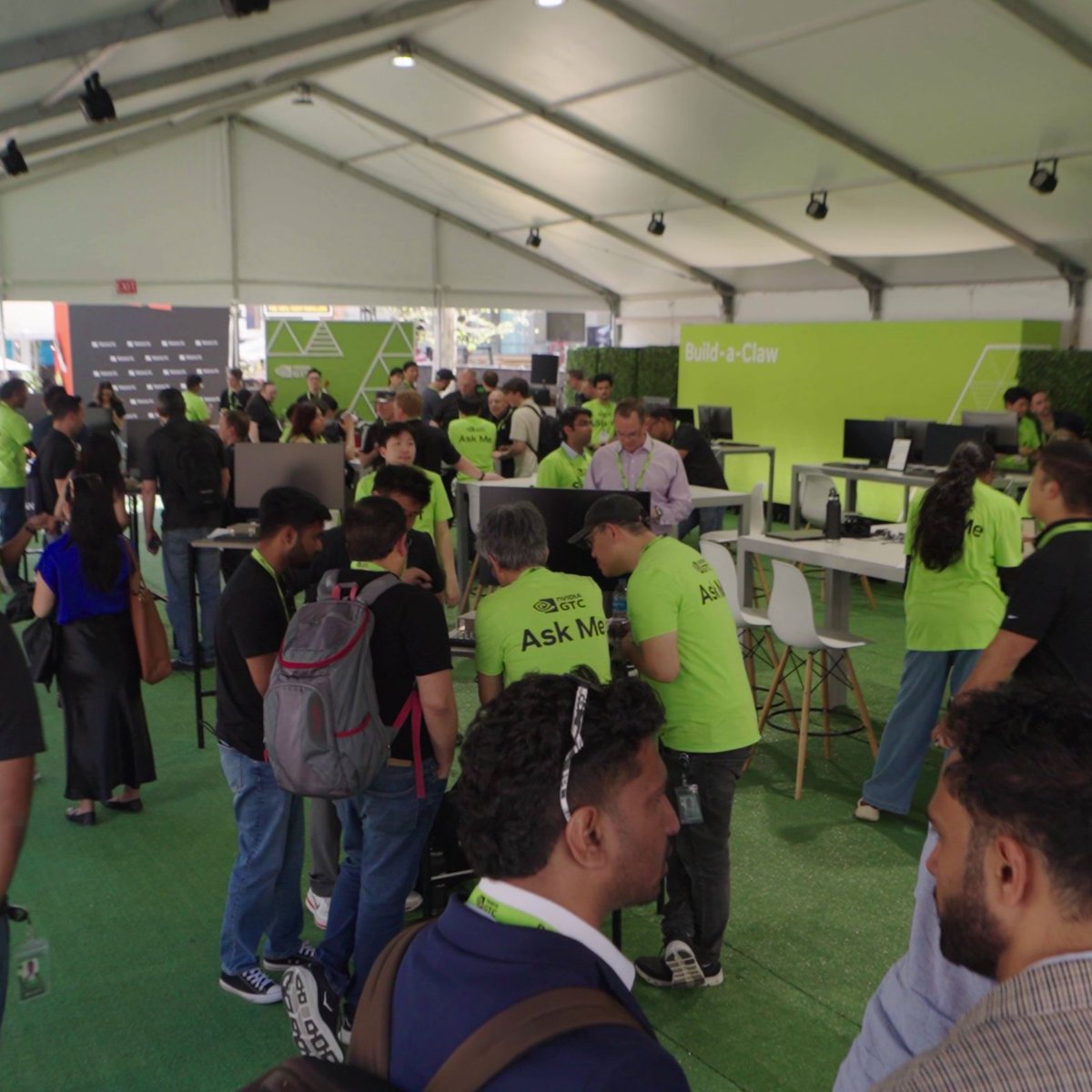
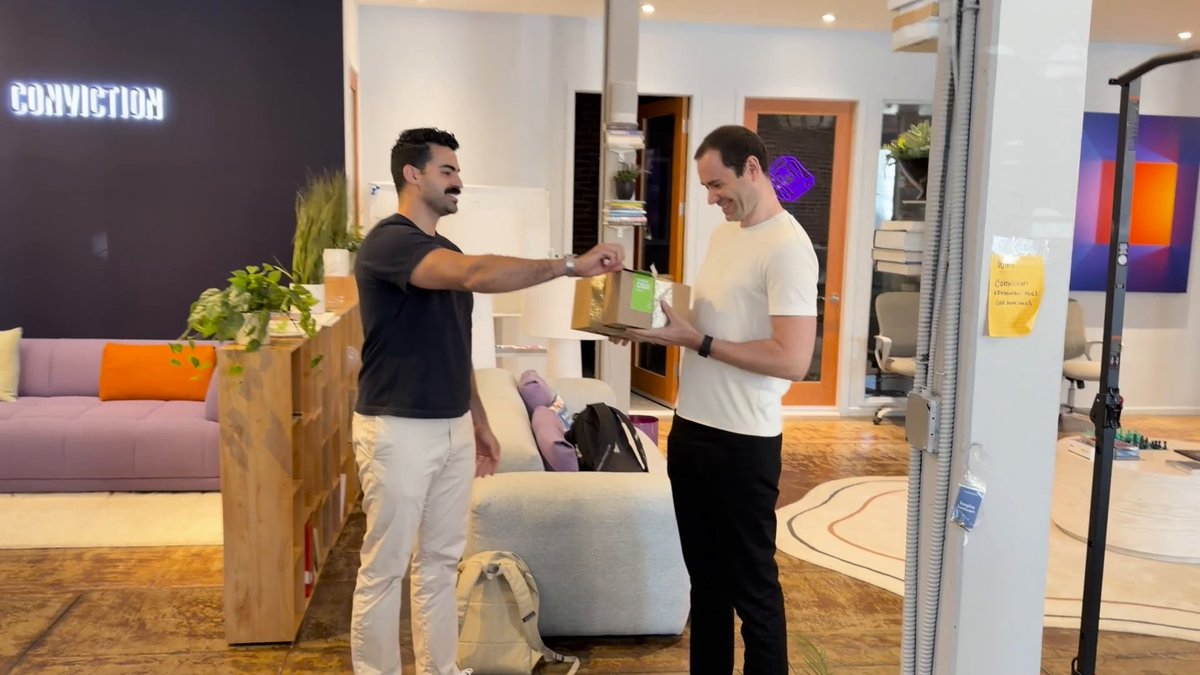
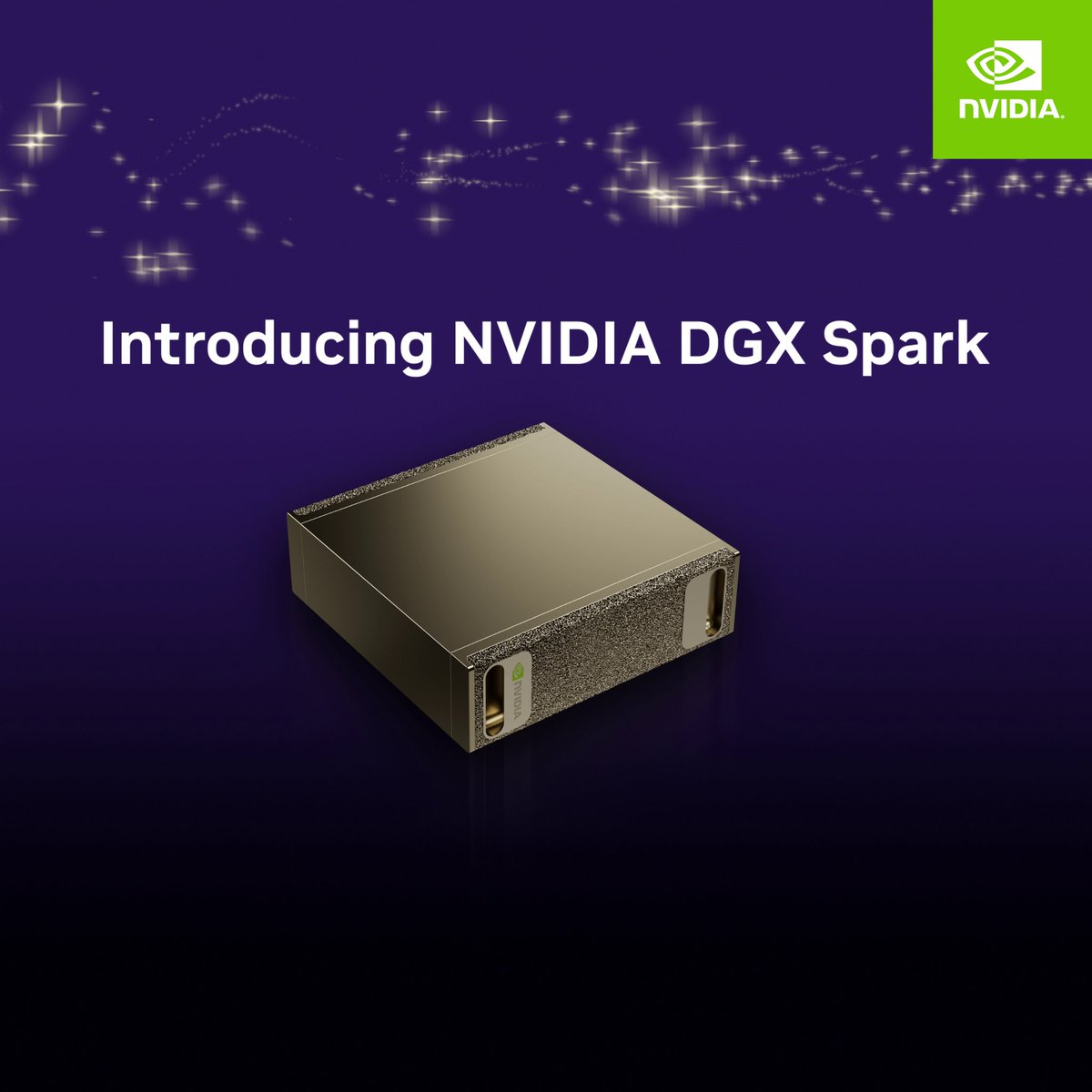
🦞 Thanks to everyone who stopped by at Build-a-Claw yesterday. You can BYOD or purchase a DGX Spark there and engineers will help you install and answer any questions about OpenClaw🦞. 📆 Reminder - open each day of #NVIDIAGTC at 8am, until 5 p.m. Tues/Wed and until 2 p.m. Thurs. 📍 GTC Park 🔗
NVIDIA AI Developer45,623 views • 7 months ago