
The Math Flow's banner
The Math Flow's profile picture

The Math Flow

@TheMathFlow40,832 subscribers

All about Mathematics • Books • Pictures • Problems • Proofs • Animations• Memes • & • History.

Shorts

Rotation Matrices in Motion.

Rotation Matrices in Motion.

114,532 просмотров

In 1963, mathematician Stanislaw Ulam got bored during a meeting and started doodling a grid spiral of sequential numbers. By highlighting only the primes, he uncovered what remains one of the most mesmerising visual mysteries in number theory: the Ulam Spiral.

In 1963, mathematician Stanislaw Ulam got bored during a meeting and started doodling a grid spiral of sequential numbers. By highlighting only the primes, he uncovered what remains one of the most mesmerising visual mysteries in number theory: the Ulam Spiral.

52,236 просмотров

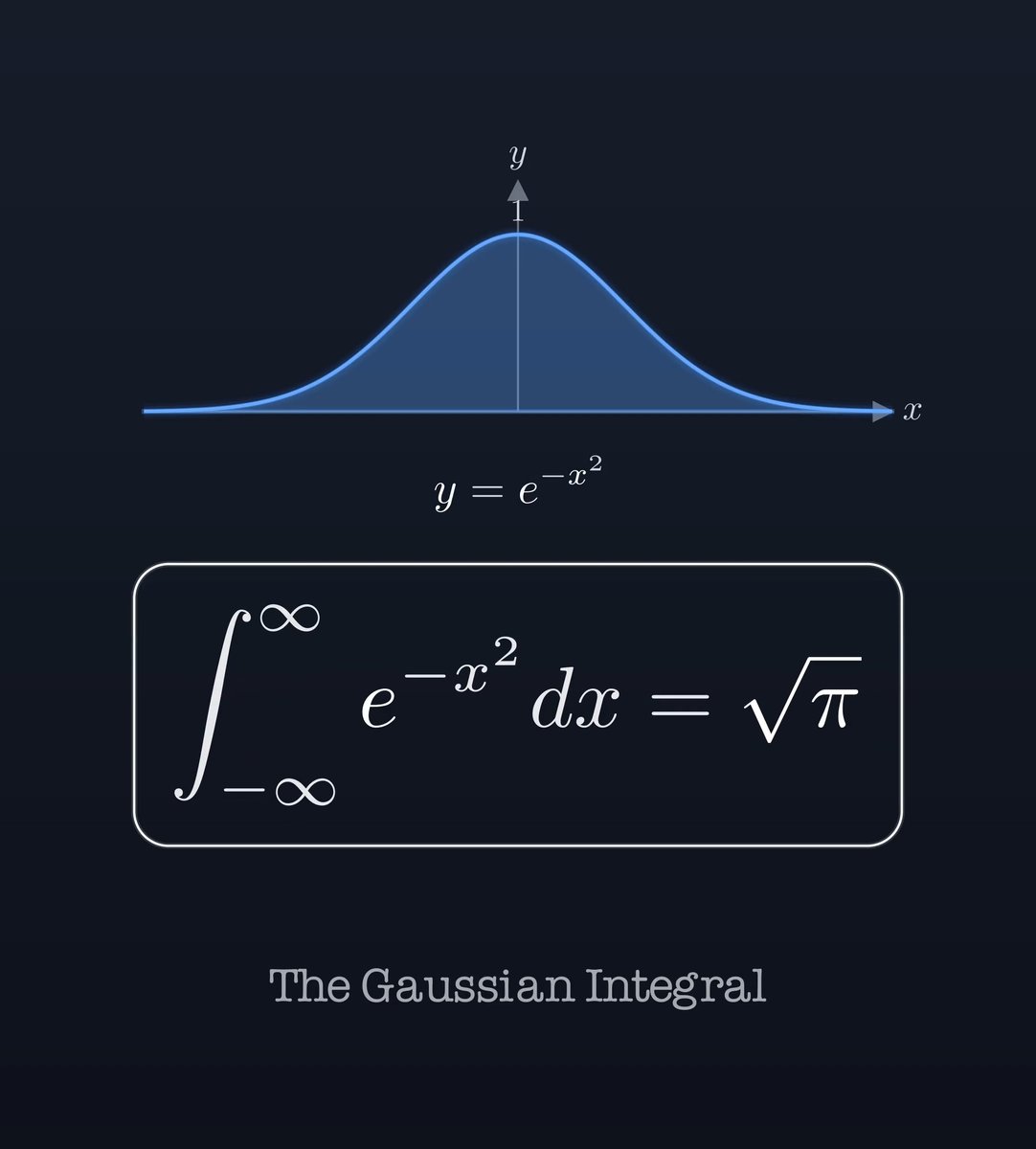
The Beautiful Gaussian Integral.

The Beautiful Gaussian Integral.

60,295 просмотров

Anatomy of a Definite Integral.

Anatomy of a Definite Integral.

28,250 просмотров

a² - b² = (a+b)(a-b)

a² - b² = (a+b)(a-b)

40,740 просмотров

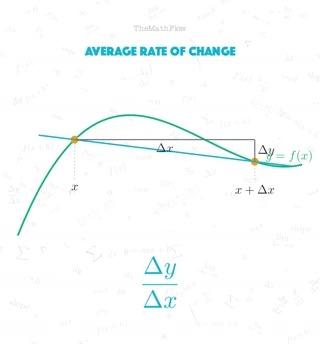
We were taught the derivative as a formula to memorise. A definition to recite. A rule to apply. Something that "gives you the slope." But nobody told us what the formula was actually saying. Every symbol is a sentence. Every fraction is a question. Every limit is a story about getting closer and closer to something you can never quite touch. The top of the fraction? That's a change. A difference. A before and after. The bottom? That's how long you waited to see it. The limit? That's you, zooming in, refusing to settle for an approximation - chasing the truth all the way down to an interval so small it almost disappears. Put it all together, and you get the most honest question in calculus: How fast is something changing - right now, in this exact instant? Not on average. Not over a minute. Not eventually. Right now. That's it. That's the derivative. It's not a trick. It's not a rule. It's a beautifully precise way of asking a very human question: what's happening, in this moment? We spent years solving these. Maybe it's time we actually understood them.

We were taught the derivative as a formula to memorise. A definition to recite. A rule to apply. Something that "gives you the slope." But nobody told us what the formula was actually saying. Every symbol is a sentence. Every fraction is a question. Every limit is a story about getting closer and closer to something you can never quite touch. The top of the fraction? That's a change. A difference. A before and after. The bottom? That's how long you waited to see it. The limit? That's you, zooming in, refusing to settle for an approximation - chasing the truth all the way down to an interval so small it almost disappears. Put it all together, and you get the most honest question in calculus: How fast is something changing - right now, in this exact instant? Not on average. Not over a minute. Not eventually. Right now. That's it. That's the derivative. It's not a trick. It's not a rule. It's a beautifully precise way of asking a very human question: what's happening, in this moment? We spent years solving these. Maybe it's time we actually understood them.

22,145 просмотров

The Basics of Electromagnetic Waves: Electricity and magnetism can sit still, like static electricity in your hair or a magnet stuck to your fridge. But when they move and change, they actually create each other. Together, they team up to form invisible ripples of energy called electromagnetic waves. Unlike ocean waves or sound waves, which need water or air to ripple through, electromagnetic waves don't need any material at all. They can easily travel through the completely empty vacuum of space. Maxwell's Big Idea: In the 1860s and 1870s, a Scottish scientist named James Clerk Maxwell figured out how this works. He wrote down the math showing exactly how electricity and magnetism link together to make these travelling waves. Today, scientists call his famous rules Maxwell's Equations. Hertz Proves It: Later, a German physicist named Heinrich Hertz took Maxwell's ideas and brought them to life. He was the first person to actually create and catch radio waves. To honour his work, we use the word hertz to measure how fast a wave vibrates (one cycle per second). Hertz's experiments proved two massive ideas: Radio waves are just invisible light: He showed that radio waves travel at the exact same speed as light, proving that they are actually a form of light we just can't see. Going wireless: He finally figured out how to detach these energy fields from physical wires, allowing the waves to fly freely through the air exactly as Maxwell had predicted.

The Basics of Electromagnetic Waves: Electricity and magnetism can sit still, like static electricity in your hair or a magnet stuck to your fridge. But when they move and change, they actually create each other. Together, they team up to form invisible ripples of energy called electromagnetic waves. Unlike ocean waves or sound waves, which need water or air to ripple through, electromagnetic waves don't need any material at all. They can easily travel through the completely empty vacuum of space. Maxwell's Big Idea: In the 1860s and 1870s, a Scottish scientist named James Clerk Maxwell figured out how this works. He wrote down the math showing exactly how electricity and magnetism link together to make these travelling waves. Today, scientists call his famous rules Maxwell's Equations. Hertz Proves It: Later, a German physicist named Heinrich Hertz took Maxwell's ideas and brought them to life. He was the first person to actually create and catch radio waves. To honour his work, we use the word hertz to measure how fast a wave vibrates (one cycle per second). Hertz's experiments proved two massive ideas: Radio waves are just invisible light: He showed that radio waves travel at the exact same speed as light, proving that they are actually a form of light we just can't see. Going wireless: He finally figured out how to detach these energy fields from physical wires, allowing the waves to fly freely through the air exactly as Maxwell had predicted.

36,982 просмотров

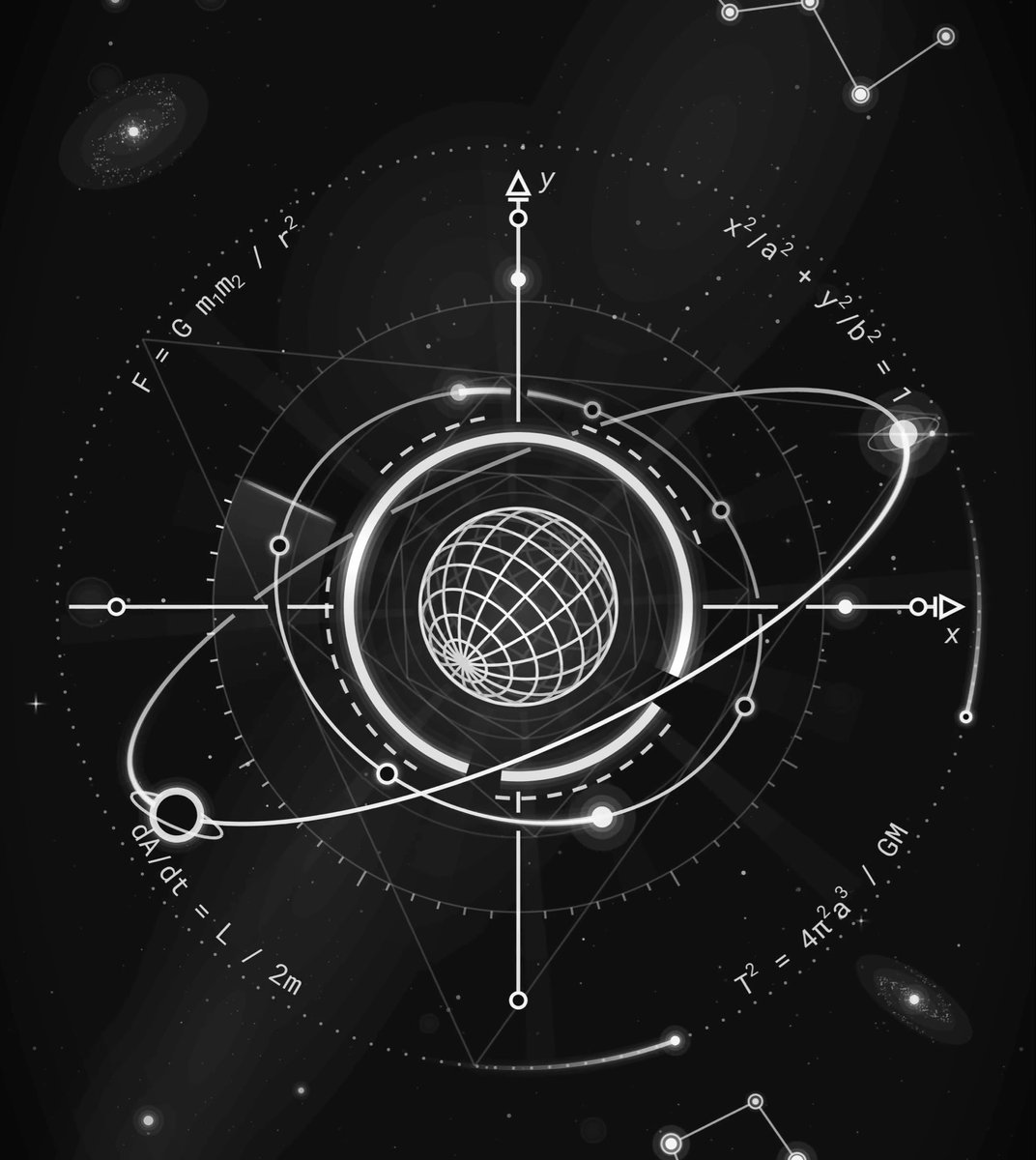
17 equations that changed the world.

17 equations that changed the world.

30,058 просмотров

Dynamics of the swing of a pendulum.

Dynamics of the swing of a pendulum.

19,973 просмотров

Videos

TheMathFlow's profile picture

Mathematics. Functions. Dance.

The Math Flow

309,748 просмотров • 1 месяц назад

TheMathFlow's profile picture

The Unit Circle: Sines and Cosines in Motion

The Math Flow

69,376 просмотров • 21 дней назад

TheMathFlow's profile picture

The Rössler Attractor.

The Math Flow

88,958 просмотров • 1 месяц назад

TheMathFlow's profile picture

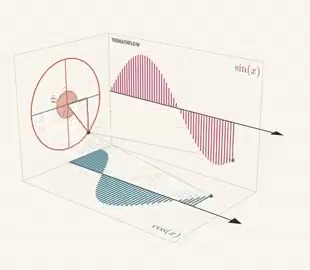
How the Unit Circle Generates Sine and Cosine Waves:👇

The Math Flow

75,819 просмотров • 1 месяц назад

TheMathFlow's profile picture

Calculation of the area under a curve.

The Math Flow

26,518 просмотров • 1 месяц назад

TheMathFlow's profile picture

sin²x + cos²x =1

The Math Flow

44,123 просмотров • 2 месяцев назад

TheMathFlow's profile picture

Matrix Multiplication:👇

The Math Flow

38,687 просмотров • 2 месяцев назад

TheMathFlow's profile picture

Unrolling circle into trigonometric functions.

The Math Flow

44,199 просмотров • 3 месяцев назад

TheMathFlow's profile picture

Which is bigger: π^e or e^π?

The Math Flow

33,638 просмотров • 3 месяцев назад

TheMathFlow's profile picture

Visualizing 3x3 Matrix Multiplication.

The Math Flow

35,929 просмотров • 3 месяцев назад

TheMathFlow's profile picture

Deriving the quadratic formula.

The Math Flow

20,939 просмотров • 2 месяцев назад

TheMathFlow's profile picture

The Geometry of a Derivative:👇

The Math Flow

18,712 просмотров • 2 месяцев назад

TheMathFlow's profile picture

Taylor Series Expansion of eˣ.

The Math Flow

15,158 просмотров • 2 месяцев назад

TheMathFlow's profile picture

17 Equations that changed the world.

The Math Flow

18,804 просмотров • 3 месяцев назад

Больше нет контента для загрузки