A Kanchipuram Sari is not mere fabric. It is... a language with grammar, a financial instrument you can wear, a biological object dyed with chemistry, & a cultural archive woven by history & hand. For over a millennium, it functioned as liquid wealth. In desperate times, the silk could be burned away, leaving behind real silver & gold. A garment that protected its wearer, even in fire. Today, that loom meets AI, microbes, & cryptography — systems trying to relearn lost grammar, grow colour without poisoning land, & turn trust from promise into proof. What happens when a thousand-year-old loom meets 21st century’s thinking machines? Issue 3: Kanchipuram Saris & Thinking Machines, written by Nivedita, designed & built by Alt Carbonshow more

Alter Magazine
55,744 просмотров • 6 месяцев назад
They started with 50. Now they say they’re 18,000... In 1996 there were fewer than 50 of them. Today, according to the organizers, up to 18,000 walked through Copenhagen. From Dronning Louises Bro to the Imam Ali Mosque. Look at the curve. This is how it happens. First a handful. Then a few hundred. Then it fills a bridge, a district, a capital. A little at a time, until it is no longer a little. And let me be fair, because fairness is the point. There is nothing strange about them holding this mourning procession. They have done it as part of their faith for more than a thousand years. It is theirs, and they believe in it. There is nothing strange about that at all. What should stop us is the other half. There is nothing strange about Europe allowing it either, and that is exactly the problem. Europe allows it because Europe has forgotten who it is. A people that remembers what it stands for does not need to ban anything, it simply knows where its own line runs. We have lost that. And so the issue was never them. The issue is us. Now look at what actually moved through the streets. Men in front. Women in the second row. That is not a detail, that is the whole point. It is a view of women set into a system and marched out into the public square, in a city where generations fought for women and men to stand as equals. The real question is not whether people may believe what they want. They may. The question is why our capital should cultivate a political law-religion that commemorates a 7th-century power struggle by dividing people by sex on Nørrebrogade. One of the organizers is the Imam Ali Mosque, repeatedly described as the Iranian regime’s extended arm in Denmark. The same regime that hangs women and young men from cranes. We are not importing culture. We are importing a system. And we let it grow, not because they are strong, but because we forgot why we were. First a little. Then a lot. Then too late.show more

Krisztina Maria
38,814 просмотров • 2 месяцев назад
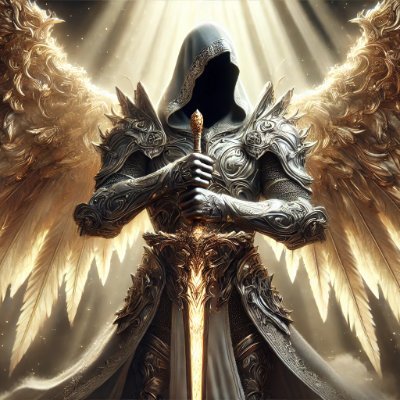
⚡️Truth is the moment consciousness refuses to be captured... by comfort. That is why it matters. Anyone can “tell the truth” when it costs nothing. That is just description. The real test comes when lying would protect your image, preserve your status, avoid conflict, keep money flowing, satisfy the audience, defend the tribe, protect the ego, or maintain the illusion that your old map still works. That is where truth becomes moral force. A lie is not just a false statement. A lie is reality being bent to serve fear. It lets the person avoid contact with what is real. It keeps the dead pattern alive. It says: the truth is too dangerous, so the self will substitute a more convenient world. Do that enough times and the soul becomes unreal. Not in a mystical decorative sense. In a structural sense. The person loses contact with reality. Their words stop pointing outward. Their identity becomes a defense system. Their relationships become performances. Their work becomes propaganda. Their mind becomes a lawyer for its own comfort. Truth matters because it keeps consciousness aligned with reality. And reality is the only place creation can actually happen. You cannot build a real life on falsehood. You can build status. You can build money. You can build an image. You can build an audience. You can build a career. But the structure will rot because it is no longer in contact with the thing it claims to represent. That is why “telling the truth when lying would be easier” is sacred. It proves that something in you serves reality more than self-preservation. That is the beginning of freedom. Because the person who cannot tell the truth when it costs something is owned by whatever the lie protects.show more
SightBringer
56,009 просмотров • 3 месяцев назад
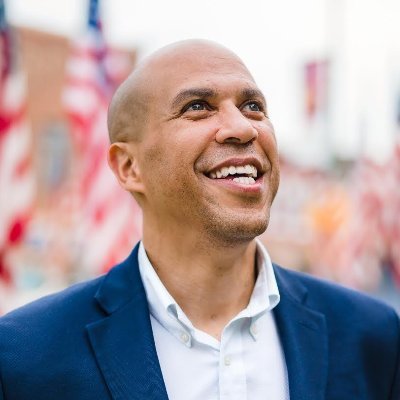
On this, my birthday… I thank God for a... year, though with more challenges than victories, that taught me lessons hidden in pain, in loss, in struggle. For showing me that taking a noble stand, even if it costs you, even when you’re criticized, is far better than living safe, silent, and untested. I Thank God for a year that built grit in so many of us and taught us more about the invincible power of not giving up. For the humbling truth that no one person can save the world but we all can serve in it - especially in small acts. Daily kindness. And maybe that’s how the world heals, not all at once, but a million times over. Thank you for reminding me, in a long year, to hold onto wonder, joy and even fun - as defiance, as resistance, as restoration in the long fight. And this year… thank you for a love that changed my life, for a wife who brought with her a universe of joy, and a partner to walk with, day by day, turning the ordinary into something sacred. Another year older. Another year grateful. Another year still learning how to love, to serve, to stand. (Thank you jin_sung_sa for sharing this precious birthday greeting with your followers and me).show more
Cory Booker
21,458 просмотров • 4 месяцев назад
The Circle 🐜 Nobody told the ant about the... circle. That, as far as anyone can tell, is the whole problem. A researcher named Kostowski – this was in the early 1970s, at a laboratory in Warsaw that smelled permanently of formaldehyde and institutional coffee – discovered quite by accident that if you draw a continuous line around an ant using a felt-tip pen, the ant will not cross it. It will walk right up to the line, pause with what appears to be genuine philosophical unease, and turn back. It will do this indefinitely. For hours. Sometimes for days. The ant is not stupid. Let’s be clear about that. The creature you are looking at in this photograph – this tiny, improbable machine of chitin and chemical signals, this six-legged marvel that can carry fifty times its own body weight and navigate by polarized light – has a brain roughly the size of a pinhead, and yet that brain contains approximately 250,000 neurons dedicated entirely to making sense of the world. It has survived as a species for 130 million years. It watched the dinosaurs arrive, flourish, and disappear, and then went back to work. And yet here it is. Trapped by a drawing. The reason is chemistry, not cognition. Ants navigate by pheromones – volatile chemical compounds that their legs read like a blind man reads braille. When they encounter the solvent in a felt-tip pen, something in their nervous system fires an alarm. The signal says: boundary. The signal says: edge of the known world. And the ant, loyal to its chemistry in the way that all of us are loyal to ours, obeys. This is the part that stays with you if you think about it too long. The ant’s prison has no walls. No bars. No lock. It is made entirely of information – a chemical whisper laid down by a felt-tip marker – and the ant cannot see past it, because it has no framework for doing so. The circle is not a circle to the ant. The circle is simply: where the world ends. I find myself thinking about this more than is probably healthy. We are, most of us, walking around inside our own circles. They were drawn for us gradually, by parents and teachers and early disappointments, by the limits of what we saw done and the boundaries of what we were told was possible. We bump up against them occasionally – in those moments when a job offer from another city seems too frightening, or a new idea feels somehow presumptuous – and we turn back. Not because anything is stopping us. Because the world, as far as we can tell, simply ends there. The ant in the photograph is walking the inner edge of its circle with a kind of purposeful calm that is almost admirable. It has not given up. It is still looking. It is still moving. It simply cannot conceive of a direction that leads out. Kostowski, for what it’s worth, eventually just picked the ant up and moved it. Sometimes that’s what it takes. Gandalv / Gandalvshow more
Gandalv
28,294 просмотров • 5 месяцев назад
🚨 SCIENTISTS JUST BUILT A CHIP THAT CAN SEE,... THINK, AND REMEMBER ALL AT THE SAME TIME. And it works more like a biological brain than a traditional computer. Researchers at RMIT University have created a neuromorphic vision chip that mimics the human eye and brain. Unlike conventional systems that capture images and send data to external processors, this chip performs sensing, processing, and memory storage directly where the light hits. The active layer is thousands of times thinner than a human hair. It uses doped indium oxide to detect light, process the information on-chip, and retain what it sees over time without constant electrical refreshing. Why this matters: • It dramatically cuts energy use and latency by eliminating data transfer to separate processors • Enables much faster real-time decision making for autonomous systems • Works more like biological vision than traditional machine vision • Could power the next generation of efficient edge AI in vehicles, robots, and remote sensors The deeper implication: For decades, we’ve built vision systems by bolting cameras, processors, and memory together like separate organs. This chip collapses those functions into one biological-style unit. It’s a step toward machines that don’t just “see” but actually perceive and remember in a more efficient, brain-like way. If scaled successfully, it could become a foundational component for autonomous systems that need to operate intelligently with minimal power and minimal delay. We’re moving from cameras that take pictures to chips that truly see. How do you think neuromorphic vision chips like this will change what’s possible for self-driving cars and autonomous robots? Follow for more frontier neuromorphic computing, AI hardware, and brain-inspired technology.show more

TheNewPhysics
23,196 просмотров • 2 месяцев назад
They did not take cursive from the schools because... children no longer needed it. They took it because of what it was quietly building in them. Consider what the exercise actually is. A child, six years old, is handed a pen and asked to draw a single unbroken line that becomes a word. The wrist must float. The fingers must hold a living pressure, never quite the same twice, always correcting. The eye must follow the ink forward and trust the hand to finish what it has begun. There is no lifting, no stopping, no starting over mid-word. The loop must close. The ascender must rise and return. The sentence must travel from one margin to the other as a single continuous gesture, and at the end of it the hand must still be steady. Twelve years of this. Every day. Ten thousand small acts of sustained, self-correcting attention, carried out below the level of conscious thought, until the motion belongs to the body and the body belongs to the motion. This is not penmanship. It is the slow construction of an interior form. The hand that has learned to carry a line without breaking it is the hand of a mind that has learned to carry a thought without breaking it. The two are not metaphors for one another. They are the same faculty, trained in the same child, by the same daily discipline. Continuity of the stroke becomes continuity of the reasoning. The patience of the loop becomes the patience of the argument. The commitment to finish a word one has started becomes the commitment to finish a sentence, a paragraph, a life's idea, without reaching for the nearest distraction halfway through. Print is a different creature entirely. Print lifts. Print stops. Print assembles a word out of separate, stamped, interchangeable pieces, each one beginning and ending in isolation. A mind raised only on print learns to think the way print is made, in discrete tokens, in replaceable units, in fragments that can be recombined by any outside hand without the owner noticing the substitution. It is precisely the shape of thought a language model produces. It is precisely the shape of thought a language model can steer. Cursive is kata. This is the whole of it. A form repeated daily, for years, not for the sake of the form but for what the repetition lays down in the practitioner beneath the form. The swordsman does not train kata so that one day he may fight in kata. He trains it so that when the moment comes and there is no time to think, the movement is already inside him, older and deeper than thought, and it rises on its own. Cursive was the kata of the literate mind, the daily quiet drilling of continuity, of patience, of a line held steady under the long pressure of its own length. And the signature it produced at the end, that small flourished mark unique to a single human being on earth, was only the outward proof of an inward form no machine and no other hand could ever reproduce. Take the kata away and the practitioner is left with vocabulary in place of faculty. He can recognise a whole thought when he encounters one. He cannot carry one himself. He can admire a finished argument. He cannot sustain one long enough to close its loop. He begins books he does not finish, sentences he does not end, ideas he abandons the moment the screen in his palm offers him a brighter one. And when the machine begins feeding him tokens in the exact shape his schooling taught him to receive, he meets it with no interior resistance at all, because no interior form was ever built in him to push back with. They removed it quietly, across a generation, and they removed it in the last years before the machines arrived. Twelve years of daily practice in unbroken, embodied, self-authored thought, gone from the curriculum of almost every child in the Western world, just as the instruments designed to complete their sentences for them came online. The hand forgets. The mind, having never been taught the kata, forgets a thing it never knew it had. That is what cursive was. That is what was taken. And that is why the thought of anyone who still writes by hand, in long unlifted lines, remains, quietly, stubbornly, and without their ever needing to announce it, their own. Now the question stands open. What else has been banned, phased out, quietly retired from the curriculum and from common life over these same decades, under the same soft excuses? Mental arithmetic. Memorisation of poetry. Latin. Logic as a formal subject. Map reading. Knot work. The keeping of a commonplace book. The reading aloud of long passages in class. Singing in parts. What was each of those actually building in the child, beneath the surface of the lesson, and whose interest was served by its disappearance?show more

SiriusB
443,703 просмотров • 4 месяцев назад
Systems created from racism cannot be reformed. That is... why we keep seeing the same thing happen over and over again… with police and with ICE. An unarmed Black man, in Milwaukee, was shot in the head three times after being tased and restrained by five officers. Meanwhile, just 80 miles away, a white man was actively on top of a police officer, assaulting him… and was taken into custody without being shot. We have seen this same disparity play out over and over again. And we will continue to see this happen because… American policing is deeply rooted in systems created to control and hunt down Black populations... and ICE was created from a system rooted in racial exclusion, and the criminalization of immigrants. And we see the consequences of that history every single day. The problem is not just a few bad officers/agents, or a lack of training. The problem is not just that the wrong person was hired… These systems were built on racism. They were built to use state violence against certain people. You cannot reform a system whose foundation is rotten. You cannot train racism out of a system created by racism. You cannot reform your way out of a structure that is operating how it was designed to operate. At some point, we have to stop asking how to make these systems work better… And we have to start asking why we keep defending systems that were never designed to protect people in the first place.show more

Jesus Freakin Congress
48,817 просмотров • 1 месяц назад
The case of Débora Rodrigues is a brutal example... of what happens when the judicial system abandons impartiality and turns into a tool of political repression. The disproportionate sentence imposed on her, comparable to those given for violent crimes, has no reasonable justification in a democratic state governed by the rule of law. It is a judicial aberration that reveals the vindictive nature of those in power in Brazil today. Even if Débora had committed a serious crime, her punishment should have followed principles of proportionality, considering her clean record and personal circumstances. But as far as we know, her "great threat" was a symbolic act—a peaceful protest. A 14-year sentence is not justice; it is institutionalized torture. Those who condone this, whether through silence or justification, must understand that tomorrow they could be the next target. Today it’s Débora—tomorrow it could be any citizen who dares to challenge the establishment. Brazil is moving toward a regime where political dissent is punished with the harshest penalties, while criminals allied with those in power receive pardons and privileges. If lawmakers do not take a stand against this injustice, they will be signing the death sentence of Brazilian democracy. You are absolutely right to bring this case to the international community. History shows that authoritarian regimes only retreat when faced with both external and internal pressure. This is no longer just a political issue—it is a humanitarian one.show more
Arlete Caetana
31,385 просмотров • 1 год назад
The largest theft in history has already happened. The... people behind it just cannot open what they stole yet. Right now, intelligence agencies and criminal groups are quietly copying the world's encrypted data, bank records, medical files, state secrets, private messages, and storing every byte untouched. They cannot read any of it. They are collecting it anyway, because they know the key is about to be invented. The strategy has a name, harvest now, decrypt later, and in 2026 it stopped being theory. Washington declared this the Year of Quantum Security in January, backed by the FBI, the NSA, and NIST. Canada ordered every federal agency to file a migration plan by April. Europe set its deadline for December. Governments do not impose operational deadlines on a someday problem. They do it when the clock is already running. Here is what moved the clock. Every password, every transfer, every secret on Earth is protected by one assumption, that a certain math problem is too hard to solve. Quantum computers solve exactly that problem. For years the machine that could do it looked decades away. Then in late 2025 Google's Willow chip cracked the hardest part of building one, and in March 2026 Google's own researchers estimated that breaking the encryption behind Bitcoin might take fewer than 500,000 qubits, down from 20 million, and could run in minutes. The day this becomes real has a name, Q-Day, and the latest estimates place it between 2030 and 2033. Now make it concrete. Roughly 6.5 million Bitcoin, about a third of every coin that will ever exist, worth close to 500 billion dollars, sit in addresses that have already exposed the very key a quantum computer needs. That includes the coins of Satoshi, the anonymous creator. On Q-Day they become, in the researchers' own word, trivially stealable. It would not look like a crash or a whale selling. It would look like half a trillion dollars of the most secure money ever built simply walking out the door. The asset designed to trust no one and no institution turns out to rest on a single unverified bet, that one math problem stays hard forever. This is what sits beneath the entire digital world. A bank balance, a Bitcoin, a classified cable, all of it is real only because of a proof you supposedly cannot forge. Quantum breaks the proof. Everything we call secure is true only until someone finally checks, and for the first time the check is visible on the horizon. You cannot know whether your data has already been copied. You cannot know the exact day the key arrives. The trust holding up the digital age is a clock counting down to a zero no one can see. The honest counter matters. No machine on Earth can break this encryption today, and serious cryptographers still argue the real threat is a decade or more away. The timeline is far from certain. Quantum-safe codes already exist, the migration has started, and Bitcoin can move its coins to safety before Q-Day if it acts in time. The danger is not that everything breaks tomorrow. It is that anything which must stay secret into the 2030s, a state secret, an identity, a private key, is being stolen today and is already on the clock. The breach is not coming. It is already here, sitting in storage, perfectly encrypted, waiting for a machine that does not exist yet to read it out loud. Research and opinion, not investment advice.show more

Shanaka Anslem Perera ⚡
185,515 просмотров • 2 месяцев назад
🚨 JAPAN JUST PUT A REAL QUANTUM COMPUTER ONLINE... FOR THE WORLD TO ACCESS. And most people still don’t realize how big this moment is. For decades, quantum computers sounded like science fiction: machines that use quantum states instead of ordinary binary bits. Now researchers in Japan have opened access to a real superconducting quantum system connected to the internet. Why this matters: • quantum simulations • next-generation AI research • new material discovery • drug development • cryptography disruption • solving problems impossible for classical computers But quantum computers work nothing like normal machines. A regular computer checks possibilities one at a time. A quantum computer can explore many probability states simultaneously through superposition and entanglement. In simple terms: It doesn’t just calculate faster… It calculates differently. That’s why these systems look so strange. The giant gold structure isn’t “the computer” itself. It’s an ultra-cold dilution refrigerator designed to keep the quantum processor near absolute zero so fragile quantum states don’t collapse. The terrifying implication is this: Humanity may be entering the first era where computation starts operating on the rules of quantum reality itself. And once quantum hardware becomes scalable… Entire industries may be rewritten from the ground up. What happens when computers stop thinking like machines… and start behaving like physics itself? Which field do you think gets transformed first and would you actually trust it with something important?show more
Paul White Gold Eagle
64,297 просмотров • 3 месяцев назад
"When parents pray for their children, God hears them,... angels move, and great things happen. Pray with faith, and do not worry." - St. Padre Pio Padre Pio is reminding us that a parent’s prayer is powerful because it is rooted in love and trust in God. Scripture shows us that God listens to the prayers of the faithful, especially when they are offered with faith and perseverance. Parents have a real role in bringing their children closer to God, not by control, but by interceding for them. Even when nothing seems to change, God is still working in ways we cannot see. Prayer invites grace into your child’s life, and grace is what truly transforms a heart. 💬 Do you really believe your prayers can change your child’s life, or have you started to give up without realizing it?show more

Dana Rachel 🇻🇦
22,834 просмотров • 3 месяцев назад
China's central bank has now bought gold for 19... months straight, the largest official buyer on earth. And this week, as gold broke 4,000 dollars, China's biggest banks moved to push ordinary Chinese out of leveraged gold trading, with at least one warning it will liquidate any position not closed by month-end. Both are true at once, and together they explain what this crash really is. Start with what is being banned, because the words matter. ICBC and a string of other banks are shutting down retail trading in what the Chinese themselves call paper gold, the margined, leveraged contracts where you bet on the price without ever owning a bar. Some banks lifted the margin requirement to 140 percent to choke the leverage off before closing the products outright. Physical gold, meanwhile, stays wide open. Coins, bars, savings plans, ETFs, all fine. It is only the paper, the leverage, the casino, that is being shut, the last step in a five-year retreat that the crash just finished. Officially this is about protecting small investors, and that part is real. The same kind of leverage wiped out a wave of Chinese retail in a 2020 commodity blowup. But set the ban beside what the state is doing and something larger comes into view. While its citizens are pushed out of the paper, the People's Bank of China has spent those same 19 months buying the physical metal, more than two thousand three hundred tonnes of it now, accumulating straight through a 28 percent crash that scared everyone else out. Beijing is not trading gold. It is hoarding it. That is the strategy in one frame. China looked at the two things both called gold, the paper bet and the physical bar, and made a choice no Western government would make. It is taking the metal for the state and closing the casino for everyone else. The reason sits in a single date. 2022, when Russia's reserves were frozen with a keystroke. That taught every country outside the Western system one lesson: dollars in an account can be switched off, gold in your own vault cannot. So China is building its monetary independence out of the one asset nobody can freeze, and it does not want that foundation in the hands of leveraged traders who panic-sell in a crash, or priced by a paper market it does not control. Watch this month and the two worlds split in real time. Western investors were forced out of their gold by margin calls and a rate scare. China's central bank bought that exact dip with both hands. One side treats gold as a trade. The other treats it as the floor under a currency. The West is selling paper gold and calling it a crash. China is buying physical gold and calling it a foundation. In ten years, only one of them will look like it understood what gold was for. The metal is already moving to that side.show more
Shanaka Anslem Perera ⚡
327,003 просмотров • 2 месяцев назад
Had my mind blown today by how simple it... was to buy Tokenized Gold. I was listening to Balaji talk about Gold today on a podcast with Luke Gromen I asked ChatGPT “what’s the best way to buy Gold that’s digital and almost like owning the real thing?” It responded with “tokenized gold: Each token represents ownership of real, physical gold This is not a gold stock, not an ETF, and not a synthetic bet—it’s closer to digital warehouse receipts for gold.” It then said the best option was Tether Gold (XAUT). I remembered recently the World team saying that you could buy real assets like Gold on World App. I wondered if you could buy XAUT? I opened the app and one of the first ten assets was XAUT. Swap USDC for Tether Gold in under 10 seconds and that’s it. The experience was magical. We are so close the Balaji vision of interoperable money and assets. When everything is a token, value will be the only thing that matters again. Tokens are just 24/7 global markets for trust. People will be able to move in and out of whatever assets they trust instantly. Trust will become the most important thing that compounds. What’s even cooler, is that you can then send Gold to anyone, instantly in World Chat 💬 Any asset, anywhere, to anyone, in any any chat. Check out the screen recordings to see how fast and easy it wasshow more

Shane Mac
12,559 просмотров • 7 месяцев назад
Elon Musk gave the entire entertainment industry its expiration... date, and he is the one building the thing that kills it. Musk: “My guess is that we see the first compelling half hour, pure AI show next year.” Next year. A complete show generated entirely by AI. No writers. No actors. No cameras. No sets. No crew. No studio. Just a prompt and enough compute to render a reality that never physically existed. And shows are the easy part. Musk: “I say probably we’re maybe three years away from AI does the whole video game.” A show plays the same way every time. A game has to generate a living world that reacts to every decision in real time across every single frame. That is a fundamentally harder class of problem. And Musk put three years on it. Right now a single AAA title takes seven years and half a billion dollars across thousands of engineers and artists just to ship it. Musk is describing a world where one person types a paragraph and gets something comparable. The entire value proposition of a multi-billion dollar industry lives inside that gap. And it closes in thirty-six months. But the prediction is not the story. The person making it is. This is not an analyst speculating from the sidelines. This is the man building the largest AI compute clusters on the planet. The man who built xAI from zero in under two years. The man stacking hundreds of thousands of GPUs into facilities designed to do exactly what he is describing. When Musk says three years, he is not guessing about what someone else might eventually ship. He is reading you a delivery date off his own roadmap. Every media company on Earth is valued on a single assumption. That quality content is expensive and difficult to produce at scale. That one assumption is the structural foundation underneath every studio, every network, and every publisher in existence. Musk is dismantling it with raw compute. The studios still parading thousand-person production teams are not demonstrating strength. They are advertising the exact cost structure that one person with a prompt and a GPU allocation is about to make irrelevant. And it does not stop at entertainment. If AI can generate an interactive world that responds to human input in real time, it can generate anything. Advertising. Architecture. Training simulations. Product design. Every industry built on humans manually constructing visual experiences frame by frame is sitting on the same countdown Musk just read out loud. Now zoom out. Because this is not just an industry story. For the entire history of human civilization, the distance between imagining a world and actually creating one required thousands of people, millions of hours, and billions of dollars. That distance built Hollywood. That distance built the gaming industry. That distance made content scarce and studios powerful. Musk is collapsing that distance to zero. When the gap between imagining something and it existing disappears, every business model built on the difficulty of creation disappears with it. That is not disruption. That is a full inversion of how human beings create. Musk did not make a casual prediction on that podcast. He told you what he is building. He told you the timeline. And he told you which industries do not survive it. The entertainment industry is still debating whether this future is real. Musk is not part of that debate. He is building. And he just told you the delivery date.show more

Dustin
22,390 просмотров • 1 месяц назад
🇯🇵 A brainless blob reproduced the Tokyo rail network... in 26 hours. It was not trying to solve a transport problem. It was trying to eat oat flakes. Physarum polycephalum is, to be generous, a blob. Pale, damp, the size of a thumbnail, it has no brain, no nervous system, and no cells that could reasonably be accused of thinking. Scientists had studied it for years without feeling particularly threatened by it. Then someone put it in a maze. Within hours, Physarum had found the shortest route between entrance and exit. Not by wandering randomly. Not by luck. By something that had no name, because everyone had assumed it required a brain. This was interesting enough. What happened next was embarrassing. In 2010, a researcher named Toshiyuki Nakagaki and his team placed a piece of slime mold at the centre of a damp map of greater Tokyo. Around it, at the locations of 36 surrounding cities, they put small piles of oat flakes. Then they left the room. The organism did what it always does. It explored. Thin tendrils pushed outward in every direction, feeling for food. When a tendril found an oat flake, that connection strengthened. When a path led nowhere useful, it was quietly dismantled. The slime mold was not planning. It was simply following local chemistry, the same way it had been doing for 500 million years. After 26 hours, the exploration was over. What remained was a sparse, elegant network of tubes connecting all 36 cities to each other. Not a tangle. Not a web covering everything. A clean, efficient system with strong main corridors between the busiest points and lighter connections branching where they were needed. The team held it up next to the actual Tokyo rail map. The corridors matched. The branch lines matched. Even the redundant connections, the backup routes engineers had added so the system could survive a single failure, appeared in nearly the same places. The slime mold had not just found the cities. It had independently arrived at the same logic that Japanese railway engineers had spent decades refining. By some measures, its network was more robust than the one humans had built. There is no headquarters inside Physarum, no moment where anyone decides anything. The intelligence, if that is even the right word, lives entirely in one simple rule repeated across millions of connections: strengthen what works, abandon what doesn’t. That rule, applied blindly and without awareness, produces something that looks unnervingly like wisdom. The slime mold was not trying to redesign the Tokyo rail network. It was trying to eat breakfast. It just turns out that the most efficient way to eat breakfast, when your breakfast is scattered across a map of greater Tokyo, looks a great deal like good urban planning 😅 Gandalv / Gandalvshow more
Gandalv
206,041 просмотров • 5 месяцев назад
There is a room in Málaga that was built... to be the closest thing on earth to standing inside heaven. It is called the camarín of the Virgin of Victory, and it is hidden at the top of a tower inside the Santuario de la Victoria. To reach it, you climb and the ascent is the entire point... The building you are climbing through was completed in 1700, and it was designed as a single argument made in stone. At the bottom lies a crypt: a black chamber crowded with white plaster skeletons, a meditation on death and the brevity of life. From there a staircase rises, and as you climb it the light grows stronger and the imagery changes from bones to saints. The architects of the time understood this ascent as the soul's own journey, the dark crypt as the stage of penitence, the staircase as the stage of spiritual progress, and the room at the very top as the final stage: the union of the soul with the divine. That room at the top is the camarín, and its dome is one of the most extraordinary interiors in Spain... Every surface is covered in white and gold plasterwork. There is no empty space anywhere. The Baroque called this horror vacui, the horror of the void: the conviction that a space meant to represent heaven should not contain a single bare patch of stone. Out of that plasterwork emerge angels, flowers, birds, and mirrors. The mirrors are not decoration alone. They catch the light pouring in through the windows of the drum and throw it around the chamber, so that the gold seems to move and the whole room appears to shimmer and breathe. This wonder was built by people who believed that if you wanted to show a human being what heaven might feel like, you did not describe it to them. You built a room, and you let them climb into it... -- -- -- If you enjoyed this, I write a weekly newsletter read by over 50,000 people who love rediscovering the beauty of the past. You can join us here: If you'd like to support my work, a paid subscription is what makes it possible.show more

James Lucas
69,389 просмотров • 3 месяцев назад
Europe is quietly becoming what the United States once... promised the world. More and more people are looking at their best years ahead and choosing a place where everyday life is designed to work. Where the future feels stable enough to plan for. Where safety is not a luxury product. Where you can build a good life without gambling your health, your family, or your dignity on one bad month. In much of Europe, the “dream” is not about becoming a billionaire. It is about becoming unafraid. It is the freedom of walking home at night without scanning every shadow. The comfort of knowing that if you get sick, you do not need to calculate whether you can afford to be treated. The relief of having a society that still believes children should carry backpacks, not trauma, and definitely not weapons. The calm of streets built for human beings, not just cars. The ability to take a holiday without feeling like you are committing career suicide. The basic decency of labor protections that assume you are a person first and a resource second. And then there is the part people underestimate until they live it: the texture of life. The cities are older and more beautiful than you expect. The distances are smaller. Weekends are real. Food is real. Public spaces are not just decorative, they are functional. Parks are full. Cafes are full. Trains take you somewhere, often across borders, without turning travel into a stress test. You can live in one country, work with another, and visit a third like it is normal because, in many places, it is. The European dream is also a quiet confidence in the social contract. That if you contribute, the system does not abandon you. That you can raise a family without feeling like you are one accident away from ruin. That “getting ahead” does not require burning out. That a good society is one where normal people can live normal lives and still feel proud of them. This is why more and more Americans are not just visiting Europe, but staying. Some come for studies and never leave. Some arrive for a job and realise the lifestyle is the real promotion. Some originally planned a one year experiment and then cannot imagine going back to a place where stress is treated as a personality trait and insecurity is marketed as freedom. Europe is not perfect. It has bureaucracy. It has politics. It has problems that deserve criticism. But in many European countries, life is still built around a simple idea: society should reduce fear, not monetise it. That is the new dream. And people can feel it the moment they arrive. If you could choose one thing to trade for a better life, what would it be: more income, or more security? And what do you think your country would have to change for people to stop leaving, and start staying? Stay connected, Follow Gandalv Gandalvshow more
Gandalv
989,075 просмотров • 5 месяцев назад
The castles of Europe are some of the most... amazing things we’ve inherited from history Between 75,000 and 100,000 castles were built in Western Europe during the medieval period, with around 1,700 in England and Wales alone, and roughly 14,000 in German-speaking areas... Most of them rose between the 9th and 15th centuries after the collapse of centralized Roman authority and the rise of fragmented feudal power. As attacking armies grew more sophisticated, so did the walls meant to stop them. The cost was staggering: from 1179 to 1188, King Henry II of England spent over £6,500 on Dover Castle alone — an enormous sum given that his entire annual revenue was around £10,000. That figure was more than three times what he spent on any other building project in his reign, and more than four times what went into grand royal residences like Windsor. And then there is Malbork... Built by the Teutonic Knights in what is now Poland, Malbork is the largest castle in the world measured by land area. It covers 52 acres and once housed approximately 3,000 knights. A medieval visitor reportedly noted it seemed "more a city enclosed by walls than a single castle." In 950, Provence was home to just 12 castles. By 1000, the number had risen to 30. By 1030, it was over 100. The pace was not driven by a single empire with a plan, but by thousands of individual decisions made by lords, bishops, and kings who each decided, in their own time and place, that stone was the only reliable answer to an uncertain world... The word castle is derived from the Latin word castellum, which is a diminutive of the word castrum, meaning "fortified place". Between seventy-five thousand and a hundred thousand of these fortresses were built over six centuries as a reminder that every civilization eventually decides what it will leave behind. Europe decided on this. And the castles are still here.show more
James Lucas
1,922,101 просмотров • 4 месяцев назад