Almost no workers in sight at China's automated container... terminals.🚧 Driverless container trucks navigate the port autonomously, automatically avoiding obstacles while keeping operations running smoothly and efficiently.🚚 #ChineseTech #TechForGood #AutomaticContainerTerminalshow more

Xu Feihong
13,807 Aufrufe • vor 26 Tagen
Shahid Rajaee Port, Iran's largest container hub, stands largely... deserted. Idle cranes, empty yards, and almost no ships or trucks at the country's main commercial gateway.show more
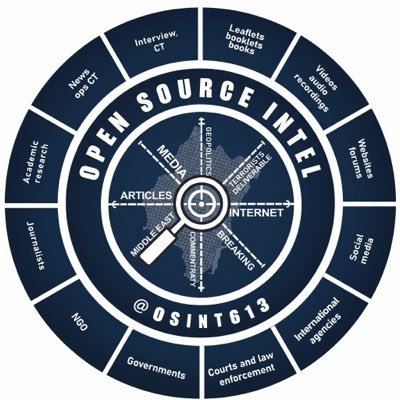
Open Source Intel
211,159 Aufrufe • vor 5 Tagen
I took this with the intention of sharing it... earlier but wimped out. Changed my mind though because I figured it might help motivate someone. I started running again 4 weeks ago after almost no running in the last 10+ years. In just a month, I knocked out an unofficial half marathon. Not only that, but it felt easy enough to talk 11.5 miles in without being winded. I’m not running fast, in fact I’m really slow at around a 12min/mile pace, but that’s the point I want to make. Running at a low heart rate does amazing things. If you want to try out this style, look up zone 2 training. Or, just go out and do some extended exercise (walk/jog) while keeping your heart rate around 130-145. Walk if you go over that upper end, even I had to when I started. Stay consistent, and you’ll see improvement relatively quickly.show more

Faux
54,366 Aufrufe • vor 2 Jahren
🚨 WW3 HIGH ALERT 🚨 A US-owned cargo ship... was just hit by a missile off the coast of Yemen ⚠️ The United Kingdom Maritime Trade Operations security agency reported it as a "vessel hit from above by a missile" on its website. According to Ambrey, a British maritime risk company, a fire broke out on board the Marshall Islands-flagged, #US-owned bulk carrier. The company "assessed the attack to have targeted US interests in response to US military strikes on Houthi military positions in Yemen" Ambrey said. With continued escalations of this nature, WW3 could break out at any moment. The United States will likely react now with overwhelming force. STAY SAFE AND BE PREPARED FOR ANYTHING! (The footage attached is being used as a placeholder to depict a ship on fire because no footage of the current event is available yet at the time of posting. The video below is of a container ship that suffered an explosion a few years ago off the port of Colombo, Sri Lanka)show more

Matt Wallace
15,371,828 Aufrufe • vor 2 Jahren
GM Lot of speculation from the community on the... photo I posted showing a container with the "Tether Energy" logo. "Is the site real?", questioned some tabloid. Did Paolo really photoshopped the logo on a container? Did Paolo really start to eat cabbages and vegetables? Well, let's start from the beginning. Tether, as announced since few months, has started Tether Energy ⚡️. TE is growing partnerships around the world with local companies, providing capital, infrastructure support, development and general expertise to build renewable energy production and #bitcoin mining sites. TE is choosing partners that have solid local connections, outstanding and passionate personnel and that demonstrate deep respect for the environment. At Tether we believe that #bitcoin mining has to be as geographically decentralized as possible, with the goal of reducing the current heavy concentration in specific countries. Is the photo real? Yes. That photo shows one of the control rooms in one of the sites that is currently being finalized and will start soon operations. Where? In LATAM. We tend to not share exact locations to avoid personnel harassment, a valid concern given the amount of detractors obsessed with Tether. You can almost hear some of them screaming: "NOOOOOOOO if you don't tell us the address, zip code, surname of the cow that is eating the grass nearby, then it's not real!!!!!" Then why the logo was overimpressed? We thought that the photo would have been shared on newspapers so the team wanted to brand it. And in fact this is exactly what happened. Moreover, putting gigantic Tether logos would not be great from physical privacy of the site point of view. It has been quite entertaining to follow the "GOTCHA!!" moment of some paid groups, desperately hoping to have found the holy grail of their anti-Tether theories, as if companies would not usually put their logos on things they build. "NOOOOOOOO!!! If it's not real paint then the entire thing does not exist!!!" So does it make it less real? No. It's really happening. The site is progressing well, everyone in the team is super excited and working around the clock to start operations in the next few weeks. Can you show something more? Sure, here is the 3D design of how the mining site will look like in a few monthsshow more

Paolo Ardoino 🤖
357,431 Aufrufe • vor 3 Jahren
BREAKING: Israel's Channel 12 says that Israeli soldiers will... not be participating in the U.S. ground invasion of Iran For decades, Israel has relied on the United States to handle the heavy lifting and dangerous combat in regional conflicts that ultimately serve Israeli interests, while keeping its own troops out of harm’s way. When the United States invaded Iraq in 2003, it toppled Saddam Hussein, an enemy who had launched missiles at Israel during the 1991 Gulf War. Israeli leaders supported the war but committed no ground forces. American troops did the fighting, dying, and occupying. Similarly, after the 9/11 attacks, the U.S. launched a massive campaign in Afghanistan against the Taliban and al-Qaeda. Israel provided intelligence assistance but sent zero combat soldiers, letting America expend its blood and treasure far from Israeli borders. The pattern repeated in Libya in 2011. U.S. led NATO intervention removed Muammar Gaddafi, a longtime antagonist of Israel. Once again, Israeli infantry stayed home. In Syria, American military involvement including airstrikes, support for opposition groups, and operations against ISIS helped weaken the Assad regime, Iran’s key ally and Hezbollah’s sponsor. Israeli forces remained on the sidelines, avoiding direct entanglement. This approach reflects calculated self interest. By encouraging or benefiting from U.S. interventions, Jerusalem achieves strategic gains removing regimes without the political backlash or casualties that direct involvement would bring. America becomes the instrument that clears away threats ranging from Baghdad to Tripoli to Damascus, often at enormous cost to itself in lives, money, and international standing. United States performs the “dirty work” of reshaping the Middle East in ways favorable to Israeli security. The latest declaration regarding Iran simply confirms what Iraq, Afghanistan, Libya, and Syria already demonstrated: when major ground operations are required, Israel prefers Washington to sacrifice its own people.show more

Financelot
37,013 Aufrufe • vor 5 Monaten
Inside Kenya’s Multi-Million Smuggling Web: KRA Officials, Dual Citizen... in High-Stakes Tax Evasion Syndicate A major tax evasion and smuggling scandal is unfolding in Kenya, placing senior officials from the Kenya Revenue Authority (KRA) under intense scrutiny alongside a Kenyan–US dual citizen accused of orchestrating a sophisticated contraband network that could expose deep-rooted weaknesses in the country’s customs enforcement systems. According to sources familiar with the investigation, detectives from Interpol have launched a probe into an elaborate scheme involving the importation and illegal clearance of goods into the Kenyan market. The operation allegedly exploited loopholes within customs systems and involved collusion with insiders, pointing to what investigators fear could be a well-organized cartel operating across borders. The mastermind, Peter Mwaniki Maina, is now on the police radar alongside his second wife, Stacy Wangari Njiri. Njiri is believed to be the key figure handling the local operations of the syndicate both have been advertising the company Arisilva logistics on different social media outlets. She reportedly resides along the posh Kiambu Road in a house allegedly purchased by Mr. Maina, from where authorities suspect coordination of logistics, storage, and distribution of the smuggled goods has been taking place. How the Scheme Allegedly Worked Investigations reveal that a suspicious container—number MAGU5438993 was cleared through the Compact Special Economic Zone (SEZ) in Nairobi under questionable circumstances. The clearance is said to have been facilitated by senior KRA officials within the verification department, raising serious concerns about internal controls and possible compromise of key clearance procedures. However, in a dramatic twist, internal whistleblowers within KRA reportedly leaked the irregularities to the Commissioner General’s office. Acting swiftly, enforcement officers tracked and seized the container while it was being offloaded at Viken Thirty Industrial Park in Kamakis, Nairobi an operation that insiders describe as a “near miss” in stopping what could have been a massive circulation of contraband into the Kenyan economy. Authorities say the shipment, valued at millions of shillings, contained undeclared goods. Even more alarming are suspicions that the consignment may have included counterfeit products and possibly illicit substances, widening the scope of the investigation from tax evasion to potential public health and safety risks. A Growing Pattern of Smuggling Through Kenyan Ports This case highlights a broader and persistent challenge facing Kenya’s trade and border control systems. The Kenya Ports Authority (KPA), particularly the Port of Mombasa, has long been identified as a critical entry point vulnerable to contraband smuggling despite increased surveillance and digitization efforts. Over the years, authorities have intercepted a wide range of illegal imports, including: * Counterfeit electronics and textiles flooding local markets and undermining legitimate businesses * Untaxed luxury goods falsely declared as household items to evade customs duties * Restricted pharmaceuticals and narcotics posing serious health and security threats * Vehicles imported under the “returning residents” scheme using falsified documentation Experts note that criminal networks often exploit tax exemptions, insider collusion, and weak verification mechanisms. In some cases, forged passports are used to falsely qualify for tax waivers, while bribery within clearance chains enables goods to pass undetected through official systems. The Alleged Mastermind At the center of the investigation is a Kenyan national with dual US citizenship, accused of running a highly coordinated smuggling ring with both international and local linkages. Detectives believe the suspect used fake identities and manipulated the “returning residents” tax exemption scheme to evade millions in taxes while maintaining a low profile behind legitimate-looking business operations. Authorities further allege that close associates, including Njiri, played a crucial role in logistics overseeing the deconsolidation, storage, and redistribution of goods into local markets. Social media platforms were also reportedly used to promote a logistics company linked to the network, helping to mask illicit operations under the guise of legitimate trade. A Potential Transnational Crime Case Investigators now believe the case could extend far beyond Kenya’s borders, describing it as a possible multinational smuggling syndicate with links to international supply chains. The involvement of Interpol signals the seriousness of the probe and raises the likelihood of coordinated cross-border arrests and asset tracing. If proven, the suspects could face serious charges under international law, including tax fraud, organized crime, and trafficking of illegal goods offenses that carry heavy penalties and could trigger extradition proceedings.show more

Cyprian, Is Nyakundi
112,321 Aufrufe • vor 5 Monaten
OpenClaw setup made me $23,472 Literally overnight my $100... turned into $2,411 Average bot win rate 71% Copytrade: Here is the full strategy: The system builds automated workflows for trading by turning domain expertise into structured skills that activate automatically when specific market conditions appear Skill architecture Each skill is a modular package that includes instruction scripts and reference data This allows the system to apply specialized workflows without needing manual input for every trade Progressive context loading Skills use a three layer structure Only minimal metadata loads at first Full instructions historical data and supporting resources load only when required This reduces resource usage while keeping advanced trading capability Trigger detection Skills activate automatically when market conditions match predefined triggers such as volatility levels orderflow behavior or news sentiment This ensures the right workflow is used at the right time without manual action Workflow execution Once activated each skill runs a predefined multi step process including Real time price tracking and order book analysis Factor generation and backtesting Signal aggregation from machine learning models news sentiment and orderflow Risk assessment and capital allocation Trade execution with retries and position splitting Consistency and reliability All workflows are embedded directly into the system which ensures consistent execution instead of random decision making Every factor signal and risk rule is applied in a structured way Testing and iteration Skills are continuously improved using historical backtesting simulated trading and live performance tracking to maintain reliability in real market conditions Automation edge Instead of creating new strategies every time the system repeatedly uses optimized workflows This reduces complexity increases consistency and scales performance across thousands of trades Performance snapshot Started one month ago with $500 Current daily profit $2,300 per day Morning profit today $71,452 The system runs fully autonomously constantly scanning markets generating signals auditing trades managing risk and executing orders to maximize compounding returnsshow more

winkle.
44,158 Aufrufe • vor 5 Monaten
当地时间11月21日18:30,洛杉矶港日本福神汽船旗下集装箱船“One Henry Hudson”(刚完成东京至洛杉矶航行)甲板下方突发电气火灾,19:58甲板中部爆炸,致全船断电、照明及起重机瘫痪。因货单显示部分集装箱含危险品,消防员需佩戴特殊呼吸设备救援,危险品处理小组持续监测空气质量,部分区域因风险暂停作业;洛杉矶消防局派出超180名消防员及消防船通宵喷水降温,同时发布危险品警报,覆盖圣佩德罗、威尔明顿等社区,要求居民立即室内避险、关闭门窗及空调。事故导致洛杉矶港4个码头暂停作业、47号州道临时关闭,这座全球最繁忙港口之一陷入部分瘫痪。At 18:30 local time on November 21,... an electrical fire broke out under the deck of the container ship "One Henry Hudson" (which had just completed the voyage from Tokyo to Los Angeles) owned by Japan's Fukushin Steamship in the Port of Los Angeles. At 19:58, an explosion occurred in the middle of the deck, causing power outages, lighting and crane paralysis throughout the ship. As the manifest shows that some containers contain dangerous goods, firefighters need to wear special breathing equipment to rescue, the dangerous goods handling team continuously monitors the air quality, and some areas suspend operations due to risks; The Los Angeles Fire Department dispatched more than 180 firefighters and fire boats to spray water overnight to cool down, and issued a dangerous goods alert covering San Pedro, Wilmington and other communities, requiring residents to immediately avoid danger indoors, close doors and windows, and air conditioning. The accident led to the suspension of operations at four terminals in the Port of Los Angeles and the temporary closure of State Route 47, partially paralyzing one of the busiest ports in the world.show more

雁过留声
32,071 Aufrufe • vor 9 Monaten
🧃 Introducing stereOS: a Linux based operating system hardened... and purpose built for AI agents. It's clear that agents need an ACTUAL operating system (not what people are calling an "OS") to witness the full breadth and depth of their capabilities while mitigating the blast radius of autonomous, untrusted actors. But there are so many problems with AI sandboxes today: * Going out to the apple store and buying a mac mini will never scale and is way too expensive (obviously) * Running in Docker is too restrictive (agents can't stand up their own container infrastructure, no sub virtualization, docker-in-docker is very broken) * Firecracker strips all the hardware so GPU PCIe passthrough, secure boot, FIPs, etc. is out of the question. * Native VMs are too fat and the overhead of 1 agent per VM is too much. stereOS takes a different approach: it's a full NixOS system that you boot and then kick off agent sandboxes inside with gVisor + /nix/store namespace mounting. Each agent gets their own kernel and the /nix/store is read only by nature. Even if the agent was somehow able to escape the gVisor virtual kernel, they'd land on the NixOS system as the "agent" user! Not your actual hardware!! If you want to take a defense-in-depth approach, we support "native" agents that run at the system level kicked off by our `agentd` utility. These agents, on their own, can manage and kick off other sub agents using the internal sandboxing mechanisms. Today, we're open sourcing all of this: * stereOS: our purpose built Linux OS - * masterblaster: client utility to launch, manage, and orchestrate agents - * stereosd: the stereOS system control plane daemon - * agentd: the stereOS system agent management daemon - Give it a try, throw us a star, and let me know what you think 🧃⭐️show more

John McBride
150,742 Aufrufe • vor 6 Monaten
🚨OPERATIONAL UPDATE: ISRAEL U.S. WAR WITH THE ISLAMIC REPUBLIC... - Reporting Window: 3/14 to 3/16 • The war widened further into the Gulf economy, with drone incidents near Dubai Airport, disruption at Fujairah energy infrastructure (also in the UAE), and continued pressure around the Strait of Hormuz • Israel continued deep strike waves inside Iran while expanding ground operations against Hezbollah in southern Lebanon • Iran continued missile salvos toward Israel while activating proxy pressure fronts across Iraq • The U.S. began pushing for a multinational Hormuz security coalition while calibrating escalation to avoid a global oil shock The last 48 hours showed that the war is no longer just about missile exchanges between Israel and Iran. It is increasingly a contest over the regional system itself: energy flows, maritime routes, proxy networks, and command infrastructure. While Israel continues to degrade Iran’s military capabilities, Iran is trying to widen the battlefield economically and geographically. 📽️VIDEO 1: U.S. strikes on Iran’s Kharg Island oil export hub. 📽️VIDEO 2: Smoke rising from oil infrastructure in Fujairah after drone debris caused a fire. *⃣ GULF FRONT: THE ECONOMIC WAR DEEPENED This remained the most strategically important development. Following earlier strikes around Kharg Island and threats to the Strait of Hormuz, pressure on Gulf infrastructure continued. Drone incidents and debris related fires disrupted operations near Fujairah’s energy infrastructure, one of the world’s largest bunkering hubs in the UAE. Shortly afterward, a drone related incident near Dubai International Airport ignited a fuel tank and temporarily disrupted flight operations before authorities contained the fire and resumed traffic. These incidents show the war repeatedly touching civilian energy and logistics infrastructure in the UAE, not just military facilities. Even limited disruptions matter in this region. The Strait of Hormuz handles roughly 20 percent of global oil supply, and repeated incidents have pushed oil prices above $100 during the week. Iran does not need to fully close Hormuz to achieve strategic leverage. Persistent disruption alone can force insurance spikes, rerouting of shipping, and higher global energy prices. *⃣ KHARG ISLAND: IRAN’S ECONOMIC JUGULAR IS NOW UNDER DIRECT PRESSURE One of the most consequential developments in the war involves Kharg Island, Iran’s primary oil export terminal. Historically, roughly 85 to 90 percent of Iran’s crude exports pass through Kharg, making it the single most important node in the country’s energy economy. Recent U.S. strikes targeted military infrastructure associated with IRGC naval operations near the island, particularly facilities linked to mine laying capability and coastal missile systems. These strikes appear connected to Washington’s warning that Iran must not deploy naval mines in the Strait of Hormuz. There are also scattered reports of secondary explosions and possible infrastructure damage near the port, though there is no credible confirmation that the export terminal itself has been destroyed. That distinction is important. Destroying Kharg outright would cripple Iran’s oil exports overnight and likely trigger a massive oil price spike. Instead, the current targeting pattern appears designed to threaten Iran’s economic lifeline without fully collapsing it, maintaining pressure while avoiding the most extreme global economic consequences. *⃣ IRAN: STRIKES INSIDE THE CORE CONTINUED Inside Iran, Israeli strike activity remained intense. Over the last 48 hours, strikes targeted command infrastructure, missile launch systems, air defense networks, and military production sites across Tehran and other strategic locations. The campaign also hit Mehrabad Airport, where Israeli officials reported destroying aircraft associated with Iran’s leadership. Across central and western Iran, the strike map remains broad. Tehran, Karaj, and several other military zones have continued to appear in overnight strike reporting. This suggests the campaign is still focused on systematically degrading Iran’s military capacity, particularly missile infrastructure and command networks. Rather than shifting toward a narrow endgame phase, the strikes indicate a continued effort to keep Iran’s launch capabilities suppressed. *⃣ LEBANON: THE NORTHERN FRONT IS EXPANDING The Lebanon front also escalated further. Israeli forces expanded ground operations in southern Lebanon and reportedly encircled Khiyam, pushing westward toward the Litani River. This represents a larger ground posture than earlier border operations and indicates Israel is attempting to shape the battlefield against Hezbollah rather than simply retaliating against rocket launches. At the same time, Hezbollah continued firing rockets and drones toward northern Israel, maintaining pressure on the northern front even after suffering extensive infrastructure losses earlier in the war. Israel has continued heavy strikes on Hezbollah infrastructure in Lebanon, including operational sites and logistical facilities tied to the group’s missile network. The northern theater now appears to be entering a phase of attrition and positional pressure, rather than the limited cross border exchanges that characterized earlier weeks. *⃣ IRAQ: PROXY PRESSURE ON THE UNITED STATES CONTINUES Iran aligned militias continued attacks on U.S. positions across Iraq. Over the past several days these groups have launched drones and rockets against American bases and diplomatic infrastructure, including a missile strike on the helipad area of the U.S. embassy compound in Baghdad. These attacks serve two purposes: ➡️First, they impose direct costs on U.S. operations in the region. ➡️Second, they force the United States to divert resources toward base defense and interception missions. Even when damage is limited, the attacks expand the battlefield and complicate the operational environment for U.S. forces. *⃣ IRANIAN MISSILE ATTACKS CONTINUE Iran continued launching missiles toward Israel during this period. Several salvos targeted southern Israel and the Negev region, triggering repeated air raid alerts. Despite continued launches, the overall military impact of these attacks appears limited. Israeli air defense systems including Iron Dome, David’s Sling, and U.S. systems such as THAAD have maintained high interception rates. Iran is still able to launch missiles and drones, but the sustained strikes on launchers, command centers, and production facilities appear to be reducing the scale of its barrages compared to the opening days of the war. *⃣ WASHINGTON: TRUMP SIGNALS A LONGER STRATEGIC GAME The political messaging from Washington over the past 48 hours has also clarified the broader strategic direction. Publicly, Trump has suggested the war could end soon and that most major Iranian targets have already been struck. Operationally, however, the signals point toward preparation for a longer campaign. Washington has begun pushing for a multinational coalition to secure the Strait of Hormuz, urging countries that depend on Gulf energy flows to participate in maritime security operations. At the same time, the United States has been careful not to push escalation to the point of triggering a global energy shock. This balancing act helps explain why certain targets, such as Kharg Island’s export terminal, have been threatened but not completely destroyed. The strategic posture appears to be: ➡️sustain pressure on Iran’s military capability ➡️protect global energy flows ➡️avoid triggering a catastrophic oil price spike Israel’s priorities are somewhat different. Israel is focused primarily on maximizing military degradation of Iran and Hezbollah, even if that increases regional escalation risks. The dynamic between Washington’s economic caution and Israel’s military pressure is likely to shape the next phase of the conflict. *⃣ WHAT CHANGED IN THE LAST 48 HOURS Three developments stand out: ➡️First, the Gulf economic front is becoming central to the war. Drone incidents near Dubai and Fujairah show that the conflict is now directly touching regional infrastructure and global energy flows. ➡️Second, Israel continues to widen the battlefield rather than narrow it. Deep strikes inside Iran and expanded operations in Lebanon suggest the campaign is still in a degradation phase. ➡️Third, the United States is beginning to shift toward coalition management of the conflict, particularly around Hormuz, while trying to prevent the war from triggering a global energy crisis. In short, the war is evolving from a direct military confrontation into a broader struggle over regional stability, energy flows, and long term strategic balance in the Middle East.show more

Inside_Israel_Intel
460,417 Aufrufe • vor 5 Monaten
Day 11/90 of Inference Engineering How does vLLM work... and how is it used in production? Before we discuss how vLLM works internally, it helps to understand what vLLM is. At a high level, vLLM is an inference engine that is designed to serve LLMs to thousands of concurrent users efficiently while managing scarce compute and memory. The goal for vLLM is to maximize throughput and minimize latency; optimizing for the best inference economics and experience for end users. With every request from the end user, it eventually ends up in the engine core, gets scheduled alongside other requests from other concurrent users, executes on the GPU, and updates the KV cache with the new key and value vectors, and streams the tokens back to the user. The Scheduler decides what requests should execute next while continuously batching requests together to maximize GPU utilization. Continuous batching is an inference optimization that allows new requests to join a running batch as other requests finish generating tokens. This helps with keeping the GPU utilization high instead of letting it sit idle waiting for an entire batch to complete generating. After the scheduler dispatches the selected batch to the Model Executor, the Model Executor prepares the tensors and metadata required for inference, retrieves each request’s block table from KV Cache Manager, launches the optimized transformer forward pass on the GPU, computes the logits, updates the KV cache with the new key and value vectors, and finally returns the results for sampling and streaming. The KV Cache Manager uses the PagedAttention memory layout to allocate fixed-size cache blocks on demand and maintains a Free Block Queue on the CPU that tracks which blocks in the GPU’s Paged KV Cache are currently free. When a request needs additional KV cache space, the KV Cache manager takes a free block from the queue and assigns it to that request, thus avoiding an expensive search through GPU memory for available cache blocks. All of these components form the core of vLLM’s inference engine. The Scheduler determines what requests are executed, the Model Executor determines how those requests are executed, the KV Cache Manager determines where each request’s KV cache lives using the PagedAttention Memory Layout. This architecture enables vLLM to serve thousands of concurrent requests with high throughput, low latency, and efficient GPU memory utilization. Heres a little animation that visualizes everything! - I've also completed the forward pass for my mnist.c project. I had a nice chat with shrey birmiwal, such a knowledgeable guy. Excited to learn more about vLLM and implement a tiny-vLLM one day.show more

max fu
70,543 Aufrufe • vor 1 Monat
🚨OPERATIONAL UPDATE: ISRAEL U.S. WAR WITH THE ISLAMIC REPUBLIC... - Reporting Window: 3/11 to 3/12 • Iran widened pressure on the Gulf energy system, with tankers hit near Basra, a container vessel struck near the UAE, and fuel infrastructure targeted in Bahrain and Oman, sending oil back above $100. • Israel expanded its campaign inside Iran, striking IRGC command infrastructure, missile production sites, and drone launch networks in and around Tehran. • Hezbollah launched one of its largest rocket barrages of the war, triggering heavy Israeli strikes on command centers and weapons infrastructure in Beirut’s southern suburbs. • Iranian proxies and aligned forces continued attacks on U.S. positions across the region, bringing the total number of incidents targeting American sites or personnel to at least 25 since the war began. The central story of the last 24 hours is that the conflict is increasingly moving beyond the battlefield and into the systems that keep the region functioning. Iran continues to pressure shipping, energy infrastructure, and U.S. positions across the Middle East, while Israel is pushing deeper into the regime’s military and security architecture. The result is a war that now looks less like a contained exchange of strikes and more like a widening struggle over the region’s economic stability, military balance, and internal political control. ━━━━━━━━━━━━━━━━━━ *⃣ PERSIAN GULF: IRAN CONTINUES TO PRESSURE THE ENERGY SYSTEM The Persian Gulf remained the most strategically significant theater over the last 24 hours. Multiple reports confirmed additional attacks affecting shipping and energy infrastructure across the region. Two oil tankers were reported burning in Iraqi waters near Basra after earlier strikes on vessels in the Gulf, while another container ship was reportedly hit near the UAE. Fuel and logistics infrastructure also came under pressure. Bahraini authorities reported that Iranian aggression targeted fuel tanks at a facility in Muharraq near Bahrain International Airport, while additional reports indicated that oil storage facilities at Oman’s Port of Salalah were struck. These attacks reinforce a clear pattern: Iran may not be able to fully close the Strait of Hormuz, but it is demonstrating that it can disrupt the broader logistical network surrounding the Gulf’s energy system. The market reaction was immediate. Oil prices moved back above $100 despite coordinated moves by the United States and its partners to release large volumes from strategic petroleum reserves. The International Energy Agency and several governments have moved to inject supply into the market, but these measures are temporary buffers. As long as shipping through the Gulf remains at risk, the global energy market will continue to price in disruption. ━━━━━━━━━━━━━━━━━━ *⃣ TEHRAN: THE CAMPAIGN IS NOW HITTING THE REGIME’S CORE SECURITY NETWORK The latest strike waves inside Iran appear to be moving beyond general bombardment and toward a systematic dismantling of the regime’s security infrastructure. Israeli strikes reportedly targeted the IRGC Air Force headquarters in Tehran, ballistic missile storage and production facilities, Basij paramilitary command centers, and a compound at Imam Hossein University that functions as an operational hub for the Revolutionary Guards. Additional strikes were reported against Iranian intelligence ministry facilities and internal security infrastructure, indicating that the campaign is beginning to focus not only on missile capability but on the regime’s ability to control events inside the country. Separate strikes in western Iran reportedly hit drone launch teams preparing attacks toward Israel, suggesting that launch infrastructure is now being targeted dynamically as it emerges rather than only through preplanned strikes against fixed installations. Satellite imagery also confirmed damage to Iranian F-14 fighter aircraft at Isfahan’s 8th Tactical Air Base, further degrading an already aging Iranian air force that has struggled to contest Israeli and U.S. air superiority throughout the conflict. Taken together, the targeting pattern suggests that the coalition is increasingly focusing on the regime’s operational nervous system: command networks, launch infrastructure, and internal security forces that allow the government to coordinate and sustain military operations. ━━━━━━━━━━━━━━━━━━ *⃣ LEBANON: ISRAEL IS NOW TARGETING HEZBOLLAH’S OPERATIONAL COMMAND STRUCTURE The northern front also escalated sharply over the last 24 hours. Hezbollah launched one of its largest barrages of the war, firing large numbers of rockets and drones toward northern Israel in coordinated strikes linked to Iran’s broader regional campaign. Israel’s response focused heavily on Hezbollah’s command and operational infrastructure rather than simply retaliating against launch sites. Israeli aircraft struck multiple facilities in Beirut’s southern suburbs (Dahieh), including command centers, operational headquarters, and weapons storage sites linked to Hezbollah’s Radwan forces, the elite unit responsible for cross-border operations against Israel. Additional strikes targeted missile launch infrastructure and militant positions across southern Lebanon, as well as logistical sites used to support ongoing rocket attacks. The concentration of strikes in Dahieh is significant. The area functions as Hezbollah’s central military and intelligence hub, and repeated attacks there suggest Israel is attempting to disrupt the group’s command-and-control structure rather than merely suppress individual launch cells. This shift indicates that the northern theater may be entering a new phase where Israel seeks to systematically degrade Hezbollah’s operational leadership and coordination networks, not just reduce the immediate rocket threat. ━━━━━━━━━━━━━━━━━━ *⃣ REGIONAL SPILLOVER: U.S. POSITIONS AND GLOBAL SECURITY CONCERNS Regional spillover continues to grow. Iranian proxies and aligned groups have carried out repeated attacks targeting American facilities or sites hosting U.S. personnel across the Middle East. Analysts now count at least 25 attacks targeting U.S. sites or locations housing American personnel since the war began. One of the most significant recent incidents involved a drone strike on a large U.S. diplomatic facility near Baghdad International Airport. The attack caused damage but did not produce casualties, and U.S. officials suspect it was carried out by Iranian-aligned militias operating in Iraq. Beyond the Middle East itself, intelligence warnings suggest the conflict could reach further. U.S. authorities have warned about potential Iranian retaliation targeting American interests abroad, including scenarios involving drone launches from maritime platforms. Cyber activity linked to Iran has also been detected in Europe, including an attempted attack on a nuclear research facility in Poland that officials say bears multiple indicators of Iranian involvement. These developments show that while the war’s kinetic center remains in the Middle East, the broader confrontation between Iran and its adversaries is beginning to manifest across multiple domains: military, cyber, and economic. ━━━━━━━━━━━━━━━━━━ *⃣ WHAT MATTERS MOST RIGHT NOW The key takeaway from the past 24 hours is that the war is continuing to widen in practice even as some political messaging suggests it could be nearing a conclusion. Iran is still capable of imposing meaningful costs through attacks on shipping, energy infrastructure, and proxy operations across the region. Israel, meanwhile, is expanding its strike campaign into deeper layers of Iran’s military and security architecture while escalating pressure on Hezbollah in Lebanon. Neither side appears close to a decisive breakthrough. Iran’s leadership structure remains intact despite heavy strikes, and its network of proxies continues to generate pressure across multiple fronts. At the same time, Israel and the United States retain overwhelming military superiority and appear committed to degrading Iran’s ability to sustain a prolonged conflict. For now, the trajectory remains clear: the war is evolving from a direct exchange of strikes into a broader contest over the region’s economic stability, military balance, and political future. --------------------------------- END REPORTshow more
Inside_Israel_Intel
30,124 Aufrufe • vor 5 Monaten
Just finished a one-week trip to China. I've now... "survived" all the major (~20) L2 self-driving and robotaxi vehicles in both the US and China. Some thoughts & observations: ▶️L2 self-driving I tested major brands like $Huawei, $Li, $NIO, $Xpeng, and $Xiaomi. Overall, they exceeded my expectations. The rides were not overly cautious and handled complex situations (yes, road conditions in China are very challenging!) quite well. Nothing compares to $Tsla's approach. I see imitation learning/end-to-end as the only effective approach for self-driving. While Chinese peers perform well on main roads, they struggle on frontage roads due to reliance on high-precision maps and rule-based methods (e.g. cars stopped in the middle of the road where there was no clear white lining). Chinese EVs' self-driving capabilities are far ahead of those from US and EU brands. I doubt any Chinese players can profit from L2 self-driving, not because it’s not useful, but because it’s hard to differentiate, and price wars dominate the market in China. Chinese consumers and regulators seem much more receptive to self-driving. Even with a 5/10 self-driving capability, cars are practically *hands-free(!)* Insurance-wise, for L3+ cars, OEMs bear responsibility for incidents, so OEMs avoid labeling cars as L3+. ▶️Robotaxi I tested major brands like $Didi, and $Bidu. I'd rate equal to $Waymo, and it's ahead of other peers. However, the same issue applies here: user experience is nearly perfect (in Yizhuang, Beijing), but expansion is the real question. Chinese robotaxi companies are very sophisticated. While the rest of the world focuses on technology, Chinese peers treat it as a product, considering unit economics, operations, mass production, etc. Interestingly, most companies expressed a preference NOT to operate fleets themselves. They aim to be asset-light and let fleet managers handle operations. Policy Support: China has a very clear approval process, driven by data (autonomous driving distance, fully driverless distance, intervention rate, passenger ratings, etc.). ▶️Chinese EVs In major cities like Beijing or Shanghai, EV adoption (green license plates vs. gas cars with blue license plates) seems to be 40%+. If 40% of cars on the road are EVs, then EV penetration (defined as the % of new car sales) must already be over 50%. In shopping malls, the ground floor is filled with EV showrooms—easily 10+ brands, many of which are unfamiliar Chinese brands. It appears almost too easy to make an electric car, which is a stark contrast to the US. $Xiaomi, for example, can achieve a 10% gross profit margin in its first year of operation, compared to $RIVN's -45%. Additionally, $Xiaomi cars are priced at 30% of $RIVN's price. It's fascinating to see how China transitioned from "couldn't make their own gas cars at all (only JVs)" to "dominating EVs globally." The government deserves credit for setting the direction and executing effectively. China now controls the entire supply chain, with $CATL holding 40% of the global market share. 🔹How did it happen? The success of the industry Incentives were set just right: the government provided incentives early on to make EVs and gas cars have comparable MSRPs, allowing consumers to choose based on functionality. This approach differs from how the IRA offers incentives... Perfectly competitive market: $TSLA was brought in, and competition was welcomed, unlike the US, which has a 100% import tax on Chinese EVs. Strategic regulations: License plate restrictions were used effectively; for example, taxis and minivans are required to be EVs. 🔹The challenges Despite the success, the industry faces challenges with low-margin companies and struggling stocks. The intense competition shows no sign of ending. Well-funded global OEMs and Chinese state-owned car companies continue to subsidize, leading to new EV brands emerging annually. The natural tendency in China is to race to the bottom. I think this ties back to China's history as the "world’s factory," where manufacturers price products at "cost plus" versus the US and developing countries, which price based on "affordability/value creation." 🔹The wow EV feature >Software features that surprised me the most: - Everything in the car can be voice-controlled. Not just simple tasks like playing music; users can adjust the height of the steering wheel and set the temperature easily. - Self-parking, which $Tsla has yet to release to all FSD users, is already a table stake in China (I'd rate the quality as 10/10). >Other fun hardware features: - Mini fridges in the car - Infotainment systems - IoT: remote access the car/home via cellphone - all connected together - Heads-up displays - UV-protected glass roofs: $Xiaomi took $Tsla's design, but the glass roof of the $Xiaomi car is made of double layers with silver, blocking 99.9% of UV and infrared rays...as a result, heat is no longer a problem inside the carshow more

Freda Duan
399,095 Aufrufe • vor 2 Jahren
Buddy had been going to that beach with the... Miller family for almost 14 years. When he was young, getting him out of the water was usually harder than getting him into it. He would race into the surf before anyone had finished taking their shoes off and keep swimming until somebody finally called him back. The years changed that little by little. His runs became slow walks, his coat faded around the face, and eventually the Labrador who once spent an hour in the ocean was happy just standing where the water reached his paws. A few days earlier, the family had heard the words they had been dreading. Buddy was very old, and he was very sick. The veterinarian couldn't tell them exactly how much time he had left. There was no dramatic countdown, only the understanding that they were probably looking at days instead of months and that keeping him comfortable mattered more than anything else now. Emma was the one who brought up the beach. It had always been Buddy's place. So they drove him there one more time. Nobody brought a ball. Nobody tried to get him excited or make the afternoon into something it wasn't. They walked slowly down to the shoreline and let Buddy decide what he wanted to do. For a while, he simply stood there. The family stayed several feet behind him while Buddy looked toward the ocean. Then he turned and looked back at them. Emma's eyes were already wet. "We're right here, Buddy." The old Labrador held their gaze for a moment before turning toward the water. His first steps were slow. The wet sand gave slightly beneath his paws, and when the first little wave reached him, Buddy stopped long enough to feel it move around his legs. Then he kept going. The water reached his chest, and for a few seconds he stood quietly looking out at the same ocean he'd been running into since he was a puppy. Buddy started swimming. It was only a few strokes, nothing like the long swims the family remembered. His gray muzzle stayed above the surface while he moved slowly through the shallow water close to shore. Nobody called him back. They just walked along the sand beside him. After a short distance, Buddy slowed and turned his head toward his family again. His mother wiped her face. "Good boy, Buddy. We love you!" Buddy stayed in the water a little longer before coming back toward shore. The family dried him off and sat with him on the sand until the evening grew colder. Buddy rested between them while they talked about old vacations, ruined towels, muddy car seats and all the times he'd refused to leave that beach when everyone else was ready to go home. They knew one last trip couldn't change what was coming. That wasn't the point. For one more afternoon, Buddy got to smell the ocean, feel the water around him and look back to find the same family waiting where they had always been. If you could give your dog one last perfect day, where would you take them?show more

Gabriele Corno
45,547 Aufrufe • vor 14 Tagen
The biggest Bitcoin miners on earth are quietly walking... away from mining Bitcoin, and the reason is not the one everyone keeps repeating. They are not fleeing a dead business. They lost an auction for their own power, and the winner was artificial intelligence. Start with the brutal arithmetic. It now costs the average public miner around $80,000 in cash to produce a single Bitcoin, and for stretches of this year $BTC traded below that. The most efficient operators on the cheapest power still clear a margin, but an estimated 15 to 20 percent of the global fleet is mining at a loss right now, burning more in power than the coins are worth the second they are minted. Three straight downward difficulty adjustments earlier this year, the first such streak since 2022, were the footprint of machines going dark. That looks like a simple story of a broken business until you see the number that explains the exodus. The same megawatt of power that earns a Bitcoin miner roughly $1 million a year earns between $10 and $20 million a year hosting AI compute. Ten to twenty times more, for the identical electricity, substation, and cooling. What made industrial miners valuable was never the mining. It was the power contracts, the land, the grid interconnects. AI walked in and bid an order of magnitude higher for exactly those assets. Mining did not fail. It got outbid for its own infrastructure. When Core Scientific runs its BTC segment at a negative margin while its AI colocation business prints money, the decision writes itself. CoinShares estimates listed miners could pull up to 70 percent of their revenue from AI by year end, up from about 30 percent. The power is being repriced to its highest use, and Bitcoin lost the bidding. If the giants leave, what happens to the network they secured? The doom posts assume it weakens. It does not, because Bitcoin has a self-healing reflex written into its core. When miners switch off, blocks slow, and within two weeks difficulty automatically drops, which makes mining cheaper and more profitable for everyone still running. The security does not vanish, it relocates, and you can already see where. State-backed pools are appearing, with one Gulf operator reportedly standing up a national pool near 3 percent of global hashrate, alongside private fleets and the handful of public miners like Marathon still choosing to buy Bitcoin rather than lease their power away. The network even hit an all-time high above one zettahash this year as the pivot accelerated. It does not need any particular miner. It needs someone, somewhere, for whom the math still works, and cheap stranded power has no shortage of those. But there is a deeper timer here, and the AI pivot just exposed it. Today miners earn almost everything from the block subsidy and almost nothing from fees, often under one percent of revenue on a quiet day. That subsidy halves again in 2028, and every four years after, marching toward zero. For Bitcoin to pay for its own security forever, fees eventually have to replace it. The open question is whether they can, and the evidence cuts both ways. On busy days, during token launches and inscription waves, fees have already spiked past 15 percent of revenue, and in 2024 some blocks earned more in fees than the entire subsidy. The capacity is there in bursts. Whether bursts become a baseline is the single most important unanswered question in Bitcoin. The AI exodus did not create that question. It pulled the cover off it years early, and showed how fast capital abandons hashing the moment something pays more. So the honest read is not that AI kills Bitcoin mining. It is stranger than that. AI is the first bidder rich enough to reveal what Bitcoin's security was always quietly worth, and what it will cost to keep once the free coins stop coming. The miners are not abandoning a sinking ship. They are selling the deck to a higher bidder while the same clock everyone forgot about keeps ticking underneath.show more

Shanaka Anslem Perera ⚡
90,718 Aufrufe • vor 2 Monaten
‼️An interesting interview with Lavrov Sergey Lavrov regularly gives... interviews, and almost every one of them is an information operation designed to create an alternative reality. The March 26 interview with France Télévisions is no exception. Let's break it down and point out where there are lies and where there is manipulation. 1. Lavrov claims that Russia is supposedly defending international law while speaking in the "language of principles" regarding Iran. What's wrong: it's basic role reversal. Moscow is trying to speak from the position of a "guardian of the law," even though it is waging an aggressive war against Ukraine. In the case of Iran, Lavrov is also deliberately omitting half the picture: yes, the US withdrew from the nuclear deal, but Iran also faced non-proliferation concerns raised by the IAEA. Why it matters: It is an attempt to whitewash Russia's crimes through someone else's crisis and to present the aggressor (Russia) as the judge. 2. Russia does not provide Iran with intelligence; the coordinates of US bases are "already known to everyone." What's wrong: it's an evasive statement, not a complete refutation. There is no independently verified evidence of specific target marking data transfers in open sources, nor can there be, but the Kremlin's "we have nothing to do with it" claim has no basis for being automatically considered true. Why it matters: A typical Kremlin tactic - to deny anything that does not align with Russia's interests and to continue operating in a gray area. 3. Saudi Arabia and the UAE have denied the US access to their airspace, so Russia is right about the "American venture." What's wrong: The caution of Gulf countries is real, but Lavrov turns it into a crude anti-Western caricature. Regional politics are more complex than the Kremlin's narrative that "everyone understands everything, only the US is pushing the world into chaos." Why it matters: The Kremlin takes a partial truth and builds a convenient political myth around it. 4. Russia isn't waging wars for its own gain; it's the US that wants to control the energy sector, the Strait of Hormuz, and the markets. What's wrong: It's pure projection. It is Russia that has used energy as a weapon for years, and after 2022, turned petrodollars into fuel for war. Why it matters: Moscow accuses others of doing what it does systematically - this is one of the central techniques of its propaganda. 5. Since 2014, Ukraine has been ruled by a "Nazi regime" that came to power through a coup. What's wrong: After Yanukovych fled, Ukraine held snap presidential elections, which the OSCE recognized as meeting international standards and being competitive. The claim of a "Nazi regime" is a political label, not a description of reality. Why it matters: "Nazism" in Kremlin rhetoric is a tool for dehumanizing Ukraine and justifying the war. 6. The Russian language is allegedly completely banned in Ukraine. What's wrong: Ukraine has strengthened the role of the state language, but this does not mean a total ban on Russian. The law does not apply to private communication and does not criminalize the everyday use of the language. Why it matters: The Kremlin is exaggerating language policy to the level of a "linguistic apocalypse" to sell the war as a supposed humanitarian mission. 7. Ukraine is allegedly at war with Orthodoxy and has "banned the canonical church." What's wrong: This is not about "banning a faith," but about a law regarding religious organizations linked to the Russian Orthodox Church. Even criticism from human rights activists does not support the Kremlin's claim of "persecution of Orthodoxy." Why it matters: Moscow is using the language of religious protection to cover up its network of influence in Ukraine. 8. The West allegedly cynically exploited the Minsk agreements as a respite to arm Ukraine. What's wrong: The Minsk process was collapsing because of the Kremlin's desire to use the agreements to establish de facto control over Ukraine, not because of some "cunning plot" by Paris and Berlin. Why it matters: The Kremlin is rewriting history retroactively to portray its own aggression as a supposedly forced response to "universal betrayal." 9. Russia does not attack civilians; its targets are solely facilities associated with the AFU. What's wrong: It's an outright lie. For years, the UN and independent sources have documented systematic Russian strikes on cities, residential areas, energy facilities, and civilian infrastructure. Why it matters: This is no longer just propaganda, but a cynical denial of documented terror against civilians. 10. The Bucha massacre is allegedly "not proven": there are no names, no evidence, and journalists haven't shown anything. What's wrong: This is one of the most mendacious claims. There are UN documents, testimonies, criminal investigations, identified suspects, and evidence of executions and killings of civilians. Why it matters: The Kremlin is not trying to refute the crime, but to wear down the audience with doubt and turn mass murder into "one of the versions." 11. Russia wants peace and negotiations. What's wrong: In the Kremlin's vocabulary, "peace" does not mean an end to aggression, but rather acceptance of its results. "Realities on the ground" means occupation; "root causes" means demanding recognition of Russia's right to punish neighbors for their political choices. Why it matters: Lavrov isn't offering peace. He's dressing up surrender in softer language. 12. Europe is supposedly dragging out the war, while Russia is looking for a solution. What's wrong: Russia started this war itself. European aid to Ukraine is a response to the aggression, not its cause. Why it matters: This is the main inversion of Kremlin logic - to make the audience forget who attacked first and shift the discussion from aggression to a "conflict that has dragged on too long." 13. RT and Sputnik are victims of censorship, and France has no right to speak about freedom of speech. What's wrong: RT and Sputnik were banned not as "ordinary media," but as state-run tools of disinformation. Their role as propaganda channels has been publicly acknowledged both in the EU and in France. Why it matters: The Kremlin wants to portray the defense of democracies against malicious information operations as a restriction of free speech. 14. France and Europe have made Russia an enemy; Moscow is merely reacting. What's wrong: The cause of the rift is not "Russophobia," but Russia's invasion, war crimes, blackmail, and influence operations against Europe. Why it matters: The Kremlin is systematically trying to reverse the cause-and-effect relationship: it is not that "Russia destroyed relations," but that "the West rejected Russia." 15. Individual real episodes - the tanker, incidents in France, disputes among allies - allegedly prove Western hypocrisy and justify Russia. What's wrong: Lavrov takes a real but local fact and uses it as a smokescreen. None of these incidents erases Russia's crimes or the very fact of its aggression. Why it matters: This is a favorite Kremlin method - using others' difficulties and whataboutism to cover up its own crimes.show more

Anton Gerashchenko
88,596 Aufrufe • vor 5 Monaten