Dragonfly is set to explore Titan, Saturn’s largest moon!... 🪐 As an untouched chemical laboratory, NASA's rotorcraft lander plans to fly across Titan’s surface, investigating its rich organic chemistry and searching for clues about the origins of life. 🔗show more

NASA Marshall
20,813 次观看 • 1 年前
How did life begin on Earth? Our Dragonfly mission... aims to find clues by exploring Titan, Saturn’s largest moon. As a pristine chemical "laboratory," Titan offers a unique window into the processes that may have led to complex molecules and the first signs of life! More:show more
ARCHIVED – NASA Astrobiology
116,485 次观看 • 1 年前
Dragonfly’s heat shield endured a 4,500°F blast—and passed the... test. Units of NASA’s Dragonfly's heat shield faced intense solar radiation and mechanical stress testing Sandia National Labs, confirming that its carbon fiber and resin thermal protection material can withstand the harsh conditions it will endure when it enters the atmosphere of Titan, Saturn's largest moon. The rotorcraft will search for signs of habitability and explore the chemical composition of Titan. It is set to launch no earlier than 2028. Read more:show more
NASA Ames
46,380 次观看 • 2 个月前
On January 14, 2005, the Huygens probe descending through... Titan’s atmosphere revealed one of the rarest views in space exploration. From Saturn’s moon Titan, Earth and the Moon crossed in front of the Sun as tiny shadows nearly a billion miles away. What makes it even more incredible is how rare the alignment was. A perfectly central Earth and Moon transit from Saturn’s system happens only about twice every 1,000 years. From that distance, our entire planet looked small enough to disappear into the sunlight.show more
Cosmos Archive
35,727 次观看 • 2 个月前
China on Thursday announced that it has successfully completed... a comprehensive test for the landing and take off of its manned lunar lander "Lanyue" at a test site in Huailai County in the northern Chinese province of Hebei. The "Lanyue" lunar lander is a newly developed extraterrestrial manned descent and ascent vehicle for China's first manned lunar exploration mission, which is primarily designed for transporting astronauts between lunar orbit and the lunar surface. The lander can carry two astronauts on round trips and is equipped to transport a lunar rover and scientific payloads, supporting astronauts in conducting surface activities and extended stays on the moon.show more

KABClub
205,579 次观看 • 1 年前
How do we know there is water ice on... the Moon? NASA's Clementine in 1994 and Lunar Prospector, which began its mission mapping the Moon this week in 1998, were two of the first missions to find evidence for the existence of water ice on the Moon. In this visualization of Lunar Prospector's data, high concentrations of hydrogen—a sign of potential ice deposits—are seen around the south pole of the Moon. Read more about the history of evidence for water on the Moon:show more
NASA History Office
48,388 次观看 • 7 个月前
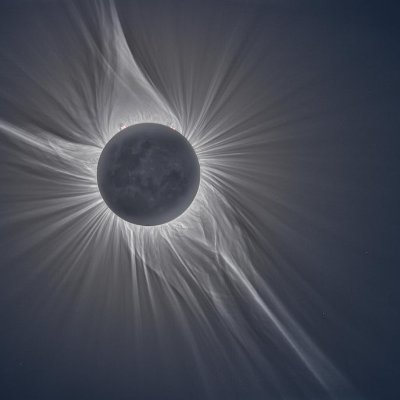
A giant canyon on the Sun On July 15,... a powerful flare occurred on the surface of the Sun, which briefly changed its structure and caused the release of hot plasma into space. As a result of this event, a plasma "scar" about 400,000 kilometers long appeared. This is approximately the distance from the Earth to the Moon. The height of the structure reaches 20,000 kilometers. All this was recorded with high accuracy by NASA's Solar Dynamics Observatory (SDO).show more
Black Hole
16,016 次观看 • 1 年前
NASA has just launched a new website for its... Moon Base missions, which aims to build a permanent $20 billion U.S. base on the Moon. SpaceX's Starship rocket will play a big role in these missions. "The Moon Base is a home away from Earth for Artemis astronauts who will live and work at humanity’s first lunar outpost. NASA is leading global teams of innovators across international space agencies, industry, and academia to build the Moon Base and establish an enduring human presence near the lunar South Pole for the benefit of all. Phase One (Now–2029): Experiment and Learn NASA will begin with a rapid series of robotic missions to scout the lunar South Pole region, test technologies, and prepare for surface operations ahead of future astronaut missions.: • A major increase in lunar activity, with up to 25 missions, including 21 landings. • Crewed and autonomous rovers for mobility demonstrations and surface preparation, along with four drones known as MoonFall and communications relay and observation satellites. • Early demonstrations of power, navigation, communications, and nuclear radioisotope heater unit technologies designed to endure the long lunar night. • Scientific payload opportunities integrated across landers and rovers. • The first tangible footprint of Moon Base effort, with four tons of payload delivered to test what works on the lunar surface. Phase Two (2029–2032): Early Habitation By 2029, NASA will transition to assembling semi-permanent infrastructure and initiating early habitation and logistics operations: • Deployment of expanded solar power systems and initial nuclear surface power capabilities, potentially including fission reactors and radioisotope power systems. • Upgraded rovers, potential advanced MoonFall drones, and early habitation elements. • Enhanced surface-to-orbit communications networks to provide reliable connectivity across the lunar South Pole region. • Delivery of up to 60 tons of cargo through as many as 24 landings using low-, medium-, and heavy-class cargo landers. Phase Three (2032 and Beyond): Sustained Human Presence This phase will scale operations to achieve a true enduring presence, with routine crew rotations and continuous surface activity. This is when living and working on the Moon becomes a reality: • Semi-permanent habitation modules with spacious interior for crew living and operations. • Operational fission surface power systems capable of delivering steady, reliable energy through the long lunar nights, leveraging in situ resource manufacturing. • Advanced logistics networks supported by crewed and autonomous rovers to keep the base supplied and functioning year-round. • Delivery of up to 38 tons of cargo annually to sustain habitats, power systems, logistics operations, and major science outposts, enabled by low-cost reusable heavy-lift capabilities." Moon base website:show more

Sawyer Merritt
955,317 次观看 • 2 个月前
Preparations Are in Full Swing | Bihar Awaits Its... First-Ever Evening with Sadhguru The stage is being set, the final touches are underway, and the excitement is building. For the first time ever, Bihar is all set to host An Evening with Sadhguru—bringing together thousands for an evening of wisdom, meditation, and bliss. As preparations gather momentum, the anticipation continues to grow.show more

Isha Foundation
10,463 次观看 • 1 个月前
Thank you to the millions of players who have... made the Settled Systems their home and helped make this an incredible first year for Starfield. We have much more coming, beginning with our first story expansion, Shattered Space, releasing September 30. Here's a bit of what you can expect when Shattered Space launches: 🪐 Over 50 new locations to discover and explore across Va'ruun'kai 🔥 New grenades to craft that stem from organic material you gather (and it's gross) 👾 Formidable new enemies - be on your guard for Redeemed and Vortex Horrors... ⚔️ You haven't seen the last of Zealots, Spacers, or the Crimson Fleet... As you explore the planet be on the lookout for those taking advantage of the situation. Stay tuned - we'll share more about #Starfield's Shattered Space soon.show more

Bethesda Game Studios
392,151 次观看 • 1 年前
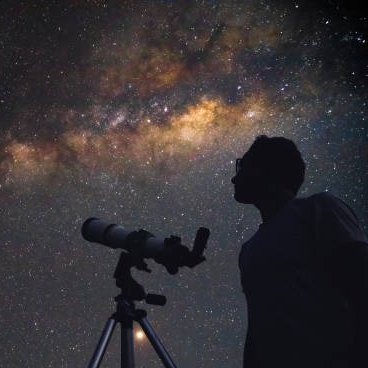
Space objects such as meteoroids and asteroids move across... the solar system and can collide with both Earth and the Moon. However, the Moon shows far more visible impact marks on its surface. One main reason is that Earth has a thick atmosphere that protects the planet. When many meteoroids enter Earth’s atmosphere, they burn up due to friction before they can reach the ground. This process creates the bright streaks of light we call shooting stars. The Moon, however, has almost no atmosphere, so incoming space rocks are not slowed down or burned up. They travel directly to the lunar surface and strike it at very high speed. Each collision creates an impact crater, throwing dust and rocks outward from the impact point. Over billions of years, thousands of these impacts have covered the Moon with craters. Unlike Earth, the Moon also has no wind, water, or weather to erase these craters, so they remain visible for millions or even billions of years. This is why the Moon looks heavily cratered when we observe it from Earth through telescopes.show more
The Astronomy Guy
17,473 次观看 • 4 个月前
MARS ROVER CAPTURES STUNNING NEW FOOTAGE ON SOL 1688... AMID SEARCH FOR SIGNS OF LIFE NASA’s Perseverance rover is still rolling across the Martian surface, snapping high-def footage like a pro using its Right Mastcam-Z camera. This latest video was taken on Sol 1688, as the rover continues its mission to search for ancient microbial life in Jezero Crater. It’s not just about pretty rocks: every frame helps scientists understand Mars’ history, climate, and whether it was ever home to life. So yeah, it's dusty, it’s dry... but it’s also science history in the making. Source: Black Holeshow more

Mario Nawfal
243,191 次观看 • 9 个月前
🎺 The Gabriel's Horn also known as the Torricelli's... Trumpet is a mind bending geometric paradox where an infinitely long shape encloses a strictly finite volume with an infinitely large surface area. The reason for the juxtaposition lies in the different mathematical rules used to calculate 3D volumes vs 2D surface areas when dealing with exponential quantities to infinity. As the horn stretches out infinitely, its opening gets so narrow that it becomes smaller than the width of a single atom. But the paradox exists only in theoretical math, in the physical world an enclosed volume is proportional to the surface that bounds it. 🔗show more

𝓜𝒂𝒖𝒓𝒊𝔃𝒊𝒐 𝗜𝒃𝛼
25,110 次观看 • 2 个月前
Update from Hawaii: Oliver and Phoenix are enjoying some... well-earned downtime after their inspirational voyage across the Pacific. Phoenix is doing great—healthy, happy, and fully settled into boat life. We’ve reached out to Oliver to hear more about what’s next and when he plans to continue his trip around the world so we’ll share any updates as soon as we have them. For now, the crew is resting, recharging, and soaking in island life. #SailingWithPhoenix #SailingWithPhoenixTracker $SWP ⛵️🐱show more

sailing_with_phoenix tracker
14,511 次观看 • 1 年前
Tomorrow is STAR TREK DAY! It is momentous as... we celebrate the 59th anniversary of it's original NBC Broadcast and we are announcing the start of what we will be an amazing 60th anniversary celebration starting in 2026! Watch for all our announcements and plans for this landmark celebration beginning with this little Video! Make you plans to Make The Trek for an unforgettable year of celebration here at STAR TREK : ORIGINAL SERIES SET TOUR!show more

Star Trek Tour
27,285 次观看 • 11 个月前
In the hellish furnace of Venus—where surface temperatures soar... to ~460–470°C (860–880°F) and pressure crushes at about 92 times Earth's—the Soviet Venera 14 lander achieved something extraordinary: it not only survived long enough to operate but also captured one of the only direct audio recordings ever made on another planet.Launched in 1981 and touching down on March 5, 1982, Venera 14 endured for roughly 57 minutes on the scorched plains before succumbing to the extreme conditions. Among its suite of instruments was a microphone (part of the Groza-2 package, shared with a seismometer), designed primarily to detect atmospheric sounds, possible thunder-like electrical discharges, and mechanical operations.The resulting audio—transmitted back to Earth—includes eerie, low-frequency rumbles: the relentless howl of super-dense winds whipping across the surface (moving slowly but with immense force, equivalent to hurricane-strength gusts in our thinner air), mechanical thuds and whirs from the lander's own activities (like the explosive release of its camera lens cap and the grinding of its drill attempting to sample the basaltic rock), and subtle vibrations as the probe settled and strained under pressure.These are among the very first (and still among the only) sounds ever recorded from another world's surface—preceding even the wind sounds picked up by later missions like InSight on Mars or Dragonfly concepts. Venera 13 (which landed days earlier on March 1, 1982) also carried microphones and returned similar recordings, surviving longer at 127 minutes and capturing comparable wind and mechanical noises.The raw, noisy tapes have been cleaned up, enhanced, and widely shared over the decades—often layered over simulated landing visuals—giving listeners a haunting glimpse into Venus's alien soundscape: a constant, oppressive roar punctuated by artificial intrusions from humanity's brief other probe has returned surface audio from Venus since the Venera program ended in the early 1980s. Future missions like NASA's DAVINCI+ or ESA's EnVision may revisit the planet, but for now, these faint, crackling echoes remain a rare auditory relic from our solar system's most inhospitable world.Image credits: Soviet space program archives (Venera 14 lander illustrations and surface panoramas from the mission); enhanced audio visualizations and modern renderings of the Venusian surface.show more
Black Hole
234,358 次观看 • 5 个月前
."NASA's autonomous exploration drone discovers anomalous mineral deposits in... a pristine Martian lava tube." Deep beneath the rusty surface of Mars, a small, next-generation drone cautiously glides through the eternal darkness of an ancient lava tube. Its powerful LED beams slice through the still, dust-laden air, illuminating a world untouched for hundreds of millions of years.The floor is a chaotic tapestry of jagged, ropey pahoehoe lava and smooth, billowing flows frozen in time—remnants of fiery rivers that once surged across the Red Planet. But the true revelation lies scattered across the low points of the cavern: striking streaks and shimmering pools of vibrant bluish-green minerals embedded in the dark volcanic rock.These intricate chemical deposits—rich in magnesium and iron salts—appear to be the crystallized remains of mineral-laden fluids that once seeped, pooled, and slowly evaporated in this subterranean refuge. Their unexpected colors and delicate formations hint at a far more complex and volatile geochemical history than previously suspected, possibly involving ancient groundwater or volcanic outgassing interacting with the basaltic host fine, reddish dust motes drift lazily in the artificial light, the absolute silence and isolation of this hidden chamber become almost tangible. This discovery not only reveals new clues about Mars’ wetter, more chemically active past—it underscores why lava tubes are among the most promising frontiers for understanding the planet’s evolution and searching for signs of ancient habitability.A breathtaking glimpse into a pristine, alien underworld… and a tantalizing promise of what future human explorers might one day find sheltered beneath the Martian surface.This version feels more cinematic and scientifically evocative while keeping your original details intact. It builds tension, emphasizes the "anomalous" nature without overclaiming, and ends on an inspiring note.show more
Black Hole
258,784 次观看 • 4 个月前
Why the C-17 will never take off from an... aircraft carrier—it’s not about power, but the complexity of the design and physics involved. The C-17 Globemaster is among the largest military aircraft ever built. Its wings span about 52 meters—longer than an Olympic pool—and it weighs as much as roughly 50 cars. An aircraft carrier’s deck is only about 300 meters long, while a C-17 needs nearly 2 kilometers to take off. Even with a catapult, it couldn’t reach the required speed. Its landing gear isn’t built for carrier landings, and its wings don’t fold like naval aircraft. It’s essentially like trying to launch a truck off a balcony—simply not possible.show more

Historic Vids
7,109,048 次观看 • 7 个月前
Welcome to #XSTAR, the new era of Star Protocol.... ➡️ Start your humanity journey here: As the #Omnichain Identity Protocol for Proof of Humanity, features an adaptive humanity scoring system that securely and privately authenticates individual personas. A groundbreaking identity for our interconnected existence is about to unfold, and XSTAR is set to lead this revolution.show more

XSTAR (mainnet arc)
90,908 次观看 • 2 年前