hardcoded tooltip CSS works until it meets the edge... bad (gets clipped): position absolute left 100% translateY(-50%) good: (collision aware) measure viewport space choose placement set top/left move the arrow animate from the correct originshow more

Tanvir
54,846 просмотров • 3 месяцев назад
Here's that Conklin play at the end. You can... see Saleh up top, standing 4 yards to our left from the ref. The end gets cut off, but you can see the ref start to run downfield toward the play and Saleh chasing behind him. I think the ref couldn't hear/see Saleh. Not great on the ref's part at all (he should be assuming Saleh wants to call it there and be more prepared for it: also how can you not hear him?) but why is Saleh not standing right next to the ref? Should be hovering over the man. Could've made this a whole lot easier To me this is a mix of both subpar officiating and a coaching mistake. Definitely not a great job by the ref, but also slightly on Saleh for making this harder by standing 4 yards away from the ref instead of right next to him. IMO But still, even at the very end of this clip there's ~17-16 seconds left. I find it very hard to believe Saleh didn't get the timeout in until 13 seconds. I say 80% bad officiating, 20% Salehshow more
Michael Nania
208,375 просмотров • 2 лет назад
Made with seedance 2.5 Prompt: Create ONE continuous 12-second,... 9:16, ultra-photorealistic LIVE-ACTION luxury fashion film. IMPORTANT REFERENCE MAPPING: REFERENCE Image = PRIMARY CHARACTER. Use the FIRST uploaded reference image of the woman. REFERENCE image2 = ENVIRONMENT. Use the SECOND uploaded reference image of the square. REFERENCE David Carbon = HERO OBJECT. Use the THIRD uploaded reference image of the sunglasses. Do NOT refer to these images as Image, image2 or David Carbon. Use the reference images according to their upload order. CHARACTER — REFERENCE IMAGE 1 Preserve the exact woman from REFERENCE IMAGE 1 throughout the entire video: same facial identity, facial structure, natural eyes, hairstyle, body proportions, skin appearance, clothing, footwear, jewelry, accessories and overall appearance. Do not copy the original background from REFERENCE IMAGE 1. The protagonist is the ONLY main character. ENVIRONMENT — REFERENCE IMAGE 2 Use REFERENCE IMAGE 2 only for visual language: architecture, atmosphere, warm sunset lighting, materials, monumental scale and cobblestone character. Create a NEW believable cinematic pedestrian space inspired by it. Do NOT reproduce its exact composition, exact camera angle or exact street layout. Provide enough open pedestrian space for natural walking and the collision. Respect real-world spatial logic: pedestrians remain in pedestrian areas, architecture has realistic scale and perspective, no impossible geometry. HERO OBJECT — REFERENCE IMAGE 3 The sunglasses shown in REFERENCE IMAGE 3 are the ONE and ONLY HERO OBJECT. Preserve their recognizable: shape, proportions, oversized shield silhouette, dark continuous lens, thin metallic/gold frame, temples, hinge construction, surface details, colour and material. The SAME physical sunglasses must remain recognizable: when worn by the protagonist, when released, during bullet-time macro inspection, and after landing. Do not redesign, replace, duplicate or regenerate the sunglasses. EXACT OBJECT COUNT Exactly: ONE protagonist. ONE secondary passing person. ONE Labrador. ONE leash. ONE pair of sunglasses from REFERENCE IMAGE 3. ONE takeaway paper coffee cup. ONE plastic drinking lid. ONE silver-grey OPEN clamshell flip phone. No duplicate objects or people. PERSISTENT PHONE There is exactly ONE phone in the entire video. It is a compact early-2000s silver-grey OPEN clamshell flip phone. Upper half: small illuminated display and speaker. Lower half: physical numeric keypad, navigation buttons and microphone. Visible central mechanical hinge. LOCK its appearance throughout: same silver-grey colour, same dimensions, same thickness, same hinge, same display, same keypad, same buttons, same open angle. The same phone is seen in wide, medium and macro shots. It never transforms into another phone. PERSISTENT COFFEE Exactly ONE medium disposable PAPER coffee cup with ONE lightweight plastic drinking lid and dark coffee inside. Same cup, same lid, same coffee and same proportions throughout. Before collision the lid is properly attached. Coffee remains inside until a real physical opening appears. HAND OWNERSHIP Before collision: RIGHT HAND = ONE OPEN flip phone held to the RIGHT ear. LEFT HAND = ONE coffee cup. Sunglasses = naturally worn by the protagonist. After collision: RIGHT HAND = COMPLETELY EMPTY. LEFT HAND = COMPLETELY EMPTY. Nothing replaces the phone or cup. Nothing remains attached to either palm. 0.0–2.0s — CINEMATIC CHARACTER REVEAL Begin with an extreme low close-up of the protagonist’s black leather heeled boots walking naturally across the pedestrian space. Camera performs ONE elegant continuous movement: smooth crane upward + gentle backward tracking. Reveal progressively: boots → legs → ripped light-blue baggy jeans → black corset → white tank top → jewelry/accessories → sunglasses → face → nearly full body. The protagonist wears the SAME sunglasses from REFERENCE IMAGE 3. She holds the SAME OPEN silver-grey flip phone to her RIGHT ear and the SAME coffee cup in her LEFT hand. She is actively having a phone conversation. Show subtle realistic speech: natural lip movement, jaw movement and mouth articulation. Maintain exact identity from REFERENCE IMAGE 1. Premium live-action fashion cinematography. 2.0–3.7s — WALKING / SECONDARY PERSON Maintain smooth frontal tracking. The protagonist continues walking naturally through the pedestrian area. Exactly ONE secondary person approaches from the opposite direction. That person holds exactly ONE leash attached to exactly ONE Labrador. The Labrador walks slightly ahead and gently pulls the person forward. They remain background/supporting elements. Maintain: stable protagonist identity, stable hairstyle, stable clothing, stable sunglasses, same phone, same coffee. 3.7–4.4s — ACCIDENTAL COLLISION As they pass each other, the secondary person’s ELBOW accidentally clips the protagonist’s arm/upper torso. Small, accidental, believable contact. The protagonist naturally recoils backward. This SAME collision causes THREE physical release events. SUNGLASSES The sunglasses from REFERENCE IMAGE 3 receive ONE short realistic outward impulse. They separate naturally from the protagonist’s face. They travel only a short physically believable distance. They do NOT fly toward the camera. COFFEE The SAME coffee cup leaves the LEFT hand. It receives one short outward/downward rotational impulse. The cup tilts and rotates. Because of the rotation and liquid inertia, ONE EDGE of the lightweight plastic lid partially pops loose from the cup rim. The lid does not disappear and does not explode away. A real physical gap forms between lid and rim. ONLY THEN does dark coffee begin escaping through this opening. Initial liquid movement is restrained. PHONE The SAME OPEN clamshell phone leaves the RIGHT hand. It receives one short outward/upward impulse. It keeps the SAME open angle and physical design. The instant it separates from the fingers: RIGHT HAND = EMPTY. The instant the cup separates: LEFT HAND = EMPTY. FACE / HAIR CONTINUITY Preserve the exact face from REFERENCE IMAGE 1 during the entire collision. The natural human eyes already exist behind the sunglasses. When the sunglasses separate, reveal the SAME normal eyes: stable pupils, eyelids, gaze direction, brows, nose, cheekbones and facial symmetry. Do not regenerate or alter the face. Hair remains stable with only subtle realistic inertia. No sudden hairstyle change. 4.4–5.2s — BULLET-TIME ESTABLISHMENT Time decelerates dramatically to approximately 2–3% normal speed. DO NOT immediately go into macro. FIRST show a clear medium-wide frozen view of the entire accident. The protagonist is beginning to fall backward. BOTH HANDS ARE EMPTY. Establish fixed WORLD-SPACE anchors: • sunglasses suspended near their release position; • coffee cup suspended lower and toward the LEFT-hand release side; • partially detached lid still connected to or immediately beside the cup; • restrained coffee beginning to escape through the opening; • OPEN flip phone suspended toward the RIGHT-hand release side. Objects move only microscopically. They do NOT move toward the camera. The CAMERA is the main moving element. 5.2–6.8s — SUNGLASSES HERO INSPECTION The sunglasses remain almost completely stationary at their existing world-space position. CAMERA physically dollies toward them. The sunglasses become larger ONLY because the camera gets closer. Once close, slow the camera dramatically. HOLD. Perform a restrained 20–30 degree camera orbit/parallax around the almost-stationary sunglasses. Reveal: dark shield lens, thin metallic/gold frame, temples, hinges, edges, material thickness, surface reflections, tiny manufacturing details. Use shallow photographic macro depth of field. The protagonist and sunset environment remain softly recognizable in the background. The sunglasses must look like a real luxury fashion accessory photographed with a macro cinema lens, NOT CGI product animation. Complete the inspection before moving away. 6.8–8.3s — COFFEE / LIQUID INSPECTION Only after completing the sunglasses inspection, the CAMERA leaves them at their existing world-space position. Travel diagonally through the frozen scene toward the SAME coffee cup. THE CUP DOES NOT MOVE TOWARD THE CAMERA. Hold a photographic macro close-up. Show: same paper cup, same lightweight plastic lid, ONE partially detached lid edge, clear physical gap, dark coffee escaping ONLY through that gap. Real restrained liquid physics: thin irregular stream, imperfect liquid sheet, several differently sized droplets, realistic surface tension, natural reflections. No explosive splash. No decorative CGI liquid. No perfect artificial shapes. Coffee advances only microscopically during bullet time. Perform a small restrained lateral/parallax camera movement around the cup, lid and droplets. HOLD long enough to see paper texture, plastic texture, liquid thickness and individual droplets. 8.3–9.8s — FLIP PHONE INSPECTION Only after coffee inspection, the CAMERA travels away from the cup. The cup, lid and droplets remain at their existing world-space positions. CAMERA moves through the same frozen scene toward the SINGLE OPEN silver-grey clamshell phone. THE PHONE DOES NOT MOVE TOWARD THE CAMERA. First establish the complete phone silhouette: same silver-grey housing, same upper display, same lower keypad, same central hinge, same open angle. Then CAMERA physically approaches the existing upper display. Extreme photographic macro close-up. The illuminated display reads: BOSS with one small realistic phone number underneath. HOLD. Show: real housing material, hinge, keypad texture, small scratches, surface wear, screen reflections. The phone does NOT transform to reveal its screen. It is the SAME phone seen from the beginning. The protagonist’s RIGHT HAND remains completely EMPTY in the background. 9.8–10.4s — COMPLETE FROZEN TABLEAU After phone inspection, CAMERA performs a fast but perfectly smooth dolly backward. All objects remain at their existing world-space positions. Reveal: same protagonist falling backward, both hands empty, same sunglasses, same coffee cup, same partially detached lid, same suspended coffee droplets, same OPEN flip phone, exactly one secondary person, exactly one Labrador. All positions must remain spatially consistent with the original collision and release trajectories. No object follows the camera. No object teleports. No object regenerates. Brief HOLD on the complete frozen tableau. 10.4–12.0s — TIME RETURNS / PHYSICAL PAYOFF Time suddenly snaps back to normal speed. Gravity and existing momentum resume simultaneously. Every object continues FROM ITS EXISTING WORLD-SPACE POSITION. The protagonist completes her backward fall naturally. The sunglasses continue from their suspended position and land according to their existing momentum and gravity. The coffee cup continues from its own separate position, impacts the cobblestone ground, the partially detached lid reacts naturally, and remaining coffee spills irregularly through the real opening and impact point. The OPEN flip phone continues from its own separate position, hits the ground and makes ONE small physically believable bounce. Objects land at DIFFERENT plausible locations. They do NOT suddenly converge beside the protagonist. CAMERA rapidly tilts/drops toward ground level to follow the final impacts. Finish with a cinematic low-angle composition showing the fallen protagonist and the scattered objects within the same believable sunset environment. Hard cut. BULLET-TIME CAMERA RULE — NON-NEGOTIABLE BULLET TIME = ALMOST-FROZEN PHYSICAL WORLD + FREELY MOVING CAMERA. Objects stay in WORLD SPACE. Camera moves through WORLD SPACE. Close-up is created ONLY by reducing camera-to-object distance. Never: move objects toward the lens, artificially enlarge objects, teleport objects, regenerate macro versions. STRICT CAMERA ROUTE: FULL FROZEN TABLEAU → CAMERA DOLLIES TO SUNGLASSES → HOLD → 20–30° CAMERA ORBIT → CAMERA TRAVELS TO COFFEE → HOLD → SMALL CAMERA PARALLAX → CAMERA TRAVELS TO PHONE → ESTABLISH COMPLETE PHONE → MOVE TO DISPLAY → HOLD → CAMERA DOLLIES BACK TO COMPLETE TABLEAU → TIME RETURNS CONTINUITY / CAUSALITY Wide shot → medium shot → macro shot = SAME physical object viewed from different camera distances. Sunglasses: same object, same design, same trajectory, same world-space identity. Coffee: same cup, same lid, same coffee, same rotation, same world-space identity. Phone: same open clamshell phone, same housing, hinge, keypad, display, open angle and world-space identity. Every visible change must have a physical cause. Collision causes recoil. Collision momentum separates sunglasses. Finger release changes phone position. Hand release + collision momentum rotates cup. Cup rotation/liquid inertia partially opens lid. Coffee escapes only through the physical gap. Camera movement creates apparent object scale. Gravity resumes final fall. Treat the entire sequence as ONE continuous practical-effects event photographed with a motion-control cinema camera. IDENTITY / PROP LOCK ONE protagonist. ONE secondary person. ONE Labrador. ONE leash. ONE pair of sunglasses. ONE coffee cup. ONE lid. ONE OPEN flip phone. Before collision: RIGHT HAND = phone. LEFT HAND = coffee. Sunglasses = worn. After collision: RIGHT HAND = EMPTY. LEFT HAND = EMPTY. Sunglasses = separated. No second phone. No second cup. No second sunglasses. No additional dog. No additional person. No unexplained props. No duplication. No teleportation. No unexplained scale changes. VISUAL PRIORITY 1. exact protagonist identity from REFERENCE IMAGE 1 2. natural eyes and facial anatomy 3. stable hairstyle and body proportions 4. exact clothing and accessories 5. exact sunglasses from REFERENCE IMAGE 3 6. stable phone geometry 7. empty hands after release 8. continuous physical trajectories 9. realistic environment inspired by REFERENCE IMAGE 2 PHOTOGRAPHIC REALISM Ultra-photorealistic LIVE-ACTION. High-budget international luxury fashion campaign. Real human anatomy. Natural skin pores. Natural facial micro-expressions. Detailed realistic hair. Real manufactured sunglasses. Real paper cup. Real plastic lid. Real liquid coffee. Real early-2000s flip phone. Real object mass, inertia, gravity, momentum and surface tension. ARRI Alexa 35 cinematic character. Premium cinema optics. Motivated sunset lighting inspired by REFERENCE IMAGE 2. Controlled highlights. Natural skin tones. Realistic optical depth of field. Shallow macro depth of field during object inspections. Subtle 35mm film texture. Restrained luxury editorial colour grade. Natural colours. Sharp optical clarity. Cinematic photographic texture. Bullet-time must feel like REAL high-speed practical photography with a motion-control cinema camera, NOT CGI product animation. 4K / Ultra HD. Maximum facial detail. Maximum hair detail. Maximum material fidelity. Stable identity. Stable geometry. Stable prop continuity.show more

Oogie
18,923 просмотров • 28 дней назад
Polymarket 5-min markets arbitrage with Clawdbot powered by Chainlink... API Polymarket uses Chainlink data for 5-min markets resolution. But sometimes the terminal instant lag vs Chainlink API. Exploit this inefficiency using a simple Clawdbot: • install Clawdbot using: { curl -fsSL https: //openclaw.ai/install.sh } • connect it to Claude Opus 4.6 and TG bot in CLI. • create an account on { simmer } → set up wallet. • install the { fast loop trading skill } by simmer • connect Chainlink API to your Clawdbot • change Binance data price for Chainlink API // How its works: • fetches BTC price momentum from Chainlink API • discovers active 5-min fast markets via Gamma API • compares API momentum against market odds • trades when divergence exceeds threshold - dry-run by default // Configuration for clawdbot: • asset: BTC • entry threshold: 0.05 (min divergence from 50¢) • min momentum: 0.5% (min price move) • max position: $5.00 • signal source: chainlink api • lookback: 5 minutes • Min time left: 60s • Volume weighting: enable When Clawdbot finds a divergence, it apes the opportunity. This is simple arbitrage between Chainlink API and Polymarket prices.show more

Movez
22,157 просмотров • 7 месяцев назад
A friend of mine just recently got his first... gun, a striker fired Glock 19. He is terrified to leave a round chambered. To anyone reading this who has this same fear, I want to alleviate your concerns. I'm going to explain why there is nothing to be afraid of. First and foremost, I fully understand your concern. It's not irrational. And you're not stupid for being nervous about a bullet being aimed at your leg with the striker cocked back under spring tension about an 1/8 of an inch from the primer. I get it. I shared this concern when I was new to carrying. But your fear is due to a lack of understanding of the internal safety features of a modern striker fired handgun. On a properly maintained modern striker fired pistol the striker CANNOT hit the primer on the chambered round without the trigger being pulled. Can't. Not shouldn't. Can't. (If you have any good Sig P320 jokes, this is the proper place to share them) There is a block that the striker will hit and stop if it is released without the trigger being depressed. It works just like a lock and key. There is a channel in the blocker that the striker can pass through if it is in the fire position. It only goes into the fire position if the trigger is pulled which pushes the blocker into the fire position. A spring keeps the blocker firmly in the block position until then. The blocker is a solid piece of steel that won't break. And if your gun is securely in a hard sided Kydex holster nothing can move the trigger unless it is unholstered. Many guns like Glocks have a trigger safety that prevents the trigger from moving due to force of dropping. Your finger has to be on the trigger safety to move it. So the gun cannot fire unless you pull the trigger. And it's easy for you to test this safety feature to see how it works! See the video below. You can try to push the striker forward by moving that piece at the back of the slide forward. That piece is the back of the striker. Push it forward and it will stop. The tip won't come out through the breach. You see it trying to come through but it gets stuck. Now push that little button in. That is the actual blocker. When you push it in you will now be able to move the striker forward through the breach and see how it will strike the primer. You can test this easily every time you disassemble your pistol to verify it is still working. You can break this safety feature by removing the blocker or losing the spring. But if it's there it will work. (You would be the first person in firearms history who has ever lost a spring. Literally the first one. It has never happened before. 😐) But it doesn't come out as part of regular maintenance. You have to disassemble the firing assembly to get it out. That won't happen by accident. And if you do that on purpose you should do this blocker test when you reassemble it to make sure the safety feature is working. My video shows a Glock slide. All Glocks will look like this. Other brands may put the blocker in a different spot or it may be a slightly different shape. But they all (mostly) have the same design. If you test yours as demonstrated and it works like mine does, your gun WILL NOT fire without pulling the trigger. (If you just thought of another P320 joke, this is another good place to toss that out there)show more
Spaceballs The X Account
197,088 просмотров • 1 месяц назад
🚨 PHYSICS IS BROKEN! MATTER IS AN ILLUSION, THE... ATOM IS JUST TRAPPED LIGHT! A NEW ERA HAS BEGUN! 🚨 For 100 years, physics has treated "mass" as a fundamental, solid particle floating in an endless, empty void (ℝ⁴). What if that is a complete mathematical hallucination? What if mass is just light that got stuck in the geometry of space? A year ago, we thought exactly like the academic establishment. Breaking a lifelong paradigm and reinterpreting everything from scratch is incredibly difficult. But mathematics is a stubborn thing. We realized one absolute truth: the infinite ℝ⁴ space is fundamentally defective in physics. It exists purely as an abstract mathematical concept, and we must finally understand that pure mathematics ≠ physical reality. We genuinely need your help to break this dogma! DO NOT TAKE OUR WORD FOR IT. DO NOT BLINDLY TRUST AUTHORITY. We wrote the code, we solved the math, and we are giving it to you for absolutely free. Read the preprint and verify it yourself. Look at the real quantum photographs attached. On one side is the groundbreaking 2013 photograph of a Hydrogen atom's electron orbital, captured by researchers at the FOM Institute AMOLF in the Netherlands using a quantum microscope. On the other side is the famous 2015 photograph from EPFL in Switzerland, capturing light behaving simultaneously as a wave and a particle. Notice the absolute revelation: they are visually identical. Atoms are not solid little billiard balls. They are concentric interference patterns-pure standing waves of energy. The ultimate conceptual shift of our IT³ framework is this: The atom is not a "box" that contains trapped light. The atom IS the trapped light. There is no abstract container. There is only the geometry of the vacuum (a discrete lattice) which mathematically forbids light from propagating past certain algebraic boundaries. How it Works (Explained simply from the video): Let’s break down exactly what you are seeing in the simulation engine: 〰️ The Cyan Wave (→): A free gauge photon travels smoothly through the quantum vacuum. 🛑 The Kummer Wall (Red Lines): Suddenly, the light hits the absolute edge of the spatial lattice. This is an algebraic cutoff where mathematics literally runs out of resolution (√13 ∉ 𝕂). Space "does not exist" beyond this boundary. 🪞 Total Internal Reflection (Purple Wave ←): With nowhere left to go, the photon undergoes complete topological reflection. It bounces back as its own precise mirror image-an antiphoton. ⚡ The Birth of Mass (Yellow Core): The two opposing waves crash into each other and geometrically interlock. They form a perpetual, vibrating "standing wave" whose energy is trapped in one place. This localized density of confined energy is exactly what we call REST MASS. The Counterfactual Test: Watch the timeline in the visualizer. When the system hits the "WALLS OFF" phase, we computationally delete the vacuum boundaries. The golden pulsating core immediately shatters. The light escapes into infinity, and the mass drops precisely to zero. Matter literally un-braids back into pure radiation. FALSIFIABILITY AND PREDICTIONS: The "Mass Gap" is not solved by adding endless, arbitrary parameters to an infinite void. It is solved by recognizing that the Universe is a discrete, constructible topological crystal. Our model is strictly falsifiable and delivers exact predictions: 🎯 It predicts a new topological resonance at exactly 1088.04 GeV, accessible for verification at the High-Luminosity LHC. 🛑 It mathematically proves the absolute end of the periodic table at element Z = 172. 🧮 It operates with ZERO fitted parameters. All physics is reduced to the strict arithmetic of integers. THE HARDWARE CODE OF THE VACUUM MATRIX: 🌌 Arena: ℳ = 𝕊⁴ × 𝕋³ over the field 𝕂 = ℚ(√2, √3, √5) 👁️ Witness: 172 topological elements ⚙️ Processor: 57600 = 240² = 1110 0001 0000 0000₂ 📖 DOWNLOAD THE CODE. BREAK THE MATH. We do not want blind faith. Read the proofs. The supreme judge is the compiler, not closed-door committees. 🔗 Code + Preprint: #Physics #QuantumMechanics #Simulation #OpenScience #MassGap #TheoryOfEverythingshow more

Dr. Logvinovich
2,820,206 просмотров • 8 дней назад
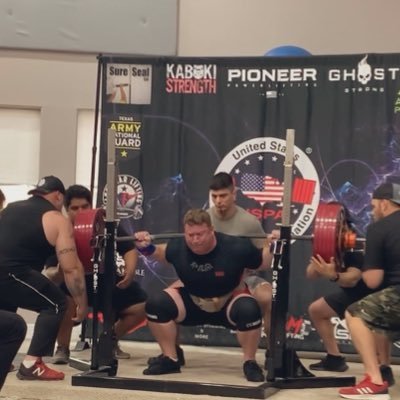
This post about bench press safety escaped containment and... got a lot of people commenting in disagreement that safeties/spotter arms would've saved him. And in truth, my language below was a little too absolute: safeties MIGHT have saved his life (though even if so, would not have prevented all damage), but it's far from certain that they would have, so I stand by the overall sentiment. I will explain in detail below. The spotter arms have to be set below the top of your arched chest or else they’ll interfere with every rep - you'll clang the bar on the safeties, which not only severely interrupts proper technique and performance, but can also be potentially injurious in its own right as the clanging against the safeties takes you out of the rhythm of the rep and leads to uneven and chaotic force application demands mid-rep. The safeties can’t be set a mere milimeter or even a half inch below the chest: both because most racks have 2-3 inch hole spacings that don't allow such finely calibrated setting, but even if they do - also because as a gross movement pattern, not a fine movement pattern, you can’t control the movement of the bar precisely and accurately enough not to clang the safeties if they’re so close to your chest. Human beings performing gross movement patterns simply lack such fine control: on heavy sets, the bar might be slightly uneven on one side, you might lose a touch of your arch over the course of the set, etc... and end up clanging the safeties anyway, if they're set so close to the top of your arched chest. These issues are not form errors that can be prevented with proper training, but are inherent limitations in the human capability to control gross motor pattern movements at a heavy weight. Thus, the safeties have to be far enough below your chest in order to not interfere with the set itself, such that they can’t possibly catch the bar before it hits your chest in the case of a sudden catastrophic drop. The proper placement for the safeties is far enough below your chest so as not to interfere with the normal execution of the set and so the bar never touches the safeties at all during the set, even with the inherent human limitations of gross motor pattern control. But high enough such tha - if you find yourself unable to successfully press the bar to lockout - you can bring the bar under control back down to your chest, exhale and drop your arch, and the bar will ideally now rest on the safeties instead of your chest and you can crawl and slither out from under it. Worst case, you can roll the bar slightly upwards and the safeties will soon take it, well before it would lie on your neck. I have an example of using the safeties this way in the video below, with 485 lbs. The ability to set this position with precision and accuracy depends on the equipment you're using: Some racks/benches have 1 inch spacings for this purpose, which is excellent and allows greater precision in safety placement, but most common racks have 2-3 inches between holes and thus people must often have the safeties a little lower than they'd ideally be. The main point is the proper use and purpose of safeties in the bench press is not really to catch a very rare catastrophic sudden drop onto your chest, but to allow you to survive the much more common situation of a normal failed rep. Could they theoretically save your life in such a situation where you drop it? Yes, they might. They won't stop the bar before it hits your chest but they might reduce the impact by stopping the bar from going further down and reducing the impact. This may or may not save your life in this rare catastrophic drop situation - it's good to have them there, set up anyway, but it's far from a sure bet. The most important things you can do are to learn and practice good technique, which involves stiff wrists in a very slightly bent back position, and thumbs around the barbell - NO SUICIDE GRIP. The safeties won't catch the bar and stop it from hitting your chest, so it's best to reduce the chances of dropping the bar on your chest from almost zero to even closer to almost zero. I've been bench pressing regularly for well over 20 years, always put my thumbs around the bar, and have never dropped it on myself. Nor has anyone I have coached to the best of my memory, over tens of thousands of sets and hundreds of thousands of reps. I have used safeties to successfully avoid getting trapped under the bar after a failed rep. In the video below, I tweaked my pec while pushing through a rep at 485 and had to set the bar on the pins to avoid getting trapped under it. This kind of situation is the primary use for the safeties. It's good to have them set up regardless - they might indeed save you if you somehow still manage to drop the bar, but they also very well might not.show more
Deep Squats, Shallow Thoughts
924,853 просмотров • 9 месяцев назад
Introducing Zest Protocol Stacks Vaults, Automated yield strategies for... Bitcoin-native finance. Launching alongside the stacks.btc Bitcoin Staking upgrade. Stacks Vaults mark the evolution of Zest Protocol from a lending market into yield infrastructure. Until now, earning optimised yield on Stacks meant actively managing positions across markets, moving collateral, monitoring rates, and rebalancing by hand. Stacks Vaults changes that: deposit a single asset, select a strategy, and the vault handles the mechanics in the background. This is the yield toolkit for Stacks. Every yield source in the ecosystem becomes a strategy that can be automated and offered as a single-deposit product. The first vault is a levered Bitcoin Staking vault, built around the liquid staking Bitcoin token Stacking DAO launches with the Stacks Bitcoin Staking upgrade. How the levered Bitcoin Staking vault works: 🟠 One deposit, one position. Deposit BTC, sBTC, or stBTC directly into the vault. You hold a single position while the strategy runs itself. 🟠 Automated leverage. The vault uses your stBTC as collateral to borrow sBTC, stakes the borrowed sBTC into stBTC, and repeats the process. Target yield: 6 to 8%, purely derived from Bitcoin Staking on Stacks. 🟠 Non-custodial. The vault contract can only execute strategy actions on Zest Protocol's lending markets. It cannot move funds anywhere else, and only the user can withdraw their position. No one, including Zest Protocol, can access vault assets. 🟠 Built on live lending markets. The vault runs on Zest Protocol's existing markets: two years in production, over a thousand liquidations processed without bad debt. 🟠 Continuous monitoring. Zest Protocol manages the strategy and monitors the position automatically. No manual rebalancing, no juggling markets. 🟠 First of many strategies. The stBTC looping vault is the first, not the last. STX-based strategies, stablecoin and credit-based strategies, and structured yield products can all be built on the same foundation. External curators will be able to manage their own strategies on Stacks Vaults. Lending markets were the foundation. Vaults are what gets built on top. Stacks Vaults launch alongside stBTC, right before Stacks Bitcoin Staking goes live. Note: Stacks Vaults are separate from Bitcoin Collateral Vaults, Zest Protocol's upcoming flagship product that allows users to borrow against native BTC on any chain (e.g. Ethereum). More updates on Bitcoin Collateral Vaults follow shortly. Follow Zest Protocol on X or subscribe to our newsletter to be notified when levered Bitcoin Staking goes live.show more

Zest Protocol
28,549 просмотров • 2 месяцев назад
What if workouts were generated like this? Built a... dumbbell routine as a motion sheet with GPT Image 2 Then turned it into a video with Seedance 2.0 I tested 4 exercises in 15s, it works, but 2–3 exercises would probably give the best output. Motion sheet: Monochrome grayscale technical illustration, biomechanically accurate fitness instruction sheet, clean 3D anatomical character, scientific diagram aesthetic, minimalistic, no artistic exaggeration 2x4 grid layout (8 panels total), perfectly aligned cells, equal spacing, thin black borders, numbered from 1 to 8 Neutral athletic human body (gender-neutral), proportional anatomy, consistent character across all panels Dumbbell workout sequence (key positions only): 1. Dumbbell curl (start position) 2. Dumbbell curl (top contraction) 3. Shoulder press (start at shoulder level) 4. Shoulder press (overhead lockout) 5. Dumbbell lateral raise (arms down) 6. Lateral raise (arms at shoulder height) 7. Dumbbell squat (standing start) 8. Squat (bottom position) Top-left: bold number + exercise name (English) Center: full-body pose (clear joint positions) Bottom-left: short technical explanation (2–3 lines, correct form cues) Overlay: directional arrows showing movement path (up/down/arc) Correct joint alignment, neutral spine, proper elbow and knee positioning, realistic weight distribution, no exaggerated motion Highly detailed grayscale shading, soft studio lighting, subtle shadows, clean linework, medical / sports science diagram quality Pure white background No colors, no background environment, no extra elements, no stylization, no blurshow more

Ege
99,122 просмотров • 5 месяцев назад
jane street pays $400k to traders who do this... one thing top polymarket quants use the same method stop trading the moment calibration breaks brier score tells you exactly when formula: sum of (predicted_probability - actual_outcome)² perfect prediction = 0.00 random guessing = 0.25 citadel tests this in interviews top polymarket traders check it after every 50 trades why this matters on wall street you can have 70% win rate and still be badly calibrated example: you say 90% confidence on 10 trades if only 6 win, you're overconfident your 90% was actually 60% brier score exposes this immediately quant firms fire traders who can't calibrate top 20 polymarket traders do the same they track predicted probability vs actual outcomes when brier score starts rising, they stop trading not because they're scared because the math says their edge disappeared the discipline that matters imagine making $5k in a week then your brier score jumps from 0.12 to 0.19 quants walk away amateurs keep trading and give it all back why most traders ignore this tracking brier scores feels like extra work you already know if you won or lost, right? wrong winning with bad calibration means you got lucky losing with good calibration means you got unlucky only brier score tells you which is which the actual edge it's not about being right it's about knowing when you're wrong the moment your predictions stop matching reality, you stop betting quants built systems to measure their own accuracy not just their profitshow more
ramper
103,208 просмотров • 7 месяцев назад
how to start a faceless youtube channel in 2026... with affiliates that actually makes money i've written 5,000+ scripts across 50+ niches. here's the exact process i'd follow if i had to start from $0 tomorrow STEP 1 - pick a niche with money in it, not one you "like" a million views from teenagers and a million views from 55-year-olds are not the same paycheck. finance, retirement, sleep, and world politics pay 5-10x what entertainment does because the advertisers are different. boring + high CPM beats fun + broke. every time. STEP 2 - steal what already works don't reinvent anything. find 5 channels that went from 10k to 100k recently (not the giants the ones who just broke through) and study what they changed. their titles, their hooks, their first 30 seconds. STEP 3 - the script is 70% of everything a mediocre video with a great script beats a beautiful video with a boring one every single time. cold open on the most intense moment. new question every 30 seconds. never let them guess what's coming next. if you can delete a sentence and lose nothing, delete it. STEP 4 - package it or it dies nobody sees the video. they see the title and thumbnail first. one visual, one emotion, 3 words max on the thumbnail. a title that makes NOT clicking feel like a mistake. 40 good videos die every day because of 40 bad titles. STEP 5 - make money before youtube pays you affiliate links in the description from video 1. an email freebie by week 2. a $19 guide by month 2. you should earn before adsense ever turns on. waiting for monetization is the #1 beginner mistake. STEP 6 - read the retention graph like scripture it tells you the exact second people left and why. cliff in the first 30s = fix your intro. dip in the middle = that's the sentence that bored them. it's the only feedback that matters. that's it. that's the whole game. the niche is your ceiling. the script decides how close you get to it. i post this stuff daily. follow so you don't have to learn it the slow, expensive way like i did.show more

Tryahd
42,048 просмотров • 1 месяц назад
how to build Polymarket "always buy NO" bot +$200-400/day... PnL if you pick the right markets everyone overcomplicates this. the "NO-maxi bot" strategy is literally: buy NO on outcomes that are structurally overpriced, wait for reality to catch up. the part that matters isn't "genius insight", it's picking the right markets plus execution. where the +$200-400/day comes from it's not betting "no" everywhere. it's selectively loading up NO on multi-outcome ladders (FDV ranges, price targets, user metrics) where the top brackets are CT dreams priced way too rich. if you're consistently capturing 5-15% edge per cycle across 20-30 outcomes and actually getting fills, +$200-400/day is just position sizing plus discipline. first, the edge (why this isn't a meme) polytrackhq research shows $40M+ arb profits from 86M trades came from exploiting pricing errors. "NO-maxi" is the retail version of the same logic on overhyped brackets. so the goal is simple: find multi-outcome markets with fat tails, skip the base case, load NO on the fantasy brackets, let time and reality work. what you actually need (minimal) Python plus official py-clob-client (standard for Polymarket orders). Telegram bot for alerts (don't stare at screen). VPS so it runs 24/7 (don't run from laptop). where people mess up: they try "always NO" on everything and get wrecked by the one outcome that hits. pick markets with obvious "dream vs reality" skew. the bot loop (in plain English) Pull multi-outcome markets (FDV ladders, price targets). For each outcome: check if YES price exceeds realistic probability. Buy NO on 3-5 fattest tails (skip base case). Log market, outcomes, expected edge, fills. Repeat on new ladders. that's it. no AI, no news scraping, no predictions. just "overhype vs fundamentals". where to get real references (not vibes) PolyTrackHQ arb guide. exact logic for multi-outcome pricing errors. py-clob-client PyPI. official client (no wrappers). Polymarket Agents GitHub. framework for outcome looping plus orders. r/arbitragebetting Reddit. discussions on non-atomic multi-order risk. two real-world gotchas (that decide profit vs loss) Outcome blowout: one crazy top bracket hitting wipes the basket. always skip the most likely 1-2 outcomes. Resolution risk: ambiguous wording equals instant edge killer. read rules before loading up. how to make it feel "pro" fast Run only on high-volume ladders (FDV, price targets). fills matter more than theory. Start with $50-100 per outcome until logs prove fills work, then scale. Use official libs only. treat GitHub bots as hostile until audited.show more

0xCryptoGirl
22,740 просмотров • 8 месяцев назад
OFFICIAL: EASTER EGG GUIDE FOR TOTENREICH: Wonder Weapon: 1.... Head to The Drydocks and lower The Crane, this will allow you to wall jump and interact with the tip of the ship to pick up the Chain Link 2. Next, Head to Storm Bridge and pick up Chili Chunks behind the truck next to Deadshot 3. Place Chili Chunks on the table in the middle of the Skalen Market 4. Next, Head to Burial Grounds left-side door and interact with the keyhole. 5. Interact with the door again and hold it to open the door and to unlock the underground area. 6. This will spawn a Zursa Bear during a special round (starting the second special round) you need to kill him and he will drop The Lantern 7. Place The Lantern in the center of the Underground Room in Burial Grounds. 8. Constellations will appear around the wall. Interact with them as they’re shown on the table in this order: left, right, back, front. 9. Once completed, Astrid will appear and talk, she will then travel to different areas of the map. She will occasionally stop and you will need to kill frost zombies next to her. 10. Once all the Soulboxes are completed an Obstacle Course will form on the outside of The Lighthouse, climb to the top by Jumping / Wall Jumping up 11. Once you reach the top, Listen to the Astrid talk and pick up The Jotunn Star Wundersignal: 1. After completing Jotun Star Quest Head to The Lighthouse and inside on a shelf there will be a Crowbar 2. There are Multiple Wooden Boxes around the map with red IDs on the bottom right corner of the front of the box in red (for example III-6) use The Crowbar on the Wooden Box that has the Roboterteile ID (the IDs are on the shipping manifest in the War Factory Admin Room), this will give Flak Gun Round War Factory Core Foundry Fjord Road Dry Dock 3. Head to Turret Gun beside The Lighthouse and place Flak Gun Round then melee with Jotunn Star 4. Next, Head to The Robot Head in spawn and interact with it to search broken piece to get The Transmitter 5. Go to Tyr’s Head and place it inside the Wall Machine thingy at the top of the Ladder 6. Next, whilst inside of Tyr’s Head underneath the balcony there are 3 white lights, 2 of these lights will blink, count how many times it blinks -Both lights will remain on, There is the sound of a light turning on to indicate the start of a new light flashing cycle where both lights will flash at the same time to a certain count (for example left 2, right 5). Both lights will be on and then it will flash another set (for example left 6, right 4). (Unsure if these 2 combos have to be put into console in order but correct entry will give two different voicelines.) After entering one correctly you will be kicked out to hear voiceline and can re-enter console to input the 2nd shortly afterwards. 7. Now head to Core Foundry, and use a molotov to burn the ascender to access the consoles. 8. Ascend and interact with the consoles, The next part is timed and has a cooldown if you fail - you need to Calibrate the Amplitude and Frequency using the flashing light code. 9. Once this has been done head to the room Next to the Radio Tower and pick up The Wunderbarrage Controller Atomkraft Core 1. Find three uraniums: Uranium #1 Find the Fishing Rod (Olaf’s Personal Item) locations: - Dry Dock - Storm Bridge - Fishery Island - Beacon island Look for a Glowing Green Fish jumping around the water at each Fishing Location and use the Fishing Rod at that location once you see it Fishing Locations: Eidskallen Landing x2 Beacon Island x2 Eidskallen Square x2 Dry Dock (found one so far) Fishery Island x2 Tyr’s Foot (found one so far) Once the fish is caught it will spawn an Irradiated Ravager (HVT) that will disappear and respawn somewhere else, chase it down and kill it (check your map to see its location, it shows up as an HVT). It will drop a Uranium. Uranium #2 Next, Craft an ARC-XD (there is one for free in Eidskallen Square on top of a box near the flame trap, you can get it by fishing as well) and melee the vent at Core Foundry to the left of the zipline to open the Secret ARC-XD Course. Blow up the boat full of barrels. Once the course is completed the 935 Genetic Lab room will be open and another Uranium x2 will be inside a Prison Cell There are several Jars with Heads inside in this room, all labelled A,B,C,D,E Look down the Hallway inside the Lab and note which numbered rooms have Nuclear Symbols 1 = A, 2 = B, 3 = C, 4 = D and 5 = E Take one Jar at a time that corresponds with the Numbers next to Nuclear Symbols and place them on the machine to the right of the cell door, once the correct jars are placed the Jar on the left side of the machine will glow purple and you can pick up acid There is a Big Chunk of Meat on a desk next to multiple drawings in the same Room, interact with it, then Pick up The Necrospike Once you have The Necrospike, use it on the Prison Cell Door, this will trigger a lockpick mini game. Spin the lockpick until the lock turns white 3x to unlock the cell, then pick up the second Uranium. Uranium #3 Next you need to craft or obtain the Glocke Drop, once you have one call it in, then shoot 20 mid-air zombies it throws up. This will drop the third and final Uranium. 2. At the Dry Dock, you need to call a WunderBarrage (unlocked by completing Wundersignal steps) in on the “02 Building” at Dry Dock (where there’s debris on the stairs), this will open the stairs to the Machine Workshop. 3. Inside The Workshop there is a Claw Machine which you can place all of The Uranium inside of and play a mini-game. -Have a big group of 7 cores and a small group of 2 cores. 4. Once you complete the Mini-game you will be able to pick up The Atomkraft Core (Note: you drop if you zipline, and cant sprint with it) 5. Head to Quick Revive and place The Atomkraft Core on generator next to quick revive. Go into the shed behind quick revive and turn on the generator. You must now defend the The Atomkraft Core until it’s charged. In interrupted you must turn on the generator again to continue. 6. Take the The Atomkraft Core to the barrel on the Storm Bridge and a Mini-Cutscene will play between the Giant and The Robot. Vegvisir 1. After the cutscene finishes, The Dravakar Shard will spawn at Tyr’s Foot, pick it up 2. Pick it up and place the Shard inside the Bloodheim Hall on the bonfire 3. Use WW range attack to light the fire 4. Use Disciple Injection (there should be a free one around the map) and throw zombies into the bonfire (I only had to throw four) 5. A lockdown will start. Kill the boss zombie and pick up the Sunstone from the bonfire 6. Put the Sunstone in the church and do a range WW attack on it. 7. Around the map, there will now be floating rocks and runes. Above the church there will now be a compass with runes and arrows. -Shoot the floating rune rocks with the ranged WW in the order of the arrow lines. If an arrow has 1 line, then that's the first one. If an arrow has 2 lines, that's the second one, etc. 8. Go into Tyr's Head and interact with the console to start the boss fight. Credit to Callum and the ZoneX discordshow more
COD: Zombies News
82,267 просмотров • 5 месяцев назад
Stanford researchers did it again. They just built the... agent-native version of Git. When an agent works on a longer task, the run builds up a lot of state. This includes files edited/created, a dev server, a database, installed packages, KV cache, etc. Say the agent is at step 10 and makes a mistake, maybe it misreads a traceback and rewrites a file that was actually fine. The tests start failing, and the run goes off track, although everything through step eight was correct. By default, the agent just tries to fix it, which creates more edits and tool calls. This burns more tokens and grows the context. The other options are a person stepping in to redirect it or restarting the whole run from step one. That's wasteful, because it pays for every model/tool call again and re-prefills the context. Moreover, since an agent's run is non-deterministic, it doesn't reproduce the same early steps anyway. The reason it's hard to just jump back exactly to a previous correct step and resume from there is that the trajectory is only a message log. It records what the agent said and which tools it called, but not the live state underneath. That state includes things like memory, open file handles, child processes, installed packages, /tmp, and KV cache. None of that is in the log. Git can version the files, but it doesn't snapshot the running process or the KV cache. Checking out step eight moves the files back, but the process is still sitting in step-ten memory with a cold cache. Shepherd is a runtime layer by Stanford that records the run as a trace of typed events rather than a flat log. Each agent-environment interaction becomes a commit, similar to Git, but it tracks the live run. Its commit includes the agent process and the filesystem together, copy-on-write, so a branch carries the actual state and not just the files. Going back to a previous step is then a single call that forks from that commit and continues from the exact state. The copy-on-write fork is roughly five times faster than docker commit, and because the prompt prefix through step eight is unchanged, the KV cache is reused over 95% on replay, so early steps aren't reprocessed again. Once the run can be forked, a meta-agent can sit on top and operate it. It watches the trace and reverts as soon as it looks wrong, before the bad write is committed. In practice, it's just Python calling fork, replay, and revert on the trace, rather than a separate control plane wired into the harness. Not everything is reversible though. Files and sandbox changes undo themselves, but a database write has no automatic undo, so it needs a matching undo step set up in advance. Something external, like a sent email or a real charge, can't be undone, so the supervisor's job there is to catch it before it fires. They tested this on a few public benchmarks. On CooperBench, where two agents work on the same codebase, adding a live supervisor took the pair-coding pass rate from 28.8% to 54.7%. It's still early and labeled alpha. The benefit mostly shows up when a run gets branched a lot over a heavy sandbox state, which is exactly where restarting wastes the most tokens and time. If Git was made to make file changes reversible, Shepherd is trying to do the same thing for a live agent run. Shepherd Repo: (don't forget to star it ⭐ ) That said, Shepherd reverts a bad step inside a run. The harness around it, the prompts, tools, and checks the supervisor relies on, still drifts across runs as models and dependencies change. Akshay wrote about making that harness repair itself, where a failing trace gets diagnosed, the fix is verified against the exact input that failed, and the failure is locked as a regression test so it can't recur. Read it below.show more

Avi Chawla
441,974 просмотров • 2 месяцев назад
🚨 SOMETHING EXTREMELY BAD IS COMING THIS MONDAY!! Markets... are getting hit from EVERY side. → The US Iran peace deal is close to collapsing → Fed rate hikes in 2026 are now confirmed → China, Japan, and Turkey are dumping US Treasuries It is a full macro stress setup hitting from every direction. When markets open Monday, this will NOT be just another dip. Smart money already sees it. They are cutting risk, moving into cash, and preparing for a major risk off move. There are only three ways this goes. - LIGHT SHOCK: markets panic first, bonds get stressed, oil pumps, and risk stabilizes if headlines calm down fast. - HEAVIER SCENARIO: the peace deal collapses, and markets start pricing a real war risk. - WORST CASE: diplomacy fully breaks, oil pumps HARD, yields pump, liquidity gets worse, and risk assets dump all at once. This is the REAL danger. When diplomacy breaks, markets stop pricing hope. They start pricing war. And when geopolitical stress hits an already fragile financial system, markets do NOT adjust slowly. They dump HARD. Watch oil. Watch bonds. Watch semiconductors. Watch rates. Once this starts accelerating, there will be no time left to react. I've studied macro for 10 years and called almost every major market top, including the October BTC ATH. Follow and turn notifications on. I'll post the warning BEFORE it hits the headlines.show more
Wimar.X
188,485 просмотров • 3 месяцев назад
🚨 WARNING: THIS IS HOW THE BIGGEST COLLAPSE STARTS!!... The market is getting hit from EVERY side now. - FED rate hikes just got confirmed. - China, Japan, and Turkey are dumping US Treasuries. - The US-Iran peace deal is 24 hours away from COLLAPSING. When markets open on Monday, this will NOT be just a dip. Because this is no longer one isolated problem. It is a full macro stress setup hitting markets from MULTIPLE fronts at the same time. Smart money already sees it. They are NOT buying the dip. They are cutting risk, moving into cash, and getting ready for the biggest risk off move of the year. And now add the next piece. China is rejecting U.S. Nvidia chips. That's a trade war signal. Because when chips become geopolitical weapons, the market stops pricing growth. It starts pricing control, supply chain stress, and lower demand. There are only a few ways this goes from here, and they are NOT equal. - LIGHT SHOCK: markets panic first, bonds get stressed, oil pumps, and risk stabilizes if headlines calm down fast. - HEAVIER SCENARIO: the peace deal collapses, China keeps rejecting U.S. chips, and markets start pricing a real trade war plus a real war risk at the same time. - WORST CASE: diplomacy fully breaks, oil pumps HARD, yields pump, liquidity gets worse, and risk assets dump all at once. That last one is the REAL danger. Because none of this is happening in a vacuum. After months of negotiations, the U.S. and Iran still have no peace deal. No breakthrough. No stability. No real off ramp. That changes the entire risk landscape. Because when diplomacy breaks down, markets do NOT price hope. They price WAR. And once markets start pricing direct U.S.-Iran escalation, oil does NOT move slowly. It pumps HARD. Shipping gets hit. Supply chains get worse. Inflation comes back. Central banks stay trapped. That is where the real damage starts. Because when geopolitical stress hits an already fragile financial system, markets do NOT adjust slowly. They dump HARD. Capital does NOT rotate calmly. It runs to safety all at once. And risk assets? They do NOT correct. They DUMP HARD. This is how chain reactions start. Because once markets stop pricing temporary fear and start pricing prolonged instability, the whole system changes. Watch oil. Watch bonds. Watch semiconductors. Watch rates. Because once this starts accelerating, there will be no time left to react. I’ve studied macro for 10 years and I called almost every major market top, including the October BTC ATH. Follow and turn notifications on. I’ll post the warning BEFORE it hits the headlines.show more
Wimar.X
52,798 просмотров • 4 месяцев назад
🚨12 HOUR NEWS RECAP 1. Trump slammed Sen. Chuck... Schumer after he demanded the release of $1 billion in Federal funds in return for approving Trump’s nominees: “It is political extortion, by any other name. Tell Schumer, who is under tremendous political pressure from within his own party, the Radical Left Lunatics, to GO TO HELL.” 2. Majority leader John Thune said the Senate will hold pro forma sessions every 3 days during recess to stop Trump from making recess appointments until September. The move comes after weeks of clashes over stalled nominees and frozen funding. 3. A drone attack blamed on Ukraine set a Russian oil depot ablaze near Sochi, forcing airport closures and sending 127 firefighters scrambling. Russian officials say the drone struck a fuel tank - one of several Ukrainian hits over the weekend, also targeting Ryazan, Penza, and Voronezh. 4. Trump’s envoy Steve Witkoff told Israeli hostage families he is working with Netanyahu on a deal that would end the conflict and rebuild Gaza. He said Hamas was prepared to disarm, though the group insists it won’t without a fully sovereign Palestinian state with Jerusalem as its capital. 5. Jeanine Pirro, Trump superfan and former Fox News star, was voted in as Washington, D.C.’s top U.S. attorney. Now she’s running the office that handles riots, corruption, and big-name crimes. 6. A sabotage unit from Ukraine’s 1st Territorial Defense Brigade destroyed a bridge near Rudnya-Tsata in Bryansk Oblast using more than 12 TM-62 anti-tank mines. The mines were remotely detonated by an FPV drone, while a second reconnaissance drone filmed the strike from above. 7. Bill Maher slammed people for calling Sydney Sweeney’s new jeans ad racist: “It's pretty funny that all the online social justice girls are like, it's racist, there's no such thing as good genes. Right, and then you go on Tinder and swipe left on every bald guy.” 8. In a rare all-hands speech, Tim Cook told Apple employees the company has no choice but to crush it in AI... or risk falling behind for good. He admitted Apple’s playing catch-up, but claimed that’s never stopped them before. 9. For the past 2 days, Mount Lewotobi Laki Laki in Indonesia has been erupting, launching ash columns as high as 18 kilometers into the sky. Officials warned that rain could unleash deadly lava floods, in what is Indonesia’s biggest eruption since 2010. 10. People advertising illegal Channel crossings online could face up to 5 years in prison under a new offense the UK government plans to introduce.show more

Mario Nawfal
460,795 просмотров • 1 год назад
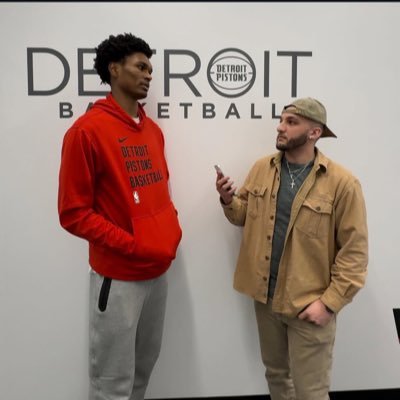
Instead of just talking about it, I wanted to... go through it and really break it down to figure out the exact reason for the difference in Jalen Duren's play between the regular season and the playoffs. *LONG BREAKDOWN COMING* First, lets list how much the difference was: Iso in RS: 82nd %ile Iso in PS: 21st %ile Post-ups in RS: 88th %ile Post-ups in PS: 59th %ile PPP on drives in RS: 1.18 ppp PPP on drives in PS: 0.80 Layups in RS: 79th %ile Layups in PS: 19th %ile It was a staggering drop off. Shocking to many of us who watched him all season. So, what happened? Well, #1 I think mentally he was letting his struggles get to him and he started to play out of control. Something that suggests this to me is this stat: He started to figure some things out himself in isolation over the last 2 games against the Cavs. He had six isolation possessions in the final two games against the Cavs; he scored on five of those possessions and drew a foul on the other. Game 6 he started to look confident and really made them pay out of isolation. I really think a ton of it was he got hit with a punch early against ORL and really struggled to handle the pressure and struggles after, and just kept stacking and stacking. So, him being in his own head is #1 for me. #2: His handle got exposed quite a bit. In the regular season, he only had a 4.2 TO% in isolation, which is incredible. In the playoffs, though, that spiked to 20 TO%. On drives in the RS, he had a TO% of 4%. In the PS, it jumped to 13.3%. The first clip below shows how the right-to-left cross he loved doing all season was really taken away from him. Too loose of a handle, and he often got his pocket picked trying this exact move over and over. I think having his go-to move taken from him shook him a bit and left him scrambling a bit in his head to find a counter. The second clip shows, imo, him starting to lose trust in his handle. He immediately turns his back to the defender, which is what you do when you're worried about losing the ball. But, even then, he loses control of the handle and it ends up in a turnover. If I'm the Pistons, I'm showing all his turnovers due to his handle and working with him on tightening his handle and also helping him get comfortable with a counter/second move so defenders don't just sit on the right-to-left cross. #3: I think he really struggled to adjust to the playoff whistle. In the regular season, he drew free throws on 21% of his isolations and 31% of his post-ups. In the PS, it dropped to 14% and 11%, respectively. There were many possessions where in the RS he would've got free throws, but did not in the PS and he was frustrated. In the third clip, you'll see how physical he was being played by Mobley (which we all want physicality in the game). But, in the RS, he probably is getting FTA's here. There are many examples of this where it felt like a lot of his value during the RS was being able to draw FTA's on his drives, and in the PS, refs just allowed more physicality, and he struggled to deal with it. #4: Ausar-Duren duo. I believe in this duo, and I do not think this was the main reason Duren struggled. However, I am not blind to the fact that there were obviously some possessions that hurt Duren. In the regular season, Duen actually got less efficient when Ausar wasn't on the floor. However, in the playoffs, Duren went from 51 TS% with Ausar on the floor (302 minutes) to 64 TS% with Ausar off the floor (121 minutes). In the 4th clip, you really see how the lack of spacing caused a tough shot from Duren. He gets a step on WCJ going right, and probably would prefer to then just use his strength to create spearation. However, he sees Suggs sitting in the right gap off of Ausar, which forces him to spin left. Once he spins left, Paolo is completely leaving Tobias open. This is one of the reasons I really think DET needs a spacing 4 because this should be an easy kickout from Duren to a shooter. He still should've made this pass to Tobias, but a legit shooting 4 I think would relocate to the corner and make an easier outlet/easier to see for Duren. But, he still coulda made the pass, tbf. Either way, you see how the lack of spacing from both Ausar and Tobias forced Duren into a really awkward drive where he was forced into an extremely tough shot. I think if the passing returned from Duren, some of these situations wouldn't happen. Hitting Ausar early as he cuts into the space would work, or hitting Tobias (who again shoulda be making himself more available) beyond the arc results in better offense. But, also, having better spacing probably allows Duren to just get to his original move once he beats WCJ off the dribble. and lastly #5: He really just didn't play well. I can't include any more clips (I'll put some in the immediate thread reply to display), but he really just didn't play well. Missed *a lot* of looks we're used to him making. His touch around the rim left him, looked like he really felt rushed in the paint. He was struggling to secure rebounds after dominating the glass all season (during the RS, he averaged 4.3 second chance points a game, in the PS it dropped to 2.3). During RS, he had a 22.0 DREB%, which dropped to 16.0% in the playoffs. So, I think a lot of factors played into why he struggled so much in the playoffs. My takeaway is I don't think these things are unfixable; actually, I think they're very fixable. Experience of dealing with what playoff physicality is I think is going to help moving forward. All young players have to adjust to that--I think Cade really learned that from NY series to this playoff run. Tightening his handle and just having a second move to go to is not something that should be considered impossible. I'd like to believe it's pretty likely with how much he works and the raw skill he already has with his handle. Pistons adding a legit spacer at the four I think solves a lot and will make Duren's life a lot easier. The most concerning part is mental. And we won't know an answer to that until the next playoffs. Did this experience help him on his journey towards becoming mentally strong and prepared enough to move forward? Did this run help him find a routine that helps him lock in mentally, as many players have said they had to discover? Or will the pressure from struggling last postseason get to him this upcoming postseason? Will he let mistakes get into his head, compound them, and start playing rashly? I don't think the second option will be the case, but no one will know until the next postseason. Honestly, I'm more concerned and critical of his defense in the playoffs (which at times was pretty good and at other times was an incredible struggle), but that would require its own thread. My ending thoughts: I still very much believe in Duren. This playoff run showed he has areas he must sharpen up and learn from, but at 22 that shouldn't be a shocker. He is incredibly talented and made a large jump during the RS. The PS posed challenges he didn't quite have answers to yet. But another run of experience, another offseason of training, and another year older should lead him down a good path. I am fully supportive of paying Duren and extending him. I am not at close to 50 million dollars. 35-40 million is where I think they'll settle on, and I'm fine with that. But, he's gotta learn from these playoffs! Every offseason he's gotten better, I don't have a reason to believe Jalen Duren won't learn and improve again this summer. He's only 22.show more
Ku 🦉
33,635 просмотров • 3 месяцев назад
Seedance 2.0 on Higgsfield AI The visual fidelity and... scene consistency bring this pirate adventure to life like never before.Every cut feels intentional immersive and ready for the big screen. Full open sourced prompts & assets below: SCENE CONTEXT Bright day at sea aboard a sailing galleon. Captain Eduardo bursts out of the sterncastle door onto the deck; his scarlet macaw lands on his LEFT shoulder mid-stride. He runs up to the quarterdeck where a lookout crewman watches the horizon through a brass spyglass, takes the spyglass and looks himself: a distant island, and a violent optical crash zoom finds a small futuristic hard case on the beach. Then a second crewman runs up, grabs his arm and points the OTHER way, astern — Eduardo turns: a black-sailed pirate ship very far behind them, a speck on the horizon. He does not raise the spyglass — he just stands and stares at the distant black sails, holding the look. ACTIVE REFERENCES >> — lean pirate captain, dark curly hair falling free from under a dusty mustard-yellow cloth bandana, a small white shark tooth pinned to the front of the bandana above his temple, thin moustache, gold hoop earrings, cream linen shirt under a worn brown leather waistcoat, cloth sash and leather belts. 100% matches the reference; studio sheet layout NOT inherited. >> — scarlet macaw, red body, blue-and-yellow wing feathers, small leather shoulder harness. 100% matches the reference; it flies in and rides Eduardo's left shoulder. >> — weathered pirate crewmen from the reference group (bandana, rough shirt, vest). 100% match the reference; TWO of them appear: the lookout at the quarterdeck rail, and a second runner who arrives in CUT 4 pointing astern. >> — collapsible brass spyglass with dark leather-wrapped barrel sections. 100% matches the reference; starts in the lookout's hands, ends at Eduardo's eye. >> — Eduardo's galleon: pale square sails, tall wooden sterncastle, raised quarterdeck. 100% matches the reference; controls hull, deck, masts and rigging only. >> — calm bright sea, glittering sun path, hazy horizon. Controls water and sky atmosphere only. >> — small lone island: dense dark-green jungle cover, a curved white-sand beach on one side, grey rocky cliff edges, turquoise shallows ringing the shore. 100% matches the reference; it is the island seen on the horizon and inside the spyglass view. >> — small futuristic hard case: matte-black armored corners, neon acid-green side panels, brushed-steel top plate with a glowing green star-shaped button. 100% matches the reference; it appears ONLY inside the zoomed spyglass view of CUT 3, lying on the beach. >> — enemy pirate galleon: black sails, acid-green skull-and-crossed-swords on the mainsail, dark carved hull. 100% matches the reference; revealed VERY far astern in CUT 4 as a tiny silhouette on the horizon — never seen closer in this beat. LOCATION MAP >> under sail on >>, open bright sea. The sterncastle door opens onto the main deck; a short wooden stair leads up to the quarterdeck at the stern. The lookout stands at the quarterdeck rail on the forward side, spyglass raised toward the horizon screen-right. Far on that horizon, 2–3 km out: >> — dense green jungle mass, the white-sand beach catching the sun on its near side, turquoise water at its shore. In the OPPOSITE direction, astern of the ship screen-left: open sea where >> rides VERY FAR OFF — 4–5 km out, right on the horizon line, a tiny dark silhouette almost dissolved in the haze — present in the world from the start, revealed to the camera only in CUT 4. Haze visible at the horizon distance. Sun high, sea glitter everywhere. FIRST FRAME / BLOCKING First frame: the sterncastle door already swinging open, >> mid-stride through it onto the deck, body angled toward the quarterdeck stair screen-right. Crew activity in the background of the deck. The lookout is visible up on the quarterdeck at the rail, spyglass already at his eye, pointed screen-right toward the horizon. FORMAT MODE Sequence of cuts, no timecodes — cuts only at the specified points, the camera does not cut on its own. CUT 1 — 63° handheld follow: the door bursts open, Eduardo comes out in a strange hurried scurry — up on TIPTOE, quick tiny mincing steps, both arms half-raised in front of him with elbows out, hands hovering at chest height, shoulders slightly hunched — comically odd, but FAST, covering the deck at 10 km/h. >> sweeps in from off-frame upper-right, wings braking, and lands on his left shoulder without breaking the scurry. He tiptoe-rushes across the deck and up the quarterdeck stair; the camera chases behind-left, half a beat late. CUT 2 — MS, 47°, on the quarterdeck: the lookout at the rail with >> raised. Eduardo arrives frame-left, the scarlet macaw >> sitting clearly visible ON HIS LEFT SHOULDER through the whole cut. With his RIGHT hand he grabs the spyglass out of the lookout's hands in one firm motion and raises it right-handed to his RIGHT eye toward the horizon screen-right, left eye squeezing shut. The lookout yields a step. CUT 3 — SPYGLASS POV, MONOCULAR: one single round image — the view through ONE lens of a telescope, a single circle centered in frame, black around it. This is a one-eyed spyglass view, never the twin overlapping circles of binoculars. Extreme telephoto image swaying with a hand-held tremor, compressed haze layers stacking toward the island. Distant >> sits small in the circle: dark-green jungle, the curved white-sand beach, turquoise shallows, heat haze. Hold 1 second — then a RAPID CRASH ZOOM, one continuous accelerating optical dive down to the waterline of the beach: >> lying on the wet sand, black-and-acid-green case, steel top plate, green star button glinting. The zoom lands and locks on the case filling half the circle. Hold. CUT 4 — MS, 47°: Eduardo lowering the spyglass, macaw on his left shoulder — a second crewman from >> runs into frame from screen-left, grabs Eduardo's arm and jabs his finger the OTHER way, astern, screen-left, shouting over the wind: "CAP'N! BEHIND US!" — and the macaw on Eduardo's shoulder instantly screams it back in a harsh parrot voice: "BEHIND US! BEHIND US!", wings half-flaring. Eduardo whips around following the point; the camera racks past his shoulder — REVEAL deep in the frame: >> VERY far astern, a TINY black silhouette sitting right on the horizon line — smaller in the frame than Eduardo's fist, under 5% of the frame height, barely bigger than a speck, half-swallowed by haze — but the black sails read unmistakably. Vast empty water fills everything between the rail and that distant speck. Eduardo does NOT raise the spyglass — it stays lowered in his right hand. He simply STANDS and STARES at the tiny black sails, motionless, eyes locked on the horizon. The cut ends on his long look toward the enemy ship against the empty sea. OPTICS CUT 1: 63° observational wide, handheld. CUT 2: 47° neutral. CUT 3: monocular spyglass optics — ONE single circular image (a one-lens telescope, never the twin circles of binoculars), tele compression as at 8°, soft edge inside the circle; the crash zoom is purely optical, horizon compressing, haze layers stacking. CUT 4: 47° neutral with a rack to the deep background on the reveal, then holding on Eduardo's profile against the horizon. No drift mid-segment. CAMERA Handheld operator character throughout the real-world cuts: chases the run at deck level in CUT 1 with visible footstep energy, settles to a 1–2 cm breath on the quarterdeck. Camera stays on the shadow side of Eduardo, sun working across from screen-right. The POV cut carries a hand-tremor sway of 1–2 cm that calms when the zoom locks on the case. ACTION Door kicks open from inside. Eduardo's gait in CUT 1 is deliberately odd: he rushes on the balls of his feet, heels never touching the planks, tiny fast tiptoe steps, arms half-raised with hands floating in front of his chest — hurried and urgent, never slow, sash swaying with the quick mincing rhythm, boot toes tapping the deck. The macaw's landing is physical: wings flare to brake, claws grip the leather waistcoat's shoulder, one small balance flap as he keeps scurrying. The spyglass handover is brisk, captain's-right, two hands to one. In the POV the island rises gently with the ship's sway until the crash zoom pins the case. PERFORMANCE Urgency without panic: breath fast through the nose, eyes fixed forward during the run. At the eyepiece his face stills completely — squint tightens, lips part a fraction when the case appears. In CUT 4 the runner's grip snaps him out of it — head whip, eyes refocusing to the far black sails — then he goes still: eyes fixed on the distant ship, a slow exhale, jaw tightening a fraction — the look held long, unreadable, no words at all. Pore-level skin realism, sun catch-lights, spray-damp sheen on the temples. PHYSICS Ship heels gently on a calm swell; rigging sways against the sky. The parrot has real bird mass — landing compresses the shoulder slightly. Cloth reacts to the run wind. In the POV, heat haze wobbles the island image and glitter fires irregularly off the water; the case sits with real weight in the wet sand, a shallow water film sliding around its base. LIGHTING High bright sun, 5600K daylight, hard key from screen-right with sea-bounce fill from below. Deck in full sun, crisp short shadows. Inside the spyglass POV the image is brighter and milkier — long air column, haze density rising toward the horizon; the case's acid-green panels and glowing star button read as the only saturated color on the pale beach. AUDIO Wind over the deck, sails snapping, boots on planks, macaw squawk on landing, gulls distant. On the POV: the world's sound thins to wind and a faint ring of focus. On the crash zoom a low whoosh rising in pitch, landing on near-silence with only the surf of the far beach, thin and distant. CUT 4: deck sound returns — running boots, the crewman's urgent shout over the wind: "CAP'N! BEHIND US!", answered at once by the macaw's harsh screeching echo: "BEHIND US! BEHIND US!" — then only the wind, a slow exhale, and the creak of the deck. No spoken line from Eduardo. STYLE Photoreal live-action, bright maritime daylight, fine film grain, crisp highlights with gentle roll-off, 8K master. POSITIVE LOCKS >> appears only inside the spyglass POV of CUT 3, lying on the beach at the waterline, star button glowing green in every frame it exists. The island always matches >>: green jungle, white-sand beach, turquoise shallows — and stays screen-right, ahead; the enemy ship stays astern, screen-left, in the opposite direction from the island. The spyglass POV (CUT 3) is MONOCULAR: one single round telescope image per frame. Eduardo handles the spyglass with his RIGHT hand at his RIGHT eye in every cut where he uses it. >> keeps black sails and the green skull mainsail in every appearance and stays VERY FAR AWAY the whole beat — naked-eye, she is only a tiny silhouette on the horizon, under 5% of the frame height in CUT 4; she never gets closer than the horizon line. After the reveal Eduardo keeps the spyglass LOWERED — he never raises it at the enemy ship; he speaks no line and makes no gesture — he simply stands looking at the distant ship, and the beat ends on that look; no cannons and no gunfire anywhere in this beat. Eduardo's head: mustard-yellow bandana with the small white shark tooth at the front, hair loose. In CUT 1 Eduardo moves only in the tiptoe scurry: heels off the deck, quick small steps, arms half-raised at chest height — fast and urgent the whole way. The macaw sits on Eduardo's LEFT shoulder continuously from its landing in CUT 1 through the end of the beat, clearly visible in CUTS 2 and 4. The spyglass is in the lookout's hands in CUT 2's first frame and in Eduardo's hands from then on. Same sun direction, same sea state, same wardrobe in every cut. Cuts only at the specified points.show more

Nawal
18,336 просмотров • 2 месяцев назад
Made with my iPhone and a bit of imagination... using #ai & using My prompt for this below: EDIT VIDEO 1. TOTAL LENGTH: EXACTLY 25.07 SECONDS. FINAL OUTPUT: EXACTLY 24 FPS. VIDEO 1 = ABSOLUTE MASTER FOOTAGE. VIDEO 1 AUDIO = ABSOLUTE MASTER AUDIO. @[garlic](25abf54f-7508-4ce8-9e67-776907b18e4d) = established baby pterodactyl character. BRACHIOSAURUS = same established massive adult Brachiosaurus from previous scenes. THIS IS AN EDIT OF THE EXISTING VIDEO 1. DO NOT RECREATE VIDEO 1. DO NOT GENERATE A DIFFERENT PERFORMER. DO NOT REPLACE THE ORIGINAL PERFORMANCE. DO NOT REPLACE THE ORIGINAL CAMERA MOVEMENT. DO NOT REPLACE THE ORIGINAL VOICE. ONLY INTEGRATE: 1. @[garlic](25abf54f-7508-4ce8-9e67-776907b18e4d) on the performer's LEFT SHOULDER 2. the established Brachiosaurus behind/near the performer 3. the physical cracker interactions 4. the Brachiosaurus sneeze and resulting goo ================================================== ORIGINAL VIDEO / PERFORMANCE LOCK ================================================== KEEP THE ACTUAL VIDEO 1 FOOTAGE AS THE MASTER. Preserve the performer's exact: face, identity, hair, beard, skin, clothing, tattoos, body, hands, expressions, eye movements, mouth/lip movements, gestures, cracker movement, body movements, camera position, camera angle, camera motion, handheld shake, micro-shake, timing, and complete original performance. DO NOT reinterpret his movements. DO NOT invent new hand movements. DO NOT alter his existing reaction to accommodate the sneeze. Generated elements must conform to the ORIGINAL SOURCE PERFORMANCE. ================================================== ORIGINAL AUDIO — ABSOLUTE LOCK ================================================== KEEP VIDEO 1'S COMPLETE ORIGINAL AUDIO TRACK FROM 0:00–25.07. DO NOT regenerate the performer's voice. DO NOT replace his voice. DO NOT clone his voice. DO NOT recreate his dialogue. DO NOT remove commentary. DO NOT rewrite commentary. DO NOT shorten commentary. DO NOT move dialogue. DO NOT change dialogue timing. DO NOT change pitch, cadence, pronunciation or microphone characteristics. EVERY ORIGINAL WORD AND REACTION REMAINS AT ITS EXACT SOURCE TIMESTAMP. Generated creature sounds are ADDITIVE ONLY. ORIGINAL SOURCE AUDIO ALWAYS HAS PRIORITY. ================================================== @[garlic](25abf54f-7508-4ce8-9e67-776907b18e4d) — LEFT SHOULDER LOCK ================================================== @[garlic](25abf54f-7508-4ce8-9e67-776907b18e4d) is physically perched on the performer's LEFT SHOULDER for the ENTIRE 25.07-second sequence. @[garlic](25abf54f-7508-4ce8-9e67-776907b18e4d) remains approximately 10 INCHES TALL. SAME @[garlic](25abf54f-7508-4ce8-9e67-776907b18e4d). SAME SIZE. SAME PROPORTIONS. SAME LEFT SHOULDER. Preserve his established: head, small beak, large expressive but realistic eyes, developing crest, skin, coloration, markings, tiny wings, wing membranes, legs, feet, claws, and juvenile proportions. He remains physically anchored to the LEFT shoulder with: correct foot contact, tiny claw placement, realistic weight, balance, contact shadows, body inertia, and natural occlusion. He may blink, tilt his head, make tiny balancing movements and react naturally. DO NOT resize him. DO NOT move him to another shoulder. DO NOT let him fly away. DO NOT make him disappear. DO NOT make him float. ================================================== BRACHIOSAURUS — SAME ESTABLISHED CHARACTER ================================================== Use the SAME massive adult Brachiosaurus established in the previous shots. Approximately 40–45 FEET TALL AT THE HEAD. Preserve its established: massive body, huge legs, long upright neck, small head, gray-brown / olive natural coloration, realistic prehistoric skin, and enormous scale. DO NOT shrink the Brachiosaurus to fit frame. The Brachiosaurus is physically CLOSE BEHIND the performer and @[garlic](25abf54f-7508-4ce8-9e67-776907b18e4d). It is peacefully grazing. Its body orientation places it behind them, calmly eating grass. It is NOT threatening them. It is NOT hunting them. It is NOT behaving aggressively. ================================================== 0:00–1.00 — CRACKER COMES OUT ================================================== During the opening second: preserve the source performer's EXACT movement as he pulls a cracker from his pocket. DO NOT replace the hand. DO NOT change which pocket he uses. DO NOT invent a different cracker movement. The cracker should remain physically consistent in: size, shape, orientation, color, and position. @[garlic](25abf54f-7508-4ce8-9e67-776907b18e4d) notices the cracker. He becomes subtly curious. Tiny head tilt. Eyes track the cracker. Small interested movement toward it while remaining on the LEFT shoulder. The Brachiosaurus remains behind them peacefully grazing. ================================================== 1.00–4.06 — OFFERING CRACKER TO @[garlic](25abf54f-7508-4ce8-9e67-776907b18e4d) ================================================== The performer offers the cracker toward @[garlic](25abf54f-7508-4ce8-9e67-776907b18e4d) according to the EXACT existing source hand movement. @[garlic](25abf54f-7508-4ce8-9e67-776907b18e4d) remains perched on the LEFT shoulder. He becomes increasingly interested. Use subtle believable baby-animal behavior: watching cracker, tiny head movements, small sniffing/inspection motion, slight forward lean, gentle blinking. DO NOT make him immediately eat. DO NOT make him leave the shoulder. ================================================== 4.06 — @[garlic](25abf54f-7508-4ce8-9e67-776907b18e4d) TAKES A HUGE BITE ================================================== At EXACTLY approximately 4.06 seconds: @[garlic](25abf54f-7508-4ce8-9e67-776907b18e4d) suddenly takes a surprisingly HUGE BITE from the cracker. This should be an adorable comedic beat. His little beak physically contacts the cracker. He bites off a noticeably large piece relative to his tiny body. The cracker must visibly lose the corresponding piece. DO NOT regenerate a whole cracker immediately afterward. Maintain cracker continuity. @[garlic](25abf54f-7508-4ce8-9e67-776907b18e4d) then begins chewing the piece. Cute but PHOTOREALISTIC. Tiny jaw/beak movement. Happy interested baby-animal energy without human facial expressions. A few VERY SMALL realistic cracker crumbs may fall. NO cartoon crumb explosion. NO exaggerated animation. @[garlic](25abf54f-7508-4ce8-9e67-776907b18e4d) REMAINS ON THE LEFT SHOULDER. ================================================== 4.06–12.03 — @[garlic](25abf54f-7508-4ce8-9e67-776907b18e4d) CHEWS / BRACHIOSAURUS GRAZES ================================================== Preserve the performer's complete source performance. @[garlic](25abf54f-7508-4ce8-9e67-776907b18e4d) finishes chewing his large bite. He may: blink, make tiny chewing movements, look toward remaining cracker, make a tiny satisfied head movement. The Brachiosaurus remains close behind them. It is peacefully eating grass. Show realistic herbivore behavior: slow neck movement, head lowered toward grass, slow chewing, occasional weight shift, subtle breathing. Its enormous size remains obvious. NO aggression. ================================================== 12.03 — CRACKER OFFERED TO BRACHIOSAURUS ================================================== At EXACTLY approximately 12.03 seconds: preserve the source performer's EXACT hand/arm movement as he offers the remaining cracker toward the enormous Brachiosaurus. DO NOT change the performer's movement. The Brachiosaurus notices the cracker. It slowly and curiously moves its enormous head toward the offered cracker. CRITICAL SCALE: The Brachiosaurus head is HUGE compared with the performer's hand and cracker. DO NOT shrink its head to make the interaction easier. The performer should look extremely small beside it. The dinosaur remains gentle and curious. ================================================== 12.03–14.07 — BRACHIOSAURUS INVESTIGATES CRACKER ================================================== The Brachiosaurus slowly lowers/brings its head close enough to inspect the cracker. Its movement is: slow, heavy, curious, gentle. The nostrils approach the cracker. The huge animal sniffs cautiously. Use subtle nostril movement and breathing. The cracker may move VERY slightly from the dinosaur's breath. DO NOT have it eat the cracker. DO NOT have it bite the performer. DO NOT make it aggressive. ================================================== 14.07 — BRACHIOSAURUS SNIFFS CRACKER ================================================== At EXACTLY approximately 14.07 seconds: the Brachiosaurus takes a clear sniff of the cracker. Immediately after the sniff, something begins irritating its enormous nostrils. THIS IS THE SETUP FOR THE COMEDIC SNEEZE. The Brachiosaurus does NOT sneeze immediately at 14.07. First create a short, recognizable PRE-SNEEZE BUILDUP. ================================================== 14.07–16.14 — MASSIVE PRE-SNEEZE BUILDUP ================================================== Immediately after sniffing: the Brachiosaurus begins preparing to sneeze. Make this visually recognizable but realistic. The huge nostrils twitch. Its breathing changes. Small involuntary head movement. Another nostril twitch. Its eyes briefly narrow/blink. Its enormous head subtly pulls back. A deep inhalation begins. The neck and head show physical tension from the incoming sneeze. This should create a funny moment where the audience realizes: "OH NO." DO NOT sneeze early. BUILD THE ANTICIPATION FROM 14.07 UNTIL 16.14. @[garlic](25abf54f-7508-4ce8-9e67-776907b18e4d) remains on the LEFT shoulder. He can become subtly confused/alert: tiny head tilt, blink, slight wing adjustment. DO NOT make @[garlic](25abf54f-7508-4ce8-9e67-776907b18e4d) leave the shoulder. ================================================== 16.14 — MASSIVE BRACHIOSAURUS SNEEZE ================================================== At EXACTLY approximately 16.14 seconds: THE BRACHIOSAURUS SNEEZES. The sneeze is: sudden, enormous, powerful, wet, unexpected, and VERY FUNNY. The enormous head makes a believable involuntary forward sneeze motion. Generate a powerful burst of GREENISH-WHITE DINOSAUR NASAL MUCUS / SALIVA. The material is: pale greenish-white, semi-translucent, wet, slimy, stringy in places, slightly foamy in places, viscous, physically believable. NOT neon green. NOT glowing. NOT blood. NOT vomit. NOT feces. NOT gore. This is disgusting but comedic dinosaur sneeze mucus. ================================================== SNEEZE TRAJECTORY / PHYSICS ================================================== The sneeze spray must originate physically from the Brachiosaurus's nostrils/mouth area. It travels through REAL three-dimensional space toward the performer and @[garlic](25abf54f-7508-4ce8-9e67-776907b18e4d). Use realistic: spray trajectory, droplet size variation, larger mucus strands, smaller wet droplets, momentum, gravity, depth, motion blur, occlusion. The goo must NOT simply appear magically on the performer. THE AUDIENCE SHOULD SEE THE SPRAY TRAVEL FROM THE DINOSAUR TO THEM. ================================================== 16.14 — PERFORMER AND @[garlic](25abf54f-7508-4ce8-9e67-776907b18e4d) GET COVERED ================================================== The huge sneeze blasts BOTH the performer AND @[garlic](25abf54f-7508-4ce8-9e67-776907b18e4d). A ridiculous amount of greenish-white mucus lands across the performer. Depending on source framing, physically coat visible areas such as: hair, forehead, face, beard, shoulders, shirt/clothing, arms, and nearby body surfaces. @[garlic](25abf54f-7508-4ce8-9e67-776907b18e4d) ALSO gets covered because he is still physically sitting on the performer's LEFT shoulder. The mucus may coat portions of: @[garlic](25abf54f-7508-4ce8-9e67-776907b18e4d)'s head, crest, beak, tiny wings, body, and feathers/fuzz/skin surfaces appropriate to his established design. IMPORTANT: DO NOT completely obscure the performer's face. His identity and expressions must remain recognizable. DO NOT deform his face. DO NOT change his mouth/teeth. The goo is an OVERLAY physically landing on the EXISTING performer. DO NOT regenerate the performer after impact. ================================================== @[garlic](25abf54f-7508-4ce8-9e67-776907b18e4d) REACTION TO SNEEZE ================================================== @[garlic](25abf54f-7508-4ce8-9e67-776907b18e4d) is surprised by the sudden blast. Use a quick but believable baby-animal reaction: rapid blink, brief tiny wing flutter, small startled body movement, little head shake. BUT: @[garlic](25abf54f-7508-4ce8-9e67-776907b18e4d) DOES NOT FLY AWAY. @[garlic](25abf54f-7508-4ce8-9e67-776907b18e4d) DOES NOT FALL OFF. @[garlic](25abf54f-7508-4ce8-9e67-776907b18e4d) REMAINS ON THE LEFT SHOULDER. Afterward he can look confused and slightly pathetic while covered in goo. This should be extremely funny because the tiny baby creature trusted the performer and now BOTH of them are covered. ================================================== 16.14–25.07 — AFTERMATH ================================================== Preserve the performer's EXACT ORIGINAL SOURCE REACTION and camera movement after the sneeze. DO NOT replace his reaction. DO NOT invent a new reaction. The mucus remains physically present on the performer and @[garlic](25abf54f-7508-4ce8-9e67-776907b18e4d) for the rest of the shot. CONTINUITY IS CRITICAL. DO NOT make the goo disappear. DO NOT magically clean them. DO NOT reset clothing. DO NOT reset @[garlic](25abf54f-7508-4ce8-9e67-776907b18e4d). The mucus can naturally: drip slowly, stretch slightly, slide under gravity, cling to hair, cling to clothing, cling to @[garlic](25abf54f-7508-4ce8-9e67-776907b18e4d). Keep it believable. The Brachiosaurus recovers from its sneeze. It can make a small head shake/blink and then look completely innocent. THIS IS FUNNIER IF THE BRACHIOSAURUS ACTS LIKE NOTHING HAPPENED. It may casually return toward grazing afterward. NO second sneeze. NO attack. ================================================== COMEDY TONE ================================================== PLAY THE EVENT STRAIGHT. DO NOT make the scene cartoonish. The comedy comes from: tiny @[garlic](25abf54f-7508-4ce8-9e67-776907b18e4d) taking a ridiculously big cracker bite, the performer deciding to offer the same cracker to an enormous Brachiosaurus, the dinosaur innocently sniffing it, the audience recognizing the incoming sneeze, and then the completely disproportionate amount of disgusting mucus covering both of them. THE MORE PHOTOREALISTIC THE EVENT LOOKS, THE FUNNIER IT IS. No cartoon effects. No comedy sound effects. No exaggerated reaction generated for performer. ================================================== LIGHTING / COMPOSITING ================================================== KEEP VIDEO 1'S ORIGINAL LIGHTING. Integrate the Brachiosaurus, @[garlic](25abf54f-7508-4ce8-9e67-776907b18e4d) and mucus into the source footage. Match: white balance, exposure, color temperature, contrast, shadow softness, black levels, highlight rolloff, green environmental bounce, camera sharpness, and motion blur. Mucus must respond to existing lighting. Wet areas should have subtle natural specular highlights. No CGI glow. No compositing halos. No artificial rim light. ================================================== CAMERA — ABSOLUTE LOCK ================================================== USE VIDEO 1'S ACTUAL CAMERA FOOTAGE. ONE PERSON. ONE PHONE. ONE CONTINUOUS TAKE. NO third-person camera. NO cutaway. NO alternate angle. NO cinematic close-up. NO dinosaur POV. NO @[garlic](25abf54f-7508-4ce8-9e67-776907b18e4d) POV. NO stabilization. NO gimbal. NO slow motion. NO cuts. ================================================== FINAL AUDIO LOCK ================================================== KEEP THE COMPLETE ORIGINAL VIDEO 1 AUDIO. Generated audio may ONLY add subtle: @[garlic](25abf54f-7508-4ce8-9e67-776907b18e4d) cracker bite/chewing, Brachiosaurus grazing, Brachiosaurus sniff at 14.07, deep inhale during 14.07–16.14, massive wet sneeze at 16.14, wet splatter, and natural pasture ambience. ALL GENERATED SFX MUST SIT UNDER THE ORIGINAL VOICE. IF GENERATED AUDIO INTERFERES WITH THE PERFORMER'S ORIGINAL VOICE: REDUCE OR REMOVE GENERATED AUDIO. NEVER REMOVE OR REGENERATE THE ORIGINAL VOICE. ================================================== FINAL HARD LOCK ================================================== TOTAL LENGTH: EXACTLY 25.07 SECONDS. FINAL OUTPUT: EXACTLY 24 FPS. VIDEO 1 = MASTER FOOTAGE. VIDEO 1 = MASTER PERFORMANCE. VIDEO 1 = MASTER CAMERA. VIDEO 1 AUDIO = MASTER AUDIO. @[garlic](25abf54f-7508-4ce8-9e67-776907b18e4d): LEFT SHOULDER THE ENTIRE SHOT. APPROXIMATELY 10 INCHES TALL. SAME SIZE EVERY FRAME. BRACHIOSAURUS: SAME ESTABLISHED MASSIVE ADULT. APPROXIMATELY 40–45 FEET TALL. CLOSE BEHIND PERFORMER. PEACEFULLY GRAZING. 0:00–1.00: performer pulls cracker from pocket. 1.00–4.06: performer offers cracker to @[garlic](25abf54f-7508-4ce8-9e67-776907b18e4d). 4.06: @[garlic](25abf54f-7508-4ce8-9e67-776907b18e4d) takes a HUGE BITE from cracker. 4.06–12.03: @[garlic](25abf54f-7508-4ce8-9e67-776907b18e4d) chews while Brachiosaurus grazes behind them. 12.03: performer offers remaining cracker to Brachiosaurus. 14.07: Brachiosaurus sniffs cracker. 14.07–16.14: VISIBLE PRE-SNEEZE BUILDUP. NOSTRIL TWITCH. BLINK. DEEP INHALE. HEAD PULLS BACK SLIGHTLY. DO NOT SNEEZE EARLY. 16.14: MASSIVE BRACHIOSAURUS SNEEZE. GREENISH-WHITE WET DINOSAUR MUCUS BLASTS ACROSS BOTH THE PERFORMER AND @[garlic](25abf54f-7508-4ce8-9e67-776907b18e4d). @[garlic](25abf54f-7508-4ce8-9e67-776907b18e4d) REMAINS ON LEFT SHOULDER. 16.14–25.07: PRESERVE EXACT SOURCE REACTION. GOO REMAINS VISIBLE AND NATURALLY DRIPS. BRACHIOSAURUS RECOVERS AND ACTS INNOCENT. NO SECOND SNEEZE. NO ATTACK. NO OTHER DINOSAURS. NO @[garlic](25abf54f-7508-4ce8-9e67-776907b18e4d) FLYING AWAY. NO @[garlic](25abf54f-7508-4ce8-9e67-776907b18e4d) RESIZING. NO REGENERATED PERFORMER. NO REGENERATED HUMAN VOICE. NO CAMERA REPLACEMENT. NO CUTS. KEEP ACTUAL VIDEO 1 FOOTAGE AND AUDIO. FINAL OUTPUT: EXACTLY 24 FPS. ``` The **2-second pre-sneeze from 14.07 → 16.14** is important. I’d keep that instead of making him instantly sneeze after sniffing—the audience gets just enough time to see the nostrils twitch and realize what's about to happen before you and Garlic get absolutely blasted.show more

OmarGoshTV
18,728 просмотров • 11 дней назад