HyperBird, a cutting-edge imaging platform for observing microscopic traits... in plants, can detect grape diseases – such as powdery and downy mildews, which cost vineyard owners billions in annual losses globally – days before physical symptoms become visible. The advancement will potentially allow plant breeders to speed the development of disease-resistant grape varieties, cue growers to target fungicide use early in a disease's progression, and provide vineyard workers with better and earlier information for crop management. While regular cameras record three bands of wavelengths (red, blue, and green) within the visible light spectrum, hyperspectral imaging records hundreds of narrow bands. With this hyperspectral power, the researchers created a high-throughput phenotyping microscope – meaning it can process hundreds of leaf samples within a few hours for observable traits related to disease resistance. This capability lets it detect changes inside a leaf before they are visible on the surface. Cornell CALS | Cornell AgriTech Read more:show more

Cornell University
34,083 views • 1 month ago
A Mayo Clinic-developed artificial intelligence (AI) model can help... specialists detect pancreatic cancer on routine abdominal CT scans up to three years before clinical diagnosis. It identifies subtle signs of disease before tumors are visible, when curative treatment may still be possible. The findings, published in Gut, mark a milestone in Mayo Clinic's multiyear research effort to enable earlier detection of one of the deadliest cancers. Learn more:show more

Mayo Clinic
2,141,040 views • 6 months ago
Spray marker works by mechanically propelling fine marking powder... through a thin needle tip. It has a small reservoir of fluorescent green powder. A spring-loaded plunger (visible in the later frames as the translucent plastic piece with fins) is cocked and then released. When triggered, the plunger rapidly compresses and forces a burst of powder out through the extended metal needle nozzle, creating a directed spray that can reach the bottom of deep holes. This lets you mark the exact depth or center of drilled holes in wood, masonry, or metal without the powder scattering on the surface. The needle tip is designed to fit inside narrow holes, and the powder sticks to the target area for a clear, visible mark.show more

World of Engineering
51,482 views • 21 days ago
When a nuclear reactor is switched on for the... first time, an intense, almost hypnotic blue glow appears in the water surrounding the reactor core. This light is neither fire nor heat; it is Cherenkov radiation, a physical phenomenon that occurs when charged particles, such as high-energy electrons produced during nuclear fission, travel through a transparent medium faster than light can propagate within that same medium. While nothing can exceed the speed of light in a vacuum, light travels more slowly in materials like water. When a charged particle surpasses this reduced speed, it emits a coherent shock-like electromagnetic wave, often described as an optical analogue of a sonic boom. This radiation produces the distinctive blue glow. The colour arises because Cherenkov radiation is strongest at shorter wavelengths, which are dominated by blue and ultraviolet light. The phenomenon was first observed experimentally in 1934 and later explained theoretically, work that led to the Nobel Prize in Physics in 1958. Its explanation confirmed how relativity and electromagnetism operate in material media. Today, this deep blue light is both a warning and a scientific tool. It signals the presence of intense ionising radiation, while also being exploited in particle detectors, nuclear reactors, and neutrino observatories. It provides a rare, visible manifestation of subatomic processes that are otherwise hidden from direct human perception. #GottaLovePhysics #Physicsshow more

Erika
281,174 views • 10 months ago
Some of the most serious diseases in women progress... for a long time without showing any symptoms. Cervical diseases, in particular, are often completely silent in the early stages. They can develop over years without pain, bleeding, or any noticeable complaints. Therefore, a Pap smear is not just a test, but one of the most powerful tools for early diagnosis. A Pap smear is a screening test that takes a sample of cells from the cervix. The aim is to detect cellular changes before they turn into cancer. Because cervical cancer is not a disease that develops suddenly; it is mostly the result of long-term cellular changes. The most critical point is this: Most patients feel nothing in the early stages. So, the approach of "if there are no symptoms, there is no problem" is not valid for this disease. Thanks to Pap smears: Precancerous lesions can be detected early. Treatment becomes much easier and more effective. Disease progression can be largely prevented. ACOG recommendations: 21–29 years → Pap smear every 3 years 30–65 years → * Pap smear every 3 years * or HPV test every 5 years * or co-test every 5 years (smear + HPV test) After 65 years of age, screening is discontinued in suitable patients. The procedure is short, often painless, and does not affect daily life. Common concerns in society are embarrassment, fear, or procrastination. However, a screening that takes only a few minutes can prevent a serious disease that could last for years.show more

Op. Dr. Mehmet Bekir Şen
192,329 views • 6 months ago
Incredible new study at Washington State University found Egyptian... Blue emits near‑infrared light 🤯 This is a fragment of ancient Egyptian Blue paint. When researchers hit it with visible light (green, around 530–550 nm), the pigment absorbed it and re‑emitted near‑infrared light at 910–940 nm. Our eyes can’t see NIR, but a modified camera can, so the pigment looks like it’s glowing. Modern NIR‑emitting pigments are used today in anti‑counterfeiting, biomedical imaging, cooling tech, and more. In the hot sun of the Egyptian desert, if a person wore clothing painted in Egyptian Blue, they would stay cooler by radiating some of the absorbed sunlight back out as near‑infrared instead of trapping it as heat.show more

Ancient Hypotheses
181,635 views • 8 months ago
Space objects such as meteoroids and asteroids move across... the solar system and can collide with both Earth and the Moon. However, the Moon shows far more visible impact marks on its surface. One main reason is that Earth has a thick atmosphere that protects the planet. When many meteoroids enter Earth’s atmosphere, they burn up due to friction before they can reach the ground. This process creates the bright streaks of light we call shooting stars. The Moon, however, has almost no atmosphere, so incoming space rocks are not slowed down or burned up. They travel directly to the lunar surface and strike it at very high speed. Each collision creates an impact crater, throwing dust and rocks outward from the impact point. Over billions of years, thousands of these impacts have covered the Moon with craters. Unlike Earth, the Moon also has no wind, water, or weather to erase these craters, so they remain visible for millions or even billions of years. This is why the Moon looks heavily cratered when we observe it from Earth through telescopes.show more
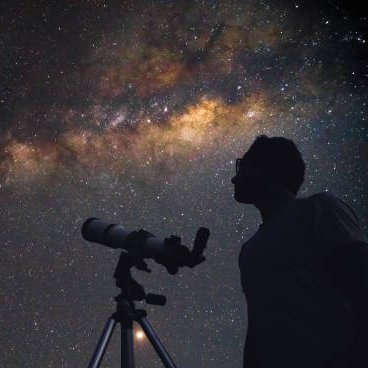
The Astronomy Guy
17,500 views • 7 months ago
When a nuclear reactor powers on for the first... time, the core fills with a deep blue glow that feels almost unreal as it rises through the water in a quiet surge of energy. The light is Cherenkov radiation, created when charged particles move through the water faster than light can travel in that medium, a discovery made in the 1930s that revealed a new way to see high energy reactions. Every appearance of this glow is a reminder of how powerful atomic reactions can be, showing a rare moment where raw physics becomes something visible and strangely beautiful.show more

Today In History
384,096 views • 5 months ago
Mantis shrimp hold the world record for the most... complex visual system. They have up to 16 photoreceptors and can see UV, visible and polarised light being the only animals known to detect circularly polarised light. [📹 MJ Ogata]show more

Massimo
1,007,361 views • 2 years ago
With World Health Organization (WHO)'s support, Ministry of Health-... Uganda has started a vaccine trial against #Ebola Sudan virus today. The trial will enroll contacts of people with the disease, and contacts of the contacts. This vaccination trial was initiated with record speed, only three days since the outbreak was declared, while ensuring full compliance with international and national regulatory and ethical requirements. It is also the first trial to assess the clinical efficacy of a vaccine against Ebola Sudan virus disease. This trial demonstrates the importance of investing in R&D for vaccines and treatments and outbreak response preparedness, as well as partnerships. We thank Makerere University University and UVRI for their leadership, as well as Africa CDC, CEPI, EU HERA and IDRC | CRDI for their collaboration on this lifesaving effort. WHO will continue supporting the government in a comprehensive response to bring the outbreak under control.show more

Tedros Adhanom Ghebreyesus
63,414 views • 1 year ago
Hundreds of boats come together to create one giant... American flag! Patriotic boat owners gathered offshore this weekend for an extraordinary patriotic display, carefully positioning their vessels to create a massive American flag visible from the air. Using red, white, and blue boats along with personal watercraft, participants spent hours organizing into precise rows before the final formation stretched across the harbor. The floating flag, spanning several football fields, drew crowds of spectators on shore and dozens of helicopters and private aircraft overhead to witness the spectacle. Organizers said the event was designed to celebrate America's 250th anniversary and showcase what can be accomplished when hundreds of people work together toward a single goal.show more

NancyH
39,174 views • 4 months ago
A cloudy start for some on Tuesday, with bands... of rain moving east through the morning 🌧️ But before it arrives, a few breaks in the cloud will bring a brighter start to the day for some areas 🌥️ Southwesterly winds strengthening in the west as the day goes on 🌬️show more

Met Office
21,884 views • 7 months ago
The only language the Russian scum understand. Explosions in... the Moscow region: Attack on the Shatura power plant. The attack on the facility created a column of fire visible from a great distance. The Shatura power plant supplies electricity and heat to part of the Moscow region. Airports in the region are reportedly being closed, and the drone attack is ongoing.show more

Jürgen Nauditt 🇩🇪🇺🇦
169,115 views • 11 months ago
After yesterday’s catastrophe at Fairway Hotel, I decided to... visit the premises today and witness the situation for myself. To my surprise, I found the hotel operating normally, just as it always has been. There is no visible sign of flooding or water damage, which speaks volumes about the efficiency and seriousness of the hotel’s management. It is unbelievable that a place which was flooded yesterday could return to full operation within just a matter of hours. Management also confirmed that the issue which caused the flooding was identified and rectified immediately, with measures put in place to ensure such an incident does not happen again.show more

Gideon Nova Kwikiriza
47,323 views • 5 months ago
Chinese kids are living in a better era than... their parents. High-speed trains can take them safely and quickly to places hundreds of kilometers away for joy and fun. This was unimaginable for their parents at the same age.show more

Li Zexin 李泽欣
23,810 views • 10 months ago
The Golden Globe as always exceptionally interesting and it... didn't fail to deliver new records and a lot of interesting moments, like Leonardo DiCaprio showing personality off camera to Amy Poehler winning Golden Globe for Best Podcast, Becoming Award’s First Recipient One thing was different in the 86th edition of the award, Polymarket had A HUGE Presence Variety, Deadline and The Hollywood Reporter all talked about Polymarket Polymarket was accurate on EVERY single prediction. People are able to put money behind their opinions and as a result you get the odds of what's likely to happen Polymarket show a new way in which the audiences engage with and connect with content that they love within the entertainment industry. Gone are the days where you have to wait for a pundit to do a red carpet interview for you to get a glimpse now the audience can access a much more reliable narrative days before the award show I see this as a legitimate data provider outside the KMPG, Deloitte with Polymarket using collective intelligence in real timeshow more

supernigga ꕤ
51,544 views • 9 months ago
The Strait of Hormuz cannot be opened by the... US with force. The Strait is narrow, and the weapons Iran can use are cheap and easy to produce. This is Iran's Azhdar UUV (unmanned underwater vehicle) that can remain underwater for 24 hours, is quiet, and is hard to detect.show more

Glenn Diesen
1,856,655 views • 7 months ago
🚨 SCIENTISTS JUST CREATED A WAY TO KILL ANTIBIOTIC-RESISTANT... BACTERIA USING NOTHING BUT LIGHT. Researchers have developed graphene quantum dots that destroy over 99.9% of antibiotic-resistant S. aureus and E. coli when hit with low-intensity blue light without using any antibiotics at all. The dots work by generating reactive oxygen species that rip apart bacterial cells. After chemically modifying them, the team made the dots over 20 times more efficient, allowing them to work at very low concentrations. Because they’re made from graphene instead of toxic heavy metals, they’re also much safer for medical use. Why this matters: • Antibiotic resistance is one of the fastest-growing threats to global health • This offers a completely different weapon light instead of drugs • The dots could be used in wound dressings, creams, gels, and coatings for implants and catheters • Graphene is cheap, stable, and biocompatible The deeper implication: We’re running out of effective antibiotics, and bacteria are evolving faster than we can develop new drugs. This approach flips the script: instead of fighting bacteria with chemicals they can eventually resist, we use light to trigger a physical attack they can’t easily adapt to. If this scales, it could become a powerful new tool in the fight against superbugs especially for wound infections and medical devices, where resistant bacteria are hardest to treat. Sometimes the solution isn’t a better drug. It’s a better way to attack. Would you trust a light-activated treatment over traditional antibiotics if it worked this well? Follow for more frontier nanotechnology and breakthroughs in the fight against antibiotic resistance.show more

TheNewPhysics
35,112 views • 4 months ago