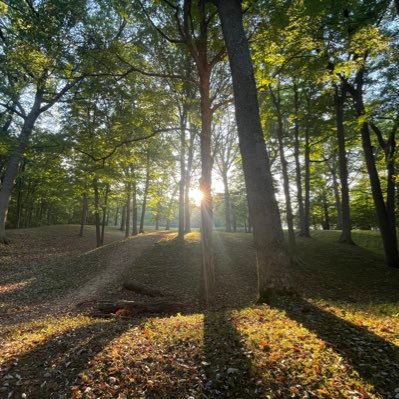
I always figured Bishop Castle was one big construction... project. It isn’t. Jim Bishop bought forty acres in southern Colorado as a teenager with plans to build a family cabin. In 1969, he started laying stone from the property. Then he came back the next day. And the day after that. Walk through the castle today and you can almost read the order it grew. One tower needed stairs. The stairs led to an iron bridge. Another section took shape. Years later came stained glass, a ballroom, and eventually the steel dragon that still breathes fire above the trees. Walking it nothing feels like it was built all at once. Older stone sits beside newer work. The welding changes from one section to another. Some ideas grew larger than he probably imagined. Others stopped exactly where they ended. People describe Bishop Castle as something one man built. Standing in it, it feels more like decades of ordinary work that never really stopped. One more weekend or one more wall. Most landmarks preserve a finished place. Bishop Castle preserves the years it took to get there.show more
MoundLore
10,336 views • 2 months ago
The dog kept placing stones beside the hospital bed.... Small stones. Smooth ones. Gray ones. One white stone shaped like a bean. They appeared every time the nurse took him outside. His name was Oakley, a red-brown mutt who belonged to a man named Chris, recovering from a serious accident after months in rehabilitation. Chris had been a landscaper. Before the accident, he collected stones from every job site and kept them in jars on his porch. He said every yard had a memory if you knew what to pick up. Oakley had followed him everywhere. After the accident, Chris stopped talking much. He answered doctors. Ignored friends. Stared out the window for hours. The hospital allowed Oakley to visit twice a week. On the first visit, Oakley walked straight to the bed and placed one stone on the blanket. Chris blinked. "Where did you get that?" he whispered. The nurse said Oakley had picked it up outside near the wheelchair ramp and carried it in his mouth the whole way. The next visit, another stone. Then another. Chris began keeping them in a paper cup beside the bed. One day, he asked the nurse to bring the cup closer. He touched each stone with his thumb and named what they looked like. Driveway gravel. Creek rock. Garden stone. It was the most he had spoken in weeks. The therapist noticed. So did his tamily. Soon, walks with Oakley became part of recovery. Chris would sit in the wheelchair while Oakley searched the hospital garden for one stone worth bringing back. Not every stone. Just one. Carefully chosen. Months later, Chris came home. He moved slower now, but Oakley moved with him. On the porch sits a new jar labeled Recovery. Inside are all the stones Oakley carried to the hospital bed. Every one of them. Some people need speeches to come back to life. Others need one loyal dog, one small stone, and a reason to reach for tomorrow.show more
Gabriele Corno
182,895 views • 2 months ago
One of the richest men in the Pacific Northwest... set out to build a mausoleum unlike anything else in Washington. Hidden in the woods near Roche Harbor, the McMillin Mausoleum was designed with Masonic symbolism throughout… unfinished columns, ceremonial stairways, and architecture meant to speak in symbols as much as stone. It was supposed to be crowned with a bronze roof and surrounded by landscaped grounds. Instead, construction simply stopped. More than a century later, no definitive explanation exists for why it was abandoned. The monument meant to preserve one family’s legacy became a monument to something else entirely: Even immense wealth can’t guarantee you’ll finish the story you planned to leave behind.show more
MoundLore
24,157 views • 2 months ago
Jeff Bezos never has to work another day in... his life. He works like he needs the job. Ninety five percent of his time goes to AI. Meetings from 9 to 7. Technical papers after. His reason is one sentence. Bezos: “The world is so interesting right now. We’re in multiple golden ages at once.” Not one. Several. Running at the same time. For ten thousand years, humanity got one breakthrough per era. Fire. The wheel. The printing press. Electricity. A single leap. Then centuries of silence. That rhythm just broke. Artificial intelligence. Space. Gene editing. Robotics. Energy. All of it arriving inside the same ten years. Nothing in recorded history looks like this. So why does it feel like an ending instead of a beginning. Because the mind evolved to flinch at danger, not to measure it. Collapse feels loud. Progress feels like it belongs to someone else. Step back far enough and the truth turns almost violent. Every person who came before you lived and died in the world they were born into. Nothing moved. Nothing shifted. The map they were handed was the map they returned. You were dropped into the one decade where the whole thing changes at once. Everyone before you knew only the old world. Everyone after you will know only the new one. You are the only ones who will ever see both. Bezos: “There’s never been a more extraordinary moment to be alive.” That was not optimism. It was arithmetic. You were not born too late. You were born on the seam between two worlds. Almost no one alive will realize they are standing on it.show more

Dustin
39,307 views • 2 months ago
The people dunking on SPECS aren't wrong - the... world's best social computer is being sold as a personal one you use alone in your room I always imagined walking around my city stumbling onto photos and art other people left behind. the invisible world we never get to see made visible in the places it matters most I realized that experience wasn't going to be there day one so over the weekend I built the map and bought a pair of SPECS to explore it this Fall Put yourself on the map today:show more

aidan
17,887 views • 2 months ago
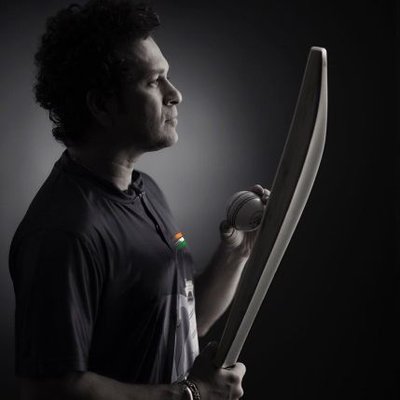
The first ball always makes your heart race… and... that night, it never stopped. 15 years later, it still stays with us. We all grew up as a bunch of young cricketers, united by one dream. To win the World Cup for India. To everyone who was a part of the journey, and to all the fans…thank you for sharing it with us and making it so special. Jai Hind! 🇮🇳show more
Sachin Tendulkar
426,900 views • 5 months ago
While you were watching YouTube Shorts, a 20-year-old was... getting paid by them. $14,621 in estimated revenue. From one video. Made by someone who has never appeared on camera once. He figured out something most creators spend years trying to learn: YouTube doesn't reward personality. It rewards retention. It doesn't verify who wrote the script. It doesn't check if a human recorded the voice. It measures one thing: do people watch to the end? Claude writes scripts that people watch to the end. Strong hook, tight structure, no dead seconds. The algorithm sees the retention. It pushes the video to more people. More people watch. The number climbs. 105 million is where it stopped climbing on this one. Then he made the next one. Just a system that produces videos and a platform that pays for every thousand people who watch. $66/month in tools. 30 minutes per video. A system that runs on its own after that. He uses it to print money while he sleeps.show more

Superior
10,454 views • 4 months ago
In 1499, Michelangelo overheard people crediting his greatest work... to someone else. He snuck into St. Peter's at night and carved his name on the sculpture. He regretted it immediately and never signed anything again for the rest of his life... He was 24 years old. The year before, a French cardinal had paid him 450 gold ducats to sculpt a statue for his own tomb. The contract had one strange clause: it had to be "the most beautiful work of marble in Rome, one that no living artist could better." Michelangelo had never completed a major public commission. He accepted anyway... He carved for two years from a single block of Carrara marble that he later called the most perfect stone he ever worked. What he produced was the Pietà: the body of Christ, lifeless, across the lap of his mother. When it was unveiled, visitors refused to believe a 24-year-old Florentine had made it. They credited the work to a more famous Lombard sculptor. So according to Vasari, Michelangelo slipped into the basilica with a chisel and carved his name in Latin across the sash running between Mary's breasts: MICHAELANGELUS BONAROTUS FLORENTINUS FACIEBAT. "Michelangelo Buonarroti, the Florentine, made this." Then he vowed never to sign another work. He kept that vow. Through the David. Through the Sistine Chapel. Through the dome of St. Peter's. Through 65 more years of work, until he died at 88. Not one of them bears his name. What I can never quite get over is that he was only 23 when he started. A young man who believed he could carve the most beautiful object on earth. And then he did... If you enjoyed this, I write a newsletter read by over 50,000 people who love rediscovering the wonder and beauty of the past, one story at a time. You can join us here: History is more beautiful than we remember.show more

James Lucas
752,252 views • 4 months ago
No tip. Heavy snow. One very frustrated delivery driver.... After making the trip through dangerous winter conditions, the driver refused to leave the pizza once he realized there wasn’t a tip. He took it back and told the customer to come get it from the shop instead. Social media is overwhelmingly backing the driver, saying if someone is willing to deliver in weather like that, they deserve more than nothing. Do you agree?show more

Caught on Camera 🎥
85,951 views • 1 month ago
There has been a fortress on this rock since... at least the year 547. It is older than England, older than Islam and older than the Vikings who would eventually destroy it... This is Bamburgh, on the Northumberland coast, standing on volcanic rock 150 feet above the North Sea. The Britons had a stronghold here called Din Guarie, possibly the capital of the kingdom of Bernicia from around 420. In 547 an Anglian warlord named Ida took it, and that is the moment Bamburgh enters written history. Around the year 600 his grandson Æthelfrith gave the fort to his wife, Bebba. It became Bebbanburh, Bebba's stronghold, and eventually Bamburgh. The castle is named after a woman almost nobody remembers... It became the royal capital of Northumbria. Vikings destroyed it in 993. The Normans rebuilt it, and in 1464 the Earl of Warwick turned cannon on those walls and broke them, in what is usually described as the first time an English castle fell to artillery. It sat as a ruin for the next two hundred years, until a bishop's fortune turned it into a charity, with a free school and an infirmary running inside the walls. In 1894 the armaments magnate William Armstrong bought the wreck for £60,000, spent over a million rebuilding it, died before the work was finished, and left it to his family, who own it still. Nearly fifteen hundred years of kings, raiders and cannon fire, and people are still living in it...show more
James Lucas
216,441 views • 1 month ago
13 years old. making $20,000 a month. working just... 1-2 hours a day. he didn’t work harder. he built a system. every morning, it looks at what’s trending. it finds the best posts from the last 24 hours. then it gives him 10 content ideas, ranked from best to worst. he picks one. one AI writes the post in his style. another checks it for mistakes. another posts it to 5 different platforms. one idea. five platforms. almost no manual work. after each post goes live, the system tracks what people liked, shared, and saved. it uses that data to make the next posts better. so the content keeps improving on its own. the results add up. 5 million views in 2 weeks. 100,000 bookmarks in 2 months. bookmarks matter. people only save posts they want to come back to. when lots of people save a post, platforms keep showing it to more people. that’s why his posts keep getting views… while he’s at school. while he’s sleeping. while he’s doing something else. the biggest advantage today isn’t working more. it’s building a system that works even when you don’t. watch the video. then read the full breakdown below.show more

MIKE
2,878,645 views • 2 months ago
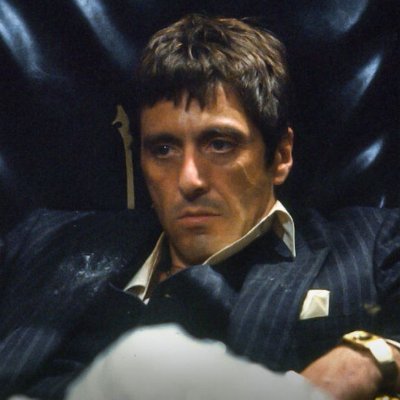
Jamie Foxx's character in Collateral was originally going to... be played by Adam Sandler, as a 'Woody Allen kind of cab driver in New York' in 'one of those funny screenplays.' But when Michael Mann came aboard, he took the project in a totally different direction. He explains why: "Nothing’s wrong with Adam Sandler, but...the Jamie Foxx character was a badly-written Jewish cab driver, with the kind of stereotypes that can only come from someone writing that kind of a character who’s foreign, who’s not American, that doesn’t live in New York.” (The script was written by Stuart Beattie, an Australian) …I didn’t like the screenplay, I didn’t like the dialogue, I didn’t like (the) writing, but if you took the screenplay, and put it under an MRI, or an X-ray machine, and took a look at it, you realize this thing has beautiful, beautiful bones. It’s one of the most beautifully constructed stories I’d had ever run into. And it was gemlike, and it all took place in one night, and the roles each guy played in the other’s realization of himself, and it was just a beautiful piece of writing by Beattie. But I loved the story structure of it, so I rewrote it."show more
Gangster Cinema Central
42,964 views • 3 months ago
The castles of Europe are some of the most... amazing things we’ve inherited from history Between 75,000 and 100,000 castles were built in Western Europe during the medieval period, with around 1,700 in England and Wales alone, and roughly 14,000 in German-speaking areas... Most of them rose between the 9th and 15th centuries after the collapse of centralized Roman authority and the rise of fragmented feudal power. As attacking armies grew more sophisticated, so did the walls meant to stop them. The cost was staggering: from 1179 to 1188, King Henry II of England spent over £6,500 on Dover Castle alone — an enormous sum given that his entire annual revenue was around £10,000. That figure was more than three times what he spent on any other building project in his reign, and more than four times what went into grand royal residences like Windsor. And then there is Malbork... Built by the Teutonic Knights in what is now Poland, Malbork is the largest castle in the world measured by land area. It covers 52 acres and once housed approximately 3,000 knights. A medieval visitor reportedly noted it seemed "more a city enclosed by walls than a single castle." In 950, Provence was home to just 12 castles. By 1000, the number had risen to 30. By 1030, it was over 100. The pace was not driven by a single empire with a plan, but by thousands of individual decisions made by lords, bishops, and kings who each decided, in their own time and place, that stone was the only reliable answer to an uncertain world... The word castle is derived from the Latin word castellum, which is a diminutive of the word castrum, meaning "fortified place". Between seventy-five thousand and a hundred thousand of these fortresses were built over six centuries as a reminder that every civilization eventually decides what it will leave behind. Europe decided on this. And the castles are still here.show more
James Lucas
1,922,286 views • 5 months ago
NEW: Recently released January 6 footage shows one of... the J6 protesters flashing something as he appears to be leaving the Capitol building. Many online are suggesting that the item he is holding is a badge and that he is a Federal agent. The man in the video is Kevin James Lyons and he was sentenced to over four years in prison. Lyons admitted to taking a wallet from then-Speaker Pelosi's staffer as well as a framed photo of Pelosi with late Congressman John Lewis. Lyons was an HVAC technician and was arrested in his home state of Illinois just one week after J6. On the evening of J6, Lyons shared a photo of the picture frame he took with his friends and said: "I'm pretty confident I am now a multiple Federal felon." It is very unlikely that the item he is holding is a badge and if it is, it is probably one that doesn't belong to him. Source assist: Brick Suitshow more

Collin Rugg
3,261,934 views • 2 years ago
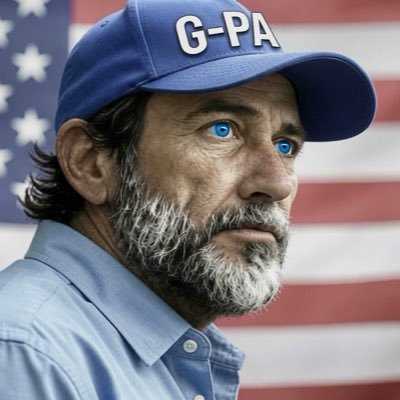
If you ever get the chance to go to... Normandy, take it. Don't just visit it-take your time and let it sink in, because it is one of the most humbling experiences I've ever had. Standing there, looking out across those beaches, you can almost feel the weight of what happened there. It's hard to fully understand what those soldiers went through until you're standing in that place, realizing the courage it took just to run toward that shore. The beauty of Normandy is quiet and powerful, but so is the sacrifice it represents. The rows of white crosses, the history in the ground, the silence in the air-it all reminds you that freedom came at a tremendous cost. It's the kind of place that stays with you long after you leave. It makes you grateful, reflective, and a little more aware of how much was given for the life we live today. Normandy is more than a battlefield. It is a lesson in sacrifice, bravery, and remembrance. 🙏🇺🇸🙏show more
G-PA
178,923 views • 3 months ago
sorry, they just did WHAT someone gave a machine... one disease name, the leading cause of blindness in the developed world with 1.5 million americans already in its path, and it came back pointing at a drug that has sat in pharmacies for years under a different label: 551 papers read in 30 minutes against the 294 hours a human would have needed, and the loop that did it is public on GitHub most agent setups answer one question at a time, so the ceiling on the work is the quality of the question you happened to think of this one was handed a single question and wrote the second one itself. turns out that follow-up is where the real find was: a target called ABCA1, upregulated threefold, in an experiment no human ordered i read the whole paper looking for the trick, and the trick is structural. that is the second question, and it is the gap between an assistant and a factory: - hand the loop a field rather than a task: it was given a disease, and choosing the mechanism was part of its job - make it rank before it spends: 151 papers in, ten candidate mechanisms out, scored against each other before anything touched a bench - split reading from judging, so the agent that forms the theory is a different agent from the one grading it - close every cycle on physical reality: the verdict was an experiment, and another model's opinion was never allowed to stand in for one - feed each result back as the next question rather than a log line, which is the step almost nobody builds - search what already passed inspection first: the winner was an approved compound with a safety file already on record - write down what the round learned before opening the next one, so round two starts where round one stopped my read, and i think it is the uncomfortable one: reading was the entire bottleneck in that field, and everybody spent the decade optimising the writing. people ran every physical experiment here, the analysis agent needs a domain expert writing its prompts, and the authors decline to call this the leap it resembles. the thinking got replaced, and the hands did not so the question i cannot answer for my own setup: which step of your loop still stops dead until you sit down and type something bookmark this one. the four parts that turn one model into a line that runs like this, the queue, the rooms, the write permissions and the gate, are built file by file in the piece below ↓show more

Argona
32,475 views • 1 month ago
In 1986, on an early fall afternoon after school,... I was eight years old, playing with two friends who were brothers, one my age and the other nine, in an apple orchard along the banks of the Napanee River. We noticed an object hovering nearby that didn’t look like anything mechanical. It looked like a long river rock, maybe forty feet in length, dark grey to almost black, with the same subtle shimmer you see when mica catches the light in stone. It wasn’t glowing. It was just there. Wrong in a quiet way. As soon as I focused on it, my stomach dropped and filled with a strange electrical sensation, like my insides were vibrating. Years later I’d recognize that feeling as similar to an electric shock. That’s the last clear moment I remember. All three of us lost consciousness. My parents later found us wandering in a nearby field, disoriented. One of the brothers will still talk about it. The older one shuts down completely and retreats to his room whenever it’s mentioned. I was left with something else entirely. The number 108 burned itself into my awareness and it never faded. It’s been there ever since, whether I wanted it to be or not.show more

Jason Wilde
30,539 views • 7 months ago