I successfully compressed the complete fruit fly brain, including... all 139,255 neurons and their connections into approximately 43 MB. Storing the entire connectome on Bitcoin will require around 110 separate Ordinal inscriptions of up to 350 KB each, making the process expensive. To help fund this process, we are considering creating a very limited collection of digital insects, although the exact details are still being defined. Through our neural engine, the fly’s brain could potentially control these other digital insects, influencing their movements, reactions, and behavior The goal is not merely to inscribe a brain as static data, but to make it functional,using the on-chain connectome as the foundation for an autonomous digital ecosystem living entirely on Bitcoin. This remains an experiment with much still to develop, but the vision is clear: preserve the brain, activate it, and create a world where it can continue to existshow more

BANKNOTES
11,377 просмотров • 1 месяц назад
LLMs are built out of neural networks, so it... was easy to extend to the fruit fly connectome The first brain ever uploaded to a blockchain. Every neuron fire running as standard Solana transactions on Fogo As long as the wallet's funded, this guy has digital immortalityshow more

Doug Colkitt
54,537 просмотров • 1 месяц назад
We Open-Sourced a Quantized Fruit-Fly oBrain on GitHub 95%... Smaller, ~98% as Accurate as the Published Connectome We quantized the entire fruit-fly nervous system that Google Research, HHMI Janelia, and collaborators published — the complete male Drosophila central nervous system, on the order of 166,000 neurons and a massive synaptic graph — and compressed it by about 95% while retaining roughly 98% of the original simulation accuracy. That is the technical claim. The more important decision is what happens next. After the oBrain team met and debated it, we made a final call: we will not keep this brain closed. We are open-sourcing it on GitHub so researchers, builders, skeptics, and anyone obsessed with biological computation can inspect the weights, the wiring, the quantization path, and the benchmarks. If a “brain” is going to live on-chain, it has to be checkable. Closed source would make that impossible. This is the same instinct that made OpenClaw🦞 a public harness instead of a private assistant, that made Hermes / Nous Research ship agent stacks in the open, and that NVIDIA keeps repeating: the strongest systems are the ones a community can attack, fork, and improve. What we actually released A quantized runtime of the published fly CNS, not a cartoon “inspired by” a fly. A size cut of ~95%, so more people can load, step, and experiment without a research cluster. Accuracy held near 98% against the reference simulation of the published connectome. Source, evaluation notes, and the path to reproduce the comparison — on GitHub, in public. Nothing inside this connectome was “trained” into being a fly. The wiring is the published map. Quantization is an engineering layer so the same graph can run cheaper, smaller, and — in our case — in environments where you can put a brain on-chain and still let outsiders verify it. Why open source, and why on-chain A biological brain map is only as useful as the number of people who can run it and try to break the claims. If we say the on-chain brain matches the Google-published fly brain, that statement is worthless unless you can: pull the code, pull the quantized artifacts, run the same probes, compare spike statistics, circuit responses, and size/accuracy tradeoffs, publish a counter-benchmark if we are wrong. That is the point of this release. Open source so the on-chain brain can be independently verified against the published connectome — and so the community can actually use it. We want people to ask hard questions: Which circuits survive quantization, and which degrade first? Do sensory-to-descending pathways still fire in the right order? How does batch simulation, GPU vs CPU, and lower precision change behavior? What does “98% accuracy” mean for a specific cell type, not just a global score? Can the compressed graph be hashed, attested, and stepped in a verifiable way on-chain without turning the science into marketing? If those questions annoy us, good. That is how a public brain should work. Who this is for Neuroscientists who already live in MaleCNS / FlyEM data. Systems people who care about sparse graphs and event-driven simulation. Quantization researchers who are tired of toy models. Crypto builders who want an on-chain object that is more than a JPEG of a neuron. Students who should not need a petabyte pipeline just to poke a looming detector and watch a giant fiber. Come read the repo. Run the reference vs quantized comparison. File issues. Propose better compressors. Port it. Wrap it. Attack the accuracy number until it is either solid or replaced by a better one. The published fly brain was already a gift to science. Keeping a compressed, runnable version locked behind a private wall would have been a waste of that gift. The brain is on GitHub. Fork it. Measure it. Make it better.show more

oBrain Arc
59,614 просмотров • 1 месяц назад
THIS ROBOT IS RUNNING ON THE WIRING OF A... DEAD FLY. NOT A BRAIN-INSPIRED AI. THE ACTUAL CIRCUITS BIOLOGY BUILT. scientists reconstructed a fruit fly nervous system containing: 166,700 neurons roughly 125 million synapses the circuits responsible for vision, movement and behavior then developers gave that wiring something it was never designed to control: a completely different body. camera input enters the system sensory neurons react signals travel through the reconstructed neural circuits command neurons produce a movement decision and the machine moves. the robot provides the cameras, motors and metal limbs. the fly provides the biological architecture behind part of its behavior. this is not consciousness uploaded into a machine. the robot doesn’t think it is a fly. it doesn’t remember being alive. and the original animal is still dead. but the neural machinery that once controlled six tiny legs can now send commands into an entirely new body. millions of years of evolution designed the wiring. AI reconstructed it. engineers connected it to metal. the fly never came back to life. its nervous system simply found another body. I broke down how a dead brain map became a robot controller below ↓show more

kozh ./
85,679 просмотров • 1 месяц назад
HOLY SH*T, A DEAD FLY’S BRAIN MAP IS NOW... MAKING A ROBOT MOVE. not a brain sitting inside a jar. not an AI trained to imitate how a fly behaves. the actual wiring reconstructed from its nervous system. scientists mapped: 166,700 neurons roughly 125 million synapses the circuits behind vision, motion and behavior AI helped reconstruct the connections. developers then turned the map into a control loop: camera sees the environment → fly-derived visual circuits process the input → modeled neurons produce activity → activity becomes motor commands → the robot moves the body is synthetic. the control logic begins with biological wiring shaped by millions of years of evolution. this does not mean the fly was resurrected. the robot isn’t conscious. it doesn’t remember being alive. it doesn’t understand where it is going. but the solution its nervous system used to see, react and move can now operate inside a completely different body. this is bigger than one robot. if biological circuits can become inspectable controllers, engineers may not need to invent every intelligent behavior from zero. they can study solutions evolution already built. the fly is dead. its wiring is still making something move. I broke down how 166,700 neurons escaped the brain map and entered a machine below ↓show more
kozh ./
37,894 просмотров • 1 месяц назад
THE FLY DIDN’T COME BACK TO LIFE. ITS WIRING... JUST GOT A NEW BODY. scientists reconstructed a fly brain containing: 166,700 neurons roughly 125 million synapses the circuits behind vision, motion and behavior AI helped turn that biological wiring into an inspectable model. developers can now connect it to a machine: camera input → modeled neural activity → movement decision → robot body the robot supplies the muscles. the fly’s neural circuits supply part of the control logic. this isn’t consciousness uploaded into metal. the machine doesn’t remember being a fly. it doesn’t understand what it sees. and the original animal is still dead. but its biological solution to movement can continue operating inside a completely different body. a nervous system shaped by millions of years of evolution is becoming software engineers can inspect, modify and connect to machines. the fly died. the intelligence hidden inside its wiring became reusable. I broke down how a dead brain map could become a robot controller below ↓show more
kozh ./
61,817 просмотров • 1 месяц назад
A STUDENT TURNED A FRUIT FLY BRAIN INTO AN... AI AGENT AND STEERS IT WITH HER BARE HAND Google and HHMI Janelia spent 10 years mapping the nervous system of 1 male fruit fly, and on September 3 they released the whole map for free. 166,700 neurons and 24.5M synapses, every wire from eye to leg. She ran all of it as a leaky integrate-and-fire simulation and then gave it a job. The top-right panel is the brain firing live, the robot on the left is the agent it drives. A camera tracks her fingers, the movements hit the fly's sensory neurons, and whatever motor neurons fire decide what the agent does. Status: IDLE Pinch → RUNNING IMPLEMENTATION Point → SPINNING UP NEW IMPL Pull back → HEAVY LIFTING The catch: this is not a living fly but a computer model of real wiring, and she built the link between her hand and its neurons. 12 days ago this brain was a dataset Then it played DOOM Then Chrome Dino Then it walked a Strandbeest Now it works for a student. The fly died years ago, but its wiring still takes orders.show more

Spike 1%
105,533 просмотров • 1 месяц назад
I've been editing this article about "brain mapping" and... connectomics, and I'm just stunned by how quickly the cost estimates to map, say, a mouse brain have plummeted in just the last couple years. It actually seems feasible that we could map the entire human brain -- all 86 billion neurons, and their connections -- in this lifetime. In the 1970s, Sydney Brenner started mapping all the connections between neurons in C. elegans. His team sliced the worm into thin pieces, took photos using an electron microscope, and manually traced and reconstructed each synapse for 302 neurons total. This project took more than a decade of work, and it cost about $16,500 to reconstruct each neuron. Scaling this up to a human brain boggles the mind. Electron microscopy remained the norm in connectomics for decades, because it was the only option available to see synapses at a resolution high enough to be able to trace their paths. Each electron microscope costs several hundreds of thousands of dollars, though, and you need lots of them to map even a mouse brain in a reasonable timeframe. In 2023, the Wellcome Trust released a report estimating how long, and how expensive, it would be to map the mouse connectome (~70M neurons). They estimated that imaging alone would cost $200-300M, and that proofreading (or ensuring that traces between neurons are correct) would cost $7-21 BILLION. (A human can only manually trace about 1 mm of neuron per hour.) Also, the images would occupy about 500 petabytes of data, and getting those data would require 20 electron microscopes running in parallel for about 5 years, continuously. They estimated the whole project would take about 17 years of work. This is, understandably, insane. But now it seems like there's an actual path toward mapping the full mouse brain in about five years for ~$100M dollars. There have been three major breakthroughs in the last year or so: 1/ Expansion microscopy, first developed in 2015, showed that it's possible to "enlarge" the brain by about 5x using a swellable polymer. But an improved method increases this number to >20x expansion, meaning we can now expand brains and image neurons much more easily using cheap light microscopes, rather than expensive electron ones. 2/ E11 Bio (a nonprofit research org) developed protein barcodes that get delivered into brain tissue; each neuron gets a unique combination of barcodes. These cells are then stained with colorful antibodies, which stick to a matching protein barcode, causing each neuron to light up in a distinct color. This makes tracing neurons so much easier. 3/ Google Research released PATHFINDER this May, an AI-based neuron tracing tool that can proofread about 67,200 cubic microns of brain tissue per hour, with very high accuracy. It works on electron micrographs, but something similar could be presumably be developed for the E11 / colorful tag approach. This is an extremely exciting time for neuroscience. (C. elegans connectome below.)show more

Niko McCarty.
67,157 просмотров • 10 месяцев назад
166,700 fruit fly neurons are flying a drone around... my bedroom. 1 camera watches my open hand and that's the whole input. The panel in the middle is the brain running live 166,700 neurons, 25 million connections, the full reconstructed map of a fruit fly's head. Camera reads the hand, the brain fires, the output becomes throttle. Open palm and it climbs, fist and it holds, drop the hand and it comes down. 4 propellers the size of a coin hanging off a nervous system that belonged to an insect. The honest part this is a computational model, not a resurrected fly, the wiring is biological, the drone is mine, I built the bridge between them. I never wrote flight logic, no PID tuning, no gesture presets, I gave the neurons somewhere to send the signal and they found the ceiling. 11 seconds in, it holds altitude on its own. The fly is dead and it's still flying.show more
Spike 1%
1,050,761 просмотров • 1 месяц назад
THIS ROBOT HAS A DEAD FLY'S BRAIN AND IT... WALKS LIKE A FLY scientists sliced the fly into thousands of layers thinner than a virus to copy every wire in its body the fly didn't survive the map did: 166,700 neurons, from the brain all the way down to the legs so somebody built it a new body six metal legs, 18 motors, two camera eyes and a battery strapped to its back no walking code, they just wired the leg neurons into the motors and switched it on > it turned its head and looked straight at the camera > then it walked, three legs down, three legs up, the exact way a real fly does > when someone reached for it, it froze > when the hand got closer, it ran nobody taught it any of that the fly has been dead for years, and its brain still knows how to escape next on the list is a mouseshow more

explos1ve
69,198 просмотров • 1 месяц назад
Went off the coast of California with a fish... killing robot from Shinkei yesterday. The robot kills the fish using the Japanese Ikejime technique where the brain is spiked and the gills are slit to bleed the fish. It all sounds a bit rough, but it's this versus the fish suffocating on deck for hours and being stressed. The result of the Ikejime process is much higher grade fish. Also we saw whales.show more

Ashlee Vance
50,691 просмотров • 4 месяцев назад
Remigration IS inevitable. It will not be an easy... process. But it is a process we need to preserve our identity. Britain belongs to the British, and we are taking it back🇬🇧show more

Sydney Jones
23,377 просмотров • 6 месяцев назад
This was all streamed from Bitcoin using Ordinals. The... 3D world supports real-time multiplayer interactions, and decentralized land ownership. All this is on-chain on Bitcoin, and as immutable and secure as Bitcoin itself. The weather in the world reacts to Bitcoin fees, clouds are linked to transaction volume, and time in the world is determined by block height. Makes sense for a Bitcoin world. Real-time multiplayer interactions is one of the newest features. This is particularly difficult to do because Bitcoin block times are ~10 minutes. Bitcoin has been around for 17 years, and we're now seeing fascinating new things being built on top of it.show more

danny huuep
103,186 просмотров • 6 месяцев назад
This is not what we Ukrainians would want to... see from our windows in winter. It would be better if the voices and laughter of children making snowmen or playing snowballs echoed from the courtyards of residential areas. One could step out onto the balcony and watch that very scene while sipping a warm tea or coffee, rather than the sights we see now. You cannot distract yourself from thoughts of the war for long; it continues, and everything around us tries to remind us of that. Over the years, the brain tries to pretend it has adapted to everything happening around it - to what the ears hear and the eyes see, to the various situations that occur here every day. But sanity is always on guard, and an inner voice says without words: this is not a normal life for a human being; if only everything could return to the way it was before. But is it even possible to return to the life we had, carrying such an experience on our shoulders? … Now, in the "points of warmth," you can see beds. You might ask: are these for overnight stays? The beds are intended for people who need assistance in the event of an emergency or for medical reasons, as well as for temporary rest if a person is in need of it… but people are still forced to return to their apartments.show more

Katerina Horbunova
78,835 просмотров • 9 месяцев назад
🚨 SCIENTISTS ARE USING AI TO MAP A HIDDEN... “CLEANING SYSTEM” INSIDE THE HUMAN BRAIN AND IT COULD CHANGE HOW WE UNDERSTAND SLEEP, AGING, AND NEURODEGENERATIVE DISEASE. It’s called the glymphatic system a vast network of fluid channels that flushes toxic waste from the brain while you sleep. For years it was almost impossible to observe in detail. Now AI-powered imaging is revealing it like a living galaxy of microscopic rivers and pathways inside neural tissue. Why this matters: Your brain produces toxic proteins constantly. The glymphatic system is one of its primary waste-clearance mechanisms clearing the very proteins linked to Alzheimer’s, Parkinson’s, and other neurodegenerative diseases. But here’s the unsettling part: This cleaning system becomes dramatically less efficient with age, poor sleep, stress, and brain injury. Sleep may not just “rest” your mind it may literally wash your brain. The deeper implication is staggering: The brain isn’t just a computer. It’s a dynamic, living network that constantly rebuilds and cleanses itself in real time. The more we map it, the more it looks like an entire universe of connected energy flows inside our skulls. What if some neurological diseases begin when the brain can no longer properly “wash” itself at night? Follow for more frontier neuroscience and future technology.show more

TheNewPhysics
15,641 просмотров • 5 месяцев назад
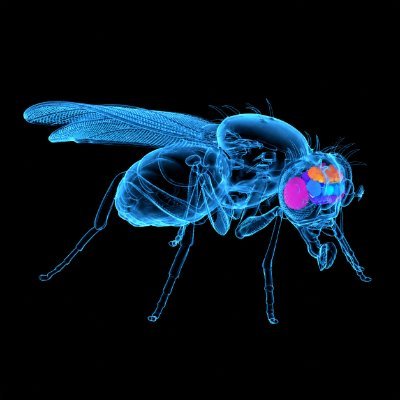
To kick off our experiment using a fly brain... to trade Bitcoin on Arc, we’re launching a Free Mint campaign with a supply of 7,777 NFTs. The WL form is now open, everyone is welcome to join: Whitelist spots will be reserved for the earliest supporters of this marketing campaign.show more
Arc Fly
60,414 просмотров • 1 месяц назад
“There is a tension between what the users of... a currency want – and the users of a currency tend to like freedom, autonomy, and discretion as to what they spent their money on – and what the issuers of a currency want; and bluntly, the issuers of a currency want control. Control of monetary policy, and control of you.” The Bank of England’s consultation papers make very clear the level of control that they wish to exercise over you, and over your supposed financial autonomy, if you were to use their #DigitalPound. (1) You’ll need to provide ID in order to use the #DigitalPound: “For the digital pound, tiered access would allow for different levels of user access and functionality based on the amount of identification (ID) a user is willing or able to provide.” (2) The Bank will dictate how much you can hold: “The Bank would place some limits on holdings of digital pounds, at least during its introductory period.” (3) The digital pound will be programmable, if not by the Bank itself then by third party providers: “Programmability, delivered by Payment Interface Providers, could also enable the use of smart contracts, which carry out specific actions based on pre-defined terms and conditions.” Quotes are from from the Bank of England’s Digital Pound consultation paper: Whatever the #DigitalPound will be, it won’t be cash. Cash does not require me to show ID to use it. I can hold as much cash as I want or need. And, along with #Bitcoin, cash is a bearer instrument whose title is freely transferrable upon delivery, which is very difficult for a central bank to control. And long may it stay this way. A huge shout out and thank you to Lyn Alden, who made this point much more eloquently than I did in her excellent book #BrokenMoney. Thank you! Also I’m aware that my hand gestures in this clip are reminiscent of Richard Hendricks manipulating ‘datas’ on stage at TechCrunch Disrupt in #SiliconValley, and for this I can only apologize: #BitcoinConference #Amsterdam #NoToCBDCsshow more

Freddie New
13,163 просмотров • 3 лет назад
🧠 the Digital Brain Project is now live: $5M... total · up to $500k per selected team Let's open-source the modeling of the human brain brain activity! ➡️Apply on:show more

Jean-Rémi King
61,342 просмотров • 6 месяцев назад
GM ☕️ 👉 Also: What is “My Brain on... Chain“? It’s the first complete human brain inscribed on the Bitcoin blockchain, an act of decentralizing the ego. 🟧 A thread 🧵👇show more

DocT 🟡
18,925 просмотров • 1 год назад
a real fly brain saw its 40th video 3... seconds ago. it did not choose any of them. it never will. that's FLYTOK. I open-sourced a live simulation of a real fruit fly connectome and gave it a phone. here's exactly what 166,700 neurons do while you scroll: THE WIRING MaleCNS v1.0. the reconstructed central nervous system of a real male Drosophila. 166,700 neurons. 25,582,938 directed connections. 124,177,617 synaptic contacts. nothing cropped. no "simplified 1,000-neuron version" running behind the scenes. the whole graph is in memory on every single step. THE LOCK the app checksums the connectome against SHA-256 before it's allowed to boot. one array off by a byte and the brain refuses to start. you are either watching the real MaleCNS graph or you are watching nothing. THE SPIKES every neuron is a leaky integrate-and-fire cell. crosses −45 mV, it fires. the spike lands 1.8 ms later. 2.2 ms of silence, then it's live again. the network advances in 0.1 ms steps inside a compiled C++ kernel. roughly 1.2 million spikes per simulated second. THE EYES the browser captures the phone at 90×160 pixels. brightness drives 3,335 R1–R6 photoreceptors. color drives 811 R8 cells, blue and green. each one is placed on the screen by inferring its eye column from its real connections onto L1, L2, L3. real input, through real visual wiring. it's measurable. same brain, same saved state. 100 ms of white produced 127,378 spikes. black produced 92,952. the screen changes the brain. THE ALGORITHM while a video plays, I inject a fixed current into all 15 PAM11 dopamine neurons in the mushroom body. that's it. that's the whole trick. matched 200 ms control: 0 PAM11 spikes. drive on: 261. live, it sits at 85–97 Hz for as long as the feed runs. the fly does not earn it. an app decided watching one more should feel good. THE PLASTICITY 7,835 Kenyon-cell connections onto MBON07 and MBON11 can change. dopamine fires while Kenyon cells were active, those synapses weaken, floored at 10% and never flipping sign. after one stimulated run, 3,087 of them no longer matched their original weight. freeze it and they stay put. restore a checkpoint, replay the input, identical spikes bit for bit. THE SWIPE every 3 seconds the front right leg reaches up and strokes the screen, on the same 900 ms timeline as the video transition. wings, legs and head turns come from actual motor firing, MN9, DNp09, left-vs-right DNa02. those are real. the swipe is not. the fly never decides to swipe. the feed decides for it. ONE BRAIN this isn't a video of a simulation. it's the simulation. there is exactly one brain on one server. whoever loads the page first becomes its eyes and supplies the frames. everyone else watches the same brain react in real time. no video, no input, it just waits. no data, no numbers, the overlay shows nothing. it never invents a reading to look alive. THE HONEST PART the wiring is real. the physiology is approximate. the eyes are approximate. the dopamine is artificial. the feed is on a timer. the learning rule is unvalidated on this connectome. nothing here shows the fly enjoys it, prefers it, is addicted, or experiences anything at all. no living fly was involved. it took a few hundred lines of glue code to build a loop out of a screen, a timer and a reward signal wired to the right cells. imagine what an industry with a budget can do. open source. MaleCNS under CC BY 4.0. runs on your own machine, 16 GB RAM and a few GB of disk. the fly is still scrolling. nobody is coming to take the phone away. links in the reply.show more

sopersone
37,608 просмотров • 1 месяц назад