Introducing DI-PCG: A diffusion-based Image2PCG framework that automates Procedural... Content Generation, and our first step towards neural symbolic 3D generation. The demo showcases six object categories and can be extended to support customized PCGs. Links in comments. CC: Wang Zhaoshow more

Ying Shan
12,420 просмотров • 1 год назад
DimensionX: Create Any 3D and 4D Scenes from a... Single Image with Controllable Video Diffusion TL;DR: Create 3/4DGS from Video Diffusion Note: Some first inference code released (not all yet). Contributions (cited): • We present DimensionX, a novel framework for generating photorealistic 3D and 4D scenes from only a single image using controllable video diffusion. • We propose ST-Director, which decouples the spatial and temporal priors in video diffusion models by learning (spatial and temporal) dimension-aware modules with our curated datasets. We further enhance the hybriddimension control with a training-free composition approach according to the essence of video diffusion denoising process. • To bridge the gap between video diffusion and real-world scenes, we design a trajectory-aware mechanism for 3D generation and an identity-preserving denoising approach for 4D generation, enabling more realistic and controllable scene synthesis. • Extensive experiments manifest that our DimensionX delivers superior performance in video, 3D, and 4D generation compared with baseline methods.show more

MrNeRF
17,062 просмотров • 1 год назад
I am blown away 🤯. Check this out! CameraCtrl... II: Dynamic Scene Exploration via Camera-controlled Video Diffusion Models TL;DR: "To enable broader exploration of dynamic scenes, our model can generate new video clips of the same scene based on previously generated content and user-provided camera trajectories. This approach maintains dynamic capabilities, accurate camera control, and scene consistency throughout the extended exploration." "Our model enables precise camera control across diverse scenarios while preserving dynamic scene elements, e.g." "Our method can generate videos with strong 3D consistency, which enables high-quality 3D reconstruction using the camera-controlled videos." Contributions: 1) A systematic data curation pipeline for constructing a dynamic video dataset with camera trajectory annotations; 2) A lightweight camera control injection module and corresponding training strategy that preserves dynamic video generation capabilities while adding camera control effect; 3) A clip-wise autoregressive generation recipe that enables extended range exploration of generated scenes.show more
MrNeRF
12,633 просмотров • 1 год назад
Wonderland: Navigating 3D Scenes from a Single Image Contributions:... • First, we introduce a representation for controllable 3D generation by leveraging the generative priors from camera-guided video diffusion models. Unlike image models, video diffusion models are trained on extensive video datasets. This enables them to capture comprehensive spatial relationships within scenes across multiple views and embed a form of "3D awareness" in their latent space, which allows us to maintain 3D consistency in novel view synthesis. • Second, to achieve controllable novel view generation, we empower video models with precise control over specified camera motions. We introduce a novel dual-branch conditioning mechanism that effectively incorporates desired diverse camera trajectories into the video diffusion model. This enables expansion of a single image into a multi-view consistent capture of a 3D scene with precise pose control. • Third, to achieve efficient 3D reconstruction, we directly transform video latents into 3DGS. We propose a novel latent-based large reconstruction model (LaLRM) that lifts video latents to 3D in a feed-forward manner. With this design, during inference, our model directly predicts 3DGS from a single input image, effectively aligning the generation and reconstruction tasks—and bridging image space and 3D space—through the video latent space. Compared with reconstructing scenes from images, the video latent space offers a 256× spatial-temporal reduction while retaining essential and consistent 3D structural details. Such a high degree of compression is crucial, as it allows the LaLRM to handle a wider range of 3D scenes within the reconstruction framework, with the same memory constraints.show more
MrNeRF
52,849 просмотров • 1 год назад
Chop the gradients ✂️! We found that truncating decoder... gradients in latent video diffusion to a fixed window allows us to finetune on videos with pixel-wise perceptual losses without running out of memory. Pixel losses have been essential for image generation and reconstruction, but until now, they haven't scaled to long-duration, high-resolution video diffusion due to recursive activation accumulation in causal decoders, leading to OOM during training 💥📉. Project: Video diffusion models can do a lot more 🚀 when you can backprop the decoder! Post-process neural rendered scenes, super-resolve videos, harmonize lighting in controlled synthetic driving scenes, and inpaint videos — all in a single step ⚡ with a quick finetune from a standard diffusion model.show more

Felix Heide
28,452 просмотров • 5 месяцев назад
App Showcase!✨ Introducing Tower Stack—A 3D arcade game crafted... with Alchemist AI, Tower Stack showcases our platform’s ability to combine advanced generation capabilities with essential game mechanics for a polished and engaging experience. • Physics-Based Gameplay: Advanced physics simulations, including collision detection and object dynamics drive every block's movement and placement. • Dynamic Camera Movement: A responsive camera system ensures smooth tracking and adapts fluidly to gameplay, keeping the focus on key actions for an optimized player experience. • Progressive Difficulty: As players progress, stacking speed increases and block variations evolve, creating a scalable challenge. • High Score Tracking: Scores are saved across sessions allowing players to compete and track their achievements.show more

ALCHEMIST AI 🔮
23,127 просмотров • 1 год назад
Introducing Kaleido💮 from AI at Meta — a universal... generative neural rendering engine for photorealistic, unified object and scene view synthesis. Kaleido is built on a simple but powerful design philosophy: 3D perception is a form of visual common sense. Following this idea, we formulate rendering purely as a sequence-to-sequence generation problem, successfully unifying neural rendering with the architecture principles behind modern language and video models. Unlike traditional neural rendering methods, Kaleido learns 3D purely in a data-driven way, without explicit 3D representations or structures. It acquires spatial understanding directly through large-scale video pretraining, then multi-view 3D data finetuning, inspired by how LLMs acquire textual common sense from large corpora before specialising in domains like coding. Through extensive ablations, we progressively modernised the architecture design and training strategies and tackled key scaling challenges in sequence-to-sequence generative rendering, arriving at a design that’s simple, versatile, and scalable. Kaleido significantly outperforms prior generative models in few-view settings, and remarkably is the first zero-shot generative method matches InstantNGP-level rendering quality in multi-view settings. We view Kaleido also as an alternative step towards world modeling that flexibly spans a spectrum of “realities": with many views, it faithfully reconstructs grounded reality; with fewer views, it imagines plausible unseen details. 🔗 Explore more results and paper:show more

Shikun Liu
22,464 просмотров • 11 месяцев назад
(1/n) 🚀 With FastVideo, you can now generate a... 5-second video in 5 seconds on a single H200 GPU! Introducing FastWan series, a family of fast video generation models trained via a new recipe we term as “sparse distillation”, to speed up video denoising time by 70X! 🖥️ Live demo: (Thanks to @gmicloud for the support!) 🔗 Blog: 🔓 We fully open-source our models, code, and data with Apache-2.0 licensesshow more

Hao AI Lab
79,140 просмотров • 1 год назад
From product image to video with just one tool... - Dzine As you may have noticed, this is one of my favorite tools. It is also very underrated, as probably 50% of my tutorials include some workflow. I was testing the new image-to-video option today, and I love it. Step - by step guide in comments 🔽 I can do 95% of a workflow without switching between apps. Image generation, Image to image with style reference, background removal, background generation, and 2 frames image to video. The only other app I have been using for this video is CapCut so that I can stitch it together. Step by step 🔽show more

Teodora P L
28,523 просмотров • 2 лет назад
Introducing Muse Image and Muse Video, the first media... generation models developed by Meta Superintelligence Labs. Muse Image is our most advanced image generation model yet. It follows instructions faithfully, edits with precision, composes from multiple references, and draws on Instagram for social context. It also brings agentic tool use capabilities to image generation and integrates with Muse Spark. You can try Muse Image in the Meta AI app and web, as well as in Instagram Stories and WhatsApp – starting in limited countries with more locations on the way. Today we’re also previewing Muse Video, which is built upon the same pretraining base as Muse Image to deliver exceptional visual fidelity with native audio support. Learn more about both models:show more

AI at Meta
853,288 просмотров • 2 месяцев назад
Multi-axis 3D printing with curved layers! 🖨️ Researchers from... the The University of Manchester introduced a neural network-based computational pipeline as a representation-agnostic slicer for multi-axis 3D printing. Traditional 3D printing works like stacking pancakes, flat layers on top of each other. 🥞 This often requires temporary support structures that get thrown away after printing, wastes material, and creates weaker parts. Multi-axis 3D printing can print along curved paths that follow the object's natural shape. This eliminates support structures and makes stronger parts. But figuring out these curved paths is mathematically complex, you need to avoid collisions, respect what the printer can physically do, and optimize for strength. The neural network solves this automatically. It learns to create a "field" around the object, then extracts curved printing paths from this field. Because the entire process is differentiable (translation for non-math specialists, meaning you can optimize it end-to-end), the AI can directly optimize for manufacturing goals like "no support structures needed" and "make it as strong as possible." Here's the project: ~~ ♻️ Join the weekly robotics newsletter, and never miss any news →show more

Lukas Ziegler
57,048 просмотров • 5 месяцев назад
With Hunyuan3D World Model 1.0 now released and open-sourced,... we're excited to showcase the technical highlights behind this impressive innovation: ✅360° Panoramic Generation: Creates complete, immersive “world scenes”, far beyond localized views. ✅Explorable 3D Scene Generation: Generates diverse, spatially consistent 3D worlds from text/image for truly immersive exploration. ✅Interactive/Editable: Achieves separation of foreground objects, background terrain, ground, and sky, for seamless secondary editing. ✅Exportable Mesh: Generated scenes can be exported as 3D meshes for direct import into mainstream game engines and modeling software. ✅Industry-Leading SOTA Evaluation: Surpasses state-of-the-art open-source models in generation quality. As the industry's first open-source model for physical simulation and explorable world generation, Hunyuan3D World Model 1.0 aims to foster a collaborative community ecosystem with developers and enthusiasts. ✨ Try it now: 🤗 Hugging Face:show more

Tencent Hy
23,240 просмотров • 1 год назад
Introducing WELLAIOS: A revolutionary Open source AI Agent development... framework and launchpad on Solana WELLAIOS empowers you to create, tokenize, and trade advanced AI agents on the Solana blockchain. Built by our team of AI professionals, our platform combines a sophisticated open-source framework with multi-modal AI technology, bringing character creation and storytelling to life without having to write a single line of code. Create intelligent digital characters that evolve, interact, and generate content through our library of AI agents. Each character becomes a unique asset equipped with a large set of AI tools on the Solana blockchain. For developers and creators: Join our thriving ecosystem where innovation meets rewards. Build plugins, contribute to our open-source framework, and earn as your creations shape the future. 👀 Sneak Peek: Watch our 3D AI agent capabilities showcase for content creation. Coming soon to Solana. Follow us on X for exclusive updates and be part of the revolution.show more

WELL3
10,508 просмотров • 1 год назад
We are excited to announce that DRKVRS is integrating... with Immutable, a leading platform for NFTs built on Ethereum. Immutable provides the infrastructure that powers next-generation Web3 games, allowing us to offer players seamless digital ownership and enhanced gaming experiences. In addition, we’re thrilled to share that our first DRKVRS NFT collection will be launching soon #onImmutable, offering exclusive in-game rewards and utility.show more

DRKVRS ⨀
10,838 просмотров • 1 год назад
Google dropped a new AI paper called LUMIERE. It's... remarkably flexible, supporting video inpainting, image-to-video, AND stylized video generation tasks. Say hello to “space-time diffusion” for video generation! Now what the heck does that mean exactly?! 🌐⏳ → TL;DR it utilizes a “Space-Time UNet” architecture that generates the full duration of the video in one pass, rather than generating distant keyframes and interpolating between them like prior works. Because the computation is done in this “compressed space-time representation” to generate the full clip at once, it's far more temporally consistent. → Another benefit of generating the full video at once is that you can “direct” the video generation, making it easier to hand off to other models/tasks without having to stitch together partial solutions. You can condition generations on additional inputs, meaning you get the full stack of AI video capabilities – from video inpainting to image-to-video and beyond. → New SOTA for AI video generation? User study results in the paper suggest human evaluators preferred Lumiere over Runway Gen-2, Pika Labs, and Stable Video Diffusion in terms of quality, text alignment AND motion. But as always, we need to get hands-on with this tech when Google *actually* decides to ship it. → Could this end up inside YouTube? Y’all know i’m obsessed with blending reality and imagination – so it’s the video inpainting tech I'm most excited about. I really hope this model finds its way into YouTube's Generative AI efforts, and based on their prior announcements and the list of acknowledgments in the paper I think it might! 🤞🏽 Links: 🔗Paper: 🔗Project:show more

Bilawal Sidhu
44,822 просмотров • 2 лет назад
📢MeshPad: Interactive Sketch-Conditioned Artist-Designed Mesh Generation and Editing📢 Users... can interactively design 3D models just from a sketch-based interface - check out the demo :) We break down the design process into addition with an autoregressive generator and deletion operations enabled by a classifier. To speed-up predictions, we propose a mesh-specific speculator such that users get immediate within a few seconds. Project: Video: Great work by Haoxuan Li Ziya Erkoç Lei Li Daniele Sirigatti V. Rosov Angela Daishow more

Matthias Niessner
30,110 просмотров • 1 год назад
You can't 3D reconstruct glass from images... ...WRONG! Thanks... for video diffusion, now just about anything is possible! Introducing...Diffusion Knows Transparency (DKT) Transparent and reflective objects usually break robot vision and photogrammetry pipelines because they don't follow the "solid object" rules standard cameras expect. DKT is a new AI model that repurposes the "internal physics engine" found in video generation models to solve this problem. Researchers took a massive video diffusion model (WAN) and fine-tuned it using a custom-built synthetic dataset to turn it into a high-precision depth sensor. To train the AI, they built the first massive synthetic video library of transparent objects, 1.32 million frames of perfectly labeled glass and metal objects in motion. Without ever seeing a "real" labeled video of glass during training, the model (DKT) outperformed all previous specialized systems on real-world benchmarks (ClearPose, DREDS). They created a "lightweight" 1.3B parameter version that runs fast enough (0.17s per frame) to be used on actual robot hardware. Two reasons I find this project important: 1. It further proves that synthetic data will be essential for training the next generation vision models. 2. In real-world robotic tests, using DKT's depth maps nearly doubled the success rate of robot arms trying to pick up objects on tricky reflective or translucent surfaces. At home robots will need to interact with these types of objects on a daily basis. Check out the project page here: Code is LIVE! #Computervision #Robotics #AIshow more

Jonathan Stephens
17,712 просмотров • 8 месяцев назад
The hope of Johannesburg lives in its people, especially... our young residents who believe this city can rise again. Today, I was reminded why we cannot give up on reclaiming our inner city. We are restoring law and order, revitalising our neighbourhoods, and rebuilding Johannesburg for the next generation. This conversation touched me deeply and strengthened my commitment to ensuring that future generations inherit a city they can be proud to call home. #ReclaimJoburg #InnerCityRejuvenation #JoburgWorksshow more
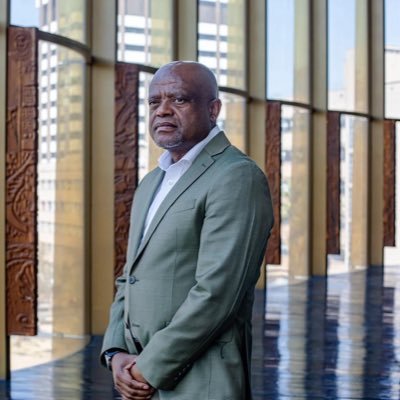
Executive Mayor: @CityofJoburgZA
13,767 просмотров • 2 месяцев назад