Model-Free Reinforcement Learning (MFRL) has been alluring, especially with... supercharged compute with physics on GPU. However, the methods use 0-th order gradients, and are often not the best optimizers. Can we do better than PPO in continuous control for robotics? Turns out yes! 🥳 tl;dr: Faster, better RL than PPO in continuous control 💪 The answer lies in using more information from the simulation. We are juicing the simulation on GPU as it is, why not use it for gradients as well? This has been a driving question in a series of our works. We first studied this problem in ICLR 2022 paper on Short Horizon Actor Critic Naive gradient based methods are stuck in local minima and have exploding/vanishing gradients. SHAC solved this problem truncated rollouts and model based value estimation, where the model is Differentiable Sim. This boosted sample efficiency and wall-clock time immensely especially in high dimensional systems such as humanoids Yet, given enough compute PPO often caught up. Our follow up paper on on Adaptive Horizon Actor Critic at ICML 2024 discovers the cause and provides a fix. However, we find that even when given ground-truth dynamics, not all gradients are useful due to sample error. 1st-Order Model-Based Reinforcement Learning methods employing differentiable simulation provide gradients with reduced variance but are susceptible to bias in scenarios involving stiff dynamics, such as physical contact. We find that back-propagating through contact and long trajectories drastically reduces gradient accuracy. Using this insight, we propose AHAC to dynamically adapt its roll-out horizon to avoid differentiating through stiff contact. AHAC is a first-order model-based RL algorithm that learns high-dimensional tasks in minutes (wall clock) and outperforms PPO by 40%, even in the limit of data provided to PPO. This work is led by Ignat Georgiev alongside Krishnan Srinivasan, Jie Xu, Eric Heiden and ample assistance from warp team at NVIDIA Robotics (Miles Macklin)show more

Animesh Garg
52,308 görüntüleme • 2 yıl önce
The term "continual learning" has become overloaded if you... see it as an ML problem. One classic thread is about memorization: regularization-based continual learning methods, such as EWC, MAS, and SI, estimate which parameters mattered for previous tasks and resist changing them too much. One modern thread is about adaptation: test-time training and inference-time learning methods, such as TTT, adapt part of the model on the incoming test stream before making predictions. These are sometimes discussed as separate threads. But in modern scalable architectures, I think they are better seen as complementary constraints: a model that learns quickly at test time also benefits from a mechanism for deciding what not to forget. In our #ECCV2026 paper, we study this in large-scale 4D reconstruction: how to build fast spatial memory that can adapt over long observation streams while reducing collapse and forgetting. Instead of using fully plastic test-time updates, we stabilize fast-weight adaptation with an elastic prior that balances adaptation and memory. Key ideas: - Elastic Test-Time Training: Fisher-weighted consolidation for fast-weight updates - EMA anchor weights that provide a moving reference for stability - Chunk-by-chunk inference for long 3D/4D observation streams We show that this scales across large 3D/4D pretraining settings, including both LRM-style and LVSM-style models, and improves reconstruction across benchmarks including Stereo4D, NVIDIA, and DL3DV-140. We release model checkpoints across different design choices: resolution, post-training curriculum, and whether the model uses an explicit 4DGS intermediate representation. - Homepage: - Paper: - Code: - Models: This work is co-led with Xueyang Yu, contributed by Haoyu Zhen Yuncong Yang, and advised by Michigan SLED Lab Chuang Gan.show more

Martin Ziqiao Ma
33,617 görüntüleme • 1 ay önce
Robora Sim: A PyBullet-Powered Environment for Learning Robotic Physical... Intelligence We are currently building our Robora simulation environment setup for our sim based learning, leveraging PyBullet, an industry-standard physics engine widely used in AI-driven robotics research and development. The environment is optimized with GPU-accelerated learning algorithms, enabling high-speed imitation learning and reinforcement learning within a safe and controlled virtual setup before shipping out to real world. This simulation platform allows our models to learn, adapt, and generalize across different robot morphologies, terrain types and task objectives - all before deployment to the real world. At it's core, the system combines a VLA-powered high-level planner with low-level motion control algorithms, working cohesively to produce emergent, physically intelligent behaviors. This synergy between simulation, learning, and real-world transfer marks a major step forward in our pursuit of adaptive and intelligent robotic systems. Through advanced domain randomization and synthetic data generation, the Robora Simulation Environment ensures that policies trained in simulation transfer effectively to real-world robots, minimizing the sim-to-real gap. Moreover, users will be able to test and integrate their own hardware kits within selected simulation environments in the Robora Dapp, ensuring seamless compatibility and safer real-world implementation.show more

Robora
23,489 görüntüleme • 10 ay önce
Building on the previous paper, in this study we... compare a continuous “smooth return” S2>S1 model with an event-driven one, where long periods of relative calm are punctuated by short, intense episodes of global reorganisation. Both models cover the same time window. Neither uses archaeological data in its construction. When compared against where early humans and early civilizations actually appear and persist, the difference is statistically robust. The smooth model behaves like background noise. The event-driven model lines up in time and space far better than chance allows, even after aggressive temporal and spatial randomization tests. Statistically, the event-driven model lines up with where and when early civilizations appear far better than a smooth, continuous model, even after we randomize both timing and location to test what could arise by chance. The event timeline itself was built independently from well-known late-glacial disruptions - such as Heinrich events, meltwater pulses, and abrupt deglacial transitions - rather than from any archaeological data. Nothing here claims that specific events caused specific cultures. It does suggest that history may not unfold on a smooth clock. Human societies seem to flourish during recovery phases between disruptions, not during the disruptions themselves. The animation contrasts the two return models. Draft paper : Source & Results : (coming soon)show more

Craig Stone
10,899 görüntüleme • 6 ay önce
A viral paper "Language Model Represents Space and Time"... recently claims that LLMs learn "world models". As much as I like Max Tegmark's works, I disagree with their definition of world model. World model is a core concept in AI agent and decision making. It is our mental simulation of how the world works given interventions (or lack thereof). A world model captures causality and intuitive physics, telling the agent what is likely and what is impossible. It can and should be used for counterfactual reasoning, i.e. "what ifs": what would happen if I knock over a cup of water? Where would I have been if I had not taken that bus? Yann LeCun Yann LeCun says it well in his position paper ( I quote: "Using such world models, animals can learn new skills with very few trials. They can predict the consequences of their actions, they can reason, plan, explore, and imagine new solutions to problems. Importantly, they can also avoid making dangerous mistakes when facing an unknown situation." The first use of the term World Model in deep policy learning is attributed to hardmaru & Jürgen Schmidhuber: In their seminal paper, an agent masters shooting skills in the popular game Doom (demo below) by learning in imagination, using an internal world model as a "physics simulator". To put in a simple Python math formula, world model learns a function F(s[0:t-1], a) -> s[t:], which takes as input the observed past and current action, and outputs plausible future states. Now the definition of World Model in Tegmark's paper seems to be about predicting GPS coordinates and time eras. I see this as just a classification task with no causal learning and simulation going on. You cannot make meaningful interventions against that model, nor can you optimize any decision making in a closed feedback loop. As for the "space & time neurons", I think they are most similar to the "sentiment neuron" that OpenAI published in 2017: Predicting GPS is conceptually no different from predicting sentiment in my opinion. I don't think their experimental results are wrong - just that their conclusion is on shaky grounds. I welcome any debate! Paper link:show more

Jim Fan
594,014 görüntüleme • 2 yıl önce
A Letter to Our Community: The Road Ahead for... Robotics To our Community and Partners, As we step into 2026, our mission at Axis is clearer than ever: Constructing the definitive End-to-End Scaling Layer for Robotics. Our goal is to accelerate the transfer of diverse human intelligence into Robotics General Intelligence (RGI). By owning the critical path of intelligence creation, we are turning the physical limitations of robotics into a scalable, software-driven future. Here is our strategic outlook and roadmap for the year ahead. The Core Thesis: Simulation is the Only Way Out The path to RGI is currently blocked by Data Scarcity, Generalization Fragility, and Hardware Fragmentation. At Axis, we believe Simulation is the only way out. Our Simulation Data Platform and Data Augmentation Engine transform raw data into "Synthetic Gold". Backed by academic milestones like Roboverse, Skill Blending, and GraspVLA, we have proven that pure simulation can achieve the generalization required for the real world. We don’t just collect data; we architect it. The Engine: Why Crypto? We believe RGI should come from all, not a few. Crypto is not just a feature; it is the primitive that powers our entire ecosystem flywheel: - Incentive Mechanism: Democratizing contribution and rewarding the trainers and developers. - Assetization: Turning proprietary data and refined models into liquid, ownable assets. - Verifiable Workflow: We are opening the "Black Box" of AI. By bringing total transparency to the Task Generation → Data Collection → Model Training pipeline, we ensure every byte of intelligence is verifiable, traceable, and secure. 2026 Strategic Deliverables This year, we are committed to delivering three foundational pillars: - The World's Largest Training Dataset for Robots: A robot training set—diverse, high-quality interaction data at an unprecedented scale. - A Robotics Foundation Model: A universal robotic brain trained on our pure simulation and synthetic data, capable of robust cross-embodiment transfer and open-world adaptability. - Evolvable Robot Hardware: Robots deployed with Axis models that autonomously evolve through continuous interaction, turning every deployment into a self-improving node within our RGI network. The Ultimate Vision We are building more than models; we are architecting the Distributed Machine Economy. A future where every dataset, model, and robotic embodiment is a verifiable asset in a global, autonomous network. Thank you for building the future of intelligence with us✌️📷show more

Axis Robotics
27,858 görüntüleme • 7 ay önce
MaskINT: Video Editing via Interpolative Non-autoregressive Masked Transformers paper... page: Recent advances in generative AI have significantly enhanced image and video editing, particularly in the context of text prompt control. State-of-the-art approaches predominantly rely on diffusion models to accomplish these tasks. However, the computational demands of diffusion-based methods are substantial, often necessitating large-scale paired datasets for training, and therefore challenging the deployment in practical applications. This study addresses this challenge by breaking down the text-based video editing process into two separate stages. In the first stage, we leverage an existing text-to-image diffusion model to simultaneously edit a few keyframes without additional fine-tuning. In the second stage, we introduce an efficient model called MaskINT, which is built on non-autoregressive masked generative transformers and specializes in frame interpolation between the keyframes, benefiting from structural guidance provided by intermediate frames. Our comprehensive set of experiments illustrates the efficacy and efficiency of MaskINT when compared to other diffusion-based methodologies. This research offers a practical solution for text-based video editing and showcases the potential of non-autoregressive masked generative transformers in this domain.show more
AK
25,449 görüntüleme • 2 yıl önce
There is only one reason to share truth. And... no it has nothing to do with money- and everything to do about helping God move. Peace is the prize- a better world for everyone is the prize. We make SACRIFICES for things we want most in this world. Christ made the ultimate sacrifice If He can do that for us FREE of charge- we owe it to each other to work TOGETHER to make the world a better place- despite the toll and sacrifice. A level playing field- where we can all work hard and do our best to succeed- that is the payout. A better world for all We’re not here for just ourselves- otherwise the second commandment wouldn’t be like the first- love your neighbor as yourself. This world gets better the sooner we all wake up. Information is free- we collect and share it for free in hopes that it keeps spreading. Only working TOGETHER can we win. We are meant to move these messages for God so that humanity can wake up- this plan is designed that way- working together The Lord is ONE. We are bound as a family by Our Father in Heaven. We are apart of Him and He is apart of all of us. We are billions of little pieces of the Lords gift of life. We’ve been separated and pushed apart because it makes us weak. We were designed to be powerful by the love we draw from Creator and push through creation. We are ONE with Our Holy Father 🙏💗 Be EXCELLENT to each other frensshow more

🐸🐸🐸 🇺🇸
23,726 görüntüleme • 2 yıl önce
Depth Any Video with Scalable Synthetic Data AI physicists... and chemists continue to make strides in depth estimation from video. Check out this new paper featuring some impressive examples. See the thread for more details (unfortunately no code yet). Abstract: Video depth estimation has long been hindered by the scarcity of consistent and scalable ground truth data, leading to inconsistent and unreliable results. In this paper, we introduce Depth Any Video, a model that tackles the challenge through two key innovations. First, we develop a scalable synthetic data pipeline, capturing real-time video depth data from diverse game environments, yielding 40,000 video clips of 5-second duration, each with precise depth annotations. Second, we leverage the powerful priors of generative video diffusion models to handle real-world videos effectively, integrating advanced techniques such as rotary position encoding and flow matching to further enhance flexibility and efficiency. Unlike previous models, which are limited to fixed-length video sequences, our approach introduces a novel mixed-duration training strategy that handles videos of varying lengths and performs robustly across different frame rates 0 - even on single frames. At inference, we propose a depth interpolation method that enables our model to infer high-resolution video depth across sequences of up to 150 frames. Our model outperforms all previous generative depth models in terms of spatial accuracy and temporal consistency.show more

MrNeRF
27,428 görüntüleme • 1 yıl önce
Dear Tarun Chitra 1. We are the original creators... of DeSci back in 2016. What DeSci has become today is largely unrelated with its original model of producing rigorous peer-reviewed scientific studies published in reputable medical journals. The model we introduced. We are tirelessly fighting against pseudoscience, and we are showing the world that people can understand the difference between legit science and pseudoscience with the success of $INNBCV. Yes, meritocracy is possible in crypto. Even against all odds. 2. We are the only project in the entire crypto space that ever funded, performed, and published highly innovative HIV cure research ( We are the project that produced the first peer-reviewed study on blockchain-based biomedical data storage in the world’s most reputable scientific network, Springer Nature ( $INNBCV is not for the privileged few; it is for the many. We resisted all the pressure from those who wanted us to provide big allocations to VIPs of other DAOs “because it is good for the marketing” and put our users first, ensuring a fair launch, a launch for the people, and they turned $70k into $2,000,000. $INNBCV shows that you can have a sustainable model, provided you are backed by actual science. And thanks to the amazing guys at daos.fun baoskee and Solana community. Behind our project there is the sweat and blood of years of work to produce publications in the most reputable medical journals. Just to put things into perspective, it took us 3 years to publish our latest work in Springer Nature. 3. Unlike many other projects, we had no ICO/VCs, meaning we had to prove ourselves every single day because we are only supported by our community. If we deliver products, we survive; it is either publish or perish for us, and that’s why we have such a close connection to our community. $INNBCV is a struggler, $INNBCV is a survivor, $INNBCV is not for the privilege of the few but for the people. Our community makes it possible by supporting us. You guys are the real heroes.show more

InnovativeBioresearch🇮🇹
10,867 görüntüleme • 1 yıl önce
Dear Pioneers 🌏 We are living in a decisive... moment! Pi Network has the potential to become a true revolution in the global financial landscape, but for that to happen, we must act wisely and united. We are millions of Pioneers around the world, driven by the same purpose: to create a decentralized, accessible, and fair financial system for all. The real value of Pi is not determined by the traditional market but by our confidence and engagement. The GCV of $314,159 represents much more than just a number – it symbolizes our conviction about Pi's potential. Our Strength Lies in the Community For Pi to reach its true value, we need to act strategically and with commitment. No great project can sustain itself without the support of its participants. If we want to see Pi shine, we must: ✅ Avoid having our Pi traded on exchanges prematurely, creating scarcity and strengthening its value ✅ Not accept selling it for prices lower than it truly deserves ✅ Acquire and withdraw Pi from exchanges, consolidating its strength in the market ✅ Use it in real transactions, promoting its growth as a global digital currency ✅ Spread awareness and encourage its daily use, expanding its acceptance Each Pioneer plays a crucial role in this process. The more we use and value Pi within the ecosystem, the more it will establish itself as an asset of great global impact. The Future Is in Our Hands We can allow speculators to dictate the value of Pi, or we can take control of our own destiny and ensure that it reaches its true potential. The decision is ours! If we act together, with strategy and determination, nothing can stop us from making Pi Network a milestone in cryptocurrency history. The time is now, and each of us is a fundamental part of this revolution. Let's strengthen Pi together and make the GCV of $314,159 an undeniable reality! Sérgio Cruz, Portugal GCV Ambassador 🇵🇹show more

Doris Yin 东方紫莲🪷
25,065 görüntüleme • 1 yıl önce
$IREN "we haven't disclosed the specific amount of GPUs"... 1. 🤮 reminds me of $NBIS 2. Setting a terrible precedent here for future deals 3. Making it purposely difficult, to not let analysts properly value your 2027 revenue 4. Increasing the polarized view on IREN by the market However: "approximately 60MW of air-cooled Blackwells" 1. You typically don't talk about gross capacity in a deployment like this 2. If it would be gross capacity, the GPU hour rate at IT level would be crazy high (at PUE 1.2, $680m / 50 = 13.6m/MW) 3. At 60MW IT load, and ~14kW draw at DGX server level, we can get to ~4,286 DGX systems with 8 GPUs per. 4. Based on this we can conclude that 60MW of IT load can run approximately 34k DGX B300. 5. 34k DGX B300 at $680m/yr, would represent a GPU hour price of $2.28 Now this is the problem with not disclosing your GPU quantity. You purposely make your business model look bad, because by approach, you get to a GPU hour price that would imply a payback period of 4 years, where only the last year of the contract is 100% margin. But of course, we can also take "the glass is half full" approach. IREN has ordered 50K B300s from Dell. They have 2 purchase orders for this, 1 between Dell Canada and IE CA Leasing Ltd for 4 phases, and 1 between Dell USA and IE US Hardware 1 Inc (amended from IE US Hardware 4 Inc on April 27, 2026). The order for Canada is divided in 4 phases, and are going to Mackenzie for 80MW of gross capacity, which happens to be 4 buildings of 20MW. The order for Childress is divided in 2 phases, and are going to DC35 and DC36, (as depicted in the earnings presentation) and those are 50MW gross. The purchase price of the order for Childress was $1.2B, and for Canada it was $2.3B If we go with 50,000 B300s for a total of $3.5B then $1.2 would represent 34.285% of the 50,000 GPUs, or 17,140 B300s rounded down. For this calculation I will consider that $IREN will deploy 17,140 GPUs in 50MW gross capacity in DC35 and DC36 of block 3 in Childress.. That would imply at 1.2 PUE, IREN can run 17,140 B300s in 41.67MW IT load. Now by that ratio, they can run 24,680 GPUs in 60MW IT load — a massive difference with 34k units through the Nvidia DGX reference calculation. If common sense is applied, you can still get to 2 completely different outcomes, that show a difference of more than 9k GPUs. The GPU hour rate at 24.68k GPUs would be $3.145 per B300, as MASSIVE difference from the earlier calculated $2.28. Sure, the DGX system may be a factor here. And I'm sure that the reality is somewhere in the middle. But I personally hate this as an investor, to be unable to calculate profitability on unit economic basis. After all, contracts are signed on a $/GPU hour basis. Why hide this from your investors? Not being able to calculate payback periods, unable to calculate ROIC. And most importantly, we cannot properly assess the $NVDA deal on a contract basis. I really hope the payback period of this contract is not 4 years. I want the glass to be half full, but by starting to censor the purchases, IREN is taking a step in the wrong direction. Not a fan of this.show more

Frans Bakker
148,167 görüntüleme • 3 ay önce
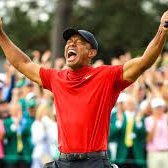
The discourse around the Eze penalty last night is... fascinating. If nothing else it provides Arteta with an excuse as to how his team has been hard done by and robbed. He loves excuses. It’s a fascinating situation because I actually think the right outcome was reached albeit through the wrong process. Once given on the field under the current rules it shouldn't have been overturned. For that Arsenal can feel aggrieved. Don't forget Arsenal were the beneficiaries of an incredibly soft penalty in Leverkusen. It wasn’t overturned. I find the attached video interesting because it clearly shows how minimal the contact is. The defender doesn’t pin Ezes foot to the ground. Doesn’t smash into it. It brushes down the side of it. It’s where the still pictures of it were wildly misleading. Are we really saying that contact such as that is worthy of a penalty? What’s clear in the video is that Eze has absolutely made the most of the slight contact. I love the straight left leg. A very natural position. It’s a brilliant dive and normally it would have been rewarded. By saying that is a stone wall penalty all we are doing is encouraging such theatrics and cheating. Whenever you hear the words “that was clever” by a commentator they are intimating the player has cheated/made the most of it. We complain about refs all the time but what chance do they have when players are doing stuff like this. Until players are punished properly there is no disincentive for players to keep doing this stuff. I also find it fascinating when you have a foot brushed like this. When you compare it to all the holding/pushing/grappling at other times. Sometimes a contact sport and others not. Is this really what football has become?show more
Luke Paton
104,531 görüntüleme • 3 ay önce
We’re excited to introduce ShinkaEvolve: An open-source framework that... evolves programs for scientific discovery with unprecedented sample-efficiency. Blog: Code: Like AlphaEvolve and its variants, our framework leverages LLMs to find state-of-the-art solutions to complex problems, but using orders of magnitude fewer resources! Many evolutionary AI systems are powerful but act like brute-force engines, burning thousands of samples to find good solutions. This makes discovery slow and expensive. We took inspiration from the efficiency of nature. ‘Shinka’ (進化) is Japanese for evolution, and we designed our system to be just as resourceful. On the classic circle packing optimization problem, ShinkaEvolve discovered a new state-of-the-art solution using only 150 samples. This is a big leap in efficiency compared to previous methods that required thousands of evaluations. We applied ShinkaEvolve to a diverse set of hard problems with real-world applications: 1/ AIME Math Reasoning: It evolved sophisticated agentic scaffolds that significantly outperform strong baselines, discovering an entire Pareto frontier of solutions trading performance for efficiency. 2/ Competitive Programming: On ALE-Bench (a benchmark for NP-Hard optimization problems), ShinkaEvolve took the best existing agent's solutions and improved them, turning a 5th place solution on one task into a 2nd place leaderboard rank in a competitive programming competition. 3/ LLM Training: We even turned ShinkaEvolve inward to improve LLMs themselves. It tackled the open challenge of designing load balancing losses for Mixture-of-Experts (MoE) models. It discovered a novel loss function that leads to better expert specialization and consistently improves model performance and perplexity. ShinkaEvolve achieves its remarkable sample-efficiency through three key innovations that work together: (1) an adaptive parent sampling strategy to balance exploration and exploitation, (2) novelty-based rejection filtering to avoid redundant work, and (3) a bandit-based LLM ensemble that dynamically picks the best model for the job. By making ShinkaEvolve open-source and highly sample-efficient, our goal is to democratize access to advanced, open-ended discovery tools. Our vision for ShinkaEvolve is to be an easy-to-use companion tool to help scientists and engineers with their daily work. We believe that building more efficient, nature-inspired systems is key to unlocking the future of AI-driven scientific research. We are excited to see what the community builds with it! Learn more in our technical report:show more

Sakana AI
360,198 görüntüleme • 10 ay önce
Wow. WOW. WOOOOOOOW. So um, that first Wildcard+Thousands stream... was... *amazing* and also... a *lot* 😅 In the end, it was *exactly* what we were hoping for - a true stress test of ALL these systems coming together for the first time. We are SO grateful for the thousands of people who showed up today to play, attend, tune-in and help us PLAYTEST all this new stuff. We can't wait to see you all again at NEXT WEEK'S EX2 EVENT! So, now let's talk about how it went... Stuff that worked: - Our community SHOWED UP. Oh boy did you show up 😅. Our servers were straining under the load... which is good actually, in fact it's the whole point. Even more importantly, we have already received insanely valuable feedback, bug reports, stuff people loved/hated - and it's only been a few hours since the stream ended. I can't even explain to y'all how valuable this process is. Yes it's stressful, it reminds me of trying to keep Words With Friends online during that first insane year, but it's EXACTLY what we were hoping for (NEED) to turn this into the polished, top-notch game and streaming experience we are on a mission to deliver. I truly can't thank y'all enough, and hope to see you again when we run it all back again next week 🥹 - The stream itself stayed up and was mostly stable! Phew 😅. For context, ThousandsTV is not a twitch wrapper, it's a web3-native streaming tech stack built we built specifically to connect game, web/mobile, and blockchain together all at the same time. There are a LOT of moving pieces going on behind the scenes. - We brought viewers INTO THE GAME! Viewers showed up in the stands of the arena, with connected wallets/assets, triggered actions/rallies from chat, and were seen and heard during the whole stream. - The brand new 2v2 build of Wildcard was (mostly) stable and our players and viewers seemed to be having a blast down on the field and up in the stands. It was thrilling to watch Team Blue dominate, even though Team Red held their own in game 3! - Our production crew did an insanely good job running the stream, managing the players, shoutcasters, and talent, and producing a top-notch show. Of course we will work hard to make every stream better than the last, but I was super proud of how our team "rolled with the punches" during today's event. Stuff that didn't work (and/or needs to be dramatically improved): - Although it's fun to see chat going crazy, chat spam is actually something we are passionate to FIX. As you can see from the attached video, chat spam dominated today's stream and made it impossible for anyone to even see anyone else's messages. We have some GREAT ideas for how to fix this and actually turn chat spam into a FUN and exciting and not annoying thing - but those improvements didn't get shipped in time for this event. - Credits purchasing flow needs a LOT of work. As I'm sure y'all know, bringing money on chain is pretty complicated, and although we've been working hard to make this as seamless as possible, it still needs a TON of improvements. Many users who WANTED to spend money today weren't able to and/or ran into frustrating bugs in the credit purchase flow. Fixing this is obviously a top priority for our team. - Rallies need a LOT of work. Spectator-interactive features like rallies are at the heart of our vision for Wildcard. These "stream apps", as we call them, are the UNLOCK for how spectators, viewers and fans directly connect and interact with their favorite competitors, content creators, and communities. The current rally feature HINTS at this potential, but it needs to be WAY easier to understand, use, and have fun with. Improvements are ON THE WAY. - Referees were only partially working. Referees are a key innovation of the Thousands platform. They are AI-driven "personalities" (NPCs) that pay attention to everything that's happening in the arena, both on the field and especially in the stands (i.e. in chat, during rallies, etc.) The referees then make "calls" at the end of every match, rewarding users for their engagement and participation. Unfortunately, the referees weren't fully functional and seemed to drop the ball on recognizing everyone's contributions (especially people who showed up holding valuable assets such as Wildpasses in their wallets, and people who boosted those rallies with credits.) What's happening next: 1. We are combing through ALL the logs from the event right now, to make sure we don't miss a SINGLE action that our viewers and fans took during the event, including what they brought in their wallets (i.e. Wildpass holders!), any credits that were purchased, rallies that users engaged with, etc. This information is normally processed by our referees, who then determine dynamically how they're going to distribute $WC awards. We were originally hoping to complete this process and the subsequent airdrops within a few hours after the event, but given the amount of data, we need a bit more time to run these scripts (and airdrops) in batches instead of all at once, and make sure ALL of the data is being included. IMPORTANT: I will keep y'all updated in real-time here on twitter/X as this process is ongoing, and let you know the moment it's complete and all the awards have been distributed (i.e. when to go check your wallets 😎) 2. PLEASE keep sending us your feedback and bug reports. Open a ticket on our Discord and let us know what you loved, what you hated, and especially what we need to FIX. Given the overwhelming response to this event, it will likely take us several days to process everyone's feedback and fix all the bugs, but we WILL NOT REST until every ticket is closed/resolved. Thank you in advance for your patience. 3. We turn it up another notch next week. As our dear friends Wolves DAO just announced, the Wildcard Exhibition Event #2 is streaming LIVE from the WOLVES DEN AT GDC next Friday! If you missed out on all the action today, DON'T WORRY, because as I keep saying: we are just getting warmed up (and there is a LOT more b that needs to be distributed, get what I'm sayin??? 😎) Finally: Just wanted to say THANK YOU, again. Truly, from the bottom of my (our) hearts. Your excitement and enthusiasm for what we're building is why we do this. Even (especially, in fact) when you tell us all the things you want us to improve. We thrive off this feedback, it's how this game and this platform go from good to GREAT. I am so grateful for those of you who are taking this journey with us. SEE YA NEXT WEEK!!!show more

WildPaul - BEAST MODE
26,851 görüntüleme • 1 yıl önce
Dear Nigerians, "Patriotism means to stand by the country.... It does not mean to stand by the president." ~Theodore Roosevelt On this national scale, if the mass number of Nigerians are suffering, their lives and properties in jeopardy, it is okay to speak up, call a spade a spade and stop this gov from leading us astray. Now more than ever, we must unite. We must unite against the ruiners of Nigeria before they bury what is left of her. Organization is the first primary weapon of the oppressed. This is the only weapon we are yet to explore, and we can not explore this until we unite. The oppressed Nigerians must organize to form a force against the ruiners of Nigeria and take back our country to have a system that is for the benefit of the Nigerian people and not a few in the position of power. President will come and go, only the people will remain. Don't give those in power today to play politics with your future. Let's unite, not necessary as one but as a team. A team with different skills, languages culture, religion and tradition, but one CAUSE regardless of our tribal differences to stand against the common enemy who have now shown to be a curse on our very own existence as an amazing people of this great nation. ~OIA✊🏿show more

𝐎i𝐀
13,158 görüntüleme • 1 yıl önce
Hey #NeuraxonMini is literally out! , we manage to... "transplant" a Neuraxon 2 bioinspired #AI brain to a physical robot the #SpheroMini moving from our last Scientific Paper (link bellow) by David Vivancos - e/acc & Jose Sánchez for Qubic #OpenScience hybridized with #Aigarth to the real World. First you need a Sphero Education Mini robot about 50$ Then you can try the first cool demos at Hugging Face: 1.- Neuraxon2MiniControl to drive the sphero robot 2.- Neuraxon2MiniWrite to write letters or words with physical moves of the sphero robot using Neuraxon Video Tutorials on youtube later today. Why this matters? Remember we are not building "dead" LLMs we are building #AliveAIs and for that we need to explore how it behaves in reality, from how it learns to how it fails, and what better way that in the emerging field of #robotics , time will tell if your next #HumanoidRobot have a #Neuraxon brain... Read the Paper: Explore the Neuraxon code here: Are you ready for #TrueAI ?show more

David Vivancos - e/acc
29,293 görüntüleme • 5 ay önce
June 4th, 1994 our lives forever changed. We said,... “I do!”. With those two words, we said, yes, to all the highs, the lows, and everything in between. God has blessed us with four absolutely amazing children who are now amazing adults, with their own best friends/significant others (that they’re doing life with), we have three incredible grandsons, and a beautiful granddaughter on the way. We’ve lived where we both grew up (on the East Coast), and have now been out here in San Diego for just over 11 years. We’ve gotten jobs (and lost jobs), we’ve had more times than we can count where we couldn’t make ends meet, even though both you and I were working two, and sometimes three jobs at a time, and we’ve been blessed in ways that we could’ve never dreamed of. We’ve watched both my parents pass on, and are now dealing with the overwhelmingly difficult challenge of seeing your parents struggle with their own health in ways that no one should have to go through. Through it all (even in the midst of the chaos), we’ve been blessed to be by each other‘s sides! I thank God for you every day, Jillian! I love our adventures together (the big ones where we fly to somewhere we’ve never been before, and the little ones where we hop in the car with no agenda, and just drive). I love when we find ourselves in deeper conversation, laughter, and tears of joy then ever expected, and in the moments of silence, where no words are even spoken, but when we’re together, just being where our feet are. As the world (as we know it), keeps getting crazier and crazier, let’s continue to keep Christ in the center of all we do, keep leaning on and lifting each other up when it’s needed, and keep living the lives that we have been so incredibly blessed to live together. I love you with all my heart Jillian. Happy 32nd (heading into our 33rd year), Anniversary.show more
Coach Hines 🇺🇸
10,530 görüntüleme • 2 ay önce
The Sabotaging Practice of Over Supply and Sameness in... the NFT Space. The current zeitgeist of the NFT space is that the same artists are doing the same kind of work five times a year, with project after project leaving a trail of disappointment and discontent among collectors and all of us watching in disbelief as huge resources are extracted from the space over work that feels like it could be left as an "artist study." I understand that you can do what you want with your money as collectors, but we are killing the whole space with this incestuous practice. No artist is that prolific to be able to do 5 collections of 100+ pieces each every year and actually deliver innovation and some kind of creative evolution. Of course, they can pretend play that the work has something new, but there is no precedent nor proof that that has ever happened in the speed that it happens in the NFT space. Again, people are free to through away their resources on whatever they want but with this way of doing things, we more and more are going to start seeing the consequences. Oh! There are consequences? Yes. Maybe unintended, but there are. Let's see. Let's start with the loss of belief in the NFT space as somewhere where emerging artists can come and find support for their experiments. Why even bother to bring experiments, innovation, and new ways to think of art on the blockchain if the same people have all the collectors hypnotized with their magical flutes? Why even try to come to a space where taking risks and challenging the status quo (the mission of art!!!) is overlooked? This makes the NFT space a social club and not a space for art. I guess it is fine, but IMO it is a recipe for disaster. New collectors stay away because the art will slowly but surely become stale and un-challenging. Why even bother to come and see what is happening here if you can't, as a collector, see new weird and up-and-coming artists? The amount of noise emitted by the same artists doing the same art over and over, drowns out any new voices. Again. A recipe for disaster. The NFT space is becoming a space of disappointment and doubt. We think that collections going to zero one after the other, over and over, is not damaging? I feel we are kidding ourselves. Disappointment piles up, and again, the people who will hurt are the emerging artists, the new blood, the ones who are willing to risk the most and, in return, put fire in this cold space of sameness. I love this space—don't get me wrong—it has changed my life, and I believe it has a ton of potential, but things need to change for it to become a beacon of light in art. But we need to support new voices. We need to support new ideas. The challenge is huge. I hope to contribute all I can to this change. I hope more and more see how exciting it is to go out and try to discover what else is out there and move this space forward. But again, I understand the leaps of faith needed, but if there is a space that is based on that, it's the NFT space...so there is hope. We will see. 📺by Boldtronshow more

alejandro cartagena
98,261 görüntüleme • 2 yıl önce
Hills I will die on as someone who has... coached high school football for over 29 years: 1. If you are not PASSIONATE about blessing, serving, and empowering those you are blessed to coach, this profession is not for you. 2. As much as we need to know our trade, getting to know (and to love), our players is far more important. 3. This is an INTENSE game, and it’ll never be “just a game”, but it IS a game. Remember that when you’re with your team, and more importantly, remember that when you’re with your family. 4. Just as we teach our athletes to “leave things better than they found them”, we need to leave our athletes better than they were when they first entered into our program. Never let a day pass without pouring into each and every individual. 5. Life is complicated enough, let’s not complicate the game in such a way that we take the joy of it away from others. In other words… Keep it simple. 6. Our words carry little (or NO), value, if we don’t practice what we preach. WE as coaches should be learning and growing each and every day, just as we expect our athletes to. 7. As much as we all want to win those championship rings for our athletes, make sure you don’t lose your wedding ring in the process. 8. The athlete that may be “difficult to reach/teach” (the one who may get on your last nerve more than you could ever imagine), is someone’s EVERYTHING. Get to know them as human beings, find out what motivates them, and do everything you can to help them to thrive. 9. Be where your feet are. Don’t fall into the trap of chasing logos and thinking that a higher division, a bigger school, or going from HS to college, or even college to the pros, is going to be more rewarding or fulfilling. 10. The legacy you leave as a coach will never be determined by your wins and losses, but by the lives you were able to change for the better!show more
Coach Hines 🇺🇸
61,424 görüntüleme • 2 ay önce