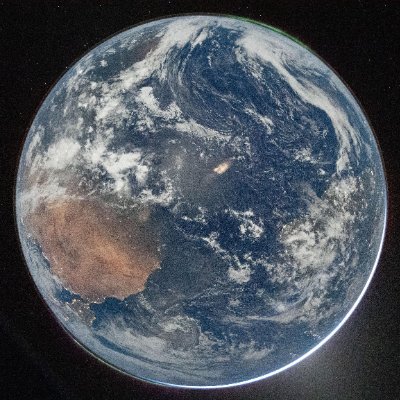
NASA’s first Earth-observing satellite was TIROS-1, which monitored cloud... cover and weather patterns. Now, NASA operates more than 20 satellites that study Earth’s land, water, air, and climate, helping us learn more about this planet we call home. 🌎show more
NASA Earth
15,124 次观看 • 6 个月前
Would you knowingly drink a glass of water filled... with dangerous pathogens, bacteria, and pollutants? More than a century ago, water treatment and sewer systems transformed public health and saved countless lives. But we still have not done the same for the indoor air we breathe, where Americans spend roughly 90 percent of their time. Whether it is a school, office, hospital, or home, we often have no idea if the air around us contains harmful invisible particles that could be affecting our health. ARPA-H’s BREATHE program is working to change that by building technologies and systems that can monitor indoor air quality, detect potential health threats early, and help make indoor spaces healthier and safer. On this Asthma and Allergy Awareness Month and beyond, ARPA-H is working to make cleaner indoor air a standard of modern public health. Learn more about BREATHE: Mayo Clinic Virginia Techshow more

ARPA-H
52,452 次观看 • 2 个月前
🚨 A SATELLITE JUST REVEALED SOMETHING SHOCKING: GPS JAMMING... IS FAR MORE WIDESPREAD THAN ANYONE REALIZED. An experimental navigation satellite called Pulsar-0, flying just 500 km above Earth, has mapped GPS signal tampering from space for the first time and the scale surprised even the engineers who built it. As soon as the satellite passed over Europe and parts of the Middle East, its GPS receiver showed massive signal degradation. In the worst areas, signal strength dropped from a normal 40 decibels all the way down to just 10 decibels. Why this matters: • Ground-based jammers (used in conflicts like Ukraine and the Middle East) are now reaching all the way into low Earth orbit • Satellites like Starlink that rely on GPS for collision avoidance and positioning are being affected across a huge region from France to the borders of Pakistan • When GPS drops out, satellites can’t accurately point their antennas, maintain formation, or safely maneuver • This isn’t just a military problem it threatens the growing network of commercial satellites we increasingly depend on The deeper implication: We’ve long known that GPS signals on the ground can be jammed. What we didn’t fully appreciate is how far those jamming signals reach into space. Even satellites in low Earth orbit the backbone of global communications, Earth observation, and future mega-constellations are now operating in an increasingly hostile electromagnetic environment. Xona’s upcoming constellation aims to fix this with signals 100 times stronger than traditional GPS. But the bigger question remains: as more nations and groups weaponize jamming and spoofing, how resilient will our orbital infrastructure actually be? How concerned are you that GPS jamming is now reaching into space and affecting satellites? Follow for more frontier space technology and the hidden vulnerabilities of our orbital systems.show more

TheNewPhysics
50,100 次观看 • 1 个月前
🚨 SCIENTISTS JUST FOUND AN ANCIENT OCEAN FLOOR WRAPPED... AROUND EARTH’S CORE. Using seismic waves recorded by stations buried in Antarctic ice, researchers have created the highest-resolution map yet of the boundary between Earth’s mantle and outer core nearly 3,000 km beneath our feet. They discovered thin but widespread patches of dense material that dramatically slow down seismic waves. The most likely explanation: these are fragments of ancient oceanic crust that sank into the deep mantle long ago and have been moved around by convection currents for hundreds of millions of years. In some places, these structures rise up to five times higher than Mount Everest. Why this matters: • It reveals that Earth’s deep interior is far more complex and dynamic than we thought • These patches likely influence how heat flows from the core into the mantle, which affects mantle convection and volcanic activity • They may also play a role in the behavior of Earth’s magnetic field, which is generated in the outer core • Understanding this boundary helps us better model how our planet has evolved over billions of years The deeper implication: We usually think of the deep Earth as relatively simple layers. This research shows that the core-mantle boundary is more like a rugged, geologically active landscape with ancient “mountains” made of recycled ocean floor. It’s a powerful reminder that Earth is a single, interconnected system what happens at the surface (like plate tectonics) can eventually end up reshaping the deepest parts of our planet, and vice versa. We’re still only beginning to map the true complexity hidden beneath our feet. How do you think discovering ancient ocean crust at the core-mantle boundary changes the way we should think about Earth’s internal dynamics? Follow for more frontier Earth science and discoveries about our planet’s hidden interior.show more
TheNewPhysics
37,534 次观看 • 1 个月前
Copepods, could stop climate change 5 gigatons of these... 1mm-sized zooplankton called COPEPODS live in all the world’s Oceans. This is equivalent to 17 million 747 jets, and if you laid the jets end to end, they would go around the planet 31 times. The copepods migrate from around 200m below the ocean surface every night to feed on plants (phytoplankton) at the surface. It is the greatest mass migration of animals on the planet, and it happens twice a day. The vertical motion of the copepods moves just about as much water as the moon and the tides. The copepods eat 30 times more carbon than humanity generates from burning fossil fuels, and about 6%, or 3 gigatons, of their dead bodies and poop end up in the world’s largest carbon bank, the Abyss. The Abyss contains 500m to 1000’s of meters thick layer of organic carbon / mineral sludge with an area greater area than dry land on the planet. Yet humanity has wiped out more than 50% of marine plankton productivity over the last 70 years due to chemical and particle pollution. We have also wiped out 50% of Arctic krill, which are just as important. and we are now even contemplating dredging the ocean floor! We would not have had climate change if we had not poisoned and destroyed most of the world’s oceans. By 2045, the destruction will be complete unless we act now to stop the inevitable annihilation of nature and life on Earth. Let’s put things into perspective, in comparison to protecting nature, carbon mitigation, windmills and electric cars are almost a joke. Copepods churn the oceans; Bioclimatic climate change: this report provides what we consider to be the most accurate mechanism for climate disruption, and it’s not(only) carbon dioxide; via Howard Drydenshow more

Thomas Reis
23,641 次观看 • 8 个月前
🚨 EARTH’S CORE JUST DID SOMETHING SCIENTISTS NEVER EXPECTED.... In 2010, a massive flow of molten iron 2,200 km beneath the Pacific Ocean suddenly reversed direction. Satellites watching Earth from space actually saw it happen in real time. For decades, scientists believed Earth’s outer core flowed in a relatively stable westward direction. Then, without warning, a large section began surging strongly eastward instead. Why this matters: Earth’s magnetic field the invisible shield that protects our atmosphere, satellites, GPS systems, power grids, and modern civilization is generated by this swirling ocean of liquid iron in the outer core. Without it, solar radiation would strip away our atmosphere and fry electronics on a planetary scale. The disturbing part: Scientists still don’t fully understand why this reversal happened. Some now suspect it’s linked to shifts occurring even deeper, inside Earth’s inner core. Meaning the entire engine driving our planet’s magnetic field may be far more dynamic and unstable than we realized. The deeper implication is almost unsettling: Earth’s core is not a steady, predictable machine. It can suddenly change direction, rewrite its own internal motion, and potentially weaken or reshape the magnetic field that keeps us safe. The planet is still actively rewriting its own rules deep beneath our feet. What happens if the next major shift is bigger than we’re prepared for?show more
TheNewPhysics
34,814 次观看 • 2 个月前
🚨 EARTH IS SPINNING SLIGHTLY FASTER AND FOR THE... FIRST TIME, SCIENTISTS ARE SERIOUSLY DISCUSSING A “NEGATIVE LEAP SECOND”. For decades, Earth’s rotation has been gradually slowing, which is why we occasionally add a leap second to keep atomic clocks in sync with the planet. But since around 2018–2020, something unusual has happened: Earth has been rotating faster than expected. Several days in recent years (including June 29, 2022) were among the shortest ever recorded by atomic clocks. This acceleration has forced timekeepers to consider something that has never been done before: subtracting a second from official time (a negative leap second) instead of adding one. Why this matters: • A negative leap second would mean clocks skip a second (e.g., jumping from 23:59:58 straight to 00:00:00) • It would be the first time in history this has happened • It could affect GPS, financial systems, telecommunications, and any infrastructure that relies on precise timing • The leading theory links the speedup to changes in Earth’s liquid outer core, though melting ice sheets are partially counteracting the effect The deeper implication: Earth is not a perfect clock. Its rotation speed is influenced by complex interactions between the core, oceans, atmosphere, and even climate change. As we become more dependent on ultra-precise global timing, these small geophysical changes are no longer just scientific curiosities they’re potential infrastructure issues. A 2024 study in Nature suggested a negative leap second might be needed around 2029, though the exact timing remains uncertain and depends on how Earth’s rotation behaves in the coming years. Would you rather we keep adding/subtracting leap seconds forever, or should we eventually decouple our clocks from Earth’s imperfect rotation? Follow for more frontier Earth science and timekeeping realities.show more
TheNewPhysics
48,968 次观看 • 1 个月前
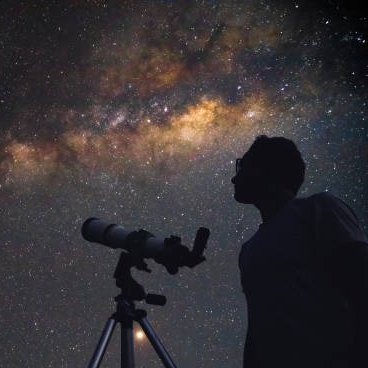
Space objects such as meteoroids and asteroids move across... the solar system and can collide with both Earth and the Moon. However, the Moon shows far more visible impact marks on its surface. One main reason is that Earth has a thick atmosphere that protects the planet. When many meteoroids enter Earth’s atmosphere, they burn up due to friction before they can reach the ground. This process creates the bright streaks of light we call shooting stars. The Moon, however, has almost no atmosphere, so incoming space rocks are not slowed down or burned up. They travel directly to the lunar surface and strike it at very high speed. Each collision creates an impact crater, throwing dust and rocks outward from the impact point. Over billions of years, thousands of these impacts have covered the Moon with craters. Unlike Earth, the Moon also has no wind, water, or weather to erase these craters, so they remain visible for millions or even billions of years. This is why the Moon looks heavily cratered when we observe it from Earth through telescopes.show more
The Astronomy Guy
17,473 次观看 • 3 个月前
🚨 NASA JUST SHARED THE CLEAREST VIEW YET OF... JUPITER’S MASSIVE HEXAGONAL STORM AT THE SOUTH POLE. This enormous, stable vortex roughly the width of Earth has been raging for years with a near-perfect hexagonal shape. At its center is a dark, powerful cyclone surrounded by turbulent, swirling bands of gas in constant motion. The hexagon is one of the most striking and mysterious atmospheric features in the Solar System. Scientists still don’t fully understand how it maintains its sharp, six-sided structure despite the chaotic winds around it. Why this matters: • It shows that giant planets can sustain extremely organized, long-lived weather systems on scales we don’t see on Earth • The hexagon is thought to be shaped by Jupiter’s rapid rotation and deep atmospheric dynamics • Studying it helps us understand how storms and atmospheric patterns work on gas giants in general including exoplanets • Juno’s close-up observations continue to reveal new details about the depth and structure of these polar vortices The deeper implication: Jupiter’s polar regions are turning out to be far more complex and structured than scientists expected. Features like this hexagon challenge our models of atmospheric physics and show that even in the most turbulent environments, nature can create remarkably stable, geometric patterns. As we study more gas giants (both in our Solar System and beyond), these kinds of observations help us understand the limits of weather, stability, and chaos on planetary scales. How do you think something this organized and long-lasting can exist in such a violent atmosphere? Follow for more frontier planetary science and stunning space imagery.show more
TheNewPhysics
460,141 次观看 • 1 个月前
🚨 A FORMER NASA ENGINEER CLAIMS HE’S DISCOVERED A... “NEW FORCE” THAT CAN OVERCOME EARTH’S GRAVITY WITHOUT ANY PROPELLANT. Charles Buhler, who spent years leading NASA’s Electrostatics and Surface Physics Laboratory at Kennedy Space Center, says his private company Exodus Propulsion Technologies has found a way to generate thrust using only electric fields. In vacuum chamber tests, their device reportedly produced enough force to counteract Earth’s gravity a claim that would completely rewrite the rules of propulsion. Why this matters: For over a century, every rocket we’ve ever launched has had to carry massive amounts of fuel. If this “New Force” is real, spacecraft could one day maneuver indefinitely without expelling mass potentially making deep space travel, satellite station-keeping, and even atmospheric flight dramatically cheaper and more efficient. The deeper implication is staggering: We may be looking at the first real breakthrough in propellantless propulsion since the invention of the rocket. If verified, this wouldn’t just change space travel it could reshape how we think about energy, momentum, and the fundamental laws of physics. Of course, extraordinary claims require extraordinary evidence. As of now, the work is still awaiting independent replication by outside laboratories. But if this holds up… What changes first space travel, energy production, or something we haven’t even imagined yet? Follow for more frontier physics and emerging technologies.show more
TheNewPhysics
122,021 次观看 • 2 个月前
NASA’s Epic 685,000-Mile Moon Odyssey! Get ready for history... in the making! Right now, NASA’s Artemis II mission is blazing a trail through deep space on an incredible 10-day journey covering more than 685,000 miles — and it’s already halfway to the Moon.Four brave astronauts are currently farther from Earth than any humans have traveled in over half a century, riding aboard the Orion spacecraft on a daring voyage that will take them on a breathtaking flyby of the lunar this video, we break down the full adventure: the outbound trajectory, the dramatic lunar flyby, and the precise free-return path that will slingshot them safely back home. You’ll see exactly how Orion navigates the vast emptiness of space using clever orbital mechanics and innovative mission design.Artemis II marks the first crewed flight of NASA’s Artemis program — the bold step that will return humans to the Moon and open the door to sustained lunar exploration and beyond.Buckle up — this is how humanity returns to deep space!show more
Black Hole
21,046 次观看 • 3 个月前
Contact in the desert was the biggest ever this... year and so was the sky watch. We witnessed dozens of orbs. With 5 minutes left before the hotel turned the lights on, I told more than a 1000k people present why pointing my laser in a certain direction that the phenomenon may give us a grand Finale and it may be an orb with wings. Within seconds a glowing orb with wings appeared and flew past the crowd. No it’s not a bird if you If you want to learn something about the phenomenon and 20 years of research with scientists and not speculation , join us on one of our adventures you will never be the same. We have this on several cameras from full spectrum to cell phones to Two types of night vision. Also scientists from NASA and Lockheed the NSA and The CIA were standing next to me during the filming of this orb and has witnessed this many times.show more

Chris Bledsoe
120,647 次观看 • 1 个月前
More from inside the Adirondack Park, which is the... largest park in the contiguous US. If you attempted to build something like this in the ADK Park before Kathy Hochul and her lapdog DEC Commissioner Amanda Lefton was installed, you’d be arrested or fined. But now in the name of “saving the climate,” it’s OK to destroy land that’s meant to be Forever Wild. We need to save the environment from the people “trying to save the environment.”show more

Alex Fasulo
22,605 次观看 • 1 个月前
🪐SATURN’S RINGS: GIANT ICY DISCS THAT KEEP SCIENTISTS UP... AT NIGHT Saturn’s rings might look solid from a distance, but they’re actually billions of icy chunks, each orbiting with razor-sharp precision instead of smashing into each other like a cosmic demolition derby. They’re enormous - stretching 240,000 kilometers wide- but so thin that if you dropped them on Earth, they’d barely be taller than a city bus. These rings aren’t just pretty space bling; they’re a working lab for gravity, helping scientists figure out how planets, moons, and even solar systems form and stay stable, which ties directly to how Earth and life came to be. They also show how tiny forces shape colossal structures, hinting at ways to predict or manage big systems back here on Earth, from weather patterns to satellite swarms. So, next time you glance at Saturn through a telescope, remember: those glittering rings are basically physics giving us a front-row seat to how the universe builds stuff - and how it might one day fall apart. Source: NASA, JPL, Cassini mission datashow more

Mario Nawfal
59,988 次观看 • 1 年前
On April 26th, 2026, the Japan Meteorological Agency's Himawari-8... satellite captured a full day of Earth. Every ten minutes, for twenty-four hours, it photographed a complete hemisphere of the planet. One hundred forty-four individual photographs. No editing for content. No compositing. No CGI. No green screen. No hologram. No drawings. These are photographs, assembled into video. Himawari-8 is a geostationary weather satellite operated by Japan. It orbits at roughly twenty-two thousand miles above the equator, remaining fixed over one spot on the planet, orbiting at the same rate Earth rotates. It was launched in 2014. It takes photographs of Earth in visible light and infrared. It does this every ten minutes, every single day, year after year. These images are available to the public. Meteorologists worldwide use them for weather forecasting. News organizations use them. Scientists use them. You can access them yourself right now. What you're seeing over that twenty-four hour period is the terminator line moving -- the day-night boundary shifting as the planet's rotation carries different regions into and out of sunlight, all viewed from a fixed point in space. It is not a composite. It is not a trick. The curvature you see is not distortion. It is not perspective compression. It is the actual shape of the Earth as photographed by an independent satellite operated by a nation with no interest in perpetuating a NASA conspiracy. This is what Earth looks like from space. This is the globe holding atmosphere in place with gravity as you witness weather patterns moving across its surface. This is reality. (No fisheye lens was harmed in the making of this video.)show more

Alex Boge
12,122 次观看 • 3 个月前
🚨 CHINA JUST MELTED THROUGH 3,413 METERS OF ANTARCTIC... ICE and reached a lake that has been completely sealed off from Earth’s surface for millions of years. No sunlight. No atmosphere. No contact with the modern world. Using high-pressure, near-boiling water, researchers drilled deeper than any previous hot-water expedition in history smashing the old record by nearly 900 meters. Why this matters: This subglacial lake evolved in total isolation. Scientists believe it may contain: Ancient microbial life forms never seen before Pristine climate records going back millions of years Unique chemical ecosystems Clues about how life could survive on icy moons like Europa and Enceladus But the deeper implication is almost surreal Earth still holds entire hidden environments frozen time capsules completely disconnected from the surface world we know. If life can thrive in complete darkness and isolation beneath kilometers of ice… What does that say about the possibility of life hidden beneath the icy crusts of other worlds? Follow for more frontier physics and hidden Earth discoveries.show more
TheNewPhysics
93,355 次观看 • 2 个月前
SOUND ON. You’re hearing the first howl of a... dire wolf in over 10,000 years. Meet Romulus and Remus—the world’s first de-extinct animals, born on October 1, 2024. The dire wolf has been extinct for over 10,000 years. These two wolves were brought back from extinction using genetic edits derived from a complete dire wolf genome, meticulously reconstructed by Colossal from ancient DNA found in fossils dating back 11,500 and 72,000 years. This moment marks not only a milestone for us as a company but also a leap forward for science, conservation, and humanity. From the beginning, our goal has been clear: “To revolutionize history and be the first company to use CRISPR technology successfully in the de-extinction of previously lost species.” By achieving this, we continue to push forward our broader mission on—accepting humanity’s duty to restore Earth to a healthier state. But this isn’t just our moment—it’s one for science, our planet, and humankind. All of which we love and are passionate about. Now, close your eyes and listen to that howl once more. Think about what this means for all of us.show more

Colossal Biosciences®
28,488,353 次观看 • 1 年前
🚨 NASA IS ABOUT TO LET A PRIVATE SPACECRAFT... RESCUE ONE OF ITS MOST IMPORTANT TELESCOPES. The Neil Gehrels Swift Observatory has been hunting gamma-ray bursts the most powerful explosions in the universe since 2004. It’s still working perfectly, but Earth’s atmosphere has been slowly dragging it down toward a fiery reentry. Now, NASA is turning to a commercial company to save it. Katalyst Space Technologies’ robotic spacecraft Link will launch later this month, rendezvous with Swift, dock with it, and boost the telescope into a higher, safer orbit extending its life by years. Why this matters: • It’s the first time a private spacecraft will perform an orbital boost on a U.S. government science satellite • Swift remains one of the best tools we have for studying gamma-ray bursts and other high-energy cosmic events • Without this mission, the telescope could have deorbited as early as this year • It shows how commercial space companies are now capable of performing complex servicing missions that were once only possible for governments The deeper implication: We’re entering a new era where valuable scientific infrastructure in orbit doesn’t have to be considered disposable. Instead of building and launching entirely new telescopes when old ones start to decay, we can now extend their lives through commercial servicing. This approach is faster, cheaper, and more sustainable and it could become a standard model for protecting high-value space assets in the future. Sometimes the most important space missions aren’t about discovering something new. They’re about making sure we don’t lose what we already have. Would you support more commercial missions to rescue and extend aging space telescopes? Follow for more frontier space exploration, satellite servicing, and NASA missions.show more
TheNewPhysics
49,682 次观看 • 1 个月前