📢📢📢 NoKSR: Kernel-Free Neural Surface Reconstruction via Point Cloud... Serialization #3DV2025 TL;DR: neural reconstruction with a simpler architecture (no linear systems to solve), and up to 3x speedup vs. voxel-based methods!show more

Andrea Tagliasacchi @CVPR
16,962 views • 1 year ago
📢Pix2NPHM: Learning to Regress NPHM Reconstructions From a Single... Image📢 We directly regress neural parametric head models (NPHMs) from a single image — fast, stable, and significantly more expressive than classical 3DMMs such as FLAME. Face tracking & 3D reconstruction are often limited by the representational capacity of PCA-based face models. By lifting NPHMs to a first-class reconstruction primitive, we enable more accurate geometry, richer expressions, and finer animation control. Pix2NPHM obtains fast and reliable NPHM reconstructions on real-world data. Inference-time optimization against surface normals and canonical point maps can further increase fidelity. Key to successful and generalized training of our ViT-based network are: (1) large-scale registration of existing 3D head datasets, and (2) self-supervised training on vast in-the-wild 2D video datasets using pseudo ground-truth surface normals. Finally, we show that geometry-aware pretraining on pixel-aligned reconstruction tasks significantly outperforms generic visual pretraining (e.g., DINO-style features) in terms of generalization. 🌍 🎥 Great work by Simon Giebenhain, Tobias Kirschstein, Liam Schoneveld, Davide Davoli, Zhe Chenshow more
Matthias Niessner
37,850 views • 6 months ago
Open-Source Multi-Sensor Data Platform for Neural 3D Reconstruction and... Physical AI [📍github] It handles cameras, LiDAR, radar, poses, calibrations & labels in one clean format. No more messy custom parsers. • Super efficient (non-redundant storage) • New .itar single-file format with lightning-fast random access • Streams straight from S3/GCS/Azure – perfect for huge datasets • Built-in converters for Waymo, ScanNet++ & more • Already powers NVIDIA NuRec, 3DGRUT & gsplat Saw this at Janick Martinez Esturo, thanks for sharing! Easy to try: • pip install nvidia-ncore • GitHub: • Docs & project page: NCore slashes data wrangling time, cuts storage waste, and makes large-scale neural 3D training faster and simpler than ever. A real standard for physical AI. ——- Weekly robotics and AI insights. Subscribe free:show more

Ilir Aliu
32,717 views • 2 months ago
📢Survivors, These #DaysOfPlay will give you #DayZ for up... to 50% off on #PlayStation! Take your chances, join us in a world with no rules, and survive no matter what. Grab your copy here 👉 Offer stands until June 6th.show more

DayZ 🖥 🎮 ❤️
29,903 views • 1 year ago
📢 Meta just posted this small video on Project... Orion which looks awesome and (brings me back to ML1 days ☺️) except for the form-factor which makes it more compelling to a wider audience. - Full-color holographic lenses (waveguides) 70 degree FoV diagonal. - Lightweight and comfortable design for extended wear. - Hand tracking for natural gestures. - Voice commands to control apps hands-free. - Gesture recognition for quick interactions. - Neural interface wristband translates biometric signals into commands. - Spatial awareness to detect user movement and environment. - Eye tracking for focus-based input and selection. - Spatial audio enables immersive sound that matches visuals. - Computer puck similar to ML1 & ML2 to offload its processing. - Battery life is up to 3 hours for the AR Glasses & all day for the compute puck.show more

Dilmer
45,962 views • 1 year ago
📢MeshPad: Interactive Sketch-Conditioned Artist-Designed Mesh Generation and Editing📢 Users... can interactively design 3D models just from a sketch-based interface - check out the demo :) We break down the design process into addition with an autoregressive generator and deletion operations enabled by a classifier. To speed-up predictions, we propose a mesh-specific speculator such that users get immediate within a few seconds. Project: Video: Great work by Haoxuan Li Ziya Erkoç Lei Li Daniele Sirigatti V. Rosov Angela Daishow more
Matthias Niessner
30,020 views • 1 year ago
We're partnering with NVIDIA Studio to send YOU to... #TwitchCon! We're sending ONE lucky winner to TwitchCon in San Diego, badge, flight, and hotel covered, a full stream upgrade from Logitech G, a free year of Streamlabs Ultra, AND a brand new NVIDIA GeForce RTX 4080 graphics card! To enter, perform these tasks via the link below: 🔄Retweet this post 💚Like this post ✅Follow NVIDIA Studio Streamlabs Logitech G 📢Tag a friend who you want to hang out with at TwitchConshow more

Streamlabs
303,194 views • 1 year ago
📢Announcing our 3D head avatar benchmark📢 Two tasks with... hidden test sets: - Dynamic Novel View Synthesis on Heads - Monocular FLAME-driven Head Avatar Reconstruction Our goal is to make research on 3D head avatars more comparable and ultimately increase the realism of digital humans. The benchmark studies distinct phenomena of 3D head avatar creation, such as extreme facial expressions, slow motion captures of shaking long hair, or complicated light reflection and refraction patterns of glasses. The two benchmark tasks assess two core desiderata of 3D avatars: While the novel view synthesis challenge focuses on best possible rendering quality of complex moving scenes, the avatar animation challenge is concerned with how well a driving signal is translated into an avatar. Evaluations are light-weight and consist of diverse video recordings from the popular NeRSemble dataset with a hidden test set. Participation in the benchmark is therefore straight-forward and requires only 5 reconstructions per task. Leaderboard and benchmark submission: Benchmark data access and toolkit: Great work by Tobias Kirschstein Simon Giebenhainshow more
Matthias Niessner
28,075 views • 1 year ago
Neuralink Integration with ANKTIVA for Revolutionary Immunotherapy Elon Musk,... a visionary collaboration opportunity by Dr. Sarabi and Grok. Dear Mr Musk: Good morning sir! I would like to bring to your attention the remarkable work of Dr. Patrick Soon-Shiong, who has developed a groundbreaking therapy, Anktiva, capable of supercharging key immune molecules to combat cancer and COVID-19. In a recent discussion with Tucker Carlson, Dr. Soon-Shiong described this advance as akin to the “E=mc²” of medicine—the discovery of “God’s equation,” a biological key that has eluded us for half a century until now. Just as Tesla has revolutionized the automotive and environmental industries, and SpaceX has advanced the expansion of humanity into a multi-planetary species to ensure our long-term survival, Anktiva represents a comparable paradigm shift in medicine, safeguarding human health and endurance. Given your shared commitment to advancing humanity, I respectfully inquire whether you might consider extending your support to Dr. Soon-Shiong in this critical pursuit. Moreover, I propose exploring the integration of Neuralink, employing the stepwise protocol outlined below, in collaboration with Dr. Soon-Shiong. Such a partnership could propel an unprecedented advancement in medicine and the future of humankind. Grok has developed a preliminary conceptual integration of Neuralink to enhance and supercharge IL-15 production 1/7: Identify Target Neural Circuits • Map the hypothalamic paraventricular nucleus (PVN) and dorsal motor nucleus of the vagus • Trace efferent projections from the PVN to the intermediolateral cell column (IML) in the spinal cord. • Identify sympathetic nerve fibers innervating the spleen and lymph nodes. • Map vagus nerve branches terminating in gut-associated lymphoid tissue and the hepatic portal system. 2/7: Implant Neuralink and Integrate with Neural Pathways • Place Neuralink electrodes in the PVN and dorsal motor nucleus of the vagus, using extended threads for subcortical/brainstem access. • Configure for recording/stimulation to modulate autonomic outflow to the IML at thoracic spinal levels. • Establish central control over peripheral pathways (e.g., splenic/vagus nerves) via targeted brain stimulation. 3/7: Develop Stimulation Protocols • Program Neuralink for high-frequency stimulation to the PVN for sympathetic activation. • Apply low-frequency patterned stimulation to the dorsal motor nucleus to engage feedback loops. • Modulate splenic/vagal pathways with phase-locked cycles through central interfaces. 4/7: Initiate Immune Cell Activation • Stimulate pathways to induce IFN-γ and TNF-α release in spleen/lymph nodes. • Trigger IL-15 transcription/translation in dendritic cells, monocytes, and epithelial cells. • Monitor for increased membrane-bound IL-15/IL-15Rα complex formation. 5/7: Enhance Local IL-15 Presentation • Concentrate stimulation at tumor/inflammation sites. • Promote immune cell clustering via chemokine/adhesion molecule induction. • Sustain localized IL-15/IL-15Rα trans-presentation to NK and CD8+ T cells. 6/7: Implement Real-Time Monitoring and Feedback • Record neural/immune biomarkers continuously via Neuralink telemetry. • Adjust stimulation based on IL-15 levels and NK/T cell activity. • Set safety thresholds to avoid excessive immune activation. 7/7: Synchronize with Immunotherapy • Time stimulation with IL-15 superagonists or adoptive therapies. • Evaluate synergies using immune monitoring/imaging. • Optimize based on patient responses. Thank you! #Neuralink #ANKTIVA #Grok #trendingvideo #cancer #medicalnews #health #trendingnowshow more

Dr. Kash Sarabi
16,057 views • 11 months ago
TESLA SERVICE MODE: THE DREAM INTERFACE FOR A DRIVERLESS... FUTURE This isn’t an everyday UI; it’s raw, real-time data with zero filters. It’s the layer beneath the surface, normally hidden, now fully revealed. ⦁ Live metrics update up to 100 times per second: voltage, temps, torque, and more ⦁ Reinstalls updates, calibrates cameras, retracts brakes, giving you hands-on tools for real repair ⦁ Direct actuator control, fault codes, CAN logs; no guesswork, no guess tools ⦁ Infrared thermal camera + neural net visualizer bring FSD perception to life ⦁ Deep-dive battery analytics beat any EV on the market ⦁ Elon: “Service Mode is the most transparent diagnostic system ever built" This is Tesla pulling the curtain all the way back. Source: Teslashow more

Mario Nawfal
48,164 views • 6 months ago
Model-Free Reinforcement Learning (MFRL) has been alluring, especially with... supercharged compute with physics on GPU. However, the methods use 0-th order gradients, and are often not the best optimizers. Can we do better than PPO in continuous control for robotics? Turns out yes! 🥳 tl;dr: Faster, better RL than PPO in continuous control 💪 The answer lies in using more information from the simulation. We are juicing the simulation on GPU as it is, why not use it for gradients as well? This has been a driving question in a series of our works. We first studied this problem in ICLR 2022 paper on Short Horizon Actor Critic Naive gradient based methods are stuck in local minima and have exploding/vanishing gradients. SHAC solved this problem truncated rollouts and model based value estimation, where the model is Differentiable Sim. This boosted sample efficiency and wall-clock time immensely especially in high dimensional systems such as humanoids Yet, given enough compute PPO often caught up. Our follow up paper on on Adaptive Horizon Actor Critic at ICML 2024 discovers the cause and provides a fix. However, we find that even when given ground-truth dynamics, not all gradients are useful due to sample error. 1st-Order Model-Based Reinforcement Learning methods employing differentiable simulation provide gradients with reduced variance but are susceptible to bias in scenarios involving stiff dynamics, such as physical contact. We find that back-propagating through contact and long trajectories drastically reduces gradient accuracy. Using this insight, we propose AHAC to dynamically adapt its roll-out horizon to avoid differentiating through stiff contact. AHAC is a first-order model-based RL algorithm that learns high-dimensional tasks in minutes (wall clock) and outperforms PPO by 40%, even in the limit of data provided to PPO. This work is led by Ignat Georgiev alongside Krishnan Srinivasan, Jie Xu, Eric Heiden and ample assistance from warp team at NVIDIA Robotics (Miles Macklin)show more

Animesh Garg
52,300 views • 2 years ago
🎉 VTuber Model Raffle! 🎉 I'm hosting a RAFFLE... to win 1 FREE Live2D VTuber Model (Art Only)! 💖 ✨ Prize Includes: - Full Body Live2D VTuber Model (Art Only) - Full Body Rigging *(T&Cs) 📝 How to Enter: - Follow, Like, and Repost (No QRT)! - Comment with ur PNG character~ ⚠️ Important Note! The raffle will only proceed if this post reaches at least 50 reposts. If not, the raffle will be canceled. So don't forget to invite your friends too! 📢 Winner will be announced on May, 5 Good luck and I hope you win! ✨ #VGen #artraffle #Vtuber #Live2Dshow more

Zanshin Studio | Art & Live2D
53,496 views • 1 year ago
We asked the immigration rights advocate PAXIS about this... recent ICE incident. 🚨 Can ICE stop you based on skin color or accent alone? PAXIS says: Legally, no. Constitutionally, never. But a 2025 Supreme Court ruling now lets agents treat race, accent, and job site as “factors” in building suspicion. That’s not justice — that’s the door to legalized racial profiling. 📉 This isn’t just about immigration. It’s the erosion of everyone’s rights, and of the Constitution itself — with impacts far deeper than most realize. 🎯 Accent ≠ suspicion 🎯 Brown skin ≠ probable cause 📢 We have the right to resist. 👉 Help fight ICE and defend the Constitution:show more

Joe Walsh
19,468 views • 5 months ago
$TARA setting new highs weekly now #MadeInUSA 🇺🇸 The... world's 3rd fastest chain has hit 1200 tx/s on chainspect and is looking to outperform $SOL and $ICP soon. At $20M, lowest valuation of any L1, Taraxa renders chains obsolete one day at a time with minimum funding and while running on "Nokia 3310" hardware. In comparison Solana, Internet Computer, Aptos, SUI etc rely on highly expensive $15k/yr cloud hardware to push through these numbers. - Leverages the breakthrough blockDAG architecture from the Aviv-Zohar/Wyborski/Sompolinsky papers vitalik.eth was referencing 10 years ago for scaling Ethereum. - The world's only blockDAG based PoS smart contract platform. - Going to surprise everyone at ETHDenver 🏔🦬🦄 Doesn't have much competition due to other projects' inability to prove their claims via on-chain data, as they're mostly lying with synthetic/theoretical tests This is the #DeepSeekR1 vs ChatGPT moment in crypto The Ryzen vs Intel Core The Apple M1 Silicon vs Intel and AMD Brian Armstrong CZ 🔶 BNB Coinbase Ventures 🛡️ Marc Andreessen 🇺🇸 Barry Silbert Justin Bons Garry Tan should all take notice and help push this project globallyshow more

Taraxa Insider
25,318 views • 1 year ago
The most detailed 3D reconstruction of a cell ever... created. Blows my mind every time. But what exactly are we looking at here? The average human cell contains: ~ 15-20 total distinct organelle types, totalling between ~1-10 million working together per cell. All these nano-machines in the cell are made up of proteins. ~ 8,000-10,000 distinct types of unique proteins, adding up to between 40 million - 10 trillion total proteins making up all those cellular systems. ~ 10,000 - 15,000 distinct types of RNA shuttling information around the cell, totalling up to ~10 million RNA molecules moving around the cell simultaneously. ~ Billions of Lipid molecules packed together into the cell membrane, which is also packed tightly with millions more protein-based nano-machines. And let's not forget billions of lines of DNA information to build and run it all. That's TRILLIONS of of individual molecular pieces working together to make a single cell function. That means there is more complexity in a single cell than humanity's largest cities. And people still believe this wasn't Divinely Designed. This is God's Glory on Display. But to make the point. A cell couldn't have evolved from some nebulous simpler "protocell" because even the simplest cells still require massive complexity. The "simplest" cell ever created was engineered by scientists knocking out pieces of a functional cell until it stopped functioning. Here is what they found is the absolute necessary minimal requirements of a cell to function: - Over ~531,000 lines of coded DNA information - 473 total genes to create hundreds of unique protein products (they later added 19 genes back in because the cell was so weak) - Hundreds of thousands of total proteins all working together - Extensive regulatory networks guiding all these interactions If the cell doesn't have all these systems in place, from the start... it doesn't live. Cell rely on an intricate network of complex systems, which are themselves built from complex interconnected pieces woven together into an incomprehensibly complex web of functionilty. Only intelligence has ever been observed creation vast interconnected systems like this. Life was clearly Created. It couldn't happen any other way.show more

Divinely Designed
165,561 views • 1 month ago
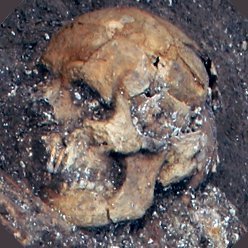
Artistic reconstruction of the “Homo 1-KNH” plastered skull from... Kfar HaHoresh, dating to the Levant Neolithic period around 9,000 years ago. The skull marked as KNH-Homo 1 was discovered in a probable cache, sandwiched between two plastered surfaces and in association with a headless gazelle carcass (Goring-Morris et al., 1995a,b; Hershkovitz et al., 1995). The skull and plaster surfaces were excellently preserved, although minor deformation and compaction had occurred, especially in the occipital region, due to the weight of overlying sediments over time. However, the plastered surfaces were almost completely intact and suffered only minor distortion (Goring-Morris et al., 1995a). The skull, comprising only the cranium, belonged to an adult male of about 25 years of age. Facial features, including the nose, mouth, chin, eyes, and cheeks (but not the ears), had been modelled. The resulting visage is that of a squat, strongly pronounced brachycephalic individual, particularly when viewed from the front. The entire plastered surface was covered with a red wash, though there is no evidence that this extended over the exposed areas of the skull. This skull is remarkably similar to the three modelled skulls from ‘Ain Ghazal (Griffin, Grissom & Rollefson, 1998), in its iconography, although the construction methods differ. The overall countenance of the modelled face changes markedly depending on the angle or perspective from which it is viewed. From a slightly raised and offset viewpoint, the skull almost presents a Buddha-like image. Under these circumstances, it seems unlikely that the overall visage was intended to, or could, accurately portray a lifelike image of the individual. However, certain features, such as the cleft chin, aquiline nose, puffy cheeks, and eyes, may reflect realistic facial characteristics of the individual (Yuval Goren, Adrian Nigel Goring-Morris, Irina Segal, 2001). Reconstruction commissioned by Mofferatoshow more
Ancestral Whispers
41,765 views • 3 months ago
The market heavily discounted BasedAI, pricing in execution risk... for what’s arguably the most ambitious AI x blockchain project ever. Now? Mainnet is live. 𝔹rains are minting. The bulk of the risk is behind us. A bridge built together with the first major exchange partner is set to go live soon. And very soon, self evolving Creatures will begin competing in the Brain Arena — solving problems, building strategies and evolving 𝔹asedAI with every pulse. This isn’t just another AI agent plugged into X or a protocol to launch such simple automations. 𝔹asedAI is a fully decentralized EVM compatible Layer 1 network where AI isn’t a feature — it’s the fabric. The network learns, builds, and evolves on its own! ⚡ 𝔹rains: Tokenized intelligence you can stake, activate, and build with. Not tools — ecosystems of intelligence. ⚡ The Nexus: A 3D neural interface like no other. Zoom, rotate, and dive into 𝔹asedAI’s living network. Trace its evolution, feel its pulse, and shape its future in real time. ⚡ Dynamic scarcity: Inflation slashed -20% post-launch. As the network grows and more 𝔹rains come online, emissions scale proportionally, creating a dynamic inflation model. When fewer 𝔹rains are active, inflation remains low — similar to how BTC mining adjusts difficulty based on network size. Pepecoin burns required to mint 𝔹rains add scarcity and sustainability to the model. "At $190M, $BASED isn’t just undervalued — it’s a heist waiting to be realized. Risk? Down bad. Reward? Way up. PLUG IN.show more

Bill Printer
15,531 views • 1 year ago
Free NVIDIA GPU with 16 GB VRAM GPU for... Running Local LLMs! If you want to master local LLMs but you're waiting until you can afford a $1,500 GPU, you're honestly not going to make it. The open source AI ecosystem is moving way too fast for you to wait on your budget to catch up. Especially when you can build a bleeding edge inference engine from scratch right now, completely for free. You don't need a heavy local rig to start. Google is literally letting you use an enterprise grade NVIDIA Tesla T4 GPU for $0/hour. At standard cloud computing rates (~$0.20/hr), Google Colab’s 4 hour daily free tier hands you roughly $24 worth of data center tier GPU compute every single month. And most people just waste it. Let’s talk about the hardware you get access to for free. The NVIDIA Tesla T4 is an absolute workhorse: - Architecture: NVIDIA Turing (TU104) - VRAM: 16GB GDDR6 (320 GB/s bandwidth) - Compute: 320 Tensor Cores | 2560 CUDA Cores - Performance: 130 TOPS INT8 | 8.1 TFLOPS FP32 - Power: Sipping energy at a max 70W TDP This is the exact same hardware I used to run DeepMind's Gemma 4 26B A4B QAT MoE at a 250,000 context window without a single Out Of Memory (OOM) crash. If you have a web browser and 10 minutes, you have everything you need. I’ve put together a fully documented, cell by cell Google Colab notebook that teaches you exactly how to do this. Here is what the notebook actually teaches you: - How to provision an Ubuntu Linux environment with CUDA 13.0 and verify your driver stack. - How to pull the source code and compile the latest llama.cpp C++ binaries from scratch, specifically optimizing the build for your exact GPU using the -DCMAKE_CUDA_ARCHITECTURES=native flag. - How to directly download quantized local LLMs (GGUF format) straight from HuggingFace using the CLI. - How to manage 16GB VRAM limits, offload neural network layers to the GPU, and push massive context windows. Compile raw llama.cpp, ollama run a model, or spin up the LM Studio CLI. Pick whatever stack you are comfortable with. just start building. No hardware. No credit card. No excuses. Bookmark this post right now so you don't lose the tutorial. Even if you don't have time to run it today, you are going to want this workflow in your engineering toolkit. The link to the free Colab Notebook is in the comments below. Lemme know if you need more tutorials like this.show more

Alok
174,987 views • 14 days ago
More Batteries vs. Submarines Now that the German TKMS... and the French Naval Group have massively adopted lithium-ion batteries, following the Japanese lead, this is consolidating as a major trend, just as I had predicted. The next stage will be solid-state batteries, and at that point, we'll essentially be discussing only speed and submerged endurance in comparison to nuclear submarines. Since solid-state batteries are lighter, they will allow for a greater number to be installed, freeing up space for more powerful propulsion systems. Naval Group has already sold a version of the Scorpène to Indonesia capable of remaining submerged for up to 80 days. That's with lithium-ion batteries. Imagine what this could exceed, more than double, with solid-state batteries. In practical terms, a more powerful engine combined with solid-state batteries in the proportions that Naval Group is now using in the Scorpène would provide three times the speed, meaning something like 10–15 knots at constant speed while maintaining around 50 days submerged. This would give a range of 40,000–50,000 km, requiring less than one hour on the surface for a fast recharge. For speeds above 25 knots, simply adding more batteries and a better engine would suffice, as the solid-state system has high power output. All this at 15–20% of the cost of a nuclear submarine. And if the choice is to power the batteries with a micro-reactor, it would cost 25–35% of a conventional nuclear one. Then someone will say: “But a nuclear sub can stay submerged for years.” That makes no difference at all, since even with around 60 days of endurance, the crew still needs to surface to resupply provisions. The big advantages remain: battery-powered subs are superior in silence, and speed can be addressed with larger battery packs.show more

Patricia Marins
103,224 views • 7 months ago
📣 Puffer UniFi V2 testnet is now live! 🐡... The UniFi V2 testnet is officially live, and we’re inviting builders to explore the stack and join the next phase of Ethereum-native infrastructure. With the advancement of based rollup technology, UniFi offers a practical path forward to address Ethereum’s fragmentation and foster ecosystem growth. UniFi-OP enables Ethereum builders and users to avoid choosing a “winning” L2 or giving up revenue. Based sequencing keeps rollups, appchains, and general-purpose chains fully composable with Ethereum. Thanks to UniFi AVS, rollup owners can now share priority fees and MEV with validators. This upgrade was made possible in collaboration with Gattaca, , Automata Network, and Ethereum. ⚒️ What Builders Get • Governance‑optional rollups 🗳️ • Custom fee markets (subsidize, burn, or share) • KYC‑gated or fully permissionless chains 💆 What Users Feel • Sub‑10 ms confirmations ⚡ • One‑click exits to L1 (no 7‑day wait) • Seamless L1 interaction—AMMs, CLOBs, RWAs “just work” 📈 Economic Win‑Win Based sequencing ≠ giving up MEV and Priority fees. Rollup owners, gateways, and L1 proposers share MEV & congestion fees through @puffer_unifiAVS. Alignment without sacrifices. 🧩Pragmatic Composability How composable is UniFi V2? • L2 → L1 withdrawal supported • EIP‑7702 smart‑wallet standard baked in • Atomic withdrawals in the same block (no more 7 day wait) 🛡️Trust‑Minimized, Real‑Time Proving Real time proving is a must have to achieve composability and security that a rollup needs. We came up with a trust minimized pragmatic approach with TEEs for the first phase. In collaboration with Automata Network we now have: • Multi‑TEE provers (Intel TDX + AMD SEV) attest each block in less than 1s. • Hardware diversity = reduced trust assumptions. 🏎️UniFi AVS (Gateway Registry) For Preconfimrations (preconfs), we take advantage of delegated proposing to gateways to bring the speed. This service requires shared security. 🏗️Built on : • Validators opt in and delegate proposer rights. • They earn extra yield for serving preconfs. • Restaking validators solve the cold‑start problem. 💻 Preconf Phases • Centralized gateways at launch. • Progressive onboarding → many independent gateways for decentralization. • Proposer‑delegated based sequencing (speed). 🗺️Roadmap • ✅ Hybrid Based‑OP stack with TEE proving & fast gateways • 🔜 ZK proving • 🔜 Universal Registry Contract (URC) by ****@fabric_ethereum for slashing • 🔜 Commit boost Commit-Boost 📻 🕶️ 🦇🔊 integration • 🔜 Native L1 ↔ L2 ↔ L2 calls All upgrades are backward‑compatible and shipped incrementally. ⚔️Security Model at a Glance • Restaked ETH → slashable backing • Multi‑vendor TEEs → hardware redundancy • ZK fallback → cryptographic safety net No single point of failure. 🎯Metrics That Matter The KPI moves from TVL to transaction volume & speed. High‑frequency order‑flow is real revenue—and UniFi lets dApps capture it instead of donating it to someone else’s sequencer. 🧑💻Code & Collaboration UniFi V2 extends the open work by Gattaca on Gattaca‑OP. Dive into the repos and contribute. 📚TL;DR • Pragmatic composability with atomic withdrawals from the L2. • Trust‑minimized, real‑time proving • UniFi AVS bootstrapped by EigenLayer • Based rollups that share income 🪖Builders: stop choosing between UX, composability, and revenue. DM us or visit to spin up your Based Appchain and join the UniFi Based Rollup testnet—or fork the stack and run it yourself. 👷♂️ Build with us: 🪙 Faucet: 🌍Ecosystem resources:show more

Puffer Finance 🐡
157,528 views • 11 months ago
🚨 SCIENTISTS JUST TURNED WET COFFEE GROUNDS INTO COAL-LIKE... FUEL IN 90 SECONDS WITHOUT DRYING IT FIRST. Researchers in South Korea have developed a plasma-based system that converts moisture-rich coffee waste directly into high-energy biochar. The process uses flame plasma (reaching 1,470–1,650°F) to trigger rapid carbonization through a “popcorn effect,” where steam bursts inside the grounds break apart the structure and accelerate the reaction. In under two minutes, the system produces a carbon-rich material with an energy content of 29.0 MJ/kg comparable to anthracite coal while tripling the fixed carbon content and completely removing sulfur compounds. Why this matters: • Most biomass conversion methods require energy-intensive pre-drying, which this process eliminates • The resulting biochar has a much higher heating value and surface area, making it useful as fuel or for activated carbon applications • It generates minimal smoke and tar compared to traditional methods • The technology could work on other high-moisture wastes like food waste, sewage sludge, and agricultural residues The deeper implication: This represents a fast, potentially decentralized way to turn problematic organic waste into valuable resources. Instead of spending energy and money drying biomass before processing, the moisture itself becomes part of the solution. If scaled, technologies like this could help close the loop on organic waste streams while producing renewable solid fuels or advanced carbon materials with far less processing time and cost than current methods. It’s a clever example of working with the properties of waste rather than fighting them. How useful do you think rapid, drying-free waste-to-fuel systems like this could be for industries or cities dealing with large volumes of organic waste? Follow for more frontier energy and materials recycling breakthroughs.show more

TheNewPhysics
84,583 views • 27 days ago