Predicting the next word "only" is sufficient for language... models to learn a large body of knowledge that enables then to code, answer questions, understand many topics, chat, and so on. This is clear to many researchers now, and there are nice tutorials on why this works by Ilya Sutskever resorting to compression ( ) and by Geoffrey Hinton ( ). However, the emergence of types of understanding is not unique to language models. In by Misha Denil and Brandon Amos the authors trained models to predict the next few time stems of over a hundred robot hand sensors (Touch, Gyro, Accelerometer, Joint Info, Actuator Info, etc.). They ten found out that they could regress the shape of the thing the hand was touching from the activations of the neural networks using probes. That is, the model developed an internal representation of shapes even though it was simply used to predict "only" the next few senses. Awareness follows from simple predictions and interaction with the world.show more
Nando de Freitas
134,252 Aufrufe • vor 2 Jahren
AI Is Moving Beyond “Generating Videos” — Toward “Generating... Worlds” Over the past two years, AI video models have advanced at an astonishing pace. From Runway and Pika to Sora and Veo, AI-generated videos have become increasingly realistic and more consistent with the physical laws of the real world. Many people believe the next objective is simply to generate videos that are longer, sharper, and more lifelike. But if we take a step back, we can see that the real transformation is not happening in video itself. It is happening in world models. What Is a World Model? In 1943, psychologist Kenneth Craik proposed an idea that would influence artificial intelligence research for decades. He argued that the human brain does not merely react to the outside world. Instead, it maintains an internal model of how the world works. Because we have this internal model, we can predict the outcome of an action before we actually take it. Before crossing a road, we estimate whether a car will pass by. Before catching a ball, we predict its trajectory. These abilities come from continuously simulating the world in our minds, rather than relying entirely on trial and error. This idea later became known by a more formal term: World Model. A world model does not describe a single image or a fixed video clip. It is an internal representation capable of continuously simulating the rules and dynamics of the real world. Why Is AI Research Turning Toward World Models? Because predicting “what comes next” is becoming increasingly central to how AI systems work. Language models predict the next token. Image models predict the next step in the denoising process. Video models predict the next frame. A world model, however, attempts to predict something broader: What should the world look like in the next moment? In 2018, David Ha and Jürgen Schmidhuber proposed in their paper World Models that an intelligent agent could first learn a model of the world, and then use that internal model to plan its actions. The Dreamer series later demonstrated that many complex tasks could be learned by training agents inside an “imagined world.” At the same time, the development of video models such as Sora and Veo led researchers to another realization: A model capable of continuously generating video has already learned, at least implicitly, many of the rules governing the real world. As a result, these two research directions have gradually begun to converge. But Video Is Not Yet a World This is where the distinction is often misunderstood. For a world model to support meaningful real-time interaction, it must solve several critical problems. Most video models today are essentially answering one question: What should the next frame look like? A true world model needs to answer much more: What happens if I take one step forward? If I walk behind a building and then return, will the building still be there? If I suddenly change the camera angle, will the entire space remain consistent? If I enter a command such as: “Summon a dragon.” Will the world respond immediately? In other words, a world model must do more than generate content. It must understand space. It must understand time. It must understand causality. And it must understand interaction. Moving from watching to participating is where the real difficulty of world models begins. World Models Are Entering the Interactive Era One of the latest attempts in this direction is Alaya World, recently open-sourced by Alaya World, or Alaya Lab. Instead of generating a fixed video clip, it generates a world that users can explore in real time. Users can begin with text, an image, or a video, enter the generated scene, move freely through it, and introduce new prompts at any moment during generation. The world responds immediately. According to the publicly released information, Alaya World provides: Real-time streaming generation at 720p and 24 FPS Stable continuous exploration for more than one minute The ability to switch prompts and trigger skills or events during generation Model weights and inference code released under the Apache 2.0 License Training code and datasets planned for future release What makes these capabilities important is not simply the technical specifications. It is that the generated “world” can now support continuous interaction. The official demo shows that users can genuinely control, transform, and explore the generated environment. AI Is Evolving From a Tool Into an Environment Over the past few years, most discussions around AI have focused on content generation. Generating text. Generating images. Generating videos. But world models raise a fundamentally different question: Can AI generate an environment that people can inhabit, explore, and continuously evolve? If the answer is yes, the impact will extend far beyond video generation. Game development, robotics training, embodied intelligence, digital twins, virtual production, and many other fields could be transformed by the development of world models. World models are still at a very early stage. Yet from Craik’s proposal of an internal mental model more than eighty years ago to the emergence of today’s interactive world-generation systems, a clear evolutionary path is beginning to take shape. Perhaps what AI is ultimately learning has never been limited to images, videos, or language. Perhaps it is learning the world itself. References GitHub: Technical Report:show more
雪踏乌云
112,114 Aufrufe • vor 25 Tagen
World Models are the path for some AI Models... in the future. But how can we efficiently train these models to not only see the world the way humans do but to see the world in a new and unique way. By visualizing, what is normally sequenced audio patterns, we can derive much more insights. Here we see Paganini in a visual form that can than be described and transcribed into a World Model. We can observe connections in a manner that may not have been clear prior to the digitalization of music and sound in this way. The company with the most valuable potential in building a World Model is Tesla. Not that this type of visualization is being used, but that the mechanisms are in place, and the technology is in place for the company to thrive in this new form of AI.show more

Brian Roemmele
57,454 Aufrufe • vor 8 Monaten
What do we mean by hand marbled paper? It's... a traditional process for adding painted oils to paper to give a striking effect. Here are the cover papers for our M.R. James edition being made by the team we use in the English county of Wiltshire. The oils are placed on water and the patterns are threaded through them. The paper is then placed on top and the oils are pressed on to the paper by the opposition of the water molecules, whilst the oils keep the water from seeping into the paper. The papers are then gently peeled away. The process is then repeated for the next sheet and the finished pieces are left to hang throughout the day and overnight until they set. It's the individuality of this process that makes every cover unique This is hand-marbling. This is perfection being lots of little things being done well. This is one of the many ingredients that go into making the covers for OSP leather editions. Support us to continue to support these kind of expert artisan skills and the artisans and artists that make them.show more
Old Sovereign Publishing
20,270 Aufrufe • vor 1 Jahr
Protesters at Saint Annes police station last night. I... have seen in the Echo today that politicians have come out condemning the next protest organised by the same person on County Road next week. Country Road is one of many areas in Liverpool that has undergone massive demographic and cultural change in a short space of time. Many of the locals are upset that this has been done to their home without consulting with any of them. It’s not that they were ignored. They were never part of the decision-making process to begin with. So they are taking to the streets to make themselves heard. And now they are being silenced by the very people that did this to them.show more

Around Liverpool
11,999 Aufrufe • vor 2 Monaten
Left: Nigel Farage, "The far right are a reaction... to fear, to discomfort, to unease, that is out there, that is shared by tens of millions of people.. What you've seen on the streets of Hartlepool, London of Southport is nothing compared to what could happen over the course of the next few weeks" Right: Sunderland police station is on fire after being set alight by the far rightshow more

Farrukh
1,249,112 Aufrufe • vor 2 Jahren
Each booth at Apsara 2025 is buzzing with the... latest AI innovations! From the next-generation large language models of the Qwen3 family and the Wan 2.5 models to the new agent development framework feature in Model Studio, the updates are rolling in! Stay tuned as we zoom into the booths and bring the breakthroughs to you!🔥show more

Alibaba Group
161,611 Aufrufe • vor 10 Monaten
They did not take cursive from the schools because... children no longer needed it. They took it because of what it was quietly building in them. Consider what the exercise actually is. A child, six years old, is handed a pen and asked to draw a single unbroken line that becomes a word. The wrist must float. The fingers must hold a living pressure, never quite the same twice, always correcting. The eye must follow the ink forward and trust the hand to finish what it has begun. There is no lifting, no stopping, no starting over mid-word. The loop must close. The ascender must rise and return. The sentence must travel from one margin to the other as a single continuous gesture, and at the end of it the hand must still be steady. Twelve years of this. Every day. Ten thousand small acts of sustained, self-correcting attention, carried out below the level of conscious thought, until the motion belongs to the body and the body belongs to the motion. This is not penmanship. It is the slow construction of an interior form. The hand that has learned to carry a line without breaking it is the hand of a mind that has learned to carry a thought without breaking it. The two are not metaphors for one another. They are the same faculty, trained in the same child, by the same daily discipline. Continuity of the stroke becomes continuity of the reasoning. The patience of the loop becomes the patience of the argument. The commitment to finish a word one has started becomes the commitment to finish a sentence, a paragraph, a life's idea, without reaching for the nearest distraction halfway through. Print is a different creature entirely. Print lifts. Print stops. Print assembles a word out of separate, stamped, interchangeable pieces, each one beginning and ending in isolation. A mind raised only on print learns to think the way print is made, in discrete tokens, in replaceable units, in fragments that can be recombined by any outside hand without the owner noticing the substitution. It is precisely the shape of thought a language model produces. It is precisely the shape of thought a language model can steer. Cursive is kata. This is the whole of it. A form repeated daily, for years, not for the sake of the form but for what the repetition lays down in the practitioner beneath the form. The swordsman does not train kata so that one day he may fight in kata. He trains it so that when the moment comes and there is no time to think, the movement is already inside him, older and deeper than thought, and it rises on its own. Cursive was the kata of the literate mind, the daily quiet drilling of continuity, of patience, of a line held steady under the long pressure of its own length. And the signature it produced at the end, that small flourished mark unique to a single human being on earth, was only the outward proof of an inward form no machine and no other hand could ever reproduce. Take the kata away and the practitioner is left with vocabulary in place of faculty. He can recognise a whole thought when he encounters one. He cannot carry one himself. He can admire a finished argument. He cannot sustain one long enough to close its loop. He begins books he does not finish, sentences he does not end, ideas he abandons the moment the screen in his palm offers him a brighter one. And when the machine begins feeding him tokens in the exact shape his schooling taught him to receive, he meets it with no interior resistance at all, because no interior form was ever built in him to push back with. They removed it quietly, across a generation, and they removed it in the last years before the machines arrived. Twelve years of daily practice in unbroken, embodied, self-authored thought, gone from the curriculum of almost every child in the Western world, just as the instruments designed to complete their sentences for them came online. The hand forgets. The mind, having never been taught the kata, forgets a thing it never knew it had. That is what cursive was. That is what was taken. And that is why the thought of anyone who still writes by hand, in long unlifted lines, remains, quietly, stubbornly, and without their ever needing to announce it, their own. Now the question stands open. What else has been banned, phased out, quietly retired from the curriculum and from common life over these same decades, under the same soft excuses? Mental arithmetic. Memorisation of poetry. Latin. Logic as a formal subject. Map reading. Knot work. The keeping of a commonplace book. The reading aloud of long passages in class. Singing in parts. What was each of those actually building in the child, beneath the surface of the lesson, and whose interest was served by its disappearance?show more

SiriusB
443,240 Aufrufe • vor 3 Monaten
The kind of Catholicism practiced by Italians is the... result of a profound inculturation that has been ongoing for many centuries. Italians are not a rigid or logical people. Their world is one of deep passions, emotions, and festive exuberance. It's only natural then that the religion they practice would be shaped and influenced by that temperament. That the Catholic Church has successfully managed to do this is a testimony to its enduring ability to be a truly universal faith, not a narrow and parochial one. It's a tragic shame that so many outsiders seem unable to perceive this and instead hurl insults and condemnations because they are either too close-minded or ignorant to understand (or even desire to) how such a unique expression of a religion could have been created and continue to exist, nourishing those who partake in it.show more

Robert Kearney
184,957 Aufrufe • vor 2 Monaten
Today we're dropping the "beta" tag from Adaptyv, launching... our new website and announcing our $8M seed round. When we started Adaptyv a few years ago, our core belief was: AI models for biology are only as good as the experimental data they're trained on and the hypotheses they can test in the real world. Now, after a year of working with many great partners, we’ve scaled our infrastructure to the point that we're now open to anyone who wants to use our platform! Overall, this year, over 30 companies started using Adaptyv to validate their protein designs - from some of the biggest pharmas to frontier AI labs to many, many techbio startups. We've run hundreds of experiments, tested well over 10,000 proteins this year and are generating the data that validates the best AI models currently in development.show more

Adaptyv Bio
11,484 Aufrufe • vor 10 Monaten
“Zionists aim was to change the Jewish Identity. They... wanted to transform the Jewish people from religion to a nationality.” Israel was founded by a nationalistic movement that replaces the Jewish religion with Zionism. They wanted Jews to forget of G-d and Religion, & be united by land and language. To date, they have raised generations of Israelis who have a deep hatred for traditional Jews & Judaism The only responsibility for the dead Jews and Muslims is the racist and usurper government of the Zionist state of Israel. Israel is not the country of the Jews. Jews don't need a state. There is something that Zionists ignore: Jews already have many countries in the world where they live. Judaism is not a nationality. Judaism is a religion. Israel can call itself a Zionist state or a Herzlston state, but it cannot call itself a Jewish state.show more

Voice of Rabbis
398,924 Aufrufe • vor 2 Jahren
It is shameful to hear that the Congress party... is asking, "Kashmir se kya waasta hai?" I would like to remind the Congress party that J&K is an integral part of India, and every state and citizen has the right over J&K, just as the people of J&K have the right over the rest of India. The Congress doesn’t know that many brave sons of Rajasthan have sacrificed their lives for peace and security in Kashmir. But it is not merely the fault of the Congress leaders. It is mostly the Italian culture of the Congress party that is to blame for not understanding the very idea of India. Such statements hurt every patriotic citizen who cares for the unity and integrity of the nation. People will certainly answer Congress. And for the kind information of the Congress, it was not Article 371, but Article 370, that was abrogated by the Modi government. However, it is only expected of Congress to make such horrendous mistakes. Such blunders made by it have haunted our nation for decades now.show more

Amit Shah
785,670 Aufrufe • vor 2 Jahren
Topic: Science and the Fullness of Life. Quote 1:... Rejecting science is easy. Understanding it is hard. Yet only this path leads to fullness of life. Author: Zafar Mirzo. Rejecting science is easy. It requires no effort, no study, and no discomfort. You can simply dismiss it and stay within familiar beliefs. Understanding science, however, is hard work. It demands time, intellectual honesty, and the willingness to change your mind when evidence shows you were wrong. Yet the author insists this harder path is the only one that leads to a full life. Science is not just a collection of facts. It is the most reliable way we have to understand reality, our origins, our world, our possibilities. Embracing it opens the door to wonder, clearer thinking, and better decisions. It frees us from illusion and gives us the tools to solve real problems. A life lived in deliberate ignorance stays small. A life guided by scientific understanding expands. The choice, though difficult, is clear. Quote 2: Science is hard to understand, yet without it there is no fullness of life. Author: Zafar Mirzo. Science is hard to understand. It takes real effort, patience, and the courage to question old beliefs. Many prefer to avoid that struggle. Yet the author is clear: without science, there is no fullness of life. Rejecting it or staying ignorant leaves a person trapped in a smaller, less accurate picture of reality. Understanding it, however difficult, brings clarity, wonder, and the ability to engage with the world as it truly is. A life shaped by scientific knowledge is richer. It sharpens thinking, solves real problems, and deepens appreciation for existence. The path is demanding, but the alternative is a diminished existence, one cut off from truth and possibility. Science may be hard, but it is the only road to a complete and meaningful life.show more

Zafar Mirzo | Quotes
1,667,888 Aufrufe • vor 21 Tagen
CES was an enormous success. We saw thousands of... people and a few dogs interacting with our agents and robots. We booked this booth at the last minute, mainly to book next year’s booth. Truly extraordinary what our team was able to put together on such short notice. Next year we reserved one of the largest booths at CES in the highest traffic location for AI and Robotics. We plan to unveil something extraordinary. Until the next show, we will be debuting the first custom models that will emerge from the first humanoid robotics hot rod shop. These models will be walking around, talking and interacting at tradeshows all over the world over the next few months. We are in the process of acquiring every humanoid robot available on the market to modify these as well. Stay tuned for more updates, the future is here and it’s rapidly accelerating.show more

Parallel
16,871 Aufrufe • vor 1 Jahr
Today I was visiting the exceptionally beautiful Plantin-Moretus Museum... in Antwerp, Belgium (one of the only museums in the world that is itself listed as UNESCO World Heritage), which is one of the oldest printing shops in Europe, with the oldest surviving printing presses in the world. I stumbled upon an old 16th century atlas - written in Old French - and I was pretty amused to read their understanding of China at the time, which was surprisingly accurate, maybe even more than today's! A translation of some of the most interesting passages: - They call it "China" in French (it's now called "Chine") and they write that the locals call it "Tangis", which probably refers to the Tang dynasty but which is strange given that by the 16th century the dynasty had already ended for about 600 years - They write that to its North China is bordered by "tartares" (which I guess means Mongols) whom they describe as "very warlike people from whom it is separated by a wall made by hand" - The Chinese work ethic was already legendary: "those who live there are not at all lazy but devoted to labor and work, because it is there a shameful thing to be idle" - They share a number which must have seemed astonishing at the time: "in the city of Canton, one of the smallest in the entire country, some ten or twelve thousand ducks are eaten daily at table". And then they marvel during a good proportion of the text about the abundance of food in the country, which probably made a big impression on travelers at the time. - They write that "there are in this kingdom two hundred and forty famous cities, whose names end in this syllable FU which means a city: like Cantonfu, Panquifu: the small towns, which are in great number, end in CHEU [undoubtedly refers to "zhou"]. There are infinite villages, heavily populated, because of the continuous agriculture." - China's infrastructure and engineering capabilities were also already legendary at the time: "The city gates have entrances magnificently and marvelously well made, the streets are made level, not sloping this way or that, but following their straight line. They are so wide that ten or fifteen men on horseback can march abreast and are everywhere marked and separated by triumphal arches that marvelously ornament the cities. Portuguese say they saw in the city of Fuchco [probably Fuzhou] a tower set on forty solid marble pillars, the height of which was forty palms (masonry measure) and the width twelve: that this work is so grand, so exquisitely made, so beautiful to see, so sumptuous and so pleasing that it far surpasses all the magnificent buildings of all Europe." - Already at the time, China was very wary of safeguarding its sovereignty: ""[The Chinese] rarely or never leave their country and do not easily let foreigners enter it, especially into the interior of the province, unless they first have safe conduct from the king." - On moral and cultural habits: "They put adulterers to death. There are no brothels in the cities, all manner of prostitutes being sent to the suburbs. They celebrate their weddings at the time of the new moon and around the month of March which is their first day of the new year, and they make these celebrations, like us, very magnificently. They show themselves valiant in banquets and entertainments, in which they owe nothing to the Flemings or the Germans. They eat at tables like us in Europe, on chairs or on benches, and not on the ground as other peoples of Asia do." - On justice: "Bandits and murderers are kept in perpetual prison. Theft, which is a very odious crime, is punished by whip strokes in this manner: they put a man belly down, tie his hands behind him, striking him on the fleshy part of the legs with a whip made of reeds or canes." - On China's naval capabilities at the time: "This kingdom has an infinite number of ships, galleys and vessels of all sorts, with which they cross the seas and rivers. So much so that when they want to show through vainglory the power of their king, they are accustomed to say in a common proverb that he can make a bridge of ships joined together, which can reach and extend from China to Malacca, which is a distance of five hundred leagues and more." - On the emperor and China not being warlike (already back then): "All this region is subject to a single king, like a monarch; whom they call lord of the world and son of the sun. He holds court at Paquin [Beijing], which is a city toward Tartary. He never leaves it, except in time of war. It is said that when he makes war on the Tartars he leads an army of three hundred thousand soldiers and two hundred thousand horses, although it is also said that this nation is not very warlike. This king has under him fifteen very large provinces, which they call governments, and he alone surpasses in power all the other neighboring princes of Asia; and his annual revenues exceed all the riches of Europe. Antonio Pigafetta [the chronicler of Magellan's voyage] calls this king the most powerful of all the universal earth and says that the royal city is fortified and ramparted with seven walls, having ten thousand soldiers for the guard, and that the king commands seventy other crowns of the royal diadem [likely refering to the tributary state system]." Reading these passages, it seems that the further we've come in our ability to know China, the more obscured our vision seems to have become. These 16th century observers, working with fragments brought back by explorers, merchants and missionaries, managed to capture the essential - the industriousness, the engineering mastery, the administrative sophistication, the careful sovereignty. They approached their subject with the humility of the genuinely curious. They had no framework to force China into, no predetermined narrative to fulfill. They simply watched, counted ducks in Canton, measured city walls, and wrote it down. Their errors were errors of transmission - a dynasty name lingering centuries past its time, numbers perhaps inflated through retelling - but the spirit was one of simply describing unknown territory, not to convince anyone of anything. Today however, drowning in information, we're somehow seeing less of what's there and more of what we expect to find. Each observation must fit into existing narratives, serve predetermined conclusions, advance familiar arguments. So much so that we must ask ourselves: have we actually moved backward from those 16th chroniclers? Maybe we need to re-learn to approach China - and others in general - like those old cartographers, pen in hand, ready to be surprised? What might we discover if we stopped explaining and started counting ducks again?show more

Arnaud Bertrand
19,380 Aufrufe • vor 11 Monaten
in software, we're entering a new age of skyscrapers:... rather than a small group of humans hand-typing code into a computer, software is now built by thousands of humans and agents working together to build applications at a scale that was previously unthinkable. the unsung heroes of this new era are infrastructure engineers. they are the people who are figuring out how to make software with 100x the amount of code, and 1000x the amount of contributors actually work OpenAI is one of the few companies already operating at this scale so we Every 🧱 spent a few days deep inside of the company to learn how their infrastructure team thinks about building software skyscrapers—and how they use agents to do it one of the most important articles we've written this year:show more

Dan Shipper 📧
14,629 Aufrufe • vor 12 Tagen
The Hidden Language of Diffusion Models paper page: tackle... the challenge of understanding concept representations in text-to-image models by decomposing an input text prompt into a small set of interpretable elements. This is achieved by learning a pseudo-token that is a sparse weighted combination of tokens from the model's vocabulary, with the objective of reconstructing the images generated for the given concept. Applied over the state-of-the-art Stable Diffusion model, this decomposition reveals non-trivial and surprising structures in the representations of concepts. For example, we find that some concepts such as "a president" or "a composer" are dominated by specific instances (e.g., "Obama", "Biden") and their interpolations. Other concepts, such as "happiness" combine associated terms that can be concrete ("family", "laughter") or abstract ("friendship", "emotion"). In addition to peering into the inner workings of Stable Diffusion, our method also enables applications such as single-image decomposition to tokens, bias detection and mitigation, and semantic image manipulationshow more
AK
41,828 Aufrufe • vor 3 Jahren
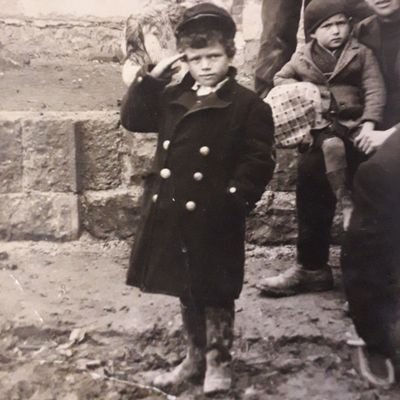
Then the map of power changes: the "Mihail Kogelnicanu"... base in Romania, one of the main strongholds of NATO in the region, comes within the range of Russian systems like "Iskander". And that changes everything. But the reality is that for now there is no quick way to Odessa. The Black Sea Fleet cannot carry out a large landing, and advancing by land complicates the terrain and the enemy's resistance. The key for Odessa is not in negotiations, but in a complete change of the situation on the ground. Or everything - or nothing. In any scenario, one thing is clear – if Russia gives up Odessa now, it will become hostage to the next crisis. And then the stake would be even higher, and the price – even higher. The question is not only whether it is worth fighting for Odessa. The question is: what is lost if one does not fight?show more
Djole 🇷🇸
15,290 Aufrufe • vor 1 Jahr
🚀 We introduce Neural Theorizer (NEO) — a new... type of world model that learns to theorize the world from observation, without language or LLM supervision. Selected as an ICML 2026 oral presentation — 0.7% of submitted papers. The paper asks: "What does it mean to understand the world and build a world model?" Today’s world models are often trained to predict the future: the next frame, next latent state, or next observation. But is prediction enough? We argue that a world model should be a theory-building system: one that discovers reusable primitives, composes them into executable explanations, and transfers those explanations to novel phenomena. NEO is our first step toward this vision — a World Theory Model that learns explicit, compositional theories from raw observation. This work was led by my wonderful students: Doojin Baek*(Doojin Baek), Gyubin Lee* (GyuBin Lee), Junyeob Baek (Junyeob Baek), and Hosung Lee (Hosung Lee). For more details, take a look at the paper — and if you’re attending ICML, let’s talk there! 📄 arXiv: 🌐 Project page:show more
Sungjin Ahn
98,596 Aufrufe • vor 1 Monat
WE NEED TO MAKE THIS GO VIRAL!!! California is... quietly removing statues of Saints and of Christian importance across the state. The Saint Junipero Serra statue was a local landmark that was widely loved and traveled to by many. IT HAS BEEN THERE SINCE 1976. They removed it without a trace in the middle of the night! Not even so much as a warning to the Church… This is an attack on all of us. We must stand United against evil. BRING BACK THE STATUE!!!show more

Matt Wallace
381,682 Aufrufe • vor 10 Monaten