Responsive magnetic link effect using CSS anchor positioning 🧲... nav li:nth-of-type(2) { anchor-name: --i2; } nav:has(li:nth-of-type(2) a:hover) { --a: --i2; } ul::before { /* indicator */ left: anchor(var(--a) left); width: anchor-size(var(--a) width); }show more

jhey ʕ•ᴥ•ʔ
396,709 views • 2 years ago
💡 CSS Tip! Two circles, one arrow, and CSS... magic. 🪄 A cool demo packed with modern features (anchor positioning, attr(), container queries, shape(), and more!) 🤩 The shape and position of the arrow are fully controlled using CSS.show more

CSS by T. Afif
82,668 views • 8 months ago
Pretty amazing that we can now implement swipeable Tabs... with native CSS. Updating the React Aria demo I made a few years ago to use native scroll snapping, scroll timeline, and anchor positioning instead of Framer Motion. Feels smooooooth! 🎉show more

Devon Govett
83,922 views • 11 months ago
Seems like a good opportunity to share a trick... I used on the React Aria website to make headings scale to fit the viewport on mobile, even with SSR. I used fontkit, a library I wrote 10 years ago to parse fonts and layout glyphs, to measure the width of the heading at build time in the "em" unit. width = font.layout('DateRangePicker').advanceWidth / font.unitsPerEm This is a size independent measurement using the font's internal metrics. When multiplied by any font size, you get the pixel width of the text. To calculate the font size, set this as a CSS variable and divide the target width (100vw minus padding). Clamp to make sure it doesn't get too big or small. font-size: clamp(35px, (100vw - 32px) / var(--text-width), 55px) And tada! You have perfectly scaling text no matter the viewport size. 🎉show more
Devon Govett
48,276 views • 5 months ago
CNN anchor Kasie Hunt celebrated the attack on Sen.... Rand Paul which left him with 6 broken ribs and said it was “one of my favorite stories.” Now she’s crying because Trump spokesperson @kleavittnh shared Jake Tapper’s own words and Kasie thinks this is “an attack” Wild that Kasie still even has a job after those disgraceful remarks about Senator Rand Paul.show more

Libs of TikTok
3,116,154 views • 2 years ago
Never do this to your PS5! Look at the... practically indestructible HDMI port from a 20-year-old Console 🤯 Where is the root of the problem? The technology gap: Seventh generation (Older consoles like the PS3): HDMI sockets were mounted using Through-Hole Technology (THT). Pins and mechanical anchor tabs went straight through the entire mainboard and were soldered from the bottom. This created a rugged, armor-plated structure capable of withstanding massive physical forces. Seventh generation (Older consoles like the PS3): HDMI sockets were mounted using Through-Hole Technology (THT). Pins and mechanical anchor tabs went straight through the entire mainboard and were soldered from the bottom. This created a rugged, armor-plated structure capable of withstanding massive physical forces. The test of time: The 2 year old console shown in the video has hundreds (if not over 700) days of real operating time under its belt, took daily abuse in homes for years, and had cables plugged in and out hundreds of times yet the port is still rock-solid and transmits video without a single glitch. #ps5 #ps5pro #consolerepair #electronics #gaming #playstation #retrogaming #ps3 #hdmi #testshow more

modyfikatorcasper
70,564 views • 14 days ago
Roberto Clemente at the age of 37 with a... Massive Outfield Throw to Home Plate to prevent the runner from scoring during game 6 of the 1971 World Series It’s telling that with 2 outs, the runner on 1st, Mark Belanger doesn’t even think about scoring on a double to the right field corner. Belanger, who had good speed, was a smart enough base runner to just drop anchor at third base rather than challenge Clemente’s arm. Watching the throw, he obviously made the right decision.show more

BaseballHistoryNut
121,803 views • 5 months ago
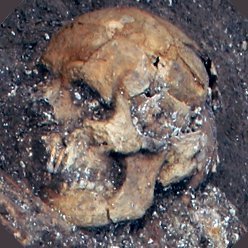
Facial reconstruction of a 5,000-year-old Yamnaya man The individual... was buried beneath the central mound of a kurgan on the left bank of the Sok River, Samara. The excavation was conducted in 1992 under the direction of P. F. Kuznetsov and A. A. Khokhlov. The man was approximately 40–50 years old at the time of death. The burial consisted of a skeleton placed in a contracted position on the back, with the skull oriented north-north-east. The hands were positioned over the lumbar-pelvic region. The entire skeleton was heavily covered with ochre. No grave goods were present. Morphologically, the individual represents a highly expressive cranial type of the Yamnaya population, vividly exemplifying the most stereotypical features of Yamnaya morphology. The man had sustained a broken nose. Fractures of the nasal bones are the most common traumatic injury observed among Yamnaya populations, affecting approximately one in four adult males; such injuries are also documented among women. These traumas are not interpreted as evidence of warfare, but rather of close-quarters interpersonal violence. This pattern is consistently observed across all regional Yamnaya groups - whether from the Volga region, the Donets basin, the Fore-Caucasus, or Kalmykia - indicating a widespread and characteristic social phenomenon within the culture. He had a very large skull, with a massive cranial length of 208 mm, very large cranial width of 152 mm, very large cheekbone width of 145 mm, and large bigonial width of 110 mm.show more
Ancestral Whispers
27,249 views • 7 months ago
In 2026 there are 3 types of people left... on Polymarket. I have been all 3 and only one of them stopped losing money. Type 1: programmers. They write bots, make $11K to $120K a month. They are 2% of the platform. I tried to become one of them. Lasted two weeks and one broken script. Type 2: people who found type 1 and copy their trades. No code, no servers, no sleepless nights. They are 5%. Type 3: everyone else. Trading by hand, trusting their gut, and steadily handing money to the first two types. They are 93%. I sat here for 4 months and lost $1,800. The most frustrating part is that all the information is right there. The blockchain shows every trade from every wallet. I stared at it for 4 months and kept trading on my own. To become type 1 you need months of coding. To become type 2 you need to stop believing you are special. The team at PMX built a tool that copies the best wallets automatically: I did not get smarter. I just stopped being type 3.show more

Blaze
22,760 views • 6 months ago
Ramu Kaka wasn’t just a name, it was Bollywood’s... quiet way of reducing Bhagavan Rama to a dhoti-clad servant. 😡 There were several movies, Khoon Bhari Maang, Amar Deep, Sholay, Deewar, Patanga and many more, that featured the same character: Ramu Kaka. An elderly, dhoti-clad family servant. Loyal. Often the emotional anchor of the household. Always named Ramu. Why this name? Why repeatedly link the most revered name in our civilization with a servile, stereotypical role? It didn’t stop at names. Bollywood repeatedly demeaned our culture, our rituals, and our deities. In this scene 👇🏽, Rajesh Khanna arrives with two large bottles of liquor on Diwali. He casually asks a woman to hold them, but stops his Muslim driver from doing so, saying alcohol is haram in Islam. A small scene, but it reflects how even popular films didn't mind crossing lines with Hinduism but preserved the boundaries of Islam. This was the pill Bollywood gave us in the name of Secularism.show more

Āyudhika
36,225 views • 1 month ago
#uwcnf #BuckBasinFire on the Heber-Kamas Ranger District grew to... approximately 230 acres yesterday. Fire is burning in heavy dead standing fuels in mixed conifer and aspen stands. Resources made some good progess on building an initial anchor point to build off of for future shifts. Air support helped with bucket drops until weather picked up and were unable to continue in the afternoon. The fire is located in Buck Basin 4 to 5 miles northwest of the Currant Creek Reservoir. Red Creek Mountain Road FS080 and Low Pass Road FS106 are closed to the public at this time. Resources on scene: two engines, two Type 2 crews, two Type 1 helicopters, scoopers, water tender and a grader will be assisting the operations today. The cause of the fire has been determined as lightning. Crews were in the area today working on the northern section of the fire. At this time, there are no reported threats to structures or communities. Smoke is visible from Highway 35 and 40 and surrounding area please do not report.show more

Utah Fire Info
13,502 views • 1 month ago
Facial reconstruction of a 5,500-year-old man from Middle Irtysh,... Kazakhstan Based on the era and geographical proximity, it is likely that this individual belonged to the ANE-rich West Siberian Hunter-Gatherer/WSHG genetic cluster. The skull was described by (Konstantin Solodovnikov, Anatoli Bagashev, Tur Svetlana, A.V Gromov, 2019) as follows: The facial portion of the skull with the mandible of an adult individual comes from the destroyed Neolithic burial ground of Zhelezinka. The originally incomplete cranium was studied by V. V. Ginzburg, who identified it as belonging to a mature-aged woman. It was noted to have a moderately sloping forehead, a supraorbital region developed above average, and markedly protruding brow ridges. The face is low, of medium width, moderately projecting in the horizontal plane, with deep canine fossae, moderately high orbits, and a strongly projecting, medium-wide nose. Despite some flattening of the face, the anthropological type of the skull was defined by the author as Proto-Europoid, possibly close to the Afanasievo population type of Southern Siberia. One of the authors has previously noted that the Zhelezinka skull, judging by the structure of the preserved facial part, is characterized by a narrow forehead, a wide, medium-high, moderately flattened face, rather high orbits and nasal region, a high nasal bridge, and a moderately large angle of projection of the nasal bones. By these traits, it is more similar, for example, to a male skull from a Neolithic burial at the Shiderty-3 site in Pavlodar Oblast (according to L. T. Yablonsky), than to craniological series of Proto-Europoid populations of the Bronze Age, which are characterized by sharply profiled faces in the horizontal plane, low orbits, and a broad forehead. At the present level of accumulation and interpretation of materials, the Zhelezinka skull is extremely difficult to consider as an ancestral form for the Andronovo Proto-Europoid morphological variant; however, its similarity to another pre-Bronze Age skull from the same region deserves separate consideration. For this reason, the incomplete cranium from Zhelezinka was re-examined at the Peter the Great Museum of Anthropology and Ethnography (Kunstkamera) of the Russian Academy of Sciences using a standard program, with the addition of the angle of horizontal curvature of the forehead. Based on the scale of sexual dimorphism of ancient populations of Northern Eurasia, we determined the sex of the individual as male. To the characteristics given above, it can be added that, according to male size categories, the frontal bone width is small both at the frontotemporal points and in the coronal region. Visually, the frontal bone is rather sloping and weakly convex in the sagittal plane and weakly profiled horizontally. Visual assessment indicates a tendency toward mesognathism of the facial region; its height is small, bordering on medium values for upper and total facial height. The zygomatic diameter cannot be measured due to broken zygomatic arches, but by approximate assessment of the projection size, its value appears to have been close to the boundary between medium and large categories. The mid-facial width falls within the medium size category, while the upper facial and biorbital widths are large. The width of the alveolar arch is small, and that of the palate is medium. The orbits are high, at the boundary with the medium size category in absolute terms. Given the very large orbital width measured from maxillofrontale, this yields a chamaeconch index, whereas measured from dacrion the orbits are mesoconch. Nasal height and width are at the boundary between small and medium values; the inferior margin of the piriform aperture is in the form of pre-nasal fossae; the anterior nasal spine is moderately developed. The angle of nasal projection is medium (closer to large values), with large simotic and dacrial indices. At the same time, the dimensions of the nasal bridge are large, while the nasal bones at their point of greatest narrowing are of medium size. The rami of the mandible are extremely wide, of medium height, and vertically oriented. The mandible has medium values for bicondylar length, body height, and thickness; the bigonial width lies at the boundary between small and medium values. The chin is broad, with a high symphysis, and weakly projecting relative to the basal plane. The generalized index of facial skeletal flatness of the Zhelezinka skull is 38.2; accordingly, the proportion of the Mongolid component, calculated solely on the basis of this index, amounts to 30.4%.show more
Ancestral Whispers
17,478 views • 7 months ago
Facial reconstruction of a 7,000-year-old man from Eridu, Iraq... He lived during the Ubaid period, a culture that flourished in Mesopotamia before the rise of the Sumerian cities. The Ubaid people are known for establishing some of the earliest settled communities in southern Iraq, laying the foundations for later urban civilization. The Ubaid culture emerged in southern Mesopotamia through a combination of local development and external influences, such as from Susiana, with additional contributions from northern traditions such as the Samarra culture (particularly irrigation), as well as contact with groups associated with the Arabian bifacial tradition. A Babylonian creation text says of Eridu: "All the lands were sea, then Eridu was made." The history of Eridu goes back to the Ubaid period. Its inhabitants lived largely by fishing. Their harbour was located in a marshy, semi-aquatic environment. During the Uruk period (which follows the Ubaid and represents a key stage in the development of early Mesopotamian urban civilization, preceding the fully historical Sumerian city-state period), there is still ample evidence of Eridu’s importance. However, from the beginning of the historical period, it no longer appears to have been a populous settlement. From the Third Dynasty of Ur onward, Eridu was not so much a city as a complex of religious buildings, raised high above the surrounding plain on an artificial platform. The Sumerians and Babylonians worshipped Ea (Enki) here, the god of wisdom and patron of craftsmen and artisans. He was regarded as the father of Marduk and a principal deity associated with the primordial waters. His name was also reflected in that of the city Dur-Ea and in personal names such as Ea-gamil. The earliest written source mentioning Eridu dates to the time of Ur-Nanshe, founder of the Lagash dynasty (c. 2500 BC). By the time of the Third Dynasty of Ur, Eridu had already undergone desiccation and was largely uninhabited. Ur-Nammu, the founder of the dynasty, cut a new channel to the Euphrates to bring water back to the area in an effort to repopulate it, and he also rebuilt Enki’s temple. At the end of the 2nd millennium BC, Nebuchadnezzar I referred to himself as “Governor of Eridu.” By the beginning of the 1st millennium BC, Eridu functioned more as a sacred site than as a major inhabited city. The Assyrian king Sargon II regarded the occupation of Eridu in 710 BC as a significant achievement. The man, who was about 40 years old, was described as belonging to the South Iraqi type, which still inhabits the region today. His skull was artificially deformed during his lifetime using circular bandages. He had a medium-large cranial length of 184 mm, a small cranial width of 123 mm, a medium-large cheekbone width of 134 mm, and a large condylar width (upper jaw width) of 132 mm. (Istvan Kiszely, 1978)show more
Ancestral Whispers
85,884 views • 4 months ago
The governing bodies that run golf have 1. Changed... the drop from shoulder to knee height 2. Banned anchor putters based on no research on it’s effectiveness on performance 3. Played Open championships at venues with questionable rules towards women. 4. Banned a shape of groove based on a study that showed what they thought was happening was wrong, but they banned them anyway 5. They have let the equipment get to a stage they are now saying they don’t like. (Under their watch) 6. Promoted diversity on golf club committees while not practicing this good idea at some of its venues used for their flagship event Anyway who cares. Make sure you socks are the correct length out there golfers.show more

Mark Crossfield
287,753 views • 3 months ago
An airplane radial engine is a powerful internal combustion... engine where cylinders are arranged in a circle around a central crankshaft, resembling the spokes of a wheel. Renowned for their exceptional power-to-weight ratio and reliable air cooling, they were the dominant powerhouses of early aviation and World War II. An aeroplane radial engine operates by converting fuel into mechanical rotation through a unique circular piston arrangement. The cylinders are positioned in a circle around a central crankcase, resembling the spokes of a wheel. Inside the hub, only one "master" connecting rod attaches directly to the crankshaft, while all other rods anchor to the base of that master rod. As fuel ignites inside the cylinders, the pistons fire in a specific "skip-one" sequence-such as 1, 3, 5, 7, 9, 2, 4, 6, 8-to distribute power evenly around the hub. This sequential pushing motion turns the master rod assembly, which rotates the crankshaft and spins the aircraft propeller. Finally, because the cylinders face forward into the oncoming wind, the engine cools itself naturally using direct airflow instead of heavy liquid radiators.show more

Mechanical Knowledge
26,030 views • 2 months ago
Seedance 2.0 - Manga to Video Test 2: Tested... a magical girl transformation sequence using 5, 10, and 15s length to see what it would remove or keep. Generating a manga as base might actually be a better way to control transformation output in anime than creating a grid. 🧐 Prompt: Animate this manga page of a girl transforming into a magical girl. Full color cinematic Japanese anime. Start at the first panel at the top right of the page. She beings to glow blue brightly as her body become a blue glowing silhouette. Camera orbits the girl rapidly, pushing in and out of Extreme close ups to highlight the formation of her shoes, gloves, bow, and tiara before her eyes opening as she dramatically strike the pose in the final panel. Magical light burst effect. $100million budget. Additional sakuga pages. Masterpiece. ----- Yes I know there is a typo that says "beings," instead of begins. The credits were spent and it didn't seem to effect the output so I left it on all 3 to maintain consistency. 😅show more

Jason W - AI
65,326 views • 6 months ago
Facial reconstruction of a 4,700-year-old Ural Yamnaya/Tamarutkul woman from... the Orenburg region The Cis-Ural variant of the Yamnaya culture, also known as the Ilek group, is distinguished by a high proportion of right-side burials and abundant copper tools (Smirnov, 1965; Morgunova & Kravtsov, 1994; Kuznetsov, 2010). The Tamarutkul type was subsequently identified within this group (Bogdanov, 2004). Its origins remain debated: Morgunova (2011; 2014a) considered it a local development rooted in the Volga-Ural Yamnaya and Khvalynsk populations, while others emphasized links with the Poltavka population and a North Caucasian, particularly Novotitorovka, influence (Kuznetsov, 1996a, 2010). Bogdanov (2004) instead proposed influence in the opposite direction. Tamarutkul skulls differed from the contemporaneous Early Poltavka populations, being predominantly mesomorphic, dolichocranial, and strongly profiled, broadly corresponding to the Southeuropid type (Khokhlov, 2017). Similar traits in the Cis-Urals and northwestern Black Sea region have been hypothesized to reflect the spread of related Novotitorovka/"Wagon Burial" groups from the North Caucasus (Khokhlov, 2000, 2013a; Khokhlov et al., 2024). The Novotitorovka culture emerged within the broader Yamnaya cultural sphere, it morphologically resembles the preceding Maykop-Novosvobodnaya culture (Shevchenko, 1983, p. 84; Gei, 2000), likely due to the assimilation of the aforementioned cultural group. The reconstructed individual was buried in a mound measuring 17 m in diameter and 0.58 m in height. One primary Yamnaya burial was excavated beneath the mound. Burial No. 1. A rectangular grave pit (1.9 × 1.2 m) was identified in the southern half of the mound. Its vertical walls reached a depth of 172 cm, and the floor was covered with a thin layer of ochre on which two skeletons lay. Skeleton No. 1 lay crouched on its right side, with the head oriented eastward. The right hand rested beneath the lower jaw, while the left hand rested on the right elbow. All bones were stained with ochre. Skeleton No. 2 (the reconstructed individual) was undisturbed, but all limb bones except the right tibia were absent. Its skull touched the heel bones of Skeleton No. 1 and showed no ochre staining. Near the thigh of Skeleton No. 1 was an oxidized copper object, while a perforated, worn bone object lay near the skull. A ceramic vessel with a thickened base, wide mouth, and outward-flaring rim was found between the pelvises. The surface of the vessel was partially covered with scratches. Ocher powder was preserved inside. The texture of the ceramic is dense, without visible impurities. A copper socketed axe was found in the northwestern corner of the grave. (Morgunova & Kravtsov, 1994) She had a cranial length, cranial width, bizygomatic width, bigonial width, naso-malar angle, and zygo-maxillary angle of 190 mm, 140 mm, 119 mm, 89 mm, 131°, and 124°, respectively.show more
Ancestral Whispers
142,669 views • 13 days ago
Wow! Send A File By Just The Camera! A... vibe coder used AI to build a file transfer system that sends data between two phones using only a screen and a camera. One phone displays a new type of animated QR codes while the other scans them to rebuild the file, with no Wi-Fi, Bluetooth, or cables needed. It is fully optical and local. The system uses fountain codes that create each QR frame as a random mix of file data. This keeps transfers working even if some frames are missed, reaching speeds of about 129 KB/s for a 2 MB image. The entire project was built in one night and released as open source. The idea came from a music project where the developer wanted to share MP3 files without streaming or using the same network. Animated QR codes became the solution, showing a creative new way to transfer files with everyday phone hardware. GitHub link:show more

Brian Roemmele
16,658 views • 29 days ago