Mechanical Knowledge's banner
Mechanical Knowledge's profile picture

Mechanical Knowledge

@mechanical_4u147,663 subscribers

⚙️⚙️⚙️ Mechanical breakdowns | Daily engineering wisdom | Learn how machines really work every day .⚙️⚙️⚙️

Shorts

This is how dangerous a CT scan machine looks without its outer casing

This is how dangerous a CT scan machine looks without its outer casing

7,928,513 views

Detail of Cavitation in Between two gears

Detail of Cavitation in Between two gears

1,234,398 views

Millions of iron ore pellets are loaded into freighters using pure gravity, a century old system that can fill an entire ship fast

Millions of iron ore pellets are loaded into freighters using pure gravity, a century old system that can fill an entire ship fast

4,440,907 views

This is the reason why no other tire except this racing tire is used on the track

This is the reason why no other tire except this racing tire is used on the track

4,643,033 views

Industrial Submerged Arc Furnace (SAF) maintenance inside a high-temperature metallurgical vessel. Operators wearing specialized aluminized heat-reflective suits perform critical cleaning and material adjustment around massive electrodes. This hazardous operation is essential for maintaining electrical conductivity, furnace stability, and continuous metal smelting performance.

Industrial Submerged Arc Furnace (SAF) maintenance inside a high-temperature metallurgical vessel. Operators wearing specialized aluminized heat-reflective suits perform critical cleaning and material adjustment around massive electrodes. This hazardous operation is essential for maintaining electrical conductivity, furnace stability, and continuous metal smelting performance.

20,387 views

Nature built a flying machine more complex than expected

Nature built a flying machine more complex than expected

199,589 views

This video shows an old mechanical odometer being spun with a drill. As soon as it reaches exactly 1,000,000 miles, the meter suddenly jumps and locks. Many older odometers were never designed to go past six digits, so hitting one million miles causes the mechanism to jam or reset unexpectedly.

This video shows an old mechanical odometer being spun with a drill. As soon as it reaches exactly 1,000,000 miles, the meter suddenly jumps and locks. Many older odometers were never designed to go past six digits, so hitting one million miles causes the mechanism to jam or reset unexpectedly.

3,558,168 views

This is called negative space effect. Black paint makes chicken wire near invisible. Black absorbs all light, making the wire non-reflective. When painted, it blends into shadows and becomes nearly undetectable. The dark gaps between the wire start to dominate visually. Your eyes ignore the thin black lines. The negative space takes over. The wire is still there but your brain stops registering it. One simple principle. Perfect optical illusion..

This is called negative space effect. Black paint makes chicken wire near invisible. Black absorbs all light, making the wire non-reflective. When painted, it blends into shadows and becomes nearly undetectable. The dark gaps between the wire start to dominate visually. Your eyes ignore the thin black lines. The negative space takes over. The wire is still there but your brain stops registering it. One simple principle. Perfect optical illusion..

3,082,745 views

Mechanic tricks and tips

Mechanic tricks and tips

8,119,503 views

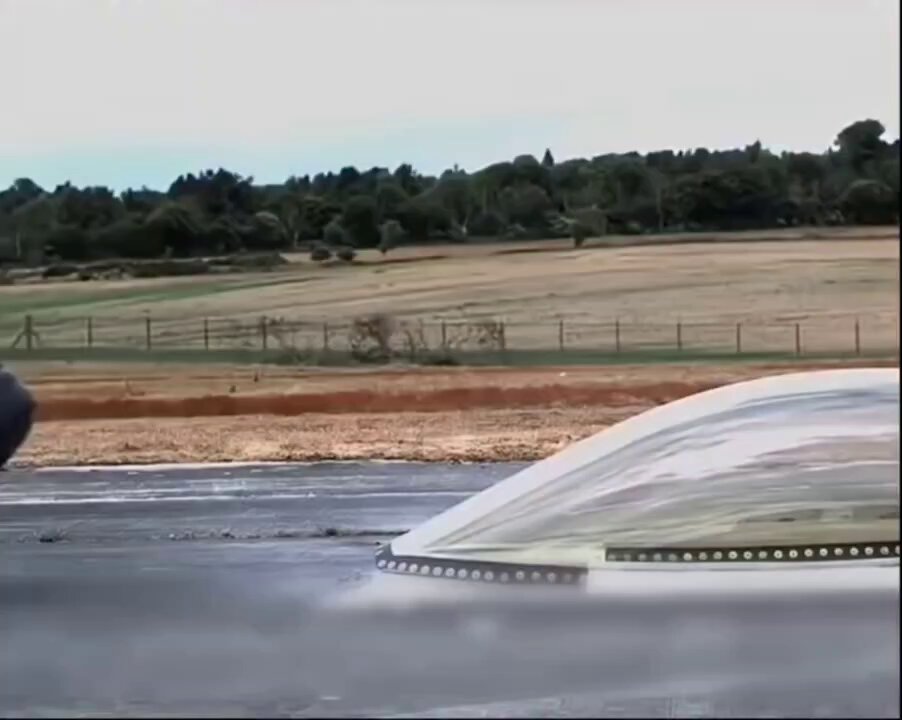
critical bird strike safety test on a Lockheed Martin F-35 Lightning II cockpit canopy. Test Purpose: Engineers simulate a bird strike by firing a projectile, often a chicken, from a pneumatic cannon nicknamed the "chicken gun". Speed: The projectile is launched at speeds exceeding 500 km/h to replicate actual high-speed flight conditions. Objective: This test ensures the canopy can absorb immense kinetic energy without shattering, protecting the pilot. Materials: The canopy is constructed from layered polycarbonate and reinforced composites designed for extreme resilience.

critical bird strike safety test on a Lockheed Martin F-35 Lightning II cockpit canopy. Test Purpose: Engineers simulate a bird strike by firing a projectile, often a chicken, from a pneumatic cannon nicknamed the "chicken gun". Speed: The projectile is launched at speeds exceeding 500 km/h to replicate actual high-speed flight conditions. Objective: This test ensures the canopy can absorb immense kinetic energy without shattering, protecting the pilot. Materials: The canopy is constructed from layered polycarbonate and reinforced composites designed for extreme resilience.

1,086,743 views

This is cavitation inside a piston diaphragm pump. Most engineers spend their entire careers hearing this destructive phenomenon. Almost none ever get to see it with their own eyes. When pressure drops below a critical threshold, liquid instantly flashes into vapor, creating thousands of microscopic bubbles throughout the system. It happens in milliseconds, invisible to the naked eye in standard metal pumps. But when pressure rises again, those bubbles don't just disappear quietly. They collapse violently, sending shockwaves rippling through the metal components. The result is catastrophic. Valves get destroyed. Seals get shredded. Pump chambers get hollowed out from the inside, one microscopic implosion at a time. Cavitation is one of the most destructive forces in industrial fluid systems, responsible for equipment failures that cost thousands of dollars per incident. Engineers have studied it for decades through sensors, pressure readings, and the telltale sounds it makes. But they've never been able to watch it happen in real time. Until now. The clear plexiglass head on this LEWA pump changes everything. For the first time, pump engineers can observe cavitation as it occurs, watching the bubble formation and violent collapse that destroys their equipment. It's like finally seeing the invisible enemy that's been wreaking havoc on industrial systems. This is what happens when engineering innovation meets visualization technology. Sometimes the most powerful breakthroughs come from simply making the invisible visible.

This is cavitation inside a piston diaphragm pump. Most engineers spend their entire careers hearing this destructive phenomenon. Almost none ever get to see it with their own eyes. When pressure drops below a critical threshold, liquid instantly flashes into vapor, creating thousands of microscopic bubbles throughout the system. It happens in milliseconds, invisible to the naked eye in standard metal pumps. But when pressure rises again, those bubbles don't just disappear quietly. They collapse violently, sending shockwaves rippling through the metal components. The result is catastrophic. Valves get destroyed. Seals get shredded. Pump chambers get hollowed out from the inside, one microscopic implosion at a time. Cavitation is one of the most destructive forces in industrial fluid systems, responsible for equipment failures that cost thousands of dollars per incident. Engineers have studied it for decades through sensors, pressure readings, and the telltale sounds it makes. But they've never been able to watch it happen in real time. Until now. The clear plexiglass head on this LEWA pump changes everything. For the first time, pump engineers can observe cavitation as it occurs, watching the bubble formation and violent collapse that destroys their equipment. It's like finally seeing the invisible enemy that's been wreaking havoc on industrial systems. This is what happens when engineering innovation meets visualization technology. Sometimes the most powerful breakthroughs come from simply making the invisible visible.

523,057 views

How to read a windsock

How to read a windsock

1,308,895 views

Different radii can cover the same distance because distance depends on the path traveled, not just the radius itself. When objects move along curves or arcs with different radii, a smaller radius can be compensated by a larger angle, while a larger radius can use a smaller angle. In both cases, the arc length can end up equal-even though the curves look very different.

Different radii can cover the same distance because distance depends on the path traveled, not just the radius itself. When objects move along curves or arcs with different radii, a smaller radius can be compensated by a larger angle, while a larger radius can use a smaller angle. In both cases, the arc length can end up equal-even though the curves look very different.

1,504,164 views

That moment you're walking through a factory but suddenly realize you're actually inside a heavy techno rave!

That moment you're walking through a factory but suddenly realize you're actually inside a heavy techno rave!

295,821 views

Proof that shock absorbers are the real hidden heroes.

Proof that shock absorbers are the real hidden heroes.

668,596 views

Watch a radioactive Uranium isotope firing alpha, beta, and gamma rays inside a mesmerizing Cloud Chamber

Watch a radioactive Uranium isotope firing alpha, beta, and gamma rays inside a mesmerizing Cloud Chamber

458,218 views

where durability begins

where durability begins

137,507 views

A Mercury V8 outboard coming to life before hitting the water. These naturally aspirated marine engines are known for delivering strong acceleration, high reliability, and a deep exhaust note that's become a favorite among performance boat owners.

A Mercury V8 outboard coming to life before hitting the water. These naturally aspirated marine engines are known for delivering strong acceleration, high reliability, and a deep exhaust note that's become a favorite among performance boat owners.

152,660 views

Before modern indexed shifting became standard, some bicycles used fully mechanical automatic derailleur systems that changed gears without any rider input. Designs like the Suntour Auto Shift relied on centrifugal force generated by rear wheel rotation to control when and how the drivetrain shifted. As speed increased, internal rotating weights inside the mechanism moved outward, activating linkages that adjusted cable tension. This movement guided the derailleur across the cassette, allowing the bike to shift into higher gears automatically, then return to lower gears as speed dropped. Although innovative, these systems were sensitive to setup and riding conditions, which limited their long term adoption. Advances in indexed shifters and rider demand for precise manual control eventually replaced automatic mechanical solutions, turning designs like this into a rare but fascinating chapter in cycling engineering history. Video Credit: rbcbikes

Before modern indexed shifting became standard, some bicycles used fully mechanical automatic derailleur systems that changed gears without any rider input. Designs like the Suntour Auto Shift relied on centrifugal force generated by rear wheel rotation to control when and how the drivetrain shifted. As speed increased, internal rotating weights inside the mechanism moved outward, activating linkages that adjusted cable tension. This movement guided the derailleur across the cassette, allowing the bike to shift into higher gears automatically, then return to lower gears as speed dropped. Although innovative, these systems were sensitive to setup and riding conditions, which limited their long term adoption. Advances in indexed shifters and rider demand for precise manual control eventually replaced automatic mechanical solutions, turning designs like this into a rare but fascinating chapter in cycling engineering history. Video Credit: rbcbikes

533,526 views

This is how airplane engines look like in thermal camera when they are at full power

This is how airplane engines look like in thermal camera when they are at full power

448,137 views

Videos

mechanical_4u's profile picture

Another one for the boys

Mechanical Knowledge

2,726,542 views • 6 months ago

mechanical_4u's profile picture

Differential Repair

Mechanical Knowledge

5,935,272 views • 1 year ago

mechanical_4u's profile picture

What is made heare?

Mechanical Knowledge

264,337 views • 1 month ago