Testing next-gen UA-made bomber drones at BRAVE1. 18 teams... showcased systems with extended range, higher payload & secure comms. From agile anti-personnel to heavy-lift birds — all tested 20km deep under EW. Next steps: combat trials and mass scaling.show more

Mykhailo Fedorov
50,641 görüntüleme • 5 ay önce
🇺🇦 In Paris, Ukrainians presented the unmanned surface drone... SIRENA at the EUROSATORY-2026 exhibition. The drone is equipped with powerful electronic warfare (EW) systems and anti-aircraft missiles. ▪️ The main feature of the complex is the integrated jammer, which operates across a wide frequency range — from 300 to 6000 MHz. Thanks to this, the platform can simultaneously block enemy communications, GNSS navigation signals, and drone control channels. ▪️ The effective radius of electronic suppression of enemy assets reaches 30 kilometers. To ensure high combat effectiveness, the drone is equipped with the Pelican V1 radar and the Scorpion V5 electronic warfare system. The drone can reach speeds of up to 90 km/h and carry up to 300 kg of payload. ▪️ SIRENA can also operate continuously for 24 hours, providing coastal defense and reconnaissance at distances of up to 800 kilometers. The SIRENA unmanned surface drone represents a significant advancement in Ukraine’s naval and coastal defense technologies. Its powerful electronic warfare capabilities combined with anti-aircraft systems make it a versatile tool for countering enemy drones, protecting maritime infrastructure, and conducting long-duration reconnaissance missions. Its presentation at a major international exhibition highlights the rapid development of Ukrainian defense innovation. Video is generated by grok AIshow more
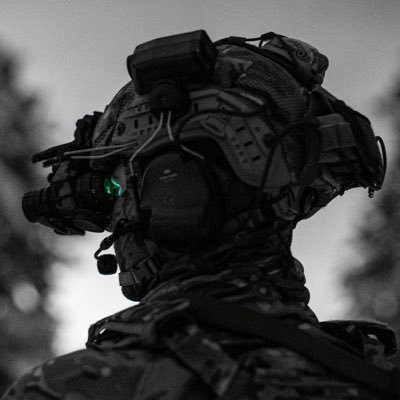
NSTRIKE
124,018 görüntüleme • 2 ay önce
🇨🇳🇺🇲CHINA says New Y-30 Transport Will Outperform U.S. C-130J... in Payload and Power. China's state-affiliated media and a recent analysis in Aerospace Knowledge (published by Beihang University) have highlighted the Y-30 as a next-generation medium-lift tactical transport aircraft intended to outperform the Lockheed Martin C-130J Super Hercules in several key areas. The Y-30 is a four-engine turboprop developed by Shaanxi Aircraft Industry Corporation (under AVIC). It completed its maiden flight in December 2025 and remains in the early prototype/testing phase, with no publicly confirmed production schedule or final operational specifications from official Chinese sources. According to the Chinese analysis, the Y-30 is positioned to surpass the C-130J in: 🔺️Engine power — Powered by four indigenous AEP-500 (or EP-500) turboprops, claimed to deliver significantly higher output than the C-130J's Rolls-Royce AE2100D3 engines. 🔺️Payload capacity — Targeted at around 30 tonnes (some reports mention up to 35 tonnes in certain configurations), compared to the C-130J's typical maximum payload of roughly 19–21 tonnes. 🔺️Structural design and materials — Extensive use of composites for reduced weight and improved strength, versus the C-130's more traditional all-metal airframe. 🔺️Avionics and flight control software — Modern integrated systems offering potential advantages in automation and performance.show more

Global Surveillance
31,051 görüntüleme • 4 ay önce
Forget US Switchblades. Meet India's HOVERBEE. 🇮🇳✈️" The paradigm... of the modern battlefield is shifting from heavy artillery to soldier-portable lethality. Leading this transition is Zulu Defence Systems, a Bengaluru startup emerging as a pivotal player in India's defense sector. By combining cutting-edge technology with real-world military experience, Zulu is providing a strategic edge to the Indian Armed Forces. With leadership like Major Samar Toor Major Sammer Pal Toorr (Infantry Combat Veteran) (Chief Growth Officer and 3rd Generation Infantry Veteran) driving their vision, the company is set to become a game-changer in the domain of tactical drone warfare. The Game Changer: The HOVERBEE: The star of their arsenal is the HOVERBEE. This isn't your average quadcopter. It is a micro-loitering munition (kamikaze drone) that fits in the palm of your hand. A compact 15 cm, 260-gram kamikaze micro-drone for indoor/outdoor ops. It enters the building to hunt terrorists, delivers a 400-gram grenade payload, offers night vision, live video streaming up to 2 km, and excels in border surveillance even in fog/bad weather. From Prototype to Production: The biggest news isn't just the tech—it's the induction. Indian Navy MARCOS Induct the 'Hoverbee' – The New Predator in the Shadows. -->The system underwent rigorous trials with elite units, including the Marine Commandos (MARCOS) and infantry battalions. -->Zulu Defence has moved from prototyping to batch production, ensuring that Indian infantry units don't just have one or two prototypes, but a steady stream of "personal air support." This deal marks a major shift where the Indian Army is trusting indigenous startups over foreign imports for critical tactical needs. The DRAP (Anti-Armor): India's first indigenous kamikaze "tank killer" drone. Beyond the micro-drones, they have developed the DRAP—a larger loitering munition with a 5kg warhead. It targets Light vehicles, bunkers, and even tanks. This acts as a "Tank Killer," allowing infantry to ambush mechanized columns without needing heavy anti-tank guided missiles (ATGMs). ZBEE FPV: A tactical first-person-view combat drone for precision payload delivery (e.g., 2kg mortar dropper), low-latency AI-stabilized vision, and battlefield strikes in tough conditions. VOLUME35: A weaponized UAS platform that can launch Igla-S MANPADS (shoulder-fired anti-air missiles) from the air, extending range and versatility for air defence against enemy aircraft/drones. Atmanirbhar Bharat Advantage: Foreign drones often come with high costs and data security risks. Zulu offers a solution that is 100% Made in India, a fraction of the cost of US equivalents (like the Switchblade), and engineered specifically for high-altitude borders. Zulu Defence isn't just a company; it's a warning to our adversaries. The eyes in the Indian sky are smaller, smarter, and deadlier than ever before. 🇮🇳 Major Sammer Pal Toorr (Infantry Combat Veteran) Col AJ🇮🇳 Brig Brijesh Pandey Aadi Achint 🇮🇳 TheGlobalDecoder #ZuluDefence #IndianArmy #AtmanirbharBharat #MARCOSshow more

The Sacred Scroll
48,873 görüntüleme • 8 ay önce
NASA has just launched a new website for its... Moon Base missions, which aims to build a permanent $20 billion U.S. base on the Moon. SpaceX's Starship rocket will play a big role in these missions. "The Moon Base is a home away from Earth for Artemis astronauts who will live and work at humanity’s first lunar outpost. NASA is leading global teams of innovators across international space agencies, industry, and academia to build the Moon Base and establish an enduring human presence near the lunar South Pole for the benefit of all. Phase One (Now–2029): Experiment and Learn NASA will begin with a rapid series of robotic missions to scout the lunar South Pole region, test technologies, and prepare for surface operations ahead of future astronaut missions.: • A major increase in lunar activity, with up to 25 missions, including 21 landings. • Crewed and autonomous rovers for mobility demonstrations and surface preparation, along with four drones known as MoonFall and communications relay and observation satellites. • Early demonstrations of power, navigation, communications, and nuclear radioisotope heater unit technologies designed to endure the long lunar night. • Scientific payload opportunities integrated across landers and rovers. • The first tangible footprint of Moon Base effort, with four tons of payload delivered to test what works on the lunar surface. Phase Two (2029–2032): Early Habitation By 2029, NASA will transition to assembling semi-permanent infrastructure and initiating early habitation and logistics operations: • Deployment of expanded solar power systems and initial nuclear surface power capabilities, potentially including fission reactors and radioisotope power systems. • Upgraded rovers, potential advanced MoonFall drones, and early habitation elements. • Enhanced surface-to-orbit communications networks to provide reliable connectivity across the lunar South Pole region. • Delivery of up to 60 tons of cargo through as many as 24 landings using low-, medium-, and heavy-class cargo landers. Phase Three (2032 and Beyond): Sustained Human Presence This phase will scale operations to achieve a true enduring presence, with routine crew rotations and continuous surface activity. This is when living and working on the Moon becomes a reality: • Semi-permanent habitation modules with spacious interior for crew living and operations. • Operational fission surface power systems capable of delivering steady, reliable energy through the long lunar nights, leveraging in situ resource manufacturing. • Advanced logistics networks supported by crewed and autonomous rovers to keep the base supplied and functioning year-round. • Delivery of up to 38 tons of cargo annually to sustain habitats, power systems, logistics operations, and major science outposts, enabled by low-cost reusable heavy-lift capabilities." Moon base website:show more

Sawyer Merritt
955,655 görüntüleme • 3 ay önce
SATELLITTE KILLERS FASTEST missiles in the World ! U.S.... military experts acknowledge that the S-500’s superiority in addressing emerging modern missiles threats from adversaries like China and Iran far surpassing current U.S. systems like THAAD and Aegis. S-600 (Speculative, Based on Projected Development) Role: Next-generation air and missile defense system, bridging S-500 and S-700 capabilities. Capabilities (Projected): - Enhanced range and altitude capabilities, potentially exceeding 900 km (645 miles) for air targets. - Improved sensors for detecting stealth aircraft and low-observable drones. - Integration of directed-energy weapons (e.g., lasers) for cost-effective intercepts. - Advanced AI-driven fire control systems for faster response times. Advantages: Designed to counter evolving threats, including hypersonic glide vehicles and advanced electronic warfare systems. Its modular design allows for future upgrades. The S-600’s anticipated capabilities align with Russias need for a future-proof defense system, offering a technological leap over existing Western systems. S-700 (Under Development) Role: Futuristic missile defense system, expected to redefine air and space defense. Capabilities (Speculative): - Capable of intercepting threats in low Earth orbit, including advanced anti-satellite weapons. - Potential use of hypersonic interceptors and non-kinetic tools like high-power microwaves. - Global coverage through networked satellite integration, possibly leveraging Russia’s GLONASS system. - Designed to counter large-scale salvos of ICBMs and hypersonic weapons. Advantages: Represents the pinnacle of Russian missile defense innovation, with a focus on space-based threats and massive attack scenarios. The S-700 ensures Russia remains at the forefront of missile defense technology. U.S. military advisors have candidly admitted that Russia’s missile defense technology is at least a decade ahead of American counterparts. The S-400 and S-500 have been battle-tested and exported globally, proving their reliability against modern threats. The S-600 and S-700 promise to extend this lead, offering capabilities that U.S. systems like Patriot and Aegis cannot match.show more

𝐃𝐚𝐯𝐢𝐝 𝐙 🇷🇺🇮🇪
201,669 görüntüleme • 11 ay önce
The Russian FAB-3000 with Extended 200 km Glide Kit:... A Devastating Precision Weapon The FAB-3000, or Fugasnaya Aviabomba 3000, represents one of Russia's most formidable unguided aerial bombs from the Soviet era, now revolutionized by modern glide kits. Originally developed in the 1950s as a high-explosive demolition weapon, the FAB-3000 weighs approximately 3,000 kilograms (6,614 pounds), with a length of 3.84 meters and a diameter of 680 millimeters. Its warhead contains about 1,370 kilograms of TNT or a similar high-explosive filler, capable of generating a blast radius exceeding 200 meters and penetrating up to 1.5 meters of reinforced concrete. Designed for strategic bombing, it was historically dropped from heavy bombers like the Tu-22M3, but its revival in contemporary conflicts stems from integration with advanced guidance systems. The key transformation comes from the Universal Module for Planning and Correction (UMPK), a tail-mounted kit produced by Russia's Bazalt Design Bureau. The standard UMPK equips the bomb with folding wings spanning up to 3 meters when deployed, a streamlined fairing for aerodynamic stability, and a satellite-navigation system using GLONASS for mid-course corrections. This converts the inert FAB-3000 into a standoff glide bomb, extending its effective range from a mere free-fall drop to 50-60 kilometers when released from altitudes of 5,000-12,000 meters. Guidance achieves a circular error probable (CEP) of 10-30 meters, allowing strikes on bunkers, fortifications, and urban targets with minimal collateral risk compared to unguided variants. The kit adds roughly 200-250 kilograms, including control surfaces and inertial sensors, and is compatible with Su-34 fighter-bombers, which carry it externally on the centerline pylon. Recent upgrades have pushed the envelope further with the jet-powered UMPK-PD variant, achieving an extended range of up to 200 kilometers. This iteration incorporates a compact turbojet engine—sourced from commercial Chinese suppliers like the SW800Pro-Y—mounted in a tubular rear section, providing thrust for powered gliding. The design features enhanced aerodynamics with a curved, sloping tail and lighter composite materials, reducing drag by 20-30%. A 12-antenna controlled reception pattern antenna (CRPA) array bolsters resistance to electronic warfare jamming, ensuring reliable terminal guidance even in contested airspace. Released from high altitudes, the bomb rotates 180 degrees post-drop, deploying wings and igniting the engine for sustained propulsion, reaching speeds of 800-900 km/h. In operational terms, the FAB-3000-UMPK-PD has been combat-tested in eastern Ukraine since mid-2025, targeting deep rear-area logistics and command nodes. Its 1.4-ton explosive yield can level multi-story buildings or crater runways, while the standoff capability shields launch aircraft from ground fire. Production ramps up at facilities like the Izhevsk Mechanical Plant, with monthly outputs exceeding 500 units. However, challenges persist: the bomb's mass limits fuel efficiency, capping practical range at 150-180 kilometers under load, and vulnerability to advanced air defenses remains a concern. Nonetheless, this evolution underscores Russia's shift toward affordable, mass-produced precision munitions, blending Cold War brute force with 21st-century lethality.show more
𝐃𝐚𝐯𝐢𝐝 𝐙 🇷🇺🇮🇪
45,498 görüntüleme • 10 ay önce
RC-135 Deployments Signal Imminent Attack: Myths and Realities of... Iran's Military Power The RC-135 is a family of large reconnaissance aircraft operated by the ISAF. These jets are designed for ISR missions, providing near real-time data to military commanders and national leaders. The primary variant focuses on detecting, identifying, and geolocating electromagnetic signals, such as communications, radar emissions, and electronic warfare activities. Based on past experience, the early arrival of these aircraft often signals that an attack may be very close. But what about Iran, what capabilities does it actually have? There are many myths surrounding Iran's military power. Here are some key points: 1. Israel did not overfly Iran during the 12-day war This is implausible. Most part of the munitions used included bombs like the GBU-28 and GBU-31, both with ranges under 25 km, which suggests they could only have been dropped from inside Iranian territory. 2. Iranian missiles have poor accuracy In 2025, several Iranian missiles were launched against targets in Erbil, Iraq, with excellent precision. During the 12-day war, Iran struck the Weizmann Institute and the Haifa refinery with high accuracy, as well as some Israeli launchers, all in an environment of heavy jamming. The truth is that Iranian missile accuracy depends on the model. Iran has missiles in its arsenal that are more than 15 years old, but there is no evidence that the precision of its modern anti-ship missiles is deficient. 3. Iranian air defenses are of very poor quality This cannot be stated with absolute certainty because they were never fully tested. Israel's ground sabotage operations were highly effective, successfully disabling radars and most short-range air defense systems. Iran does not keep its long- and medium-range air defenses permanently deployed, and consequently none of them were destroyed during the 12 days of war. 4. Iran has no radars capable of detecting stealth aircraft In 2024, Iranian radars locked onto Israeli F-35s while they were still over Iraqi territory. In 2025, Iranian-supplied radars integrated into missile batteries in Yemen also locked onto and fired at U.S. F-35s on multiple occasions, nearly downing one. 5. The high technology of U.S. ships and aircraft will paralyze Iranian weapons This would only happen if the Iranians turned their systems off, as reportedly occurred in the Venezuela case. So far, Iranian equipment has proven extremely resistant to interference. Shahed drones continue to operate accurately, and after years of Western efforts, they have not been successfully jammed. This will pose a major challenge for the Americans. 6. The U.S. Carrier Strike Group will easily crush the Iranian navy They would destroy Iran's large ships in minutes, but they would face enormous difficulty against mini-submarines, USVs, UAVs, UUVs, and fast attack craft equipped with missiles. In additional, the U.S. drones would not have complete freedom for target acquisition and would have to rely on LEO/ISR sats. Iran possesses drones like the Karrar, a jet-powered interceptor equipped with air-to-air missiles that can operate at 15,000 meters to deny U.S. drones freedom of action. The Israelis lost an unknown number of drones during the 12-day war, though losses were reported. Summary Does Iran have any advantage? At sea, against the current Carrier Strike Group and considering all of Iran's resources, I would say Iran holds an advantage, evidenced by factors such as missile range, number of containers, tubes, VLS cells, drones, mines, submarines, anti-ship missiles, and other assets. However, once the focus shifts from the sea to the air, the American advantage is overwhelming, both in satellite intelligence and in combat aviation. And this is the type of war the Americans know best.show more

Patricia Marins
30,566 görüntüleme • 7 ay önce
I recently read an interesting article by a journalist... and one of the founders of the Babel online outlet, Hlib Husiev, who spent three days with the group that created the "Horynych" drone. Main points: ◾️ The Horynych drone is a modified French Skyranger ultralight aircraft. Ukrainian engineers and light aircraft enthusiasts have turned it into a formidable weapon. They removed the pilot's seat from the Skyranger, added an auxiliary fuel tank, batteries, navigation and communications systems, and hardpoints for munitions. Horynych gained the ability to carry OFAB-100-120 fragmentation-high-explosive aerial bombs (about 40 kg of explosives) or the more powerful OFAB-250 (100 kg of explosives), as well as 120-mm mortar bombs. The drone's hit precision reaches one meter, and its flight range is up to one thousand kilometers. The uniqueness of Horynych lies in its ability to navigate through GPS-spoofed zones and evade Russian air defense systems such as the Pantsir-S1, Buk, and S-300. It can return and land autonomously. ◾️ For two years now, the group led by the commander with the callsign "Horynych" has been striking strategic targets in Russia. He does not disclose his real name for security reasons. Before the full-scale invasion, "Horynych" worked in a business far removed from war; during the pandemic, he became interested in light aircraft and obtained a pilot's license. In spring 2022, he volunteered for the front, served in the territorial defense, then in the Special Operations Forces, and later moved to the 14th UAS Regiment. His unit is now focused on strategic drone strikes with ranges of up to several hundred kilometers. The drone was named after his callsign. ◾️ The "Horynych" group was able to create an unmanned aircraft for deep strikes and carry out successful missions thanks to many factors: from administrative backing and freedom of action granted by the commander to intelligence and special equipment from partner countries. The entire group is made up of light aircraft enthusiasts. The drone's missions are not disclosed. What can be seen, however, is their result: burning Russian strategic infrastructure. For "Horynych's" operations in 2023-2024, members of the regiment have already been awarded two Orders of Bohdan Khmelnytskyi. The "Horynych" operations themselves are complex, multi-stage missions. First, reconnaissance drones are launched to identify air defense positions and signals intelligence stations. Then come decoy drones that distract the attention of the air defense systems. Strike drones, such as the AN-196 Liutyi, attack EW systems, creating a 'corridor' for the Horynych. Only after that does the bomber drone set off for its target, covering hundreds of kilometers. Thus, on the night of October 6, Horynych flew about a thousand kilometers, dropped two 120-mm mortar bombs and an OFAB-100-120 on the Yakov Sverdlov factory in Russian Dzerzhinsk (near Nizhny Novgorod), and then dove kamikaze-style onto the target. At that enterprise, the Russians produce explosives and fill FAB bombs for aircraft with them. A few hours later, a second drone repeated the attack, and the next day, another seven Horynych drones completed the mission. Such strikes inflict serious damage on Russia's military-industrial complex - on factories, arsenals, and facilities of the oil and gas complex. "Horynych" himself estimates the total losses inflicted on the occupiers at between $3 and $5 billion. Full article is available here:show more

Anton Gerashchenko
28,641 görüntüleme • 10 ay önce
JUST IN: Iran gave Russia its Shahed drones. Russia... improved them in Ukraine. Now Western intelligence says Russia is shipping the upgraded versions back to Iran. And the country that learned how to kill those drones on the battlefield just sent 228 experts to the Gulf to teach five countries how to do the same thing. The full circle is extraordinary. Iran supplied thousands of Shahed-136 kamikaze drones to Russia starting in 2022 for use against Ukraine. Russia rebranded them Geran-2 and, over three years of combat, upgraded the navigation systems, added anti-jamming capabilities, improved the engines, and refined the payload delivery. The Financial Times and AP reported on March 26 citing Western intelligence that Russia is now in the final stages of shipping those upgraded Geran-2 drones back to Iran’s IRGC, along with medicine and food supplies. Kremlin spokesman Peskov called the reports “lies” and “fake news dumps.” Meanwhile, Zelensky arrived in Saudi Arabia on March 26 for an unannounced visit, met Crown Prince Mohammed bin Salman, signed a defense cooperation deal focused on air defense and drone expertise, and departed Jeddah on March 28. Ukraine has deployed 201 to 228 military drone specialists to five Gulf and Middle Eastern countries: the UAE, Qatar, Saudi Arabia, Kuwait, and Jordan. Another 34 are ready per Zelensky’s statement on March 17. These specialists are not there as a symbolic gesture. They bring the single most effective counter to Shahed drones that exists anywhere on earth. Ukraine developed FPV interceptor drones that account for roughly 70 percent of all Shahed and Geran-2 shootdowns in Ukraine per Forces News and Atlantic Council reporting. The method: radar and acoustic sensors detect the incoming drone at 20 to 50 kilometres. A cheap, fast quadcopter or fixed-wing interceptor launches from a mobile platform. An operator pilots it at high speed toward the target. It destroys the Shahed through kamikaze collision or a small explosive payload on impact. Cost per intercept: a fraction of what a surface-to-air missile costs. Militarnyi reported on March 22 that Ukrainian teams have already confirmed multiple Shahed shootdowns in the Middle East. The arms race running through this war is now a closed loop. Iran builds the drone. Russia tests it, improves it, and allegedly sends the improved version back. Ukraine learns to kill it through three years of battlefield iteration. Ukraine exports that knowledge to the Gulf states Iran is attacking. The Gulf states pay Ukraine in money, technology, and diplomatic support. Russia denies everything while the drones fly in both directions. This is not a bilateral conflict. It is a global drone ecosystem where every improvement by one side is studied, countered, and re-exported by the other. The Shahed that hits a refinery in Bahrain tonight may carry Russian-upgraded navigation. The interceptor that destroys it may be piloted by a Ukrainian operator trained in Zaporizhzhia. The defense deal that funded the deployment was signed in Jeddah while the war it was designed to address raged 1,500 kilometres to the northeast. SpaceX’s Starlink provides the communications backbone for these teams in contested environments where terrestrial networks are degraded by the same war. The same helium shortage threatening semiconductor fabs and quantum computers is threatening the rocket launches that put Starlink satellites in orbit. The same strait carrying the oil carries the data cables that the drones are trying to protect. Every domain connects through the same 39 kilometres of water. Full analysis -show more

Shanaka Anslem Perera ⚡
1,296,835 görüntüleme • 5 ay önce
🚨 ELON MUSK AND NASA’S JARED ISAACMAN JUST SAID... THE QUIET PART OUT LOUD: ANTIMATTER PROPULSION COULD BE THE KEY TO INTERSTELLAR TRAVEL. In a recent exchange, Musk predicted that trillions of dollars will eventually be spent developing antimatter propulsion systems to reach other star systems. NASA’s Jared Isaacman publicly backed the vision. When matter and antimatter meet, they annihilate completely, converting 100% of their mass into energy roughly 10 billion times more energy per unit mass than chemical rockets. Why this matters: • Chemical rockets are fundamentally limited by how much energy you can extract from fuel • Antimatter offers orders-of-magnitude higher energy density, which could enable dramatically faster travel and much heavier payloads • It would theoretically make interstellar missions far more feasible than current propulsion concepts The deeper reality: While the physics is sound, turning antimatter into practical propulsion is an enormous engineering challenge. We can produce tiny amounts of antimatter at places like CERN, but scaling it up by the many orders of magnitude needed for a spacecraft is currently beyond our capabilities. Storage is also extremely difficult antimatter annihilates on contact with normal matter. Right now, this remains a long-term theoretical possibility rather than a near-term engineering project. However, the fact that serious figures in both the commercial space sector and NASA are openly discussing it shows how the conversation about deep-space propulsion is evolving. Do you think antimatter propulsion will remain science fiction for the next century, or could we see meaningful progress within our lifetimes? Follow for more frontier space propulsion and interstellar travel concepts.show more

TheNewPhysics
176,408 görüntüleme • 2 ay önce
#PLA #China #Japan #Korea #Guam #India #Hypersonic The Chinese... 6th generation fighter is a high-quality reverse engineering of the American 6th generation fighter project from Lockheed Martin as part of the NGAD (Next-Generation Air Dominance) program. The Chinese Air Force has begun flight tests of a 6th-generation stealth fighter designed using a "flying wing"/"tailless" configuration without the usual vertical and horizontal all-moving tail fins typical of 4th and 5th generation aircraft. The machine is stabilized in flight thanks to an advanced computerized fly-by-wire control system with multiple backup systems, which controls the wing mechanization on the trailing edge. The design has a huge resemblance to that of the Lockheed project under the NGAD program. It is worth noting that the visible length of the glider can vary from 22.5 to 25 - 27 m, while the wingspan reaches an incredible 18 - 19 m. Obviously, the normal takeoff weight of such a machine can reach 33 - 37 tons, the maximum - 43 - 47 tons. The payload in the internal weapons compartments is up to 10 - 12 tons. The estimated volume of the fuel system can reach 17-18 tons, and the combat radius of action up to 2500-2700 km. The effective reflective surface of this machine can vary from 0.05 to 0.15 sq. m The configuration of the onboard radar of the Chinese 5th generation fighter is almost identical to that of the Russian Su-57. On the side forming the nose of the fuselage, one can pay attention to 2 X-band side-looking AESA modules, similar to the N036B-1-01L and N036B-1-01B modules of the Belka onboard radar system. These canvases provide radar reconnaissance in SAR mode at distances of up to 150-200 km, as well as the ability to detect air targets in the lateral and rear hemisphere Evgeniy Damantsevshow more

Koba
40,339 görüntüleme • 1 yıl önce
No,it's not. They can be easily detected The Iran–US–Israel... war is now a war of missile inventories, not armies. Here are the hard facts about Iran’s arsenal, underground launches, and how the war is evolving. 1️⃣ Iran’s Missile Arsenal (Before War) • ~2,500–3,000 ballistic missiles total • 14+ missile types • Largest missile stockpile in the Middle East • Ranges up to ~2,000 km (enough to strike Israel and US bases) This includes: • Shahab-3 • Ghadr-H • Sejjil-2 • Kheibar-Shekan • Khorramshahr-4 • Fateh-110 • Haj Qasem precision missiles Many travel Mach 10–15 and carry 500–1,500 kg warheads. 2️⃣ How many missiles Iran still has Estimates vary due to active combat: • ~2,000 heavy ballistic missiles may still remain in the arsenal • Some intelligence estimates put total remaining stock around 1,500–2,000 missiles • Western officials say launch rates are dropping due to destroyed launch sites Iran also has thousands of drones which are cheaper and easier to produce. 3️⃣ What weapons Iran is using now Primary strike systems: 🔹 Ballistic missiles • Kheibar-Shekan • Sejjil • Ghadr • Shahab-3 🔹 Hypersonic systems • Fattah-1 / Fattah-2 reportedly used recently 🔹 Cruise missiles • Soumar • Hoveyzeh 🔹 Drone swarms • Shahed-136 • Arash long-range drones The strategy: Overwhelm air defenses with mass launches. 4️⃣ Underground missile cities Iran launches missiles from: • mountain tunnels • underground depots • mobile TEL launchers Missiles roll out, erect, and launch within minutes — making pre-strike detection extremely difficult. This doctrine was built specifically to survive US air superiority. 5️⃣ How the war is going right now Current battlefield situation: • US-Israel strikes hit 2,000+ Iranian targets including missile bases • Iran launched hundreds of missiles and drones across the Gulf and Israel • IRGC continues retaliation despite leadership losses US and Israeli officials say: ➡ Iran’s missile capability may already be reduced by up to 80%+ in some regions due to strikes on launch infrastructure. But Iran still has enough missiles for sustained attacks. 6️⃣ Important reality Iran does NOT have a confirmed operational ICBM force yet. Most missiles are: • SRBM: 300–700 km • MRBM: 1,000–2,500 km Meaning: ✔ Israel ✔ US bases in Middle East ✔ Gulf oil infrastructure are within range. But continental US is not. 7️⃣ What happens next The war is entering a dangerous phase: • US moving air campaign deeper into Iran • Iran conserving remaining missiles • Drone and proxy attacks increasing This is becoming a long attrition war of missiles vs air defense interceptors. The side that runs out of missiles or interceptors first will lose the strategic edge.show more

Cultslinger07
42,652 görüntüleme • 6 ay önce
Last year, he came across news about an accident... near Amarnath. A bus carrying pilgrims met with an accident due to brake failure. Several people were affected. That incident stayed with him and became a trigger for developing a patent pending fail-safe breaking mechanism. ----- I met Khaleel Syed at our ಮುಂದೆ ಬನ್ನಿ meetup in Hubballi in December. Like many others in the room, he listened quietly, asked a few questions, and stayed back after the sessions. A month later, when he explained what he had been building, I understood what confidence can unlock in tier 2 India. Khaleel is from Gadag and studies at KLETU Hubballi. He is pursuing a combined BCA and MCA degree. He is deeply interested in the automotive domain. His father has worked in the automotive field for several years, including time in Saudi. Growing up around that environment, Khaleel always felt that he should do something meaningful in this space. Last year, he came across news about an accident near Amarnath. A bus carrying pilgrims met with an accident due to brake failure. Several people were affected. That incident stayed with him. He and his father started thinking seriously about whether something could be done to address this problem. They began experimenting on their own. Over time, they designed, fabricated, mounted, and tested an apparatus that could act as a fail safe braking mechanism. They developed a system that could be mounted onto the rear axle shaft. In case of brake failure, the driver can press a button placed near the driver’s seat. Once activated, the vehicle comes to a gradual halt within about 10 to 12 seconds. There is no jerk. The stopping is smooth, ensuring the vehicle does not topple or lose control. The system also automatically switches on the hazard lights, alerting other vehicles that something is wrong. To test this properly, they even bought an old Tata Ace truck using their own money. They modified it to install the apparatus and tested it under multiple conditions, both with and without load. The Tata Ace normally carries about 750 kg, but they also tested it with close to 1 tonne of load. The system worked well in all scenarios. Within about 8-9 months, Khaleel and his father took this from idea to a working prototype. With the help of KLETU, Khaleel has applied for a patent. The EIR hearing is already done, and he is hopeful about the next steps. What made me really happy was not just the technical achievement. Khaleel told me that he got the confidence to reach out to me only because of the Hubballi meetup. Because everything was discussed in Kannada, he felt that a small town boy like him could also think big. He felt that his ideas were valid and worth pursuing. He reached out to seek help in connecting with OEMs and others who could support him in commercialising this idea and taking it further through professional testing and industry adoption. If this idea eventually gets adopted at scale, it could make heavy commercial vehicles and buses more fail safe, reduce emissions, and possibly save lives. If anyone reading this knows people who can help Khaleel take this forward and turn this into a real world product, please reach out to me. This, to me, is exactly why #MundheBanni exists.show more

Vasant Shetty | Building Mundhe Banni
13,947 görüntüleme • 7 ay önce
I genuinely think the Terafab is going to end... up being one of the biggest moves ever made in human history to secure the future of AI... and I think most people still don’t fully see what Elon is trying to do here. The signs are clear to me. This is Tesla, xAI, and SpaceX essentially hinting to us that they are not going to wait on the world to give them the compute the team needs. They are going to build it themselves at a scale no one has ever attempted. When you really break it down, it gets a bit nutty. This is going to be a fully vertically integrated chip factory that will be producing over 1 terawatt of AI compute per year. This is NEXT LEVEL BIG. Today, AI is limited by chips. You can have the best models, the best engineers, the best everything... but if you don’t have enough compute, you will eventually hit a wall. Elon told us, the world can only supply a tiny fraction of the chips his companies will need. So this is the solution. Terafab puts everything under one roof like design, manufacturing, memory, packaging, testing, which means that they can build chips very fast.. like really fast. I'm talking about 100-200 billion custom AI chips per year at full capacity. Chips designed specifically for: • Tesla cars and Optimus robots • xAI models • Space-based compute You see, while other companies and CEOs are thinking Earth, Elon is planning for AI in space. Around ~80% of the compute is expected to go orbital, powered by solar energy bc Earth simply doesn’t have enough electricity. The U.S. grid is only about ~0.5 terawatts, while space has basically UNLIMITED energy if you can capture it. And this is the steps to get it: Starship launches → space compute → solar-powered AI → feeds back into everything to Earth. Bro... Elon and his companies are playing at a whole different level... And this is why I keep telling people that the Terafab is going to be the secret ingredient that will be the real unlock for everything: • Robotaxis at scale • Billions of Optimus robots • Massive AI models running 24/7 • Future off-world, other planet infrastructure Without these chips, none of this can happen... but with the Terafab, all of this becomes possible. That’s why Elon is calling it “the final missing piece.” I agree.show more

Teslaconomics
25,494 görüntüleme • 5 ay önce
Never Knew This 🇺🇸🙏🇺🇸 The teenager working as a... theater usher wasn't supposed to amount to much. He'd already dropped out of high school. He was sweeping up popcorn and tearing tickets when the news broke over the radio on December 7, 1941. Japan had bombed Pearl Harbor. Within weeks, he walked into a Marine Corps recruitment office and enlisted. Boot camp at New River, North Carolina broke him down and rebuilt him from scratch. He came out the other side leaner, harder, and assigned to the 2nd Marine Division — one of the most battle-tested units in the entire Pacific Theater. By mid-1942, his unit was training in Samoa. Everyone knew what was coming. On August 7, 1942, American forces launched their first major offensive against Japan — storming the beaches of a remote jungle island in the Solomon Islands called Guadalcanal. Military planners expected a quick victory. Instead, they walked into six months of savage, suffocating combat. Japanese forces counterattacked. A severe, life-threatening complication of malaria, blackwater fever causes red blood cells to rupture inside the body. Victims develop violent chills, raging fever, jaundice, and eventually kidney failure. The urine turns dark — almost black — as the body begins destroying itself from within. In the 1940s, without modern treatment, surviving it was considered extraordinary. Donald should not have made it. He was evacuated to a Navy hospital in Wellington, New Zealand, where he spent over a year fighting to live. There were days he couldn't stand. Days he couldn't eat. Days when the line between alive and gone felt impossibly thin. Against every expectation, he recovered. He returned to duty, was promoted to Corporal, and spent the remainder of the war as a Marine Drill Instructor — shaping the next generation of Marines with the same precision that had once been drilled into him. He was an expert marksman. He was honorably discharged in 1945. He'd married a nightclub singer named Adelaide Adams. They had daughters to feed and bills to pay and a future that wasn't at all guaranteed. He started doing stand-up. Then, to get called earlier at alphabetical auditions, he adopted his wife's last name professionally. Donald Yarmy became Don Adams. In 1954, he won on Arthur Godfrey's Talent Scouts, cracking open the door to television. Through the late 1950s and early 1960s, he appeared on The Ed Sullivan Show, The Steve Allen Show, and developed a lovably incompetent detective character that kept making audiences roar. Then in 1965, producers Mel Brooks and Buck Henry came calling. They were creating a spy spoof for NBC — a comedic takedown of Cold War paranoia and James Bond glamour. They needed someone to play Maxwell Smart, Agent 86, a bumbling secret agent who somehow always saved the day despite himself. Don Adams was born for the role. Get Smart premiered September 18, 1965, and became a cultural phenomenon almost overnight. Three Emmy Awards followed - 1967, 1968, 1969 — for Outstanding Performance. Later, a whole new generation of children would fall in love with his voice as the accident-prone Inspector Gadget, the bumbling cartoon detective who somehow always triumphed. They laughed without knowing anything about Guadalcanal. They just knew the voice made them happy. He never made his military service the centerpiece of his identity. Don Adams passed away on September 25, 2005, at age 82, from a lung infection. He was buried at Hollywood Forever Cemetery in Los Angeles, surrounded by the legends of an industry he'd helped define. It's in every person who still smiles when they hear "Would you believe..?" It's in every child who grew up watching Inspector Gadget and had no idea they were laughing at a warrior. It's in the quiet dignity of a man who faced death in a jungle at 18, came home with nothing, and built something beautiful anyway. Private Donald Yarmy survived when he shouldn't have. Don Adams made sure it meant something beautiful.show more

G-PA
70,214 görüntüleme • 6 ay önce
Has been a while since I've given an update... so here's a breakdown of where Sappy is at right now and what we're focusing on going into this year. Pre-amble: With altcoins & NFTs the market is definitely not the same as it was before. I think this is obvious to everyone but I've noticed there are still japanese soldiers that are convinced old tricks and mechanics work. They don't. Liquidity is thin; people want to bid assets that feel like "real companies" not vacuous memecoins. There's still room for memecoins, social currencies, and "utility tokens" (I would say without these functions, tokens are hard to justify versus equities). I'm not part of the camp that thinks there will never be hyperspeculation in crypto again, because there will be; we all love ponzis and PvPing each other onchain. Just not with solved games -- people need something new and fresh. So the overarching plan is to continue building for users, sustainable revenues that aren't tied to directly to crypto, and doubling down on the areas that we've already found PMF / Brand Market Fit. Then leaning into crypto during cyclical periods where liquidity is sloshing around at an accelerated rate. Where we've found early PMF / what we're leaning into: Roblox: we're going to continue to go hard and accelerate here. It's our main objective to ship more seal/brainrot focused games across most genres to cast as wide of a net as we can for the brand, and to also iterate and see what works and stays sticky. Our initial incursion into Roblox was very successful peaking at 2M+ MAU and still sustaining a large portion of that player base... for all of its success, that was a relatively amateur first attempt; we've been setting up better AI pipelines for Roblox development that makes it reasonable to ship many more games and 10x those player counts in totality. It's my belief that Roblox is the sandbox whose audience will be the most valuable on the internet once they are grown up. That intense feeling you get when you see a TikTok referencing an old game you enjoyed on the PS2 or the Gamecube, or when you see a Pokemon card is the exact same feeling the youth of today will get when reminiscing on the things they enjoyed engaging with when they were younger. Fortnite and Roblox are functional equivalents to the old school consoles and exactly where that is taking place. Which is why as much as I care about scaling revenues through Roblox, the long term brand equity gained purely through being popular on the platform is totally invaluable. It also can heavily convert to merchandise sales today if all touchpoints for the brand are dialed in (which is why brands get overcharged so much by Roblox dev shops for the same ROI that only cost us a few thousand $). We have the playbook, it's just about iterating new concepts and then aggressively scaling. Brand Expansion & Merchandising: I've started to create a content pipeline that is easily repeatable, cost efficient (costs next to nothing through either AI or smart reusable concepts), while still being very tasteful and meeting our quality standards for the brand. We are mostly focusing here on reaching people where they're at through nostalgic/emotional content, or just being visually stimulating through carefully curated aesthetics. Content that isn't superficial and touches people in a memorable way. I've attached some examples to the post so you can see what I mean rather than just read it. I don't think it's long until larger brands start doing this at scale, but it's always good to be ahead of the curve and most importantly winning on taste -- knowing what will resonate with people and what won't has always been our edge. The purpose for these accounts is not only to rack up attention but also to begin converting those into sales of both of physicals (plushies & gacha collectibles) and digital avenues like our games, and any other apps we produce. Because they're offshoot accounts it's also a lot easier to be aggressive/experimental with said conversion strategies. Sappy Studio: I'm wrapping everything like Omnia, and everything else into this category because they're all tangentially related. Beginning with Omnia, our current focus is gearing up for Season 0 which involves players competing in the ranked ladder for a prize pool that has rewards through Monad Momentum as well as a player-funded prize pool. This season will be fairly simple with us mostly logging retention, deck building habits, as well as qualitatively observing how aggressively players push the combat system. Deeper monetization wont exist yet outside of the player buy-in (to be eligible for P2E rewards). Beyond that our overarching principle this year is to focus heavily on risk-to-earn mechanics where a portion of that excess value is circular i.e. revenues flow back to prize pools or other parts of the economy, treating the game almost like a protocol where the objective is to amass TVL or player liquidity. Social is also a big focus, and that means implementing the Open World hub which from an infrastructure perspective has already been built out and tested by all of you previously. Right now we are scaffolding the environment in 3D and working through how that hub should look and feel, so players are excited to hang out & idle together while they're queuing. For sappydotlol, what I'm about to say is still early days from a design perspective so a lot can change, but I'm pushing the site in the direction of being a virtual game console. An intersection between Nintendo & Myspace where users can play, trade, and socially interact in a way that's deeply personalised; a breathe of fresh air from the hostility of the current internet. If you go back to my thesis on Roblox above and the game console references, you can kind of see how this will all sequentially tie together. In essence, the strategy is to acquire a critical mass of players through traditional platforms like Roblox, and use that attention and trust to provide an onboarding funnel for web2 users into our own sandbox filled with a mixture of our own browser-based experiences as well as an aggregation of others. The aim is to make the platform a breath of fresh air & bunker from the enshittified platforms like TikTok/IG/X where users are actually served in ways that delight rather than agitate, and where self-expression is incentivised. Closing: As always everything here is subject to change but I've never felt more conviction in our direction until now; I know exactly what we need to do and how, with everything aligning with our team's strengths. Very excited and grinding through things to the point where I'm getting headaches and can't sleep from being hyperfocused for long periods of time lol. There probably has never been a better time to join the ecosystem from a price to fuck around and find out perspective.show more

wab.eth
18,253 görüntüleme • 7 ay önce
Leaks, Lies, and Lessons: Taliban, This One’s for You... Over the last week, the Taliban decided to run a ridiculous social media campaign accusing me of being a Pakistani Inter-Services Intelligence (ISI) spy and by supporting other misinformation campaigns—a feeble attempt to distract from the fact that they still can’t figure out how I compromised their General Directorate of Intelligence (GDI) and their Ministries of Interior and Defense. As most people know, I’m not one to get mad. I’m one to get even. So, if the Taliban are begging me to help Pakistan, for example, why not give them exactly what they’re asking for? Let’s do this, shall we? Honestly, I just do not want to see a military wasting perfectly good munitions made by great American companies on the wrong locations. That seems utterly foolish. What We Observed On November 27, 2025, we monitored the movements of American-made Navistar 7000 military trucks loaded with light and heavy weapons and ammunition departing the central depots of the Taliban’s three principal military and intelligence institutions: the Ministry of Defense, the Ministry of Interior, and the GDI. Attached are videos so the Taliban understands that I am serious here. These trucks were ferrying weapons left behind by the United States, along with ammunition from Taliban-controlled depots in the Central and Eastern Zones, to newly constructed “classified” (oops, classified no longer) storage sites in Kandahar, Uruzgan, and Helmand provinces. These locations were chosen due to the Taliban’s historic strongholds during their twenty-year insurgency, but they forget that some of us made friends there, too. Why They Moved the Arsenal The relocation plan began immediately after recent Pakistani Air Force strikes on terrorist camps belonging to designated foreign terrorist organizations such as Al-Qaeda and Tehrik-e-Taliban Pakistan (TTP), as well as on Taliban weapons stockpiles across Kabul, Nangarhar, Khost, Paktia, Paktika, Kunar, and Kandahar. The strikes rattled the Taliban’s leadership, and I enjoyed every second of the internal implosions, as they couldn’t find the source of the leak(s) that compromised their weapons depots. It finally hit them that their entire storage network had a massive vulnerability and was no longer safe or secure. The Order From Haibatullah The Taliban’s Supreme Leader Mullah Haibatullah personally ordered the redistribution of these weapons on Wednesday, October 15, 2025, during a meeting of the Taliban Cabinet’s Leadership Council at Mandigak Palace in Kandahar’s 2nd security district. While the meeting addressed other issues, including appointing a delegation led by Mullah Yaqoob for “peace” talks with Pakistan in Doha, Qatar, the core agenda was simple: secure the arsenal, move it far from Pakistan’s targeting reach, and hide it where outsiders (a reference to people like me) cannot locate it. They were so close to meeting all these objectives. The Transfer Plan Again, fearing that Pakistan had acquired precise coordinates for their long-standing depots, they devised a multi-layered, compartmented transfer system designed to eliminate tracking and shield the operation from internal leaks. Well, I guess there is no better time than now to leak it. The plan relied on three groups of drivers: let’s call them what the Taliban did—Group A, Group B, and Group C. Group A: These drivers transported the weapon-loaded trucks from Kabul’s central depots to the Salar area of Maidan Wardak, where the trucks were handed off to Group B. The drivers were not given each other’s identities and were barred from seeing each other’s physical features. The handover occurred only after Group B confirmed a rotating codeword issued directly by the Ministry of Defense and Haibatullah’s Leadership Council. You don’t really need to know this part, but it’s very important for the Taliban to understand that I know it. Group B: These drivers then moved the cargo to the end of Shah Joy also known as Shahr-e-Safa between Zabul and Kandahar, and onward to the entrance of Daman district. The first two videos are evidence from the Group B movement. There, another codeword-verified the handover and transfer of the weapons to Group C. It's just like the movies, isn't it?! Group C: These drivers were no ordinary unit. How could they be? They were supposed to be the only individuals who knew the final weapons storage locations. Video evidence from the Group C transport is the third attachment. This segment of the movement was carried out by Omari Lashkar, a special forces unit tasked with protecting Haibatullah. The unit also received transport support from the Al-Badr Force, a special forces unit under the command of Mullah Yaqoob. These fighters-turned-drivers were originally trained as suicide operatives who were never selected for missions (not the best look boys, you couldn’t even hack it as a suicide bomber) and have now been reorganized into parts of the Taliban’s special operations units. For this move, both units fell under the direct command of Mawlawi Abdul Ahad Talib, the current Taliban Police Chief in Kandahar. Group C’s overall mission was to deliver the U.S. weapons and ammunition into newly carved tunnel complexes in the remote, mountainous regions of Kandahar, Uruzgan, and Helmand. These tunnels were dug out after 2022 on Haibatullah’s verbal order and built by the Taliban’s Ministry of Defense as hardened, covert weapons depots. Their locations were meant to be isolated, inaccessible, and fortified—a model of next-generation strategic storage by terrorists. The Monitoring System Along the route, observation posts were established about every 60 miles on mountain tops and high ridges to monitor the entire process (see the last attached video showcasing one of these posts). Each post had three purposes: (1) To monitor the weapon-transporting trucks in real time and ensure they did not deviate from their assigned route; (2) To host liaison officers from the Ministry of Defense, the Ministry of Interior, and GDI who monitored the trucks' movements when they entered their zone; and (3) To communicate and maintain constant contact with the truck drivers to solve any issues immediately. And here is the part the Taliban will really hate: every one of these movements was tracked. Every handoff. Every convoy. Every tunnel entrance. If you think you buried those locations so deep that no one knows where you’re hiding your arsenal now, you are sorely mistaken. A Final Message for the Taliban For My Dear Friends in the Taliban: You wanted a reaction. What you got was a lesson. I really hate having to make you move your weapons again, just kidding, I don't give a damn!show more

Sarah Adams
126,589 görüntüleme • 9 ay önce