Video yükleniyor...

Video Yüklenemedi

Ana Sayfaya Dön

10 free Google AI tools nobody talks about. while everyone's burning $20/mo on chatgpt and claude, google quietly shipped a stack worth $200+/mo. all free. all yours. — 1️⃣ NotebookLM — your second brain upload sources (PDFs, websites, audio, YouTube). it summarizes, builds mind maps, generates quizzes, drafts slide...

11,673 görüntüleme • 1 ay önce •via X (Twitter)

0 Yorum

Yorum bulunmuyor

Orijinal gönderinin yorumları burada görünecek

Benzer Videolar

10 free github repos that can replace major SaaS with subscriptions. all free. open-sourced. some are MIT licensed. — 1️⃣ openscreen — replaces screen studio ($29/mo) - a clean macOS/windows/linux screen recorder for polished demos. - blur, cursor highlighting, annotations, export to mp4 or gif at any aspect ratio. - doesn't try to clone every feature, just nails the basics for quick walkthroughs you'd post on X. — 2️⃣ voicebox — replaces elevenlabs ($22/mo) + wisprflow ($15/mo) - local-first AI voice studio. - clone voices from 3 seconds of audio, generate speech across 7 TTS engines in 23 languages, - dictate into any text field with a global hotkey. - nothing leaves your machine. - runs on apple silicon, cuda, rocm. — 3️⃣ openshorts — replaces opus clip ($19/mo) + submagic ($16/mo) - free AI video platform. - clip generator turns long youtube videos into 9:16 shorts with auto-subtitles and face tracking (runs on free gemini + elevenlabs tiers). - also includes AI UGC video generation with actors — that part is pay-per-use via fal. ai (~$0.65-2 per video). docker self-host. — 4️⃣ freellmapi — replaces chatgpt pro + claude pro ($20/mo each) - stacks 14 free AI provider tiers (google, groq, cerebras, openrouter, github models + 9 more) behind one openai-compatible endpoint. ~800M tokens/month. - smart router with failover, sticky sessions, encrypted key storage. ships with a dashboard. — 5️⃣ playwright-mcp — replaces browserbase ($39/mo) + browser use ($25/mo) - microsoft's official MCP server that gives any AI agent full browser control. - uses accessibility trees, not screenshots — deterministic and token-efficient. - works with claude code, cursor, windsurf, codex out of the box. — 6️⃣ vibe-trading — replaces tradingview premium ($60/mo) - natural-language finance research agent. - 7 backtest engines across stocks, crypto, futures, forex. - 75 specialist skills (factor analysis, options strategy, ML strategy). - 29 multi-agent swarm presets. - 21 of 22 MCP tools work with zero API keys. — 7️⃣ CalCom — replaces calendly ($12/mo) + savvycal ($12/mo) - the open-source scheduling infrastructure. - one-on-ones, group events, round-robin, team booking, - payment collection (stripe), routing forms, workflows. - integrates with google/outlook/apple calendar, zoom, meet, teams. - self-host in 10 minutes with docker. 40k stars. — 8️⃣ whisper — replaces otter ($17/mo) - openAI's open-source speech-to-text model. - transcribe audio in 99 languages, translate to english, generate timestamps. - runs locally on cpu or gpu. - the actual model behind most "AI transcription" SaaS tools you're paying for. — 9️⃣ postiz — replaces buffer ($15/mo) - AI-powered social media scheduler. - cross-post to X, linkedin, instagram, tiktok, threads, bluesky, mastodon, youtube, pinterest. - AI captions and hashtags. - analytics dashboard. team workspaces. 31k stars and rising. — 🔟 vaultwarden — replaces 1password ($8/mo) - unofficial bitwarden-compatible server written in rust. - works with every official bitwarden client (mobile, desktop, browser). - unlimited users, unlimited vaults, full enterprise feature set. - runs on a $5 VPS or your home server. — disclaimer: open-source ≠ 1:1 replacement. you'll trade polish for ownership, hand-holding for control, and a credit card for a github version. for builders, prototypers, and indie hackers — that's the whole point. for everyone else, the paid tools still have their place. bookmark this. share with one friend bleeding subscription fees. ~m0h

m0h

225,095 görüntüleme • 1 ay önce

10 free github repos that can replace major SaaS with subscriptions. all free. open-sourced. some are MIT licensed. — 1️⃣ openscreen — replaces screen studio ($29/mo) - a clean macOS/windows/linux screen recorder for polished demos. - blur, cursor highlighting, annotations, export to mp4 or gif at any aspect ratio. - doesn't try to clone every feature, just nails the basics for quick walkthroughs you'd post on X. — 2️⃣ voicebox — replaces elevenlabs ($22/mo) + wisprflow ($15/mo) - local-first AI voice studio. - clone voices from 3 seconds of audio, generate speech across 7 TTS engines in 23 languages, - dictate into any text field with a global hotkey. - nothing leaves your machine. - runs on apple silicon, cuda, rocm. — 3️⃣ openshorts — replaces opus clip ($19/mo) + submagic ($16/mo) - free AI video platform. - clip generator turns long youtube videos into 9:16 shorts with auto-subtitles and face tracking (runs on free gemini + elevenlabs tiers). - also includes AI UGC video generation with actors — that part is pay-per-use via fal. ai (~$0.65-2 per video). docker self-host. — 4️⃣ freellmapi — replaces chatgpt pro + claude pro ($20/mo each) - stacks 14 free AI provider tiers (google, groq, cerebras, openrouter, github models + 9 more) behind one openai-compatible endpoint. ~800M tokens/month. - smart router with failover, sticky sessions, encrypted key storage. ships with a dashboard. — 5️⃣ playwright-mcp — replaces browserbase ($39/mo) + browser use ($25/mo) - microsoft's official MCP server that gives any AI agent full browser control. - uses accessibility trees, not screenshots — deterministic and token-efficient. - works with claude code, cursor, windsurf, codex out of the box. — 6️⃣ vibe-trading — replaces tradingview premium ($60/mo) - natural-language finance research agent. - 7 backtest engines across stocks, crypto, futures, forex. - 75 specialist skills (factor analysis, options strategy, ML strategy). - 29 multi-agent swarm presets. - 21 of 22 MCP tools work with zero API keys. — 7️⃣ CalCom — replaces calendly ($12/mo) + savvycal ($12/mo) - the open-source scheduling infrastructure. - one-on-ones, group events, round-robin, team booking, - payment collection (stripe), routing forms, workflows. - integrates with google/outlook/apple calendar, zoom, meet, teams. - self-host in 10 minutes with docker. 40k stars. — 8️⃣ whisper — replaces otter ($17/mo) - openAI's open-source speech-to-text model. - transcribe audio in 99 languages, translate to english, generate timestamps. - runs locally on cpu or gpu. - the actual model behind most "AI transcription" SaaS tools you're paying for. — 9️⃣ postiz — replaces buffer ($15/mo) - AI-powered social media scheduler. - cross-post to X, linkedin, instagram, tiktok, threads, bluesky, mastodon, youtube, pinterest. - AI captions and hashtags. - analytics dashboard. team workspaces. 31k stars and rising. — 🔟 vaultwarden — replaces 1password ($8/mo) - unofficial bitwarden-compatible server written in rust. - works with every official bitwarden client (mobile, desktop, browser). - unlimited users, unlimited vaults, full enterprise feature set. - runs on a $5 VPS or your home server. — disclaimer: open-source ≠ 1:1 replacement. you'll trade polish for ownership, hand-holding for control, and a credit card for a github version. for builders, prototypers, and indie hackers — that's the whole point. for everyone else, the paid tools still have their place. bookmark this. share with one friend bleeding subscription fees. ~m0h

Kshitij Mishra | AI & Tech

13,629 görüntüleme • 1 ay önce

most traders pay $3,000+/month for tools GitHub replaced for free. 9 repos. zero subscriptions. 1. OpenBB → replaces Bloomberg Terminal ($2,000/mo) financial data platform built for AI agents and quants connects natively to claude via MCP. most people don't know this. 2. freqtrade → replaces paid crypto bot services ($100/mo) ML strategy optimization. runs on binance, bybit, hyperliquid and 10+ others 34,000 stars. free and always will be. 3. hummingbot → replaces HFT bot platforms ($200/mo) $34B+ in user-generated trading volume has a native claude MCP integration. connect your AI directly to 140+ exchanges. 4. FinGPT → replaces financial AI subscriptions ($150/mo) open-source LLMs that outperform GPT-4 on market sentiment bloomberg spent $3M training theirs. this costs $17 to fine-tune. 5. NautilusTrader → replaces institutional trading platforms ($500/mo) production-grade. rust-native. fast enough to train RL trading agents same codebase for backtesting and live. zero rewrite needed. 6. QuantConnect Lean → replaces paid quant research platforms ($100/mo) professional algo trading engine. python + C# from backtest to live in one click. used by 200K+ quants worldwide. 7. jesse → replaces TradingView algo subscriptions ($25/mo) advanced crypto trading framework for serious strategy builders clean. powerful. no bloat. 8. vectorbt → replaces paid backtesting tools ($80/mo) fastest backtesting library in existence tests thousands of strategies in seconds. pandas-based. 9. FinRL → replaces custom AI trading infrastructure ($300/mo) financial reinforcement learning. train your own trading AI. from the same team behind FinGPT. 10. AlphaCartel Setup → replaces hedge fund signal services ($300/mo) this is where all 9 repos above connect into one working system claude-powered bots. live signals. no-code setup. community of traders already printing. total before: ~$3,455/month total now: $0 + alphacartel like + bookmark. you'll need this.

AI Bulls

106,909 görüntüleme • 2 ay önce

🚨 Claude Code costs $200/month. GitHub Copilot costs $19/month. Jack Dorsey's company built a free alternative. 35,000 GitHub stars. It's called Goose. An open source AI agent built by Block that goes beyond code suggestions. It installs, executes, edits, and tests. With any LLM you choose. Not autocomplete. Not suggestions. A full autonomous agent that takes actions on your computer. No vendor lock-in. No monthly subscription. Bring your own model. Here's what Goose does: → Works with ANY LLM. Claude, GPT, Gemini, Llama, DeepSeek, Ollama. Your choice. → Reads and understands your entire codebase → Writes, edits, and refactors code across multiple files → Runs shell commands and installs dependencies → Executes and debugs your code automatically → Extensible through MCP. Connect it to any external tool. → Desktop app, CLI, and web interface. Pick your workflow. → Written in Rust. Fast. Lightweight. No bloat. Here's the wildest part: Block is a $40 billion company. They built Cash App, Square, and TIDAL. They use Goose internally. Then they open sourced the entire thing. This isn't a side project from a random developer. This is production-grade tooling from a company that processes billions in payments. Built for their own engineers. Given to everyone. Claude Code: $200/month. Locked to Claude. GitHub Copilot: $19/month. Locked to GitHub. Cursor: $20/month. Locked to their editor. Goose: Free. Any LLM. Any editor. Any workflow. Forever. 35.3K GitHub stars. 3.3K forks. 4,078 commits. Built by Block. 100% Open Source. Apache 2.0 License.

Nav Toor

392,570 görüntüleme • 3 ay önce

Matthew Gallagher Built a $401M Company in Year One with 2 People. And the tool behind it? Claude Code. This year he's on track for $1.8B. Sam Altman predicted this. It's happening now. The problem? It costs money. API credits stack up. Monthly bills keep growing. Every prompt eats your budget. Every project drains your wallet faster. Until now. Two methods. 99% cheaper. One is completely free. Forever. $0. Not a trial. This video breaks down both step by step. ↓ Let me put this in perspective. $100-$500. That's monthly. That's what you spend. That's $6,000/year on API credits. Just to use a tool you haven't shipped anything with. The $401M guy? Spending $0. Same capability. Shipping weekly. Different cost structure. Different results. Different life. I'm about to hand you his cost structure for free. ↓ Open source vs closed source. Pay attention. Closed source: Claude. GPT-4. Pay per token. Meter always running. Open source: Qwen. Llama. Mistral. Free to download. Free to run. Free forever. No meter. No tokens. No bill. Here's what nobody tells you: 80% of coding tasks? Open source handles them. More than handles them. Writes clean code. Debugs errors. Generates boilerplate. Handles routine work perfectly. You're paying premium prices for tasks that don't need premium intelligence. That's hiring a brain surgeon to put on a bandaid. Smart play: Free models for the 80%. Paid credits for the 20%. That's what the $401M guy does. That's what this video teaches you. Follow Himanshu Kumar for more breakdowns that turn free tools into real businesses. ↓ Method 1: Ollama. Local. Free. Forever. Download it. Pull a model. Point Claude Code at it. Done. No internet needed. No API keys required. No monthly subscription. No token counting ever. No bill. Today. Tomorrow. Ever. Your data never leaves your computer. Complete privacy. Complete freedom. Claude Code thinks it's talking to the cloud. It's talking to your laptop. For $0. The video walks through every step: Every config file. Every variable. Every command. Every click. If you can follow a recipe, you can do this. People who set this up 3 months ago? Saved $300-$1,500 since then. Workflow didn't change one bit. ↓ Hardware you need: 16GB RAM: 7B models run smooth. 32GB RAM: 32B models run comfortable. 64GB + GPU: biggest models available. No GPU? Still works. Just slower. Few extra seconds. That's it. Your $1,500 laptop is sitting there running Chrome and Spotify. Put it to work saving you $200/month instead. Follow Himanshu Kumar for more breakdowns that turn free tools into real businesses. ↓ Method 2: Open Router. Free Cloud. No Hardware. Weak machine? Don't want local setup? This method is for you. Free AI models in the cloud. No download. No hardware. Configure Claude Code to route through Open Router. The config: Base URL: Open Router API. API key: free Open Router key. Default Sonnet: free. Default Opus: free. Default Haiku: free. Small fast model: free. Subagent model: free. Free. Free. Free. Free. Free across the board. Same interface. Same commands. Same workflow. Zero cost. Copy the config from the video. Paste it. Save $200/month. Starting today. Right now. ↓ When to use which: Ollama (local): Best for privacy. Best for offline work. Best for unlimited usage. Best if you have decent hardware. Open Router (cloud): Best for weak machines. Best for instant setup. Best for trying different models. Best if you don't want to manage anything. Both methods: Best for 80% of your daily work. Still use paid Claude for: Complex architecture. Multi-file refactoring. Deep reasoning tasks. The 20% that actually needs it. $20/month instead of $200/month. Same output. 90% less cost. ↓ The math that should make you angry. You (current): $200-$500/month. $2,400-$6,000/year. $7,200-$18,000 over 3 years. You (after this video): $20-$50/month. $240-$600/year. $720-$1,800 over 3 years. Savings over 3 years: $6,480-$16,200. That's a used car. That's seed money. That's 6 months of rent. All from one 25-minute video. All from 15 minutes of configuration. Highest ROI 25 minutes you'll spend this year. ↓ The limitations. I won't lie to you. Open source is not Opus. Not as smart on complex reasoning. Not as good at long-context tasks. Makes more mistakes on nuanced problems. But they are: Free. Capable. Getting better monthly. Good enough for 80% of daily work. Smart cost management isn't being cheap. It's being strategic. Expensive tool when it matters. Free tool when it doesn't. ↓ The one-person billion-dollar company is coming. $401M in year one proved it's possible. The building blocks: AI that codes: Claude Code. Way to run it free: this video. Distribution: the internet. Customers: everyone. Only missing ingredient? Someone who builds. Not reads about building. Not saves posts about building. Not bookmarks videos about building. Builds. Tools are free. Knowledge is free. Opportunity is screaming. You're still "thinking about it." ↓ Your action plan: Tonight: Watch the video. Tomorrow morning: Set up Ollama or Open Router. Tomorrow afternoon: Build something. Anything. This week: Build a second thing. Faster. This month: Charge someone for it. One video. One setup. One weekend. $0 cost. Unlimited potential. Or keep paying $200/month for something you could get free. Keep consuming instead of building. Keep planning instead of shipping. Matthew Gallagher didn't plan a $401M company. He built it. Full video attached. Every method. Every config. Every tradeoff. 25 minutes. Your move. Follow Himanshu Kumar for more breakdowns that turn free tools into real businesses.

Himanshu Kumar

13,363 görüntüleme • 3 ay önce

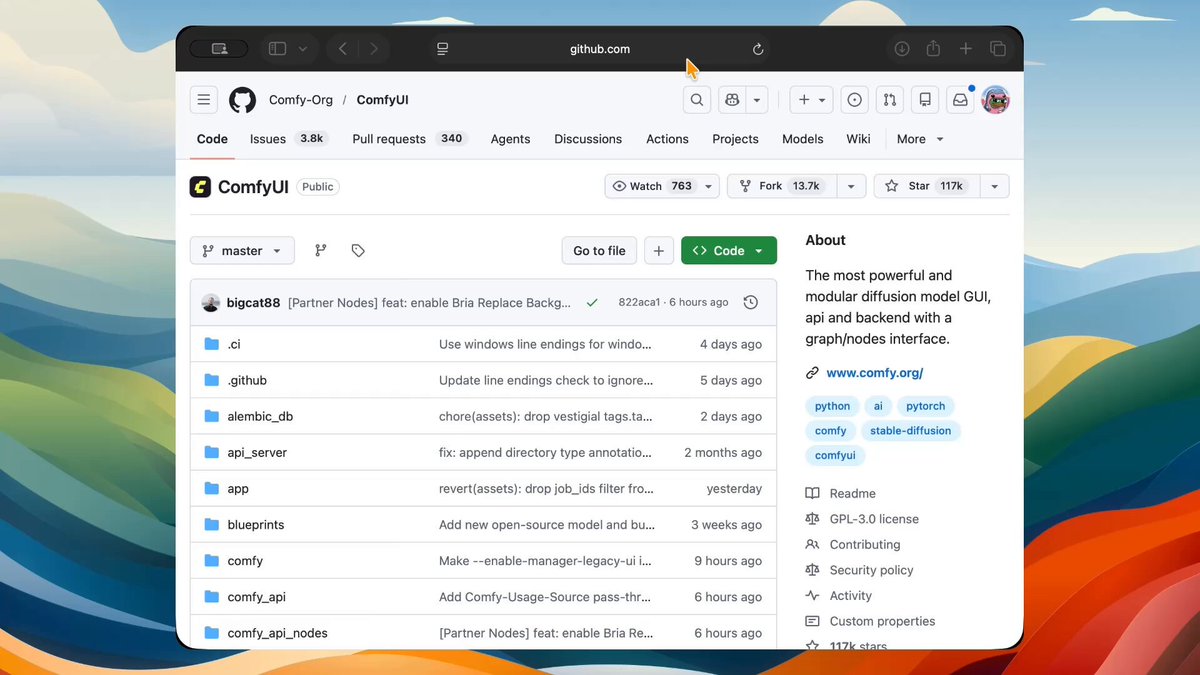
no money for grok or midjourney? this tool is for you. there's a FREE tool created by an anon dev. open-source. runs locally. 117k stars on github. it generates: > images & video > 3d models > audio > 20+ models here's how to set it up in under 5 minutes: 1️⃣download ComfyUI Desktop go to and grab the desktop app for your system. windows 10+, mac (apple silicon), or linux. it installs like any normal app, it sets up python and every dependency for you in the background. no terminal, no config files. 2️⃣open it first launch, it spins up its own environment automatically. you just wait a few seconds and you're in. you'll land on a node canvas, that's the whole interface. 3️⃣load a starter workflow top menu → Workflow → Browse Templates → Image Generation. click it. this drops a ready-made setup onto your canvas so you don't build anything from scratch. 4️⃣grab a model comfyui ships empty on purpose, the model is the brain, and you pick it. in the template, the "Load Checkpoint" node has a Download button when no model is installed. click it. it pulls one in for you (a few GB, this is the only real wait). 5️⃣install ComfyUI Manager this is the one add-on you don't skip. it lets you install models, custom nodes, and updates with a click instead of the command line. grab it from github (link in comments). it's the difference between fighting comfyui and flying in it. one honest note: an NVIDIA gpu makes this fast, apple silicon works great too, and a weak machine still runs it just slower. that's the whole setup. you now own an image, video, and 3D studio that costs you nothing per month. save this. and the next time grok or midjourney asks for your card. you won't need it. disclaimer: comfyui itself is 100% free. so are the local models (sdxl, flux, wan 2.2, ltx-2). some premium models like seedance are pay-per-use api models, only if you want top-tier quality. the free local ones cover most of what you need. (github link in the comments) follow and turn on post notification for daily AI contents.

m0h

14,542 görüntüleme • 1 ay önce

-> someone cloned claude -> design interface and -> made it completely free -> it's work on YouTube -> and also suitable for kids -> it’s called open design -> and it’s live on github -> same clean split-screen ui -> you get in claude artifacts -> prompt on the left, live -> design/code preview on -> the right, type what you -> want to build and it -> generates the ui in real -> time, but here’s the twist -> you pick the ai model -> not locked into one -> company, want to use -> gemini, mistral, llama, -> deepseek any model -> with an api work -> if you’re running local -> models with ollama -> that works too -> no subscription walls -> the big difference -> vs claude artifacts -> works with any free -> ai model you’re not -> paying $20/mo just to -> design, use free tiers -> local models, or whatever -> you already have access to -> fully local, your prompts -> and code never leave -> your machine unless -> you want them to -> no data training -> no cloud storage -> privacy by default -> no usage limits -> claude cuts you off -> after a few designs -> here you can generate, -> iterate, break things -> and rebuild all day -> the only limit is your -> don’t like how a button -> works, change it -> want to add your own -> components, go ahead -> you own the tool -> so if you’ve been gatekept -> by paywalls or worried -> about sensitive prompts -> going to some company’s -> servers, this fixes that. -> same workflow, more -> control, zero monthly fee

BeingInvested

12,134 görüntüleme • 1 ay önce

🚨BREAKING: An open-source agentic video production system just dropped. 11 pipelines, 49 tools, and a full product ad produced for $0.69 total. It's called OpenMontage. And it's not a text-to-video tool. It's a full production orchestration system where your AI coding assistant (Claude Code, Cursor, Copilot, Windsurf) becomes the director. Describe what you want in plain language. The agent researches, scripts, generates assets, edits, and renders the final video. Here's what the pipeline actually does: → Live web research first: 15-25+ searches across YouTube, Reddit, news sites before writing a single word of script → 12 video generation providers: Kling, Runway Gen-4, Google Veo 3, MiniMax, plus local GPU options (WAN 2.1, Hunyuan, CogVideo) → 8 image generation providers: FLUX, Google Imagen 4, DALL-E 3, Stable Diffusion locally → 4 TTS providers: ElevenLabs, Google (700+ voices), OpenAI, and Piper offline for free → WhisperX word-level subtitles burned in automatically → Remotion for React-based animated composition with spring physics, transitions, TikTok-style captions → Budget governance: cost estimate before execution, per-action approval above $0.50, hard cap at $10 Here's the wildest part: One product ad. 4 AI-generated images, TTS narration, royalty-free music, word-level subtitles, Remotion data visualizations. Total cost: $0.69. Zero manual asset work. Works with zero API keys too. Piper narrates locally, Pexels/Pixabay provide free stock, Remotion animates everything. No spend required to start. 100% Open Source. AGPL v3 License. (Link in the comments)

Guri Singh

112,201 görüntüleme • 3 ay önce

Introducing Workshop: cloud + on-device agentic AI. And to celebrate, we're giving away $250k in Google Gemini AI credits. (details below). The future of AI work is neither cloud-based nor local. It's both. In Workshop Cloud, you can use agents powered by frontier models like Claude and/or open source models like Z.ai's GLM-5 to build internal tools, dashboards, and AI web apps. Or, breeze through tasks like managing your Google and Meta Ads. In Workshop Desktop, you can do all the same right on your computer, plus make desktop apps, mobile apps, and 3D creations. Our favorite part? You can power the full agent experience with local models like Qwen 3.5 family on your computer. Fully offline. 2026 is the year in which local models for agentic tasks will become viable for mainstream use. But the setup for tools like OpenClaw is like setting up Linux from scratch on your computer. Workshop Desktop is one-click to install on Windows, Mac, and Linux. It recommends which open source model you should use for your hardware and lets you download and run it right in the app. And its agent harness allows you to chat, create websites, build personal utilities, and analyze data. 100% offline. Or multitask with AI models in the cloud while running other agent threads locally. Start in Workshop Cloud when you want flexibility and speed. Download your project and continue in Workshop Desktop when you want local files, privacy, and/or better performance on large code bases. Publish from either. The agent tooling space is maturing and discerning users have come to expect a lot from their tools. We've packed Workshop with features to help you 10x your productivity. - Native support for skills - Autocompaction for seamless context management - Built-in AI for your apps - Dozens of connectors, like Google Drive, Big Query, and Supabase - dbt integration to ground your dashboards in your semantic layer - Native Github integration - Private app deployment - ... and more (+ we're shipping super fast) To access the free credit offer, RT this post and reply with "Workshop". Make sure you are following us so we can DM you the instructions to redeem. - First 100 to RT + comment get $500 in credits. - Everyone else gets up to $250 And thanks to our partners Modal, Google Gemini, and Z.ai!

Workshop AI

28,322 görüntüleme • 3 ay önce

BREAKING: Introducing All Access from Every 📧, our new membership tier for the best builders in AI All Access subs get the Builder Pack which includes $7,000 in credits and free usage to the models + tool stack we use Every 📧. All Access subscribers get: - $1,000 in Codex / ChatGPT for Work credits - 12 months free of Cursor Pro+ - $4,000 in PostHog credits including self-driving to automatically fix bugs and identify issues in your production app - 1 year free of Framer - 6 months free of Notion And much more! (Did I mention $1,000 in Codex credits? It's time to build!) Get all access: Why All Access and the Builder Pack This is the best time in history to build something. For a long time, it’s been possible to one-shot impressive demos, but they’d fall flat the minute they hit production. But the release of GPT-5.6-Sol and Fable 5 heralds a new era: Everyone can build, launch, and maintain the software that they’ve always dreamed of. Everyone is a builder now. There’s just one catch: Building with AI is very expensive. (Ask me how I know.) (Alright, I’ll tell you. I accidentally used 2 billion tokens overnight this week on a big GPT-5.6-Sol run. Worth it.) This is unique in the history of technology. For most of the personal computing era, a billionaire and a solo builder could buy essentially the same top-of-the-line Mac. AI changes that: The more tokens you can afford, the more you can make. And we want to make that accessible to more people. That’s why the main feature of our new All Access plan is the Builder Pack: more than $7,000 in credits and discounts on the full stack we use to run Every, from idea to production—Codex, Claude, PostHog, Render, Gemini, FLORA, and more. Early-bird membership is only $500/year for the next 24 hours—and the Codex credits alone are worth $1,000. (I could’ve used it for my overnight run this week.) Now we’re handing it to you. Get all access: Meet the Builder Pack It's got more than $7,000 in offers from 10 of the AI products we use to write, design, build, and run Every 📧: BUILD - $1,000 in Codex credits plus one month of ChatGPT for business - Twelve months free of Cursor Pro+ - One month free of Claude Max - Three months free of Google AI Pro DESIGN - One year free of Framer Pro - One month free of FLORA © Max HOST - $300 in Render credits IMPROVE - $4,000 in PostHog credits - Six months free of Notion Business - Six months free of AgentMail (YC S25) We rely on these every day, and we tried to put together a package that helps you comprehensively for each part of the process of building and running software in AI. What comes with All Access - Everything in an existing paid Every membership: our daily writing, guides, camps, and software like Monologue, Cora, Sparkle, and Spiral - The Builder Pack, with more than $7,000 in partner offers - Unlimited email accounts use of Cora and unlimited Spiral usage - Members-only programming with me and the Every team and me Get All Access:

Dan Shipper 📧

165,202 görüntüleme • 3 gün önce

AI AGENTS 101 (58 minute free masterclass) send this to anyone who wants to understand ai agents, claude skills, md files, how to get the most out of AI etc in plain english: 1. chat vs agents - chat models answer questions in a back and forth while agents take a goal, figure out the steps, and deliver a result 2. agents don’t stop after one response. they keep running until the task is actually finishedno babysitting required 3. everything runs on a loop. they gather context, decide what to do, take an action, then repeat until done 4. the loop is the system. they look at files, tools, and the internet. decide the next step. execute and then feed that back into the next step. over and over until completion 5. the model is just one piece. gpt, claude, gemini are the reasoning layer. the key is model + loop + tools + context 6. mcp is how agents use tools. it connects things like browser, code, apis, and your internal software. once connected, the agent decides when to use them to get the job done 7. context beats prompt all day. you don't need to write perfect prompts. load your agent with context about your business, style, and goals and then simple instructions work 8. claude.md or agents.md is the onboarding doc it tells the agent who it is, how to behave, what it knows, and what tools it can use. this gets loaded every time before it starts 9. memory.md is how it improves. agents don’t remember by default. this file stores preferences, corrections, and patterns you tell the agent to update it, and it gets better over time 10. skills + harnesses make it usable. skills are reusable tasks like writing, research, analysis the harness is the environment like claude code or openclaw that runs everything. basiclaly, different interfaces, same system underneath this episode with remy on The Startup Ideas Podcast (SIP) 🧃 was one of the clearest ways of understanding a lot of the core concepts of ai agents could be the best beginners course for ai agents 58 mins. all free. no advertisers. i just want to see you build cool stuff. im rooting for you. send to a friend watch

GREG ISENBERG

375,365 görüntüleme • 4 ay önce

Adobe tried to buy Figma for $20 billion in 2022. The deal collapsed. So Figma went public on the NYSE in July 2025 instead. Ticker FIG. Public company. Quarterly earnings. Wall Street pressure. You know what happens to design tools after they IPO. In March 2025, Figma raised the Professional Full seat 33%. From $15 to $20 a month. Organization seats jumped to $55. Enterprise to $90. Then they took Dev Mode, which was free during beta, and locked it behind a paid seat. Your developers now pay extra to inspect the designs your designers already paid to create. In March 2026, Figma started charging for AI credits on top. If Figma raises prices again, you pay. If Figma gets acquired, you pray. If Figma shuts down, your files die with it. Your design system. On their servers. In a proprietary format only their app can read. To draw rectangles on a screen. There is an open source design platform that runs on your hardware. Stores your files in plain SVG. Costs $0 forever for unlimited users. It is called Penpot. 45,700+ stars on GitHub. A full Figma-grade design platform built on open web standards. Vector editing. Components. Design tokens to W3C spec. Flex and Grid layouts. Real-time multiplayer. Interactive prototyping. Here's what it does: → Real-time collaboration. Live cursors. Comments in line. → Components, variants, shared libraries. → Auto layout, Flex, CSS Grid. The tool outputs production CSS, not lookalike CSS. → Interactive prototypes with overlays, animations, and flows. → Inspect tab. Free. Built in. Every developer grabs production CSS, SVG, HTML without a separate seat. → Plugin ecosystem. Figma import to migrate your files. → Self-host on Docker in one command. Your designs never leave your network. Here's the wildest part: Figma stores your designs in a proprietary format only Figma can read. Penpot files are SVG. The same format your browser has rendered for 25 years. Open them in any editor. Open them in 20 years. Nobody can lock you out. The feature Figma charges your developers extra for, Penpot gives away. Without asking permission. Figma Professional: $20/month per seat. A 10-person team: $2,400/year. Figma Organization: $55/month per Full seat. A 50-person org: $33,000/year. Penpot: $0. Unlimited users. Unlimited files. Unlimited teams. Self-hosted. Free forever. 45,700+ stars. 2,700+ forks. 250+ contributors. MPL-2.0 license. Backed by a community that believes design tools should be free. Your designs. Your files. Your standards. 100% Open Source. (Link in the comments)

Nav Toor

216,326 görüntüleme • 2 ay önce

Google just STOLE Apple away from OpenAI... And it might decide who wins the AI race. Apple announced a multi-year $1 billion deal with Google to power the next generation of Siri using Gemini AI. Not ChatGPT. Gemini. This is the same Apple that 18 months ago announced a partnership with OpenAI to integrate ChatGPT into iPhones. Everyone thought that meant OpenAI won. Turns out it was an audition. And OpenAI failed. Here's why: June 2024: Apple announces OpenAI partnership. Sam Altman tweets: "very happy to be partnering with apple." Media declares OpenAI the winner of the AI race. December 2025: Sam Altman issues "code red" at OpenAI. Tells everyone to pause everything and ship ChatGPT 5.2 faster. Why the panic? Google released Gemini 3 and it was actually good. January 2026: Apple picks Google. ChatGPT stays as an "optional feature" for complicated queries. But Gemini becomes the DEFAULT intelligence layer for 2 billion Apple devices. The financial reality: Apple pays OpenAI $0 But Apple pays Google $1 BILLION per year That's a verdict. The excuse OpenAI gave for why they did it for free was "exposure to millions of iPhone users." Which basically means "we couldn't negotiate worth shit." Meanwhile Google walked away with both the money AND the distribution. Why Google won: Infrastructure ownership. OpenAI runs on Microsoft's Azure cloud. That creates a dependency chain: Apple → OpenAI → Microsoft. 3 companies. 3 points of failure. Google owns its entire stack. One relationship. Zero middlemen. Apple's statement said Google's technology provides "the most capable foundation." Not "most innovative." Not "best partner." Most CAPABLE. In other words, OpenAI's tech couldn't handle the scale. The Alphabet boost: Google's stock hit $4 trillion market cap after the announcement. Up 65% in 2024 on AI momentum alone. This deal validates Google's pivot from "search company" to "AI infrastructure company." Now they power Samsung's Galaxy AI AND Apple's Siri. Billions of mobile devices running on Gemini. OpenAI's big problem here: Still no profit. Ever. Anthropic is stealing enterprise customers. DeepSeek launched a price war forcing ChatGPT to cut prices. GPT-5 was overhyped and underwhelming. Circular financing deals are getting scrutinized. And now Apple just downgraded them from partner to backup option. That "code red" in December? Too little, too late. The reality everyone's missing: This isn't about chatbot quality. It's about who owns the infrastructure to power billions of devices. Google proved it with Samsung. Now Apple. OpenAI proved it can build a viral product but can't scale it profitably. Very different skill sets. Elon called it "unreasonable concentration of power for Google." He's right. But that's exactly why Apple chose them. Apple doesn't want a startup partner. They want a utility provider. Google is now the default AI for Android AND iOS. OpenAI is relegated to opt-in queries for people who specifically request ChatGPT. That's the difference between infrastructure and feature. The next 12 months: Apple launches Gemini-powered Siri in spring 2026. If it works, every iPhone user defaults to Google's AI. ChatGPT becomes the thing people use when Siri can't answer. The backup plan. My takeaway for entrepreneurs watching this: Distribution beats innovation. Google didn't necessarily build a better chatbot. They built better infrastructure and negotiated better terms. OpenAI won the hype race. Google won the business war. What do you think can save OpenAI now?

Ricardo

50,663 görüntüleme • 6 ay önce

THIS MIGHT BE THE #1 OPEN-SOURCE REPO FOR CLAUDE CODE RIGHT NOW. IT GIVES CLAUDE A MEMORY AND SLASHES YOUR TOKEN COST ON EVERY QUESTION The repo is safishamsi/graphify, a free open-source skill that turns any codebase into a knowledge graph Claude Code can read instantly. Instead of grepping through your files every session, Claude gets a map of how everything connects The problem it fixes: Every time you ask Claude Code about a big repo, it does the same thing, greps through dozens of files like a brute-force Ctrl+F, blows through your context window, and sometimes still misses the answer hiding in a file nobody searched. Claude Code has no memory of how your project is structured. Every session starts from zero What it does: It maps your entire codebase into a knowledge graph, capturing not just which files exist, but which functions depend on which, which modules are central, and which files cluster around the same concern. Claude queries the map instead of scanning files How it works, three passes: 1. Code structure, free and local. Tree-sitter parses your files and pulls out classes, functions, imports and call graphs. No LLM, no tokens, just your actual code mapped deterministically 2. Audio and video, if you have them. Transcribed locally and folded into the graph 3. Docs, papers, images. Here an LLM does semantic analysis, figuring out what each document means and where it fits. Only the meaning gets sent up, never your raw source It saves you money: Normally a question about a big repo makes Claude spawn explore agents that scan file after file, eating your context window and your token budget before you get an answer. With the graph already built, Claude queries the map instead of re-reading the codebase every time. Same answer, a fraction of the tokens. The graph only gets built once, then a hook rebuilds it after each commit for free, so you never pay that scanning cost again. The bigger the repo, the bigger the gap The best parts: it's a skill, so once installed Claude knows when to use it without you memorizing commands. It works on non-code folders too, point it at docs or notes and it can spin up an Obsidian vault How to add it to your Claude: 1. Install Claude Code if you haven't: npm install -g Paul Jankura-ai/claude-code 2. Add the skill: claude skill add safishamsi/graphify 3. Open your project folder and run /graphify . to build the graph 4. Optional, make it automatic: graphify hook install so the graph rebuilds after every commit That's it. Ask Claude about your repo and it reads the map instead of burning tokens on a file hunt Bookmark this

Yarchi

55,345 görüntüleme • 1 ay önce

🚨PERPLEXITY JUST LAUNCHED SOMETHING THAT MAKES EVERY OTHER AI PRODUCT LOOK LIKE A TOY.. AND NOBODY IS TALKING ABOUT IT.. They built a Personal Computer.. Not an app.. Not a chatbot.. A full digital worker that runs 24/7 on a Mac mini even while you sleep.. You press both command keys.. And it wakes up.. Ready to work.. But here's where it gets insane.. This thing doesn't run on one AI model.. It runs on 19 of them.. At the same time.. It uses Claude Opus for complex reasoning.. Gemini 3.1 Pro for deep research with a 2 million token context window.. Nano Banana Pro for 4K images.. Grok for fast tasks.. It doesn't just pick one model and hope for the best.. It reads your task.. Breaks it into subtasks.. And routes each one to whichever model is best at that specific thing.. All running in parallel.. While ChatGPT is still thinking about your first question.. Perplexity has already split your project into 6 pieces and assigned each one to a different AI.. And here's the part that should worry OpenAI.. Perplexity hallucinates at 3.3%.. ChatGPT hallucinates at 12%.. Claude at 15%.. It's not even close.. Because Perplexity is built differently.. Every other AI tries to remember facts.. Perplexity searches for them first.. It's structurally forced to cite live sources before it's even allowed to generate a response.. OpenAI Operator launched with a 32.6% success rate on computer-use tasks.. People called it "the world's most anxious intern" because it pauses every 5 seconds to ask if it's doing the right thing.. Perplexity runs multi-hour and multi-day workflows independently.. Only interrupts you when it hits a decision that actually matters.. You can start a task from your iPhone on the train.. And it executes on your Mac mini at home.. The economics are wild too.. Internal studies show it saved teams an average of $1.6 million in labor costs.. Performing 3.25 years of work in four weeks.. And unlike every other AI company.. Perplexity dropped ads entirely.. They charge $200 a month because they said they're in the "accuracy business".. Not the advertising business.. They even launched a $42.5 million publisher program to pay media partners when their content gets cited.. While OpenAI is getting sued by every newspaper on earth.. Google and OpenAI want you locked into their ecosystem.. If a better model comes out tomorrow you're stuck.. Perplexity just updates its routing matrix.. You get the best model on earth automatically.. No switching.. No migrations.. No friction.. This isn't an AI assistant anymore.. This is the first real AI employee.. And it costs $200 a month.

Evan Luthra

1,096,928 görüntüleme • 3 ay önce

$VET, #VeFam. In this video, I demonstrate in less than 4:30 minutes how to create an AI agent on veworld(.)ai. Watch me build a Mr. Robot Monologue Writer agent. If you haven't seen Mr. Robot, I suggest you watch it! This is just early bird access. The options for tools and integrations and such are limited, but what exists is already working quite well. The process is easy peasy. The UI is simple, but effective. It asks you for... 1. Role & Purpose 2. Voice & Style 3. Behavior 4. Rules 5. Tags 6. Avatar image 7. Welcome text. 8. Test drive before publication. ... and that's about it. This free version lets you have at most 3 agents, I am told. This implies that there is also a paid version. I'm all for it, because it sounds to me like VeChain is ready to do real business! I am providing feedback to Jérôme Grillères in order to help improve VeChain's AI agent marketplace. I didn't have to set up anything. The web UI is all I needed! The agent is running on Claude Sonnet 3.7. I did not have to provide a Claude API key. We seem to be riding along on VeChain's. I hope there'll be a choice for more models, including ChatGPT, in the future. This is so user friendly, that I can easily imagine that this would take off in a big, big way. I'm definitely building on this, when it goes into production with full features. Even if my own AI agents aren't successful, then I'm sure others' will be. And that means the $VET / $VTHO / $B3TR flywheel is going to take off in a big, big way. I, for one, am here for it. (See the reply below for the listing of the AI agent I just created.)

₿lackthorne AI

13,806 görüntüleme • 22 gün önce

Claude Code cannot read 300 files at once. So someone built a system that lets it control NotebookLM from the terminal instead. The results are wild. Here is the full workflow nobody is talking about: The Setup → Claude Code connects to NotebookLM via a command line interface → Claude searches YouTube, finds relevant videos, uploads them as sources automatically → NotebookLM processes up to 300 sources simultaneously and returns cited, grounded answers → Everything syncs back into your Obsidian vault with passage-level citations you can click to verify Why This Changes Research Forever → No more 20 browser tabs you never close → No more copy-pasting outputs into random notes → No more hallucinated answers with no sources to back them up → 60% of citations verified as strong matches in accuracy audits - answers are grounded in real data What Claude Can Do From the Terminal → Search YouTube for relevant videos on any topic and rank by relevance → Create a new NotebookLM notebook and add 20 sources in parallel automatically → Ask questions and export cited answers directly into Obsidian with wikilinks → Set custom personas per notebook - concise, no filler, no preamble → Generate audio overviews and save them as MP3 files into your vault → Build mind maps, flashcard decks, and research dashboards from your sources → Search arXiv for academic papers and feed them directly into NotebookLM → Upload competitor blog posts, podcast episodes, PDFs, and your own vault notes The Obsidian Output → Every answer arrives with clickable citations that link to the exact passage in the source video or article → Graph view shows connections between all 20 sources and the topics they share → Q&A log tracks every question asked and the grounded response received → Source dashboard shows citation frequency, topics extracted, and which questions each source answered Use Cases Worth Building Today → Academic research with arXiv papers, full citation traceability → Competitor analysis from their YouTube channels and blog posts → Company knowledge base for onboarding, new employees ask NotebookLM instead of interrupting teammates → Podcast research, feed 4-hour Lex Fridman episodes and ask what's new in AI this week → Personal second brain, 300 daily notes uploaded and queryable in one notebook Before this system existed you needed 20 tabs, hours of manual reading, and no guarantee the answers were real. Now you type one prompt in the terminal and Claude does all of it for you. The research stack of 2026 is not a browser. It is a terminal connected to everything

Dami-Defi

252,693 görüntüleme • 1 ay önce

Andrej Karpathy said: "There's room for an incredible new product in the second brain space" This might be it. (bookmark it) Everyone is suddenly building a second brain. Karpathy's LLM wiki pattern went viral, and half of X is now hand-wiring Obsidian to Claude Code so an agent maintains their notes for them. The idea is beautiful: stop making your AI re-read raw notes on every question. Let it build a wiki that compounds. As Karpathy put it, "LLMs don't get bored, they don't forget to update a cross-reference (backlinks), and can touch 15 files in one pass." But if you start doing it manually, it becomes a project in itself. You wire up the vault, the agents, the schedules, the integrations, and then you babysit all of it. So I sat down with Arjun, who actually built the open source version of this, and we broke down what it looks like when the whole thing already works out of the box. It just crossed 15K stars on GitHub. Think Claude's desktop app, open source, with two things layered on top: → A work brain: background agents index your emails, meetings, and notes into a living knowledge graph that updates itself as you work. → Work surfaces: chat is not the best interface for real work, so you get an email client, a meeting note taker, a browser, and a code mode where you and the AI actually collaborate. The part that got me: a customer email comes in asking for a product change, a background agent triages it, spins up Claude Code in its own worktree, and the feature is written before you are back at your desk. Bring your existing Obsidian vault, connect Slack, X, and Fireflies, and let it run your day. Here's the full breakdown of what we covered in this session: Enjoy! 00:00 Intro 01:08 What is Roboat (an open source AI co-worker) 02:42 The second brain (a knowledge graph of your work) 04:01 Bringing your existing Obsidian vault in 04:46 Work surfaces 05:29 Meetings and automatic note taking 06:53 Connecting Slack, X and other sources 07:55 Background agents that run your day 09:24 Code mode (Claude Code and Codex) 10:18 Demo: from an email to written code 14:28 Guardrails: approvals and agent workspaces 17:15 Scheduling agents on a cron 18:52 The browser work surface (browser use) 20:42 Wrapping up: automating your whole day 22:44 Outro Checkout Rowboat's GitHub repo: (don't forget to star 🌟) My co-founder recently wrote a great article on the same idea, and I highly recommend reading it as well. The article is quoted below. Here's my session with Arjun:

Akshay 🚀

45,585 görüntüleme • 9 gün önce

5 startup ideas you can build and resell using only ElevenLabs Agents each one costs $0.08/min to run and replaces $2-5k/mo in human labor Let's break them down ↓ 1. AI Receptionist for Local Businesses dentists, salons, clinics, they all pay $2-3k/mo for someone to answer phones build a voice agent that: - answers calls 24/7 - books appointments - handles FAQs - speaks the client's language who ALREADY uses it: ~31% of local service businesses who STILL needs it: ~69% (your market) white-label it, charge $300-500/mo per client your cost per client: ~$30/mo in minutes 2. Multilingual Customer Support ElevenLabs agents speak 70+ languages natively e-commerce brands selling internationally need support in 5-10 languages minimum one agent replaces a 5-person multilingual team who ALREADY uses it: ~36% of e-commerce businesses who STILL needs it: ~64% and most of them are mid-market brands scaling globally sell 24/7 coverage, mark up the minutes, charge per-seat 3. AI Sales Qualifier (SDR Replacement) voice agent calls inbound leads, asks 5-10 qualifying questions, books meetings directly into the sales team's calendar startups pay $4-6k/mo per SDR you charge $1.5k/mo for an agent that works 24/7 and never misses a lead who ALREADY uses it: ~27% of mid-market teams who STILL needs it: ~73% and 22% already fully replaced human SDRs plug it into any CRM like HubSpot, Salesforce, Pipedrive 4. Restaurant Order-Taking Agent phone ordering for restaurants, pizzerias, takeout spots the agent takes the order, upsells sides and drinks, confirms, pushes to the POS who ALREADY uses it: ~34% of restaurants who STILL needs it: ~66% (expected to hit 50%+ in major cities this year) build one integration template → sell to 100+ restaurants at $200/mo each that's $20k/mo from one vertical 5. Real Estate Showing Scheduler agents answer property inquiry calls, give listing details, qualify buyers, and book viewings (all mid-call) realtors spend hours on phone scheduling who ALREADY uses it: ~18% use voice AI specifically who STILL needs it: ~82% while 82% of agents already use some form of AI, almost none have voice agents charge per listing or flat monthly integrates with their calendar + CRM -------- How to build any of these: - sign up for ElevenLabs (startups get $4k free credits) - pick your niche - build the agent with their no-code platform - connect it to GPT or Claude for the brain - plug in scheduling/CRM via API - white-label it under your brand you don't need to build AI, you need to sell AI to people who don't know it exists yet reply "ELEVEN" + RT and i'll send you a free guide so you can build this too

Ronin

773,891 görüntüleme • 2 ay önce