Video yükleniyor...

Video Yüklenemedi

Ana Sayfaya Dön

A performer dressed as a lion has long appeared in some Iranian Muharram ceremonies that reenact the story of Karbala. With smartphones, videos of these performances now circulate widely online every year. This year’s clips show more realistic lion costumes and animal-like behavior, often turning parts of the ceremonies...

20,002 görüntüleme • 2 ay önce •via X (Twitter)

0 Yorum

Yorum bulunmuyor

Orijinal gönderinin yorumları burada görünecek

Benzer Videolar

Dolce & Gabbana (D&G) fashion show in summer of 2019; Ancient Greece inspired collection. As the collection was inspired by Ancient Greece, it was only fitting that the clothes were displayed for the first time at the Valley of the Temples in Agrigento, Sicily - Italy. The noble temple, reflecting the tangerine yellow of the setting sun, stood like a rock of ages – taking Sicily back thousands of years to the artistic culture of ancient Greece. The Valley of the Temples in Agrigento belonged – for one night only – to Dolce & Gabbana, whose Alta Moda collection was shown on this historic site. Civilization of ancient Greece flourished from 8th Century BC to 600 CE. It was located in southeastern Europe along the coast of Mediterranean Sea and included modern-day countries of Greece and parts of Türkiye, Italy and Bulgaria. Today, ancient Greeks are known for their contributions to philosophy, politics, art, architecture, and science. They were also known for their unique clothing styles, inspired by their environment and cultural traditions. In movies about ancient Greece, characters portraying Greek citizens, soldiers, or mythological figures often wear these clothing styles. Characteristics of traditional Greek fashion included long, flowing garments made of lightweight materials such as linen or wool. People draped these garments over the body in a manner that allowed for a range of movement and comfort. Both men and women wore tunics that were knee-length or longer. They could be worn as a standalone garment or layered over other clothing. People fastened their tunics at the shoulder with a pin or brooch and often wore a belt to cinch the waist. Overall, the clothing of ancient Greece was functional and practical but also imbued with cultural and artistic significance. Intricate patterns, designs, and embroidery often adorned garments, and they were often made of luxurious materials such as silk or gold-threaded fabric. A tunic was a garment that both men and women would commonly wear in ancient Greece. It was a sleeveless piece of clothing, knee-length or longer, that they wore over the upper body and fastened at the shoulder with a pin or brooch. Ancient Greeks typically made tunics of lightweight materials such as linen or wool and wore them as either a standalone garment or layered over other clothing. The tunic was a versatile garment that could be worn in a variety of settings and was suitable for both formal and casual occasions. It was also practical in ancient Greek dress, allowing for a range of movement and comfort. Ancient Greeks created their clothing using various techniques and tools, such as weaving fabrics on looms, sewing together pieces of fabric, and using decorative techniques like embroidery, beadwork, and the use of gold and silver thread. In ancient Greece, men and women wore tunics that they crafted out of lightweight materials like linen or wool and fastened at the shoulder with a pin or brooch. Men and women both wore a chiton, a long sleeveless garment, as well as cloaks called himatia made of heavier materials like wool or animal skin to keep warm. Men wore various headgear such as hats, helmet-like caps, and headbands, while women wore head coverings like veils, headbands, and hair ornaments. Ancient Greeks also wore garments like the peplos and the chlamys. The peplos was a long rectangular piece of fabric that women would often wear on formal occasions, fastened at the shoulders with a pair of fibulae (brooches), and made of luxurious materials such as silk with intricate patterns or designs. A chlamys was a short cloak-like garment worn by men over a tunic or chiton. It was made of lightweight materials like wool or linen, fastened at the shoulder with a pin or brooch, and often used for travel, outdoor activities, or in battle. 🎥© antiktarih (IG) #archaeohistories

Archaeo - Histories

144,162 görüntüleme • 2 yıl önce

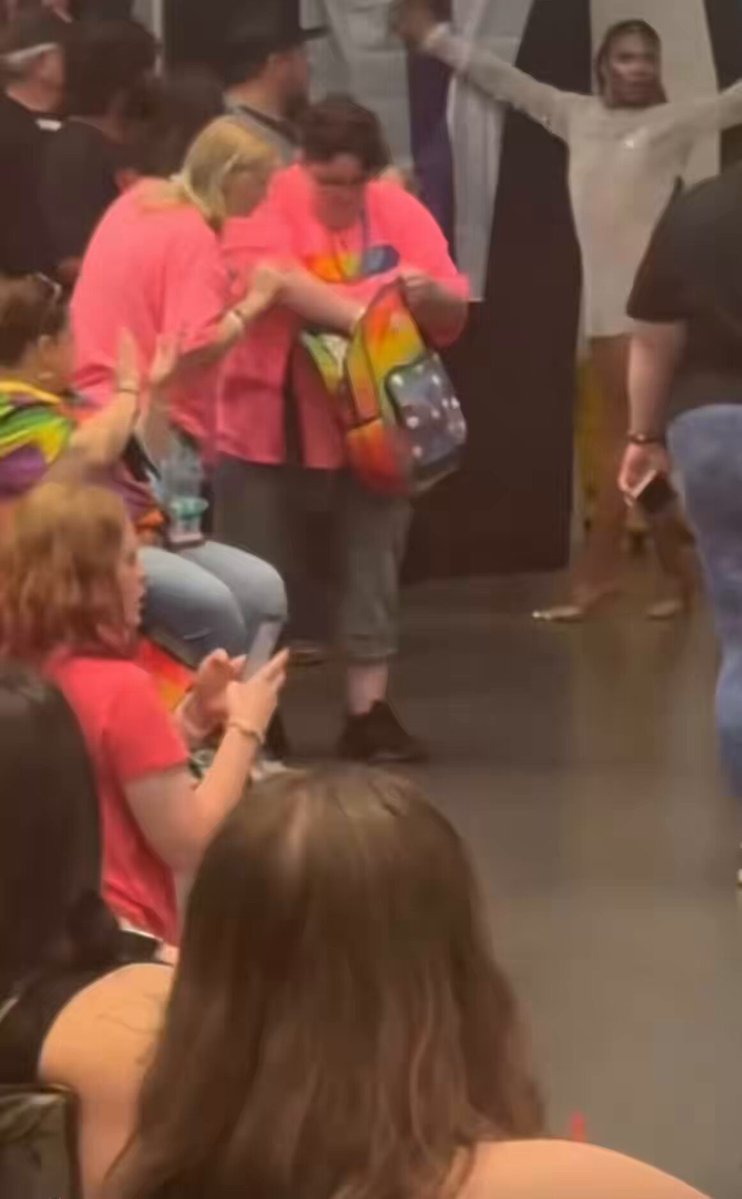
🚨 EXCLUSIVE: EAST TEXAS PRIDE EVENTS, CHILDREN, DRAG PERFORMANCES, POLITICAL ORGANIZATIONS. DIRECT VIOLATION OF TEXAS LAW! Im going to name EVERYONE INVOLVED. THE CHILDREN ARE OFF LIMITS! And yes, James Talarico and Beto are at the top of the list. What I initially began looking into as two separate Pride events in East Texas has turned into a much larger investigation involving nonprofit organizations, political groups, taxpayer-owned municipal facilities, regional organizers, vendors and activists operating across multiple East Texas communities. On June 27, 2026, Paris Prism Pride was held at Love Civic Center in Paris, Texas. The event was hosted by The Prism and featured a traveling drag revue coordinated through the Tyler Area Gays (TAG+) Thespians. The evidence provided for review documents minors present while drag performers were being tipped with money during performances. Then, on July 11, Pride East Texas Longview held its event inside the Maude Cobb Convention Complex - a municipal facility owned and operated by the City of Longview. Again, the evidence provided for review documents children in the immediate audience while drag performers were financially tipped during performances. The event also included local drag performances and a “Pups in Drag” runway competition. These events shared parts of a regional organizational and commercial pipeline. Special Health Resources maintained a presence at both. Hardwicks is identified in the material as providing logistical support for both festivals. Multiple independent vendors traveled the same circuit. The organizers also coordinated their dates - June 27 in Paris and July 11 in Longview - to avoid conflicts involving performers and vendors and cross-promoted the events. The Lamar County Democrats maintained a physical presence at the Paris event, including voter-registration and political outreach activities. (I will share photos) At the Longview axis, the material identifies Powered by People, founded by Beto O’Rourke, as part of the political voter-registration operation. Powered by People describes its mission as reaching, registering and mobilizing voters to elect Democrats throughout Texas. And then… you guessed it, the nastiest of them all in the center… James Talarico. Talarico’s 2026 campaign has worked with Beto O’Rourke and Powered by People on voter-outreach strategy. Reporting in July revealed that Powered by People held a strategy call with Talarico’s campaign as part of an outreach effort specifically looking at potential Democratic voters including drag-show attendees. Talarico also has a public legislative history on this exact issue. During the 2023 battle over legislation restricting s*xually oriented performances on public property or in front of minors, Talarico publicly PRAISED Texas drag queens and opposed efforts he believed targeted drag performances. At the urging of the House LGBTQ Caucus, he ultimately voted “present” on key legislation. Now Texans deserve to know exactly how far the political and organizational connections surrounding these 2026 events extend. Because the conduct documented at these events raises serious questions under Texas SB 12. This isn’t simply about whether someone dressed in drag. That isn’t the issue. Adults can do this if they want… OUT of the presence of CHILDREN! The issue is children being present during s*xualized performances, including children in audiences where money was being handed or thrown to performers as they danced. If the documented performances meet SB 12’s statutory definition of a prohibited s*xually oriented performance, the fact that this occurred with minors present - and inside taxpayer-owned municipal facilities - puts the conduct directly within the territory the Legislature sought to regulate.

Sarah Fields

171,667 görüntüleme • 25 gün önce

🇮🇷☪️ 2 days to the funeral of martyred Ayatollah Representatives from 100 countries will attend the farewell and funeral ceremony of the murdered leader Ali Khamenei and his family. Foreign Ministry Spokesperson on the initial public official ceremonies in Tehran: 🔸️The farewell and funeral ceremony for the body of the martyred leader is a historic event for the Iranian nation, Muslims, and all free people of the world. 🔸️From Friday morning at 8:00 AM, the tribute and farewell ceremony will be held with the participation of a large number of dignitaries and public groups, continuing until approximately 12:00 noon. 🔸️In the afternoon, from around 2:00 PM, high-ranking officials from various countries and political figures will take part in the ceremony. 🔸️We will have guests from approximately 100 countries, including political figures, heads of state, speakers of parliaments, foreign ministers, or special representatives of governments, as well as a large number of dignitaries and public groups. Main Locations & Schedule 🔸️July 4–5 (Tehran, Iran): Public farewell ceremonies at the Grand Mosalla prayer complex. 🔸️July 6 (Tehran, Iran): Main funeral procession through the capital. 🔸️July 7 (Qom, Iran): Funeral ceremonies and prayers in the holy city. 🔸️July 8 (Najaf & Karbala, Iraq): Ceremonies in both holy cities. 🔸️July 9 (Mashhad, Iran): Final burial at the Imam Reza Shrine. Officials estimate between 15 million and 20 million mourners could attend - making this the largest funeral in history.

DD Geopolitics

11,617 görüntüleme • 2 ay önce

There’s a reason the idea of “elite bloodlines” keeps showing up across history, mythology, and even modern conspiracy circles it taps into something ancient, something people have been trying to make sense of for thousands of years. To understand the claim, you’ve got to start with the Nephilim. In the Bible, specifically in Genesis 6:1–4, there’s a cryptic passage describing a time before the flood when the “sons of God” took human women as wives and had children with them. These offspring were called the Nephilim often translated as “giants,” but the meaning goes deeper than just physical size. The Hebrew root implies “fallen ones,” which is why many interpret them as hybrid beings part divine, part human. This ties directly into the broader biblical narrative about fallen angels, especially figures like Lucifer and the rebellion against God. Some traditions especially extra-biblical texts like Book of Enoch expand on this, describing a group of angels called the Watchers who descended to Earth, corrupted humanity, and created these hybrid offspring. According to that account, the Nephilim became violent, powerful beings who spread chaos, eventually contributing to the judgment of the flood in the time of Noah. Now here’s where things get interesting and controversial. Some believe that these bloodlines didn’t fully disappear. The idea is that after the flood, remnants of these hybrid lineages survived or re-emerged, and over generations, they became intertwined with royal families, ruling classes, and eventually what people today call “the elites.” This belief suggests that certain powerful families throughout history kings, emperors, even modern influential figures see themselves not just as leaders, but as descendants of something other than ordinary humanity. In that framework, “sacred bloodlines” aren’t just about wealth or status, they’re about identity. It’s the belief that they carry a kind of divine or fallen, right to rule. You’ll see echoes of this in ancient civilizations. Egyptian pharaohs were considered gods on Earth. Roman emperors claimed divine ancestry. European monarchies often justified their rule through the “divine right of kings.” These weren’t just political tools, they reflected a worldview where rulership was tied to something supernatural, something embedded in blood. Fast forward to today, and this idea gets reinterpreted through a modern lens. Some claim that global elites,whether in politics, finance, or media, still operate with this hidden belief system. That behind closed doors, there’s an understanding (or at least a tradition) “freemasonry”that their lineage traces back to these ancient beings. And that this belief shapes their actions, their long-term agendas, even their view of humanity as something… lesser. Because at its core, this idea reflects a deeper question: What do those in power believe about themselves—and about us? Do they see themselves as stewards… or as something elevated above the rest of humanity?

Blake S. Taylor Investigations 🚫

16,775 görüntüleme • 4 ay önce