Video wird geladen...

Video konnte nicht geladen werden

Zur Startseite

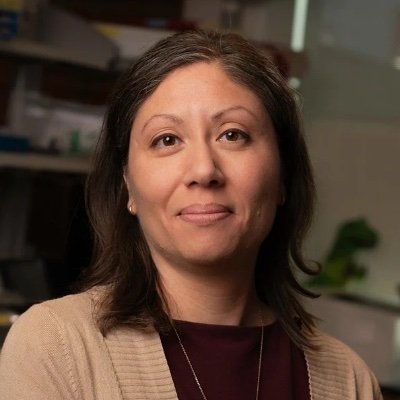
A sneak peak of a complex and technically challenging experiment that my lab developed: Super proud of PhD candidate Hannah Johnson for showcasing our Whole-gut spatial genomic analysis in #zebrafish. This video illustrates one landmark in the protocol after multiple rounds of sequential #HCR and 3D imaging in zebrafish...

10,119 Aufrufe • vor 5 Monaten •via X (Twitter)

0 Kommentare

Keine Kommentare verfügbar

Kommentare vom Original-Post werden hier angezeigt

Ähnliche Videos

Wonderland: Navigating 3D Scenes from a Single Image Contributions: • First, we introduce a representation for controllable 3D generation by leveraging the generative priors from camera-guided video diffusion models. Unlike image models, video diffusion models are trained on extensive video datasets. This enables them to capture comprehensive spatial relationships within scenes across multiple views and embed a form of "3D awareness" in their latent space, which allows us to maintain 3D consistency in novel view synthesis. • Second, to achieve controllable novel view generation, we empower video models with precise control over specified camera motions. We introduce a novel dual-branch conditioning mechanism that effectively incorporates desired diverse camera trajectories into the video diffusion model. This enables expansion of a single image into a multi-view consistent capture of a 3D scene with precise pose control. • Third, to achieve efficient 3D reconstruction, we directly transform video latents into 3DGS. We propose a novel latent-based large reconstruction model (LaLRM) that lifts video latents to 3D in a feed-forward manner. With this design, during inference, our model directly predicts 3DGS from a single input image, effectively aligning the generation and reconstruction tasks—and bridging image space and 3D space—through the video latent space. Compared with reconstructing scenes from images, the video latent space offers a 256× spatial-temporal reduction while retaining essential and consistent 3D structural details. Such a high degree of compression is crucial, as it allows the LaLRM to handle a wider range of 3D scenes within the reconstruction framework, with the same memory constraints.

MrNeRF

52,849 Aufrufe • vor 1 Jahr

Biomni Lab lets biologists collaborate with AI agents to finish complex tasks end-to-end. Here are 15 popular use cases, each link is a full replay so you can watch the agent work through every step: 1. Spatial transcriptomics analysis: map gene expression across tissue architecture from spatial transcriptomics data, with spatial clustering and neighborhood analysis. 2. Binder design: design de novo protein binders against a target structure using computational protein design tools. 3. Biomarker panel design: identify and optimize a multi-marker diagnostic or prognostic panel from omics data. 4. Clinical trial landscaping: search and summarize the trial landscape for a disease area, mapping phase, endpoints, and sponsor activity. 5. Survival analysis: pull clinical and expression data, fit Cox models, generate Kaplan-Meier curves, and identify prognostic markers. 6. scRNA-seq processing and annotation: from raw counts to UMAP clustering, marker gene detection, and automated cell type labeling. 7. Cell-cell communication: infer ligand-receptor interactions between cell types from single-cell data and map intercellular signaling networks. 8. Primer design for novel Cas13: analyze a putative Cas13 protein from a metagenomic screen—verify the ORF, identify HEPN domains, and design cloning primers with restriction sites and a FLAG 9. Proteomics differential expression: normalize mass spec data, run statistical tests, and visualize differentially abundant proteins. 10. Gene regulatory network inference: reconstruct transcription factor-target gene networks from expression data and identify key regulators. 11. Gene co-expression network analysis: build weighted co-expression networks, identify gene modules, and correlate them with phenotypic traits. 12. Microbiome analysis: process 16S/metagenomic sequencing data to profile microbial communities, diversity, and differential abundance. 13. Polygenic risk scores: compute and evaluate PRS from GWAS summary statistics against a target cohort. 14. Variant annotation: annotate genetic variants with functional predictions, allele frequencies, and clinical significance. 15. Fine-mapping: narrow GWAS loci to credible causal variants using statistical fine-mapping methods. Each of these would normally take days to weeks of scripting, debugging, and iteration. In Biomni Lab, the agent handles the full execution while you steer the science. Learn more:

Kexin Huang

27,189 Aufrufe • vor 3 Monaten

The U.S. Special Presidential Envoy for Ukraine, General Keith Kellogg Keith Kellogg, is in Kyiv today. I am grateful for a constructive meeting. We discussed various vectors of cooperation – how to achieve real peace and guarantee Ukraine’s security. These include projects within the PURL initiative for financing production and procurement of Patriot systems, strong bilateral agreements on co-production of drones and weapons that we have proposed to America. We count on a positive response from the United States. We had a substantive discussion on stepping up pressure on the Russians and what we can do together with partners in tariff and sanctions policy to enable a meeting at the leaders’ level at the earliest and bring this war to an end. A trilateral leaders’ format is undoubtedly the most effective. We also discussed the return of abducted Ukrainian children, international cooperation on this track, and the conditions in which our children are being held. I expressed condolences to the American people over the horrific murder of Charlie Kirk and thanked President Trump for his condolences and response to the brutal murder of Ukrainian citizen Iryna Zarutska in North Carolina. It is important that justice prevail every time violence seeks to take hold. We are also preparing for the 80th session of the UN General Assembly in New York. We discussed planned events, coordination between Ukraine and the U.S., and work within the Coalition of the Willing. We are working on potential meetings and various formats.

Volodymyr Zelenskyy / Володимир Зеленський

228,172 Aufrufe • vor 10 Monaten

The most detailed 3D reconstruction of a cell ever created. Blows my mind every time. But what exactly are we looking at here? The average human cell contains: ~ 15-20 total distinct organelle types, totalling between ~1-10 million working together per cell. All these nano-machines in the cell are made up of proteins. ~ 8,000-10,000 distinct types of unique proteins, adding up to between 40 million - 10 trillion total proteins making up all those cellular systems. ~ 10,000 - 15,000 distinct types of RNA shuttling information around the cell, totalling up to ~10 million RNA molecules moving around the cell simultaneously. ~ Billions of Lipid molecules packed together into the cell membrane, which is also packed tightly with millions more protein-based nano-machines. And let's not forget billions of lines of DNA information to build and run it all. That's TRILLIONS of of individual molecular pieces working together to make a single cell function. That means there is more complexity in a single cell than humanity's largest cities. And people still believe this wasn't Divinely Designed. This is God's Glory on Display. But to make the point. A cell couldn't have evolved from some nebulous simpler "protocell" because even the simplest cells still require massive complexity. The "simplest" cell ever created was engineered by scientists knocking out pieces of a functional cell until it stopped functioning. Here is what they found is the absolute necessary minimal requirements of a cell to function: - Over ~531,000 lines of coded DNA information - 473 total genes to create hundreds of unique protein products (they later added 19 genes back in because the cell was so weak) - Hundreds of thousands of total proteins all working together - Extensive regulatory networks guiding all these interactions If the cell doesn't have all these systems in place, from the start... it doesn't live. Cell rely on an intricate network of complex systems, which are themselves built from complex interconnected pieces woven together into an incomprehensibly complex web of functionilty. Only intelligence has ever been observed creation vast interconnected systems like this. Life was clearly Created. It couldn't happen any other way.

Divinely Designed

165,874 Aufrufe • vor 2 Monaten

PHOTON COUNTING CT AND A NEW CONCEPT OF NORMAL CORONARY ARTERIES For more than 2 decades we have been performing Cardiac CT with constant improvements in all parameters (spatial, temporal and contrast resolution). The improvements were progressive in certain fields and steep in other (e.g.: the introduction of Dual Source CT that completely changed the range of temporal resolution achievable basically overnight and still is the most important source of flexibility in Cardiac CT scanning after almost 20 years). Spatial resolution instead was improved in a slow and progressive way until the test EID CT generations that achieved a spatial resolution of 250 microns. This allowed us to assess a coronary artery tree and define it as normal when no apprentice changes were visibile up to that value. But we know that the normal thickness of coronary artery walls is quite below that threshold. It is more in the range of 80-200 microns. Therefore, the very early changes in coronary artery wall thickness could not be picked up by EID CT technology. With the introduction of PCCT we can constantly achieve 100 microns spatial resolution which means that we work extol in range in which coronary artery disease starts. It also means that we don't see any thickening of the the coronary artery walls we have a much higher specificity and reliability. This concept is a transformative one because it allows us to shift earlier and earlier the beginning of atherosclerosis in our patients and think even more precisely in terms of cardiovascular prevention and monitoring. Movie: example of normal coronary artery tree with PCCT. A new era is coming into practice and it is the age of Photon Counting CT which pushes this boundaries further away. PCCT is a NEW Imaging Modality. PCCT is changing the game, the field, the language, the priorities and in the end it will change the entire infrastructure of diagnostic medicine. PS: note that PCCT images have to be reduced in resolution when uploaded in social media. #CardiacImaging #MedicalInnovation #StentAssessment #Radiology #PCCT #photoncounting #QuantumHD #CT #computedtomography #yesCCT #coronaryarterydisease #ischemia #naeotomalpha #Peak #Pro #Prime #speed #cardiac #highresolution #siemenshealthinners #CardiacCT #PhotonCountingCT #MedicalImaging #HeartHealth #CardiovascularInnovation #Radiology #AIInMedicine

Dr. Filippo Cademartiri

63,080 Aufrufe • vor 1 Jahr

HapdZi Birthday, Sam! As many of you are aware, as part of this year's "Sam's Birthday Fundraiser" we have been raising funds for the dZi Foundation. The dZi foundation works along side communities in Nepal providing support, infrastructure, knowledge, education, and upskilling, whilst working towards sustainability and self-sufficiency. They are doing truly amazing work within these communities and I am so very glad that they are this year's recipient. Now for the exciting part! Drum roll, please... I am very proud to announce that we were able to raise $32, 290USD! Yes, you read that correctly! $32,290USD! Thank you to everyone who has donated, those who were cheerleaders, and those who were donators and cheerleaders. I am so incredibly proud of our community and I hope that you are too! You guys are fabulous! I would also like to extend my sincere thanks to Jake Norton for sharing his love of Nepal and its people with us. By sharing his memories, and parts of his recent trip with Sam, we were able to have a personal connection with both the people and the places that our donations will benefit. For that I will always be grateful to Jake. I would also like to thank Jake for his very, very generous donation match during the last week of the fundraiser. It was great to see Jake ensure that "Sam" finally made it to the top of "Everest." (Where there's a will, or in this case, a Jake, there's a way!) As always, it is lovely to hear from the organizations that we raise money for each year and this year is no different. Please take a moment to listen to this lovely message of thanks from Wende Valentine, Executive Director at dZi. It is reminder of just how important our philanthropy is, and, that wherever we are in this wonderful world of ours we can always make a difference in the lives of others. "It takes a village. Ours just happens to be sparkly." #SamHeughan

Tash

15,455 Aufrufe • vor 1 Jahr