Video wird geladen...

Video konnte nicht geladen werden

Zur Startseite

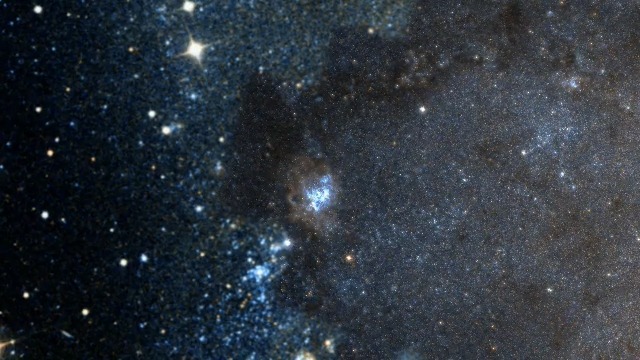
A useful animation demonstrating gravitational lensing. This is when the gravity of a high mass object, like a galactic cluster, distorts the light of objects behind it. 💡 CREDIT : ESA/Hubble, L. Calçada

98,875 Aufrufe • vor 3 Jahren •via X (Twitter)

0 Kommentare

Keine Kommentare verfügbar

Kommentare vom Original-Post werden hier angezeigt

Ähnliche Videos

A one-in-a-million chance—and it happened. A team from the Technical University of Munich spent six years compiling a list of promising gravitational lenses and waiting for a supernova to explode behind one of them. In August 2025, it happened. A superluminous supernova 10 billion light-years away was located precisely behind two foreground galaxies—and its light, bent by gravity, produced five images of the same explosion. Typically, lenses produce two or four—five was a surprise even to the authors. The supernova was named SN Winny. The odds of such a coincidence are less than one in a million. But the value of the discovery is enormous. Light from the supernova travels to us along different paths around the lensing galaxies, and each path has its own length. Because of this, the five copies appear with different time delays. By measuring these delays and knowing the mass distribution in the lensing galaxies, one can directly calculate the Hubble-Lemaître constant, or the rate of expansion of the Universe. How is this better than existing methods? The classic "cosmic distance scale" is a multi-step process, with errors accumulating from step to step. Microwave background radiation measurements are precise, but depend on models of the evolution of the Universe. The lensed supernova method is a single-step process, with completely different sources of error. SN Winny is particularly convenient: it is lensed by just two individual galaxies with a simple mass distribution, rather than a complex cluster. SN Winny is currently being observed by telescopes around the world. The results could bring us closer to resolving the Hubble controversy—the discrepancy between the two main methods for measuring the expansion rate.

Black Hole

180,949 Aufrufe • vor 5 Monaten