Video wird geladen...
Video konnte nicht geladen werden
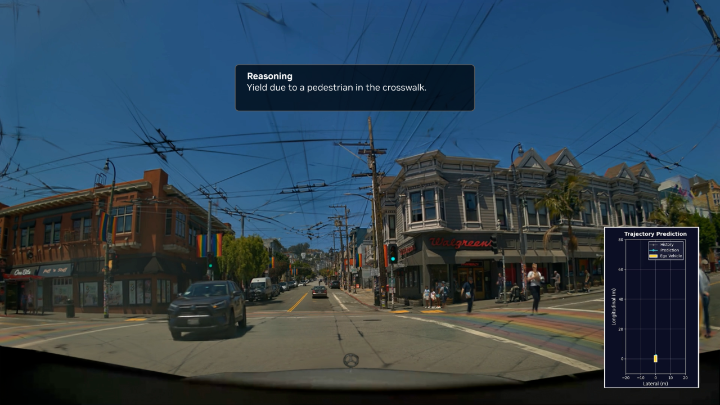
AI for robotics has some monumental challenges, like high dimensionality and reasoning with the physical world. Ashok Elluswamy, AI lead at Tesla, thinks the hardest problem is Evaluation. - Loss isn't a perfect indicator of Policy Neural Network's quality. - Testing in the real world for all the long-tail... show more

17,065 Aufrufe • vor 7 Monaten •via X (Twitter)
0 Kommentare
Keine Kommentare verfügbar
Kommentare vom Original-Post werden hier angezeigt


![15–30 minutes of real-world robot data. That's now enough to go from sim-to-real failure to working robot. Let’s see… You train a robot in simulation. You deploy it in the real world. It fails. The physics don't match. So you try to fine-tune it with real data, but… you never have enough real data, and the fine-tuning breaks everything the simulation taught it. SimDist fixes this with one key decision: don't transfer the policy. Transfer the world model. Keep the reward and value knowledge from simulation frozen. Only update the part that's actually wrong, how the robot predicts physics. Now the robot doesn't have to relearn the entire task in the real world. It already knows what success looks like. It just needs to correct its understanding of how the real world moves. The part that makes this work: they also trained on failures and recoveries; not just perfect demonstrations. Without that, the planner finds the gaps and exploits them. With it, the robot can tell a good future from a bad one. That's all it needs. Results on peg insertion, table leg assembly, locomotion on slippery and uneven surfaces. Tasks that require precision, force, and quick reaction. Thanks for sharing, Tyler Westenbroek ([Tyler Westenbroek]. Interactive visualization + paper: ——- Weekly robotics and AI insights. Subscribe free:](https://image.24vids.com/tw-2057007432878928150/ext_tw_video_thumb/2057007419692101632/pu/img/Tr8ccWDNdIoIxpos.jpg)