Loading video...

Video Failed to Load

Go Home

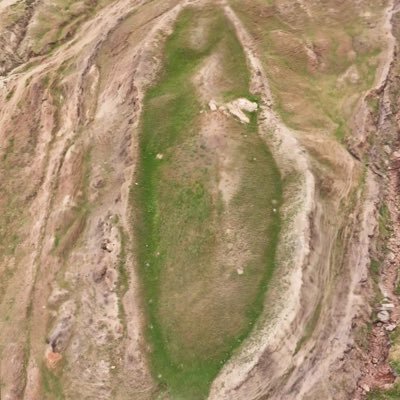
Ancient historian Josephus wrote something remarkable nearly 2,000 years ago: “Now all the writers of barbarian histories make mention of this flood, and of this ark…” He goes on to say that remnants of the Ark still remained in Armenia, and that people were carrying pieces of it away....

20,085 views • 5 months ago •via X (Twitter)

0 Comments

No comments available

Comments from the original post will appear here

Related Videos

Mumbai, Maharashtra: Researcher Syed Shamir Hussain presented documents and artifacts related to the Trishul of Lord Shiva and the Vajra of Lord Indra, described as ancient symbols associated with Sanatan Dharma. These artifacts are reportedly around 10,000 years old and were discovered during excavations in the Philippines. If these findings are validated through rigorous archaeological and scientific study, they could suggest that symbols and ideas connected to Sanatan Dharma existed and possibly spread far beyond the Indian subcontinent thousands of years ago. For a long time, civilizations such as Ancient Egypt (around 3100 BCE, roughly 5,000 years old) and Mesopotamia (around 3500 BCE, about 5,500 years old) have been widely considered among the oldest known civilizations. However, if discoveries linked to Sanatan Dharma date back 8,000–10,000 years or more, it would indicate that these traditions were already well developed thousands of years before many other recorded civilizations fully emerged. Many researchers also argue that the ancient history of the Indian subcontinent has not yet been explored or documented as extensively as it should be. Continued research, excavations, and scientific analysis may reveal that early societies connected with Sanatan traditions had already developed knowledge in areas such as metallurgy, symbolism, art, philosophy, and organized social systems at a very early stage in human history.

VictorVon Solanki

39,821 views • 6 months ago

Appeal for the Protection of Balochistan’s Ancient Historical Heritage Independent Republic of Balochistan: 22 August, 2026 Balochistan has been blessed by nature not only with vast seas, immense mineral resources, and a highly strategic geographical location, but also with the honour of being one of the important centres of some of humanity’s oldest civilizations. Mehrgarh, the Indus Valley Civilization, and other ancient archaeological sites stand as living evidence of the thousands of years of Balochistan’s human, cultural, and civilizational history. Earlier this month, a large quantity of valuable ancient artefacts was discovered in Dera Bugti during excavations by local people, while just yesterday, local Baloch people in the oil and mineral rich region of the Kohlu District (Kohlu, Kahan of Kohistan Marri region is known the richest region of entire Balochistan. These discoveries have once again drawn the world’s attention to the deep and ancient civilizational history of Balochistan. Where is Kohlu? It is believed that It has more oil than Venezuela and Iran) also discovered ancient artefacts and archaeological remains. Kohlu is the hometown of Baloch nationalist leader Hyrbyair Marri HYRBYAIR MARRI the son of Baloch nationalist leader Nawab Khair Bakhsh Marri. Former army chief Gen. Pervez Musharraf offered billion royalty to the Nawab Marri and Hyrbyair Marri to allow Pakistan for oil, gas, gold, critical minerals exploration but both the leaders refused to allow Pakistani military to extract the Baloch resources. These artefacts are not merely old objects; they are living documents of Balochistan’s past. Every seal, vessel, ornament, tool, sculpture, or other ancient object preserves the story of an era from which valuable knowledge can be gained about human society, trade, art, religion, ways of life, and the evolution of civilization. Scientific research into these remains can contribute not only to understanding Balochistan but also to understanding the shared history of all humanity. It is a great honour for Balochistan that its land has preserved such ancient civilizations and historical heritage. The Republic of Balochistan appeals to all international institutions, archaeologists, historians, museums, and organizations working to preserve ancient civilizations, Mehrgarh, the Indus Valley Civilization, and human history to play their role in protecting Balochistan’s historical heritage. Balochistan urgently needs international attention and cooperation so that these precious artefacts can be preserved, documented, and made available for scientific research, while protecting them from illegal transfer, destruction, or loss. We are also deeply concerned that if this historical heritage falls into the hands rogue state of Pakistan who seek to erase Balochistan’s history, language, and culture rather than preserve them, these artefacts could also suffer irreparable damage. In the context of reports of destruction and pressure involving educational and cultural institutions, libraries, and materials related to Baloch history and culture in Balochistan, as well as actions against students, teachers, professors, and individuals conducting research on history, serious international concern is necessary regarding the protection of these ancient remains. This is not only a time to rediscover the past, but also to protect it. These archaeological remains are not merely the heritage of the Baloch people; they are part of the shared civilizational heritage of all humanity. The world must take immediate steps to protect Balochistan’s ancient historical heritage, provide experts with opportunities for research and documentation, and ensure that these rare testimonies of thousands of years of human history do not become victims of Pakistan's state terrorism, war, neglect, illegal trade, or any form of destruction. Balochistan wishes to preserve and present this magnificent heritage of its land to the world with dignity, so that future generations may also see, understand, and take pride in their ancient history.

Mir Yar Baloch

21,741 views • 1 month ago

A giant classical Greek statue prop on a stadium stage during the opening ceremony of the 2026 Mediterranean Games in Taranto, Italy 🇮🇹 One of the most striking images of the opening ceremony of the Mediterranean Games in Taranto was the monumental figure inspired by Taras, the mythical founder and eponymous hero of the ancient city. Presented almost as a colossal living statue, the figure offered a spectacular reference to the Greek origins of Taranto and to a mythology that has remained embedded in the city’s identity for more than two millennia. According to ancient tradition, Taras was a son of Poseidon and the nymph Satyria. The hero was closely associated with the foundation of the settlement that bore his name, ancient Taras, Τάρας, although Greek historical tradition attributes the actual colonial foundation of the city, around the late 8th century BC, to Spartan settlers known as the Partheniae under their leader Phalanthus. Taranto therefore preserved two intertwined foundation traditions, the mythical story of Taras and the historical memory of its Spartan origins. Taras became particularly recognizable through one of the most enduring symbols of the ancient city, the dolphin rider. Ancient Tarentine coins repeatedly depict a youthful figure riding a dolphin, an image associated with Taras and the protection of his divine father Poseidon. The motif became so deeply connected with Taranto that a dolphin rider remains part of the modern city’s coat of arms. Through its coinage, the image circulated throughout the Mediterranean world and became an unmistakable emblem of one of Magna Graecia’s most powerful Greek cities. The appearance of the colossal Taras at the ceremony therefore carried considerable historical symbolism. Behind the modern Italian city stands the ancient Greek polis of Taras, founded by settlers from Sparta and transformed into a major political, economic and cultural centre of Magna Graecia. By bringing its mythical founder dramatically back to life, the ceremony connected the contemporary Mediterranean Games with the ancient Mediterranean world from which so much of Taranto’s identity emerged. 🎥© greekgetaway #archaeohistories

Archaeo - Histories

63,101 views • 1 month ago