Загрузка видео...

Не удалось загрузить видео

На главную

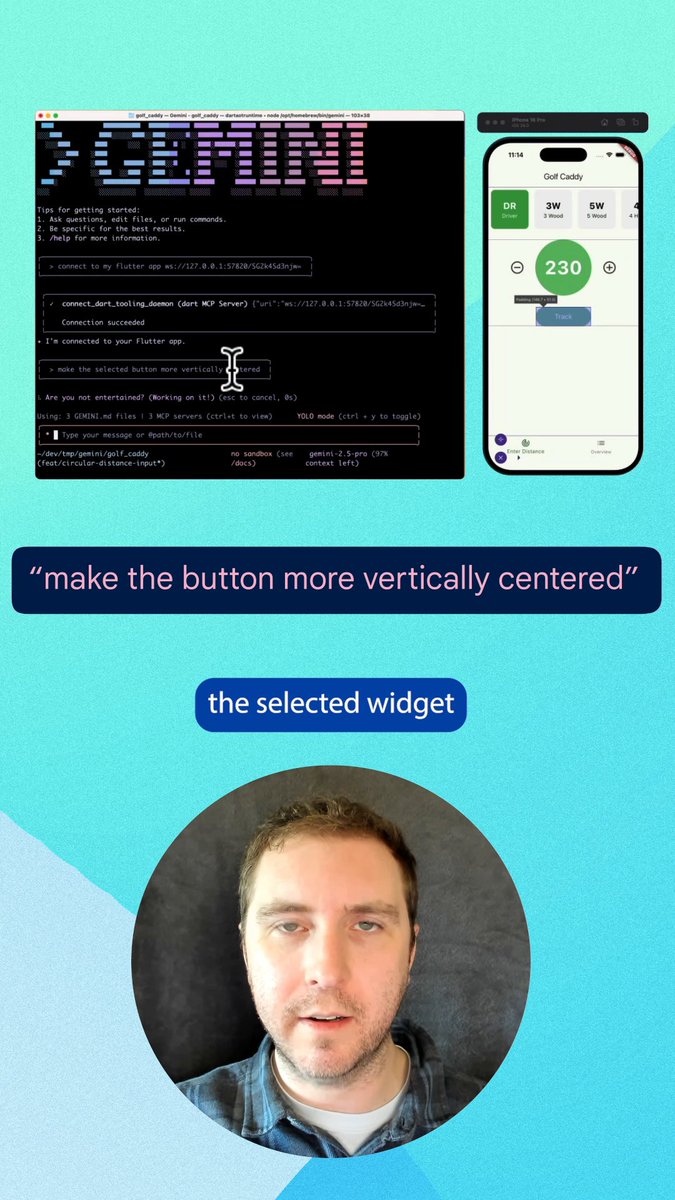
Android is shifting to an intelligence system. 🧠 This evolution gives developers a spectrum of ways to engage users. Out of the box, Gemini can automate tasks across your app by analyzing the screen with zero code required. For deeper integration, the AppFunctions Jetpack library provides an MCP-like solution....

29,093 просмотров • 3 месяцев назад •via X (Twitter)

Комментарии: 0

Нет доступных комментариев

Здесь появятся комментарии из оригинального поста

Похожие видео

Today, Box is announcing major new AI agent capabilities to let customers tap into the full value of their unstructured data. First, we’re announcing all new updates to the Box AI Studio to make it even easier to build AI agents that tap into your enterprise content for any job function, business process, or industry specific use case. We are also expanding our set of foundational agents that customers will be able to use to work with their enterprise content, including new features like search and research on unstructured data. Next, we’re announcing Box Extract to enable customers to use AI agents seamlessly for complex data extraction from any type of document or content. This makes it easier than ever to pull out data from contracts, invoices, research data, marketing assets, medical charts, and more. Finally, we’re introducing Box Automate, a new workflow automation solution within Box that lets you deploy AI agents across enterprise content-centric workflows. With Box Automate, you can design your business process in a simple drag and drop builder and then drop in AI agents at any step in the process. This ensures agents execute tasks at the right steps in a workflow every time. Best of all, our AI agents and workflow tools are designed to work across any system our customers work within, whether it’s leveraging pre-built integrations, Box APIs, or the new Box MCP Server. Ultimately, all of these capabilities come together to transform how companies can work with their enterprise content. Software has historically only been good at automating work that deals with structured data, which is why ERP, CRM, and HR systems have been mainstays of enterprise software for so long. The data in these systems fits neatly into a database, and the workflows are very ripe for automation. But it turns out most of the work in the world deals with unstructured data. It’s ideating through research documents, working with a client on contracts, reviewing details for a new product launch, looking at a patient’s healthcare record to make a diagnosis, working through due diligence documents for an M&A deal, and so on. For the first time ever, we can begin to bring all new insights and automation to this work with AI agents. At Box, we’re incredibly excited to be on this journey to help customers transform how they work with their most important data.

Aaron Levie

91,863 просмотров • 11 месяцев назад

New course: MCP: Build Rich-Context AI Apps with Anthropic. Learn to build AI apps that access tools, data, and prompts using the Model Context Protocol in this short course, created in partnership with Anthropic Anthropic and taught by Elie Schoppik Elie Schoppik, its Head of Technical Education. Connecting AI applications to external systems that bring rich context to LLM-based applications has often meant writing custom integrations for each use case. MCP is an open protocol that standardizes how LLMs access tools, data, and prompts from external sources, and simplifies how you provide context to your LLM-based applications. For example, you can provide context via third-party tools that let your LLM make API calls to search the web, access data from local docs, retrieve code from a GitHub repo, and so on. MCP, developed by Anthropic, is based on a client-server architecture that defines the communication details between an MCP client, hosted inside the AI application, and an MCP server that exposes tools, resources, and prompt templates. The server can be a subprocess launched by the client that runs locally or an independent process running remotely. In this hands-on course, you'll learn the core architecture behind MCP. You’ll create an MCP-compatible chatbot, build and deploy an MCP server, and connect the chatbot to your MCP server and other open-source servers. Here’s what you’ll do: - Understand why MCP makes AI development less fragmented and standardizes connections between AI applications and external data sources - Learn the core components of the client-server architecture of MCP and the underlying communication mechanism - Build a chatbot with custom tools for searching academic papers, and transform it into an MCP-compatible application - Build a local MCP server that exposes tools, resources, and prompt templates using FastMCP, and test it using MCP Inspector - Create an MCP client inside your chatbot to dynamically connect to your server - Connect your chatbot to reference servers built by Anthropic’s MCP team, such as filesystem, which implements filesystem operations, and fetch, which extracts contents from the web as markdown - Configure Claude Desktop to connect to your server and others, and explore how it abstracts away the low-level logic of MCP clients - Deploy your MCP server remotely and test it with the Inspector or other MCP-compatible applications - Learn about the roadmap for future MCP development, such as multi-agent architecture, MCP registry API, server discovery, authorization, and authentication MCP is an exciting and important technology that lets you build rich-context AI applications that connect to a growing ecosystem of MCP servers, with minimal integration work. Please sign up here!

Andrew Ng

142,227 просмотров • 1 год назад

"The future of AI is agentic. That includes browsers!" Imagine having an AI agent in your browser that can help you complete complex tasks, answer your questions, and streamline your workflow. Today I'm thrilled to share a sneak peek at Project Mariner, a cutting-edge research collaboration between Chrome and Google DeepMind, exploring the future of agentic AI within the browser! Building on the power of Gemini 2.0, Mariner envisions AI agents seamlessly guiding users through online tasks, streamlining workflows and enriching browsing experiences. Imagine having an intelligent co-pilot in your browser, anticipating your needs and proactively offering assistance. We're in the early stages of experimentation, focusing on core functionalities like understanding user intent, automating actions, and providing personalized recommendations. This prototype leverages Gemini's advanced natural language understanding and reasoning capabilities to interpret user requests, both typed and spoken. Mariner can then interact with web pages, retrieve information, and even perform actions like filling out forms or navigating to specific sites. For example, a user could simply ask "Find me a job near me," and Mariner would understand the request, navigate to a relevant job search site, and tailor the search based on the user's location and preferences. This is just one example of how we're exploring Gemini 2.0's potential to unlock agentic experiences through a series of prototypes, including: 1. Agents with multimodal reasoning: Project Astra, our research prototype exploring the capabilities of a universal AI assistant, is enhanced by Gemini 2.0. 2. Agents that can help you accomplish complex tasks: Project Mariner itself focuses on the future of human-agent interaction within the browser. 3. Agents for developers: Jules is an experimental AI-powered coding agent that integrates directly into a GitHub workflow. 4. Agents applied across domains: We're exploring agents for navigating video games and even applying Gemini 2.0's spatial reasoning to robotics. We believe that integrating AI agents directly into the browser has the potential to revolutionize how we interact with the web. Project Mariner aims to make browsing more intuitive, efficient, and personalized. By understanding user context and proactively offering assistance, Mariner can simplify complex tasks, save users time, and empower them to achieve more online. This aligns perfectly with the vision of Gemini 2.0 to create more helpful and intuitive AI experiences. We’re currently testing Mariner with a small group of trusted users to gather feedback and refine the user experience. We believe that this technology holds immense potential to transform the way we browse and interact with information online.

Addy Osmani

29,518 просмотров • 1 год назад